
REVIEW · MADRID
Madrid: Street Art Tour with Local Graffiti Hunter
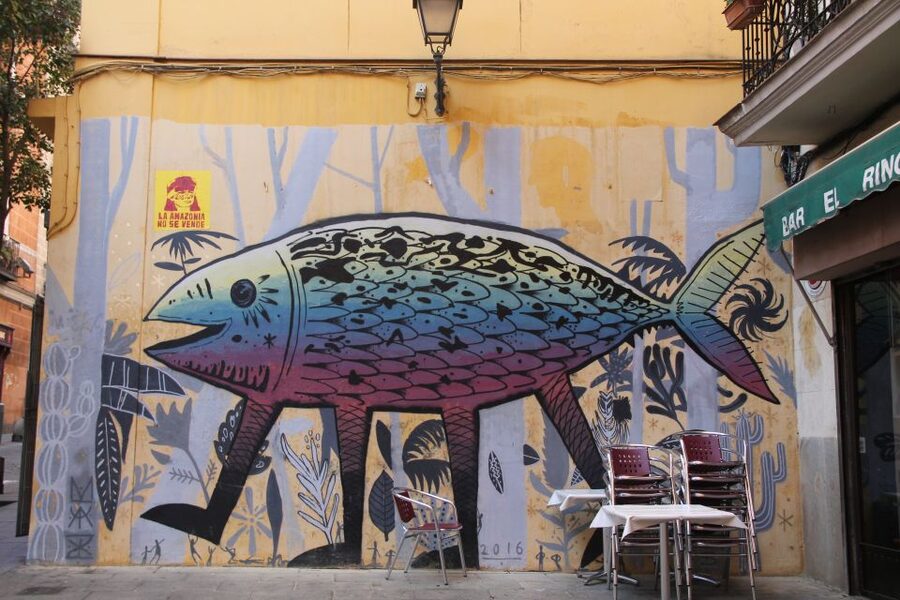
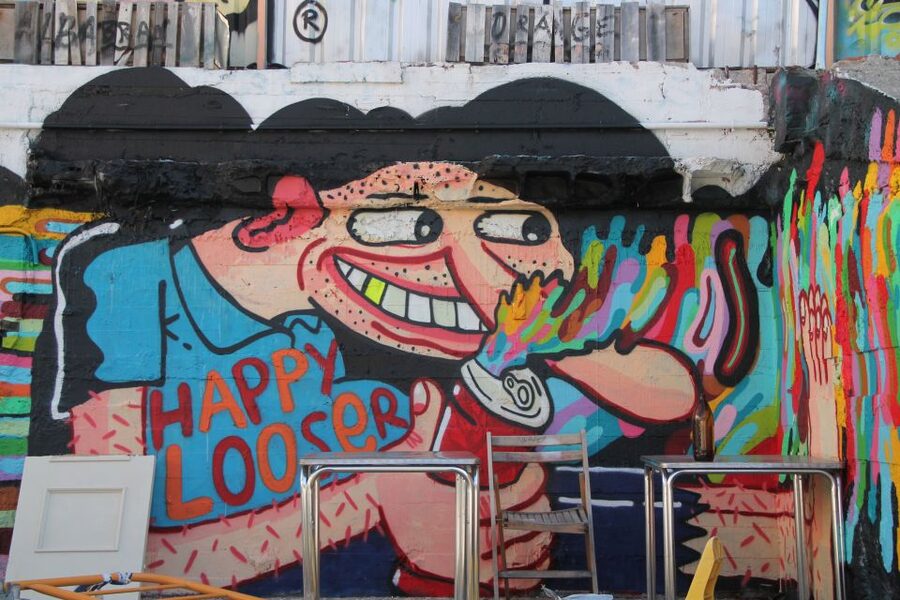
Madrid’s street art is not kept behind museum glass. It fills the walls of Lavapiés, spills around La Tabacalera, and appears in small stencils, stickers, tags, and legal murals. This two-hour walk gives you a local graffiti writer’s view of that changing public art scene.
I like the mix of art and neighborhood life, especially the stops at La Tabacalera and Esta es una Plaza. I also like the guides’ personal connection to the subject. Julien, Esther, Santiago, and other local guides bring stories about artists, techniques, nightlife, and Madrid’s social fabric.
The main consideration is that street art changes. A piece may be painted over, covered, or under repair, and rain does not cancel the tour. You will also spend the full two hours on foot, so comfortable shoes matter.
Key points to know before you book
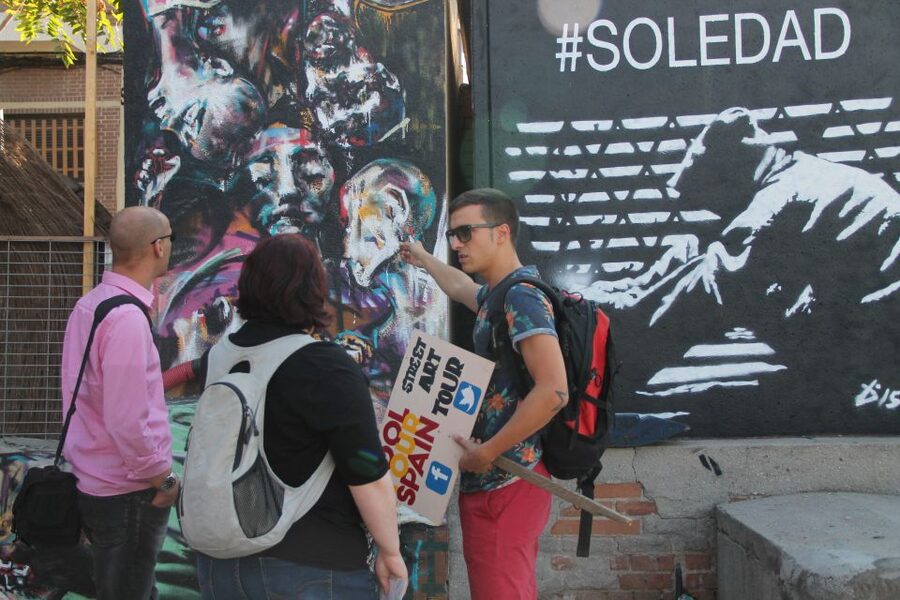
- A local artist leads the way: Guides such as Julien, Esther, Santiago, and Javier explain techniques, artists, and the rules behind graffiti and legal murals.
- Three central neighborhoods: The route moves through Lavapiés, Embajadores, and La Latina, giving you a look at Madrid beyond the major museums.
- La Tabacalera is a major stop: The former tobacco factory has walls covered with urban art and hosts free activities such as photography, dance, yoga, cycling, and longboarding.
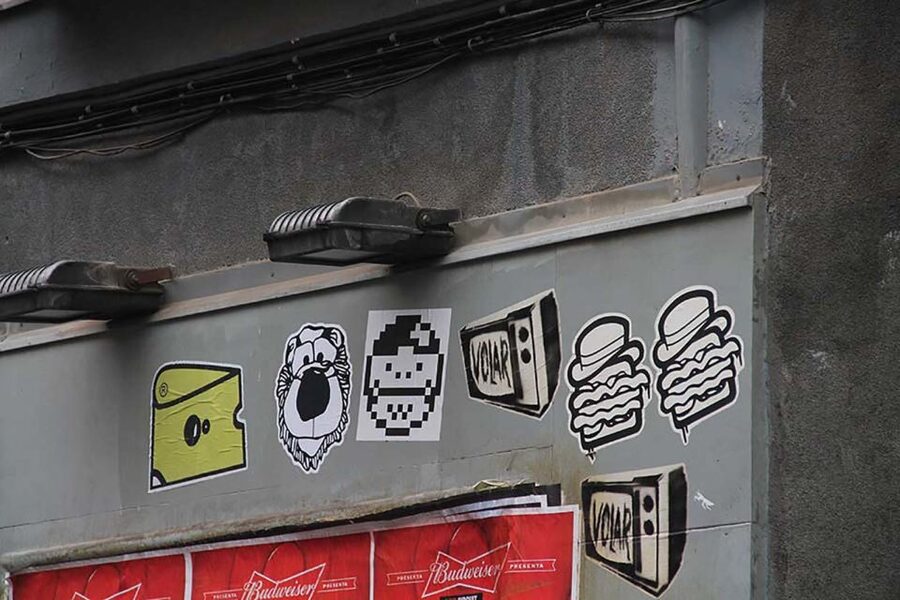
- Street art comes in many forms: You will see large murals alongside stencils, stickers, tags, and smaller works that are easy to miss alone.
- A good value at $29: Two hours with an English-speaking guide costs less than many museum tours and adds local context to an area you might otherwise pass by.
- Flexible booking: You can cancel up to 24 hours ahead for a full refund and reserve without paying immediately.
Why Lavapiés is the right place for this walk
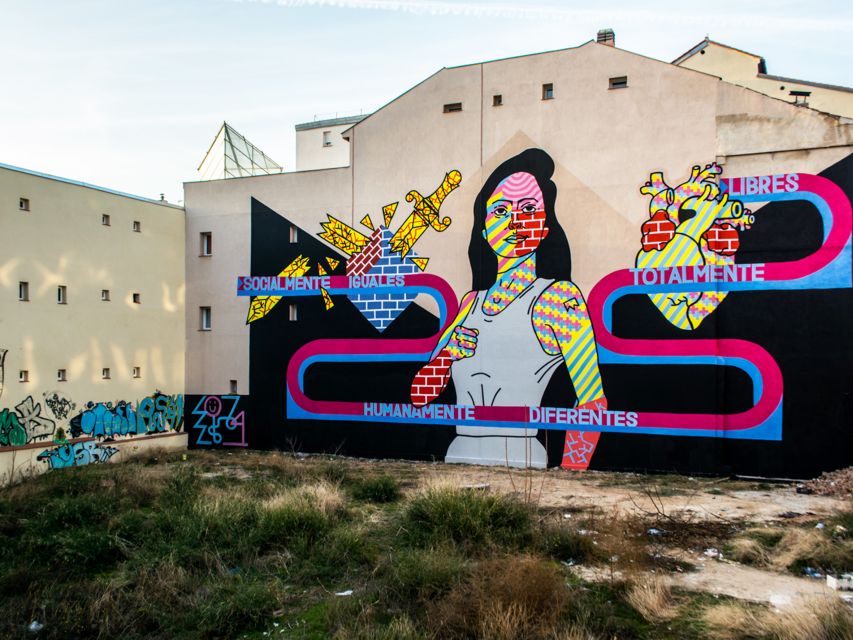
Lavapiés is one of the best parts of Madrid for seeing how public art and everyday life overlap. The area is multicultural, closely built, and full of small streets where a mural can appear beside a shop, a neighborhood association, or an old residential building.
That setting matters. You are not simply looking at pictures on a wall. You are seeing how artists respond to local buildings, public space, politics, identity, and the changing character of the neighborhood.
The walk also helps you read the difference between forms of street art. A large painted wall demands attention, while a sticker or stencil may be designed to reward a quick glance. A graffiti writer can explain how artists use lettering, spray paint, layering, repetition, and scale.
I like that the tour does not treat all urban art as the same thing. Graffiti, commissioned murals, stencil work, and community projects have different purposes and different relationships with the city. A good guide can explain those distinctions without turning the walk into a lecture.
More Graffiti Tours in Spain
- Raval Street Art and Graffiti Guided Tour in Barcelona
★ 5.0 · 81 reviews - Barcelona: Raval Street Art and Graffiti Walking Tour
★ 4.9 · 60 reviews - Barcelona: Graffiti E-Scooter Tour
★ 4.4 · 9 reviews
Meeting at Teatro Valle-Inclán
The tour begins outside Teatro Valle-Inclán at Calle de Valencia, 1. Lavapiés is the nearest metro station, so the meeting point is practical if you are using Madrid’s public transport.
Arrive ready to walk rather than expecting a vehicle or a seated presentation. The guide speaks English, and the pace is described as comfortable. Several outings have included time for questions and discussion, which is useful because street art often raises questions about ownership, public space, permission, and community impact.
The guides also keep the group from blocking pavements or disrupting local life. That is more important than it sounds. Lavapiés is a lived-in neighborhood, not an open-air gallery built for tour groups.
The tour is wheelchair accessible, though street surfaces and the changing condition of public sidewalks can still affect how easy any walking route feels. If access is a concern, confirm current route details when booking.
From Lavapiés streets to Calle Argumosa
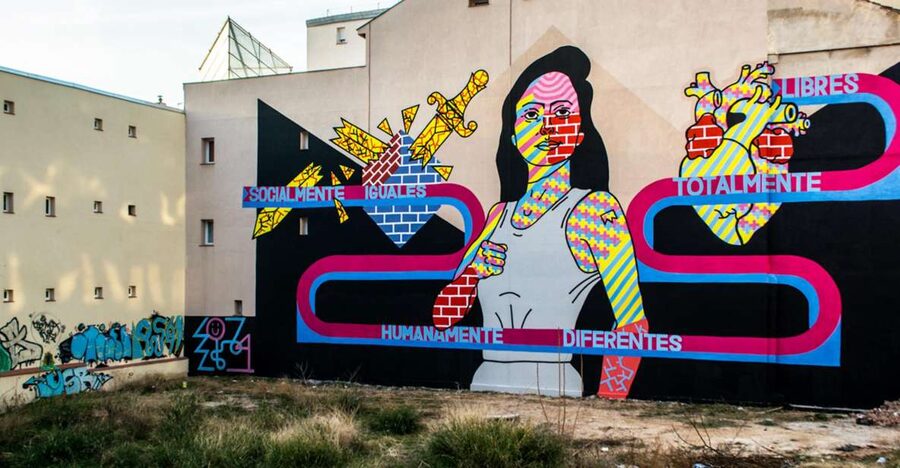
The first part of the walk takes you through Lavapiés, where the art is woven into the streets rather than gathered in one single venue. You may stop at works by established local artists, newer names, and artists connected to Madrid’s wider urban art scene.
Calle Argumosa is one of the route’s useful stretches because it lets you see art alongside normal neighborhood activity. You are likely to move between larger painted surfaces and small works that require the guide to point them out.
This is where the guide’s personal experience becomes useful. A local graffiti writer can talk about how a piece was made, what materials were used, and how artists work within a city where some walls are legal spaces and others are not.
The best part of this section is the conversation. Guides including Esther and Julien have been praised for asking questions, keeping the walk lively, and making room for both serious art fans and people seeing graffiti for the first time.
You do not need to know the names of artists or the vocabulary of street art before you arrive. The explanations start with the basics and build from there. If you already follow urban art, you can ask about technique, local scenes, or individual artists.
La Tabacalera and Madrid’s largest central mural
The route continues along Calle de Embajadores toward La Tabacalera, the former tobacco factory. Its walls are among the clearest examples of Madrid’s urban art culture, with large-scale works that are easier to appreciate when you know something about the artists and the area.
La Tabacalera is also more than a painted exterior. The site is linked with free workshops in photography, dance, yoga, cycling, longboarding, and other activities. This gives the stop a broader meaning. You are seeing art connected to a place used for culture, learning, and local participation.
The tour also offers the chance to see the biggest mural in Madrid’s Center District. Exact works can change, but the scale of this kind of painting helps explain why Madrid’s street art is more than a collection of small tags. Large murals can alter how people experience a street, draw attention to a blank wall, and invite arguments about who gets to shape public space.
A guide can also explain the difference between festival work and unsanctioned graffiti. The experience connects with events such as CALLE Lavapiés, Urvanity, and Muros Tabacalera, so you get a sense of the organized side of Madrid’s art scene as well as its more informal side.
Same walls, a different guide:
- Moco Museum Barcelona Banksy & More
★ 4.6 · 2,340 reviews - Moco Museum Barcelona Admission Ticket
★ 4.5 · 1,302 reviews - Barcelona: Banksy Museum, Permanent Exhibition Ticket
★ 4.7 · 543 reviews - Barcelona Street Art and Graffitti Bicycle Tour
★ 5.0 · 361 reviews
Esta es una Plaza and Plaza del Sombrerete
Esta es una Plaza is another important stop. The project is a strong example of residents and artists using public space in a creative way. Your guide provides context about veteran artists and explains how the site fits into the neighborhood.
The value here is not just visual. You begin to see why certain pieces belong in particular places. A wall can be a canvas, a meeting point, a political statement, or part of a wider effort to make a neglected space useful.
At Plaza del Sombrerete, the focus may shift toward newer artists and emerging work. That contrast is helpful. You can compare older and newer approaches, large and small pieces, and formal murals with less permanent forms such as stickers and stencils.
Because public art changes, this part of the route may not look exactly the same on every visit. That is not necessarily a weakness. It means the walk reflects a living art scene rather than a fixed museum display.
What the guides add to the experience
The strongest feature of this tour is the guide. The people leading it are not simply reciting dates and artist names. Several are practicing street artists or active participants in Madrid’s urban art world.
Julien has been praised for his clear English, humor, and ability to keep both beginners and experienced art fans involved. Esther brings together graffiti technique and local history, while Santiago has been described as warm, interactive, and good at telling stories. Other guides, including Hector, Javier, Ana, Mario, Yago, and Stefan, have also led this walk over time.
Do not book around one particular guide unless the operator confirms who will lead your date. The lineup can change. The common thread is an energetic, personal approach to the subject.
You may also get a lucky moment that cannot be scheduled. Some walks have passed artists working on new murals, giving the group a chance to say hello or see the process at close range. Treat that as a bonus, not a promised part of the tour.
The guides also offer more than art tips. Some have suggested Madrid nightlife spots and Saturday evening addresses. That can be useful if you want to continue exploring Lavapiés after the walk.
A two-hour pace that leaves room for questions
Two hours is a good length for this subject. It gives you enough time to cover several streets and projects without turning the outing into a tiring half-day walk.
The pace is generally casual, with regular stops for explanations and photographs. One reason the format works is that the route does not try to show every piece in the neighborhood. Instead, the guide selects works that help explain the art scene and the district.
Small groups make a noticeable difference. When the group is compact, you can hear the guide more easily, ask questions, and discuss whether a work is attractive, political, legal, temporary, or all four. One guide has been especially noted for keeping groups small.
Still, you should expect a walking tour, not a polished theater performance. You may pause on ordinary streets, stand near walls, and share space with residents. Comfortable shoes are essential, and an ID or passport is listed among the items to bring.
Bring a phone or camera if you want photographs, but leave room to listen. The small works can be easy to miss if you spend the whole walk looking through a screen.
What the $29 price gives you
At $29 per person, this is a sensible purchase if you want local context rather than another standard tour of Madrid’s headline sights. The price covers a two-hour walk and an English-speaking guide, with no drinks included.
The value comes from the selection and explanation. You could walk through Lavapiés on your own for free, but you would probably miss many small works and have little way to judge which murals matter in the local scene.
You also get an introduction to neighborhoods beyond the Prado, the Royal Palace, and the main shopping streets. That makes the tour useful early in a Madrid visit, when you are still learning how the city fits together.
I would not choose it if your main goal is to see a fixed list of famous murals in perfect condition. Street art is temporary, and this tour is about the scene, the streets, and the ideas behind the work as much as the individual images.
The booking terms add some flexibility. You can cancel up to 24 hours before the start for a full refund, and you can reserve now while paying later. Rain is the important catch: the tour is not canceled simply because rain is forecast, so check the weather before committing.
Who will enjoy this Madrid street art tour
This is a strong choice for:
- First-time Madrid visitors who want to explore beyond the central monuments.
- People interested in graffiti, murals, stencil work, stickers, and public art.
- Families with older children or teenagers who enjoy visual culture and debate.
- Museum fans who want to see art outside galleries.
- Photographers looking for colorful walls and smaller details.
- Visitors who prefer a local guide and conversation over a large sightseeing group.
It also works well for anyone curious about cities and public space. A teenager can engage with questions about art, ethics, permission, and community. An adult who knows little about graffiti can still follow the explanations without feeling out of place.
You may want to skip it if you dislike walking, prefer indoor attractions, or need a guaranteed set of artworks. The route is also not the best match for someone who wants a hands-on spray-paint workshop. It is a guided look at Madrid’s street art, not an art lesson where you make your own mural.
Is this tour worth booking?
I would book this tour if you want to understand how Madrid’s art scene operates at street level. The combination of Lavapiés, La Tabacalera, Esta es una Plaza, and Plaza del Sombrerete gives you more than a collection of photographs. It shows how art, local identity, and public space meet.
The guides are the main reason to choose it. Julien, Esther, Santiago, and the other artists who lead the walk bring practical insight, humor, and an easy way of explaining unfamiliar work. The two-hour length and $29 price also make it a low-risk addition to a Madrid itinerary.
Book it early in your stay if you want ideas for returning to Lavapiés, nightlife tips, or a better sense of the city’s less polished side. Just wear comfortable shoes, accept that the art can change, and carry an open mind rather than a checklist.
FAQ
How long is the Madrid street art tour?
The tour lasts two hours.
What neighborhoods does the tour visit?
The walk covers Lavapiés, Embajadores, and La Latina in Madrid.
Where does the tour meet?
The meeting point is at the entrance of Teatro Valle-Inclán, Calle de Valencia, 1, 28012 Madrid, Spain.
Which metro station is closest to the meeting point?
Lavapiés is the nearest metro station.
What language is the tour conducted in?
The tour is conducted in English with a live English-speaking guide.
Is the tour wheelchair accessible?
Yes, the activity is listed as wheelchair accessible.
Does the tour include drinks?
No. Beverages are not included.
What should I bring?
Bring comfortable shoes and a passport or ID card.
Can I cancel the tour for a refund?
Yes. You can cancel up to 24 hours in advance for a full refund.
Does the tour run in the rain?
The tour is not canceled because of rain, so check the forecast and dress accordingly.
Just added around Spain
- Small-Group Graffiti Tour and Workshop in El Carmen★ 5.0 · 2 reviews
- Madrid Hidden Street Art Tour★ 5.0 · 12 reviews
- Bilbao Urban and Street Art Walking Tour★ 5.0 · 2 reviews
- Barcelona Street Art, Graffiti and Tapas Tour★ 4.0 · 5 reviews
- Moco Museum Barcelona: Banksy Small-Group Tour with Skip-the-Line★ 5.0 · 5 reviews
- Small-Group Moco Museum Barcelona: Banksy & Modern Art Tour★ 4.8 · 16 reviews
- Salamanca: Private Guided Street Art Walking Tour★ 5.0 · 2 reviews
- Private Barcelona Street Art Tour★ 5.0 · 2 reviews
Madrid Street Art Tours, compared.




Madrid Street Art Tour (Malasaña Chueca Gran Via & Lavapies)
Read our review →
Browse the lists this tour appears in