
REVIEW · MADRID
Madrid: Street Art Bike Tour
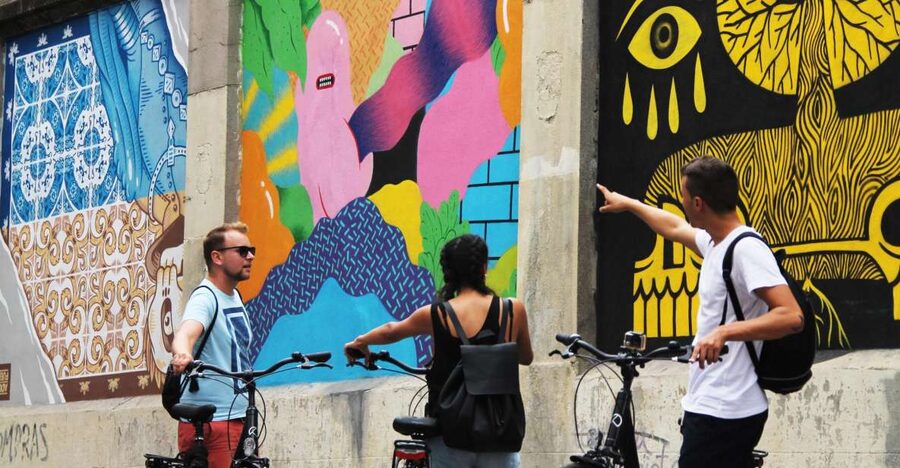
Madrid’s street art is best understood on the move. This bike tour links Malasaña and Lavapiés, two neighborhoods where old walls, shutters, gardens, and traffic posts become part of the city’s art scene. A local graffiti artist explains the styles and stories instead of simply pointing at painted walls.
I like the chance to see both famous festival work and smaller community projects, including the preserved 1989 tag by Muelle and the large mural in Madrid’s Center District. I also like the route’s human scale: you ride between stops, rather than viewing Madrid from behind a tour bus window. The drawback is the city cycling. Traffic and one uphill section can challenge anyone who is not comfortable on a bike.
Key points at a glance
- Muelle’s 1989 tag: See one of Madrid’s earliest surviving marks from its graffiti movement.
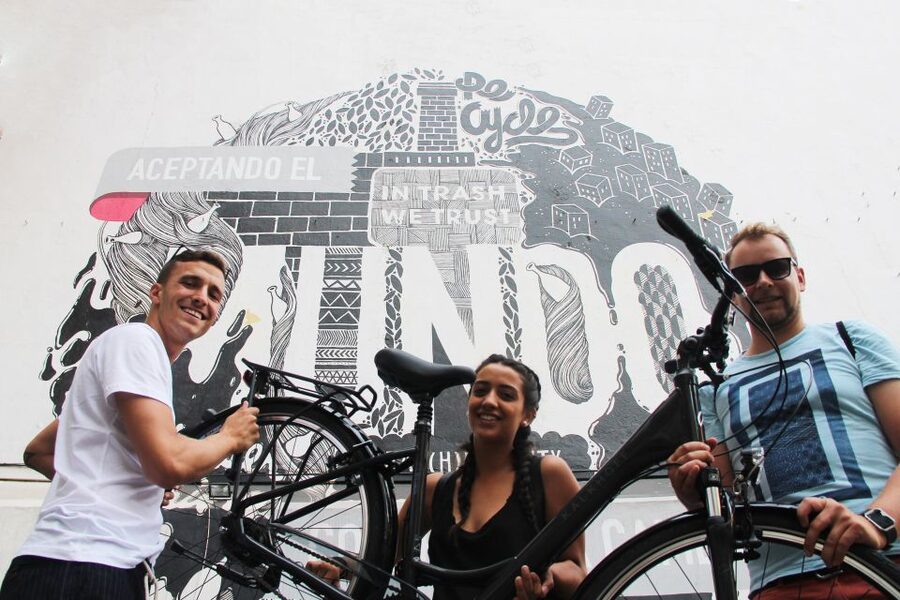
- Pinta Malasaña artwork: Ride through the festival area around Plaza Dos de Mayo and see the playful Bolardo Voy, Bolardo vengo installation.
- A local artist as guide: Learn how graffiti is planned and painted from someone connected to the scene.
- Community art spaces: Visit Solar Antonio Grilo and Esto es una Plaza, former abandoned sites now used by local communities.
- A moderate city ride: The tour is listed as 2.5 hours, though the practical information calls it a 3-hour activity, with one uphill section.
- Good value for active visitors: At $46 per person, the price covers the bike, helmet, lock, map, restroom stop, and live guide.
Why this bike tour offers more than a mural checklist
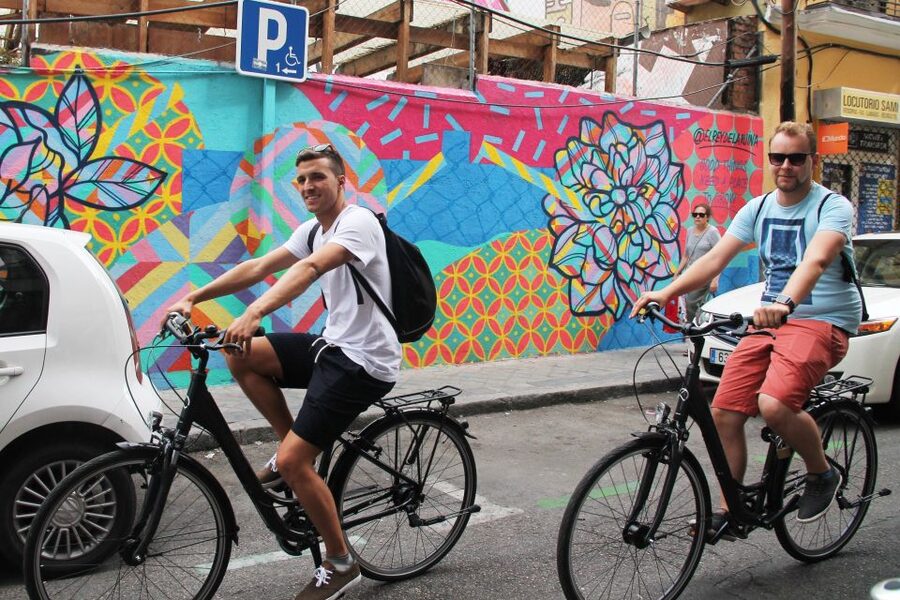
Street art can be easy to miss in Madrid. A painted metal shutter may be closed when you pass it, and a mural can sit on a side street you would never find by following the main sights. A bicycle makes it possible to connect these pieces across several neighborhoods without spending the whole morning on foot.
The guide adds the important layer. You learn about the history of graffiti in Madrid, the techniques artists use, and the way they work on walls, shutters, traffic fixtures, and other parts of the city. That context helps you look at the work as more than decoration.
The route also gives you a useful view of Madrid’s recent cultural life. It includes work by Spanish artists, international artists who joined local festivals, and neighborhood groups that turned unused spaces into shared gardens and art sites. You get a mix of formal festival work and less polished, more local projects.
The tour is led in English or Spanish by a live guide. One guide named Javier has been praised for making the ride friendly and easy to manage, including for a family with a seven-year-old riding independently. That does not mean every child will find the route easy, but it shows that the experience can work for families with confident young cyclists.
More Street Art Bike Tours in Spain
- Barcelona Street Art and Graffitti Bicycle Tour
★ 5.0 · 361 reviews - Valencia: Street Art Tour on Bicycle, E-Bike or E-Step
★ 4.8 · 31 reviews - Bilbao: Street Art Small Group E-Bike Tour
★ 4.8 · 23 reviews
Starting on Calle Montera with Muelle
You meet outside the small Carrefour Express at C/Montera 32, close to both Gran Vía and Sol metro stations. This is a central, easy-to-reach starting point, but Calle Montera can be busy, so arrive ready to collect your bike and pay attention during the opening instructions.
The first part introduces Madrid’s graffiti movement. You see a tag by Muelle, considered a pioneer of the city’s graffiti scene, preserved from 1989. It is a small but important detail. Unlike a giant new mural, a surviving tag shows how the movement began in a direct, personal way.
Muelle was very young when he helped establish a new cultural movement in Madrid. Seeing his mark gives the tour a clear starting point: before the festival walls and large public projects, graffiti often appeared as a personal signature placed in the city.
This is also when you receive bicycle safety instructions. Take them seriously. The route passes through an active capital city, and the ride is not presented as a fully protected cycle path excursion. You need to be comfortable steering, stopping, and watching traffic while also listening to the guide.
Alonso Martínez and the work of Boa Mistura
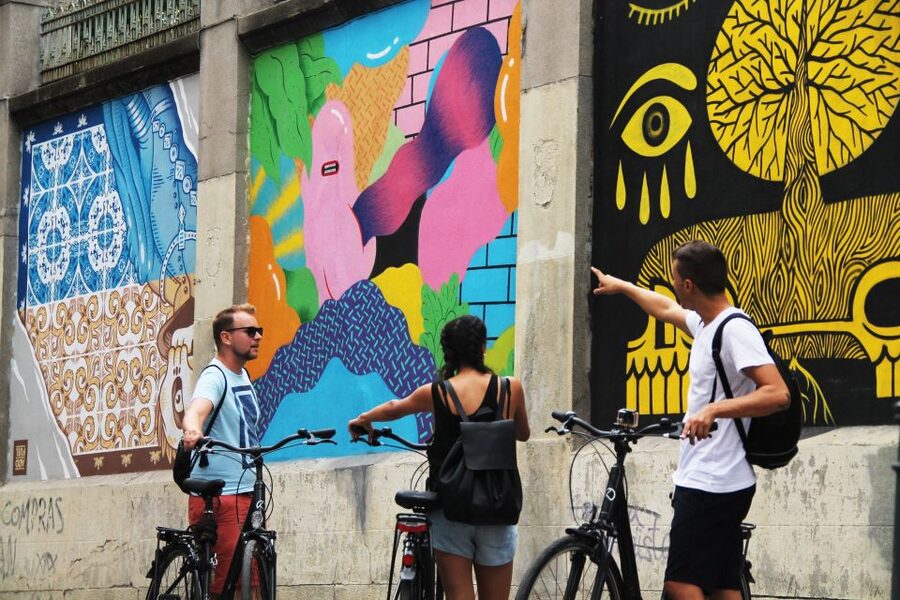
After the introduction, the route heads toward Alonso Martínez. Here, you stop to see the first piece created by Boa Mistura, a crew from the outskirts of Madrid that has worked on street art projects around the world.
Boa Mistura is useful context for understanding how Madrid’s graffiti scene developed. The group connects neighborhood art with professional design and large public projects. Their work shows how artists who begin in local streets can later take their ideas to wider audiences.
This stop also gives the tour a change of scale. Muelle’s tag represents an early, individual mark. Boa Mistura’s work points toward organized crews, designed compositions, and public art projects. The guide can help you compare the purpose, technique, and visual impact of each.
You are photographing the work rather than entering a museum or gallery. That matters if you want a traditional art tour with long talks in front of each piece. This is quicker and more active. You get an introduction, take in the artwork, and continue by bike.
Pinta Malasaña and Plaza Dos de Mayo
From Alonso Martínez, you ride into Malasaña, one of Madrid’s trendiest neighborhoods. The area is closely linked to Pinta Malasaña, a street art festival that colors the neighborhood during April. The route includes artwork by national artists who took part in the 2017 edition.
Malasaña works well on a bicycle because the art is spread through the neighborhood rather than gathered in a single exhibition hall. The changing streets also make it easier to understand how the work fits into everyday life. Murals and painted shutters share space with shops, apartment buildings, traffic, and pedestrians.
Plaza Dos de Mayo is the center of the festival area. One featured work is Bolardo Voy, Bolardo vengo, a colorful treatment of traffic posts. It is a clever reminder that street art does not need a blank wall. Ordinary city hardware can become part of the piece.
This stop should appeal to you if you enjoy art with a sense of humor. It is also one of the tour’s most practical lessons: look down, look around corners, and inspect small objects. Madrid’s street art is not limited to the biggest walls.
The main caution here is the city environment. Malasaña is popular and active, so you may be dealing with pedestrians and traffic while moving between pieces. The guide can direct the group, but you still need basic city-bike skills.
Same walls, a different guide:
- Moco Museum Barcelona Banksy & More
★ 4.6 · 2,340 reviews - Moco Museum Barcelona Admission Ticket
★ 4.5 · 1,302 reviews - Barcelona: Banksy Museum, Permanent Exhibition Ticket
★ 4.7 · 543 reviews - Banksy Museum Madrid: Entrance Ticket
★ 4.7 · 335 reviews
Solar Antonio Grilo and the move into Lavapiés
The ride continues toward Solar Antonio Grilo and the Lavapiés and Noviciado areas. These sites were once abandoned places. They have been turned into community spaces filled with urban gardens, murals, and local projects.
Solar Antonio Grilo helps show another side of Madrid’s street art. The point is not only to create an attractive wall. A neglected site can become useful again when local people shape it for shared purposes.
The same idea appears at Esto es una Plaza, a community garden and public space in Lavapiés. The tour describes these places as examples for communities elsewhere that want to combine social, cultural, and economic activity. You get to see how street art can support a wider neighborhood project instead of existing as an isolated image.
This part may be especially interesting if you want to understand Madrid beyond the usual sights. Malasaña offers festival energy and polished public work. Lavapiés adds local participation and the practical question of what a neighborhood does with unused land.
The route includes interventions by artists such as El Rey de la Ruina, Cassassola, Ze Carrión, and Por Favor. You should not expect a fixed gallery-style display where every work remains unchanged. Street art can be painted over, altered, or affected by its setting. That changing quality is part of the subject, though it also means a particular piece may not look exactly as expected.
What you learn from a graffiti artist
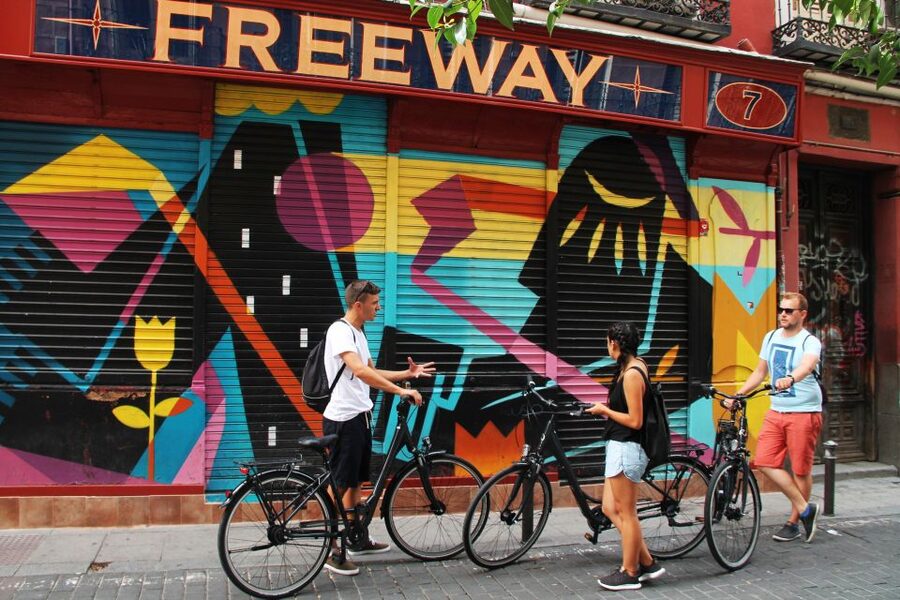
A guide who works as a local graffiti artist can explain details that are easy to miss on your own. You learn how artists decorate walls, metal shutters, and other urban surfaces, along with the techniques used to place images and lettering in public space.
The guide’s role is not just to name artists. You can ask why a piece uses a certain surface, how a design fits a wall, or how festival work differs from an individual tag. The tour is most useful when you treat it as a moving conversation rather than a series of photo stops.
The personal side matters, too. Javier, who guided one family group, was described as friendly and experienced, and the ride was handled smoothly from bike collection through the city route. A guide who can adjust the pace is valuable because cycling ability will vary within any group.
One rider in a group found that less experienced cyclists had trouble with Madrid traffic and the uphill sections. The guide adjusted the outing as much as possible, but you should not book this expecting a gentle, traffic-free ride. You do not need to be a racing cyclist. You should be familiar with riding in a city.
The route, timing, and physical effort
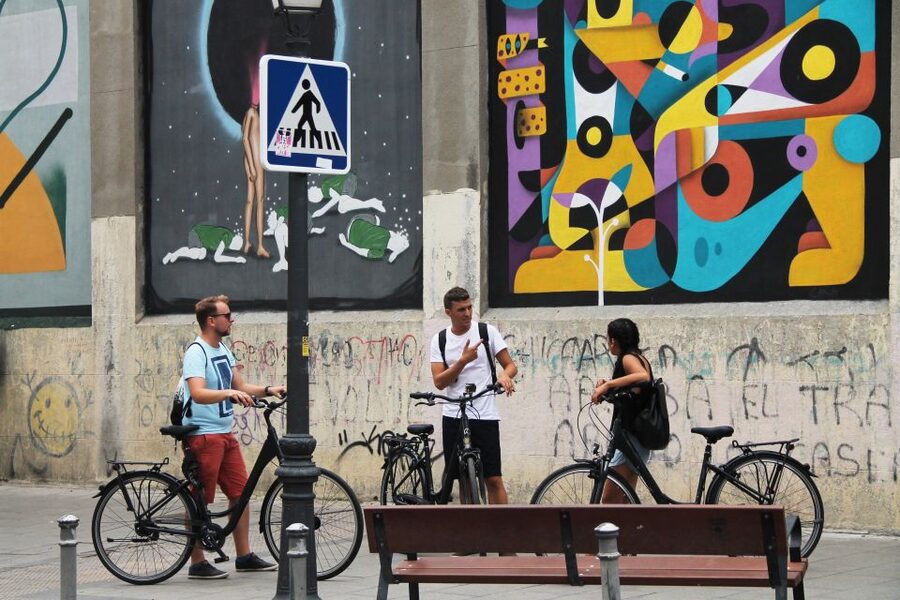
The listed duration is 2.5 hours. The practical information also calls it a 3-hour medium-level activity, so allow roughly three hours in your day rather than scheduling a tight appointment immediately afterward.
The route includes one uphill section. That sounds modest, but the combination of hills, traffic, stops, and listening while riding can make the outing feel more demanding than a flat park cycle. Comfortable shoes are recommended, and you should bring a passport or ID card.
A restroom break is included. Beverages are not included, so carry water if you need it during the ride. The bike rental, helmet, lock, and Madrid city map are included, which keeps the preparation simple.
Families can consider this tour if children ride their own bikes confidently. A seven-year-old has completed it successfully with a parent, but the traffic issue remains important. For younger or uncertain cyclists, a walking street art outing may be a better fit if available.
Is $46 a fair price?
At $46 per person, the value depends on how you normally explore Madrid. You are paying for 2.5 to 3 hours of a guided city experience, not simply for a bicycle rental. The fee includes the bike, helmet, lock, map, restroom stop, and an English or Spanish-speaking guide.
The strongest value is the access to interpretation. You could find some Malasaña and Lavapiés artwork alone, but you would likely miss the links between Muelle, Boa Mistura, Pinta Malasaña, and the community sites. You would also need to arrange a bike and work out a practical route.
The cost is less attractive if you dislike city cycling or prefer to set your own pace. You may spend part of the tour waiting for the group, and the need to watch traffic limits how closely you can study a piece while riding between stops.
For an active first or second day in Madrid, I think the price is reasonable. It combines transportation, neighborhood orientation, and an art lesson. It is not the right purchase simply because you want to collect a few mural photographs quickly.
Who will get the most from the ride?
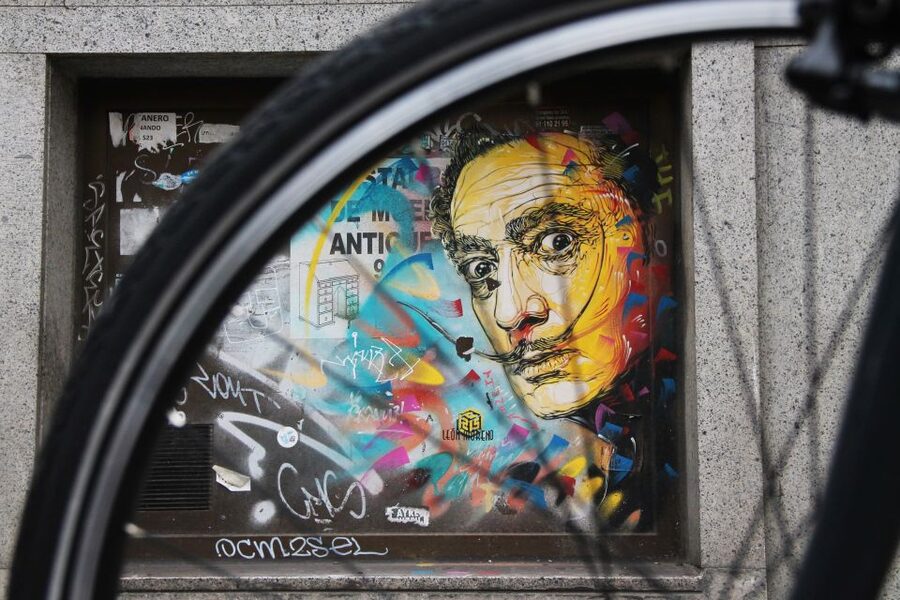
You are a good match for this tour if you enjoy contemporary art, local neighborhoods, and active sightseeing. It suits people who want a different view of central Madrid and like hearing how public art takes shape outside museums.
It also works for visitors who have already seen the main monuments and want to understand the city’s newer cultural movements. The route offers enough historical background to give the art meaning without turning into a long classroom lecture.
You should think twice if you are uncomfortable riding near traffic, have difficulty with an uphill stretch, or want a slow, highly detailed look at every mural. The group format and moving route mean you will sometimes need to keep pace.
The tour can suit families, but only when children are steady cyclists. The guide can adjust the ride, yet no guide can remove the basic demands of riding through Madrid.
Booking details to keep in mind
The tour begins and ends at the Carrefour Express at C/Montera 32. The nearest metro stations are Gran Vía and Sol, and returning to the same location makes the route easy to fit into a day of central sightseeing.
You can cancel up to 24 hours in advance for a full refund. A reserve-now, pay-later option is also available, which helps if your Madrid schedule is still changing.
Check the starting time when you choose your date. Bring identification, wear comfortable shoes, and allow extra time around the stated duration because the information gives both 2.5 and 3 hours as estimates.
Should you book the Madrid Street Art Bike Tour?
Book it if you want to connect Madrid’s graffiti origins with its current festival and community art scenes. The preserved Muelle tag, Boa Mistura’s early work, Pinta Malasaña, and the gardens at Solar Antonio Grilo and Esto es una Plaza give the route a clear range.
Skip it if you are not comfortable cycling in city traffic. For everyone else, $46 buys more than a ride through fashionable neighborhoods. You get a local artist’s explanation, a practical look at Madrid’s public art, and a useful introduction to Malasaña and Lavapiés without spending the whole day indoors.
FAQ
How long does the Madrid Street Art Bike Tour last?
The tour is listed as 2.5 hours. The practical information also describes it as a 3-hour medium-level activity, so allow about three hours.
How much does the tour cost?
The price is $46 per person.
Where does the tour start?
It starts at the entrance of the small Carrefour Express at C/Montera 32.
Which metro stations are near the meeting point?
The nearest metro stations are Gran Vía and Sol.
Where does the tour end?
The activity ends back at the starting meeting point.
Which languages are available?
The live guide is available in English or Spanish.
Is a bicycle included?
Yes. Bike rental is included, along with a helmet and lock.
What neighborhoods does the route visit?
The route includes Malasaña and Lavapiés, with time in the Noviciado area as well.
Is the tour suitable for children?
A family with a seven-year-old completed the ride with the child on their own bike. Children should be comfortable cycling in a city because the route includes traffic and one uphill section.
What should I bring?
Bring a passport or ID card and comfortable shoes. Beverages are not included, so bring a drink if you want one during the ride.
More Bike Tours in Spain
- Barcelona: 3.5-Hour Street Art Tour by Bamboo Bike
★ 5.0 · 56 reviews - Valencia Street Art | Private Tour by Bike or Electric Ride
★ 5.0 · 22 reviews - Valencia Street Art | Small Group Guided Tour by Bike
★ 5.0 · 16 reviews - Barcelona | StreetArt Bike Tour Moco Museum
★ 4.6 · 13 reviews
Just added around Spain
- Small-Group Graffiti Tour and Workshop in El Carmen★ 5.0 · 2 reviews
- Madrid Hidden Street Art Tour★ 5.0 · 12 reviews
- Bilbao Urban and Street Art Walking Tour★ 5.0 · 2 reviews
- Barcelona Street Art, Graffiti and Tapas Tour★ 4.0 · 5 reviews
- Moco Museum Barcelona: Banksy Small-Group Tour with Skip-the-Line★ 5.0 · 5 reviews
- Small-Group Moco Museum Barcelona: Banksy & Modern Art Tour★ 4.8 · 16 reviews
- Salamanca: Private Guided Street Art Walking Tour★ 5.0 · 2 reviews
- Private Barcelona Street Art Tour★ 5.0 · 2 reviews
Madrid Street Art Tours, compared.

Madrid Street Art Tour (Malasaña Chueca Gran Via & Lavapies)
Read our review →
Browse the lists this tour appears in