
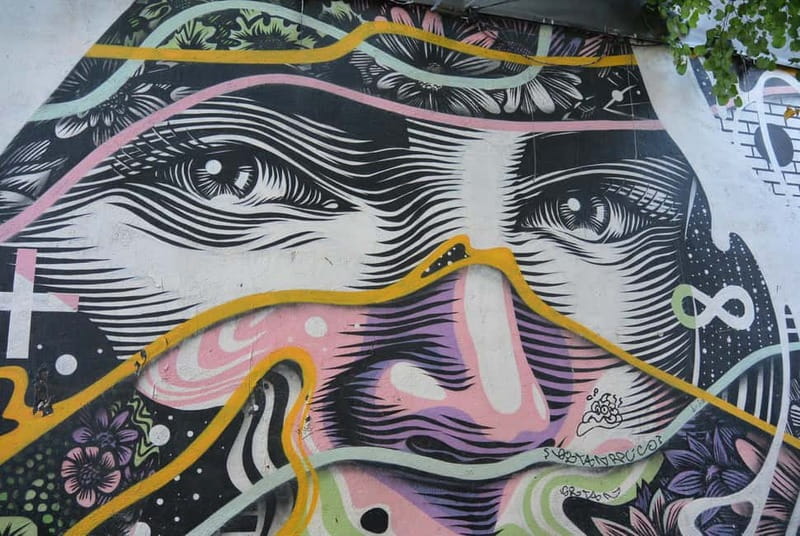
REVIEW · MADRID
Madrid Street Art Tour (Malasaña Chueca Gran Via & Lavapies)
Madrid’s best street art is not gathered in one museum. It is tucked onto shutters, walls, side streets, and old façades. This two-hour walking tour follows that living gallery through Malasaña, Chueca, Gran Vía, and Lavapiés, adding the story of graffiti and the artists who shaped Madrid’s current art scene.
I like the route for two clear reasons: you see several different neighborhoods in one outing, and the guide connects large murals with smaller paste-ups, mosaics, tags, and urban sculpture. The chance to spot the protected signature of Madrid artist MUELLE is a fine local detail. The main drawback is the amount of walking. One rating specifically found the pace manageable but the distance difficult, so this is not a good pick if you rarely walk in cities.
Key details before you book
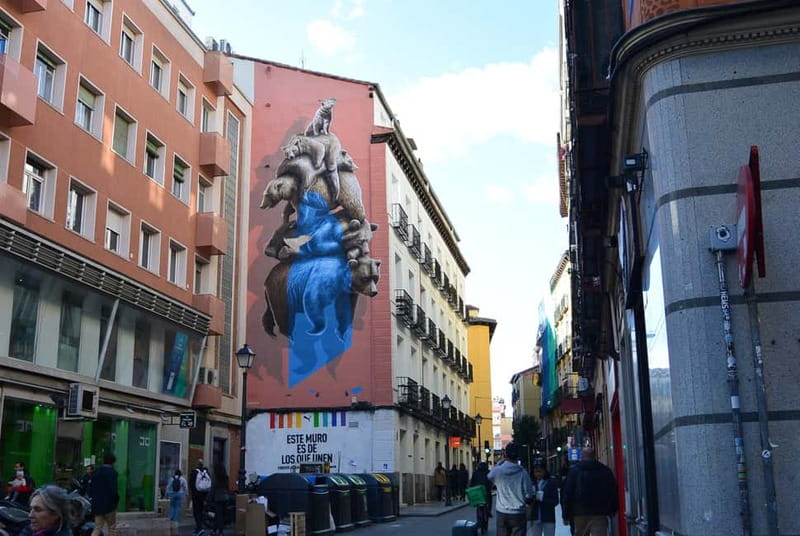
- A street-art route with real neighborhood variety: The walk links Malasaña, Chueca, Gran Vía, Sol, and Lavapiés rather than staying in one art district.
- A useful introduction to graffiti: The guide begins with a short explanation of how graffiti started around the world.
- Madrid artists get their due: Look for MUELLE, Okudart, Basket of Nean, El Rey de la Ruina, and Done Street.
- Gran Vía adds a sharp contrast: Madrid’s grand theater street sits alongside smaller streets covered with independent art.
- You choose the final price: The reservation costs nothing in the usual free-tour sense, and you decide what to give the guide at the end.
- Plan for steady walking: Comfortable shoes matter more here than a packed camera bag.
Why Madrid’s street art works best on foot
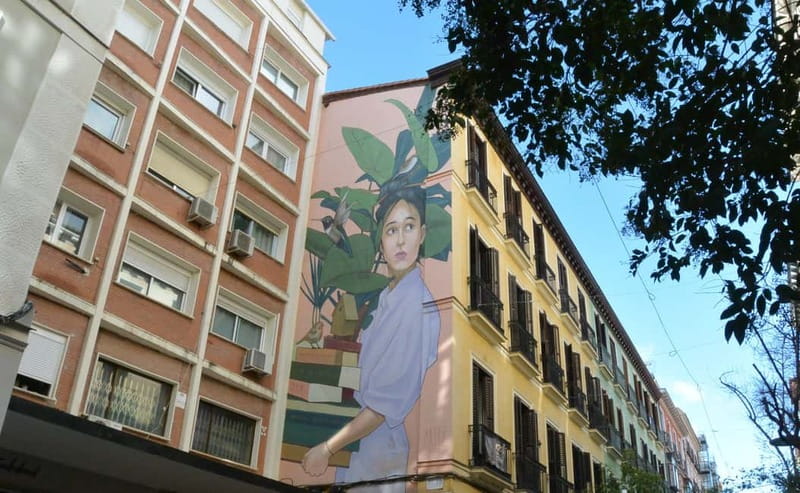
A museum gives you a clean view of one artwork. Madrid gives you a wall beside a bakery, a sticker on a utility box, or a painted shutter that changes the feel of an ordinary street. That is the appeal of this tour. You move through the city while the guide explains how each piece fits into the neighborhood around it.
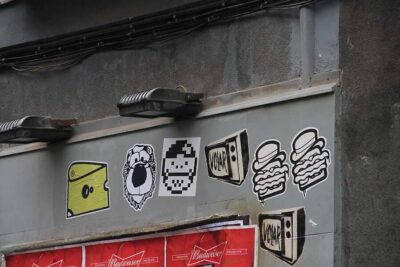
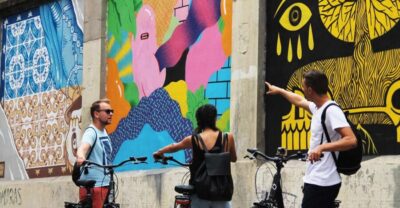
The route also gives you a quick lesson in scale. Some works are large and made for photographs. Others are easy to miss unless somebody points them out. The program includes murals from the Urvanity Art Fair, works linked with Calle the festival, mosaics, paste-ups, and urban sculpture. You will not be looking only at conventional graffiti.
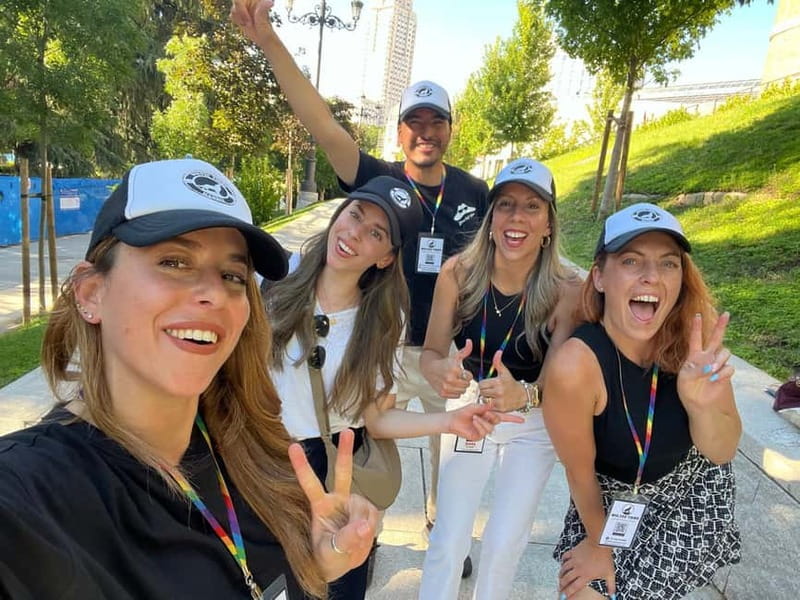
The tour is led in English by a live guide from Wolves Tours. Guide Diana received especially strong praise for making the experience enjoyable in a group, while other ratings describe the guides as friendly and the pace as relaxed. The guide’s role matters here because street art often lacks a label. Without context, you see color. With context, you begin to see technique, local references, and the difference between a mural, a paste-up, a tag, and a planned public artwork.
A few more street art tours around Spain worth a look
- Moco Museum Barcelona Banksy & More
★ 4.6 · 2,340 reviews - Barcelona: Banksy Museum, Permanent Exhibition Ticket
★ 4.7 · 543 reviews - Barcelona Street Art and Graffitti Bicycle Tour
★ 5.0 · 361 reviews
Meeting at Way Hostel Madrid
The meeting point is the door of Way Hostel Madrid, where the guide waits with the rest of the group. Arrive ready to walk rather than expecting a formal check-in or a museum-style start. The first section takes place on foot, with short photo and visit stops before the route reaches its major landmarks.
The exact group size is not provided, so you should expect a shared walking tour rather than a private visit. That can be useful for solo visitors who want company in Madrid, though it also means the pace and time at each wall can depend on the group.
The first few stops are brief, around 10 to 15 minutes each. This is enough time for an explanation and a few photographs, but not enough for a long, quiet study of every work. If you love street photography, keep your camera or phone ready. Art can appear on a side street and disappear from view as the group moves on.
The graffiti story before the walls
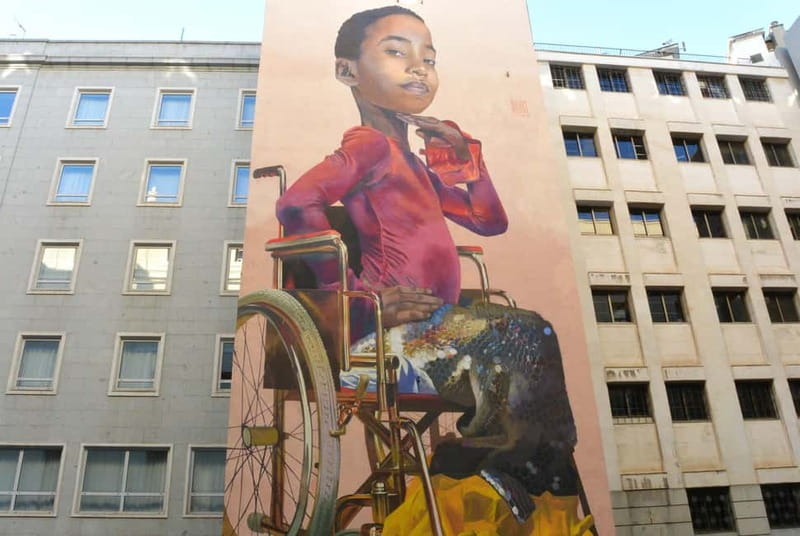
The tour begins with a short history of how graffiti started around the world. This opening gives you a frame for what follows. You will hear about graffiti as a form of personal marking and public expression before seeing how artists now work with murals, stickers, mosaics, and other formats.
The value of this section is not academic detail. It helps you understand why street art sits in a complicated space between permission and protest, decoration and identity. The tour description does not promise a long lecture, and the itinerary leaves most of the time for walking and seeing the city. Expect a practical introduction, not a full course in urban art.
That balance suits Madrid. The city itself is part of the lesson. As you move between older streets and major avenues, the guide can show how art adjusts to different walls, businesses, neighborhoods, and audiences.
Puerta del Sol and the Capitol building
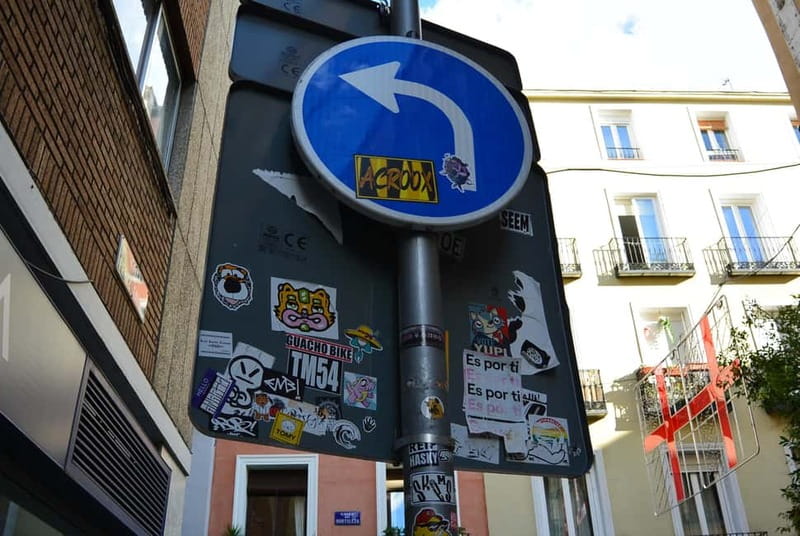
Puerta del Sol is one of the route’s central stops. It is a useful place to connect Madrid’s main city center with the side streets where much of the street art appears. You will visit the square for about 12 minutes, then continue toward Gran Vía and its nearby landmarks.
The Capitol building is also included among the points of interest. The available schedule does not assign it a separate long stop, so treat it as part of the route’s city-center sightseeing rather than a building visit. No entry tickets are included, and the tour does not take you inside attractions or museums.
This is one reason the tour works well early in a Madrid stay. You get your bearings around Sol and Gran Vía while learning where Malasaña, Chueca, and Lavapiés fit in relation to the center. You are seeing the city, not just a sequence of isolated walls.
Same walls, a different guide:
- Moco Museum Barcelona Admission Ticket
★ 4.5 · 1,302 reviews - Banksy Museum Madrid: Entrance Ticket
★ 4.7 · 335 reviews - Madrid: Street Art Tour with Local Graffiti Hunter
★ 4.8 · 270 reviews - Street Art Guided Tour in Madrid
★ 5.0 · 175 reviews
Gran Vía, Madrid’s Spanish Broadway
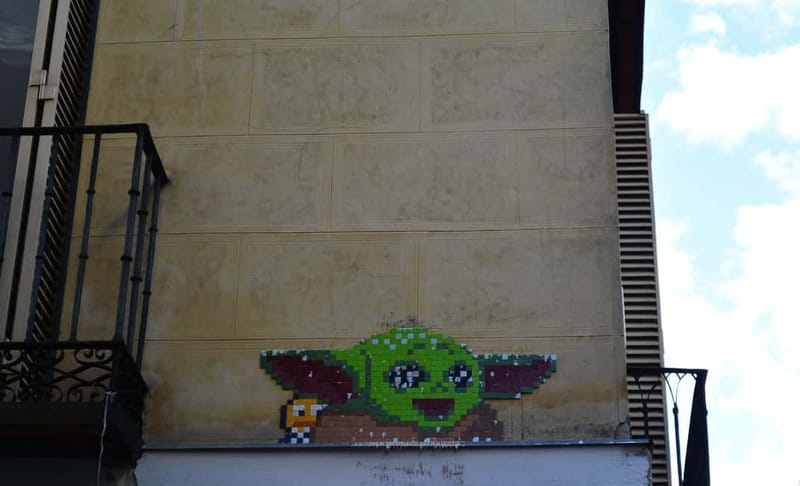
Gran Vía receives about 15 minutes on the route. The nickname Spanish Broadway makes sense because of its theaters, grand façades, shops, and constant city traffic. It is a very different setting from the narrow streets of Malasaña or Lavapiés.
The contrast is part of the pleasure. Gran Vía shows Madrid’s polished, major-city face, while the nearby neighborhoods show smaller-scale creative work. You may photograph the architecture and street scene here, then spend the next part of the tour looking at art tucked into side streets.
Do not expect Gran Vía itself to be the main street-art stop. Its value is as a transition and a landmark. You see one of Madrid’s most recognizable avenues, then move into streets where the art has more room to feel personal and local.
Malasaña and the trace of MUELLE
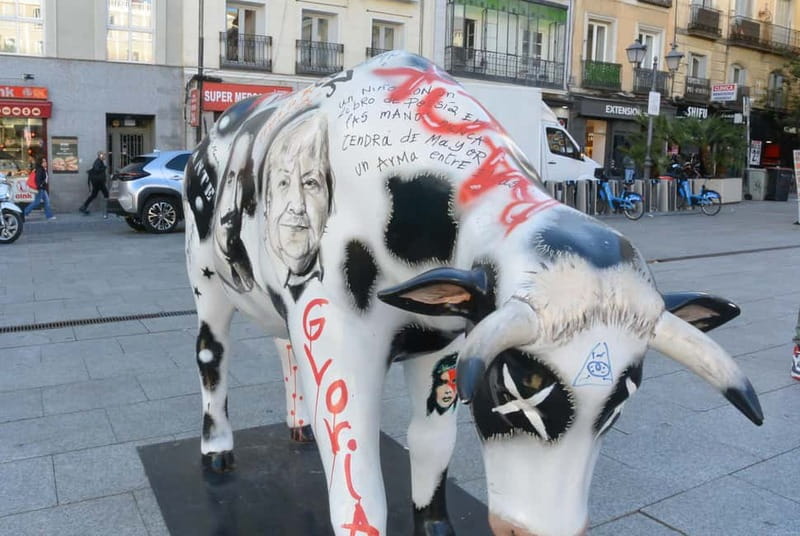
Malasaña gets roughly 30 minutes, making it one of the most important sections of the walk. The neighborhood is known for its independent character, and the route visits some of its iconic streets. This is where the tour’s mix of neighborhood history and contemporary art becomes especially clear.
A special detail is the protected signature of MUELLE, a Madrid artist whose mark became part of the city’s visual memory. A signature may sound modest beside a huge mural, but that is exactly why it is worth seeking. Street art is not only about size. A small sign can carry a local story and show how an artist claimed space.
You will also encounter work connected with national and international artists. The focus is not simply on famous names. The guide points you toward different forms and styles, helping you notice how one artist uses a large painted wall while another works through a sticker, paste-up, or small intervention.
Malasaña is a good section for people who want a neighborhood feel alongside art. It is less useful if you want a slow, detailed analysis of each piece. Thirty minutes passes quickly, and the group needs to keep moving.
Chueca, Fuencarral, and Hortaleza
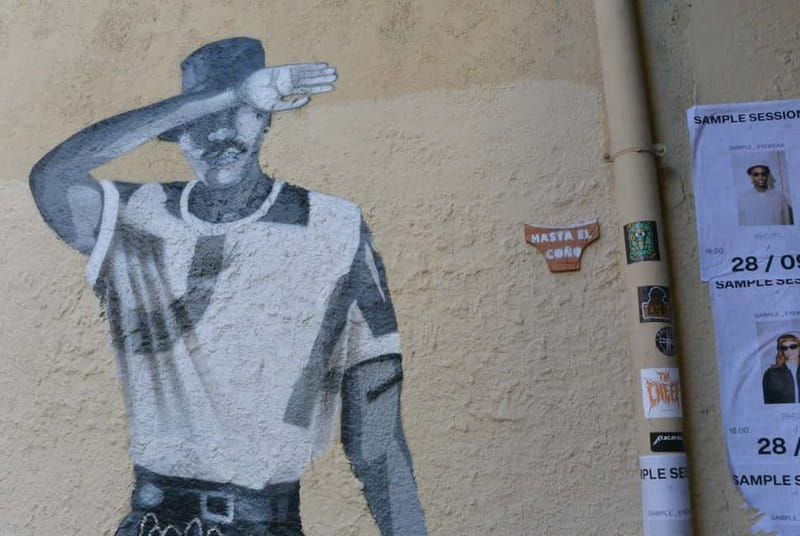
Chueca receives another 30 minutes. The route also includes Fuencarral Street and Hortaleza Street, giving you a close look at the changing colors and textures of central Madrid. Chueca adds its own identity to the tour, with streets that feel different from both Gran Vía and Malasaña.
The route’s strength is variety. You are not shown one official art zone and told that it represents the whole city. Instead, you cross streets with different rhythms and types of buildings. That makes it easier to understand why the same piece of art can feel playful in one place and political, commercial, or disruptive in another.
The listed artists include Okudart, Basket of Nean, El Rey de la Ruina, and Done Street. Names alone will not make the work meaningful, but they give you something to follow after the tour. If a style catches your eye, note the artist’s name and look for more work later.
This portion can also be the most tiring because the tour combines walking with frequent stops. Wear comfortable shoes and clothing. The activity is wheelchair accessible, but the route still takes place on city streets, so anyone with mobility concerns should confirm that the current route suits their needs before booking.
Lavapiés, Madrid’s cultural heart
Lavapiés is described as the cultural heart of the city, and it forms an important part of the tour’s final story. The neighborhood is known for multi-story buildings that retain the character of traditional Madrid. Here, contemporary art sits against older urban fabric rather than replacing it.
That contrast gives Lavapiés more weight than a simple final stop. You see how murals and other public works can become part of a neighborhood’s daily life. The art is not placed in a blank gallery. It shares space with apartment buildings, local businesses, narrow streets, and the routines of the people who live there.
Lavapiés is also where the tour’s range becomes clear. You may see large murals, mosaics, paste-ups, or small pieces by local artists in a relatively short span. A guide can point out details you might otherwise miss, especially when works sit above eye level or blend into a busy façade.
The published schedule lists a final visit in Sol before the walk ends on Calle de la Magdalena. That means the route loops back toward the center rather than finishing deep inside a distant district. One account of the experience also included an artist’s studio at the end, but this should not be treated as guaranteed on every departure. The fixed route information does not promise studio entry.
What the $1.77 price really means
The advertised price is $1.77 per person, but the experience is presented as a free tour. You reserve a place, pay nothing at the start, and decide at the end what the guide’s work was worth. The small listed amount may reflect a booking or promotional price, so read the payment terms shown for your selected date before assuming that $1.77 is the final amount paid to the guide.
The real value depends on how much context you want. If you are content to photograph walls on your own, you can explore Madrid’s streets without paying for a tour. If you want someone to explain graffiti’s origins, identify artists, and connect art with Malasaña, Chueca, Gran Vía, and Lavapiés, the pay-what-you-value model gives you a low-risk way to do that.
I would not treat the free format as a reason to skip a fair tip. The guide provides the structure, research, timing, and local interpretation. Bring enough money to reward the experience if it gives you a better understanding of Madrid.
The current score is 3.5 out of 5 from eight ratings. That is a mixed result, but the written feedback points to a clear pattern: the guides and artwork are the strongest parts, while walking ability can affect your enjoyment. The tour is also described as relaxed in pace, which helps, but relaxed does not mean short.
Who will enjoy this walk most
I would choose this tour if you want to see Madrid beyond the standard monuments. It suits first-time visitors who want an introduction to several central neighborhoods, art fans who like murals and small street pieces, and solo visitors who prefer a shared activity.
It is also a good choice for photographers. You will have repeated photo stops and a mix of large and small subjects. Bring a camera, but keep your eyes open between stops. Some of the most interesting details may be on shutters, walls, or corners rather than in the obvious large mural.
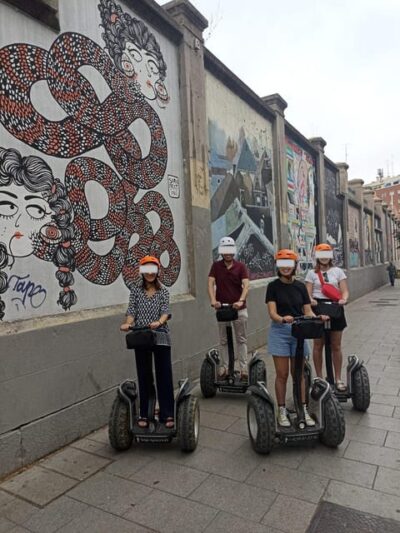
You may want another plan if you avoid walking, prefer a bicycle, or want long periods of quiet viewing. One rating specifically suggested a bike would have been easier for someone who does not walk often. This tour does not include bicycle transport, and no museum entries or indoor attractions are part of the price.
Families and mixed-age groups should think about stamina. The tour lasts two hours, and the itinerary includes several neighborhoods with walking between them. The pace is reported as good and relaxed, but you still need comfortable shoes.
Practical tips for a smoother two hours
Arrive at the door of Way Hostel Madrid a little early. The guide waits there with the group, and a walking tour cannot easily hold up for late arrivals.
Wear shoes you can use on city pavement for two hours. Comfortable clothes are also recommended. Madrid street art is an outdoor experience, and the route does not provide the indoor comfort of a gallery.
Bring a camera or phone with enough battery. The tour includes photo stops at artworks, Gran Vía, neighborhood streets, and other city sights. You will probably want both wide shots of murals and close details of signatures, stickers, and paste-ups.
Keep an open mind about what counts as art. The route includes graffiti, murals, mosaics, paste-ups, and urban sculpture. If you only want monumental paintings, some smaller works may feel less important. If you like seeing how artists use every kind of surface, the variety is a major strength.
Book with the weather and your walking ability in mind. Cancellation is free up to 24 hours before the activity, and you can reserve now and pay later, which helps if your Madrid schedule is still changing.
Should you book the Madrid Street Art Tour?
Book it if you want a friendly, low-cost introduction to Madrid’s independent art scene, with enough city sightseeing to place the work in context. The strongest reasons are the neighborhood range, the focus on local and international artists, the MUELLE detail, and the chance to see Lavapiés, Malasaña, and Chueca in one walk.
Skip it if you need a short route, a private guide, or guaranteed entry to an artist studio or museum. The tour covers plenty of ground, and the final amount depends on the value you choose to give. For most people who can comfortably walk for two hours, it is a sensible first look at the Madrid you do not see from the main squares alone.
FAQ
Where does the Madrid Street Art Tour start?
The meeting point is at the door of Way Hostel Madrid. The guide waits there with the rest of the group.
How long does the tour last?
The walking tour lasts two hours.
What language is the tour in?
The tour is conducted in English by a live guide.
Which Madrid neighborhoods does the route visit?
The route includes Malasaña, Chueca, Gran Vía, Lavapiés, and Sol. It also includes Fuencarral Street and Hortaleza Street.
Is the tour free?
It uses a pay-what-you-value format. You reserve your place, pay nothing today, and can give the guide whatever amount you think the experience was worth at the end. The listed price is $1.77 per person.
Are museum or attraction tickets included?
No. Entry to attractions and museums is not included.
What should I bring?
Bring comfortable shoes, comfortable clothes, and a camera. The experience involves walking outdoors and includes several photo stops.
Just added around Spain
- Small-Group Graffiti Tour and Workshop in El Carmen★ 5.0 · 2 reviews
- Madrid Hidden Street Art Tour★ 5.0 · 12 reviews
- Bilbao Urban and Street Art Walking Tour★ 5.0 · 2 reviews
- Barcelona Street Art, Graffiti and Tapas Tour★ 4.0 · 5 reviews
- Moco Museum Barcelona: Banksy Small-Group Tour with Skip-the-Line★ 5.0 · 5 reviews
- Small-Group Moco Museum Barcelona: Banksy & Modern Art Tour★ 4.8 · 16 reviews
- Salamanca: Private Guided Street Art Walking Tour★ 5.0 · 2 reviews
- Private Barcelona Street Art Tour★ 5.0 · 2 reviews
Madrid Street Art Tours, compared.
Browse the lists this tour appears in