REVIEW · MEXICO CITY
Mexico City: History on Walls. Mexican Murals Walking Tour
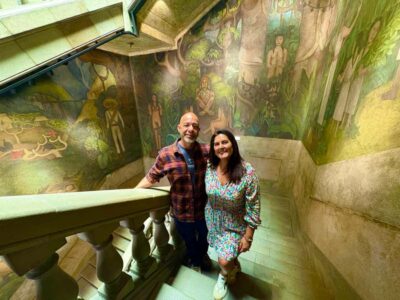
Mexico City’s murals are not just decoration. They are public arguments about revolution, labor, class, Mesoamerican culture, and the pain of war. This four-hour walk begins at Bellas Artes, then moves through several settings where art was meant to teach ordinary people, not simply fill a private gallery.
I like two things in particular: the tour links famous artists to the political ideas behind their work, and it includes a rooftop coffee stop with a view over the Historic District. The main consideration is the $218 price, which is high for a walking tour, so you should care deeply about Mexican muralism before booking.
Key points to know
- Rivera, Siqueiros, and Orozco at Bellas Artes: See major works by Mexico’s three best-known muralists in one important cultural setting.
- Murals made for public education: A market and other public buildings show how art reached people outside traditional museums.
- A wartime mural about the Holocaust: A former colonial palace provides a striking setting for a work shaped by grief and global conflict.
- Your choice of a Rivera or Orozco focus: The final part may examine Rivera’s scenes of work and celebration or Orozco’s criticism of Mexican social classes.
- Small group, academic guide: The group is limited to 10, with a guide who holds a graduate degree in art history, history, or architecture.
- Four hours on foot: Wear good shoes, bring sun protection, and remember that the tour runs rain or shine.
Why Mexican murals need more than a quick look
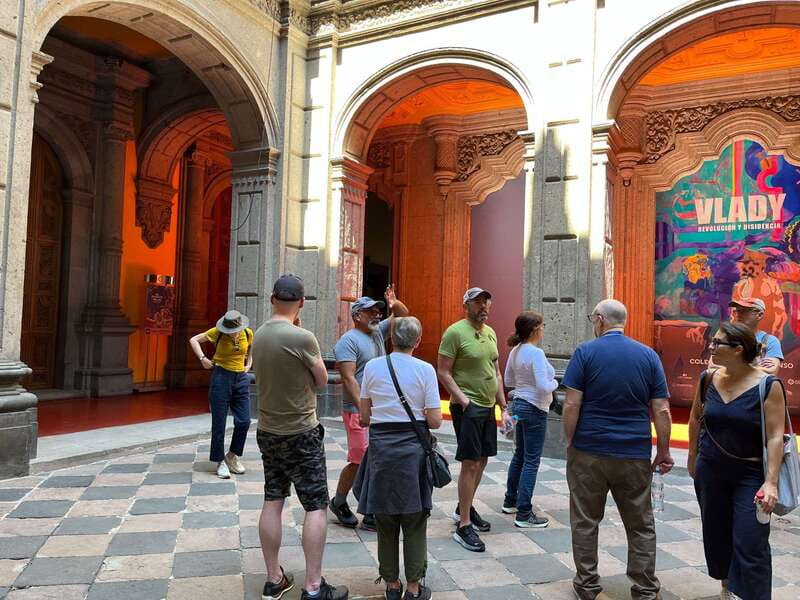
Mexico’s mural project grew in the 1920s, after the Revolution, when the country was trying to define a new public identity. Murals could reach people who did not visit museums or read political essays. They were placed in government buildings, schools, markets, and other public spaces.
That setting matters. You are not only looking at technique or color. You are asking who the artist wanted to educate, who was shown as powerful, and which parts of Mexico’s past were being reclaimed.
The tour focuses on the early 1920s and 1930s, when mural painting became closely tied to national education and political thought. You’ll look at Mesoamerican culture, workers, social classes, festivals, and the effects of war through the eyes of Mexican and foreign artists.
I find this approach more useful than a simple greatest-hits tour. It gives you a way to read the images. Without context, a huge mural can become a wall of busy figures. With context, the people, symbols, and conflicts begin to make sense.
More Mural Tours in Mexico
- CDMX: Xochimilco, Coyoacan, Frida Kahlo Museum & Murals Tour
★ 4.4 · 3,025 reviews - Cancun Street Food Tour with Food Stalls, Local Market and Murals
★ 5.0 · 723 reviews - Mexico City; ART NACO : Murals & Street Art Bike Tour
★ 5.0 · 284 reviews
Starting at Bellas Artes with Mexico’s great three
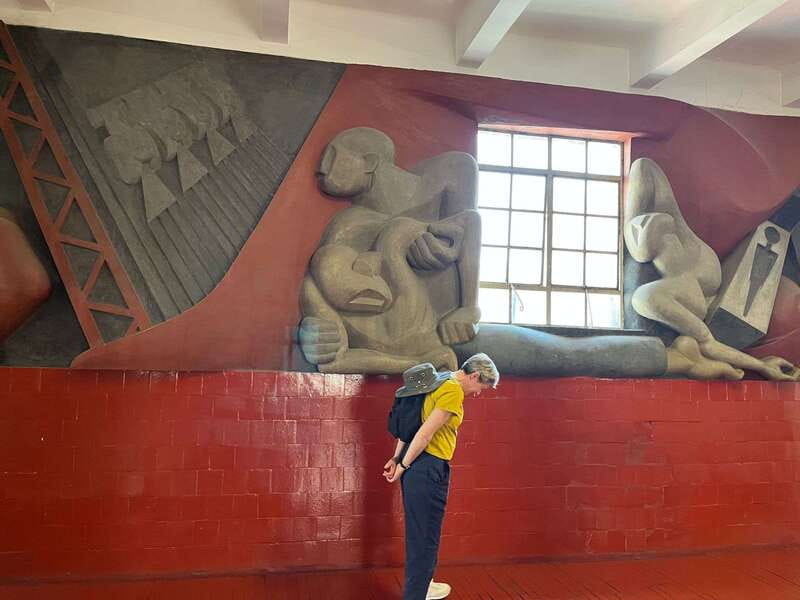
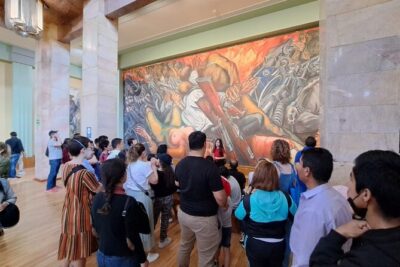
Meet your guide outside the main entrance of the Fine Arts Palace, known as Bellas Artes. This is the natural starting point for a mural tour because the building holds works by Diego Rivera, David Alfaro Siqueiros, and José Clemente Orozco, the three central names in Mexican muralism.
The Bellas Artes portion introduces the different artistic and political voices of these painters. Rivera often turned national identity, labor, and history into broad public scenes. Siqueiros brought forceful movement and political urgency. Orozco was more skeptical and often harsher in his treatment of power and social division.
You’ll also learn about artists beyond that famous trio, including Rufino Tamayo, González Camarena, and Rodríguez Lozano. That wider view is important. Mexican muralism was not the work of three men alone, and these additional artists help show the range of ideas and styles active in the period.
Museum admission is included, so you do not need to arrange a separate ticket for this part. You should still allow a little patience at the start, since the guide needs to gather the group and introduce the day before the walk gets going.
A former colonial palace and the grief of war
One unusual stop places a mural about the Holocaust inside a former colonial palace. The contrast is worth thinking about. A building tied to Mexico’s colonial past becomes the setting for a work about the Second World War and the suffering of European Jews.
This stop broadens the tour beyond Mexican nationalism. The murals are not only about the Revolution or Mesoamerican civilization. They also show how Mexican artists responded to events far beyond Mexico’s borders.
Expect a serious pause here rather than a light sightseeing moment. The subject is grief, and the setting adds another layer of history. If you want only colorful public art and famous names, this part may feel heavy. If you want to understand how mural painting could address international events and moral questions, it is one of the more meaningful stops.
Your guide’s academic background should be particularly useful here. The experience includes a guide with a graduate degree in art history, history, or architecture, but no individual guide names are provided in the tour details. You can expect live commentary in English or Spanish.
A rooftop coffee break with the Historic District below
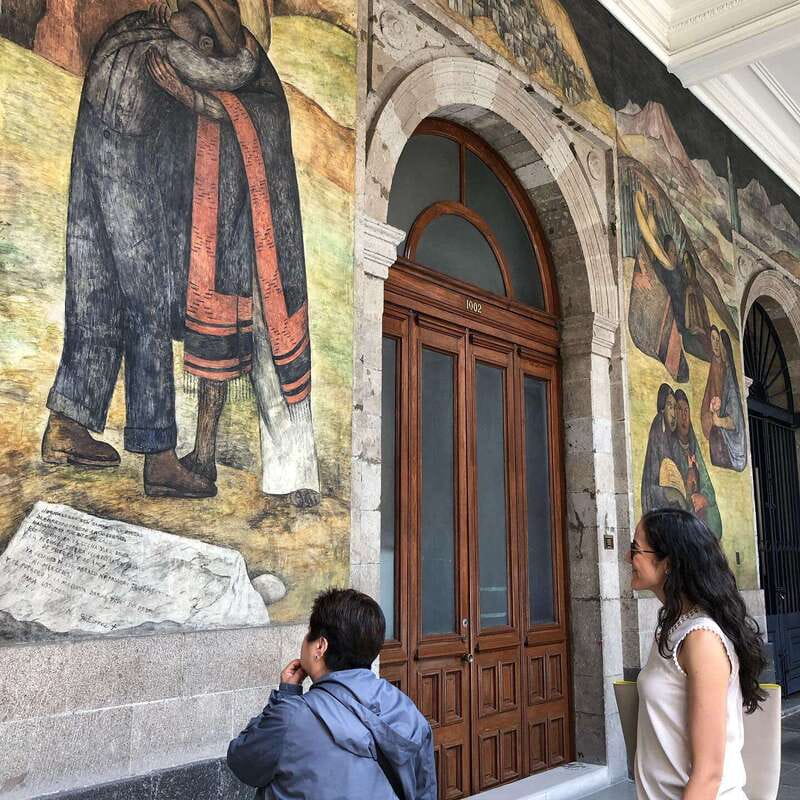
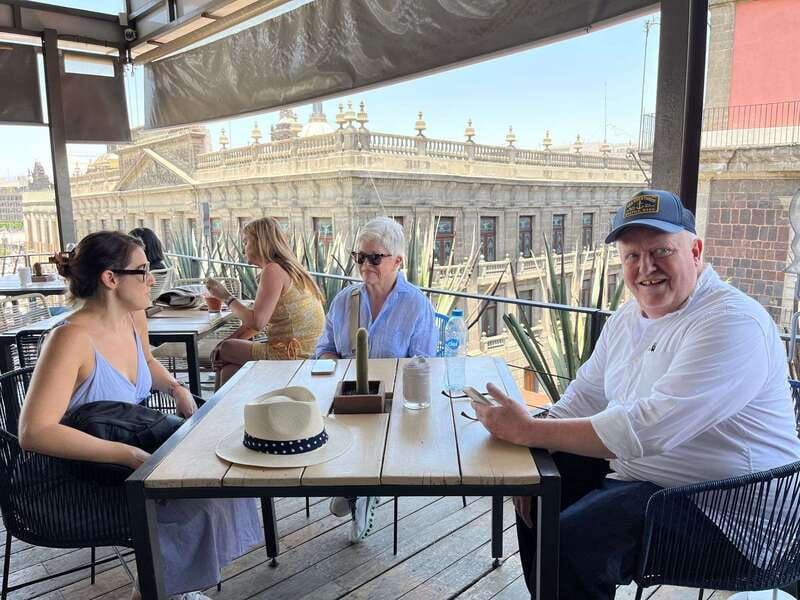
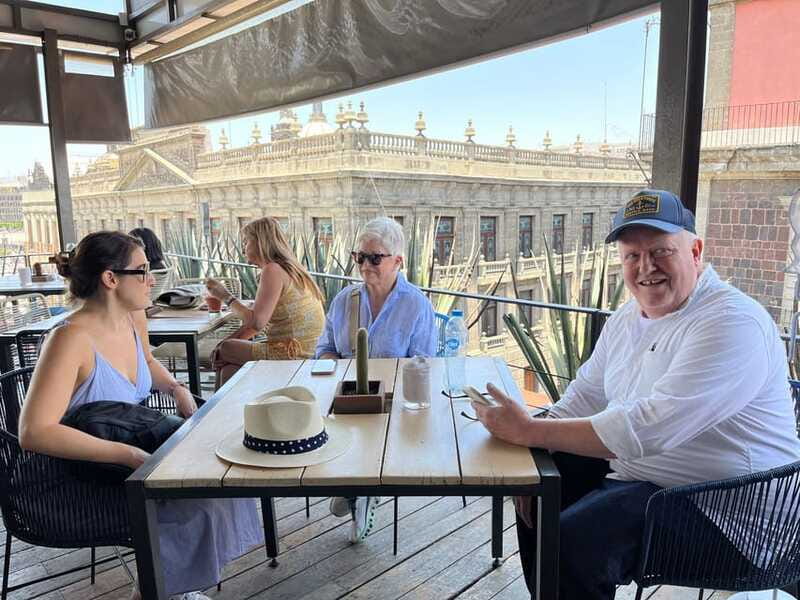
Four hours of walking through central Mexico City can be tiring, especially under strong sun. The planned coffee break gives you time to sit down, drink something, and look across the Historic District from a rooftop.
Food and drinks are not included, so you pay for your own coffee. That is a small extra cost, but the pause has practical value. It breaks the day into manageable sections and gives you time to absorb what you have seen.
The rooftop view also changes the way you experience the city. Instead of looking at each mural as an isolated work, you can consider the public spaces around them and the dense historic center they help define. The stop is not presented as a formal lecture or tasting. Think of it as a useful rest with a good view.
Bring water as well as sunscreen. A coffee break is not a substitute for staying hydrated, especially on a warm day.
More Mural Tours in Mexico City
- Walking Tour – Impressive murals in Historical Center of Mexico City
★ 5.0 · 224 reviews - Mexico City: Art Naco, murals & street art bike tour
★ 4.7 · 166 reviews - Xochimilco floating gardens, Coyoacan and UNAM murals
★ 4.0 · 53 reviews - Mexico City: Diego Rivera’s Murals Guided Walking Tour
★ 5.0 · 49 reviews
Murals inside a market, made for ordinary people
The market stop shows how the mural project moved into everyday public life. During the 1930s, murals by Mexican and foreign artists were placed inside a market as part of an effort to bring culture and education to the wider population.
This is one of the tour’s strongest ideas. You are not seeing art separated from daily life. You are seeing it in a setting connected to shopping, work, and the routine movement of local people.
The market murals help explain why public location was so important. A painting in a market could reach people who might never enter an art museum. It could present a lesson about national identity, history, labor, or social values while people went about their day.
The setting may also feel less controlled than a museum. Markets can be active places, and the guide may need to manage the group carefully while explaining the art. That is part of the point, but it means you should not expect a silent gallery atmosphere.
Rivera’s Mexico of work and celebration
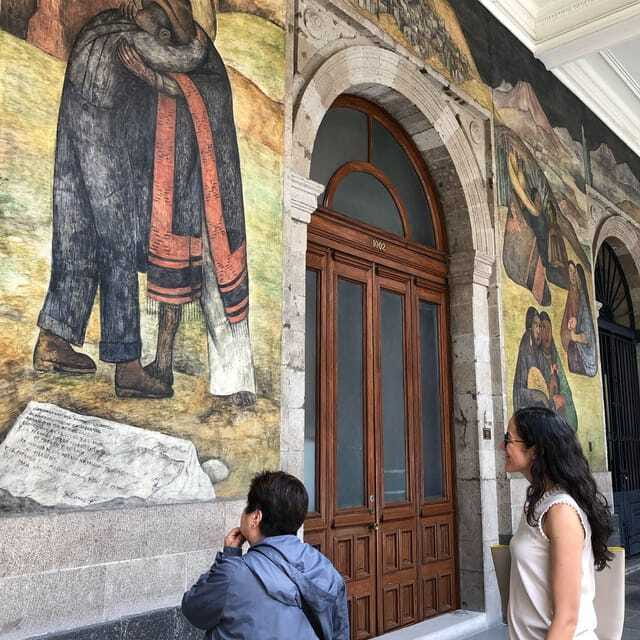
The final section may take you to some of Diego Rivera’s most striking murals, showing labor and festivities from different parts of Mexico. These works help explain Rivera’s role in creating a broad picture of national life.
Look for the range of occupations and celebrations presented across the scenes. The appeal is not simply that the murals are large or famous. Rivera tried to show Mexico as a country made by workers, communities, customs, and regional traditions.
This section suits you if you enjoy murals packed with people and activity. There is a lot to examine, and a guide can help you avoid treating the work as one giant scene. Ask yourself how different kinds of work are valued, how local traditions become national symbols, and which groups receive the most attention.
The itinerary describes this as an alternative to the Orozco portion, so the exact final focus may depend on the route available on your date. Confirm the planned final stop when you book if Rivera is your main reason for joining.
Orozco’s criticism inside a former high school
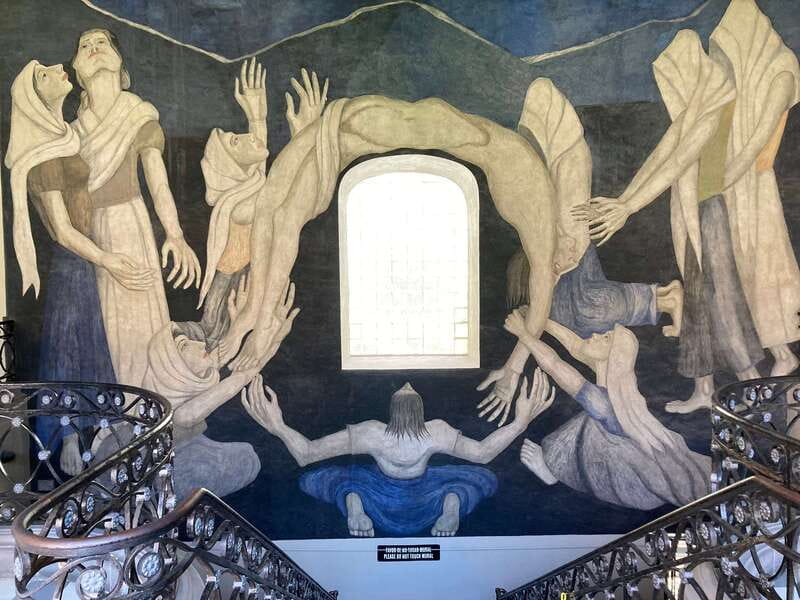
The alternative final focus returns to post-Revolutionary Mexico through a former high school where Orozco created murals criticizing the country’s social classes in the 1920s.
This is a different mood from Rivera’s scenes of national work and celebration. Orozco’s approach is more critical. The former school is not a random backdrop. It connects the murals to education and to the question of what young people should learn about their society.
For you, the value is seeing muralism as an argument rather than a patriotic picture book. Orozco’s work can challenge the very social divisions that public art was supposed to expose.
Choose this emphasis if you prefer political criticism, social class, and post-Revolutionary debate. Choose the Rivera focus if you are more interested in regional life, occupations, and festivals. Since the description presents these as an either-or option, do not assume you will receive both full visits during the four-hour walk.
Is $218 a fair price?
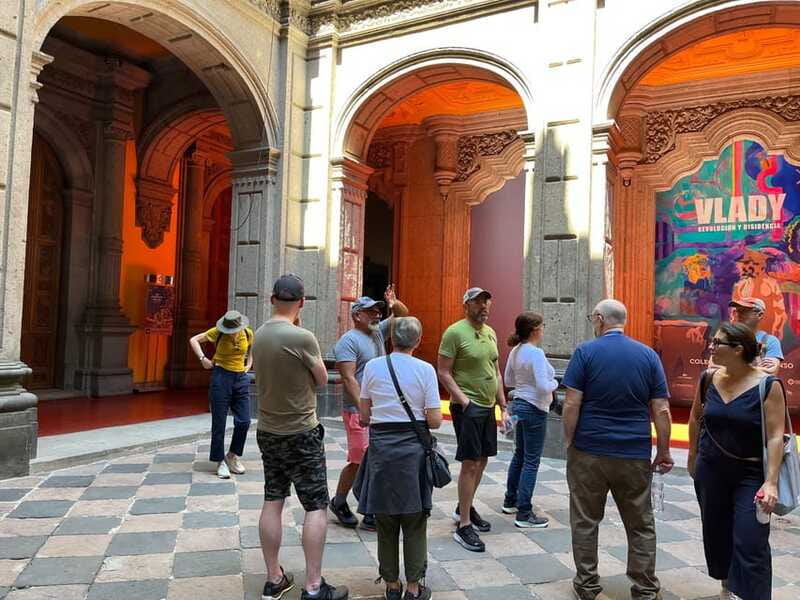
At $218 per person, this is not a bargain city walk. The price can make sense if you want a focused art-history lesson, museum entry, a small group, and a guide with advanced academic training.
The group limit of 10 is a real advantage. A small group makes it easier to hear explanations, ask questions, and stay together in crowded central areas. For larger groups, headsets are provided so you can hear the guide, but the small-group format may mean you do not need them for most of the walk.
The value depends on your interests. If murals are a main reason you came to Mexico City, the tour brings together several important themes and artists in one half-day. If you only want to see a few famous paintings and take photographs, $218 is harder to justify. You could spend less visiting sites independently, but you would have to supply the historical connections yourself.
The price does not include hotel pickup, transportation, food, or drinks. You meet at Bellas Artes and should plan your own way to the starting point. That central meeting location is convenient for visitors already exploring the Historic District, but less useful if you are staying far from the center and expected door-to-door service.
What to wear and how demanding the walk is
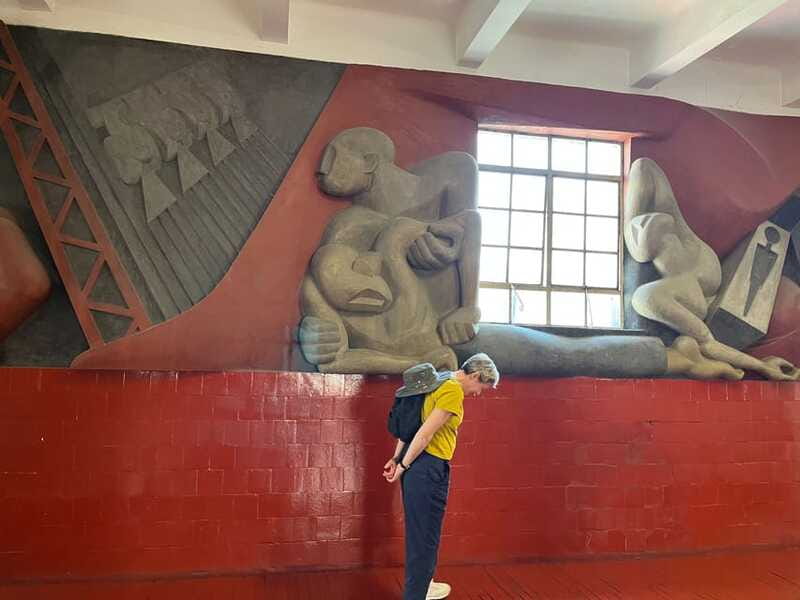
Wear comfortable shoes. This is a four-hour walking experience, and the itinerary includes outdoor movement between cultural sites. Bring a hat and sunscreen, since the tour takes place rain or shine.
The activity is not suitable for people with mobility impairments. The supplied information does not give a step-by-step accessibility assessment, so you should ask the operator for more detail if stairs, uneven surfaces, standing, or extended walking could be a problem.
The pace should be manageable for someone used to city walking, but the combination of museums, markets, streets, and a rooftop stop means you should not treat it as a seated lecture. Bring water and keep your schedule free enough that you do not need to rush away at the end.
Who should book this mural walk?
I would choose this tour if you want to understand why Mexican murals were made, where they were placed, and what they were trying to say. It is especially well suited to you if you enjoy art, politics, education, architecture, or modern Mexican history.
It is also a good choice for a first visit to Mexico City if you want a strong introduction to the Historic District through public art. The tour connects Bellas Artes with less conventional settings, including a market and a former school.
I would skip it if you dislike long explanations, prefer to explore at your own pace, or mainly want food and neighborhood scenery. The focus is interpretation. You will spend time looking closely and discussing ideas, not simply moving from one photo stop to the next.
The language choice is English or Spanish. Free cancellation is available up to 24 hours before the tour, and you can reserve now and pay later, which helps if your schedule is still changing.
Should you book it?
Book this tour if the story behind the mural matters as much to you as the mural itself. Bellas Artes, the market paintings, the wartime work, and the Rivera or Orozco focus create a thoughtful four-hour look at how Mexico used public art to teach, criticize, and define itself.
At $218, it is best treated as a specialist tour rather than a general sightseeing walk. You are paying for an academic guide, museum tickets, a small group, and a clear connection between art and Mexican history. If that sounds like your kind of half-day, it should be worth the cost. If you only want quick views and plenty of free time, choose a less formal outing.
FAQ
Where does the tour meet?
Your guide will wait in front of the main entrance of the Bellas Artes Palace.
How long does the tour last?
The walking tour lasts four hours.
What languages are available?
The live tour is offered in English and Spanish.
How large is the group?
The tour is limited to 10 participants.
Are museum tickets included?
Yes. Museum tickets are included in the tour price.
Is food or coffee included?
No. Food and drinks are not included. The itinerary includes a coffee break at a rooftop location, but you pay for your own drink.
Does the tour include hotel pickup?
No. Hotel pickup and drop-off are not included.
What should I bring?
Bring comfortable shoes, a hat, and sunscreen. You may also want water for the walking route.
Can I cancel the booking?
Yes. You can cancel up to 24 hours in advance for a full refund. You can also reserve now and pay later.
More Street Art Walking Tours in Mexico City
- Mexico City: The Murals of Mexico Semiprivate Walking Tour
★ 5.0 · 2 reviews
More Street Art Walking Tours in Mexico
- History and Murals: Walking Tour Guadalajara
★ 5.0 · 237 reviews - Guided Walking Tour Describing UNAM Murals and Revolution
★ 5.0 · 8 reviews - Street Art Walk
★ 4.5 · 7 reviews - Mexico City: Historic Center Walking Tour with Murals
★ 5.0 · 6 reviews
Just added around Mexico
- Xochimilco floating gardens, Coyoacan and UNAM murals★ 4.0 · 6 reviews
- UNAM: Murals & Revolution★ 4.9 · 8 reviews
- Street Art & Cemetery Cultural Tour – half day★ 5.0 · 3 reviews
- Graffitis & Munchies biketour Playa del Carmen★ 4.5 · 18 reviews
- Street Art Walk★ 4.5 · 7 reviews
- Diego Rivera’s murals, hidden treasures★ 5.0 · 21 reviews
- Private Street Food & Mural Art Tour in Mexico City★ 3.5 · 3 reviews
- Explore Modern Art & Murals in Mexico City’s Best Museums★ 5.0 · 2 reviews
Mexico City Street Art Tours, compared.
Xochimilco, Coyoacan, Frida Kahlo Museum & Murals Tour
Read our review →
Mexico City; ART NACO : Murals & Street Art Bike Tour
Read our review →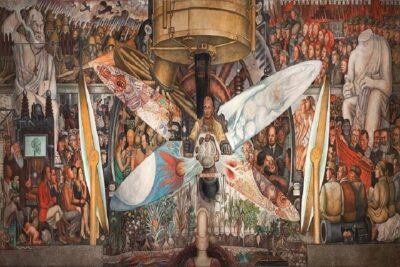
Walking Tour – Impressive murals in Historical Center of Mexico City
Read our review →
Iztapalapa: Cable Car Tour and Urban Art From the Heights
Read our review →
Xochimilco floating gardens, Coyoacan and UNAM murals
Read our review →