REVIEW · MEXICO CITY
Mexico City: The Murals of Mexico Semiprivate Walking Tour
Mexico’s mural movement turned public walls into lessons in history, politics, identity, and daily life. This three-hour walking tour brings that story into focus at San Ildefonso, the Education Secretariat, and the Palace of Fine Arts, where your guide explains how artists shaped modern Mexican culture after the Revolution. I especially like the small group, limited to eight, and the practical goal of learning to identify each artist’s style. The main consideration is that you will be on your feet for most of the tour, and photography permits inside the museums cost extra.
I also like the modest 1.5-kilometer route. You get several major mural sites without committing to an all-day art program, and the $52 price includes admission to all three museums. Orosco was singled out as a discovery in one verified booking note, which makes this tour especially appealing if you know Diego Rivera’s name but want a clearer introduction to other muralists.
Key points about this mural walk
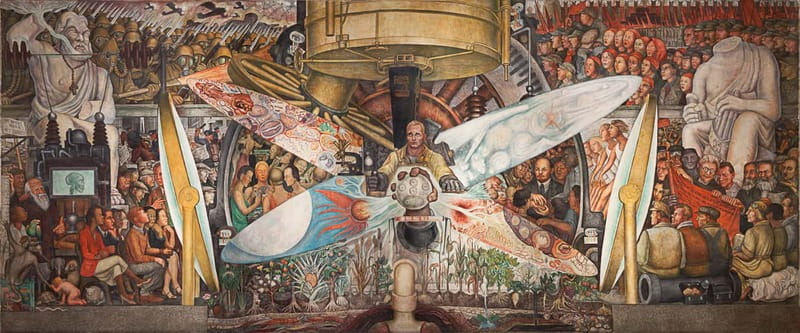
- Three important art stops: Visit Antiguo Colegio de San Ildefonso, the Secretariat of Public Education, and Museo del Palacio de Bellas Artes.
- A lesson in recognition: Learn how different artists used distinct techniques, subjects, and visual messages.
- Small-group format: The group is limited to eight people, giving you a better chance to ask questions.
- A short urban route: You walk about 1.5 kilometers, or roughly one mile, over three hours.
- English-speaking specialist: A professional guide explains the mural movement and its place in 20th-century Mexico.
- Good value for museum lovers: Entrance tickets are included, but photography permits are not.
Why Mexican murals matter beyond decoration
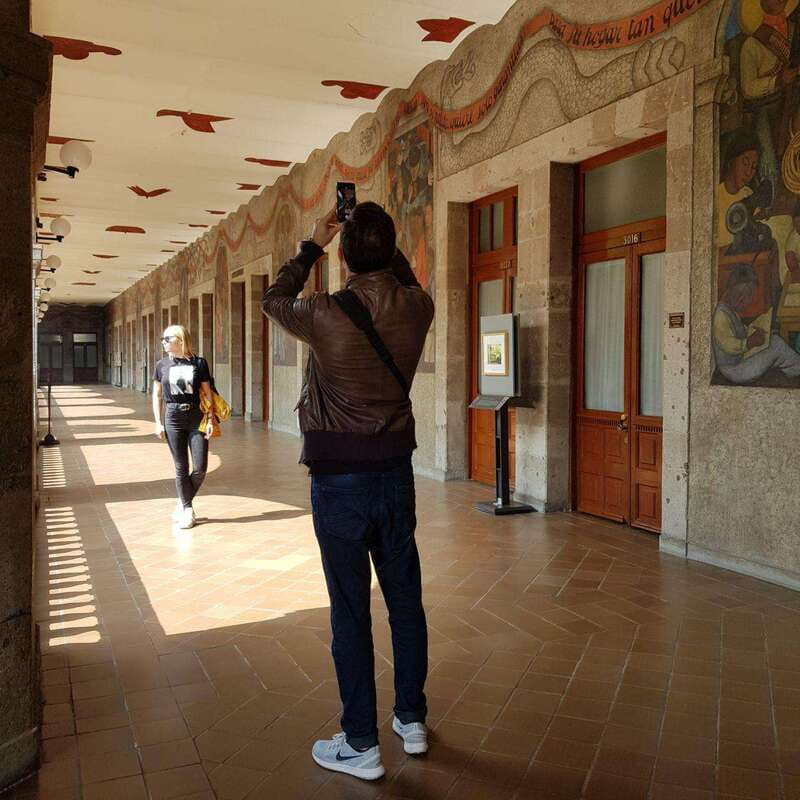
The murals you see here were part of a public project. After the Mexican Revolution, artists began using large walls to speak to ordinary people about culture, politics, work, education, progress, and national identity.
That matters when you visit. You are not simply looking at colorful pictures in old buildings. You are seeing art designed to communicate in public, often to people who did not visit galleries or own books about art. The walls became a kind of open classroom.
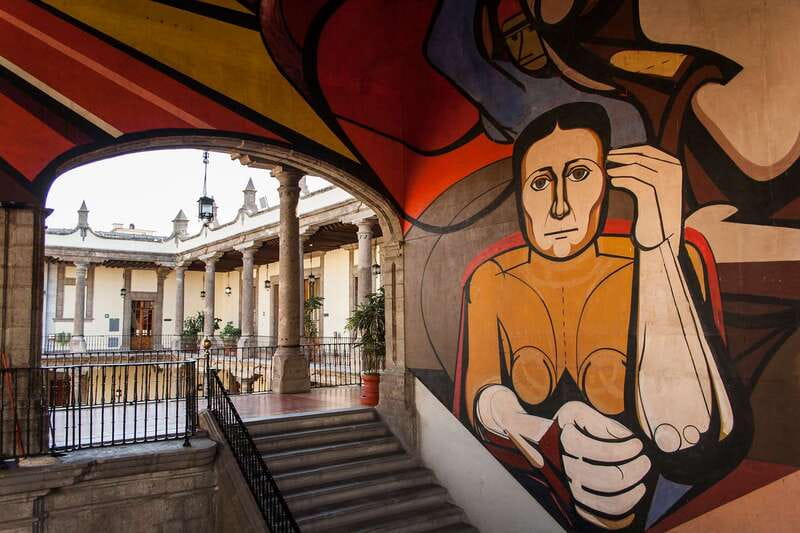
The tour also gives you a useful way to read the paintings. Instead of hearing a list of dates and names, you learn to connect an artist’s technique with his message. Siqueiros wanted art to speak clearly, without forcing people to guess at the meaning. That direct style is a helpful idea to carry with you as you examine the murals.
I like this approach because it makes the art less intimidating. You do not need a background in Mexican painting. You need curiosity, comfortable shoes, and a willingness to look closely at how a wall communicates.
More Mural Tours in Mexico
- CDMX: Xochimilco, Coyoacan, Frida Kahlo Museum & Murals Tour
★ 4.4 · 3,025 reviews - Cancun Street Food Tour with Food Stalls, Local Market and Murals
★ 5.0 · 723 reviews - Mexico City; ART NACO : Murals & Street Art Bike Tour
★ 5.0 · 284 reviews
Starting at Santo Domingo Square
The meeting point is on the corner of Santo Domingo Square and República de Cuba Street, outside Domingo Santo Hotel Boutique. This gives you a precise place to begin, which is useful in a busy central district where a vague street address could waste time.
You should arrive ready to walk and avoid carrying anything that makes museum visits awkward. The tour takes place rain or shine, so check the weather before leaving and bring suitable protection if rain is possible. Comfortable shoes are specifically recommended, even though the total walking distance is not extreme.
The small-group size is one of the strongest features here. With no more than eight participants, the guide can point out details without shouting across a large crowd. You can also ask why a particular artist used a certain technique or how a mural connects with the period in which it was painted.
The route is described as wheelchair accessible. Still, it includes three museum visits and an outdoor walk, so anyone with specific mobility needs should confirm current access arrangements when booking.
Antiguo Colegio de San Ildefonso and the early mural movement
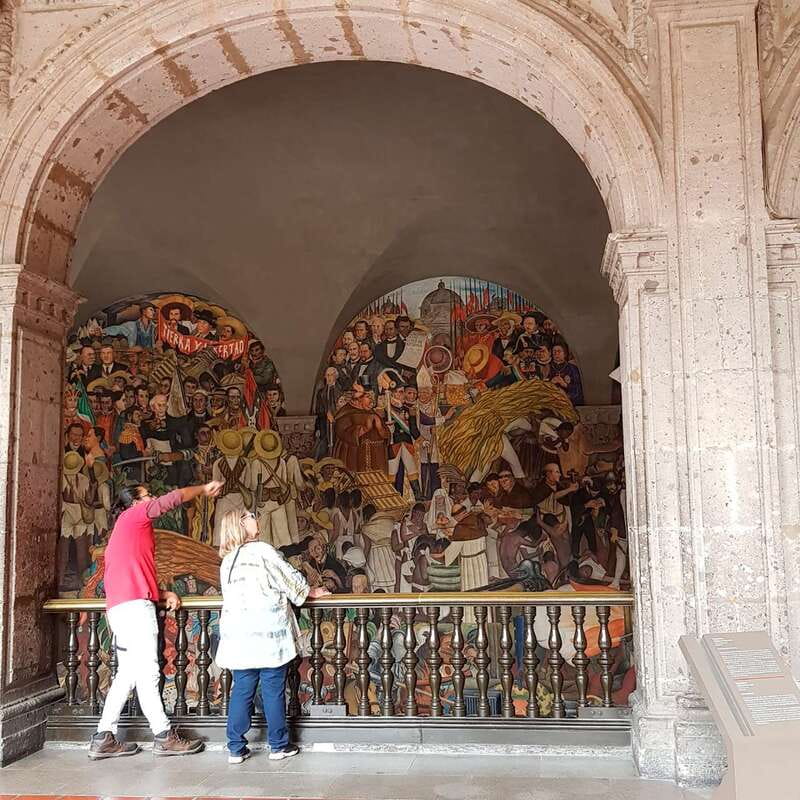
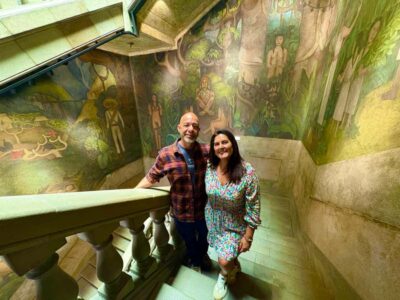
The first museum included is the Antiguo Colegio de San Ildefonso. Its inclusion gives the tour a strong starting point because the building is tied to the early development of mural art in Mexico.
Here, your guide sets up the central story: artists needed large public surfaces, and Mexico’s institutions offered walls where national ideas could be presented to a broad audience. The building helps you understand why muralism grew through public projects rather than remaining limited to private studios.
Expect the guide to focus on how the movement developed after the Revolution and how artists opened the door for new forms of Mexican cultural expression. You will likely spend time looking at the relationship between the building and the murals, not just at individual images.
This is also where the tour’s promise to help you identify artists becomes useful. You may begin noticing differences in line, scale, movement, and the way figures are arranged. The guide’s job is not only to name the painter. It is to give you visual clues you can use later in another museum or public building.
The possible drawback is pace. Three hours is enough for an introduction, but not enough to inspect every mural in detail. If you want to linger over each work, you may need to accept that the group will move on.
The Secretariat of Public Education and art for ordinary people
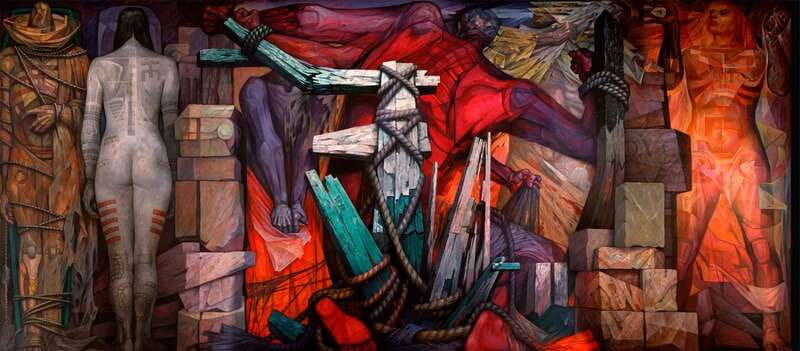
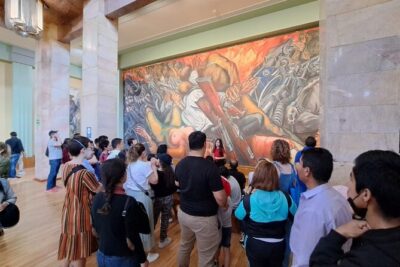
The Building of the Secretariat of Public Education is another key stop. Its role connects directly with one of the mural movement’s major aims: making art available to everyone.
This stop should help you see how mural painting worked in an active public setting. The art was not placed only in a quiet gallery for people already interested in painting. It was put where daily life, government, education, and public messages met.
That setting gives the murals a practical force. Themes such as labor, politics, cultural identity, and social progress could be encountered by people going about ordinary business. Your guide explains how those subjects reflect the concerns of the early 20th century and why the murals helped define Mexico’s public identity.
This is likely the part of the tour where the movement feels most connected to civic life. You can compare the idea of art as decoration with the stronger idea of art as communication. The walls were meant to teach, persuade, and make people think.
The tour description places special emphasis on distinguishing the techniques used by different artists. Pay attention to whether the guide discusses composition, color, scale, or the way figures carry the story. These observations help you move beyond simply asking if you like a mural.
Photography rules are worth noting here and at the other museums. A photography permit is not included in the tour price and can be purchased at the box office. If taking pictures matters to you, budget for that separately and ask the guide or museum staff about the current rules before raising your camera.
More Mural Tours in Mexico City
- Walking Tour – Impressive murals in Historical Center of Mexico City
★ 5.0 · 224 reviews - Mexico City: Art Naco, murals & street art bike tour
★ 4.7 · 166 reviews - Xochimilco floating gardens, Coyoacan and UNAM murals
★ 4.0 · 53 reviews - Mexico City: Diego Rivera’s Murals Guided Walking Tour
★ 5.0 · 49 reviews
Museo del Palacio de Bellas Artes and the best-known names
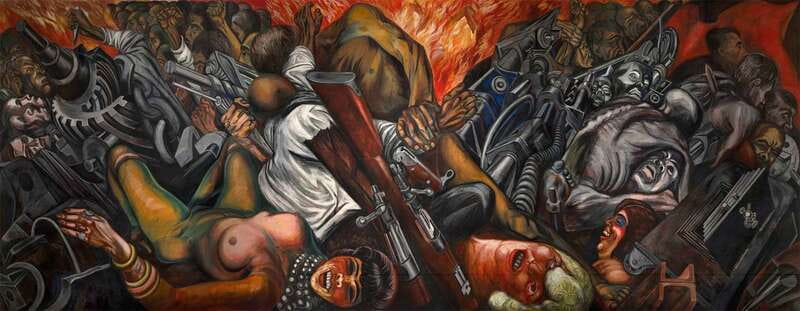
The final included museum is Museo del Palacio de Bellas Artes, one of Mexico City’s most important places for major Mexican art. The tour uses this stop to widen the story and place the mural movement in a larger artistic setting.
You will learn to recognize the work of several artists rather than treating Mexican muralism as the work of one famous name. Diego Rivera may be the painter most people know before arriving, but the tour also makes room for artists such as José Clemente Orozco and David Alfaro Siqueiros.
The note that Orosco was a discovery is particularly useful if you are booking this experience because you want more than the standard introduction. Orozco’s work gives you another way to think about the movement, especially its forceful treatment of history and public life. The available information does not identify Orosco as the guide, so do not assume that name refers to your tour leader. It refers to the artist singled out in the booking note.
At Bellas Artes, the setting also lets you compare murals with a formal museum environment. The same art form can feel different when viewed in a grand cultural building rather than along a public corridor. That contrast adds value to the tour because you are not seeing the paintings in isolation.
You should expect the guide to explain what makes one artist recognizable when you encounter his work elsewhere. This is the most lasting skill offered by the tour. Afterward, you may not remember every date, but you should have a better eye for the broad differences in technique and artistic voice.
What the three-hour format really gives you
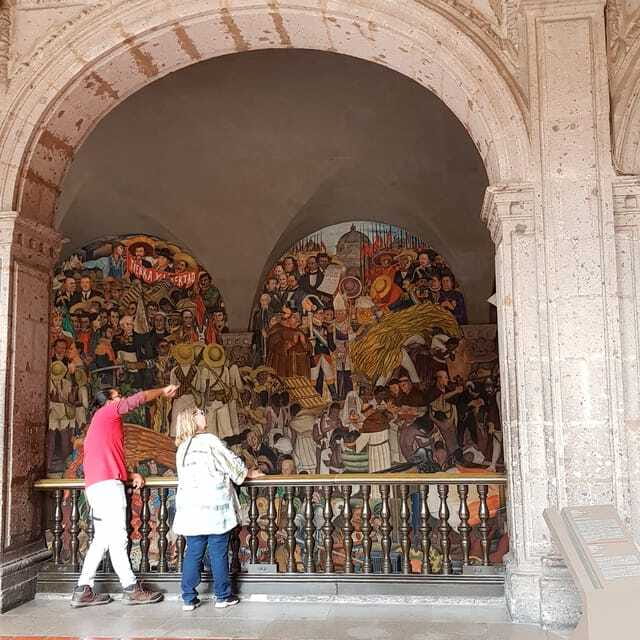
Three hours sounds long for a one-mile walk, but the distance includes museum visits and time spent looking at art. The route is not designed as a fast city walk. Much of the time is devoted to explanation and observation.
I see that as a fair balance. A shorter tour might give you a quick list of famous murals without enough context. A much longer program could become tiring, especially if you are also visiting other museums in Mexico City.
The small group improves the use of time. A guide can answer individual questions, adjust explanations, and point out details that a large group might miss. You still need to stay with the group, since museum stops have their own opening hours and access rules, but the eight-person limit should make the walk feel more manageable.
The main practical issue is that the exact starting time varies. You need to check availability for the date you want. Since the tour runs rain or shine, plan your clothing with the outdoor portion in mind.
Is $52 a fair price?
At $52 per person, the tour is not the cheapest way to see murals in Mexico City. You are paying for more than entry to three museums, though. The price includes a professional English-speaking guide, admission to Antiguo Colegio de San Ildefonso, the Secretariat of Public Education, and Museo del Palacio de Bellas Artes, plus the structure of a focused route.
That is reasonable value if you want help making sense of what you see. Museum admission alone does not tell you how the mural movement changed after the Revolution or how to distinguish one artist from another. A specialist guide can turn three separate visits into one connected lesson.
The value is weaker if you prefer to move at your own speed, take many photographs, or read wall text independently. Photography permits are extra, and a three-hour group tour will not let you linger indefinitely at one mural.
The reserve-now-and-pay-later option is useful if your Mexico City schedule is still changing. You can hold a place without paying immediately, and cancellation is free up to 24 hours before the tour for a full refund.
Who will enjoy this experience most?
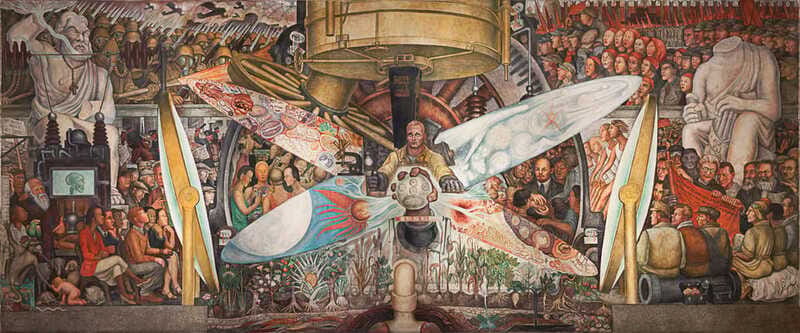
This tour suits you if you want cultural context without spending a full day in museums. It is a good fit for first-time visitors who know little about Mexican muralism, as well as art-minded visitors who want a clearer way to tell Orozco, Siqueiros, Rivera, and other artists apart.
It also works well for people who prefer a small group to a large guided crowd. The eight-person limit gives the experience a more personal scale, especially when you have a specific question about an image or technique.
You may want to choose another format if your priority is photography. The required permits add cost, and you will need to follow museum rules. You should also think twice if you want a fully flexible schedule, since the route has three set museum visits.
The tour is wheelchair accessible, but it is not suitable for people with visual impairments. That limitation is important because the experience depends heavily on looking closely at painted details and comparing visual styles.
My verdict: book it for the way it teaches you to look
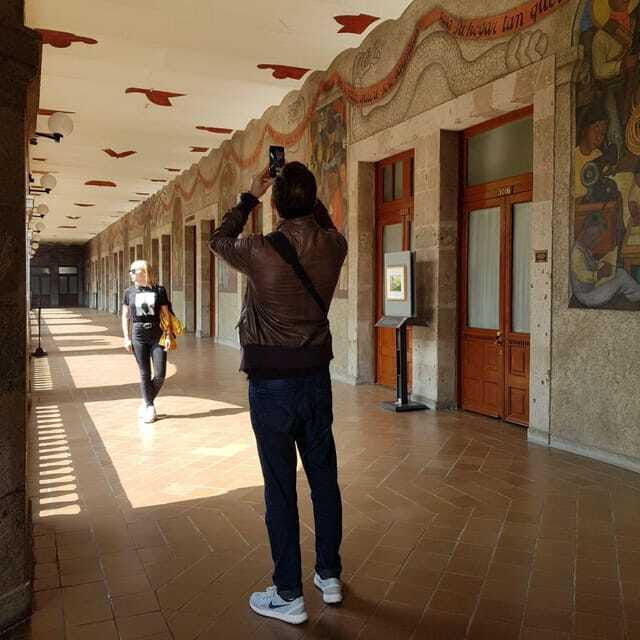
I would book this tour if you want Mexican history explained through public art rather than presented as a string of dates. The strongest feature is not simply visiting three respected museums. It is learning a visual method you can use after the tour, whenever you encounter a mural elsewhere in Mexico City.
The small group, included admissions, short walking distance, and English-language guide make the $52 price sensible for many people. Book it if Orozco, Siqueiros, Rivera, and the mural movement are names you want to understand rather than merely recognize.
Skip it if you dislike guided pacing, need extensive time for photographs, or want a broad Mexico City sightseeing walk. For everyone else, this is a focused and practical introduction to one of Mexico’s most public forms of art.
FAQ
How long does the mural tour last?
The experience lasts three hours.
How far will I walk?
You will walk about 1.5 kilometers, or one mile.
What language is the tour offered in?
The tour is offered in English with a live professional guide.
How large is the group?
The group is limited to eight participants.
Which museums are included?
The tour includes Antiguo Colegio de San Ildefonso, the Building of the Secretariat of Public Education, and Museo del Palacio de Bellas Artes.
Are museum entrance tickets included?
Yes. Entrance tickets to all museums visited during the tour are included.
Do I need to pay extra to take photographs?
Photography permits are not included. They can be purchased at the museum box office.
Where does the tour meet?
Your guide meets you at the corner of Santo Domingo Square and República de Cuba Street, outside Domingo Santo Hotel Boutique.
Is the tour wheelchair accessible?
Yes, the activity is listed as wheelchair accessible. It is not suitable for people with visual impairments.
More Street Art Walking Tours in Mexico City
- Mexico City: History on Walls. Mexican Murals Walking Tour
★ 5.0 · 2 reviews
More Street Art Walking Tours in Mexico
- History and Murals: Walking Tour Guadalajara
★ 5.0 · 237 reviews - Guided Walking Tour Describing UNAM Murals and Revolution
★ 5.0 · 8 reviews - Street Art Walk
★ 4.5 · 7 reviews - Mexico City: Historic Center Walking Tour with Murals
★ 5.0 · 6 reviews
Just added around Mexico
- Xochimilco floating gardens, Coyoacan and UNAM murals★ 4.0 · 6 reviews
- UNAM: Murals & Revolution★ 4.9 · 8 reviews
- Street Art & Cemetery Cultural Tour – half day★ 5.0 · 3 reviews
- Graffitis & Munchies biketour Playa del Carmen★ 4.5 · 18 reviews
- Street Art Walk★ 4.5 · 7 reviews
- Diego Rivera’s murals, hidden treasures★ 5.0 · 21 reviews
- Private Street Food & Mural Art Tour in Mexico City★ 3.5 · 3 reviews
- Explore Modern Art & Murals in Mexico City’s Best Museums★ 5.0 · 2 reviews
Mexico City Street Art Tours, compared.
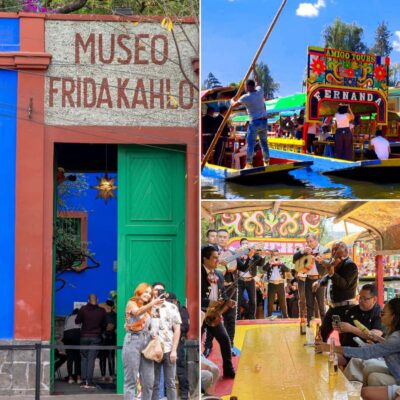
Xochimilco, Coyoacan, Frida Kahlo Museum & Murals Tour
Read our review →
Mexico City; ART NACO : Murals & Street Art Bike Tour
Read our review →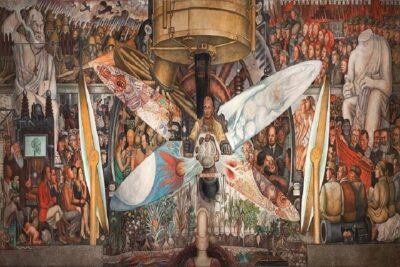
Walking Tour – Impressive murals in Historical Center of Mexico City
Read our review →
Iztapalapa: Cable Car Tour and Urban Art From the Heights
Read our review →
Xochimilco floating gardens, Coyoacan and UNAM murals
Read our review →