
REVIEW · MEXICO CITY
Iztapalapa: Cable Car Tour and Urban Art From the Heights
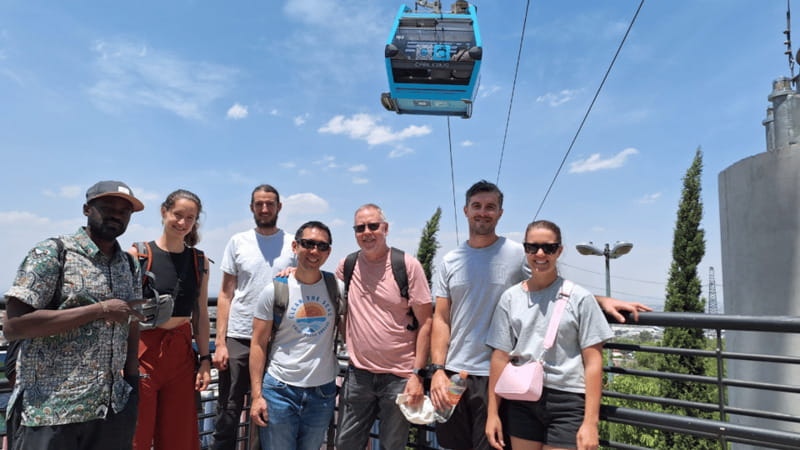
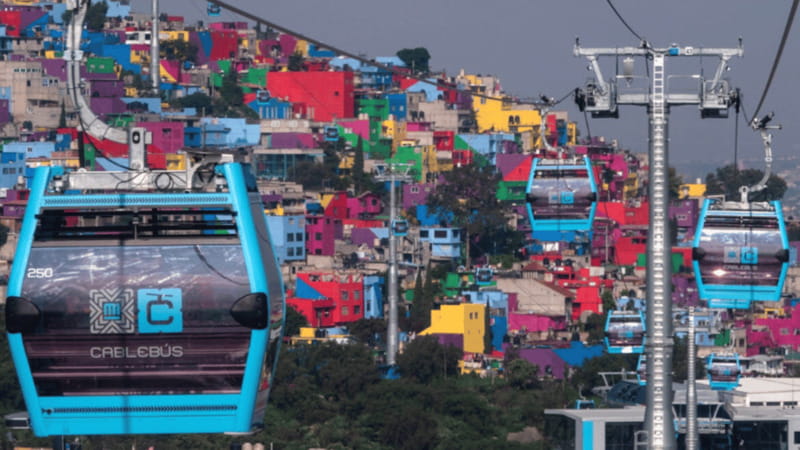
Mexico City’s Cablebús gives you a view most visitors miss: rooftops, narrow streets, painted walls, distant volcanoes, and the daily life of Iztapalapa spread below. This four-hour outing combines the metro with the cable car, making the trip itself part of the lesson.
I like two things right away. You get a useful introduction to Mexico City’s public transport, and you see large community murals from an angle that street-level sightseeing cannot provide. Guides such as Benjamin, Eduardo, Oscar, Alexia, Gabi, and Tomas have been praised for explaining the city with warmth and care. The main drawback is that a fair amount of the four hours is spent getting to and from Iztapalapa, so visitors already familiar with metro systems may find that section longer than needed.
Key points at a glance
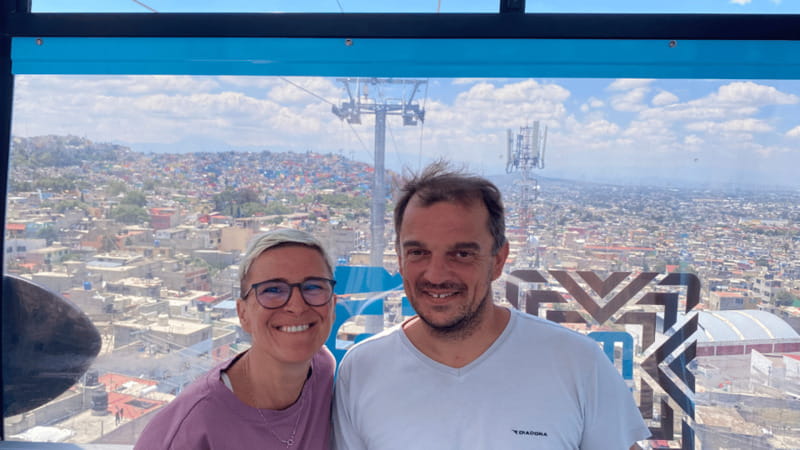
- The Cablebús ride: See Iztapalapa’s rooftops, murals, streets, and surrounding mountains from above.
- A practical metro lesson: Ride from Bellas Artes with a guide who helps you understand Mexico City’s large public transport network.
- Local food and tortillas: Visit a local area, try typical snacks if you wish, and learn why tortillas matter so much in Mexican cooking.
- A small group: The group is limited to nine people, which makes questions and keeping together easier.
- A different side of Mexico City: This is an outing for people who want more than the historic center, museums, and familiar tourist districts.
- Plan for the rules: Wear discreet, comfortable clothing and closed shoes. Bring cash, and avoid large bags, sandals, shorts, and sunglasses.
Why the Cablebús changes your view of Iztapalapa
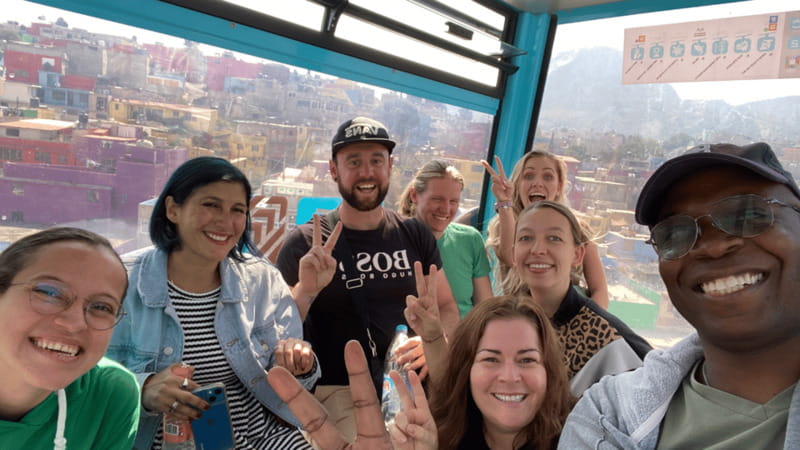
The main attraction is not simply reaching Iztapalapa. It is seeing how the city connects its outer communities and how much urban life becomes visible from a moving cable car.
From the cabins, you look down on a patchwork of homes, streets, rooftops, murals, and transport routes. The view is constantly changing. One moment you are looking across dense blocks; the next, you can see mountains and volcanoes beyond the city. The murals are especially effective from this height because many were designed to be seen by people riding the line.
The Cablebús is described as the longest cable car in the world, and the ride covers enough ground to give you a real sense of the area rather than a quick amusement-park loop. The guide explains the artwork, the purpose of the cable car, and the way the line affects people who use it every day.
I like that the tour treats public transport as part of Mexico City’s story. The cable car is not just a scenic ride. It is also a way to connect communities and reduce the sense of distance across a huge city.
A few more street art tours around Mexico worth a look
- CDMX: Xochimilco, Coyoacan, Frida Kahlo Museum & Murals Tour
★ 4.4 · 3,025 reviews - Cancun Street Food Tour with Food Stalls, Local Market and Murals
★ 5.0 · 723 reviews - Mexico City; ART NACO : Murals & Street Art Bike Tour
★ 5.0 · 284 reviews
Starting at Bellas Artes and learning the metro
You meet at the Parisian entrance of the Bellas Artes subway station, on the left side of the palace. Look for a guide wearing a green shirt and carrying a green umbrella. This meeting point deserves extra care because the Bellas Artes area has several entrances and plenty of foot traffic. One participant specifically found the meeting spot difficult to identify, so arrive early and keep the guide’s WhatsApp contact available.
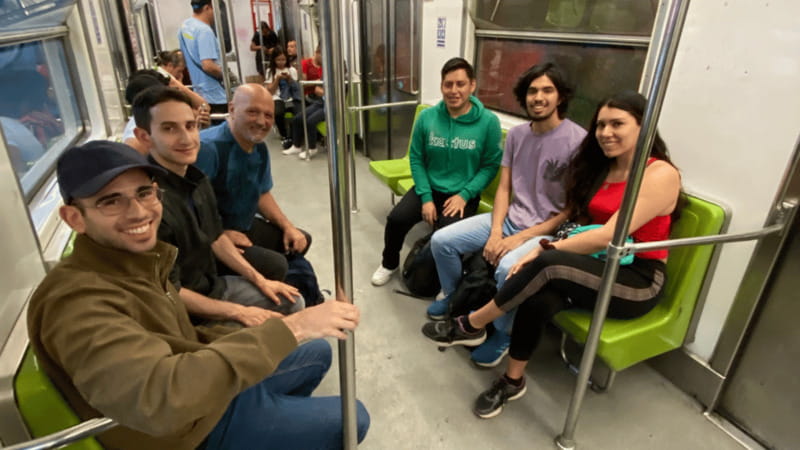
The first part uses the metro and lasts about 45 minutes. The return ride takes roughly 40 minutes, so the metro accounts for a sizeable part of the outing. That may sound less exciting than the cable car, but it has real value if Mexico City’s transport system makes you nervous.
The network is large, busy, and not always obvious to a first-time visitor. Your guide helps with the basic rhythm of using it, including moving through stations and staying with the group. Several guides, including Eduardo, Benjamin, Oscar, and Gabi, have been especially praised for helping people gain confidence with public transport.
If you come from a city with a strong metro system, you may already know how to read signs, change lines, and handle a crowded station. In that case, the explanations may feel slow. If this is your first visit to Mexico City, the time can be well spent. You leave with a better chance of using the metro on your own for the rest of your trip.
The 40-minute Cablebús ride over Iztapalapa

After the metro, the tour moves to the Cablebús. The main ride lasts about 40 minutes, followed later by another ride of around 25 minutes as you continue through the area and return toward the metro.
This is the moment to keep your camera ready. You can expect wide views across Iztapalapa, with colorful buildings, tangled streets, painted rooftops, and the mountains around Mexico City. The perspective makes the city’s scale easier to understand. On foot, you see one block at a time. From the cabin, the connections between neighborhoods become clearer.
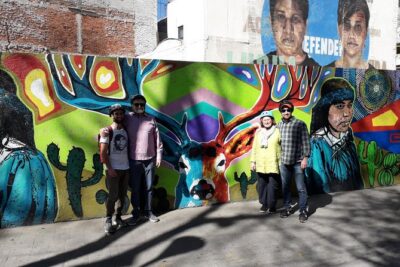
The murals are a major reason to take this particular route. Their subjects and placement are tied to the local community and to the people who pass below and ride above. Your guide explains the stories behind them and their cultural meaning, rather than treating them as simple decoration.
The cabins are described as modern, clean, safe, and quiet. That matters because the ride is long enough to settle into the view. People with vertigo or motion sickness should think carefully before booking. The height and movement may be uncomfortable, and the activity specifically advises bringing motion sickness prevention if needed.
Iztapalapa’s stories, music, and public spaces
Once in Iztapalapa, the guided section lasts about 20 minutes, followed by a photo stop of roughly 15 minutes. The exact feel of this portion depends on the day and the guide, but the focus is on the area’s growth, its challenges, and the way local communities have developed over time.
The tour also introduces music associated with the area, including cumbia, sonidero, and urban rock. This is a useful detail because it keeps the visit from becoming only a discussion of buildings and transport. Music helps explain how public life works in a neighborhood, from street gatherings to local celebrations.
A stop at a local park provides a wider view. On a clear day, you may see the volcanoes and the city stretching into the distance. The park is also a place to pause after the transport connections and listen to the guide’s explanation of Iztapalapa.
I appreciate the effort to present the neighborhood with respect. This is not a quick ride through an area reduced to a photo opportunity. The guide connects the views to daily life, public services, art, music, and the city’s long process of growth.
Same walls, a different guide:
- History and Murals: Walking Tour Guadalajara
★ 5.0 · 237 reviews - Walking Tour – Impressive murals in Historical Center of Mexico City
★ 5.0 · 224 reviews - Mexico City: Art Naco, murals & street art bike tour
★ 4.7 · 166 reviews - Street Art Bike Ride
★ 5.0 · 125 reviews
Tortillas, market food, and the taste of the neighborhood
The tortilla activity adds a hands-on part to the outing. You learn about the tortilla’s place in Mexican food and culture, and tortillas are included in the price.
The food side can extend beyond the activity. You are encouraged to bring cash for typical snacks, and the optional gorditas cost 15 pesos. Several outings have included a local market or food stop, where people bought gorditas, tacos, fruit juice, sweets, and other local specialties. Meals and drinks are not included, so think of this as a chance to buy food rather than a promised full lunch.
That distinction matters. If you expect a formal meal, you may find the food portion limited. If you want to sample something local and choose what appeals to you, cash gives you more freedom. I would carry small bills and avoid arriving hungry enough to depend on a stop whose timing may vary.
The tortilla lesson also gives context to what you eat. Instead of treating street food as a quick snack between sights, the guide explains its connection to Mexican daily life. That makes the food stop more meaningful, especially if you are trying to understand how ordinary meals fit into the culture.
Is four hours a fair price at $24?
At $24 per person, this is a good value if you want a guided introduction to both the metro and Cablebús. The price includes the public transport card, metro and cable car rides, tortillas, an expert guide, and educational material. You do not need to work out the transport payment on your own.
The value is strongest for first-time visitors, people who are unsure about using public transport, and anyone interested in urban design, public art, or how Mexico City serves communities away from the center. You are paying not only for the ride, but also for interpretation and help moving through a huge transport system.
The calculation is different if you are already comfortable with the metro and can navigate independently. You might be able to take the Cablebús yourself for less, then spend the savings on food. The tour’s advantage is the explanation, the organized route, the small group, and the chance to ask questions as you go.
A small group of no more than nine people is another point in its favor. It is easier to hear the guide, stay together, and ask about the murals or transport system. The experience is not designed as a private tour, but it should feel more personal than a large bus outing.
Who will enjoy this outing most?
This is a strong match for you if you:
- Want to see a less familiar side of Mexico City.
- Enjoy public art and city views more than formal museum visits.
- Feel uncertain about using the metro.
- Like learning how neighborhoods connect through public transport.
- Want local food suggestions without signing up for a full food tour.
- Can manage several hours of public transport and a cable car ride.
- Prefer a small group and a guide who can explain local context.
It is less suitable for children under five, people with vertigo, respiratory problems, altitude sickness, or strong motion sickness. The activity also lists a 220-pound, or 100-kilogram, weight limit.
The clothing rules are unusually specific. Wear comfortable closed shoes, discreet clothing, and a shirt with sleeves. Avoid shorts, skirts, short dresses, sandals, flip-flops, high heels, sunglasses, hats, and bright colors. Large bags, luggage, drones, bikes, scooters, strollers, and non-folding wheelchairs are not allowed. These rules may feel fussy, but following them helps avoid trouble at the meeting point and during transport.
Language, guides, and the quality of the explanation
The tour runs in English or Spanish, and some material may be presented in its original language. Guide quality is central here because the ride itself is straightforward. The best part comes from the person explaining what you see.
Benjamin has been singled out for combining transport guidance with historical context. Eduardo has helped first-time visitors feel comfortable with the metro and Cablebús. Oscar has been praised for clear explanations and local food suggestions, while Alexia has brought careful attention to the murals and the community.
Gabi, Gabriella, Tomas, Thomas, Gabriel, Sam, Fran, and Diana have also led well-received outings. Since the guide is assigned rather than selected by you, the exact tone may vary. The common thread is that the guide’s local perspective is the main reason to choose an organized visit instead of riding the line alone.
Should you book the Iztapalapa Cablebús tour?
Book it if you want a practical, visual introduction to a part of Mexico City that most short city breaks skip. The Cablebús views are unusual, the murals give the ride purpose, and the metro lesson can make the rest of your stay easier.
Skip it if you dislike public transport, feel uneasy at height, or want a fast sightseeing tour with little travel time. Also think twice if you already know Mexico City’s metro well and would rather explore independently.
For most curious first-time visitors, $24 is a sensible price for the combination of transport, guiding, art, views, and tortillas. Arrive early at the Bellas Artes meeting point, bring cash for food, wear practical clothing, and expect the route to feel like a real city outing rather than a polished sightseeing circuit.
FAQ
Where does the tour meet?
Meet at the Parisian entrance of the Bellas Artes subway station, on the left side of the Bellas Artes palace. Guides wear a green shirt and carry a green umbrella.
How long does the experience last?
The experience lasts about four hours. Travel includes metro rides, Cablebús rides, a guided visit in Iztapalapa, a photo stop, and scenic viewing.
What languages are available?
The live tour guide is available in English or Spanish. Some content may be presented in its original language.
Is the Cablebús ride included?
Yes. The price includes the Cablebús and metro rides, along with a public transport card.
Is food included?
Tortillas are included, and the activity includes a tortilla-making experience. Meals and drinks are not included. Gorditas are available separately for 15 pesos.
What should I bring?
Bring comfortable shoes, cash for typical snacks, and motion sickness prevention if you need it. The activity also recommends leaving a WhatsApp contact with the area code for quick communication.
Can children or people with mobility equipment join?
Children under five are not suitable for this activity. Non-folding wheelchairs, non-folding strollers, mobility scooters, bikes, and large bags are not allowed. Assistance dogs are allowed, but pets are not.
Just added around Mexico
- Xochimilco floating gardens, Coyoacan and UNAM murals★ 4.0 · 6 reviews
- UNAM: Murals & Revolution★ 4.9 · 8 reviews
- Street Art & Cemetery Cultural Tour – half day★ 5.0 · 3 reviews
- Graffitis & Munchies biketour Playa del Carmen★ 4.5 · 18 reviews
- Street Art Walk★ 4.5 · 7 reviews
- Diego Rivera’s murals, hidden treasures★ 5.0 · 21 reviews
- Private Street Food & Mural Art Tour in Mexico City★ 3.5 · 3 reviews
- Mexico City Private Tour with Teotihuacan, Murals, Guadalupe Basilica★ 3.0 · 2 reviews
Mexico City Street Art Tours, compared.
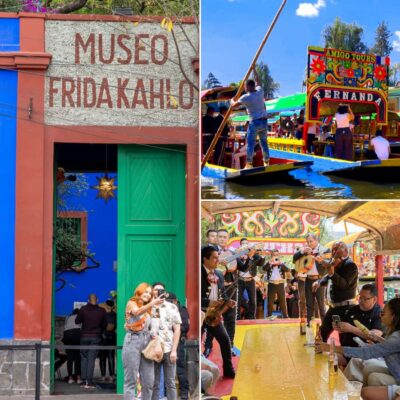
Xochimilco, Coyoacan, Frida Kahlo Museum & Murals Tour
Read our review →
Mexico City; ART NACO : Murals & Street Art Bike Tour
Read our review →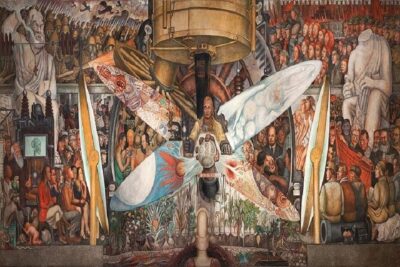
Walking Tour – Impressive murals in Historical Center of Mexico City
Read our review →
Xochimilco floating gardens, Coyoacan and UNAM murals
Read our review →
Browse the lists this tour appears in