
REVIEW · MEXICO CITY
Diego Rivera’s murals, hidden treasures
The most striking part of this Mexico City tour is the chance to see Diego Rivera’s work in three very different settings. You’ll begin at the Museo Vivo del Muralismo, home to the largest number of Rivera murals, then see the replica of his controversial Rockefeller mural at Palacio de Bellas Artes, and finish with a single large work filled with figures from Mexican history.
I like the clear three-hour focus and the fact that admission is included at every stop. I also like the guide-led approach: David and Laila are praised for making Rivera’s politics, symbols, and life easier to understand. The main consideration is that the Museo Vivo del Muralismo visit is subject to availability, and the tour is offered in English, so confirm the language and date when booking.
Key points
- Three major mural stops: Visit the Museo Vivo del Muralismo, Palacio de Bellas Artes, and Museo Mural Diego Rivera in one compact tour.
- Rivera’s Rockefeller mural: See the Mexico City replica of the work destroyed in New York after its political content caused a dispute.
- A strong guide makes the difference: Guides David and Laila receive special praise for clear explanations, flexibility, and enthusiasm.
- More than art appreciation: The murals address revolution, inequality, identity, work, education, festivals, and the hopes of the Mexican people.
- Small-group format: The group is capped at 15 people, which should make questions and conversation easier.
- Good value for art lovers: The $80.60 price includes the guide and all listed entrance fees, with free cancellation up to 24 hours before the start.
Why Rivera’s murals need a guide
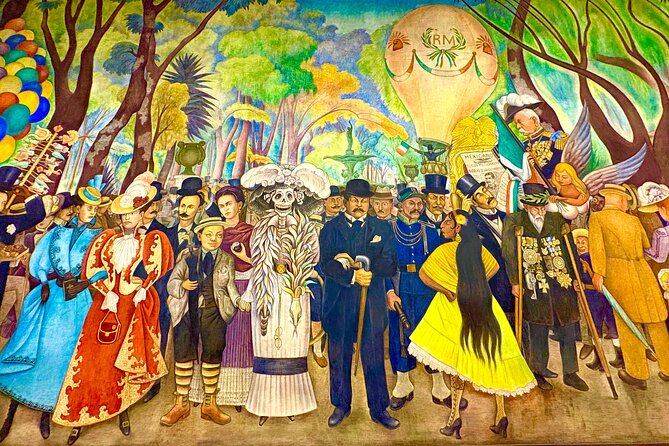
Diego Rivera’s murals are large, crowded, and packed with people, symbols, and political messages. You can look at them on your own and still enjoy the color and scale, but a guide helps you understand why certain workers, politicians, teachers, revolutionaries, and historical figures appear together.
That context is the real purpose of this tour. Rivera did not treat walls as simple decoration. His murals presented ideas about Mexican identity, social inequality, labor, education, revolution, and the lives of ordinary people. A good guide helps you move from simply seeing a scene to asking what Rivera wanted the scene to say.
David and Laila are the two guide names associated with the strongest praise for this experience. David is described as a great ambassador, a flexible guide, and a person who makes the history feel alive. Laila is praised for her spirited presentation and for connecting separate Rivera works into a clearer picture of his life and art.
That matters because the tour is not built around one famous painting alone. It links works made in different places and introduces other muralists, including David Alfaro Siqueiros, Roberto Montenegro, Amado de la Cueva, Jean Charlot, Federico Canessi, and Manuel Felguérez. You get a wider view of Mexican muralism instead of treating Rivera as an isolated figure.
More Mural Tours in Mexico
- CDMX: Xochimilco, Coyoacan, Frida Kahlo Museum & Murals Tour
★ 4.4 · 3,025 reviews - Cancun Street Food Tour with Food Stalls, Local Market and Murals
★ 5.0 · 723 reviews - Mexico City; ART NACO : Murals & Street Art Bike Tour
★ 5.0 · 284 reviews
Starting at Museo Vivo del Muralismo
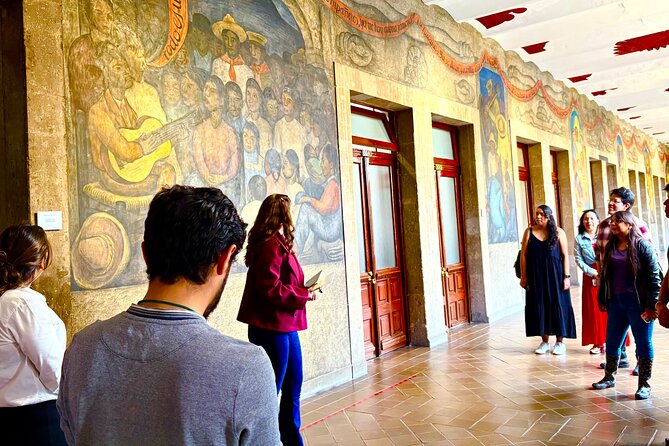
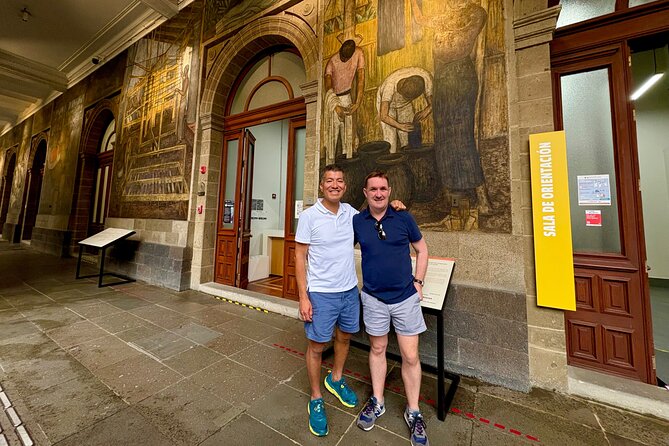
The tour begins at República de Argentina 28 in Mexico City’s Centro Histórico. The first stop lasts about an hour at the Museo Vivo del Muralismo, which is open Wednesday through Monday according to the schedule provided.
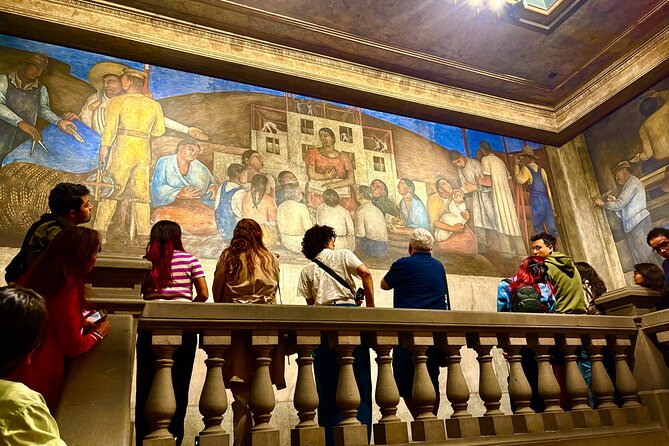
This is the strongest stop for understanding Rivera’s larger project. The museum houses the largest number of Diego Rivera murals, so you see more than a single celebrated image. The works cover the struggle of the Mexican people, local trades, festivals, traditions, education, cultural missions, revolution, inequality, and national identity.
I would pay close attention to how Rivera places everyday life beside major political events. The murals are not only about famous leaders. They also point toward workers, teachers, communities, and the daily activities that Rivera believed belonged in a public account of Mexico.
The museum also gives you a chance to consider Rivera after his return from Europe. The experience frames the murals as part of his changing vision of Mexico, including his view of the country’s people and its social problems. That background gives the images more weight than a quick museum visit usually can.
The word vivo suggests a living approach to muralism, and that idea fits the subject. Rivera’s work is tied to public life, not just private collecting. His murals were placed where large numbers of people could encounter them, and their subjects were meant to speak to a broad audience.
There is one practical catch. Admission to this museum depends on availability for your scheduled date and time and can change without notice because of circumstances beyond the operator’s control. The itinerary lists admission as free, but the visit itself is still subject to access on that day. If this is your main reason for booking, keep that limitation in mind.
Palacio de Bellas Artes and the destroyed New York mural
The second stop is Palacio de Bellas Artes, Mexico City’s best-known cultural site in this itinerary. You’ll spend about an hour here, with admission included.
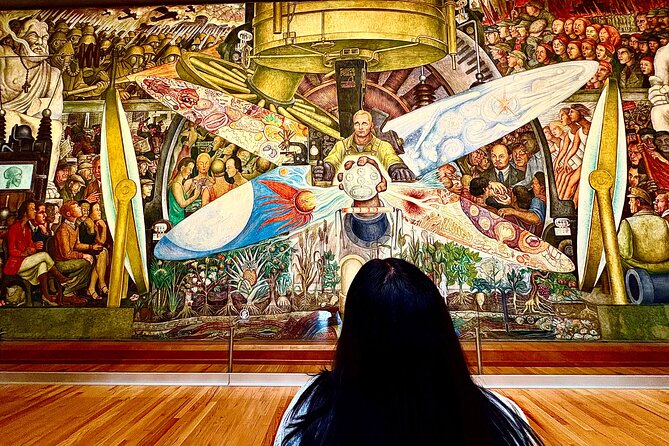
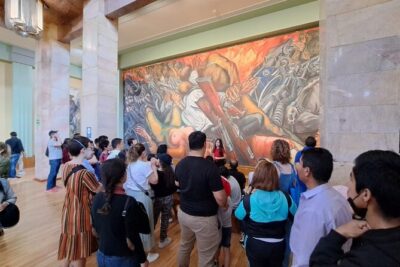
The special feature is the replica of Rivera’s controversial mural depicting The Man Who Controls the Universe. The original was destroyed in New York after the Rockefeller family objected to its political content. Seeing the Mexico City version adds a dramatic story to what might otherwise be a standard museum visit.
You do not need to know every detail of the dispute to appreciate why this work matters. The mural raises questions about power, industry, politics, and who gets to decide what can appear in a public building. The controversy becomes part of the viewing experience, but the work is still worth examining as a composition filled with competing forces and figures.
This stop also helps you compare Rivera’s approach with the earlier museum visit. At Museo Vivo del Muralismo, the focus is broad and social. At Bellas Artes, the conversation centers more sharply on one disputed work and the clash between art and power.
A guide can point out connections that are easy to miss when you stand in front of a large mural for only a few minutes. Laila’s strength, based on the details available about her tours, is explaining significance rather than reciting dates. David is described as engaging and flexible, which is useful when a group wants to spend more time on a particular part of the work.
Because the stop lasts about an hour, you should expect a focused visit rather than unlimited time in the building. The itinerary does not specify extra time for exploring every part of Palacio de Bellas Artes, so think of this as a mural-centered stop.
The Museo Mural Diego Rivera finale
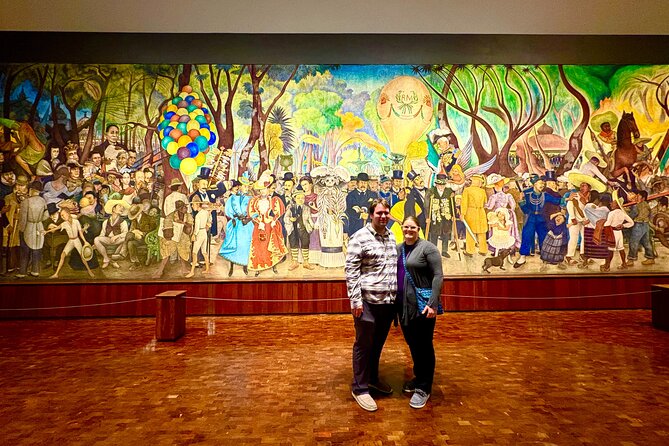
The final museum is the Museo Mural Diego Rivera, another hour devoted to one of Mexico City’s most impressive Rivera murals. This is a smaller, more concentrated way to finish the tour.
The central work brings characters from Mexican history into one mural. That setup makes it useful after the first two stops because you have already heard about Rivera’s interest in national identity, revolution, social classes, and the lives of ordinary people.
I like the contrast between this stop and the Museo Vivo del Muralismo. The first museum gives you a broad look at muralism and several artists. The final museum lets you spend sustained time with a single Rivera work and consider how he assembled Mexico’s past into one crowded visual story.
Expect the guide to help identify figures and explain the relationships among them. Without that assistance, a mural filled with historical characters can become a hunt for names without much understanding of the larger idea. With a good explanation, you can look at the composition as Rivera’s argument about Mexico, not merely as a collection of portraits.
The itinerary calls this museum a lesser-known find in Mexico City, but I would treat that as a reason to value its focused subject rather than assume it will be quiet or empty. No crowd conditions are provided. The reliable point is that it gives the tour a final Rivera-centered stop instead of ending after the more famous Bellas Artes visit.
More Mural Tours in Mexico City
- Walking Tour – Impressive murals in Historical Center of Mexico City
★ 5.0 · 224 reviews - Mexico City: Art Naco, murals & street art bike tour
★ 4.7 · 166 reviews - Xochimilco floating gardens, Coyoacan and UNAM murals
★ 4.0 · 53 reviews - Mexico City: Diego Rivera’s Murals Guided Walking Tour
★ 5.0 · 49 reviews
What the $80.60 price includes
At $80.60 per person, this is not a bargain-priced museum visit. The value depends on how much you want interpretation and how many of the three museums you would visit on your own.
The price includes the guide and all listed entrance fees. That is important because you are not paying the tour cost and then adding several museum admissions. You also get a planned sequence that links the stops through Rivera’s life, Mexican muralism, and the political ideas behind the art.
For someone already interested in Rivera, the cost is easier to justify. You are seeing a large collection of his murals at the first stop, the disputed Rockefeller mural replica at Bellas Artes, and a major historical composition at the Museo Mural Diego Rivera. Buying separate tickets may not produce the same explanations or connections.
For a casual art lover, the price requires more thought. The tour spends roughly three hours looking at murals and discussing their meaning. If you prefer quick sightseeing or want time for unrelated parts of the Centro Histórico, this may feel too specialized.
The small group helps the value. A maximum of 15 people is not private touring, but it is limited enough to make questions practical. The strongest guide praise is directed at David and Laila, especially their ability to explain the material and adjust to the group. That personal interpretation is what separates this from simply buying museum entry.
Guides, group size, and language
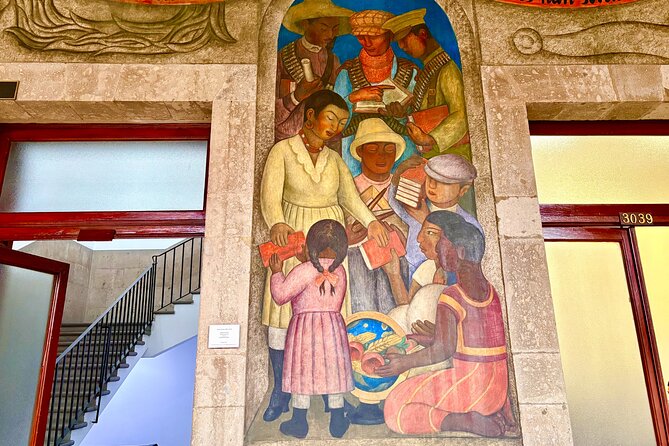
The tour is offered in English, and the maximum group size is 15 people. Those details make it suitable for an English-speaking visitor who wants structure but does not want a large coach-group format.
David is described as exceptionally attentive, flexible, and engaging. Laila is praised for her command of the material and her ability to connect individual murals with the wider story of Rivera’s life and art. One account also describes Laila sharing suggestions for food and museums around Mexico City after the tour, along with small gifts. Those extras are not guaranteed, but they show the kind of personal interaction you might get with a guide who enjoys the subject.
The provided information also refers to a Spanish tour with Laila. Since the main tour details list English, confirm the language option that applies to your booking rather than assuming every departure is the same.
A small group does not guarantee a private conversation, but it gives you a better chance to ask about a particular figure or symbol. That is especially useful at the Museo Vivo del Muralismo, where a large number of works could otherwise become visually overwhelming.
Timing and practical planning
The experience lasts about three hours and begins at the Museo Vivo del Muralismo. It ends back at the same meeting point, so you should plan your day around a return to República de Argentina 28 in the Centro Histórico.
The first museum operates Wednesday through Monday, making the day of the week important. The provided information does not give a separate start time, so check your confirmation carefully for the exact departure hour.
The museum admission at the first stop depends on availability at the scheduled date and time. That is the one part of the plan with an explicit uncertainty. The other listed admissions are included, but the operator notes that conditions can change without notice.
The tour is near public transportation, and most people can participate. Service animals are allowed. No special fitness requirement is listed, but the experience involves moving through three cultural sites, so comfortable shoes are still a sensible choice.
Tips are not included. You should treat gratuity as optional and based on the guide’s service, rather than as part of the $80.60 price.
Free cancellation is available if you cancel at least 24 hours before the start time. Cancellations or changes made less than 24 hours before the experience are not accepted for a refund, and the cut-off follows Mexico City local time.
Who will get the most from this tour
I would recommend this experience most strongly to you if Rivera’s murals are a priority during your Mexico City visit. It is also a good fit if you enjoy art more once someone explains the political and historical setting around it.
You do not need an art degree. The guide’s role is to make the murals readable, not to test you. The tour should suit solo visitors, couples, and small groups who want a clear three-hour plan and the chance to ask questions.
It may be less suitable if you want a broad introduction to Mexico City’s architecture, food, or archaeology. The subject is narrow by design. You are spending the full experience on muralism and Rivera, with some attention to other Mexican artists.
The tour also makes sense for repeat visitors who have already seen Palacio de Bellas Artes but have not visited the two Rivera-focused museums. The route adds works and context beyond the usual single-stop look at Bellas Artes.
Should you book Diego Rivera’s murals, hidden treasures?
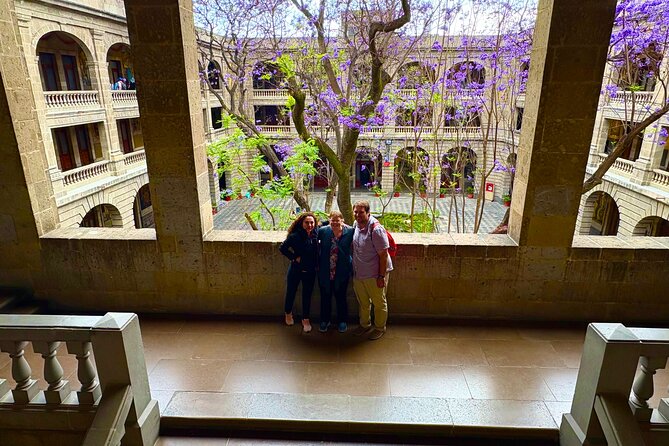
Book it if you want to understand what Rivera’s murals are saying, not just photograph their size and color. The combination of the Museo Vivo del Muralismo, the Rockefeller mural replica, and the Museo Mural Diego Rivera gives you three useful angles on his art.
The strongest reason to choose this tour is the guide. David and Laila receive specific praise for making the material clear, lively, and connected. The price is fair for a three-hour guided experience with entrance fees included, though it is more than you need if you prefer to browse museums without commentary.
Check that your date falls within the first museum’s Wednesday through Monday schedule, confirm the English departure, and remember that access to Museo Vivo del Muralismo is subject to availability. If those conditions work for you, this is a focused and worthwhile way to meet Rivera’s Mexico City.
FAQ
How long does the Diego Rivera mural tour last?
The tour lasts approximately three hours, with about one hour at each of the three listed stops.
Where does the tour begin and end?
It begins at Museo Vivo del Muralismo, República de Argentina 28 in Mexico City’s Centro Histórico, and ends back at the same meeting point.
Which museums are included?
The tour visits Museo Vivo del Muralismo, Palacio de Bellas Artes, and Museo Mural Diego Rivera.
Is admission included in the price?
Yes. The listed entrance fees are included, along with the guide. Tips are not included.
Is the tour offered in English?
Yes. The main tour information lists English as the available language.
What is the cancellation policy?
You can cancel at least 24 hours before the start time for a full refund. Cancellations or changes made less than 24 hours before the start time are not accepted for a refund.
Just added around Mexico
- Xochimilco floating gardens, Coyoacan and UNAM murals★ 4.0 · 6 reviews
- UNAM: Murals & Revolution★ 4.9 · 8 reviews
- Street Art & Cemetery Cultural Tour – half day★ 5.0 · 3 reviews
- Graffitis & Munchies biketour Playa del Carmen★ 4.5 · 18 reviews
- Street Art Walk★ 4.5 · 7 reviews
- Private Street Food & Mural Art Tour in Mexico City★ 3.5 · 3 reviews
- Private Mexico City Mural Art Tour★ 5.0 · 13 reviews
- Explore Modern Art & Murals in Mexico City’s Best Museums★ 5.0 · 2 reviews
Mexico City Street Art Tours, compared.
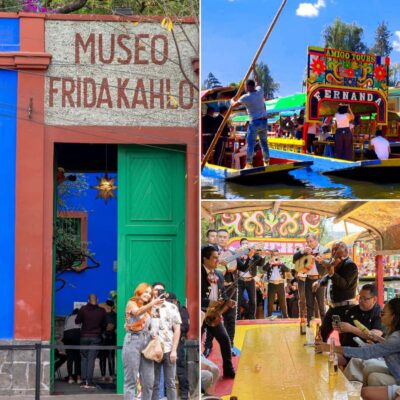
Xochimilco, Coyoacan, Frida Kahlo Museum & Murals Tour
Read our review →
Mexico City; ART NACO : Murals & Street Art Bike Tour
Read our review →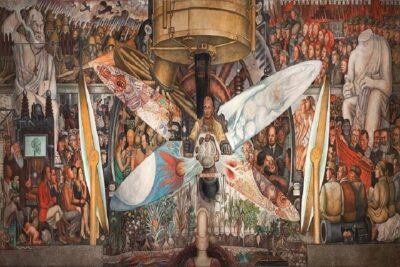
Walking Tour – Impressive murals in Historical Center of Mexico City
Read our review →
Iztapalapa: Cable Car Tour and Urban Art From the Heights
Read our review →
Xochimilco floating gardens, Coyoacan and UNAM murals
Read our review →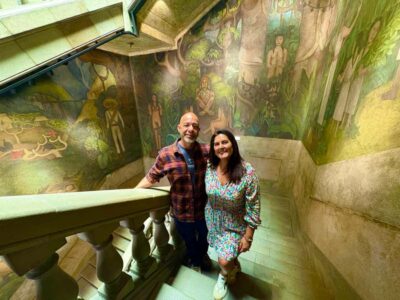
Browse the lists this tour appears in