
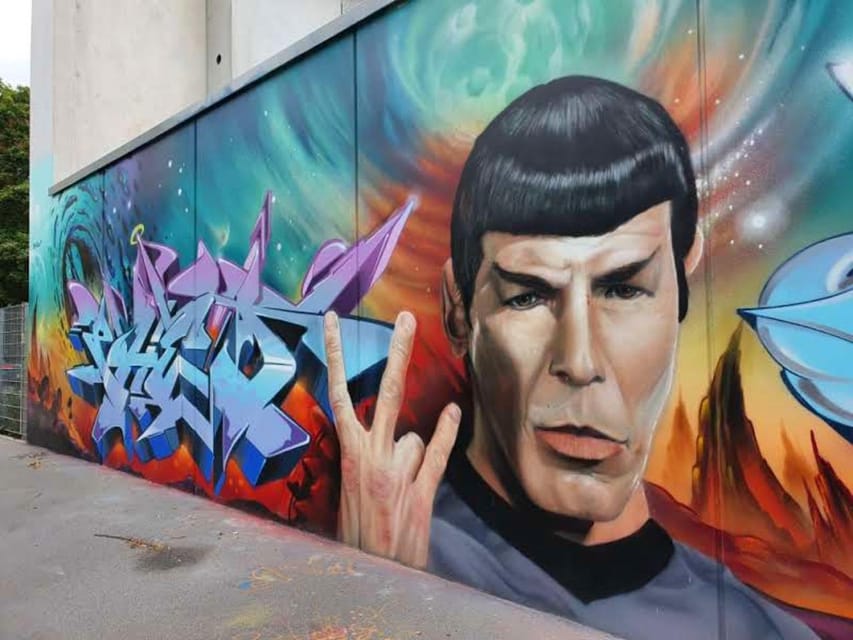
REVIEW · BERLIN
Mega Street Art, Mural, Graffiti Private Tour
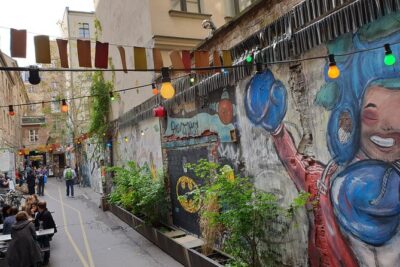
Berlin’s street art is not confined to one neighborhood, and this private tour makes that the main event. Over three hours, you cross the city from west to east, moving from giant murals and legal painting spots to quiet courtyards, backstreets, and small pieces you could easily miss alone. The story runs from late-1970s graffiti through the 1980s and 1990s, then into the street-art boom of the early 2000s.
I especially like the wide range of work, with more than 35 murals, illegal graffiti pieces, stencils, pasteups, and small installations. I also like the private format, priced at $176 for up to 20 people, since a group can share the cost and ask questions without being folded into a large public outing. The main consideration is that you must buy an AB transport ticket, and three hours of moving around Berlin may feel brisk if you want long photo stops.
Key points at a glance
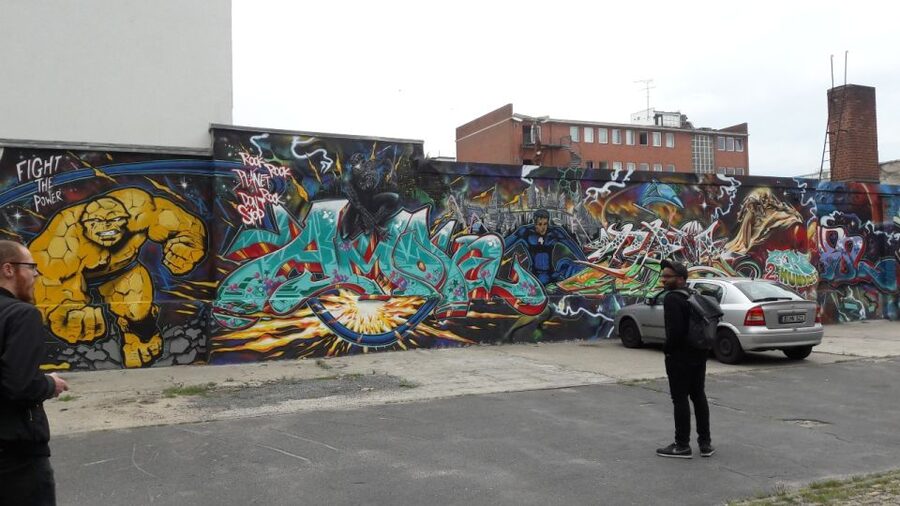
- More than 35 works: Expect giant murals, graffiti walls, stencils, pasteups, and tiny street installations.
- A citywide route: The tour links western and eastern Berlin, with stops beyond the usual central sights.
- A long view of graffiti: Learn about the scene from the late 1970s, through the 1980s and 1990s, and into the 2000s street-art boom.
- Private group value: One $176 fee covers up to 20 people, making this most attractive for families, friends, schools, and company groups.
- An active scene guide: Adrian is named in the booking feedback, and the tour is led by someone involved in Berlin’s urban-art world.
- Bring a camera and an AB ticket: The route offers many photo opportunities, but local public transport is part of the practical planning.
Why Berlin’s street art needs a citywide tour
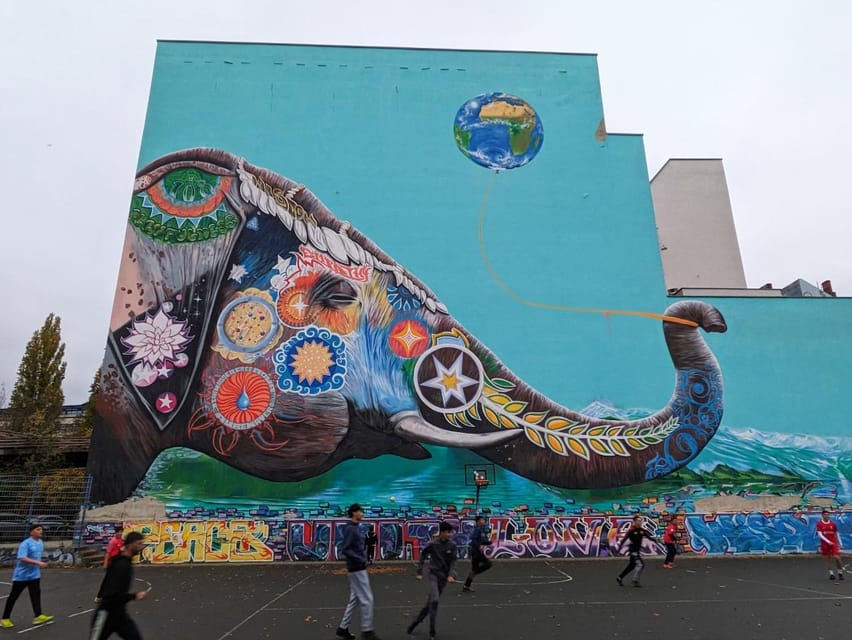
A quick walk through Kreuzberg or Friedrichshain can show you plenty of paint, but it can also give you a narrow picture of Berlin’s art scene. This experience takes a broader approach. You visit places outside the city center as well as familiar urban areas, with the route crossing from west Berlin to east Berlin.
That matters because the city’s street art is not one neat style. You may see a rooftop tag made quickly and quietly, a polished wall-sized mural, a political stencil, or a pasteup that takes only a few seconds to install. The contrast helps you understand that street art is a loose family of methods and motives, not a single look.
The guide connects those visual differences to Berlin’s past. You learn how graffiti developed in Schöneberg and Kreuzberg during the 1980s, how crews formed, and how styles and techniques changed. The discussion also covers the influence of hip-hop and street gangs on graffiti culture, as well as the reasons artists painted trains, rooftops, walls, and commissioned works.
This is useful context. Without it, a wall can be attractive but anonymous. With it, you have a better chance of recognizing the difference between a tag, a larger piece, an illegal work, and an officially commissioned mural.
More Graffiti Tours in Berlin
- Berlin Street Art & Graffiti Walking Tour
★ 5.0 · 109 reviews - Berlin Street Art Tour with Graffiti, Murals, and Urban Culture
★ 4.5 · 12 reviews - Alternative Berlin Private Tour with Jacob – Graffiti and Squats
★ 5.0 · 6 reviews
From late-1970s tags to the 2000s street-art boom
The tour does not treat Berlin’s art as a recent decoration project. Its story begins with the graffiti scene of the late 1970s and continues through the 1980s and 1990s. That gives you a sense of how writers, crews, techniques, and public attitudes developed over time.
The 1980s receive particular attention in Schöneberg and Kreuzberg. You hear how graffiti connected with hip-hop culture and how artists used names, lettering, and crew identities to claim space. The subject is not presented as a simple tale of colorful walls. It includes the illegal side of the work and the risks involved in painting trains, rooftops, and public structures.
Then the focus shifts to the street-art explosion of the early 2000s. The guide explains who helped drive that change, why artists came to Berlin, and how the city became an important place for both local and international artists. The result is a useful bridge between old-school graffiti and the wider street-art movement that followed.
You also hear about the motives behind different kinds of work. Some artists are interested in style and reputation. Others respond to politics, humor, current events, or the character of a particular wall. Commissioned murals can reach a huge audience, while illegal pieces may be temporary and harder to find.
What you will see across the three-hour route
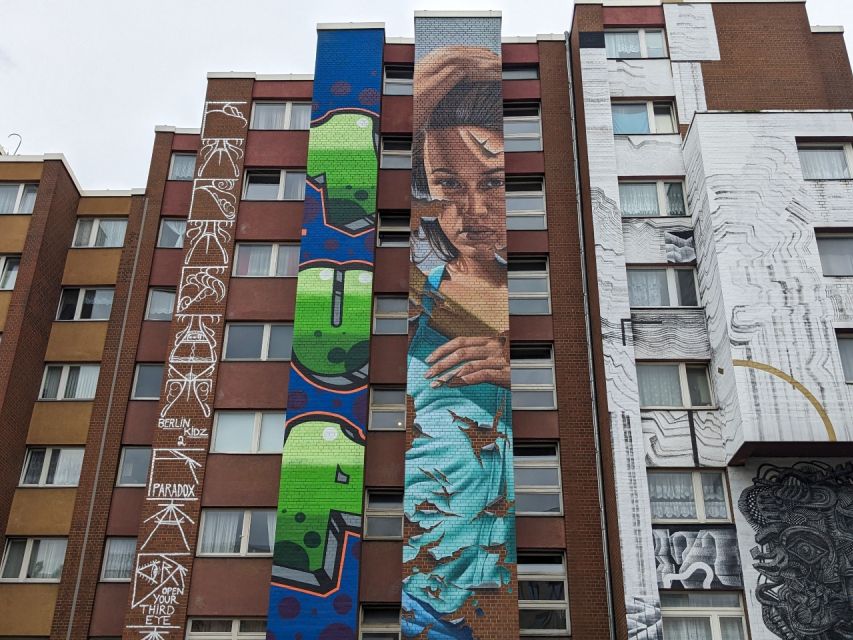
The exact order of the stops can vary, but the tour is built around a large number of contrasting works rather than one famous wall. You can expect more than 35 examples, including:
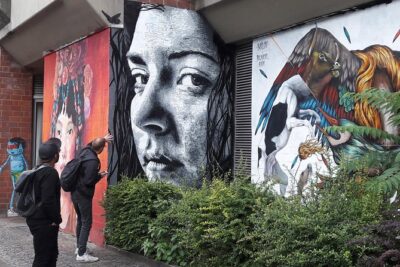
- Giant murals that cover much of a building
- Legal graffiti walls and painting spots
- Illegal graffiti and tags
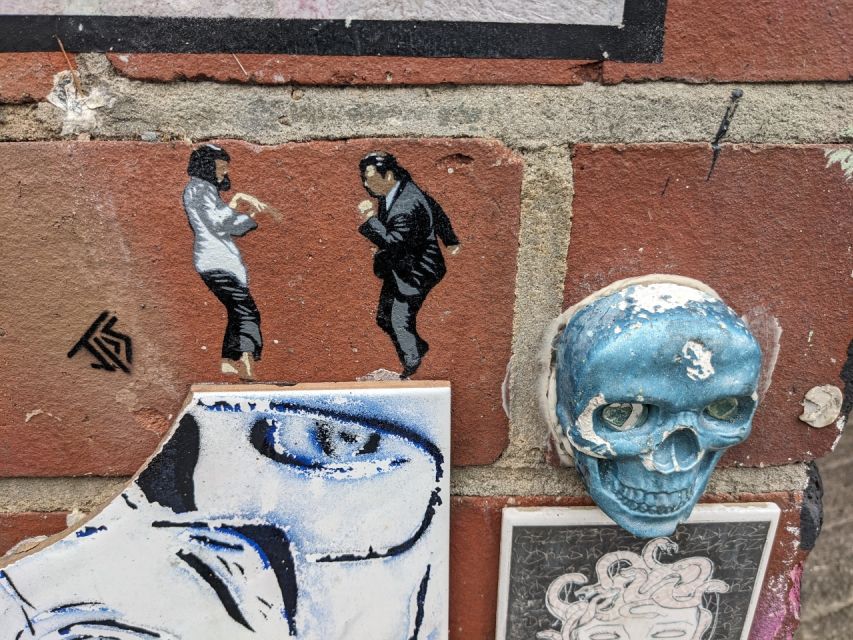
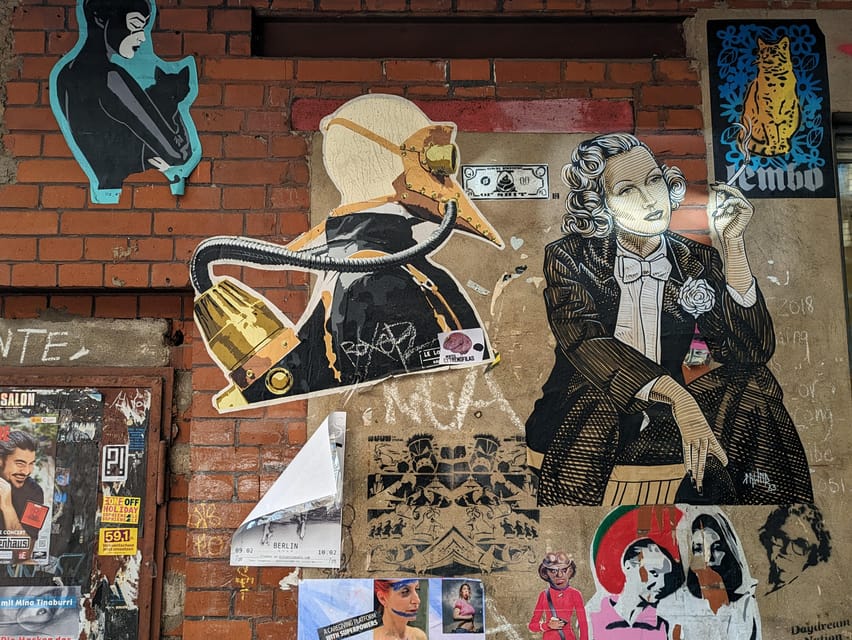
- Pasteups and stencil art
- Small street installations
- Works with political or humorous themes
- Pieces by Berlin artists and artists from elsewhere
The large murals are the easiest part of the experience to appreciate. They offer clear photo subjects and often dominate the surrounding buildings. Their size also lets the guide discuss how much planning, labor, and access a major wall requires.
The smaller works may reward closer attention. A stencil or pasteup can be tucked into a corner, placed on a sign, or added to a surface that most people pass without noticing. These pieces show the quick, portable side of the scene. They also help explain why street art changes so quickly. A small work can disappear under paint, weather, construction, or another artist’s contribution.
Legal spots offer another useful comparison. You can see how a planned wall differs from a fast illegal tag, while still considering the skill and visual impact in both. The tour does not reduce the subject to legal good, illegal bad. Instead, it examines why artists choose different surfaces and levels of risk.
Courtyards, backstreets, and the art you might miss
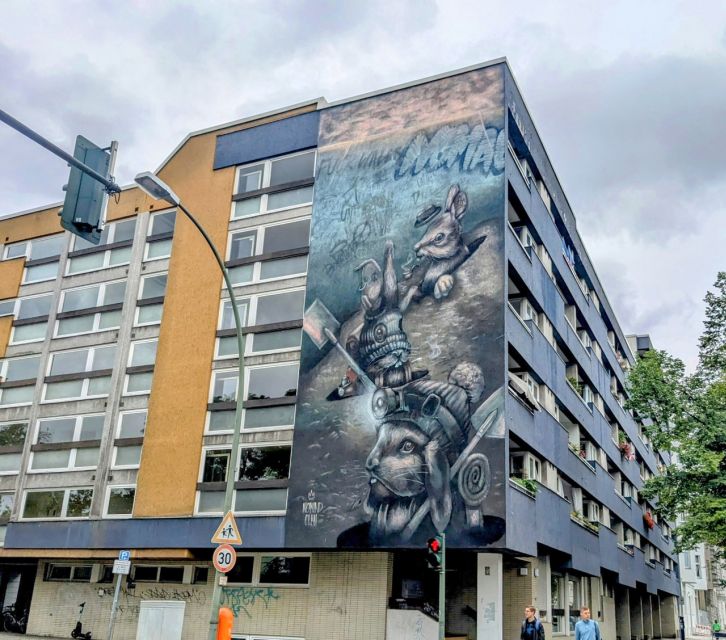
One of the strongest parts of this experience is the promise of places that are not all on the standard sightseeing circuit. The route includes public spaces, quiet courtyards, and backstreets. That makes the tour feel more like an urban-art field trip than a simple walk between postcard locations.
A central-city route would be easier, but it would also leave out much of Berlin’s character. Crossing the city lets you compare different settings and see how the surrounding buildings affect each piece. A mural on a large facade has a different presence from a stencil in a narrow passage. A legal wall can feel open and public, while a small installation in a courtyard may reward patience and careful looking.
The tradeoff is time. Three hours sounds generous, but a route covering both west and east Berlin cannot give every work a long explanation. If you stop to photograph every mural, you may need to keep moving. I would treat the tour as an introduction to a large number of works, with the option to return later to the pieces that interest you most.
Bring a camera, but do not spend the entire time looking through it. The guide’s stories about artists, methods, and motives are a major part of the value. Take a few photos, then look up and listen.
More Graffiti Tours in Germany
- Private Alternative Berlin Tour -Murals, Graffiti and Squats
★ 4.8 · 5 reviews - Graffiti Workshop Berlin with professional graffiti artists
★ 4.0 · 4 reviews - Open graffiti workshop in the Mauerpark in Berlin
★ 5.0 · 2 reviews - Berlin Graffiti Workshop For Groups & Team-Buildings
★ 5.0 · 2 reviews
Why the private format changes the experience
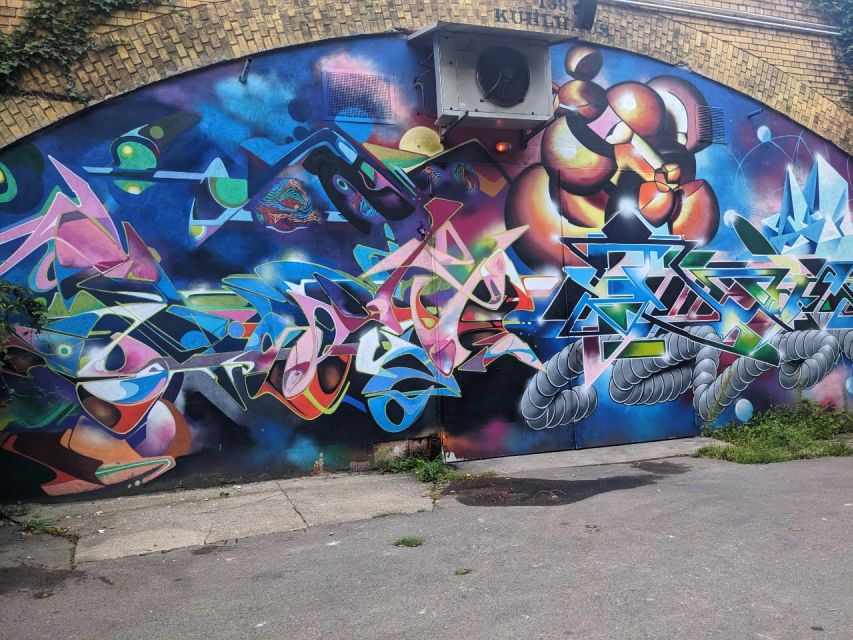
This is a private group tour, not a fixed public walk. That gives you more control over the pace and makes it easier to ask about the styles or artists that catch your attention.
The stated price is $176 for a group of up to 20 people. For one or two people, that is a fairly serious expense for three hours. For a family, school group, group of friends, or company outing, the calculation changes quickly. At the full group size, the per-person cost is low for a private citywide experience.
A private tour also makes sense if your group has a specific interest in graffiti, mural painting, photography, urban culture, or Berlin’s recent history. You can ask the guide to explain a technique again, compare two artists, or spend a little more time on a work that interests your group.
The format is less useful if you prefer to wander alone and stop whenever you like. You are paying for the guide’s route, interpretation, and access to a large amount of material in a short time. It is best for people who want structure and context rather than an unplanned afternoon of wall hunting.
The guide’s role and the local perspective
The tour is led in English by a guide described as an active member of Berlin’s urban-art scene. Adrian is named in one of the booking comments, and a separate German-language note specifically praises him as a great street-art guide.
That local involvement is important here. Berlin’s graffiti is easy to photograph but harder to interpret. A guide who has spent more than 17 years guiding and engaging with the scene can explain the difference between a famous image, a local style, a fresh piece, and a work that has significance beyond its surface.
You will hear stories about how tags are made while other people sleep, why artists use certain locations, and how commissioned and illegal work can exist side by side. The conversation also covers the backgrounds and motivations of artists, rather than treating every painted wall as the same kind of act.
Do keep your expectations realistic. The experience provides a guide’s informed view, not a formal art-history lecture or a guarantee that every artist will be identified. Street art changes, and some pieces may be temporary. The value is in learning how to read the city’s walls and understanding the forces that shaped the scene.
Transport, timing, and practical planning
You need an AB public transport ticket. That is a key cost and planning detail because the route crosses Berlin instead of remaining in one compact area. Check that your ticket covers the areas you will use and allow enough time to reach the meeting point before the start.
The tour lasts three hours, with available starting times shown during booking. Since the route includes both outdoor public spaces and backstreets, wear comfortable shoes and dress for the weather. These are practical suggestions for any extended city walk, especially one that moves between several districts.
The experience is listed as wheelchair accessible. If you use a wheelchair, it is sensible to confirm the route and current site conditions with the provider before departure, since outdoor art locations and public spaces can change.
The tour includes the guide, local tips, and free stickers. The stickers are a small extra, but they fit the subject and give you a simple souvenir. The local tips may be just as useful, particularly if you want to keep exploring Berlin’s urban-art culture after the tour.
Cancellation is free up to 24 hours before the start, and you can reserve now and pay later. Those terms help if your Berlin schedule is still shifting, though they do not remove the need to plan around the AB ticket and a three-hour block.
Photo opportunities without losing the story
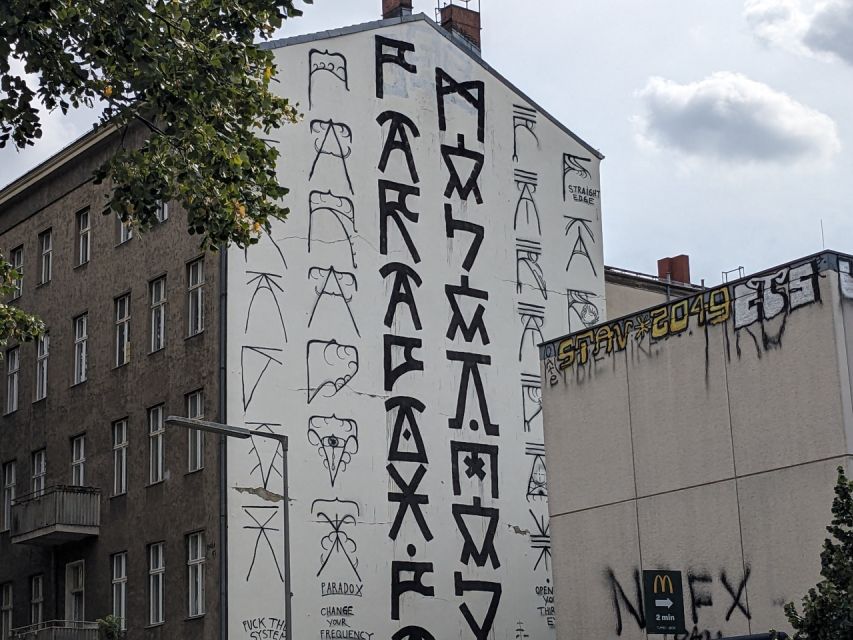
This tour is designed for people who like taking pictures. Giant murals give you strong subjects, while stencils, pasteups, and small installations reward close shots. The mix of legal and illegal work also creates visual variety, from carefully planned surfaces to fast, rough marks.
The best approach is to photograph selectively. Ask the guide which pieces are especially important, then take time to frame them. A wall may look impressive in person but lose its scale in a quick snapshot. Including part of the building or street can help show how the artwork fits into Berlin’s public space.
The photo side also has a limit. You are moving through a city, not visiting a gallery where every work can be studied at leisure. If photography is your main goal, tell the guide at the beginning. A private group has more room to discuss priorities than a public tour, though the route still needs to keep moving.
Who will get the most from this tour
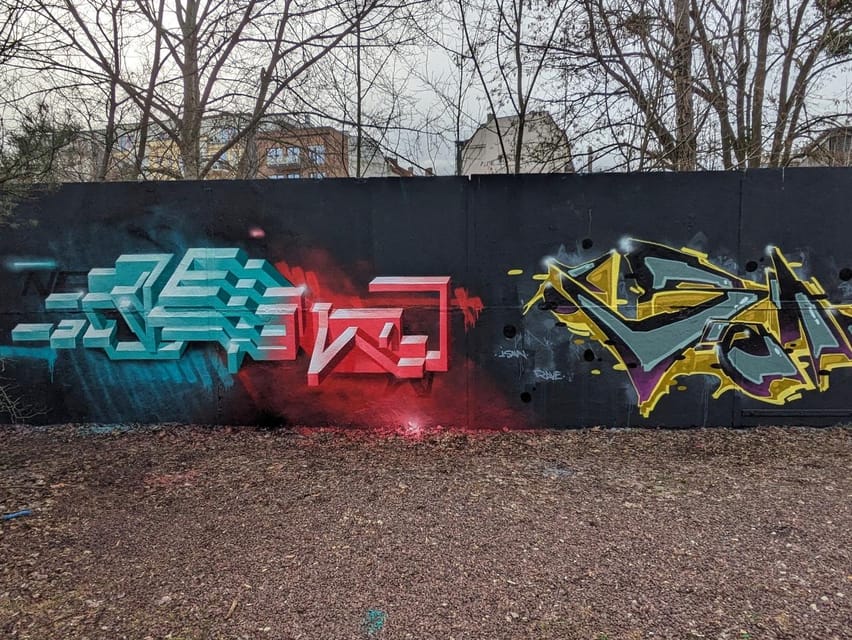
I would recommend this experience to you if you want more than a few famous murals. It suits visitors who are curious about the history of graffiti, the politics and humor of public art, and the difference between a tag, a stencil, a pasteup, and a large mural.
It is also a strong choice for groups. The $176 flat price becomes attractive when divided among several people, and a private guide can keep the outing focused on your interests. Families with older children and teenagers may find the subject more engaging than a traditional museum visit, while photographers will appreciate the number of possible subjects.
You may want a different plan if you have only a short time in Berlin and want to stay near the main sights. This tour covers ground, and the AB ticket is extra. It is also not the best match if you want a slow, single-neighborhood walk with long breaks at each stop.
The two available booking ratings are both five out of five, and the comments praise the route through different parts of Berlin and the guide, especially Adrian. That matches the experience’s clearest strengths: range, local perspective, and a private format.
Should you book it?
Book this tour if you want Berlin’s street art explained as a living part of the city, not just used as a colorful backdrop. You will see more than 35 works and learn how the scene developed from late-1970s graffiti through the 1980s, 1990s, and early 2000s street-art boom.
The best value comes when several people share the $176 group price. Bring an AB transport ticket, comfortable shoes, and a camera, then expect a fast-moving route with plenty to look at. If you prefer a focused neighborhood walk or a quiet afternoon, choose something smaller. If you want a broad, informed look at Berlin’s walls and the people behind them, this is a strong choice.
FAQ
How long does the Mega Street Art, Mural, Graffiti Private Tour last?
The tour lasts three hours.
What language is the tour offered in?
The live tour is offered in English.
Is the tour private?
Yes. It is a private group experience for up to 20 people.
How much does the tour cost?
The price is $176 per group of up to 20 people.
What kinds of art will I see?
You can see more than 35 giant murals, graffiti walls, legal and illegal pieces, pasteups, stencils, and small street installations.
Do I need a public transport ticket?
Yes. An AB transport ticket is required.
Is the tour wheelchair accessible?
Yes, the experience is listed as wheelchair accessible.
More Private Street Art Tours in Berlin
- Berlin Private Street Art Tour – Off The Grid
★ 5.0 · 9 reviews - Berlin : Private Street Art Walking Tour (Private Tour)
★ 5.0 · 2 reviews - IRA Troubles Conflict Private Tour Museum Graves Murals and Political Analysis
★ 5.0 · 67 reviews - Denver: Street Art, Murals, and Graffiti Private Walking Tour
★ 5.0 · 47 reviews
More Mural Tours in Berlin
- CDMX: Xochimilco, Coyoacan, Frida Kahlo Museum & Murals Tour
★ 4.4 · 3,025 reviews - Belfast: Murals Taxi Tour
★ 4.9 · 2,047 reviews - Belfast’s Political Mural Taxi Tour
★ 5.0 · 1,180 reviews - Murals of Nashville Instagram Tour by Golf Cart
★ 5.0 · 950 reviews
Just added around Berlin
- Open graffiti workshop in the Mauerpark in Berlin★ 5.0 · 2 reviews
- Berlin Private Street Art Tour – Off The Grid★ 5.0 · 9 reviews
- Alternative Berlin & Street Art Tour★ 4.5 · 14 reviews
- Street Art & Berlin Gay, Queer, Trans History + Free Gay Map★ 4.9 · 15 reviews
- Berlin : Private Street Art Walking Tour (Private Tour)★ 5.0 · 2 reviews
- Berlin: Alternative & Street Art Tour★ 4.5 · 10 reviews
- Alternative Berlin / Street art tour – Private group★ 5.0 · 6 reviews
- Graffiti Workshop Berlin with professional graffiti artists★ 4.0 · 4 reviews
Berlin Street Art Tours, compared.

East Meets West: Berlin Food Culture & Street Art
Read our review →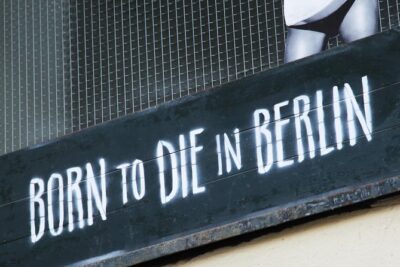
Street Art and Alternative Tour of Berlin in French
Read our review →Browse the lists this tour appears in