
REVIEW · BERLIN
Berlin: Alternative & Street Art Tour
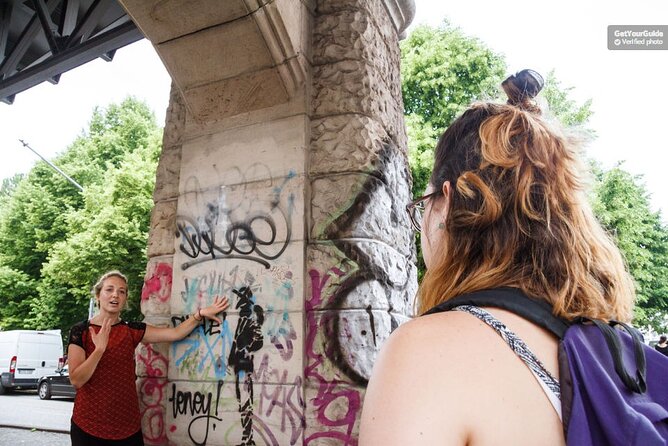
Berlin’s alternative culture is not tucked away in a museum. It is painted across walls, built into abandoned spaces, played through club doors, and argued over in neighborhood streets. This three-hour walk connects that world across Mitte, Kreuzberg, and Friedrichshain, with stops tied to punk, techno, squatting, graffiti, politics, and community life.
I like the focus on real places rather than a simple mural checklist, especially Haus Schwarzenberg, the Treehouse on the Wall, and Künstlerhaus Bethanien. I also like the guide-led storytelling. Guides such as Damien and Antonio Castello have been singled out for their enthusiasm, clear explanations, and strong grasp of Berlin’s alternative scene.
The main consideration is pace. Three hours covers several districts, so this is a walking tour with a broad reach, not a slow look at every artwork. Public transportation tickets are not included, food and drinks are your responsibility, and the tour runs rain or shine.
Key points to know before booking
- Berlin’s counterculture in one walk: Connect punk rock, techno, graffiti, political activism, and squatting culture.
- Five distinctive stops: See Haus Schwarzenberg, YAAM Beach, Künstlerhaus Bethanien, the Treehouse on the Wall, and SO36.
- Three major districts: The route links Mitte, Kreuzberg, and Friedrichshain rather than staying in one compact neighborhood.
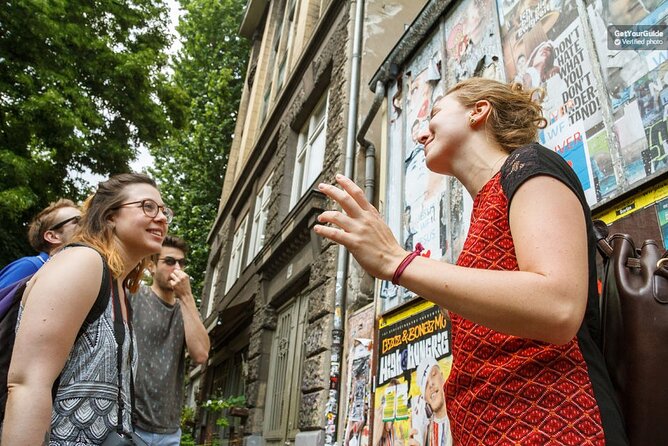
- Strong guide element: English-speaking guides explain how artists and alternative communities shaped the city.
- Good value at $23: The price covers three hours with a live guide, but not transport, meals, or drinks.
- Practical flexibility: You can cancel up to 24 hours before the tour for a full refund and reserve without paying immediately.
Why Berlin’s alternative side needs a guide
You can see graffiti on your own. You can also walk past a former squat, a music club, or an improvised garden without realizing why it matters. The useful part of this experience is the connection between the places.
Berlin’s creative identity grew through conflict as much as through art. Punk challenged social conventions. Techno found new life in unusual buildings after reunification. Squatting offered an answer to empty housing and unused property. Street art turned blank walls into public arguments, jokes, memorials, and acts of defiance.
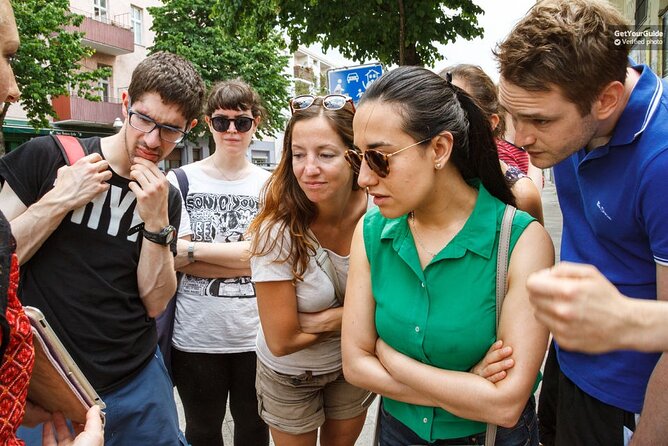
A guide gives you the missing background. You learn why artists came to Berlin, why the city has attracted people seeking space and freedom, and how alternative communities helped shape neighborhoods now popular with visitors. The tour is not only about taking photographs. It is about understanding why these photographs exist in the first place.
The English-speaking guides are central to the experience. Damien is described as enthusiastic and well informed, while Antonio Castello received especially strong praise for making the experience memorable and offering a clear view of alternative Berlin. Another guide was noted for explaining things calmly, which matters when the subject includes complicated social and political changes.
More Alternative City Tours in Berlin
- Berlin: Street Art and Alternative Tour
★ 4.7 · 98 reviews - Street Art and Alternative Tour of Berlin in French
★ 5.0 · 49 reviews - Berlin Alternative Street Art Tour
★ 4.0 · 26 reviews
Meeting under the TV Tower in Mitte
The tour begins under Berlin’s TV Tower, in front of the Vapiano restaurant. This is a practical central meeting point, but it also creates a useful contrast. You start beside one of Berlin’s best-known landmarks, then move toward places that are less polished and less obvious.
Mitte gives the opening section a big-city setting. From there, the route reaches other parts of Berlin, including Kreuzberg and Friedrichshain. Since the tour lasts three hours and covers several districts, the outing has a citywide feel rather than the narrow focus of a single street-art neighborhood.
Check the starting time when you book, and arrive ready to walk. The meeting point is easy to identify, but the experience does not include pickup or drop-off. If public transportation is used between sections, your ticket is not included, so plan for that extra cost.
The tour is listed as wheelchair accessible. Because it runs through multiple city areas and takes place outdoors in all weather, it is still sensible to check the day’s route details if you have specific mobility needs.
Haus Schwarzenberg and the art of the back street
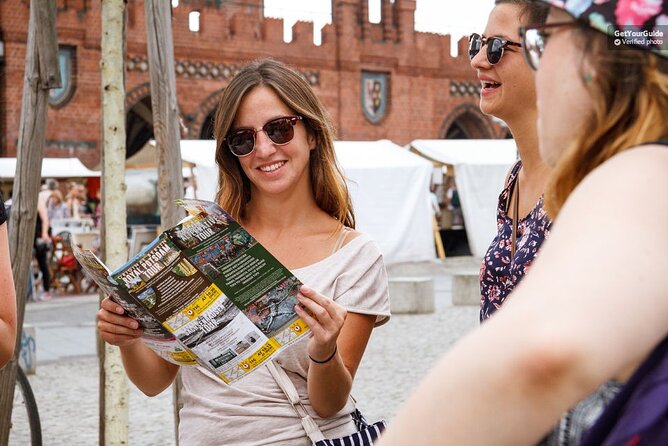
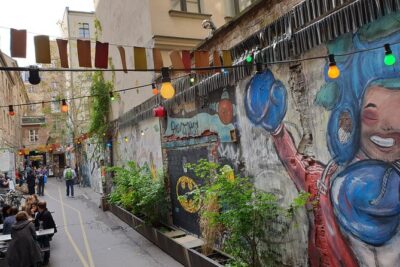
Haus Schwarzenberg is one of the strongest early stops because it shows how Berlin’s alternative culture can occupy a place that feels rough, layered, and personal. Here, street art and alternative culture meet in a setting that rewards close attention.
You can expect walls covered with changing artwork, stickers, painted figures, and large murals. The point is not simply to identify a famous artist. The guide helps you read the site as a living piece of Berlin, where art changes as the city changes.
This is an excellent place for photographs. Look beyond the largest mural and notice the smaller marks around it. Street art often works as a conversation, with new images appearing beside older ones. A guide can help you understand the difference between a decorative wall and a place with a long connection to Berlin’s creative scene.
One limitation is that public art changes. A wall that looks one way on one visit may look different later. That is part of the appeal, but you should not treat the tour as a guaranteed gallery of specific works. The value lies in the setting, the stories, and the chance to see how Berlin’s art culture works in public space.
YAAM Beach, where music and community meet
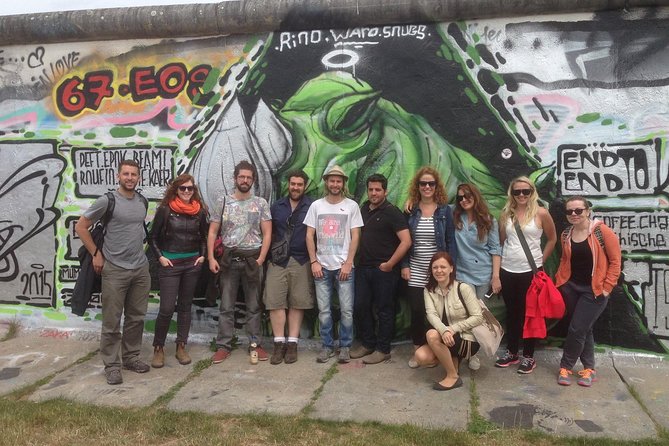
YAAM Beach brings a different mood to the route. It connects reggae, music, graffiti, and community life beside the river. The setting gives the tour a break from dense streets and shows that Berlin’s alternative spaces are not limited to clubs or covered walls.
YAAM is useful because it widens the idea of street culture. You see how music, food, art, and social life can share one place. The stop also helps explain why Berlin has drawn artists and independent-minded people from many backgrounds. The city’s alternative identity is not one single style. It includes different musical traditions and communities.
You may find this one of the more relaxed stops, but conditions can depend on the day and season. The tour does not include food or drinks, so do not assume a refreshment break is part of the price. If you want to spend extra time at YAAM, remember that the guided walk continues on its schedule.
For photographers, the combination of graffiti, open space, and community activity can be rewarding. For anyone mainly interested in formal monuments, though, this stop may feel less structured. Its appeal comes from the atmosphere and the story behind the place.
More Alternative City Tours in Germany
- Berlin: Alternative Street Art Tour
★ 4.4 · 18 reviews - Alternative Berlin & Street Art Tour
★ 4.5 · 14 reviews - Alternative Berlin / Street art tour – Private group
★ 5.0 · 6 reviews - Alternative Berlin Private Tour with Jacob – Graffiti and Squats
★ 5.0 · 6 reviews
The Treehouse on the Wall and creative defiance
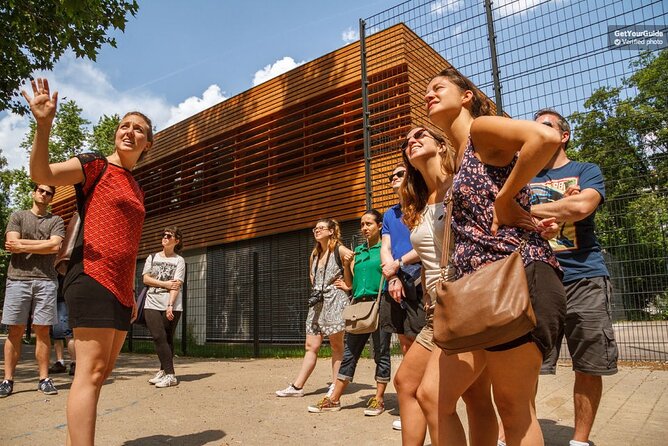
The Treehouse on the Wall is one of the tour’s most unusual sights. It represents ingenuity and resistance in a form that is easy to remember. Rather than presenting Berlin’s history through a grand building, the stop shows how people can create something unexpected in a contested urban space.
This is the kind of place that benefits from explanation. Without context, you might see a quirky structure and move on. With a guide, you get a clearer sense of how creativity, property disputes, changing neighborhoods, and personal determination can overlap.
I like this stop because it gives the tour a human scale. Large murals can impress you, but a small, stubborn act of construction can say just as much about Berlin. The Treehouse also fits the wider theme of the walk: alternative culture is not only a look or a music preference. It can be a decision about how to use space.
Do not expect a conventional attraction with a formal exhibition inside. The experience is about seeing the site and understanding its meaning. The guide’s explanation carries much of the value.
Künstlerhaus Bethanien and the roots of squatting culture
Künstlerhaus Bethanien adds political and social context. It is linked with contemporary art, alternative housing, activism, and the early squatting scene. This is where the tour moves beyond visual art and asks a harder question: who gets to use a city?
Berlin’s squatting movements grew from disputes over vacant buildings, housing, ownership, and urban change. Künstlerhaus Bethanien helps place those debates in a real location. You learn how art spaces and social movements could overlap, and how an abandoned or disputed building might become a center for creative work.
This stop is especially valuable if you want more than photographs. It explains why Berlin’s alternative districts developed the way they did, and why some residents view creative spaces as part of the city’s identity rather than a tourist product.
The subject can be complex, so the quality of the guide matters. A clear explanation keeps the story grounded instead of turning it into a list of dates and political slogans. The positive comments about calm, competent guiding are relevant here. You need someone who can explain competing viewpoints without flattening the subject.
SO36 and Berlin’s punk and music legacy
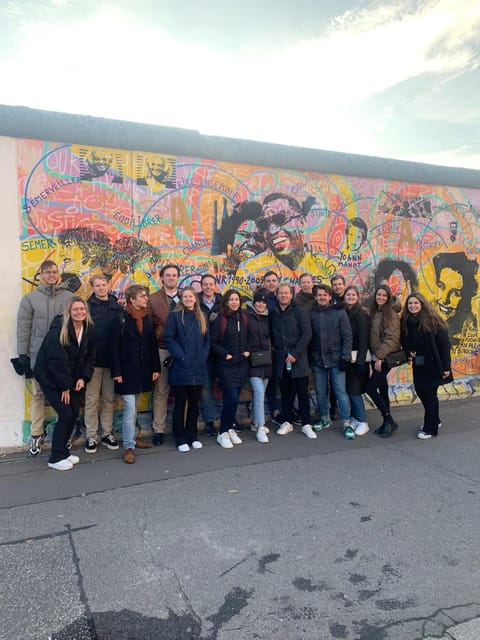
SO36 brings the tour back to music. The club is tied to Berlin’s punk, eclectic, and alternative music culture. It helps show how clubs can become more than nightlife venues. They can act as meeting points for artists, activists, musicians, and people who want to live outside the mainstream.
The stop fits the tour’s wider story about punk rock and techno. These scenes did not simply provide entertainment. They gave Berlin places where unusual ideas could develop and where people could form communities around music and identity.
You may not enter the club as part of the tour, so treat this as a cultural stop rather than a nightclub visit. The guide explains why SO36 matters and how it connects to Berlin’s musical past. If you want to experience its nightlife separately, that would be an additional plan, not part of the three-hour walk.
This section will appeal most to people who enjoy music history and urban culture. If your main interest is painting technique, it may feel like a detour. In reality, it completes the picture. Berlin’s graffiti, clubs, political groups, and squatting movements all belong to the same larger story of people making room for different ways of living.
A route through Mitte, Kreuzberg, and Friedrichshain
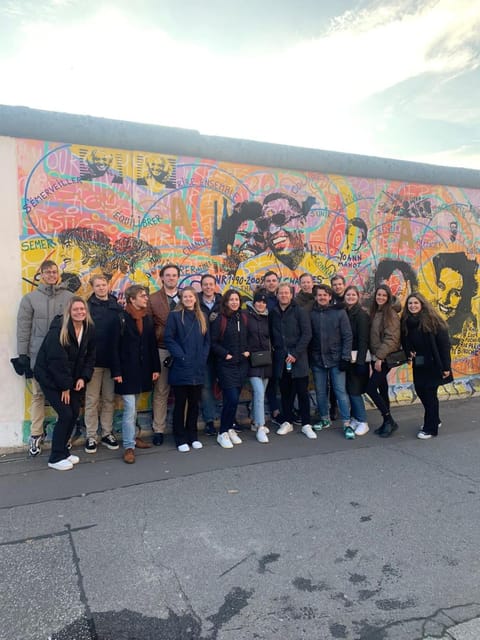
The route’s greatest strength is its range. Mitte, Kreuzberg, and Friedrichshain each contribute a different piece of Berlin’s alternative identity. You are not left with the impression that one street or one group represents the whole city.
The trade-off is distance and variety. Three hours is enough for a strong introduction, but not enough for a detailed neighborhood study. You will see selected places and hear the links between them. You will not have unlimited time at every mural, club, or cultural site.
Wear comfortable shoes and dress for outdoor conditions. The tour runs rain or shine, and the activity is built around walking between city locations. A dry day will make photographs easier, but rain will not cancel the experience under the stated conditions.
The route is suited to all ages. Its subject matter includes music, politics, housing activism, and street art, so younger participants may need some context from adults, but the activity is not restricted to a particular age group.
Is $23 fair for three hours?
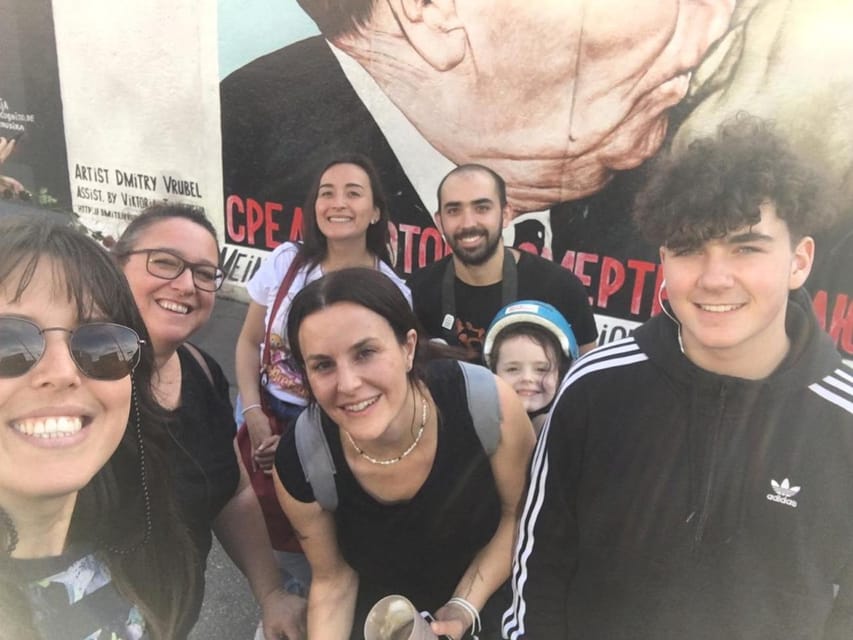
At $23 per person, the tour is reasonably priced for a three-hour guided walk in Berlin. You are paying for an English-speaking guide, local context, and a route that connects several districts and cultural sites.
The value is strongest if you would otherwise walk past these places without understanding them. A self-guided street-art outing can cost less, but you would need to research the sites and piece together the story yourself. The tour saves that effort and gives you a structured introduction.
Remember what the price does not cover. You pay separately for transportation tickets, food, drinks, and gratuities. There is no pickup or drop-off. Even with those extras, the base price remains accessible for a half-day activity.
The tour is also flexible from a booking standpoint. You can reserve now and pay later, and cancellation is free up to 24 hours before the start time. Those policies help if your Berlin schedule is still shifting.
Who will get the most from this walk?
I would choose this tour if you want to understand Berlin through its artists, musicians, activists, and independent communities. It is a good fit for first-time visitors who have seen the main sights but want a more local-feeling angle on the city.
It also suits returning visitors. Berlin’s alternative culture is broad enough that a second trip can benefit from a fresh route through Kreuzberg and Friedrichshain, especially if you have already covered the Brandenburg Gate, Museum Island, and the usual central sights.
You will probably enjoy it most if you like:
- Street art and graffiti
- Punk, reggae, or techno culture
- Urban politics and housing movements
- Unusual buildings and public spaces
- Guided walks with plenty of explanation
- Photography in changing city neighborhoods
You may want a different activity if you dislike walking in all weather, want a fully indoor experience, or prefer a tour focused only on famous monuments. The route is informal in subject and outdoor in format. It asks you to look at Berlin as a city shaped by arguments, experiments, and creative acts.
Should you book the Alternative Berlin tour?
Book it if you want the stories behind Berlin’s walls, clubs, and improvised spaces. The combination of Haus Schwarzenberg, YAAM Beach, Künstlerhaus Bethanien, the Treehouse on the Wall, and SO36 gives you more than a collection of photo stops. It shows how art, music, housing, and politics overlap in the city.
The strongest reason to go is the guide. Damien and Antonio Castello are examples of the energetic, clear style this subject needs, while the calm explanations noted from another guide will suit anyone who prefers a measured pace. Since the tour covers several districts, expect a broad introduction rather than an exhaustive study.
At $23, it is an easy way to add a different side of Berlin to your schedule. Bring suitable clothing, allow for transport costs, and meet under the TV Tower in front of Vapiano. If you want Berlin beyond postcards and major monuments, this is a practical place to start.
FAQ
How long does the Alternative and Street Art Tour last?
The tour lasts three hours.
Where does the tour meet?
The meeting point is underneath the TV Tower, in front of the Vapiano restaurant.
Which Berlin districts does the tour visit?
The route travels through Mitte, Kreuzberg, and Friedrichshain.
Which main places are included?
The tour includes Haus Schwarzenberg, YAAM Beach, Künstlerhaus Bethanien, the Treehouse on the Wall, and SO36.
Is the tour offered in English?
Yes. The experience includes an English-speaking live guide.
Is public transportation included?
No. Any transportation ticket needed during the experience is not included.
Can I cancel the booking?
Yes. You can cancel up to 24 hours in advance for a full refund. You can also reserve now and pay later.
Just added around Berlin
- Open graffiti workshop in the Mauerpark in Berlin★ 5.0 · 2 reviews
- Berlin Private Street Art Tour – Off The Grid★ 5.0 · 9 reviews
- Alternative Berlin & Street Art Tour★ 4.5 · 14 reviews
- Street Art & Berlin Gay, Queer, Trans History + Free Gay Map★ 4.9 · 15 reviews
- Berlin : Private Street Art Walking Tour (Private Tour)★ 5.0 · 2 reviews
- Mega Street Art, Mural, Graffiti Private Tour★ 5.0 · 2 reviews
- Alternative Berlin / Street art tour – Private group★ 5.0 · 6 reviews
- Graffiti Workshop Berlin with professional graffiti artists★ 4.0 · 4 reviews
Berlin Street Art Tours, compared.
East Meets West: Berlin Food Culture & Street Art
Read our review →
Street Art and Alternative Tour of Berlin in French
Read our review →Browse the lists this tour appears in