

REVIEW · BERLIN
Street Art & Berlin Gay, Queer, Trans History + Free Gay Map
Berlin’s street art and queer past meet on this two-hour walk through Schöneberg and nearby neighborhoods. With trans woman guide Gali Jaffe, you’ll see colorful public art, visit the Urban Nation gallery, and connect places such as Christopher Isherwood’s former home and the site of El-Dorado.
I like the small groups of up to 10 and the personal style, which lets Gali adjust the talk to your interests. I also like the free Berlin Gay Map, a useful extra if you want to keep exploring after the tour. The main drawback is pace: two hours goes quickly, and the tour includes public transport, so you’ll need a valid ticket and comfortable walking shoes.
Key points at a glance
- Berlin street art first: Begin with colorful graffiti and public art in areas many short city tours skip.
- A trans guide with a personal approach: Gali Jaffe leads the walk in English and adapts the experience to the group.
- Urban Nation in the middle: Get a short guided visit and free time at this street-art gallery.
- Schöneberg’s queer landmarks: See Christopher Isherwood’s house, the former El-Dorado site, and places linked with Magnus Hirschfeld.
- Small and accessible: The group is limited to 10 people, and the activity is wheelchair accessible.
- Useful follow-up material: You receive a free Berlin Gay Map for further exploring.
Street art as the doorway into Berlin’s queer past

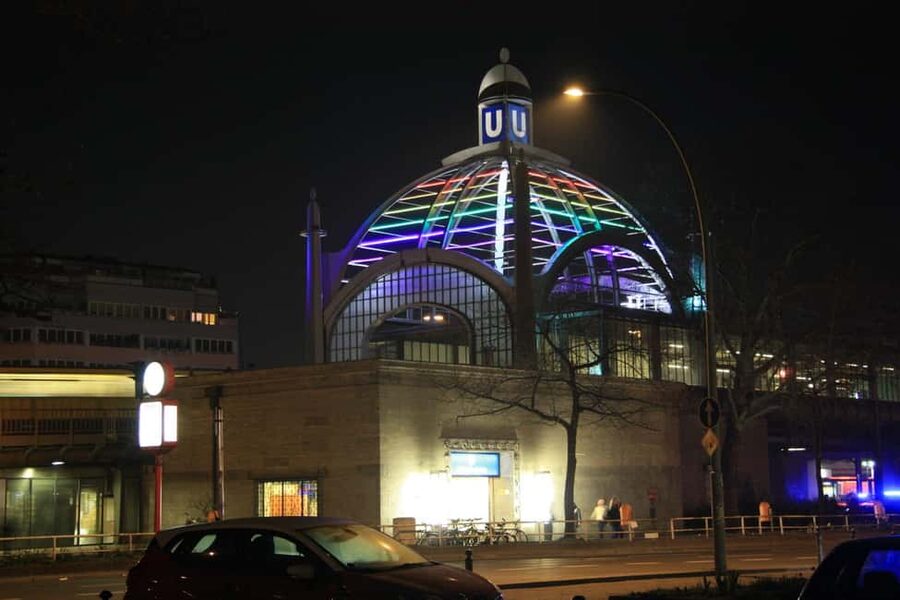
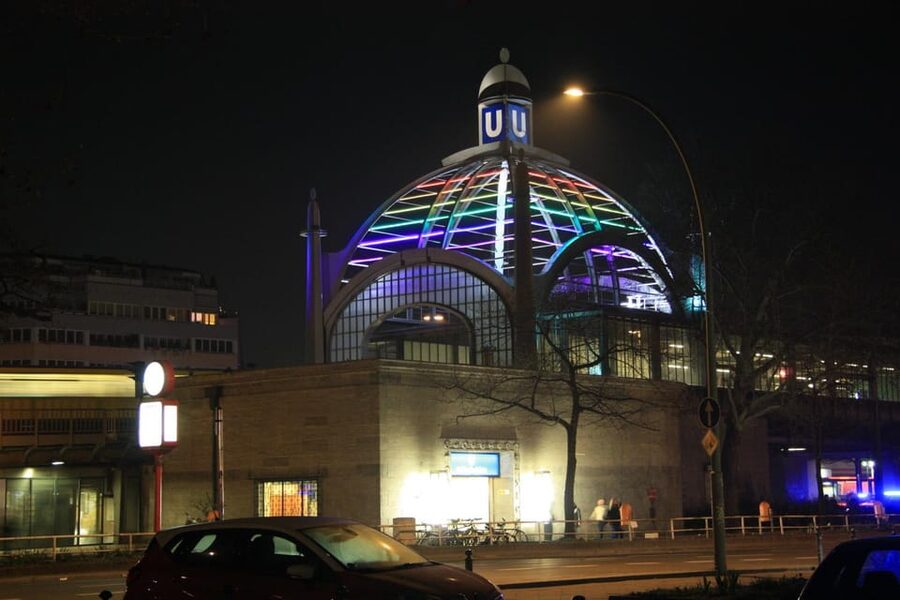
The tour begins at Wittenbergplatz, in front of the KaDeWe department store and the entrance to the underground station. That is an easy meeting point, though the open public setting means you should arrive with the exact entrance in mind rather than wait inside a tour office.
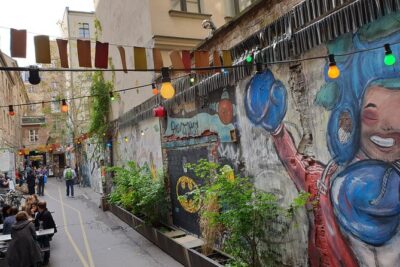
From there, Gali leads you toward some of Berlin’s street art. The art is not treated as a quick photo stop. It sets the tone for a tour about people claiming space, expressing identity, and leaving a mark on the city. You’ll see graffiti and public art before moving into the social and political story of Berlin’s gay, queer, and trans communities.
I like this order. Starting with art keeps the first part light and visual, then the historical material has a clear connection to what you are seeing around you. If you want a tour that deals only in dates and famous names, this will feel different. It uses the city itself as the classroom.
The exact artworks can change over time. Street art is temporary by nature, and pieces may be painted over, removed, or replaced. That is part of the appeal, but it also means you should book this for the way the guide reads Berlin, not for a fixed checklist of murals.
More History Tours in Berlin:
- 3-Hour Atlanta Beltline Food, Street Art and History Tour
★ 5.0 · 345 reviews - History and Murals: Walking Tour Guadalajara
★ 5.0 · 237 reviews - Walking Tour – Impressive murals in Historical Center of Mexico City
★ 5.0 · 224 reviews
A five-minute ride before the main Schöneberg walk
The route includes a short public transport journey of about five minutes. You are expected to bring your own public transport ticket, so arrange that before meeting the group. The ticket is not included in the $57 price.
This small detail matters. If you arrive without a valid ticket, the beginning of the tour can become needlessly awkward. It also means the tour is not a fully private walking route from start to finish. You’ll use the city as locals do, moving between areas rather than staying on one compact block.
The first main guided section in Schöneberg lasts about 40 minutes. Schöneberg is central to the tour because it connects Berlin’s queer past with its present-day identity. Gali’s role is especially important here. As a trans woman, she brings a personal point of view to a subject that can easily become dry or overly academic in the hands of a less engaged guide.
That does not mean the tour is only for queer visitors. Anyone interested in Berlin’s social history, street art, civil rights, or changing neighborhoods can get value from it. Still, the tone is likely to feel most useful if you want more than a standard city-center introduction.
Urban Nation gives the tour an art-focused pause
The route continues to Urban Nation, where you spend about 20 minutes on a guided visit and some free time. This short stop gives the street-art portion a physical home after seeing art outdoors.
The gallery is useful because it lets you compare Berlin’s informal, changing walls with art presented in an indoor setting. You have time to look around rather than simply walk past another facade. Since the visit is brief, think of it as a focused stop, not a full gallery afternoon.
This is one reason the $57 price can make sense for the right person. You are not paying only for a walk between historical addresses. The experience combines street art, a gallery, public transport, a focused neighborhood tour, and a guide who can connect those pieces.
Still, value depends on what you want. If your main goal is to spend hours inside museums, Urban Nation will be too short. If you prefer a compact introduction with several connected themes, the timing works better.
Schöneberg’s names and places bring the story closer
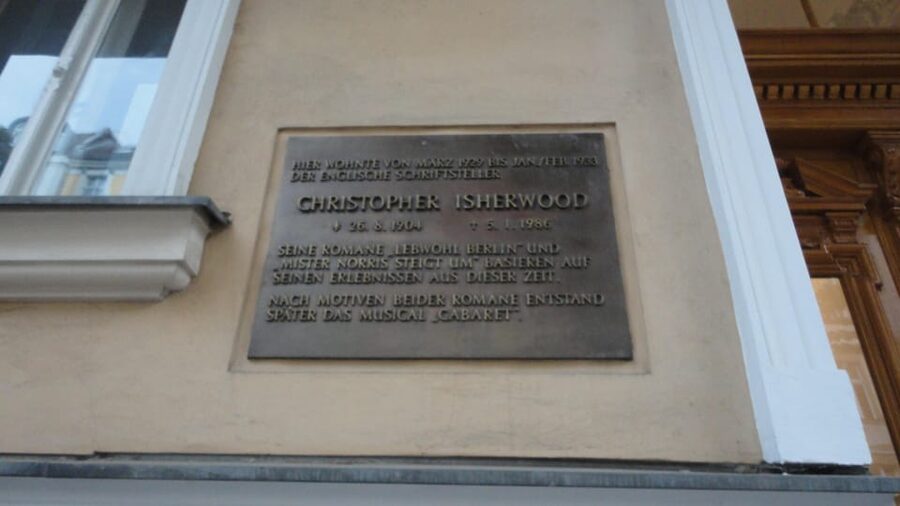
After Urban Nation, you return to Schöneberg for roughly 30 minutes of guided sightseeing and walking. This section includes the house associated with Christopher Isherwood, the location of the famous El-Dorado club, and discussion of Magnus Hirschfeld.
These are not just names to tick off. Isherwood helps connect Berlin’s queer past with literature and the city’s international reputation. The El-Dorado site points to the nightlife and social spaces that once helped shape Berlin’s queer culture. Hirschfeld brings the discussion toward sexology and his Institute for the Science of Sexuality, described as the first of its kind.
The value here is the connection between people, places, and ideas. You are not only hearing that queer life existed in Berlin. You are learning how writers, clubs, researchers, and institutions helped create a public world around it.
The tour also deals with gay, queer, and trans history together. That wider scope is important, since these stories are often separated or reduced to a few famous nightlife references. Gali’s perspective helps keep the conversation personal as well as historical.
You should also keep expectations realistic. The walk lasts only two hours, and each stop receives a limited amount of time. You will get an introduction and a clear route through the subject, not an academic seminar on Hirschfeld, Isherwood, or Berlin’s entire queer past.
Same walls, a different guide:
- Berlin: City Street Art Guided Walking Tour
★ 4.8 · 1,051 reviews - Berlin: 3-Hour Street Art Tour
★ 4.7 · 778 reviews - Berlin Street Art Walking Tour – Off The Grid
★ 5.0 · 270 reviews - East Meets West: Berlin Food Culture & Street Art
★ 5.0 · 157 reviews
A guide who can shape the walk around your interests

Gali Jaffe is the experience provider and the live guide. The tour is offered in English. The small group limit of 10 is a real advantage here, especially during the history sections.
A large group can make street art stops feel rushed and discussion difficult. With fewer people, you have a better chance to ask questions and follow a topic that catches your interest. The tour’s format also allows Gali to personalize the experience rather than deliver a completely fixed speech.
That personal quality is one of the strongest reasons to choose this walk. The guide’s background gives the subject a human angle, and the tour is designed around conversation as much as sightseeing. You should still remember that the exact amount of discussion depends on the group and the available time.
The experience has earned a 4.9 rating from 15 reviews, and the praise centers on Gali’s warm manner, personal approach, and strong command of Berlin’s art and cultural story. One particularly useful detail is that the tour can work for a parent and a 16-year-old together. A snowfall even added atmosphere for one group, though weather is obviously not part of the booking.
What the $57 price includes, and what it does not

At $57 per person, this is priced above a basic free walking tour but below a longer private tour. The strongest value comes from the combination of a specialist guide and several themes in one short outing.
Your price covers the guided street-art walk, the church stop, the Urban Nation visit, the Schöneberg sightseeing route, and the free Berlin Gay Map. It does not cover your public transport ticket. The map is more than a small souvenir if you want to continue exploring Berlin’s queer venues and landmarks on your own.
I would book this if you want a compact, guided introduction and care about the meaning behind the places you see. I would skip it if you are mainly looking for a long street-art photography walk or a full museum visit. The tour offers a sample of each, then uses them to frame the historical story.
A two-hour duration also makes it easy to fit into a busy Berlin schedule. It begins and ends at Wittenbergplatz, so you are not left across town at the finish. That return point is convenient for continuing your day in the city.
Practical details that shape the experience

The tour starts at the entrance to Wittenbergplatz underground station, in front of KaDeWe. It ends at the same meeting point. Check the available starting times when booking, since the tour does not list one fixed departure time.
The activity is wheelchair accessible. Because the route includes walking, public transport, a gallery, and several outdoor stops, you should still consider your own comfort and mobility needs when choosing a time and season.
The tour is not suitable for children under 16. Teenagers aged 16 and older can attend, making it a possible choice for families with older children who are comfortable with the subject matter.
You should bring:
- A valid public transport ticket
- Comfortable shoes
- Weather-appropriate clothing
The last two items are practical advice for any outdoor walk, while the ticket is specifically required for this experience. Berlin weather can change quickly, and part of the tour takes place outside.
Cancellation is flexible: you can cancel up to 24 hours before the start for a full refund. You can also reserve now and pay later, which helps if your Berlin plans are still shifting.
Who will get the most from this Berlin walk
I would recommend this tour to you if you want to see a side of Berlin that standard sightseeing routes often leave out. It suits queer visitors looking for useful orientation, allies who want a thoughtful introduction, and anyone interested in how art and social history shape the city.
It is also a good match if you prefer a small group and a guide who can respond to questions. The personal scale matters more here than on a simple photo walk because the subject includes identity, discrimination, nightlife, research, and political change.
You may want something else if you need a highly detailed historical lecture, a long museum visit, or a tour designed mainly for young children. The route is concise and mixed in format. Its strength is the link between several subjects, not exhaustive coverage of any one of them.
The free Berlin Gay Map is particularly useful if this is your first visit and you want to keep exploring after the tour. It gives you a starting point for planning your own follow-up rather than ending the experience at the final stop.
Should you book the Street Art and Berlin Gay, Queer, and Trans History tour?
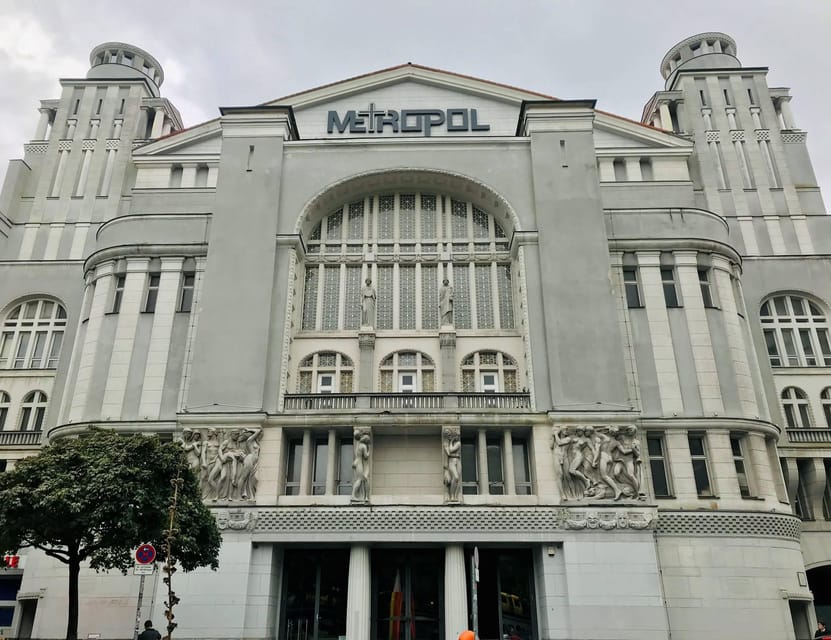
Book it if you want a personal, English-language introduction to Berlin’s street art and queer past, especially with a trans guide who can bring lived perspective to the subject. The combination of Schöneberg sites, Urban Nation, outdoor art, and the free map offers good value in a compact two-hour format.
The main tradeoffs are the short duration, the extra public transport ticket, and the fact that the art portion cannot promise a fixed set of works. For most people who value context over a rigid checklist, those are reasonable compromises. If you want a focused introduction that helps you understand Berlin before exploring further, this is a strong choice.
FAQ
Where does the tour start?
It starts at the entrance to Wittenbergplatz underground station, in front of the KaDeWe department store.
Where does the tour end?
The tour ends back at the Wittenbergplatz meeting point.
How long does the experience last?
The tour lasts two hours. Starting times vary, so check availability when booking.
What language is the tour in?
The live tour is conducted in English.
Is public transport included?
No. You need to bring your own public transport ticket for the short ride included in the route.
Is the tour wheelchair accessible?
Yes, the activity is listed as wheelchair accessible.
Can children join the tour?
The tour is not suitable for children under 16.
Just added around Berlin
- Open graffiti workshop in the Mauerpark in Berlin★ 5.0 · 2 reviews
- Berlin Private Street Art Tour – Off The Grid★ 5.0 · 9 reviews
- Alternative Berlin & Street Art Tour★ 4.5 · 14 reviews
- Berlin : Private Street Art Walking Tour (Private Tour)★ 5.0 · 2 reviews
- Mega Street Art, Mural, Graffiti Private Tour★ 5.0 · 2 reviews
- Berlin: Alternative & Street Art Tour★ 4.5 · 10 reviews
- Alternative Berlin / Street art tour – Private group★ 5.0 · 6 reviews
- Graffiti Workshop Berlin with professional graffiti artists★ 4.0 · 4 reviews
Berlin Street Art Tours, compared.

East Meets West: Berlin Food Culture & Street Art
Read our review →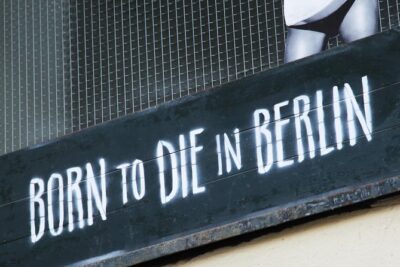
Street Art and Alternative Tour of Berlin in French
Read our review →Browse the lists this tour appears in