
REVIEW · COLOMBIA
Shared Tour Cali’s Salsa, Graffiti & Resistance Experience
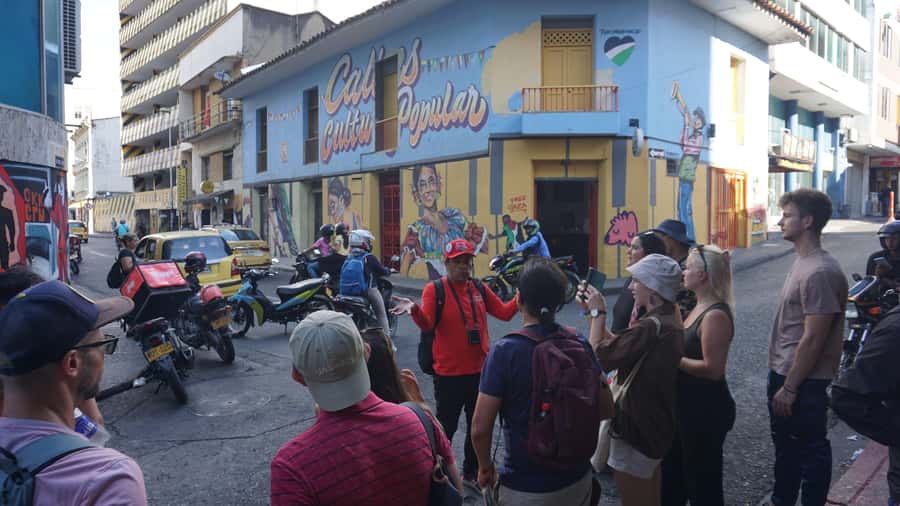
Cali’s salsa is more than a soundtrack for late nights. On this walk, you connect the city’s famous dance style with popular culture, protest, and African heritage, then see those ideas painted across central Cali. The tour moves through plazas, boulevards, salsa areas, and political murals, so you get a useful first look at how the city tells its own story.
I like two things right away: the route links salsa and street art instead of treating them as separate sights, and guides such as Christian, also called Chris, bring plenty of energy to the subject. The tour also points you toward salsa bars and food spots for later, which makes the $13 price especially good for a first afternoon in Cali.
The main drawback is the walking. You cover about 8 kilometers in roughly two and a half hours, with stops to listen, so comfortable shoes and water are essential. This is not a seated music show, and it is not suitable for wheelchair users.
Key points to know before you go
- Salsa with a social story: Learn how music from the Caribbean and New York became tied to Cali’s identity, working communities, romance, protest, and social change.
- A long central-city walk: Expect about 8 kilometers on foot, with breaks for explanations and street scenes.
- Murals with a purpose: See tributes to salsa figures alongside activist art and the N21 graffiti monument honoring victims.
- Useful nightlife advice: The guide can recommend salsa bars and other places to eat or go dancing after the walk.
- A shared experience for $13: You join a group rather than booking a private guide, but the low fee gives you a strong cultural introduction.
- English or Spanish: Live guiding is available in both languages, with an optional Spanish audio guide.
Why Cali salsa makes a better starting point than a dance lesson
If you arrive in Cali expecting only fast footwork and crowded clubs, this tour gives you a broader frame. You learn that salsa grew through movement across the Caribbean, was shaped in New York, and took on a particular force in Cali during the 1960s through the 1980s.
That timeline matters. It helps you understand why salsa feels so closely tied to local identity here. The music was not simply imported and copied. It became part of cultura popular, the everyday culture of working communities, neighborhoods, musicians, dancers, and social groups.
I especially like that the experience treats salsa as a form of communication. Its lyrics can carry stories of romance, revolution, hard times, historical events, and social demands. You may know the music as something joyful, but the guide helps you hear the political and emotional weight beneath the rhythm.
The story also connects salsa to African emancipation and the cultural legacy carried by descendants of Africans in the Americas. That does not turn the walk into a formal lecture. Instead, it gives meaning to what you see and hear in the streets.
You should not expect a full dance class. The focus is on history, culture, murals, and the city’s social struggles. Still, the guides use music and movement to keep the walk lively, and you may be encouraged to loosen up a little. One guide described in the experience, Christian, is known for an animated style and a clear love of salsa.
More Graffiti Tours in Colombia
- Medellin: Comuna 13 Graffiti Tour, Cable Car & Street Food
★ 4.8 · 9,046 reviews - Medellín: Comuna 13 Tour with Snacks And Your Own Graffiti
★ 4.9 · 311 reviews - Bogotá: La Candelaria Graffiti & Urban Art Guided Tour
★ 4.7 · 250 reviews
Starting at Plazoleta Jairo Varela
The meeting point is Plazoleta Jairo Varela, where you look for the red umbrellas. This is a practical place to begin because it puts you near several central sights and gives the group a clear landmark in a busy part of town.
The plaza is tied to Cali’s musical identity through Jairo Varela, the late Colombian composer and founder of Grupo Niche. The tour uses this starting area to move quickly into the city’s relationship with salsa, rather than spending the opening on generic orientation.
Arrive ready to walk. Bring water, wear comfortable clothes, and keep your phone and wallet secure. The route includes crowded areas, and the tour’s own advice is simple: keep your friends close and your belongings closer.
Plazoleta de la Caleñidad and the city’s popular culture
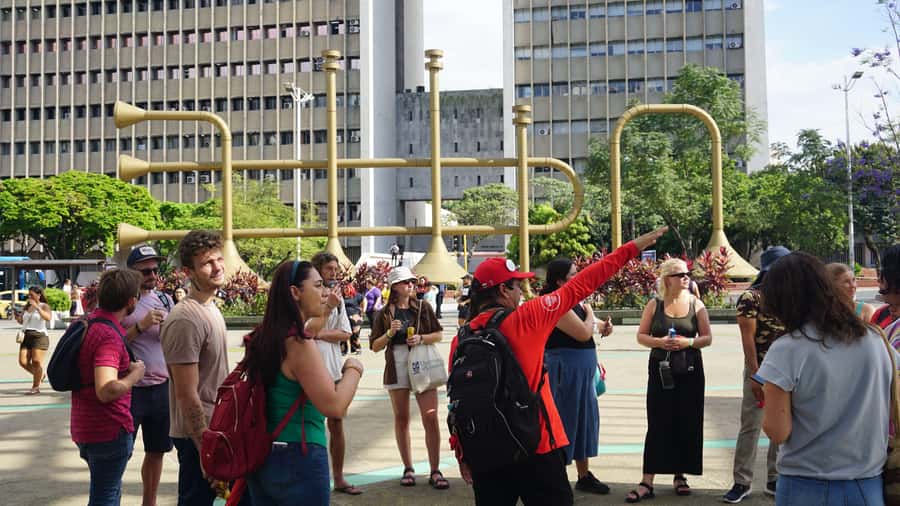
The Plazoleta de la Caleñidad is one of the places where the tour explains how people in Cali express local pride. The name itself points to caleñidad, the character and identity associated with Cali and its people.
Here, the guide can help you place salsa within everyday life rather than treating it as a tourist product. The city’s musical style grew through communities and social connections. It became a way for people to gather, celebrate, tell stories, and respond to what was happening around them.
This stop is valuable if you want more than a list of famous songs or dance steps. You begin to see why salsa remains such a strong local marker. It is tied to nightlife, but also to memory, neighborhood life, and public expression.
The pace here should suit most visitors because the group pauses while the guide explains the setting. The larger question is whether you enjoy context. If you want nonstop dancing, this part may feel slow. If you want to understand why Cali calls itself a salsa capital, it gives you an important base.
Calle del Pecado and the flavor of Cali nightlife
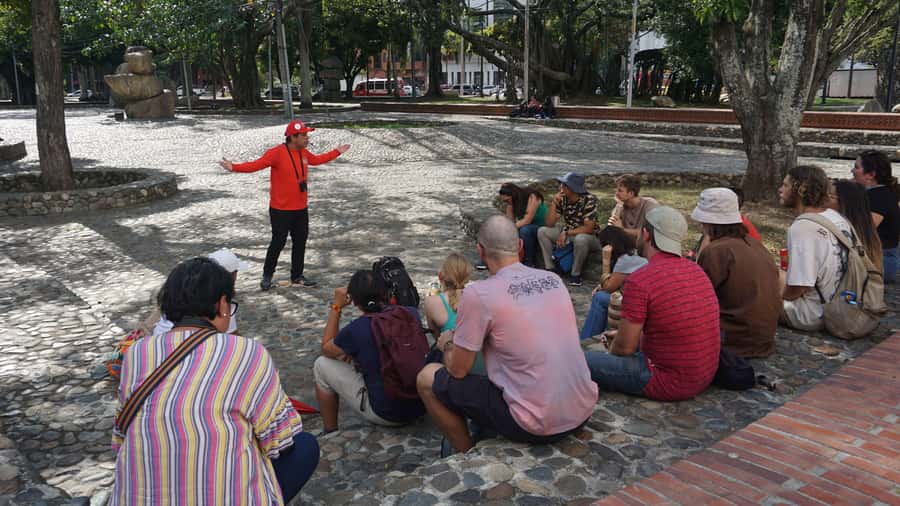
The route continues toward Calle del Pecado, also called the street of flavor. The name signals the area’s connection to food, nightlife, social energy, and the pleasure associated with salsa culture.
Do not expect this stop to function like a full evening out. You are seeing the street as part of a walking route, not booking a club crawl. The guide explains how these spaces fit into Cali’s musical life and can point you toward places worth returning to later.
That advice may be one of the most useful parts of the tour. A first-time visitor can easily find a bar with loud music, but it is harder to know which places match your mood, budget, and interest in Cali salsa. The guide offers recommendations for salsa bars, and the experience includes partner benefits when you show the Beyond Colombia Free Walking Tour Map through its Linktree.
You pay separately for food and drinks. A useful plan is to note the places mentioned during the walk, then choose one later when you are not rushing to keep up with the group.
Same walls, a different guide:
- Medellín: Comuna 13 and Graffiti Guided Tour with a Local
★ 4.9 · 239 reviews - Historical Shared Tour Salsa, Graffiti & Resistance in Cali
★ 5.0 · 107 reviews - Medellín: Private Comuna 13 Street Art Tour
★ 4.8 · 88 reviews - Medellín: Comuna 13 Tour with Spray Painting and ice cream
★ 5.0 · 74 reviews
The River Boulevard and the Curve
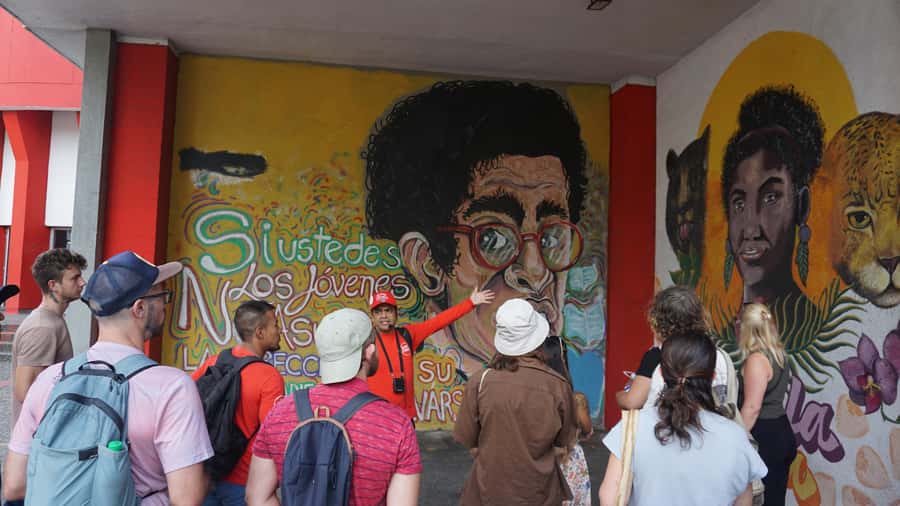
At the River Boulevard, including the area known as the Curve, the route shifts between public space, city design, music, and social memory. This is one of the places where the walk’s mix of subjects makes sense. You are not just moving from one mural to another. You are seeing how open city spaces become stages for gathering, performance, celebration, and protest.
The guide uses the boulevard to explain the effervescence of Cali, a word that here means the city’s restless energy and strong public spirit. That energy has a positive side, seen in music, dancing, and solidarity. It also has a harder side, seen in protests and social conflict.
I appreciate this balance. The experience does not present Cali as only a party city. It recognizes the joy while making room for the struggles that have shaped public life. Art and music become tools for people who want to remember, speak out, or stand together.
The boulevard is also a good point to take photographs, but stay aware of the group and your belongings. The tour is still moving, and you will want to listen rather than spend every pause framing pictures.
World Cup Tunnel and 5th Avenue
The World Cup Tunnel and 5th Avenue add another layer of urban Cali. These stops show how major public routes and infrastructure can carry cultural messages, not just traffic and pedestrians.
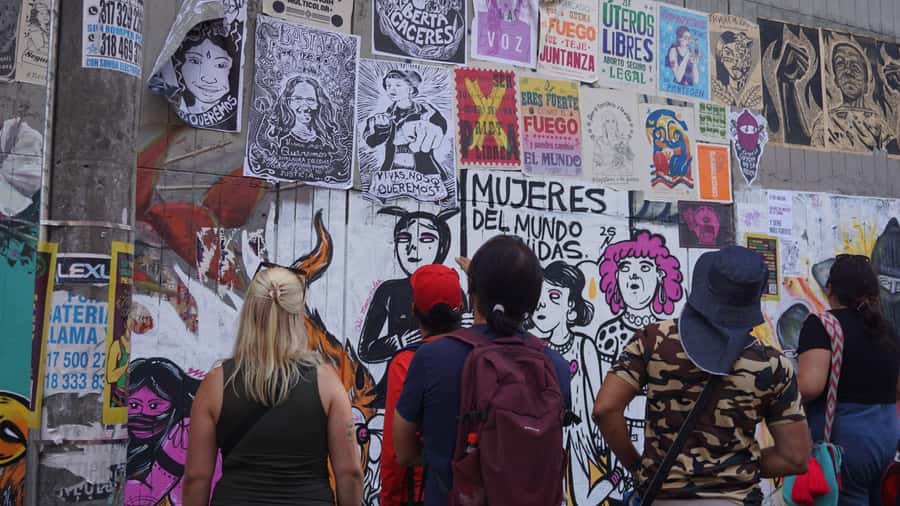
The route includes street art and references to salsa figures, social movements, and public memory. Some murals pay tribute to musicians and their contribution to Cali. Others carry more direct activist messages. Placing both types of art close together lets you compare celebration with resistance.
This is where the tour’s title becomes clear. Salsa, graffiti, and resistance are not three random subjects. They overlap in the way people claim public space and tell stories about who they are.
The murals may change over time, as street art often does. Paint fades, new work appears, and political messages can shift. That is part of the point. You are looking at living public art, not a fixed museum display.
The N21 graffiti monument and victims’ memorial
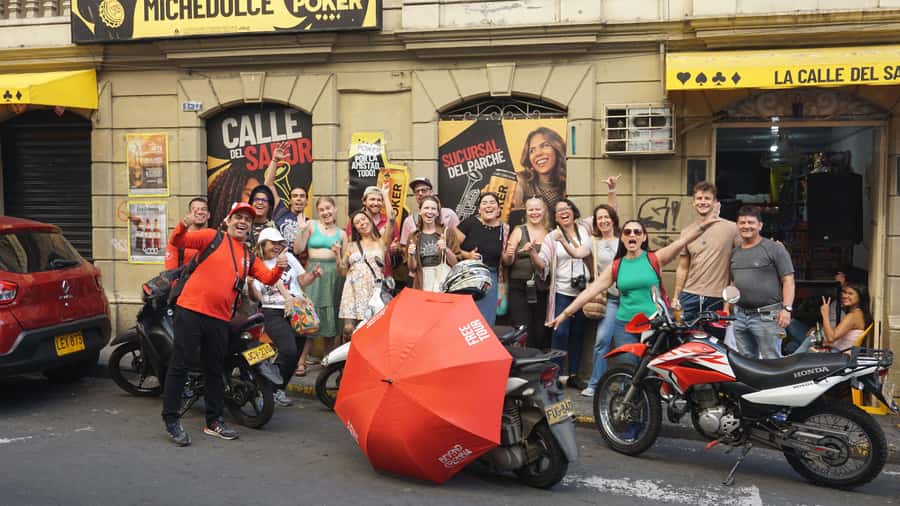
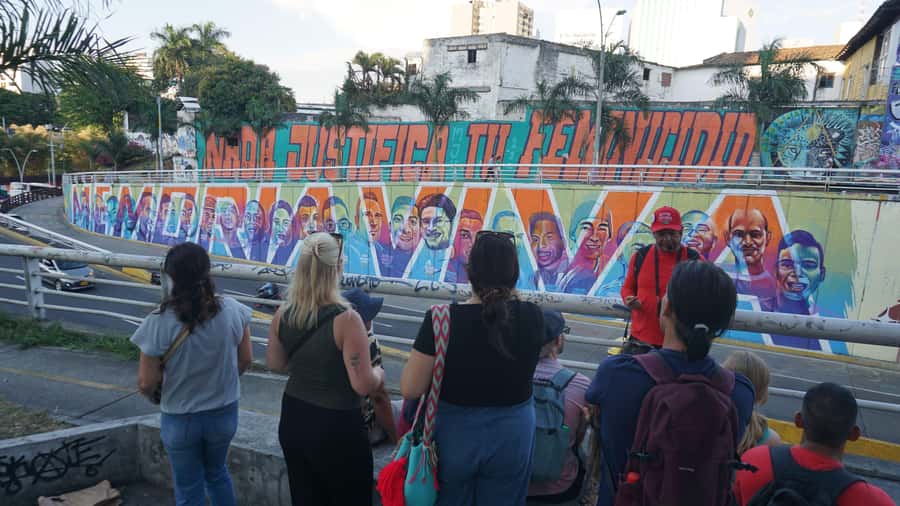
The graffiti monument to victims known as N21 is one of the more serious parts of the walk. It brings the subject of resistance into direct focus and shows how art can honor people affected by social conflict.
The stop needs attention and respect. You are not simply collecting a colorful photograph. The guide explains why the memorial matters and how it connects to wider popular struggles in Cali.
This section may feel different from the salsa stops, and that change is useful. It prevents the tour from turning social issues into decoration. You see that the same public culture that produces music and dance can also create memorials, protest art, and calls for solidarity.
If you prefer a light sightseeing outing, this section may be heavier than expected. If you want to understand the city beyond nightlife, it is one of the strongest reasons to choose this experience.
How the guide brings the subjects together
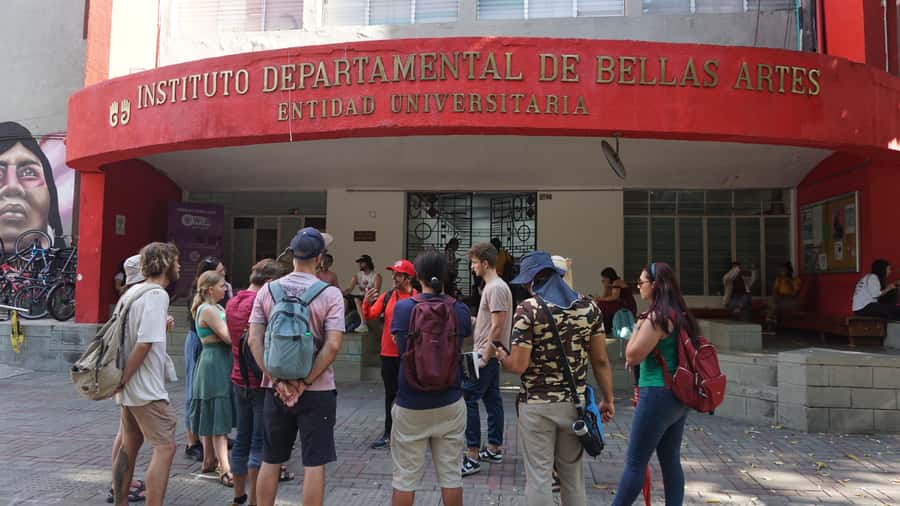
A good guide is crucial here because the route covers a lot: Caribbean musical roots, New York, Cali’s salsa boom, African cultural legacy, graffiti, public protest, nightlife, and local pride.
The strongest praise attached to the experience centers on the guides’ energy, storytelling, and ability to keep the walk interactive. Christian, also called Chris, is repeatedly identified with this experience and is described as enthusiastic, animated, and passionate about Cali and salsa.
That matters because the walk is long. A dry talk about music history could feel tiring after several kilometers. The guide’s role is to keep the route moving while giving each stop a clear reason to matter.
You should also feel free to ask questions. The tour is shared, not private, so the guide cannot tailor every minute to one person. Still, the informal format gives you a chance to ask about dancing, music, food, or social history as you go.
The tour is offered in English and Spanish. An optional Spanish audio guide is also available. If you need the English tour, check the available start time when booking.
What the $13 price really buys you
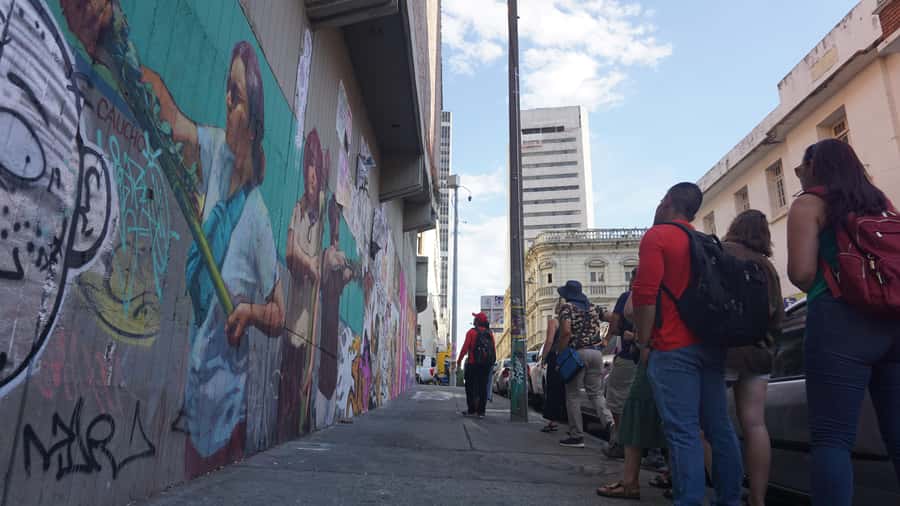
At $13 per person, this is a strong value if you want orientation and cultural context early in your stay. You get about 150 minutes with a professional Beyond Colombia guide, a route through major central sights, salsa history, street art, nightlife suggestions, and discussion of social movements.
You do not pay for drinks, food, souvenirs, hotel transfers, or transport during the route. The tour is on foot, and it does not include a private guide. There are no planned entrance fees or surprise charges for attractions, which keeps the cost easy to understand.
The shared format is both the benefit and the limit. You meet other people and keep the price low, but the group may not move at your ideal pace. If you need a private conversation about music or want to linger at every mural, a private arrangement would suit you better.
For most visitors, the value comes from what the walk helps you do afterward. You finish with a clearer idea of where salsa fits in Cali and with recommendations for bars and restaurants. That can save you from spending your first night choosing at random.
Who will enjoy this walk most
I would choose this experience if you are curious about the link between music and social change. It suits first-time visitors who want a strong introduction to Cali before going out at night.
It is also a good match for people who enjoy street art but want more than attractive walls. The guide explains what the murals honor, who they remember, and how activist messages fit beside salsa tributes.
You do not need to be an experienced dancer. The tour works for people who want to watch, listen, understand the city, and perhaps try dancing later.
I would hesitate if you dislike long walks, warm weather, or serious conversations about protest and social conflict. The route covers about 8 kilometers, and the city’s lively energy comes with crowded areas and the need to watch your belongings.
The tour is not suitable for wheelchair users. Since transportation is not provided, you should also plan how you will reach Plazoleta Jairo Varela and how you will return afterward.
Practical tips for a smoother afternoon
Wear shoes you would happily use for a full day of walking. The route includes resting stops, but the total distance is still substantial.
Bring a bottle of water or another preferred drink. You may feel thirsty before the tour ends, and there is no promise of a drink included in the price.
A camera is worthwhile for the murals and public spaces. Still, listen first when the guide is explaining a memorial or political image. The meaning is more valuable than a quick snapshot.
Keep valuables secure in crowded places and avoid smoking during the activity. Comfortable clothes are a better choice than dressing for a night out, since the nightlife recommendations come after the walk.
Finally, leave room in your evening. The tour can point you toward a salsa bar, restaurant, or place to dance, and you may want to use that advice while the city is still fresh in your mind.
Should you book Cali’s Salsa, Graffiti and Resistance Experience?
Book it if you want to understand why salsa matters in Cali, not simply where to hear it. For $13, you get a lively introduction to music, public art, nightlife, and social struggle, with plenty of practical advice for the rest of your visit.
The best part is the connection between the subjects. You see salsa figures honored in murals, activist messages nearby, and public spaces shaped by both celebration and protest. That combination gives you a more honest picture of Cali than a standard sightseeing walk.
Skip it if you want a short, easy stroll or a dedicated dance lesson. The route is long, the subject sometimes turns serious, and you pay extra for everything you eat or drink. For an open-minded visitor with comfortable shoes, though, this is a smart first look at the city’s rebel rhythm.
FAQ
Where does the tour meet?
Meet at Plazoleta Jairo Varela. Look for the red umbrellas.
How long does the tour last?
The tour lasts approximately 150 minutes, or about two and a half hours.
How far will I walk?
You will walk about 8 kilometers, with stops to rest and listen to the guide.
Is the tour available in English?
Yes. Live guiding is available in English and Spanish. An optional Spanish audio guide is also offered.
Are food and drinks included?
No. Food, drinks, and souvenirs are not included. Transportation to and from your hotel is also not included.
Is the tour suitable for wheelchair users?
No. The experience is listed as unsuitable for wheelchair users.
Just added around Colombia
- Comuna 13 Neighborhood & Street Art Private Tour★ 4.7 · 12 reviews
- Medellin: Graffiti Tour Comuna 13★ 4.1 · 14 reviews
- Medellín Comuna 13 local guides snacks and your own graffiti★ 4.9 · 13 reviews
- Comuna 13: Recorrido de Arte Urbano, Cultura y Resiliencia★ 5.0 · 3 reviews
- Graffiti Tour: a fascinating walk through a street art City★ 5.0 · 5 reviews
- Fun Graffiti Workshop: The Art of Aerosol and Color★ 5.0 · 3 reviews
- Comuna 13: Graffiti Tour with Tasting, Live Show, & Gallery★ 5.0 · 4 reviews
- Comuna 13: Graffiti tour & Street Food/drink with telesferic★ 4.4 · 19 reviews
Colombia Street Art Tours, compared.
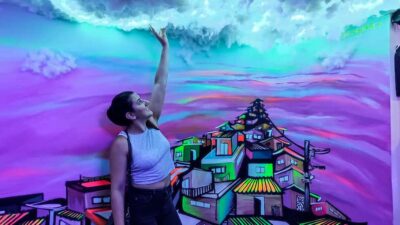
Comuna 13 Graffiti Tour, Cable Car & Street Food
Read our review →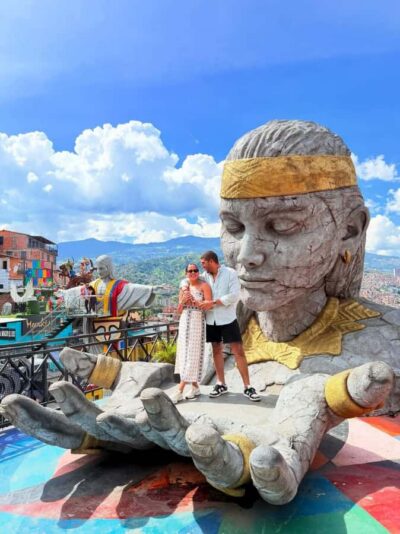
Medellín: Comuna 13 Tour with Snacks And Your Own Graffiti
Read our review →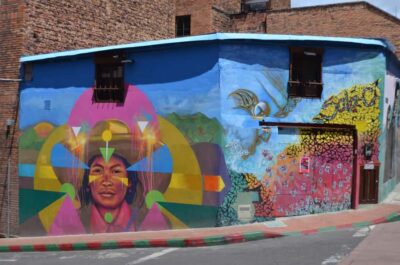
Bogotá: La Candelaria Graffiti & Urban Art Guided Tour
Read our review →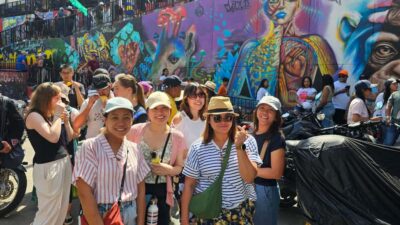
Medellín: Comuna 13 and Graffiti Guided Tour with a Local
Read our review →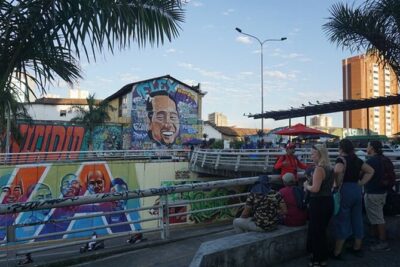
Historical Shared Tour Salsa, Graffiti & Resistance in Cali
Read our review →
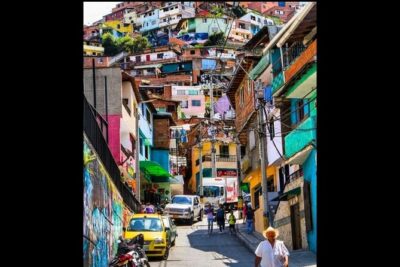
Medellín: Comuna 13 Tour with Spray Painting and ice cream
Read our review →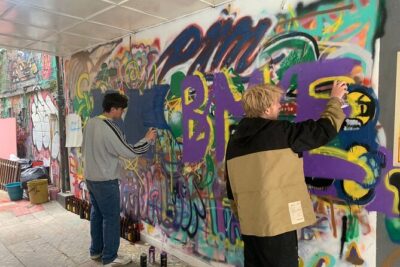
Fun Graffiti Workshop: The Art of Aerosol and Color
Read our review →Browse the lists this tour appears in