
REVIEW · SPAIN
Granada: “Street Art & The Caves” Unique Guided Walking Tour
Granada’s most surprising sights are not all inside the Alhambra. This three-hour walking tour links the old Jewish quarter, the flamenco caves of Sacromonte, and the steep lanes of Albaicín, with street art, gardens, fountains, and Alhambra views along the way. You also enter one of Sacromonte’s oldest cave homes, something many visitors would miss.
I like the tour’s local angle, especially the focus on El Niño de las Pinturas and the stories behind his murals. I also like that guide Michael keeps the group small, usually no more than eight people, and adds practical advice on tapas, restaurants, shops, and local artwork. The main drawback is simple: this is a serious uphill-and-downhill walk of about 8 kilometers, so it is not suited to wheelchairs, recent surgery, or limited mobility.
Key points at a glance
- Three old Granada districts in one walk: Realejo, Sacromonte, and Albaicín each offer a different side of the city.
- Street art with local context: See murals by El Niño de las Pinturas and other artists from Spain and Europe.
- A real Sacromonte cave visit: Enter an old cave house and learn how these homes developed in the mountain.
- Carmen de los Mártires: Pause in a flower-filled garden with birds, fountains, and clear views.
- Small group with Michael: A maximum of eight participants allows room for questions and personal suggestions.
- Bring proper shoes: The route covers about 8 kilometers, with uphill sections, downhill streets, breaks, and plenty of steps or uneven surfaces.
Why this Granada walk feels different
Many city tours stay close to the Cathedral, the Alhambra, and the most photographed lanes. This one connects parts of Granada that can feel separate when explored alone. You move from Realejo’s painted walls to Sacromonte’s cave homes, then across Albaicín’s narrow streets and lookout points.
That change of mood is the real strength. Realejo brings urban art and Jewish-quarter history. Sacromonte introduces Gitano culture and the roots of flamenco. Albaicín gives you whitewashed lanes, small shops, tapas bars, and views toward the Alhambra. The tour is not built around one grand monument. It is built around how Granada’s neighborhoods fit together.
Guide Michael is a key part of the experience. His approach is personal and flexible, with time for questions, water refills, toilets, and recommendations shaped around your interests. The small group matters here. On a walk through narrow lanes and busy viewpoints, eight people feels far more manageable than a large crowd.
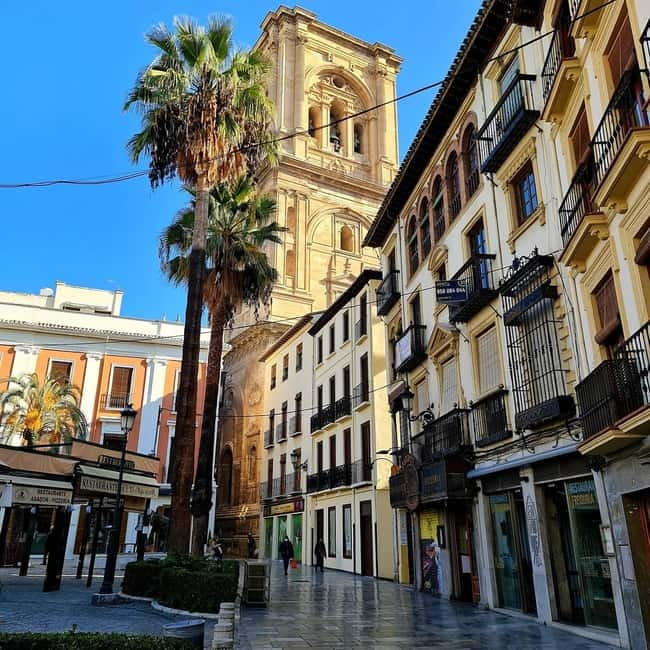
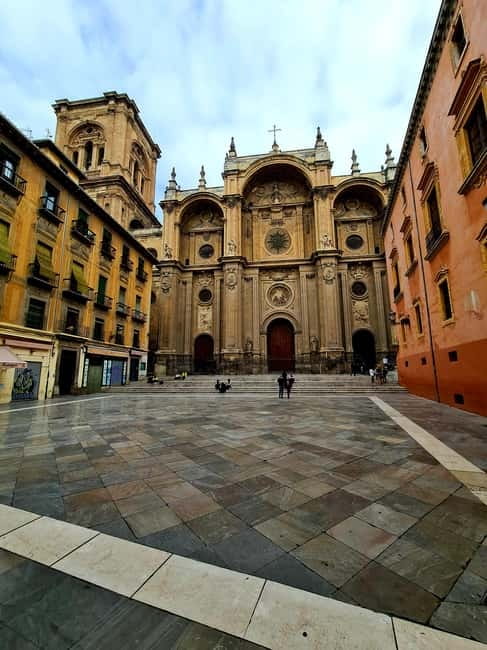
The route starts and finishes at Plaza de las Pasiegas, on the steps by Granada Cathedral. That makes the meeting point easy to locate, and the ending puts you back in the center of town for lunch, shopping, or your next sightseeing stop.
More Street Art Walking Tours in Spain
- Barcelona: Raval Street Art and Graffiti Walking Tour
★ 4.9 · 60 reviews - Bilbao: Art District Walking Tour
★ 4.8 · 27 reviews - Street Art, Sculptures & Crime Stories Walking Tour – Barcelona
★ 5.0 · 11 reviews
Realejo and the art of El Niño de las Pinturas
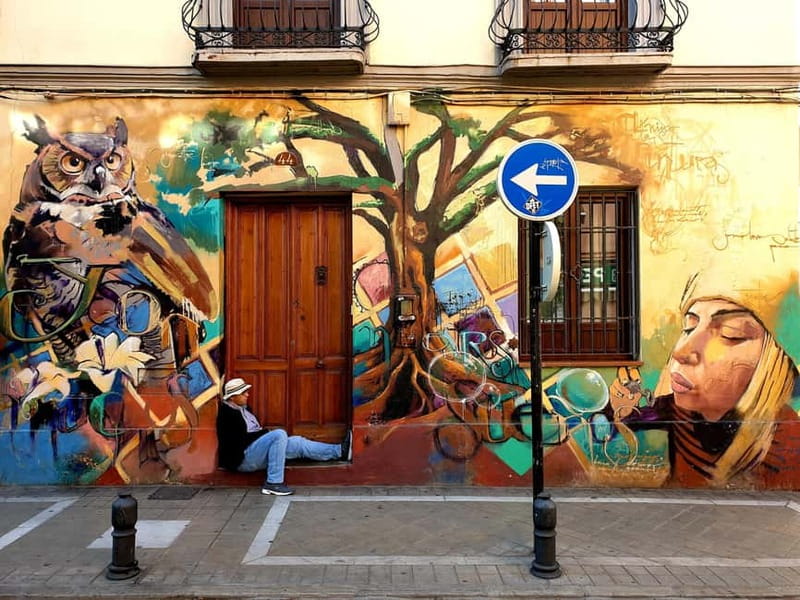
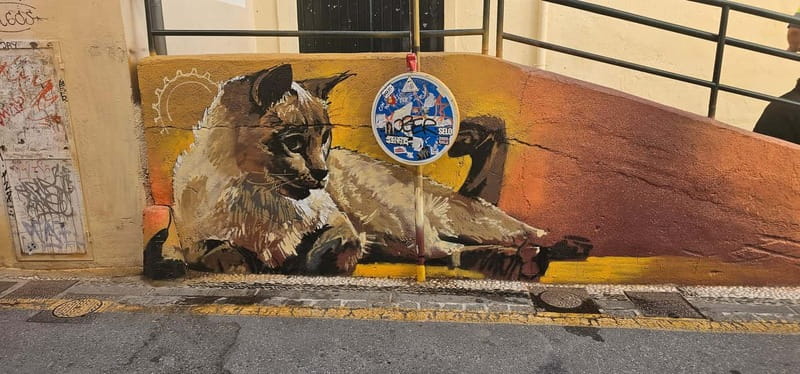
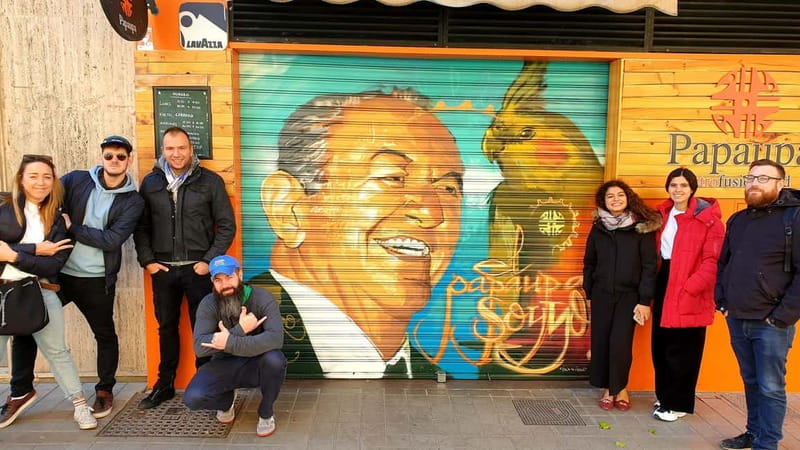
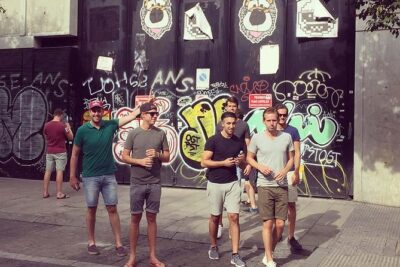
The first neighborhood is Realejo, Granada’s old Jewish quarter. The tour uses the district as an open-air art gallery, stopping at colorful murals and painted walls rather than treating street art as background decoration.
A major focus is El Niño de las Pinturas, one of Spain’s best-known street artists. His work appears across the city, and Michael explains the stories, people, and ideas behind the images. That makes a difference. You are not just taking photographs of painted walls. You are learning how one local artist has helped shape Granada’s modern visual identity.
The art is not limited to one style or one person. You see work by artists from Spain and elsewhere in Europe, giving Realejo a changing, informal character. This is a good section for anyone who has already seen Granada’s major monuments and wants something less expected.
The route also includes smaller details that are easy to miss on your own. A square named after Joe Strummer, the singer from The Clash, is one example. Michael can point out places connected to local culture, independent art, food, and shopping, helping you understand how the neighborhood is lived in today.
If you want to buy a souvenir, this is also the part of the walk where you may get suggestions for local artists’ shops. One stop connected with El Niño de las Pinturas has been especially useful for finding distinctive Granada artwork rather than generic tourist goods.
Carmen de los Mártires and a quiet garden break
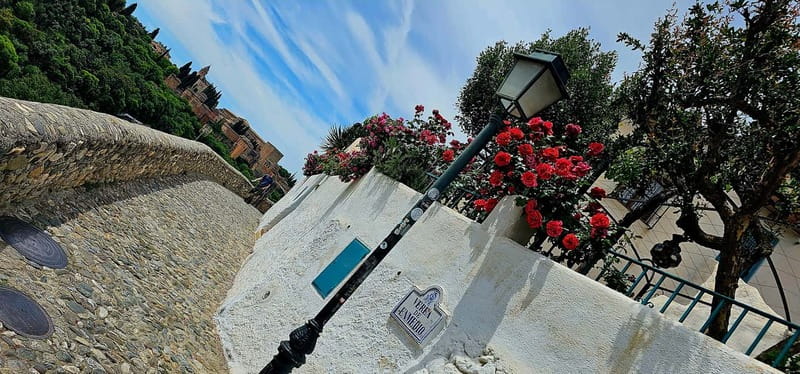
From Realejo, the tour reaches Carmen de los Mártires. A carmen is a traditional Granada home with gardens, and this one offers a useful pause in a demanding walking route.
The setting includes flowers, birds, and views toward the surrounding hills and the Alhambra. After the painted walls and city streets of Realejo, the garden feels calmer and more spacious. It also shows a different side of Granada’s domestic architecture, where the house and garden work together as one sheltered retreat.
This stop lasts about 25 minutes, long enough for photographs and a little breathing room. That break matters because the route becomes more demanding later. You are not racing from sight to sight, and Michael builds in opportunities to refill water bottles and use a toilet.
The garden is not a replacement for visiting the Alhambra. It is a smaller, more peaceful setting that helps you appreciate Granada’s fondness for courtyards, plants, water, and views. If your schedule does not include much time in the city’s residential quarters, this stop adds useful variety.
Sacromonte’s caves and flamenco roots
Sacromonte is the most distinctive section of the tour. The neighborhood climbs into the mountain above Granada and is closely linked with Gitano life and flamenco culture. Its cave homes were dug into the hillsides, using the mountain itself as part of the structure.
You enter one of the oldest cave houses in the area. This is not just a quick look at an unusual doorway. Michael explains how the caves were used and why this form of housing developed in Sacromonte. The visit gives you a clearer sense of the neighborhood’s past and its connection to the people who have lived there for generations.
The cave is also a reminder that Granada’s history is not confined to palaces and churches. These homes tell a more everyday story, one shaped by available materials, hillside living, family life, and local customs. For many people, this becomes the most memorable stop because it is difficult to find without someone who knows the area well.
The climb to Sacromonte requires effort. You should expect uphill walking, uneven streets, and a steady pace. In summer, carry a reusable bottle and use the fountains along the route. Unlimited water is included, but your own bottle makes refilling easier.
The flamenco connection adds cultural context, though this is a walking tour rather than a flamenco performance. You learn about the neighborhood where the culture developed rather than sitting in a show. If you want a performance too, Michael’s local suggestions may help you decide where to go later.
Same walls, a different guide:
- Moco Museum Barcelona Banksy & More
★ 4.6 · 2,340 reviews - Moco Museum Barcelona Admission Ticket
★ 4.5 · 1,302 reviews - Barcelona: Banksy Museum, Permanent Exhibition Ticket
★ 4.7 · 543 reviews - Barcelona Street Art and Graffitti Bicycle Tour
★ 5.0 · 361 reviews
Albaicín, white lanes, and Alhambra views

The final major neighborhood is Albaicín, Granada’s oldest district and a UNESCO World Heritage site. Its character comes from narrow streets, whitewashed houses, small squares, little shops, tapas bars, and steep routes that open suddenly onto wide views.
This section is where the tour shifts from close-up details to big scenery. At selected miradores, the Alhambra appears across the valley, often with the Sierra Nevada behind it. The views are a major reason to bring a camera, but the guide adds more than picture stops. Michael explains the layout of the city and helps connect what you see from above with the streets you have already walked.
The lanes can feel confusing if you explore alone. That confusion is part of Albaicín’s charm, but it can also make a short visit inefficient. A guide helps you spend your time on the streets and viewpoints that matter most, while pointing out places to return to later.
There is time for shopping in Albaicín, along with recommendations for food and drinks. The tour does not stop for lunch, so plan to eat before or after. You might want to make a note of Michael’s restaurant suggestions, especially if you would rather eat somewhere selected for local appeal than choose at random near the Cathedral.
The descent back toward the center can be easier than the climb, but it still involves uneven paving and plenty of walking. Comfortable shoes are not optional here. Sandals with little support could make the route unpleasant.
What the three-hour schedule is really like
The planned timing gives about 45 minutes in Realejo, 25 minutes at Carmen de los Mártires, 45 minutes in Sacromonte, 45 minutes in Albaicín, and 15 minutes near the Cathedral. These times include guided explanations, photographs, and movement between stops.
In practice, you should keep some flexibility. The walk may run longer than three hours if the group has questions, takes extra photographs, or spends more time discussing a neighborhood. That is not a problem if you have a loose afternoon, but it matters if you are booking another timed attraction immediately afterward.
The route covers roughly 8 kilometers. Breaks for water and toilets make it more comfortable, but they do not turn it into an easy stroll. The hills are real, and the tour is best treated as an active half-day experience.
I would book it early in your Granada stay. You will receive restaurant, shopping, and sightseeing suggestions before you have made all your plans. You may also learn about places you want to revisit on your own, including parts of the Alhambra complex or museums that can be visited without a full Alhambra ticket.
Price, group size, and what you receive
At $35 per person, the tour offers good value if you want more than a basic orientation walk. The fee includes a professional English-speaking guide, entry to the cave house, and unlimited water. The small group, limited to eight people, is another important part of the value.
A cheaper large-group walk might cover the same districts from the outside, but it may not offer the same room for questions or personal recommendations. The cave entrance alone adds something concrete, while Michael’s local advice can help you spend money more wisely afterward on food, shops, and art.
There are limits. Lunch is not included, and there is no flamenco show included. The tour also does not replace a dedicated Alhambra visit. Think of it as a neighborhood and culture walk that gives the Alhambra context from across the city, not as a ticketed monument tour.
Free cancellation is available up to 24 hours before the start, and you can reserve now and pay later. Those terms are useful if your Granada schedule is still changing, though you should confirm the available start time before booking.
Who should book this walk
I would recommend it to first-time visitors who want to understand Granada beyond its headline attractions. It is also a strong choice for returning visitors who have already seen the Alhambra and Cathedral and want more local art, neighborhood life, and unusual architecture.
The tour suits you best if you enjoy:
- Walking several miles through old streets
- Street art and independent local culture
- Small groups and plenty of questions
- Gardens, viewpoints, and photography
- Food and shopping suggestions from a local guide
- A look at Sacromonte beyond flamenco venues
You should think twice if hills cause pain or fatigue, or if you need step-free access. The tour is not suitable for wheelchair users, people with mobility impairments, or people recovering from recent surgery. One person did manage the walk with a mobility scooter, but the route was challenging, so you should not treat that as a guarantee of easy access.
Bring comfortable walking shoes and a reusable water bottle. Pack a snack if you need one, since the tour does not include a meal. Wear clothing suitable for sun and changing temperatures, but do not expect transport between neighborhoods. You walk the entire route.
Should you book the Street Art and Caves tour?

Book it if you want Granada’s local character in one well-planned walk. The strongest reasons are the cave-house entrance, the close look at El Niño de las Pinturas’ work, the peaceful Carmen de los Mártires gardens, and the chance to connect Realejo, Sacromonte, and Albaicín in a single outing.
I especially like it for the first full day of a Granada visit. Michael’s food, shopping, and sightseeing advice can shape the rest of your stay, and the views give you a useful mental map of the city.
Skip it if your priority is a slow, flat stroll or a formal tour inside the Alhambra. This is an active route with hills and about 8 kilometers of walking. For fit visitors who want art, cave homes, local stories, and practical advice from a small-group guide, $35 is a fair price for three busy hours.
FAQ
Where does the tour start and finish?
The tour starts and finishes at Plaza de las Pasiegas, on the steps at the main entrance of Granada Cathedral.
How long is the tour?
The scheduled duration is three hours. The walk covers about 8 kilometers and includes breaks for drinks and toilets.
Which neighborhoods does the tour visit?
The route visits Realejo, Sacromonte, and Albaicín, three of Granada’s oldest districts. It also includes Carmen de los Mártires and Granada Cathedral.
Is the cave-house entrance included?
Yes. Entry to one of Sacromonte’s oldest cave houses is included in the tour price.
What language is the tour in?
The live tour is conducted in English by a professional guide.
Is the tour suitable for people with limited mobility?
No. The route includes uphill and downhill walking and is not suitable for people with mobility impairments, wheelchair users, or people with recent surgeries.
Just added around Spain
- Small-Group Graffiti Tour and Workshop in El Carmen★ 5.0 · 2 reviews
- Madrid Hidden Street Art Tour★ 5.0 · 12 reviews
- Bilbao Urban and Street Art Walking Tour★ 5.0 · 2 reviews
- Barcelona Street Art, Graffiti and Tapas Tour★ 4.0 · 5 reviews
- Moco Museum Barcelona: Banksy Small-Group Tour with Skip-the-Line★ 5.0 · 5 reviews
- Small-Group Moco Museum Barcelona: Banksy & Modern Art Tour★ 4.8 · 16 reviews
- Salamanca: Private Guided Street Art Walking Tour★ 5.0 · 2 reviews
- Private Barcelona Street Art Tour★ 5.0 · 2 reviews
Spain Street Art Tours, compared.



Barcelona Street Art and Graffitti Bicycle Tour
Read our review →

Barcelona Street Art Tour with Exclusive Artist Studios Visit
Read our review →Browse the lists this tour appears in