
REVIEW · MEXICO
History and Murals: Walking Tour Guadalajara
Guadalajara’s best history lesson is painted on the walls of Museo Cabañas. This walking tour builds toward José Clemente Orozco’s powerful frescoes, while Fernando explains the city’s churches, plazas, politics, and daily life along the way. The route ends with food and shopping at Mercado Libertad.
I like the mix of architecture and art. You see the Cathedral, Degollado Theater, Government Palace, and Cabañas Museum instead of spending three hours on churches alone. I also like the local finish: traditional food, possible tastes of tejuino, and practical help choosing birria or tortas ahogadas in the market.
The main consideration is physical. You will be on your feet for much of the 3 to 4 hours, and there are no headsets or microphones. Government buildings may also be closed, depending on state access, so the exact route can shift.
Key points at a glance
- Orozco’s major murals: Spend about an hour inside Museo Cabañas with admission included.
- A compact historic-center route: Visit plazas, churches, government buildings, the theater, and the market in one morning.
- Fernando’s local history focus: Expect detailed explanations in English, with room for questions and conversation.
- Food at the finish: Reach Mercado Libertad for traditional dishes, regional crafts, souvenirs, and possible food recommendations.
- Small-group setting: The group is limited to 15 people, with group discounts and a mobile ticket.
- Useful timing: Meet at 10 a.m. in Plaza de Armas and finish at Mercado Libertad.
Why the Cabañas murals give this walk its purpose
Many city walks can feel like a parade of façades. This one has a clear artistic center: Museo Cabañas and the work of José Clemente Orozco.
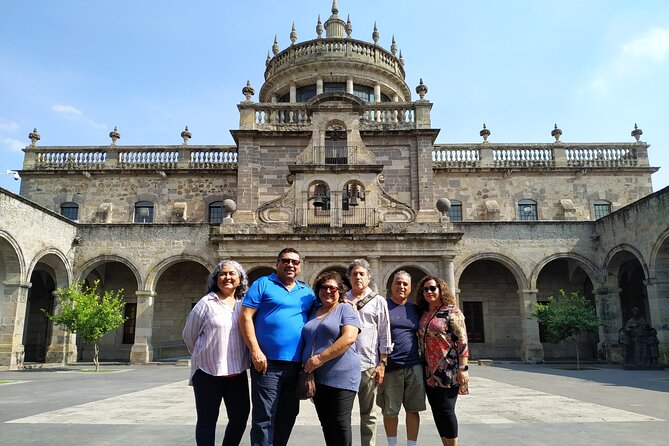
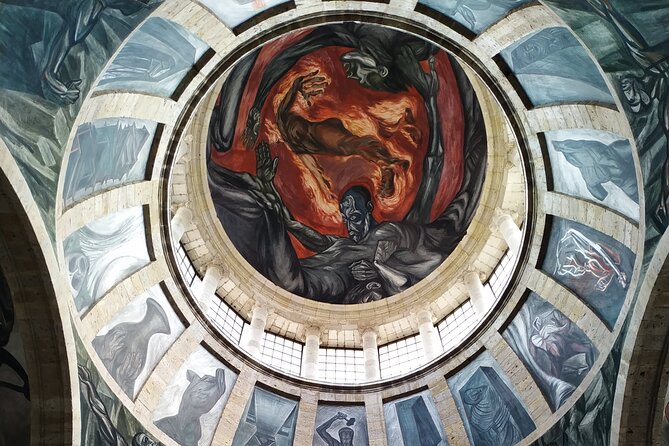
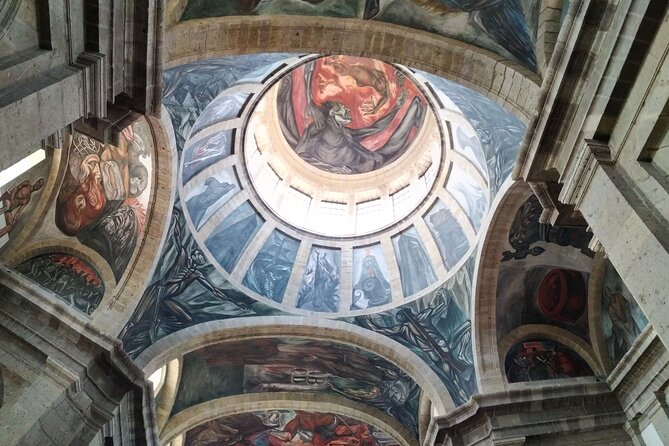
Inside the former hospice, Orozco’s 57 frescoes cover the walls and domes of the main chapel. The scale matters. You are not viewing one framed picture at eye level. You are looking up at a complete visual world that surrounds you.
Fernando’s approach is especially useful here. He gives you time to look first, then explains the images, themes, and historical setting. That order is better than receiving a lecture before you have had a chance to form your own response.
The murals are not light decoration. Orozco’s work often carries political and social weight, and the guide connects the art to Mexico’s larger story. If you care about art, history, or the way public buildings express national ideas, this is the strongest part of the morning.
Admission to Cabañas is included, which matters because it is the one major indoor attraction on the route with a clearly guaranteed place in the plan. The museum visit lasts about an hour, long enough to see the main chapel without turning the entire walk into a museum marathon.
More Mural Tours in Mexico
- CDMX: Xochimilco, Coyoacan, Frida Kahlo Museum & Murals Tour
★ 4.4 · 3,025 reviews - Cancun Street Food Tour with Food Stalls, Local Market and Murals
★ 5.0 · 723 reviews - Mexico City; ART NACO : Murals & Street Art Bike Tour
★ 5.0 · 284 reviews
Starting among Guadalajara’s oldest civic spaces
Meet Fernando at 10 a.m. in Plaza de Armas, the old central square in Guadalajara’s historic center. This is a practical meeting place because it sits beside several of the city’s most important buildings.
The square dates to the 16th-century founding period of Guadalajara. Give yourself a few minutes to look around before the walk begins. Its value is not just the garden or the central kiosk. The surrounding buildings help you understand how religious and civic power were placed beside one another in the colonial city.
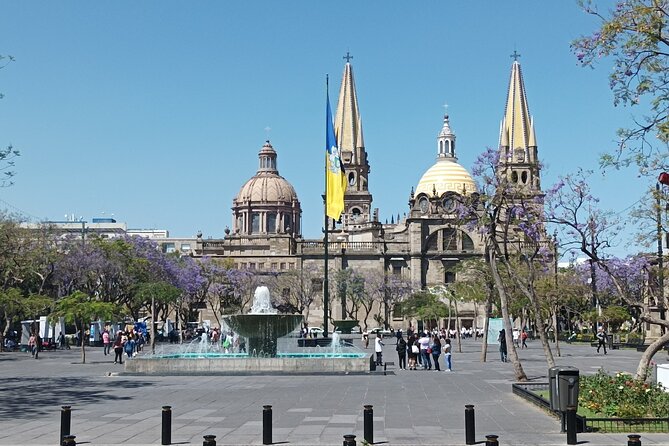
From there, the route moves to Parroquia El Sagrario Metropolitano. This parish, inaugurated in 1839, is built from golden quarry stone and uses a neoclassical design. The visit is brief, about 10 minutes, but it adds another architectural layer before the larger Cathedral stop.
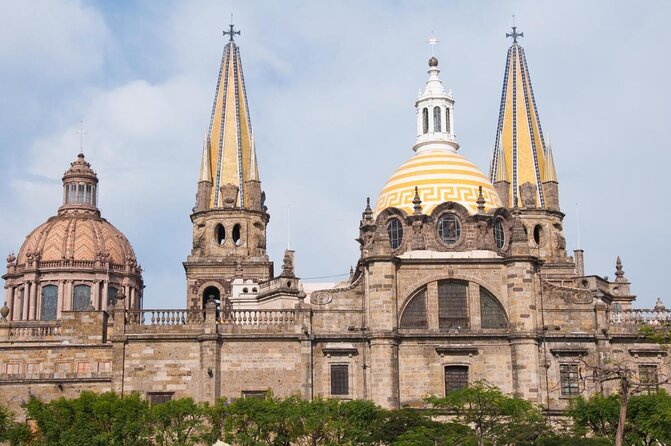
Guadalajara Cathedral receives about 20 minutes. Construction began in the 16th century, and the building remains the headquarters of the bishopric and one of the state’s most important churches. You’ll see both the outside and inside, so this is more than a quick photograph from the plaza.
The Cathedral is also a useful lesson in how Guadalajara has changed over time. Its long construction history reflects the city’s growth and changing religious role. Fernando’s explanations help connect the building to the wider development of Jalisco.
The Cathedral district, monuments, and public power
The walk continues to the Rotonda de Los Jaliscienses Ilustres, a neoclassical monument honoring important men and women from Jalisco. This is a short stop, around 10 minutes, but it shifts the focus from church history to civic memory.
I like this change of subject. A good city walk should show you not only what a place worships, but also whom it chooses to honor. The Rotonda gives Fernando a natural point for discussing Jalisco’s political, cultural, and social figures.
You also pass Guadalajara’s Municipal Palace, a neocolonial building constructed between 1949 and 1952. It houses the city’s municipal council. The building helps show that the historic center is not a preserved stage set. It remains a working center of government.
Next comes Palacio de Gobierno del Estado de Jalisco. The building opened in 1790 and has served as a court, military barracks, and seat of the state congress. Its main staircase contains a mural by Orozco, making it an important link between the first half of the tour and the later museum visit.
Access to the Government Palace is not guaranteed. State authorities control entry, and the building may be closed for official reasons or preparation work. If it is open, the interior adds an important Orozco mural. If it is closed, you should expect an exterior explanation rather than a substitute indoor visit.
That uncertainty is worth noting before you book. The tour includes Cabañas, so the central art experience remains protected, but the Government Palace should be treated as a possible extra rather than a promise.
Plaza de la Liberación and Teatro Degollado
Plaza de la Liberación follows, a public square built in the 1950s and dedicated to Mexican independence. Its broad open space links several major buildings in the center.
The stop lasts around 10 minutes. You will likely spend much of it listening and looking rather than moving through a formal attraction. This is one reason comfortable shoes, water, and sun protection matter.
The route then reaches Teatro Degollado, Guadalajara’s best-known theater for beauty and acoustics. It opened in 1866 during the Reform War, a period of major political conflict in Mexico.
The theater is an excellent place to pause because it gives the morning a different rhythm. Instead of another church or government building, you get a performance space tied to the city’s cultural life. A short break at Café Degollado may be available for the restroom, water, and tired feet. It is useful because much of the tour involves standing.
Interior access to Teatro Degollado depends on local availability. If you can enter, the experience is stronger. If not, the exterior still provides a worthwhile architectural stop, but you should not book this tour expecting a guaranteed theater visit.
More Street Art Walking Tours in Mexico
- Walking Tour – Impressive murals in Historical Center of Mexico City
★ 5.0 · 224 reviews - Mexico City: Diego Rivera’s Murals Guided Walking Tour
★ 5.0 · 49 reviews - Guided Walking Tour Describing UNAM Murals and Revolution
★ 5.0 · 8 reviews - Street Art Walk
★ 4.5 · 7 reviews
From the city’s founding to Plaza Tapatía
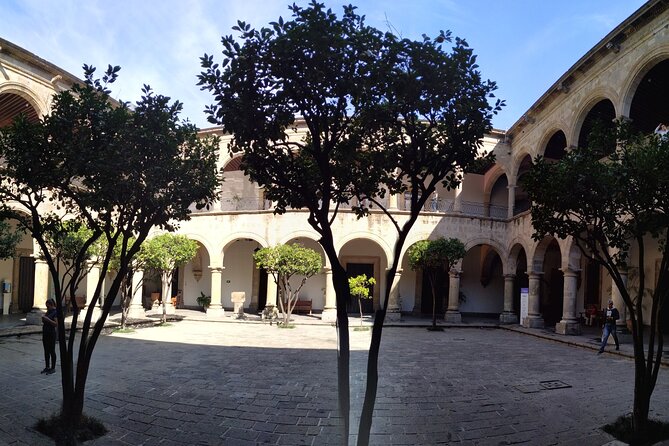
Plaza Fundadores marks the foundation of Guadalajara in 1542. A bronze sculpture by local artisan Rafael Zamarripa honors the city’s founders.
This is a short stop, but it gives the route a clear historical marker. You have seen the colonial church district, the government buildings, and the cultural center. Here, the guide brings the story back to the city’s origin.
The walk continues through Plaza Tapatía, built in the 1970s. It is the largest and newest square in the historic center, with a focus on commerce and handicrafts.
This section feels more connected to present-day shopping than to formal monuments. You may see stalls and shops selling regional goods, and it prepares you for the final market visit. Keep your expectations sensible: the tour is not built around a long shopping period here. The main buying opportunity comes at Mercado Libertad.
Why Mercado Libertad is a smart finish
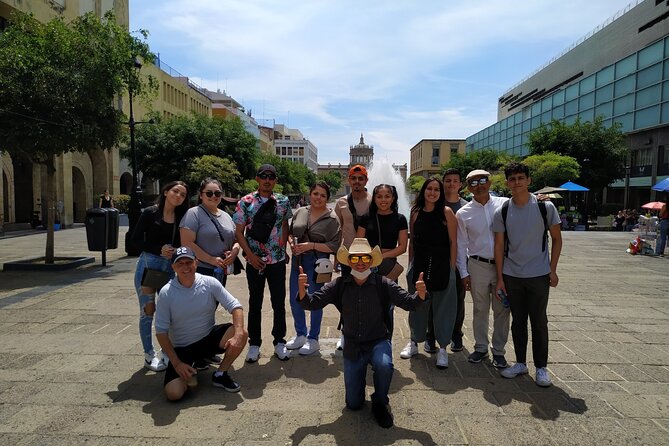
The tour ends at Mercado Libertad, also called San Juan de Dios Market. It is the largest traditional market in Guadalajara and one of the largest of its kind in Latin America.
Ending here works well. You have spent the morning learning how the city was built and governed. Now you reach a place where food, crafts, and ordinary commerce show how Guadalajara functions today.
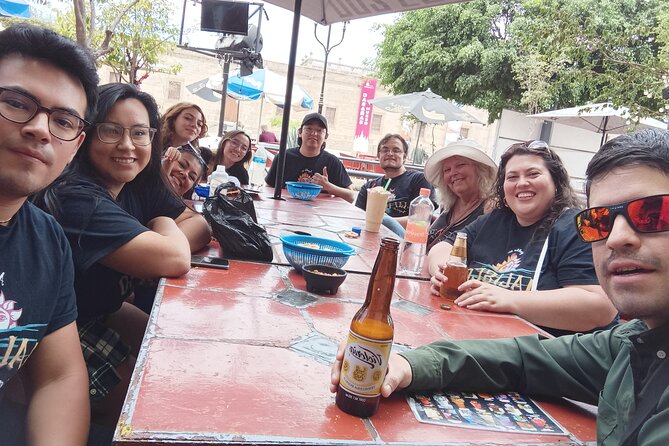
The market offers traditional local food, regional crafts, and souvenirs. The stop is listed at about 15 minutes, though your practical options after the tour are broader because you are already in the market. You can continue browsing, eat lunch, or use the location as a base for the rest of your day.
Fernando may point you toward local specialties such as birria and tortas ahogadas. Tejuino, a traditional fermented corn drink, may also be introduced during the experience. These details give the food portion more meaning than simply being told to find a restaurant later.
I would plan to eat after the formal tour rather than rush through a meal during the scheduled stop. The market is a useful place to ask Fernando for suggestions, but your time for browsing depends on the group and the day’s pace.
What the guide adds to the walk
Fernando is the key personality in this experience. His strengths are history, sociology, Orozco’s murals, and Guadalajara’s food culture. He speaks English well and encourages questions, which matters on a route filled with political and religious detail.
He also brings current context into the walk. Government buildings can have protests, graffiti, security limits, or restricted access. Rather than presenting the city as a polished museum, he explains why public spaces may look contested or change from one visit to the next.
That balance is important. You will hear about difficult parts of Mexican history and current public life without getting a simplistic version of events. At the murals, his method of letting you look before giving an explanation makes the art feel less like a school assignment.
The group limit is 15 people. That is small enough for questions, but it is not a private tour. Since there are no audio devices, staying near Fernando will help you hear every explanation, especially around busy streets or open plazas.
One practical meeting tip: look carefully for the guide at Plaza de Armas. A clear shirt, hat, or identifying sign would make the meeting easier, so if you have trouble spotting him, use the booking contact details before the start time.
Walking demands, weather, and access
This is a walking tour with frequent standing. Most people can participate, and the route is near public transportation, but the experience is not designed around frequent seating.
You should wear comfortable shoes and bring water. Guadalajara’s open plazas can feel warm, and staying in shade when possible makes the morning easier. The break near Teatro Degollado helps, but it does not turn the tour into a low-mobility outing.
The walk lasts approximately 3 to 4 hours. Timing can stretch when the group asks questions or when Fernando spends longer on Orozco’s work. That is usually a benefit if you like history, but it can affect the rest of your day.
Weather matters. The experience may be canceled in poor conditions, with a different date or full refund offered. The minimum group requirement can also affect departure. You receive confirmation when booking, and cancellation is free up to 24 hours before the 10 a.m. start time. Inside 24 hours, the payment is not refunded.
Is $53.05 a fair price?
At $53.05 per person, this is not the cheapest way to see Guadalajara’s center. The value comes from combining several elements in one guided morning: the Cathedral, historic plazas, civic buildings, Teatro Degollado, Cabañas Museum admission, market orientation, and a guide who can explain the city in English.
The included Cabañas entry matters most. You are paying not just for a walk past the museum, but for time inside with the Orozco frescoes. Group discounts may improve the price for several people traveling together.
The value is strongest for a first visit, a short stay, or anyone who wants context rather than a list of building names. It is less suited to someone who prefers to wander alone, shop at length, or spend a whole day inside museums.
Who should book this Guadalajara walk?
You should consider it if you want:
- A first orientation to the historic center
- Clear English explanations of Guadalajara and Jalisco
- A serious look at Orozco’s murals
- A small group rather than a large coach tour
- Food and market suggestions at the end
- A mix of religious, political, artistic, and everyday city life
You may want another plan if you dislike standing, need guaranteed access to every interior, or want a relaxed shopping tour. The Government Palace and Teatro Degollado are subject to local access rules, and the route remains active and fairly full.
Should you book History and Murals: Walking Tour Guadalajara?
I would book this tour if Cabañas Museum and Orozco are high on your list, especially if you are new to Guadalajara. The combination of murals, architecture, public history, and a market finish gives you a useful framework for exploring the city on your own afterward.
Book with realistic expectations. It is a walking lesson, not a hop-on, hop-off ride. You will stand, listen without a headset, and possibly see some interiors only from outside. If you are comfortable with that, Fernando’s detailed storytelling and the included Cabañas visit make the $53.05 price reasonable.
FAQ
How long does the tour last?
The tour lasts approximately 3 to 4 hours.
What time and where does the tour begin?
It begins at 10 a.m. at Plaza de Armas in Guadalajara’s historic center.
Where does the tour end?
It ends at Mercado Libertad, also known as San Juan de Dios Market, at C. Dionisio Rodríguez 52.
Is Museo Cabañas admission included?
Yes. Admission to Museo Cabañas is included, with about one hour scheduled to see José Clemente Orozco’s 57 fresco murals.
Is the tour offered in English?
Yes. The experience is offered in English.
How large is the group?
The tour has a maximum of 15 people.
Are the Government Palace and Teatro Degollado guaranteed inside visits?
No. Access to both locations depends on availability and instructions from local authorities.
Is the tour suitable for most people?
Most people can participate, but the tour involves considerable walking and standing. It does not include headsets or microphones.
What is the cancellation policy?
You can cancel at least 24 hours before the start time for a full refund. Cancellations or changes made less than 24 hours before the start time are not refunded or accepted. Poor weather or an unmet minimum group may result in a different date or a full refund.
More History Tours in Mexico
- Bicycle Tour through Oaxaca learning about its Urban Art and History
★ 5.0 · 78 reviews - Mexico City: Historic Center Walking Tour with Murals
★ 5.0 · 6 reviews - Private Walking Tour Guadalajara History and Murals with Guide
★ 5.0 · 6 reviews - Street Art & Cemetery Cultural Tour – half day
★ 5.0 · 3 reviews
Just added around Mexico
- Xochimilco floating gardens, Coyoacan and UNAM murals★ 4.0 · 6 reviews
- UNAM: Murals & Revolution★ 4.9 · 8 reviews
- Street Art & Cemetery Cultural Tour – half day★ 5.0 · 3 reviews
- Graffitis & Munchies biketour Playa del Carmen★ 4.5 · 18 reviews
- Street Art Walk★ 4.5 · 7 reviews
- Diego Rivera’s murals, hidden treasures★ 5.0 · 21 reviews
- Private Street Food & Mural Art Tour in Mexico City★ 3.5 · 3 reviews
- Private Mexico City Mural Art Tour★ 5.0 · 13 reviews
Mexico Street Art Tours, compared.
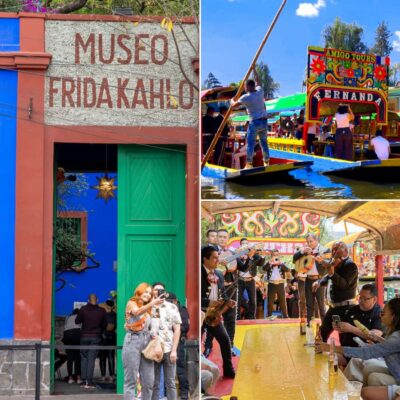
Xochimilco, Coyoacan, Frida Kahlo Museum & Murals Tour
Read our review →
Mexico City; ART NACO : Murals & Street Art Bike Tour
Read our review →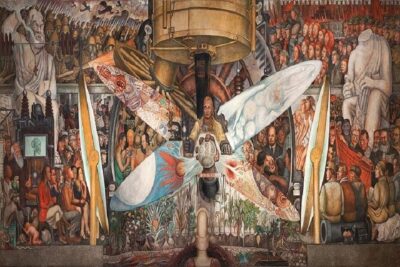
Walking Tour – Impressive murals in Historical Center of Mexico City
Read our review →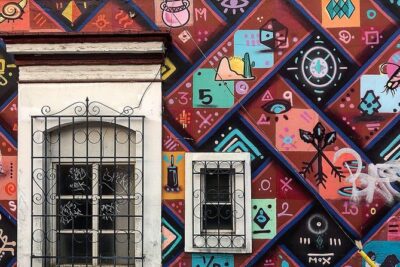
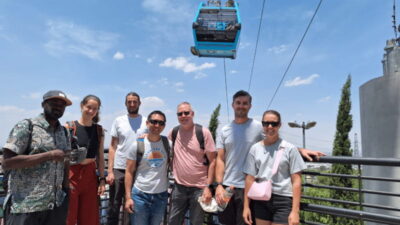
Iztapalapa: Cable Car Tour and Urban Art From the Heights
Read our review →
Cancún: Street Food, Local Market and Urban Art Tour
Read our review →
Bicycle Tour through Oaxaca learning about its Urban Art and History
Read our review →Browse the lists this tour appears in