
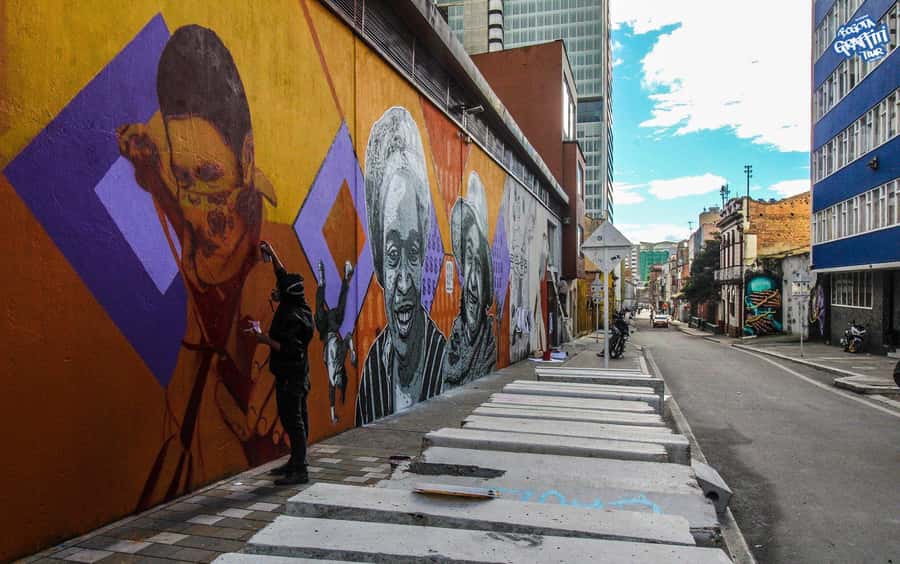
REVIEW · BOGOTA
Bogotá: Graffiti Tour el mejor recorrido de arte urbano
Bogotá’s graffiti is not just decoration on old walls. It is a public record of politics, grief, humor, identity, and neighborhood pride, and this two-hour walking tour uses the city itself as the classroom. Your guide connects the paint to Colombian history and explains how artists, building owners, and communities shape the work.
I like the tour’s clear focus on local artists and social change, rather than simply marching between colorful walls for photographs. I also like the guides’ teaching style: Lifred, Ivonne, Luis, Giovanni, Christian, Fabian, and others are praised for explaining techniques, answering questions, and sharing stories about Bogotá. The main consideration is practical: the listing gives a $13 price but also calls it a free graffiti tour, so confirm the payment arrangement before booking.
Key points to know before you go
- Meet at Parque de los Periodistas: The meeting point is on Jiménez Avenue at Carrera 4, a useful central location in Bogotá.
- Expect more than wall art: Guides explain graffiti basics, artists, protest work, Colombian culture, and the relationship between artists and property owners.
- Plan for a walking tour: The experience runs for about two hours and takes place outdoors on city streets.
- English is listed as the main language: Spanish, German, and French tours are also offered by the company, but you should confirm the language when reserving.
- The price needs clarification: The advertised cost is $13 per person, while the experience is also described as a free graffiti tour.
- The tour earns strong marks for its guides: Guests repeatedly single out Lifred, Ivonne, Luis, Giovanni, Christian, Fabian, and others for warmth, clear explanations, and patience with questions.
Bogotá’s walls tell a national story
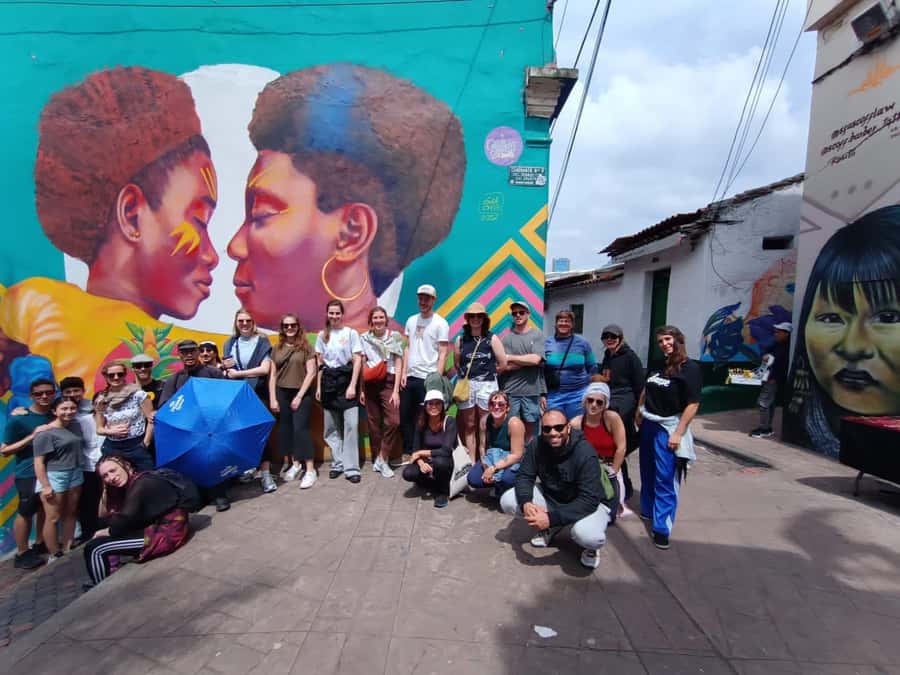
The best reason to book this walk is that it gives you a way to read Bogotá. Without a guide, a wall full of faces, animals, lettering, and symbols can be striking but hard to understand. With context, the same work can reveal a political message, a personal story, a technical experiment, or a collaboration between an artist and a building owner.
The tour traces the Bogotá graffiti movement and places it alongside the country’s past and present. That does not mean you will receive a formal lecture. The format is a street walk, with the guide stopping at selected pieces and explaining what you are seeing.
I like this approach because it keeps art tied to daily life. You are not looking at work locked behind museum glass. It appears on the walls people pass every day, where the meaning can shift with the neighborhood, the building, and current events.
The company has operated since 2011 and also supports urban-art projects with local, national, and international artists. Its work includes communities at risk, community houses, cultural centers, foundations, district schools, and graffiti groups in different parts of the city. That background gives the tour a wider purpose than sightseeing alone.
More Graffiti Tours in Colombia
- Medellin: Comuna 13 Graffiti Tour, Cable Car & Street Food
★ 4.8 · 9,046 reviews - Medellín: Comuna 13 Tour with Snacks And Your Own Graffiti
★ 4.9 · 311 reviews - Bogotá: La Candelaria Graffiti & Urban Art Guided Tour
★ 4.7 · 250 reviews
Starting at Parque de los Periodistas
The meeting point is Parque de los Periodistas, at Jiménez Avenue and Carrera 4. This is a straightforward place to begin because the address is specific rather than vague. Arrive ready to walk and keep your booking details handy, since the provider asks guests to contact [email protected] with questions.
The published schedule lists departures at 10:00 a.m. and 2:00 p.m. The same information also gives time windows of 10:00 a.m. to 12:30 p.m. and 2:00 p.m. to 4:30 p.m., while the activity description says two hours. Because those figures do not match exactly, check the actual starting time and expected finish when you reserve.
The park meeting point also makes this a handy first or second activity in Bogotá. A morning departure leaves room for lunch and another city visit. The afternoon option works well if you want a slower start or need time for another morning plan.
The tour is listed as wheelchair accessible, but the activity takes place on city streets. If you use a wheelchair or have mobility concerns, contact the operator ahead of time so you can confirm the route and pavement conditions for your date.
Reading the first walls with a guide
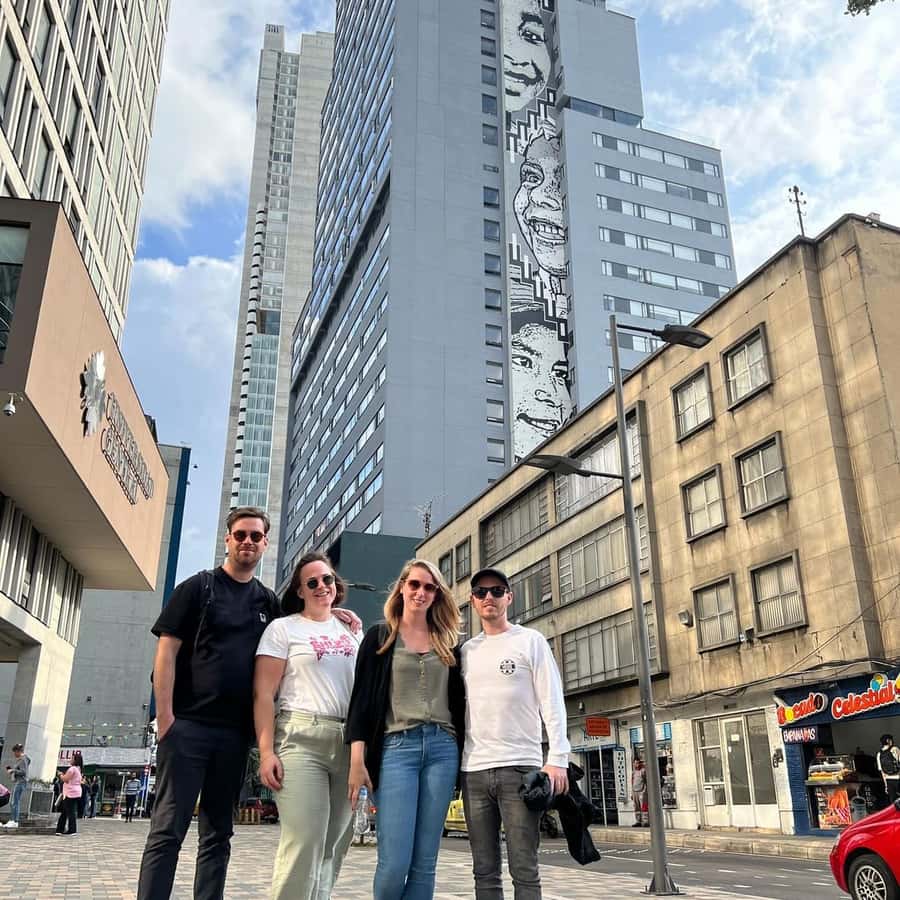
The opening part of the walk introduces Bogotá’s graffiti movement and the basic language of street art. You can expect explanations of how graffiti differs from other forms of urban art, how artists use letters and images, and why location matters.
One useful feature is the chance to ask questions as you go. Several guides are praised for taking time with questions rather than rushing from one mural to the next. That matters here because small details can carry much of the meaning: a repeated symbol, an unusual color choice, a hidden figure, or a reference to a Colombian event.
Ivonne is noted for covering both representative pieces and graffiti basics. That makes her style particularly useful if this is your first serious look at street art. You do not need prior art knowledge to follow the tour, and you should not feel that you are expected to identify artists before the walk begins.
The guides also bring different personalities to the experience. Lifred is described as kind, funny, and well informed. Luis is praised for answering questions patiently, while Giovanni explains artists and the background behind their work. Christian brings enthusiasm for street art and Colombian culture, and Fabian is associated with a calm, relaxed pace.
The exact guide depends on the date, so do not book expecting one particular person unless the company confirms it. Still, the repeated praise for several members of the team suggests that the quality is not tied to a single guide.
Graffiti as protest, partnership, and public conversation
One of the most useful parts of the tour is its treatment of graffiti as protest. Bogotá’s street art is not presented only as something pretty for a camera. Your guide explains how walls can carry criticism, memory, and public debate.
This is where the walk becomes more valuable than a self-guided photo hunt. You may see a powerful image but miss why it was created, who it addresses, or how it relates to the country. The tour helps connect the visual work with Colombia’s political and social story without taking the art out of its everyday setting.
At the same time, the presentation is not limited to protest. You also hear about collaborations between artists and building owners. That point is important because it shows that urban art is not always an unauthorized act against private property. Some works result from cooperation, and some buildings become active participants in the city’s visual culture.
The balance between conflict and cooperation gives you a more accurate view of graffiti. You see it as a practice that can challenge authority, claim space, build pride, or simply make a blank wall more human.
The company’s wider community work adds another layer. Its stated projects support cultural centers, schools, foundations, community houses, and local graffiti groups. The tour therefore introduces an art form as a possible tool for participation and change, not just a product for visitors.
Same walls, a different guide:
- Medellín: Comuna 13 and Graffiti Guided Tour with a Local
★ 4.9 · 239 reviews - Historical Shared Tour Salsa, Graffiti & Resistance in Cali
★ 5.0 · 107 reviews - Medellín: Private Comuna 13 Street Art Tour
★ 4.8 · 88 reviews - Medellín: Comuna 13 Tour with Spray Painting and ice cream
★ 5.0 · 74 reviews
Why the guide matters more than the route
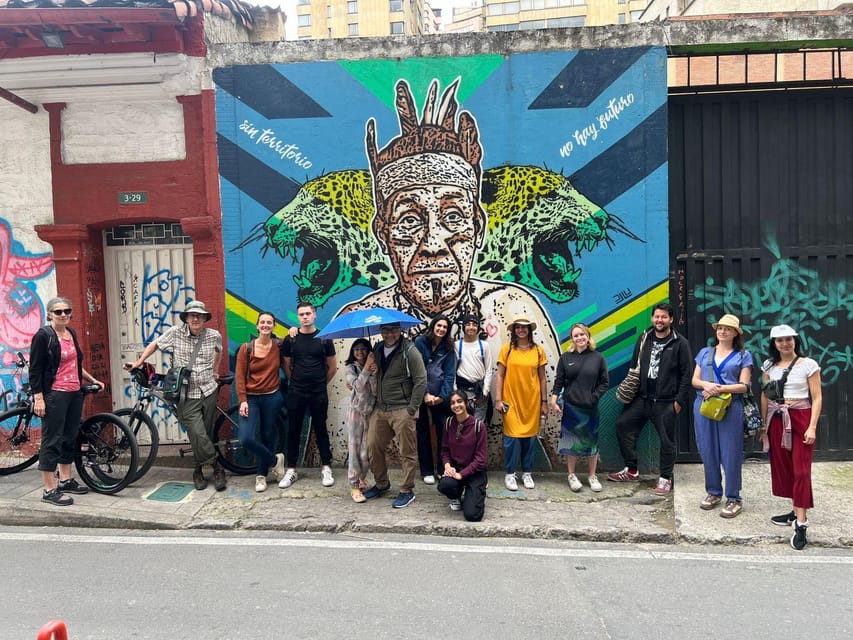
The supplied details do not list a fixed set of named murals or a complete stop-by-stop route. That means the guide is the main value of the experience. The walls can change, and street art is temporary, but a good explanation helps you understand whatever is in front of you.
I would approach this tour with an open plan rather than a checklist. You are not promised a particular famous mural at a precise time. You are promised a guided look at Bogotá through its walls, with explanations of artists, styles, Colombian culture, and the city’s graffiti movement.
That can be a strength. A flexible route may allow the guide to respond to fresh work, changing wall conditions, or the interests of the group. It can also mean the experience feels less like a museum visit and more like a conversation while walking through the city.
The drawback is that people who want a guaranteed list of major murals may find the description too general. If specific artists or walls are essential to you, ask the company what the current route includes before paying.
The tour is also listed as a private tour, while the general description presents it as a free walking tour. Those labels can mean different booking formats, and the $13 charge adds to the uncertainty. Confirm whether your reservation is private, shared, or a tip-based walk, and ask what the $13 covers.
A two-hour pace with plenty to notice
Two hours is a sensible length for this subject. It gives you enough time to examine several pieces and hear their background without turning the walk into an all-day art seminar.
You should wear comfortable shoes and dress for changing weather, since the activity is outside. The supplied information does not specify the amount of walking, restroom access, or refreshment stops, so plan as if you will be on the streets for the full tour.
The guides’ style appears conversational rather than stiff. Sian describes Fabian’s tour as informative and relaxed, while other guests emphasize patience and clear answers. That combination suits Bogotá graffiti well. You need enough explanation to understand the work, but not so much formal instruction that the street setting disappears.
The tour can also help you see the city differently after it ends. One guest explained that the walk changed the way he looked at Bogotá’s streets. That is a useful measure of success: not simply how many walls you photograph, but whether you begin noticing lettering, scale, placement, and social messages on your own.
Bring your questions. Ask why a certain wall was chosen, how an image relates to Colombia, or how the guide distinguishes one style from another. The guides are repeatedly praised for making room for questions, so use that advantage.
Price, flexibility, and what you receive
The listed price is $13 per person. For a two-hour guided walk with an English-speaking guide, that is a modest cost if you want context rather than a self-guided stroll. The value comes from interpretation: artists’ stories, graffiti basics, protest themes, and connections to Colombian culture.
The price is not the only figure you will see. The experience is also labeled a free graffiti tour, and the company promotes a free tour format. That wording needs clarification before you book. Ask directly whether $13 is a booking fee, a suggested contribution, a fixed charge, or connected to a private version of the tour.
The reservation terms are flexible. You can cancel up to 24 hours before the activity for a full refund, and you can reserve now and pay later. Those options help if your Bogotá schedule is still shifting.
English is the listed guide language for this activity. The company also advertises tours in Spanish, German, and French, along with bicycle tours, city tours, urban-art workshops, private and business tours, and design services. Confirm the language and format you want rather than assuming every departure offers all four languages.
Who will get the most from this walk
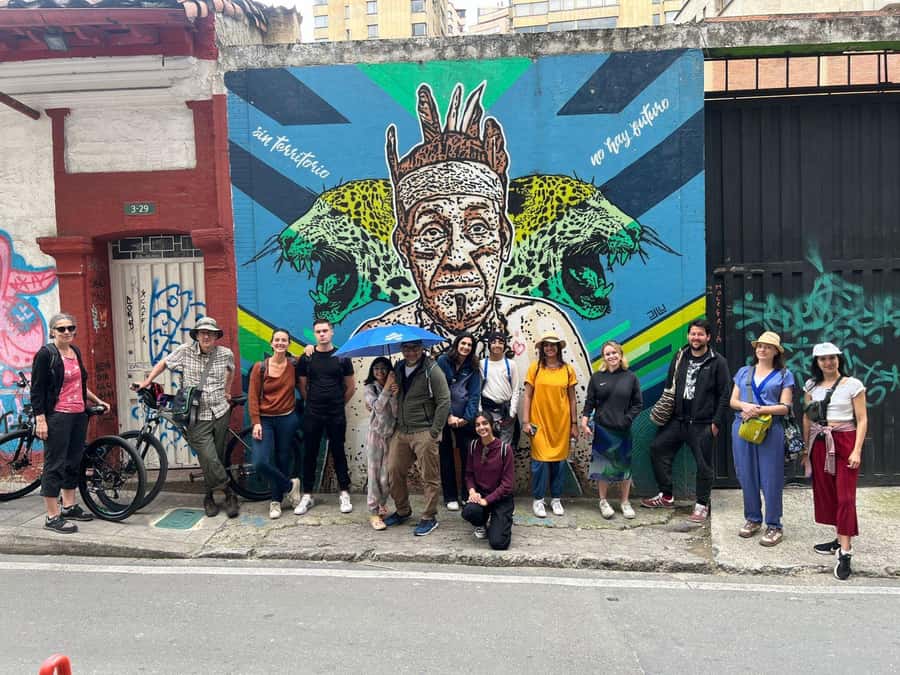
I would recommend the tour to anyone who wants an introduction to Bogotá that is cultural rather than purely architectural. It suits first-time visitors who want a clear way into the city, as well as returning visitors who have already seen the main sights.
It is especially useful if you know little about graffiti. Ivonne’s teaching of street-art basics and the guides’ patient answers make the experience approachable. You can enjoy the images immediately and then learn how to look more carefully.
It also suits people interested in Colombia’s recent story. The tour links graffiti with protest, public space, artists, communities, and national history. You will not get the full story of Colombia in two hours, but you will get a visual entry point that can make later museum visits and city walks more meaningful.
Photographers will appreciate the concentration of art, but this is not only a photo stop. If you want a quick collection of colorful backgrounds with minimal talking, the commentary may feel like more than you need. If you want to understand the people and ideas behind the images, that commentary is the reason to go.
Families, art students, solo visitors, and small groups can all find a good fit here. The wheelchair-accessible listing is useful, though route conditions should be checked in advance.
Small details that improve the experience
Book early enough to confirm the exact departure time, language, and payment format. The published hours and duration do not line up perfectly, and the free-tour wording differs from the $13 price.
Meet at Parque de los Periodistas at Jiménez Avenue and Carrera 4. Give yourself enough time to find the park, since a walking tour cannot always wait for late arrivals.
Expect an outdoor experience. Comfortable footwear and weather-ready clothing will make the two hours easier, especially if the route includes uneven sidewalks or extended standing.
Listen for names and techniques, not only colors. The guides explain artists, street-art basics, collaborations, and protest work. Those details will help you remember the tour after the photographs blend together.
If you enjoy the experience, ask about the company’s other options. It also offers bicycle tours, city tours, urban-art workshops, private tours, business tours, and design services. These are separate offerings, so confirm what is included in your reservation.
Should you book the Bogotá Graffiti Tour?
Book it if you want to understand why Bogotá’s street art matters, not just where to take a colorful photograph. The strongest part of the experience is the guide-led explanation, with multiple guides praised for warmth, humor, clear information, and patient answers.
I would be more cautious if you require a fixed route, a guaranteed mural list, or absolute clarity about the price before booking. In that case, contact the company first and settle the $13 versus free-tour wording, the private-tour label, the exact start time, and your preferred language.
For most visitors, the tour offers good value at the advertised price. It gives you a compact introduction to artists, technique, protest, Colombian culture, and the social role of public art. Just confirm the practical details, then arrive ready to look at Bogotá’s walls with more than your camera.
FAQ
Where does the Bogotá Graffiti Tour begin?
The meeting point is Parque de los Periodistas in Bogotá, at Jiménez Avenue and Carrera 4.
How long does the tour last?
The activity is listed as lasting two hours. The published departure windows run from 10:00 a.m. to 12:30 p.m. and from 2:00 p.m. to 4:30 p.m., so confirm the exact finish time when booking.
What time does the tour run?
The listed start times are 10:00 a.m. and 2:00 p.m. Check availability for the date you want.
What language is the tour offered in?
English is listed for this activity. The company also says it offers tours in Spanish, German, and French, so confirm your preferred language before reserving.
How much does the tour cost?
The listed price is $13 per person. The experience is also described as a free graffiti tour, so ask the provider to clarify the payment arrangement before booking.
Can I cancel the booking?
Yes. You can cancel up to 24 hours in advance for a full refund.
Is the tour wheelchair accessible?
The activity is listed as wheelchair accessible. Contact the provider in advance to confirm the route and conditions for your chosen departure.
Just added around Colombia
- Comuna 13 Neighborhood & Street Art Private Tour★ 4.7 · 12 reviews
- Medellin: Graffiti Tour Comuna 13★ 4.1 · 14 reviews
- Medellín Comuna 13 local guides snacks and your own graffiti★ 4.9 · 13 reviews
- Comuna 13: Recorrido de Arte Urbano, Cultura y Resiliencia★ 5.0 · 3 reviews
- Graffiti Tour: a fascinating walk through a street art City★ 5.0 · 5 reviews
- Fun Graffiti Workshop: The Art of Aerosol and Color★ 5.0 · 3 reviews
- Comuna 13: Graffiti Tour with Tasting, Live Show, & Gallery★ 5.0 · 4 reviews
- Comuna 13: Graffiti tour & Street Food/drink with telesferic★ 4.4 · 19 reviews
Bogota Street Art Tours, compared.
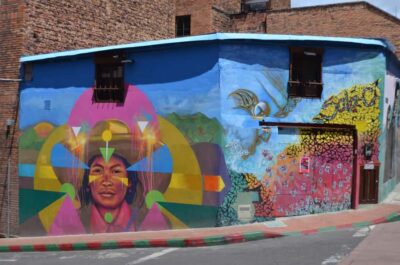
Bogotá: La Candelaria Graffiti & Urban Art Guided Tour
Read our review →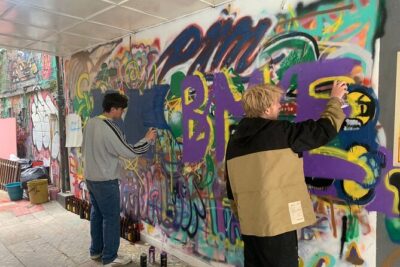
Fun Graffiti Workshop: The Art of Aerosol and Color
Read our review →
Graffiti Tour in La Candelaria Bogotá with Transportation
Read our review →Graffiti Tour in La Candelaria Bogotá with Transportation
Read our review →
Graffiti Tour: a fascinating walk through a street art City
Read our review →
Browse the lists this tour appears in