
REVIEW · BOGOTA
Bogotá: La Candelaria Graffiti & Urban Art Guided Tour
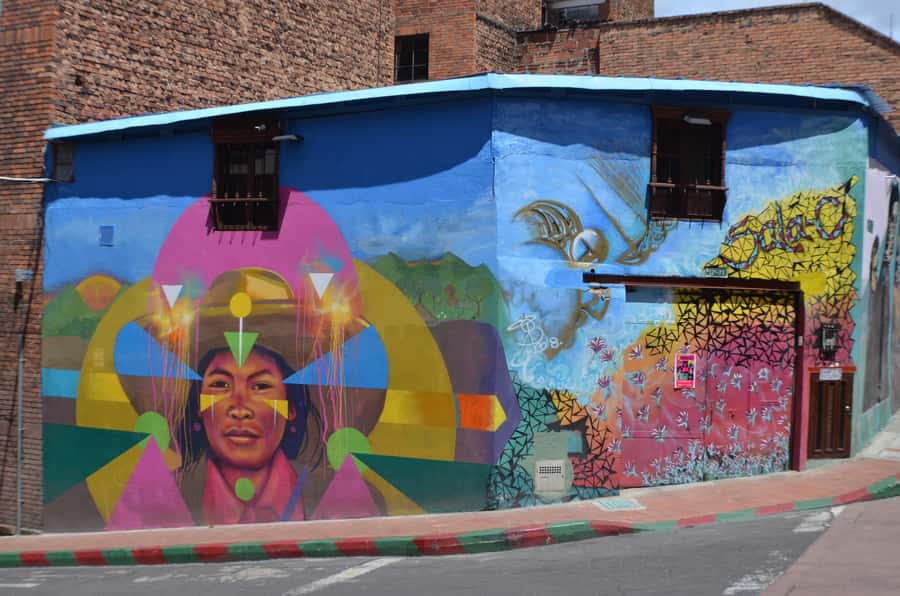
Bogotá’s graffiti is not just decoration. In La Candelaria, painted walls carry stories about indigenous roots, politics, social pressure, gender, and city life. This walking tour gives you the people and ideas behind the spray paint, with guides such as Juana, Christian, Luis, Bernardo, and Lorena bringing the art into focus.
I like the small groups of up to 10 and the mix of famous murals with easy-to-miss works tucked along side streets. I also like the stop at Café Herencia, where a cup of coca leaf tea gives the walk a distinctly Colombian finish.
The main consideration is the pace and format. You walk for about 150 minutes, sometimes on uneven city streets, and the tour may be conducted in English and Spanish at the same time. If you want a quiet museum-style art tour, this is not it.
Key points at a glance
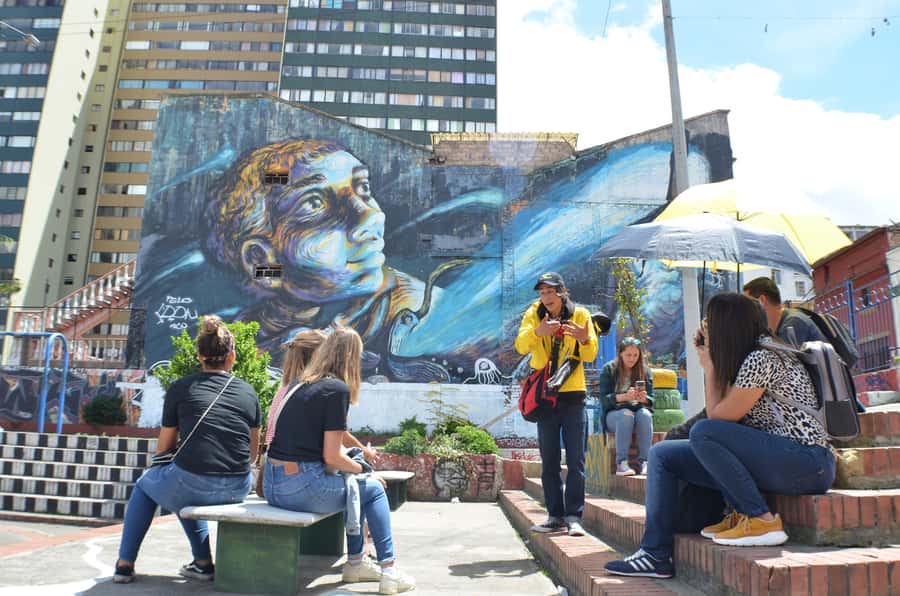
- The art tells political and personal stories: Learn how murals address indigenous identity, current issues, the environment, and urban life.
- Local artists take center stage: See work associated with 3 Manos, Ledania, Bastardilla, Vera, Carlos Trilleras, Wosnan, and Ocio 4.
- The route covers central La Candelaria: Begin at Chorro de Quevedo, pass La Concordia Market and Journalist’s Park, then return to the starting square.
- The group stays small: A limit of 10 people makes it easier to ask about symbols, tags, techniques, and artists.
- You finish with coca leaf tea: Café Herencia supports local artists and provides a pleasant final stop.
- The price is modest for the time: At $16 per person, you receive a 150-minute guided walk, tea tasting, insurance, and a rain umbrella if needed.
Why La Candelaria is the right place for a graffiti walk
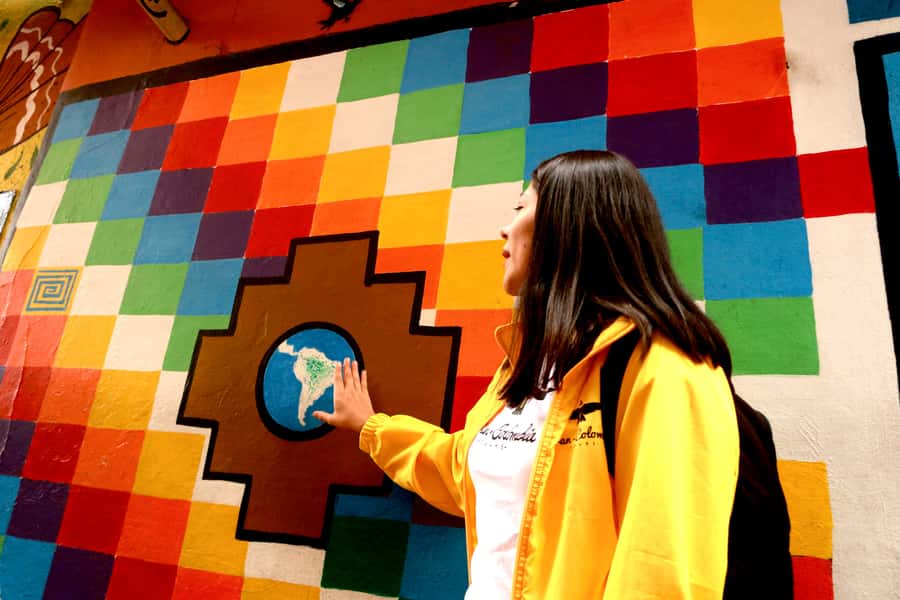
La Candelaria is Bogotá’s old central district, but this tour is not mainly about colonial buildings or formal monuments. Its focus is the public art spread across the walls, shutters, lanes, and facades of the neighborhood.
That setting matters. Graffiti here sits beside daily life. You may pass a market, a café, a university crowd, or a historic square before turning a corner and finding a large painted wall. The contrast helps explain why Bogotá has become such an important city for spray-painted art.
Your guide introduces the difference between tags, graffiti, and larger murals, then connects the work to the city around it. The art is not treated as a collection of pretty photographs. You hear why certain figures, colors, animals, faces, and symbols appear again and again.
I especially like this approach for a first visit to Bogotá. You get a way to read the city beyond its obvious sights. A mural about indigenous ancestry, for example, can open a conversation about identity and the relationship between older traditions and modern Bogotá.
More Graffiti Tours in Colombia
- Medellin: Comuna 13 Graffiti Tour, Cable Car & Street Food
★ 4.8 · 9,046 reviews - Medellín: Comuna 13 Tour with Snacks And Your Own Graffiti
★ 4.9 · 311 reviews - Medellín: Comuna 13 and Graffiti Guided Tour with a Local
★ 4.9 · 239 reviews
Starting at Chorro de Quevedo
The tour meets beside the fountain under the yellow umbrella in Plazoleta del Chorro de Quevedo. There are two daily departures, at 10 a.m. and 2 p.m.
This square is a useful starting point because it puts you in the middle of La Candelaria right away. The tour does not waste time with a long transfer from another district. You begin walking almost as soon as the group gathers.
The early part of the route introduces the street-art scene and the social setting in which it developed. Your guide may point out a wall that looks simple at first, then explain the artist’s method or the reason the image appears in that location.
Guides have included Juana, Christian, Luis, Bernardo, Lorena, Myra, Ivonne, and Gerard. The strongest part of the experience depends on how well your guide connects the visual details to the wider story. Based on the guide names and comments associated with past departures, English communication has generally been a major strength, while Spanish-speaking visitors can take the tour in Spanish.
Reading the murals with a local guide
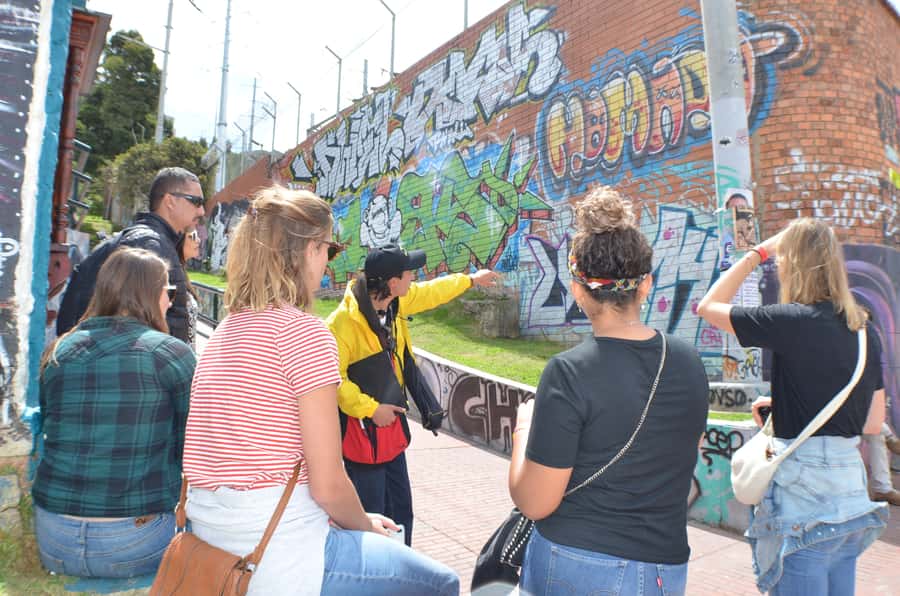
The best reason to book this walk is the interpretation. On your own, you can photograph a wall and admire its colors. With a guide, you learn to look for the artist’s signature, the difference between a quick tag and a planned mural, and the ideas tucked into the composition.
Artists discussed on the route include Carlos Trilleras, Wosnan, Ocio 4, and 3 Manos. Their work gives you different ways to think about Bogotá’s urban art. Some pieces are large and immediately visible. Others reward close attention because their message depends on small details.
The tour also gives women street artists proper attention. Bastardilla, Vera, and Ledania are part of the discussion, allowing you to see that Bogotá’s graffiti scene is not only a male story. This is one of the more useful features of the route, since it broadens your view of who makes public art and which subjects receive space on city walls.
Some guides have used short supplemental videos to show the artists’ process. That can be helpful when a finished mural looks effortless. You get a sense of planning, scale, and technique rather than seeing only the final image.
Expect conversation rather than a nonstop lecture. Several guides, including Juana, Christian, and Bernardo, have been praised for answering questions and drawing the group into a discussion about art and culture. If you are curious, ask about a symbol or artist. The small group makes that easy.
La Candelaria’s first hour on foot
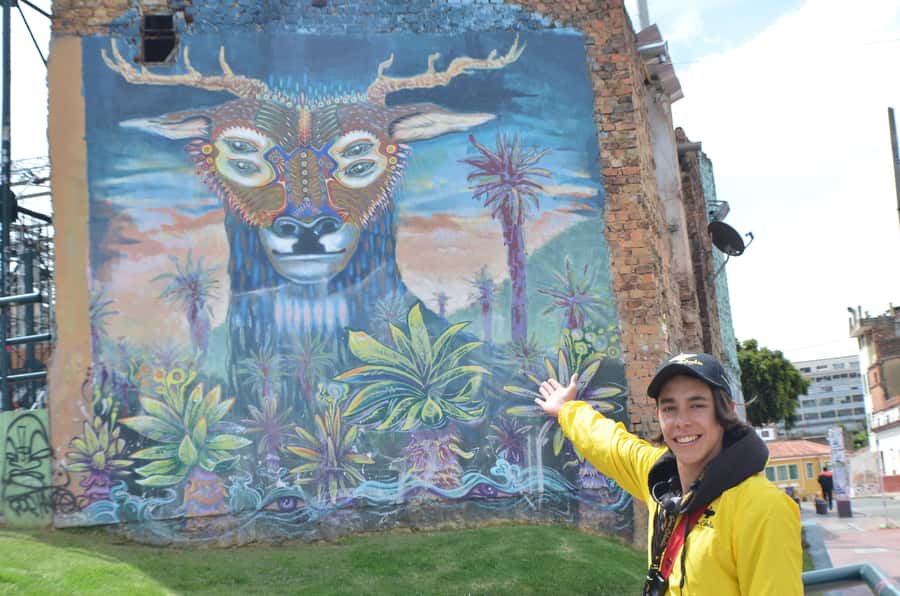
The first main walking section lasts about an hour. You move through streets packed with murals and tags, stopping often for explanations and photographs.
This is not a brisk point-to-point walk. The route is built around pauses. You may look at one wall for several minutes, then move only a short distance before stopping again. Comfortable shoes are important, and you should carry water and sunscreen.
The streets are part of the experience, but they also create the tour’s main practical drawback. This is a working district, not a closed gallery. You need to stay with the group and pay attention while walking. The tour specifically asks you not to wander away, and that is good advice.
Weather can change during the walk. Bring clothing suited to the day, and note that an umbrella is provided if rain begins. A camera is worthwhile, though your guide’s explanation is often more valuable than another quick photograph.
Same walls, a different guide:
- Historical Shared Tour Salsa, Graffiti & Resistance in Cali
★ 5.0 · 107 reviews - Medellín: Private Comuna 13 Street Art Tour
★ 4.8 · 88 reviews - Medellín: Comuna 13 Tour with Spray Painting and ice cream
★ 5.0 · 74 reviews - Fun Graffiti Workshop: The Art of Aerosol and Color
★ 5.0 · 73 reviews
La Concordia Market and the everyday city
The stop at La Concordia Market lasts about 15 minutes. It is a shorter part of the route, but it adds useful local texture to the art discussion.
Markets are places where people meet, trade, talk, and exchange ideas. Here, the market helps show how public spaces influence the themes found in nearby murals. You are not simply walking between painted walls. You are seeing art in the middle of an active neighborhood.
You may have a little time to look around, but this is not a full market tour or a separate food experience. Think of it as a compact stop that places the artwork in its daily setting. If you want photographs, keep your camera ready and listen for the guide’s explanation before moving on.
Journalist’s Park and Bogotá’s public conversations
The route then reaches Journalist’s Park, where the tour spends about an hour. This is one of the longer sections, giving the guide room to connect street art with the flow of ideas in central Bogotá.
The park and nearby streets have served as meeting points for different groups and influences. That helps explain why the surrounding art often deals with public concerns rather than private decoration alone.
You may hear about politics, culture, indigenous ancestry, environmental questions, and changing attitudes toward graffiti. The guide helps separate the artist’s intention from your first impression. A face may refer to a historical figure, a repeated shape may carry a political meaning, and a wall’s location may matter as much as its image.
This is also a good point to ask questions about technique. You can learn how artists work at different scales, how murals differ from tags, and how women artists have helped shape the scene. The tour does not require you to know anything about art before arriving. It gives you a practical vocabulary as you walk.
The final La Candelaria circuit and Café Herencia
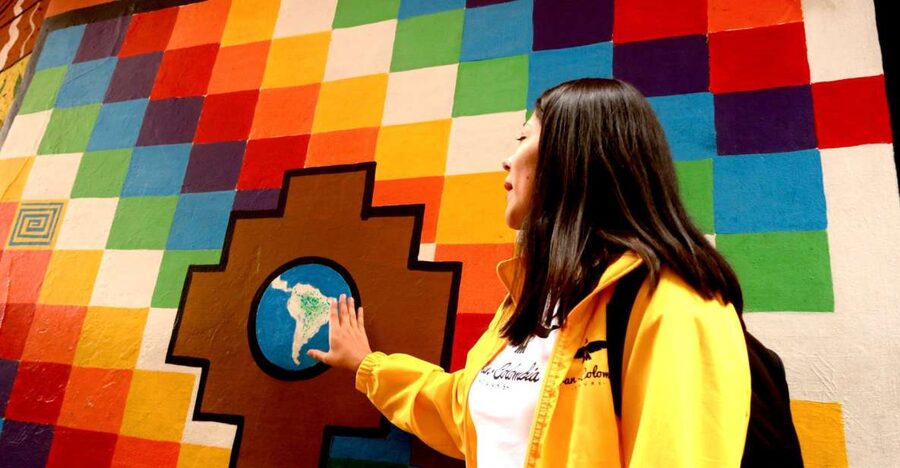
After Journalist’s Park, the group continues through La Candelaria for another 30 minutes, with more viewing and a photo stop before returning to Chorro de Quevedo.
This final section gives you time to revisit the ideas from earlier in the walk. You have seen work by artists such as Ledania, Bastardilla, Vera, 3 Manos, and others, and you can now compare their subjects and approaches. The route feels more rewarding as your eye becomes trained to look for signatures, tags, layers, and recurring themes.
The walk finishes with a Colombian tea tasting at Café Herencia. You receive coca leaf tea and can take in the café’s own art-filled setting. The café supports local artists, so the final stop continues the tour’s focus rather than feeling like an unrelated refreshment break.
Coca leaf tea is a local treat, and it gives the tour a clear sense of place. The drink is a modest finish, not a full meal, so plan to eat separately if you need lunch or an afternoon snack.
Is $16 a fair price?
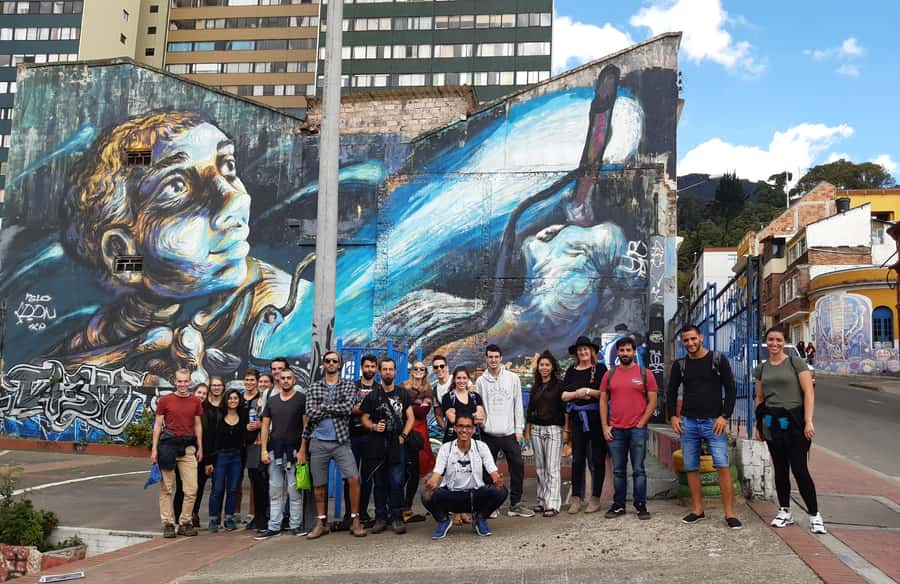
At $16 per person, I consider this good value for a 150-minute guided walk in central Bogotá. You are paying for a small group, live interpretation in English or Spanish, a tea tasting, all-risk insurance, and an umbrella if the weather turns wet.
The value comes mainly from the guide. Graffiti is easy to see but harder to understand. Without local context, you may miss the artist’s name, the political reference, or the difference between a quick tag and a carefully planned mural. The tour gives you a framework that can improve the rest of your time in Bogotá.
You also avoid paying for transportation because the experience begins and ends at Chorro de Quevedo. That keeps the price down, but it means you need to arrange your own way to the meeting point and onward travel after the walk.
The 10-person limit is another advantage. A very large group would make it harder to hear explanations or see a wall without blocking the street. With fewer people, you can ask questions and keep the walk moving at a relaxed pace.
Timing, language, and what to bring
The tour lasts 150 minutes, so allow at least two and a half hours. I would not place a tight restaurant booking immediately afterward, since walking times and group questions can affect the finish.
You can choose a 10 a.m. or 2 p.m. departure. The morning is useful if you want to continue exploring La Candelaria afterward. The afternoon option works well if you prefer a slower start, but weather and light can vary.
The guide may speak English and Spanish during the same departure, depending on the group. This is worth considering if you want a fully single-language tour. It can also be a benefit if you enjoy hearing both languages or want to practice Spanish.
Bring:
- Comfortable shoes
- Water
- Sunscreen
- A camera
- Clothing suited to the weather
You must stay with the group. That is both a tour rule and sensible city practice. Keep your attention on the guide and your surroundings as you move through the streets.
Free cancellation is available up to 24 hours before the start time, and you can reserve now and pay later. Those terms are useful if your Bogotá schedule is still shifting.
Who will enjoy this most?
I would choose this tour if you care about local art, city life, photography, politics, or modern Colombian culture. It is especially useful early in your stay because it can give you a better way to read La Candelaria for the rest of your visit.
It also suits people who have only a short time in Bogotá. In one walk, you see several parts of central La Candelaria, hear about a range of artists, visit La Concordia Market and Journalist’s Park, and finish with tea.
Families with older children and teenagers may enjoy it because the art is immediate and visual. The walk still requires attention, though, and small children may find the repeated stops less engaging.
You do not need an art background. In fact, the tour works well if you know little about graffiti but want more than a photo stop. The guide supplies the basic terms and context as you go.
I would skip it if you dislike walking, want a formal indoor gallery, or prefer a tour with no language switching. It is also not a full introduction to every part of Bogotá’s art scene. Its focus is La Candelaria and the streets around the central route.
Should you book the La Candelaria graffiti tour?
Yes, if you want to understand what you are looking at rather than simply photograph colorful walls. The strongest reasons to book are the small group, the focus on local artists, the attention to women muralists, and the guide’s explanation of political and cultural themes.
Book it for your first or second day in Bogotá if possible. The route will help you get your bearings in La Candelaria, and you can return later to revisit the murals that caught your eye.
The $16 price is sensible, the route is direct, and the coca tea at Café Herencia adds a pleasant local touch. Just wear good shoes, allow the full two and a half hours, and be ready for a walking tour that asks you to think as well as look.
FAQ
Where does the graffiti tour begin?
Meet beside the fountain under the yellow umbrella in Plazoleta del Chorro de Quevedo.
What time does the tour start?
Departures are available every day at 10 a.m. and 2 p.m.
How long does the tour last?
The tour lasts 150 minutes, or two and a half hours.
Is the tour available in English?
Yes. The live guide can conduct the tour in English or Spanish. Depending on the group, both languages may be used during the same departure.
What is included in the price?
The experience includes a Gran Colombia Tours guide, explanations of the social and political context of street art, visits to graffiti in central Bogotá, a Colombian tea tasting, all-risk insurance, and an umbrella if it rains.
Can I cancel the booking?
You can cancel up to 24 hours in advance for a full refund. You can also reserve your place and pay later.
Just added around Colombia
- Comuna 13 Neighborhood & Street Art Private Tour★ 4.7 · 12 reviews
- Medellin: Graffiti Tour Comuna 13★ 4.1 · 14 reviews
- Medellín Comuna 13 local guides snacks and your own graffiti★ 4.9 · 13 reviews
- Comuna 13: Recorrido de Arte Urbano, Cultura y Resiliencia★ 5.0 · 3 reviews
- Graffiti Tour: a fascinating walk through a street art City★ 5.0 · 5 reviews
- Fun Graffiti Workshop: The Art of Aerosol and Color★ 5.0 · 3 reviews
- Comuna 13: Graffiti Tour with Tasting, Live Show, & Gallery★ 5.0 · 4 reviews
- Comuna 13: Graffiti tour & Street Food/drink with telesferic★ 4.4 · 19 reviews
Bogota Street Art Tours, compared.
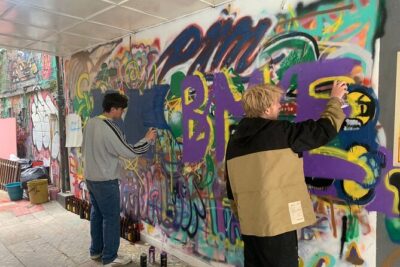
Fun Graffiti Workshop: The Art of Aerosol and Color
Read our review →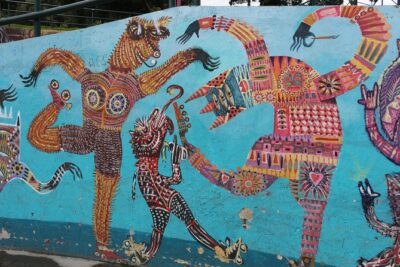
Graffiti Tour in La Candelaria Bogotá with Transportation
Read our review →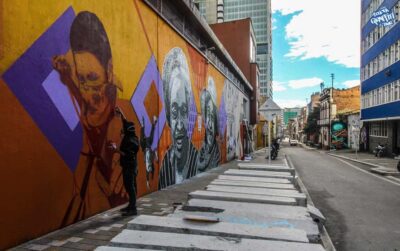
Bogotá: Graffiti Tour el mejor recorrido de arte urbano
Read our review →Graffiti Tour in La Candelaria Bogotá with Transportation
Read our review →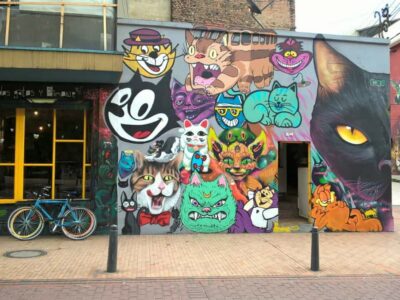
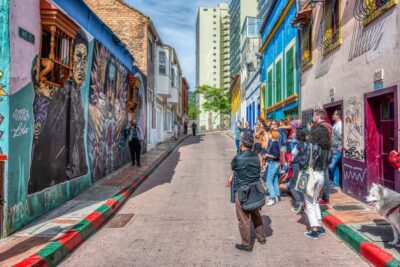
Graffiti Tour: a fascinating walk through a street art City
Read our review →
Browse the lists this tour appears in