
REVIEW · BUDAPEST
Alternative Street Art Free Walking Tour of Budapest
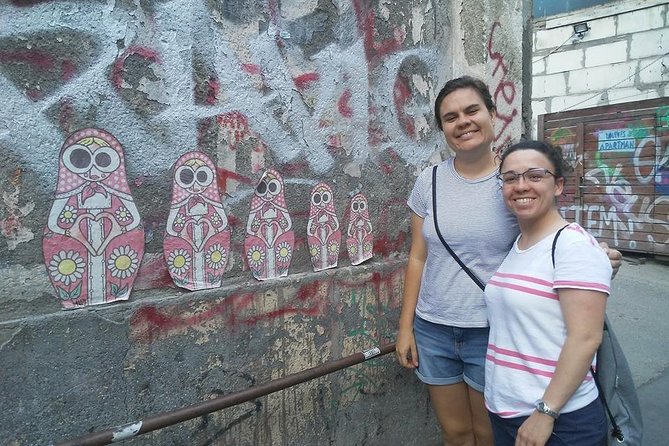
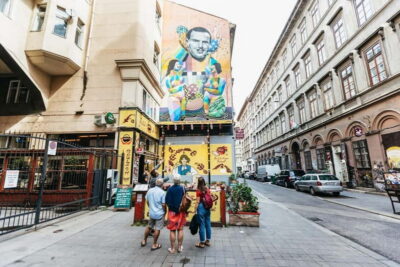
Budapest’s street art makes the city’s past easier to read. On this roughly 1-hour-40-minute walk, you follow a guide through the Jewish District, stopping for murals, small pieces, graffiti, and commissioned works that reflect Hungarian politics, social change, and daily life. The walk ends at Szimpla Kert, the city’s best-known ruin bar.
I like the small-group limit of 15, which gives the guide room to explain the art instead of rushing from wall to wall. I also like the broad subject matter: guides such as Victoria connect the artwork with Jewish District history, post-communist life, local artists, and today’s youth culture.
The main drawback is that this is an outdoor walk requiring good weather, and the meeting details need careful checking. The tour information lists Rákóczi tér as the start, while the directions also point to a yellow umbrella at Blaha Lujza Tér, so confirm the exact meeting instructions before setting off.
Key points to know before you book
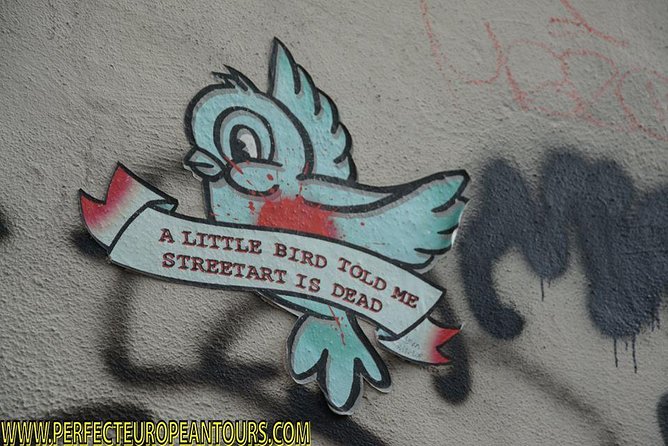
- Street art with historical context: Expect murals, graffiti, small local works, and commissioned pieces rather than a simple photo walk.
- A guide-led look at the Jewish District: The route uses public art to explain the area’s past and its changing cultural life.
- Guides with different strengths: Victoria is praised for Hungarian history and social context, while Peter and Alexandria are also named as engaging guides.
- A very low upfront price: The listed cost is $3.62 per person, with the tour described as complimentary apart from the booking fee and tip.
- A ruin bar finale: The walk finishes at Szimpla Kert, with other ruin bars discussed along the way.
- Keep an eye on the start point: Rákóczi tér and Blaha Lujza Tér both appear in the directions, so check the current meeting instructions.
Why this street art walk is different
Many city art walks focus on bright murals and quick photographs. This one aims at something more useful: it explains why the art is there and what it says about the neighborhood.
The Jewish District is a strong setting for that approach. The art sits alongside a complicated local past and a younger cultural scene. During the walk, you can expect the guide to discuss the area’s history, its growth as a center for art and youth culture, and the social and political ideas found in public works.
That makes this a good choice if you want more than a collection of colorful walls. You will still see plenty of art, but the point is to connect it with Budapest today.
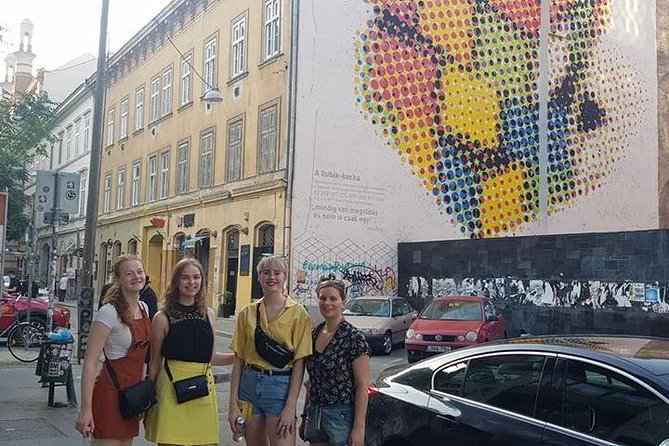
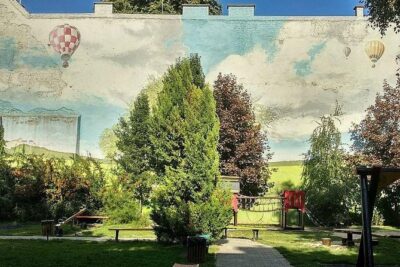
The tour also covers different types of work. You might see a large commissioned mural beside graffiti or a much smaller piece by a local artist. That mix matters. It shows that street art is not one single style, and it prevents the walk from becoming a search for only the biggest wall.
Guides named in the available information include Victoria, Peter, and Alexandria. Victoria receives particular praise for explaining Hungarian and Budapest history in a clear, direct way. One account describes her as an English guide who has lived in Hungary for more than 25 years, giving her a personal connection to changes in the country and everyday life there.
More Alternative City Tours in the world:
- London Bike Tour: Landmarks, Secret Gems, Pub Stop & Street Art
★ 5.0 · 943 reviews - Budapest: Street Art and Underground Movements Walking Tour
★ 5.0 · 365 reviews - Berlin: Street Art and Alternative Tour
★ 4.7 · 98 reviews
Reading Budapest through its walls
The most useful part of the walk is the link between art and history. The guide may explain how the Jewish District developed, why it attracted younger people and artists, and how public art reflects current concerns.
Expect discussion of more than the distant past. The experience includes references to post-communist life, the pandemic, present-day Hungary, and the relationship between art and social or political questions. That range gives you a better sense of the city than a tour that treats street art as decoration.
I especially like that the route includes corporate commissioned art as well as graffiti. A commissioned mural can have a polished public face, while a small independent piece may be more personal or pointed. Seeing both helps you consider who made the work, who paid for it, and how different kinds of messages share the same streets.
The guide’s commentary also appears to be a major part of the value. The walk is not designed as a silent circuit of photo stops. You should expect explanation, questions, and historical background. Victoria is described as witty and direct, while Peter is noted for adding fun facts. Alexandria is praised for explaining both commissioned street art and graffiti.
If you have little interest in art, the tour can still work for you. The history of the neighborhood and Hungary’s recent social changes are central enough to keep the walk useful. If you already know Budapest’s main sights, this offers a different angle on the city.
The Jewish District as the main stage
The district gives the walk its strongest sense of place. The art is tied to streets that have changed over time, and the guide explains how the area became linked with alternative culture and younger residents.
The experience is not presented as a formal museum tour. You will be outdoors, moving through the neighborhood, and looking at pieces that are easy to miss when you wander alone. That is an important practical benefit. A guide can point out smaller works and explain connections that are not obvious from a passing glance.
The route is also useful for orientation. Along with art, you may pick up ideas for ruin bars and other places to visit later. One guide took a participant to a ruin bar after the scheduled walk because she was heading that way anyway, but you should treat that as a personal extra rather than a guaranteed part of the tour.
Because the walk lasts about 100 minutes, it has enough time for context without becoming a full-day commitment. The pace is described as unhurried, which suits a tour where you need time to look closely and listen. Still, you are walking outdoors, so comfortable shoes and weather-appropriate clothing make sense.
Finishing at Szimpla Kert
The scheduled finish is Szimpla Kert, Budapest’s most famous ruin bar. The stop is listed as lasting about 10 minutes and carries no admission charge.
The value here is not simply getting a bar recommendation. The guide can explain the ruin-bar idea and point out other venues in the area. That gives the final stop some cultural context instead of making it feel like a random drink break.
Szimpla Kert is a natural ending for a tour focused on alternative culture. You finish in a place associated with Budapest’s youth scene and unconventional use of old urban spaces. If you enjoy that sort of atmosphere, you may want to stay for a drink after the guide finishes.
Do not assume the tour includes the cost of a drink. The price covers the professional guide, while food, drinks, parking, and public toilet costs are not included. The end address is given as Auróra u. 11 in Budapest, described as a grassroots community ruin bar, while the itinerary specifically names Szimpla Kert. Since those details do not perfectly match, check the final destination in your confirmation.
More Street Art Walking Tours in the world:
- Blackbeard to Banksy – The Ultimate Walking Tour of Bristol
★ 5.0 · 1,961 reviews - Bristol: Blackbeard to Banksy Guided Walking Tour
★ 4.9 · 1,422 reviews - London: Street Art and Graffiti Guided Walking Tour
★ 4.9 · 1,354 reviews - Berlin: City Street Art Guided Walking Tour
★ 4.8 · 1,051 reviews
Is $3.62 really the full cost?
The listed price of $3.62 per person makes this unusually inexpensive. It is described as a complimentary walk where you pay a booking fee and tip, so the advertised price should not be treated as the complete measure of the guide’s value.
For a low-cost introduction to Budapest’s alternative culture, it is a strong deal. You receive a professional guide, a planned route, art interpretation, local history, and an introduction to ruin bars. A small group of no more than 15 should also make the experience more personal than a large sightseeing crowd.
The sensible approach is to budget for a tip in addition to the booking fee. The tour depends heavily on the guide’s explanations, and that is where much of the experience lies.
Parking is not included, but the meeting area is near public transportation. Driving would be an awkward choice for this kind of walk anyway, particularly when the tour begins in one part of the district and finishes elsewhere.
Meeting point, timing, and group size
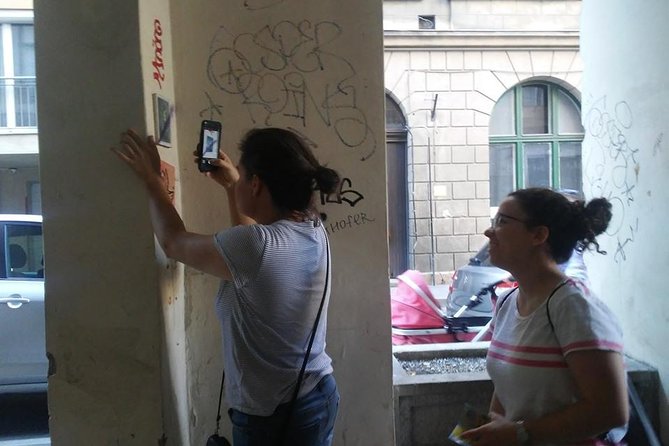
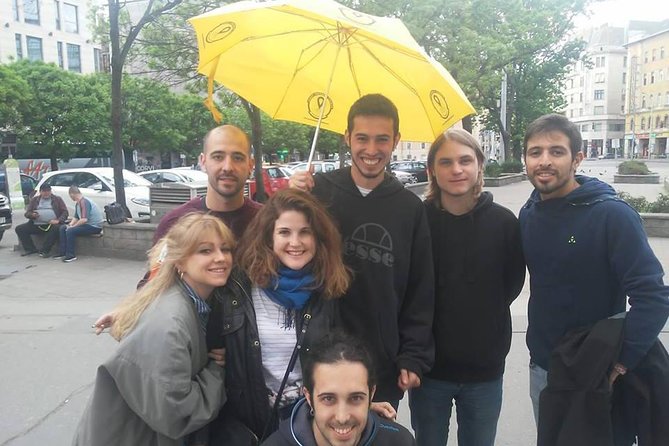
The supplied directions contain two start references. The meeting point is listed as Rákóczi tér, Budapest 1084, while another instruction says to find the guide with a yellow umbrella at central Blaha Lujza Tér. These are not details I would ignore.
Check your confirmation on the day before the walk and use the exact location shown there. If the yellow umbrella is part of the current procedure, it should make the guide easy to spot. The experience is offered in English.
The group limit is 15 people. That is small enough for the guide to interact with individuals and for you to hear explanations at street corners. One account describes a group of seven, while another had a private-feeling experience because nobody else joined that day. You should not count on a private walk, but a smaller group is possible.
Most people can participate, and service animals are allowed. The activity is near public transportation. The tour requires good weather, and if poor conditions cancel it, you can choose another date or receive a full refund.
Free cancellation is available up to 24 hours before the start time. Changes or cancellations made less than 24 hours before the start are not refunded, and late changes are not accepted. The tour also requires a minimum number of participants, so a cancellation for that reason may lead to another date, another experience, or a full refund.
Who will enjoy this tour most?
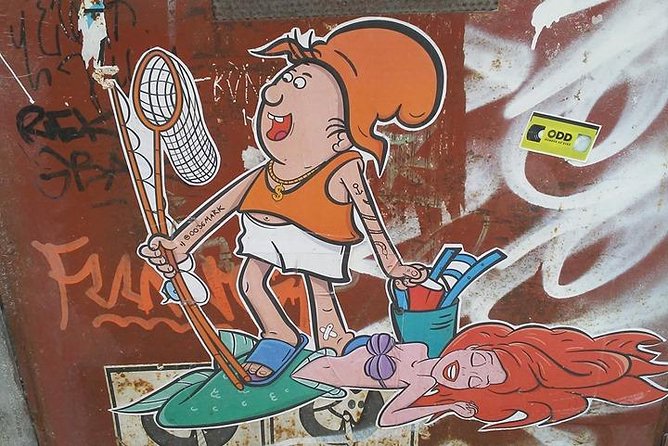
I would choose this walk if you have already seen Budapest’s main landmarks or want to understand the city through modern culture. It suits anyone interested in murals, graffiti, design, photography, urban history, and the social meaning of public art.
It also works well for visitors who want historical context without spending hours inside a museum. The guides connect the artwork with Hungary’s past and present, including the effects of communism, the pandemic, and social change.
Families and mixed-interest groups may find it useful because the tour is not limited to art criticism. Someone interested in history can focus on the Jewish District and Hungary, while someone else can pay closer attention to the murals and small pieces.
I would think twice if you dislike outdoor walking, need a fully fixed indoor schedule, or want a tour centered on Budapest’s grand architecture. This is not a standard highlights walk, and the art may be more important than famous monuments.
My recommendation
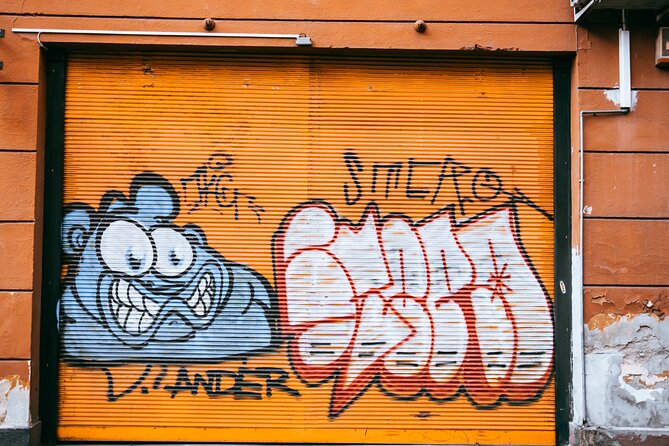
Book this tour if you want a low-cost, English-language introduction to Budapest’s street art and alternative culture. Its strongest feature is the way the guides connect public art with the Jewish District, Hungarian history, politics, and everyday life.
Victoria appears to be a particularly strong choice for historical explanation, though Peter and Alexandria are also named as engaging guides. The finish at Szimpla Kert adds a practical bonus, especially if you want help understanding Budapest’s ruin-bar culture.
Before booking, confirm the exact starting point because Rákóczi tér and Blaha Lujza Tér both appear in the directions. If the weather is uncertain, keep the cancellation terms in mind. With those details checked, this is an excellent value for curious visitors who want Budapest beyond the usual postcard sights.
FAQ
How long does the Alternative Street Art Free Walking Tour last?
The tour lasts approximately 1 hour and 40 minutes.
What does the tour cost?
The listed price is $3.62 per person. It is described as a complimentary tour where you pay a booking fee and tip.
Is the tour offered in English?
Yes. The experience is offered in English.
Where does the tour start?
The meeting information lists Rákóczi tér, Budapest, 1084 Hungary. Another direction refers to meeting a guide with a yellow umbrella at Blaha Lujza Tér, so check your booking confirmation for the current exact location.
Where does the tour finish?
The tour finishes in the Jewish District area at a grassroots community ruin bar. Szimpla Kert is named as the final stop, while the end address is listed as Auróra u. 11, Budapest, 1084 Hungary.
What kind of art will I see?
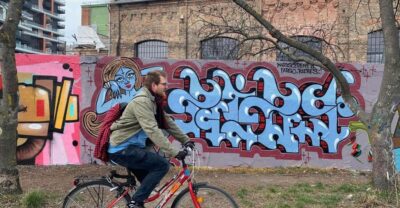
You can expect murals, graffiti, small works by local artists, and commissioned street art.
Does the tour include a ruin bar visit?
The walk finishes at Szimpla Kert, Budapest’s famous ruin bar. Other ruin bars may also be discussed. Drinks are not included.
How many people can join?
The maximum group size is 15 people.
Can I cancel for a full refund?
Yes, if you cancel at least 24 hours before the experience begins. Cancellations made less than 24 hours before the start are not refunded.
What happens if the weather is poor?
The experience requires good weather. If it is canceled because of poor conditions, you will be offered another date or a full refund.
Just added around the world
- Your Own Belgrade: Street Art and Hidden Gems Walking Tour★ 5.0 · 2 reviews
- Xochimilco floating gardens, Coyoacan and UNAM murals★ 4.0 · 6 reviews
- Vienna Urban Art Tour: Explore a different side of Vienna!★ 3.8 · 14 reviews
- Wynwood Walls Street Art & Neighborhood Walking Tour★ 4.9 · 9 reviews
- Vancouver: Street Art & Craft Beer Walking Tour with Tasting★ 4.8 · 14 reviews
- Vancouver: Street Art & Craft Coffee Walking Tour w/ Tasting★ 4.8 · 11 reviews
- Urban Canvas: Osaka Street Art Bike Tour★ 5.0 · 10 reviews
- UNAM: Murals & Revolution★ 4.9 · 8 reviews
Budapest Street Art Tours, compared.
Street Art and Underground Movements Walking Tour
Read our review →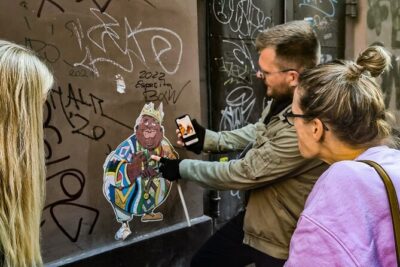


Original Budapest Alternative Street Art & Jewish Tour
Read our review →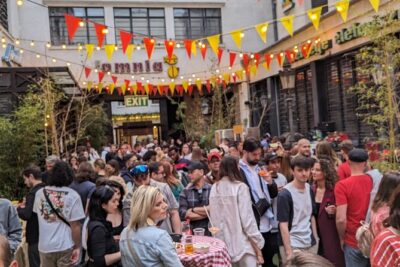
Budapest Vibe: Ruin Bars, Street Art and Culture Tour
Read our review →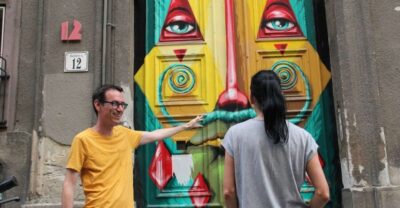
Browse the lists this tour appears in