REVIEW · LONDON
London: Street Art and Graffiti Guided Walking Tour
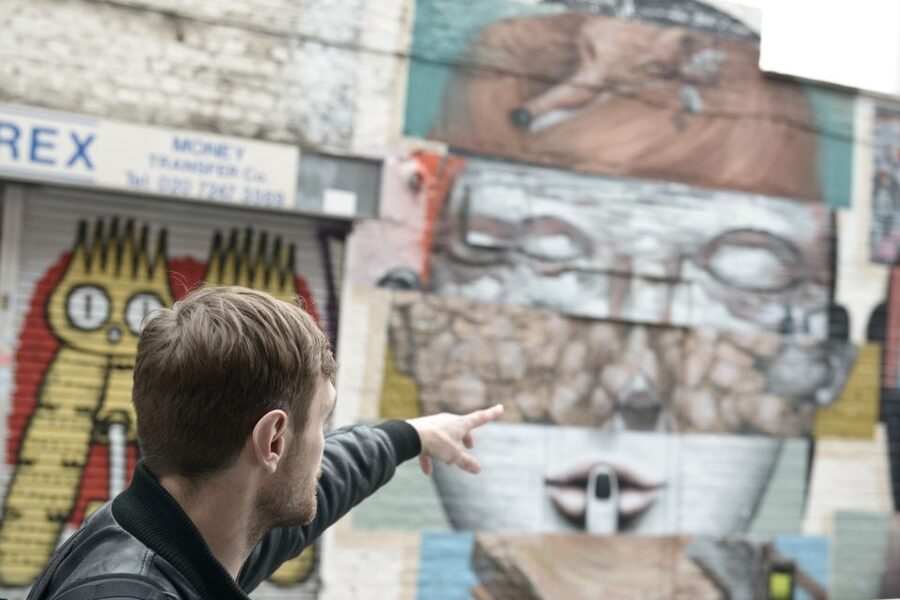
East London’s street art is not arranged behind glass. It appears on walls, shutters, signs, rooftops, floors, and tiny corners you could walk past without noticing. This two-hour walk takes you from Old Spitalfields Market through Brick Lane and Shoreditch, with context on artists such as Banksy, ROA, Invader, Shepard Fairey, and Stik.
I like the first-hand access to the scene, since guides have worked with artists or featured them through the tour’s podcast. I also like the way the art is tied to East End history, rather than treated as a simple hunt for famous names. The main consideration is that outdoor art changes constantly, so no route can promise every particular work, and rainy weather can make the walk less pleasant.
Key points
- Around 40 artists: See work by local and international artists, from major murals to small stickers and paste-ups.
- A walk with context: Learn how East London’s culture and past shaped its graffiti and street art.
- Look beyond Banksy: The route can include artists such as ROA, Invader, Shepard Fairey, and Stik.
- Guides with scene experience: Guides including Josh, Eva, Laura, Gabi, Ava, and Natalie have been praised for clear, lively explanations.
- A changing outdoor gallery: The art is regularly painted over, removed, or replaced, so each visit can feel different.
- Simple central meeting point: Start under the White Goat Statue outside Old Spitalfields Market, near Liverpool Street Station.
Why East London is the right place for a street art walk
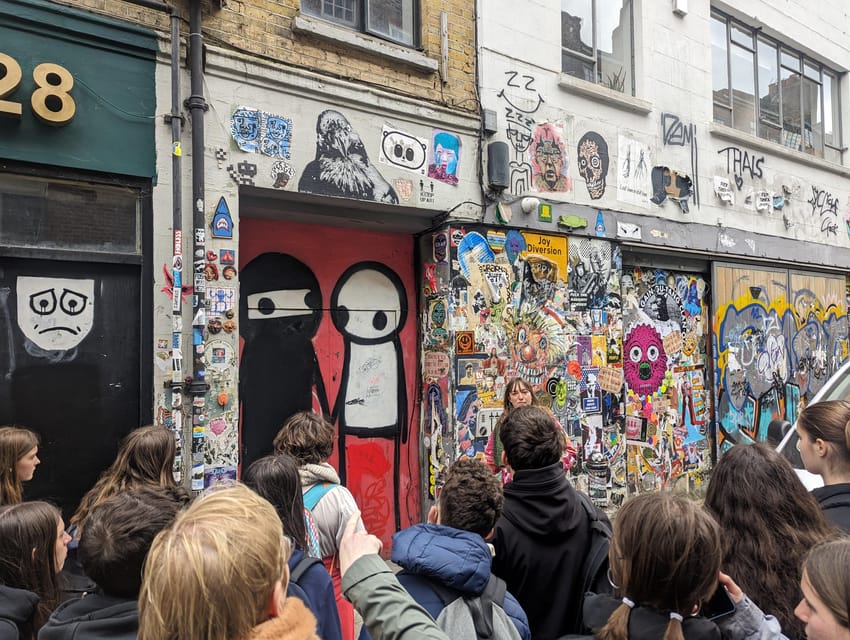
The best reason to take this tour is not simply to find a Banksy. It is to learn how to read the streets. East London gives you an unusually dense mix of murals, tags, paste-ups, stickers, stencils, and works made with different materials. Without guidance, much of it can blur into background noise.
The route begins close to the City of London, the financial district, then moves into the East End. That change matters. You start near the polished edge of central London and soon reach streets where art, independent businesses, old industrial spaces, immigrant communities, nightlife, and creative culture sit close together.
Your guide supplies the links between place and artwork. You might hear about an artist’s technique, the meaning behind a figure, the unwritten rules of graffiti, or why one wall attracts work while another does not. The strongest part of the experience is this shift in your attention. Afterward, you are better prepared to spot small pieces on your own across London.
The tour has a very strong rating of 4.9 from 1,354 reviews, and the praise is notably consistent around the guides’ clear explanations, enthusiasm, and ability to answer questions. That matters here. Street art can be enjoyed casually, but the difference between looking and understanding often comes down to the person leading the walk.
More Graffiti Tours in London
- Shoreditch Street Art and Graffiti Tour (Private Group Booking)
★ 5.0 · 108 reviews - ADVANCED GRAFFITI STREET ART TOUR / SHOREDITCH / EAST LONDON
★ 5.0 · 23 reviews - London: East End Instagrammable Street Art & Graffiti Tour
★ 4.9 · 22 reviews
Meeting under the White Goat at Old Spitalfields Market
The meeting point is under the White Goat Statue on Brushfield Street, outside Old Spitalfields Market. Liverpool Street Station is the closest station, and the location is practical if you are fitting the walk into a day of sightseeing.
From Liverpool Street, leave onto Bishopsgate, turn left, then take a right onto Brushfield Street between Pizza Express and the RBS building. Walk about 100 metres to the statue. Arrive 10 minutes early, since a large station and busy streets can slow you down.
Old Spitalfields Market gives you a useful starting point. You are not dropped into a random alley with no sense of place. Instead, the guide can set the East End scene before the walk heads toward Brick Lane and Shoreditch. The opening section also helps show how close the City of London is to neighborhoods with a very different feel.
The tour is in English and led in person. The guide is the main feature, so the experience will vary slightly with the group and the person leading it. Names praised for their clear and lively approach include Josh, Eva, Laura, Gabi, Ava, and Natalie. Several guides have artistic experience or a close connection to the local scene, which helps when the discussion turns from simple identification to process and meaning.
From Spitalfields to Brick Lane
As you leave Spitalfields, the tour begins to show you how street art fits into the area rather than presenting isolated walls as museum pieces. Brick Lane is the heart of the walk, and it gives you a concentration of work from both local and international artists.
Expect a mixture of scale. One stop might be a large mural that fills a wall. The next may be a small piece tucked beside a doorway, a sticker on a sign, or work placed low enough that you need to look toward the pavement. One especially useful part of the walk is learning where to look: walls and shutters are obvious, but art can also appear on roofs, signs, and floors.
The route can include Banksy, though you should not book this as a guaranteed Banksy-only outing. The point is the wider scene. ROA, Invader, Shepard Fairey, and Stik each bring different styles and methods, and the guide helps explain those differences.
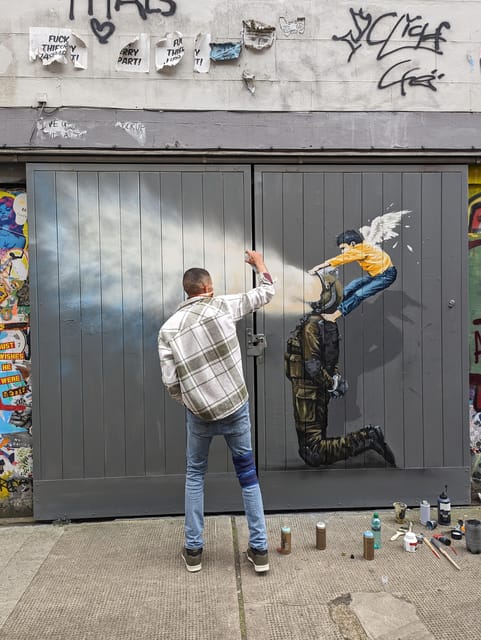
You will also hear about materials and techniques. The area’s art includes paint, stencils, stickers, paste-ups, and other forms of applied work. That range is important because graffiti and street art are not one single style or movement. A sticker artist works under different limits from someone painting a full mural, and a carefully planned wall piece has a different relationship to the street than a quick tag.
Guides have been praised for explaining the culture and rules behind graffiti without talking down to beginners. That makes the walk suitable if you know little about the subject. It also works if you already follow hip-hop or graffiti culture and want to ask more specific questions.
Shoreditch and the art you would miss alone

The Shoreditch section builds on Brick Lane’s concentration of work but makes the larger point even clearer: the best pieces are not always the biggest. Your guide may point out a detail, signature, sticker, or small image that you would have missed while walking from one major mural to the next.
This is where the tour earns its price. You are not paying only for directions to public walls. You are paying for an experienced eye that notices changes in the area and explains what you are seeing. Several guides have been praised for pointing out works that would otherwise pass unnoticed, including art tucked into less obvious parts of the neighborhood.
The route is also shaped by the fact that street art is temporary. A piece can be painted over, removed, weathered, or covered by newer work. That means the tour changes over time. It also means you should take photos if a particular piece catches your eye, since the same wall may look different on your next visit.
This changing quality is both a strength and a limitation. It keeps the walk fresh, but it prevents the certainty you get from a conventional museum itinerary. If you need a fixed list of guaranteed works, this is not the right format. If you enjoy seeing what is present now and learning how the scene keeps moving, it is a good match.
More Graffiti Tours in the UK
- East End London Instagrammable Street Art and Graffiti Tour
★ 5.0 · 16 reviews - 3-Hour Private Tour of East London Graffiti & Street Art
★ 4.5 · 5 reviews
The East End stories behind the walls
The art is only half the subject. Guides also explain the history of London’s East End and how local culture affected what appeared on its streets. The best commentary connects the physical neighborhood with the art rather than adding a few unrelated historical facts.
You may learn why some parts of the area have more street art than others, how different communities and periods shaped East London, and how the streets became a meeting place for artists. The exact emphasis depends on the guide, but the experience consistently places the artwork in a local setting.
That broader discussion helps avoid a common problem with street art tours: treating every image as a photo prop. A mural can have a political point, a personal story, a technical challenge, or a place-specific meaning. A sticker can be small but still important to an artist’s practice. Your guide gives you ways to ask better questions about each piece.
I particularly value the explanations of tagging and graffiti culture. These forms can be easy to dismiss if you only see the finished mark without understanding the motivation, skill, or social rules involved. The walk does not require you to like every form of street art, but it gives you a fairer way to judge it.
What makes the guides important
The tour depends heavily on the person leading it, and that is not a weakness so much as a fact of this type of experience. A guide who knows the area can adjust the discussion, answer questions, and choose examples that suit the group.
Josh has been praised for making the subject approachable to people with very different levels of interest. Eva is often noted for clear explanations and a strong grasp of both the art and its local setting. Laura is known for an engaging style and for adapting the walk to the group. Ava brings an artist’s point of view, while Natalie has personal experience as a street artist and a close connection to the area.
Gabi has also been praised for explaining the artists, paints, stickers, and historical setting in detail. These names are useful when you book, but guide assignments can change, so treat them as examples rather than a promise of who you will meet.
The strongest guide style for this tour is enthusiastic but not smug. You want someone who can explain technique and culture in plain English, then make room for questions. The available feedback points to that balance, with repeated praise for friendly, approachable guides who keep the two hours moving.
Is two hours enough?
Two hours is a sensible length for a first look at Brick Lane and Shoreditch. It gives you enough time to see many kinds of work without turning the day into a long urban hike. One recent walk was reported as taking about an hour and a half, so the exact length may vary, but you should plan around the stated two-hour duration.
The pace is generally described as comfortable rather than rushed. That helps when the guide is explaining a wall, answering questions, or giving you time to take photographs. It also means this is not a fast sightseeing circuit designed to cover every corner of Shoreditch.
You will be standing and walking outdoors for the full experience. Wear comfortable shoes and bring rain gear. London weather can change quickly, and there is no promise of shelter while the guide is speaking. The tour is listed as wheelchair accessible, though the practical ease of any city walk can depend on the streets and the day’s route.
The $33 price and what you receive
At $33 per person, this is not the cheapest way to walk around East London, since the art itself is free. The value comes from the interpretation. You receive a two-hour guided route, local context, artist information, and a trained eye that helps you find details you might otherwise miss.
I think the price is fair if you are genuinely curious about street art, graffiti, or the East End. It is especially good value for visitors who would otherwise spend an hour taking photos of the most obvious walls without understanding the wider scene.
The value is less clear if you only want one famous Banksy photo. The tour covers around 40 artists and treats Banksy as part of a much larger picture. You should also remember that outdoor works change, so the experience is not a fixed collection with every attraction guaranteed.
Free cancellation up to 24 hours before the start and a reserve-now, pay-later option make it easier to fit the walk into a changeable London schedule. Those booking terms are useful, but the real decision is whether you want explanation and local insight rather than a self-guided stroll.
Who will enjoy this walk most?
This is a strong choice for first-time visitors who want a side of London beyond the standard sights. It also suits people who like photography, design, urban culture, illustration, or contemporary art but do not want a formal gallery visit.
Teenagers can enjoy it because the subject is visual, current, and connected to public space. One family used it during a school break and found it a good option, while another group said the walk gave teenagers ideas for their own art projects. The tour is not limited to art specialists, and beginners should feel comfortable asking basic questions.
It also suits returning visitors. You may have walked Brick Lane before, but a guide can show you details and side streets that change your reading of the neighborhood. If you already know graffiti well, you can use the walk to compare styles, techniques, and the relationship between legal murals, stickers, tags, and more planned pieces.
You may want to skip it if you dislike walking in uncertain weather, need a quiet indoor activity, or want a guaranteed list of permanent attractions. This is a live street experience, not a museum tour.
Booking details worth knowing
Meet 10 minutes before the start under the White Goat Statue on Brushfield Street, outside Old Spitalfields Market. The tour is conducted in English, and the guide is included in the price.
Bring rain gear and wear shoes suited to a two-hour city walk. If someone in your group would rather make art than only look at it, separate street art workshop options are available. A shorter workshop is offered daily for people over 10, while a longer two-hour version with a break is available for people over 12. Anyone under 16 joining a workshop must be accompanied by an adult throughout.
If part of your group wants the walking tour and another part wants the workshop, the activities can be booked separately for the same day. That gives families and mixed-interest groups a practical way to split the experience.
Should you book the London street art tour?
Book it if you want to understand East London’s art rather than simply photograph it. The combination of around 40 artists, changing outdoor work, Brick Lane and Shoreditch, and East End history gives you more than a list of walls.
The strongest reason to go is the guide. Josh, Eva, Laura, Gabi, Ava, and Natalie have all been praised for making the subject clear, friendly, and interesting, with special care given to technique, culture, and the stories behind the art. At $33, that personal explanation is the part you are buying.
Skip it if you want a fixed museum-style route or a guaranteed Banksy-focused outing. For everyone else, bring a rain jacket, arrive under the white goat, and give yourself two hours to learn how to see London’s walls differently.
FAQ
Where does the London street art tour meet?
Meet under the White Goat Statue on Brushfield Street, outside Old Spitalfields Market. The closest station is Liverpool Street Station.
How do I reach the White Goat Statue from Liverpool Street Station?
Exit Liverpool Street Station onto Bishopsgate, walk left, then turn right onto Brushfield Street between Pizza Express and the RBS building. Continue about 100 metres to the statue.
How long does the walking tour last?
The stated duration is two hours. The exact length can vary slightly, so plan to have two hours available.
Which artists might I see?
The tour can include work by around 40 local and international artists, including Banksy, ROA, Invader, Shepard Fairey, and Stik.
Is the tour offered in English?
Yes. The activity includes a live English-speaking guide.
Is the tour wheelchair accessible?
Yes, the activity is listed as wheelchair accessible.
Can I cancel or pay later?
You can cancel up to 24 hours before the tour for a full refund. You can also reserve your place and pay later, which keeps your plans flexible.
More Street Art Walking Tours in the UK
- London : Shoreditch Street Art Walking Tour
★ 3.3 · 4 reviews - Blackbeard to Banksy – The Ultimate Walking Tour of Bristol
★ 5.0 · 1,961 reviews - Bristol: Blackbeard to Banksy Guided Walking Tour
★ 4.9 · 1,422 reviews - Glasgow Street Art Daily Walking Tour: 2pm
★ 5.0 · 648 reviews
More Street Art Walking Tours in London
- Street Art Walking Tour and Workshop in London
★ 5.0 · 58 reviews - Shoreditch Self-Guided Walking Tour: Art, Cuisine & Culture
★ 3.5 · 14 reviews - London Street Art Tour of the East End Exclusive Walking Tour
★ 5.0 · 12 reviews - London: Markets, Street Art, and Camden Town Walking Tour
★ 5.0 · 5 reviews
Just added around London
- London Street Art Tour of the East End Semi-Private 12ppl Max★ 5.0 · 23 reviews
- The Great Street Art Experience★ 5.0 · 2 reviews
- Shoreditch Street Art Private Photography Tour including Brick Lane★ 5.0 · 5 reviews
- London Street Art Tour of the East End Exclusive Walking Tour★ 5.0 · 12 reviews
- Private Shoreditch Street Photography Workshop★ 4.5 · 4 reviews
- 3-Hour Private Tour of East London Graffiti & Street Art★ 4.5 · 5 reviews
- London Unexpected Private Tour – Markets, Street Art & Camden Town★ 5.0 · 2 reviews
- East End London Instagrammable Street Art and Graffiti Tour★ 5.0 · 16 reviews
London Street Art Tours, compared.
London Bike Tour: Landmarks, Secret Gems, Pub Stop & Street Art
Read our review →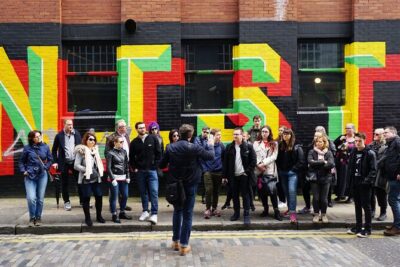

Landmarks & Secrets Bike Tour with Pub & Street Art
Read our review →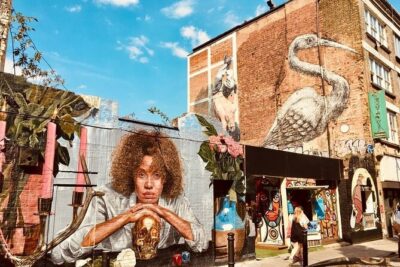

East End Street Art Tour and Spray Painting Workshop
Read our review →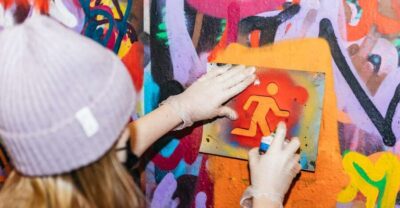
Shoreditch Street Art and Graffiti Tour (Private Group Booking)
Read our review →