
REVIEW · BARCELONA
Street Art, Sculptures & Crime Stories Walking Tour – Barcelona
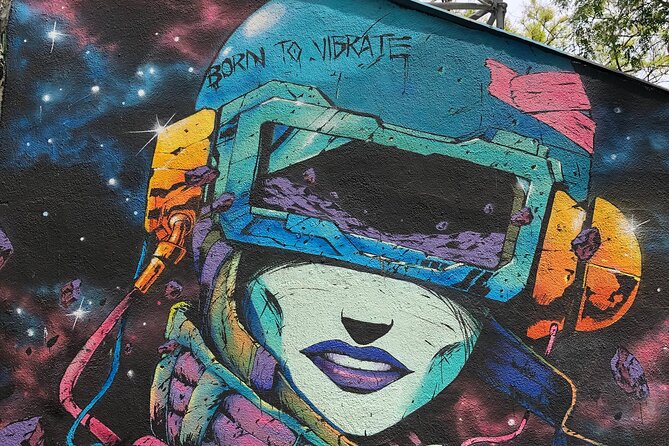
Barcelona’s street art is not tucked away in one tidy gallery. It is painted on shutters, slipped into alleyways, set into pavement, and pressed against Roman walls. This 2.5-hour walk from El Raval to El Born uses that open-air art to explain Barcelona’s social struggles, legends, and changing neighborhoods.
I like the route’s variety, especially the shift from raw political murals in Raval to Joan Miró’s pavement mosaic and the optical tricks of El Born. I also like the local guidance: Liliia is praised for clear art context, city history, and useful tips for coffee, lunch, bars, and restaurants.
The main drawback is the price, $108.37 per person, for a walking tour with no snacks or paid sights included. It makes the most sense if you care deeply about street art or want a personal, less standard view of central Barcelona.
Key points to know before you book
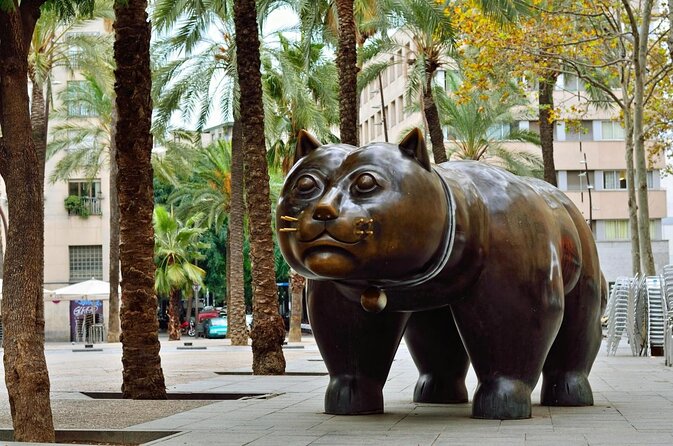
- Raval supplies the strongest social and political edge, with murals tied to local struggles, legends, and a dramatic killing.
- The route connects four central areas, El Raval, La Rambla, the Gothic Quarter, and El Born.
- Liliia is a standout guide option, with a friendly style and strong knowledge of street art and Barcelona.
- The tour ends near Ciutadella, in El Born, making it easy to continue sightseeing or stop for lunch.
- The group limit is 15 people, and the experience may be customized for you and your group.
- The $108.37 price buys interpretation, not admission tickets, so the value depends on how much you want guided context.
Why this Barcelona art walk feels different
Most first-time Barcelona walks steer you toward Gaudí, grand churches, and famous squares. This one looks down side streets and up at walls. You still pass some major landmarks, but the focus is on the art and stories that are easy to miss while rushing between the usual sights.
The route covers neighborhoods that have changed sharply over time. El Raval brings a rougher, more political tone. La Rambla supplies a short stop with one famous work by Joan Miró. The Gothic Quarter adds Roman and medieval stonework, plus art linked to Picasso. El Born finishes the walk with optical illusions, modernist details, market murals, and darker local legends.
That mix is the tour’s main strength. You are not simply shown a series of colorful walls. You are asked to look at who made them, what they refer to, and why the neighborhood around them matters.
The walk is offered in English and has a maximum of 15 participants. The description also presents it as private and customizable, so confirm the exact arrangement when booking, especially if you want a private outing rather than a small shared group. Group discounts are available.
More Street Art Walking Tours in Spain
- Barcelona: Raval Street Art and Graffiti Walking Tour
★ 4.9 · 60 reviews - Bilbao: Art District Walking Tour
★ 4.8 · 27 reviews - Granada: “Street Art & The Caves” Unique Guided Walking Tour
★ 5.0 · 27 reviews
Starting in El Raval, where the walls tell hard stories
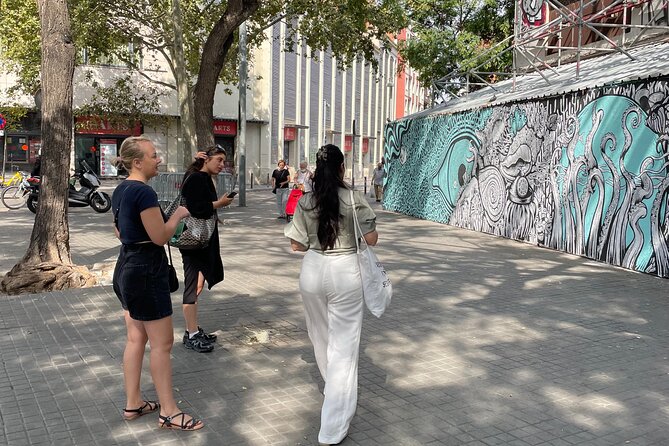
The meeting point is at Carrer Nou de la Rambla, 105, in Ciutat Vella. From there, the first hour is spent in El Raval, the section of the route with the most serious tone.
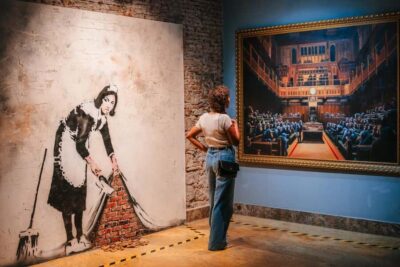
Raval was once known as one of Barcelona’s roughest districts. Today, its walls carry public arguments about social conditions, identity, politics, and neighborhood change. The art can be large and direct, but some of the best pieces are small works tucked into doorways and narrow lanes.
Your guide points out murals linked to local legends and social struggles. One stop concerns the site of a dramatic historical killing that later inspired neighborhood art. That detail gives the walk its crime-story thread without turning the whole experience into a sensational ghost tour.
I like this part because it gives you a more honest look at street art. The paintings are not just decoration for photographs. They reflect conflict, memory, and the way residents see their area. The guide’s explanation matters here, since a mural can lose much of its meaning if you only see it as a backdrop.
You also encounter iconic mosaics that represent Raval’s rebellious character. The route includes many small observations, so keep your eyes at street level and above it. A doorway, side wall, or upper facade may matter as much as the large piece in front of you.
The possible downside is that Raval’s appeal is not polished. You should expect an urban district with a strong edge, not a tidy outdoor museum. That is precisely why the stop suits people who want Barcelona beyond the postcard version, but it may feel less comfortable if you prefer conventional sightseeing.
La Rambla reveals art beneath the crowds
The next stop is La Rambla, Barcelona’s best-known central boulevard. The scheduled time here is about 20 minutes, so this is a compact segment rather than a long stroll along the full avenue.
The main feature is Joan Miró’s famous mosaic set into the pavement. Millions of people walk over it, often without noticing. A guide can help you stop, look down, and understand why this small act of attention matters. It is a good reminder that Barcelona’s public art is often part of the everyday street rather than placed behind a rope.
You will also look at philosophical street art by contemporary local artists. These works consider identity, freedom, and city life. The themes give this short section more weight than a simple photo stop.
La Rambla can be crowded, and the boulevard’s constant movement may make close discussion harder than in a quiet side street. Still, the contrast works well. After the more intimate art of Raval, you see how a major public route can also function as an open-air gallery.
If you want to photograph Miró’s mosaic, be ready to pause quickly and share the pavement with people moving in every direction. The guide’s commentary is the real reason to include this stop.
The Gothic Quarter mixes Roman stone with modern spray paint
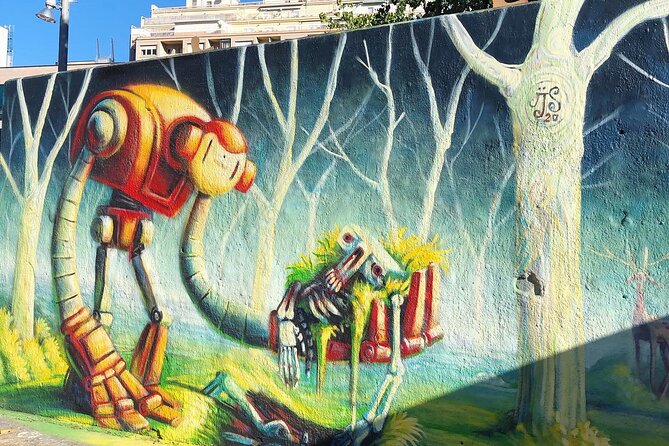
The Gothic Quarter receives about 20 minutes on the route. This is Barcelona’s old core, once enclosed by medieval walls and built over parts of the Roman city. Here, contemporary art appears beside arches, ruins, alleys, and old courtyards.
The appeal is the clash of dates. A bright mural may sit near stone that has been in place for centuries. A modern installation may reinterpret an old legend. The effect is less about neat visual harmony and more about seeing how each generation leaves a mark on the same streets.
The tour also includes works connected with Picasso’s early Barcelona period. That gives the stop a link to the city’s established art world, while the street pieces show how artists continue to respond to urban life outside formal museums.
You may find this section especially useful if you have already seen the Gothic Quarter but felt you only skimmed its lanes. The guide helps you notice details you might otherwise pass without a second look. The short timing does mean you will not receive a full architectural tour of the district. Think of it as a focused art-and-story walk through selected corners.
The Gothic Quarter can also be confusing to navigate alone. The planned path saves you from wandering without purpose, while the guide explains why a particular wall, alley, or courtyard belongs in the story.
More Street Art Walking Tours in Barcelona:
- Blackbeard to Banksy – The Ultimate Walking Tour of Bristol
★ 5.0 · 1,961 reviews - Bristol: Blackbeard to Banksy Guided Walking Tour
★ 4.9 · 1,422 reviews - London: Street Art and Graffiti Guided Walking Tour
★ 4.9 · 1,354 reviews - Berlin: City Street Art Guided Walking Tour
★ 4.8 · 1,051 reviews
El Born finishes with illusions, markets, and darker legends
The final 40 minutes take place in El Born, also called La Ribera. The tour ends at Carrer Antic de Sant Joan, 7, near Ciutadella. This is a useful finish because you can continue on foot into El Born, stop for food, or reach the park after the tour.
El Born is presented as the route’s major street art stop. You will look for optical illusion pieces by internationally known local artists. These works play with perspective and make walls, doors, or building surfaces seem to shift. They reward patience, so do not rush straight to the camera. First look at the piece from the position your guide suggests.
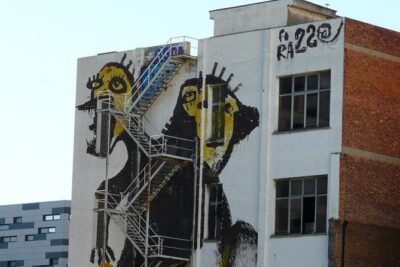
Another feature is the famous staring building facade. Its windows and architectural details appear to watch people passing below. It is an unusual example of how a building itself can become part of the street-art conversation, even when it is not a painted mural.
The route also visits street art around Santa Caterina Market, known for its wavy roof associated with Gaudí-inspired design. The market area adds color and movement to the final stretch, though the experience remains focused on public art and local stories rather than food sampling.
El Born also brings in Barcelona’s darker past, including stories tied to medieval executions. That material gives the neighborhood more depth than its current reputation as a fashionable gallery and dining district.
This is probably the most photogenic part of the walk, but it is not necessarily the most informative without a guide. Optical illusion art is easy to photograph and easy to misunderstand. The explanation helps you see the technique and the local connection.
What the guide adds to the experience
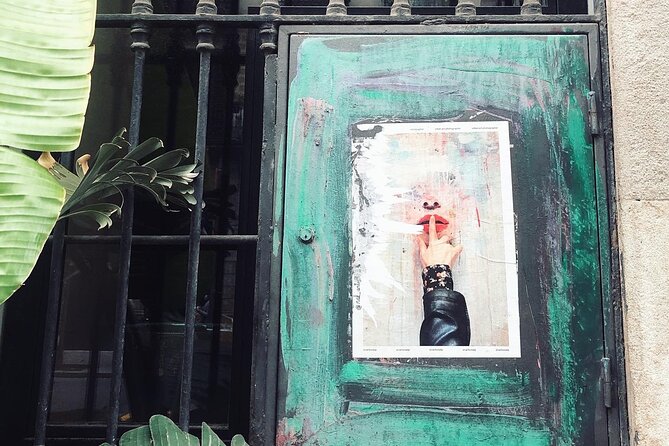
The guide is the reason to consider this tour instead of simply downloading a street-art map. Liliia is described as friendly, professional, and particularly strong on both artists and Barcelona’s past. She also gives practical recommendations for coffee, lunch, bars, and restaurants.
That matters because the route crosses four districts with different personalities. A guide can connect a political mural in Raval with the neighborhood’s past, then shift to Miró, Picasso, modern installations, and market art without making the walk feel like four unrelated visits.
Liliia is the guide name most closely associated with this experience. Leila is also named as a guide, so ask who will lead your chosen date if that matters to you. The tour can be customized, which may help you explain your interests before starting. Someone focused on political art may want more time in Raval, while a Picasso admirer may prefer extra attention in the Gothic Quarter.
The strongest guide style here is conversational rather than academic. You can ask questions, and the walk is designed to explain what you are seeing in plain terms. Several guide accounts specifically praise the recommendations for lunch and local places, which can make the tour useful beyond its 2.5-hour route.
Is $108.37 a fair price?
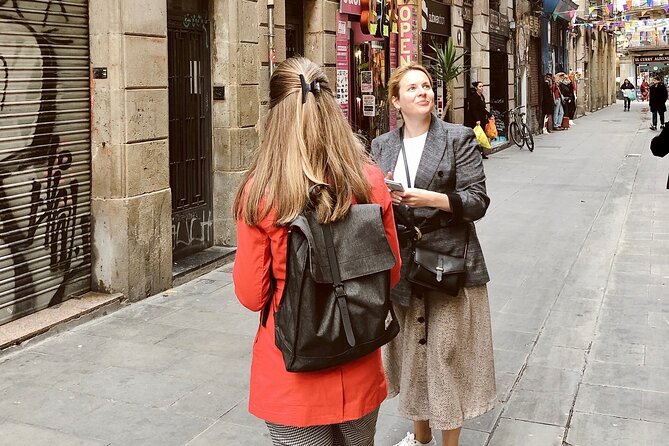
At $108.37 per person, this is an expensive walking tour. You are not paying for museum entry, a meal, or a major monument ticket. The included value is the route, the guide’s time, interpretation, and the chance to customize the experience.
I would not book it simply to see famous Barcelona sights. You can walk through La Rambla, the Gothic Quarter, and El Born without paying for a guide. You can also find public art by exploring on your own, though you may miss the smaller pieces and the stories behind them.
The price makes more sense in three cases. First, you have a strong interest in street art and want an expert to identify artists and explain themes. Second, you are short on time and prefer a thoughtful route rather than trial and error. Third, you are traveling with a group that can use the customization option or qualify for a group discount.
The tour has received a five-star rating from 100 percent of 11 listed ratings, and the praise centers on the guide’s art knowledge, personable manner, thoughtful route, and practical Barcelona advice. That is a small sample, so I would treat it as encouraging rather than proof that every departure will feel identical.
Timing, meeting point, and walking comfort
The advertised duration is about two hours and 30 minutes. The stop times add up to roughly two hours, leaving the rest for walking between districts, pauses, and explanations. Wear comfortable shoes, since the experience is entirely on foot and moves through central streets, alleys, and public spaces.
You start at Carrer Nou de la Rambla, 105, in Ciutat Vella. The finish is at Carrer Antic de Sant Joan, 7, in El Born, not far from Ciutadella. Because the start and finish are in different neighborhoods, plan your day around the endpoint rather than expecting to return to the starting place.
The tour runs daily within the stated operating period, from November 15, 2024, through March 16, 2027, with listed hours from 7:00 a.m. to 8:00 p.m. Your booking confirmation provides the exact start time.
The maximum group size is 15. Most people can take part, service animals are allowed, and the meeting area is near public transportation. Snacks are not included, so use the end of the route near El Born as a natural time to find lunch or a drink.
Free cancellation is available if you cancel at least 24 hours before the start time. Changes or cancellations inside that window are not accepted for a refund.
Who should book this street art tour?
I would recommend it most strongly to repeat visitors and first-time visitors who have already seen the main architectural sights they wanted. It also fits art students, photographers, urban-history fans, and anyone who prefers local stories to a standard checklist of attractions.
You should book it if you want to understand why a work is on a particular wall, how a neighborhood’s past shapes its art, and where to find details that are easy to miss. The guide’s food and coffee suggestions add useful value if you are still planning your days in Barcelona.
I would skip it if you want a cheap orientation walk, a broad Gaudí tour, or a museum-style art lecture. The price is high for a short walking experience, and the route does not include snacks or paid indoor attractions.
For the best value, go with people who share your interest and use the customization option. Confirm whether the outing will be private or shared, ask which guide is assigned, and treat the walk as both an art tour and a way to choose where to spend the rest of your day.
FAQ
How long does the Barcelona street art tour last?
The tour lasts approximately two hours and 30 minutes.
Where does the tour begin?
It begins at Carrer Nou de la Rambla, 105, Ciutat Vella, Barcelona.
Where does the tour finish?
It finishes at Carrer Antic de Sant Joan, 7, in El Born, near Ciutadella.
Which neighborhoods does the tour visit?
The route includes El Raval, La Rambla, the Gothic Quarter, and El Born, also called La Ribera.
What language is the tour offered in?
The tour is offered in English.
How many people can join the tour?
The maximum group size is 15 travelers. The experience may also be customized for you and your group.
Are food or snacks included?
No. Snacks are not included.
Can I cancel for a full refund?
Yes. You can cancel at least 24 hours before the experience start time for a full refund. Cancellations or changes made less than 24 hours before the start time are not accepted for a refund.
Just added around Barcelona
- Barcelona Street Art, Graffiti and Tapas Tour★ 4.0 · 5 reviews
- Moco Museum Barcelona: Banksy Small-Group Tour with Skip-the-Line★ 5.0 · 5 reviews
- Small-Group Moco Museum Barcelona: Banksy & Modern Art Tour★ 4.8 · 16 reviews
- Private Barcelona Street Art Tour★ 5.0 · 2 reviews
- Barcelona | StreetArt Bike Tour Moco Museum★ 4.6 · 13 reviews
- Barcelona: Insider Street Art Tour with Private Studio Visit★ 5.0 · 21 reviews
- Barcelona | Street Art Bike tour★ 5.0 · 3 reviews
- Barcelona Street Art, Graffiti & Tapas Tour★ 5.0 · 5 reviews
Barcelona Street Art Tours, compared.
Barcelona Street Art and Graffitti Bicycle Tour
Read our review →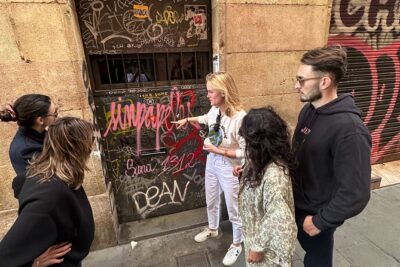
Barcelona Street Art Tour with Exclusive Artist Studios Visit
Read our review →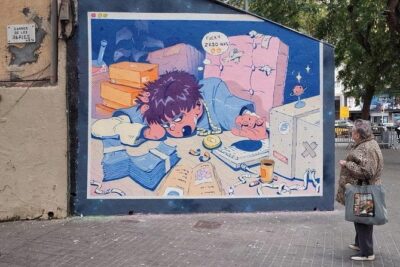
Raval Street Art and Graffiti Guided Tour in Barcelona
Read our review →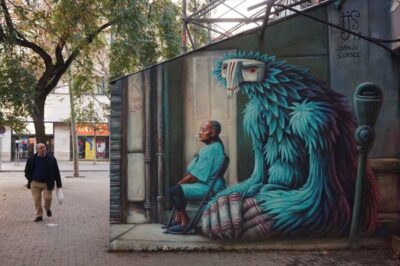
Browse the lists this tour appears in