
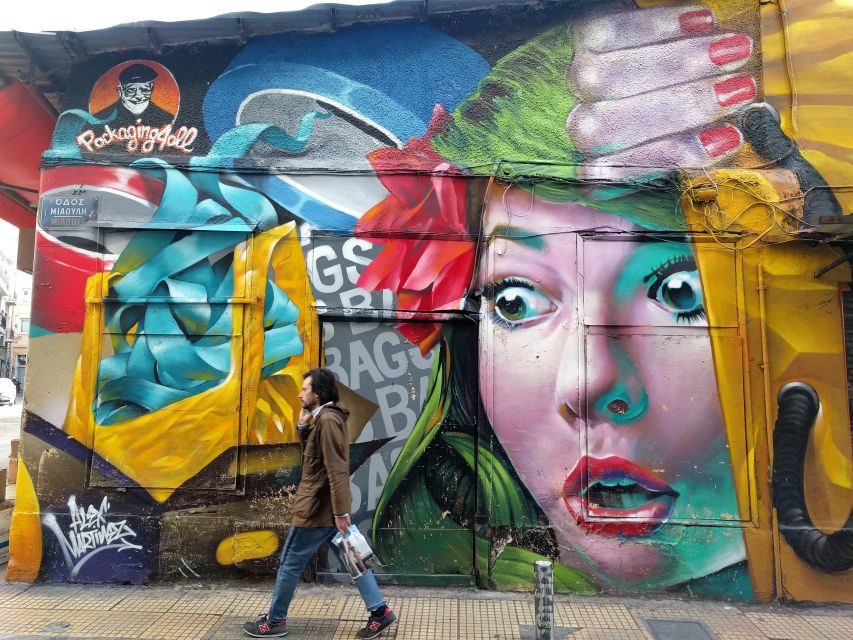
REVIEW · ATHENS
Athens: Guided Urban Street-Art Tour
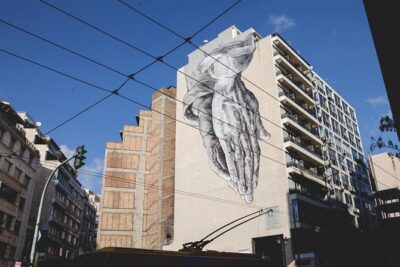
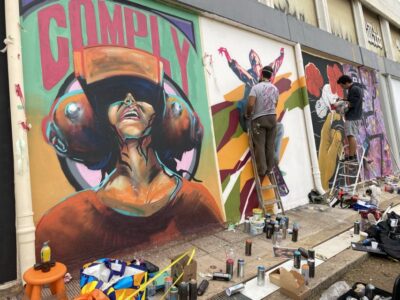
Athens reveals a very different face when you stop looking only at ancient stones and start looking up at its walls. This two-hour walk follows murals, tags, stencils, and large-scale works through central neighborhoods, using street art to explain Greece’s financial crisis, political tensions, social struggles, and changing urban culture. The art is the route’s main attraction, but the city around it is part of the lesson.
I like two things here. First, guides such as Penelope, Greg, Katerina, Eleni, and Pascal bring real subject knowledge and explain how artists, techniques, and local events connect. Second, the route moves beyond the Acropolis circuit into Psyri, Sarri, Omonoia, and Metaxourgeio, areas you could easily pass without understanding what you are seeing. The main drawback is simple: you walk for two hours at a decent pace, with limited shade in hot weather.
Key points to know before you book
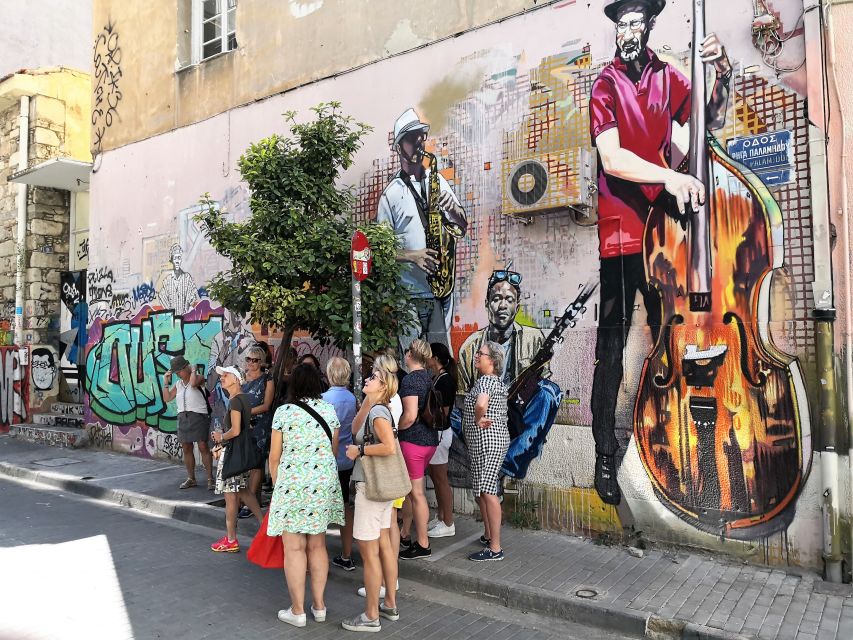
- Start beside Monastiraki metro: Meet at Lonis pastry shop on Athinas Street, right by the Athinas Street metro exit.
- Read the city through its walls: The guide explains political images, social messages, artist signatures, and different street-art methods.
- Walk from the old center to Metaxourgeio: The route passes through Monastiraki, Psyri, Platia Iroon, Sarri, Omonoia, and Metaxourgeio.
- Expect strong guiding: Penelope, Greg, Katerina, Eleni, Greg, and Pascal are among the guides praised for clear explanations and an engaging manner.
- Plan for steady walking: The two-hour route includes small alleys, courtyards, main streets, and neighborhood passages.
- Good value for art lovers: At $47 per person, you are paying for an expert-led look at many works and the modern Greek context behind them.
Why Athens street art deserves your time
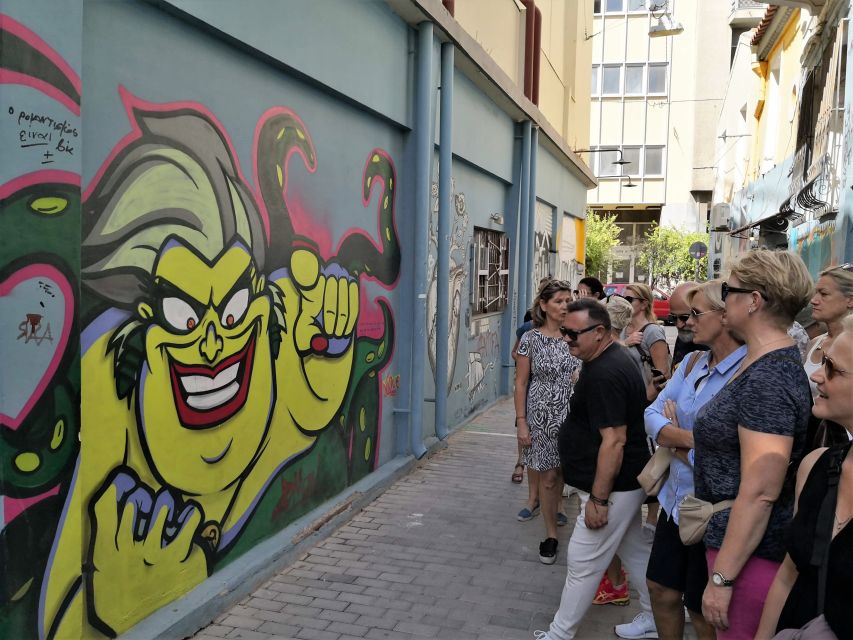
Athens is often presented through temples, statues, and archaeological sites. Those are essential, but they do not tell you everything about the city you are walking through today. Street art gives you another layer: a public record of anger, humor, grief, protest, identity, and hope.
This tour treats graffiti and murals as more than colorful backdrops for photographs. Your guide helps you ask who made a work, why it appeared in a particular place, what symbols it uses, and how its message relates to Greece’s recent social and financial troubles. You also learn how local artists fit into a wider international street-art scene.
That approach makes the walk useful even if you do not normally follow graffiti. You do not need to recognize artists or understand painting techniques in advance. The guide supplies the context, then gives you time to look closely.
I especially like the promise of seeing both commissioned and unsanctioned work. A polished mural may be designed to fit a wall and attract attention, while a rough tag or political stencil may be quick, personal, and confrontational. Seeing the two together helps you understand why Athens has such a strong street-art identity.
More Guided Tours in Athens:
- Athens: Guided Street Art Walking Tour
★ 4.9 · 182 reviews - Bristol: Blackbeard to Banksy Guided Walking Tour
★ 4.9 · 1,422 reviews - London: Street Art and Graffiti Guided Walking Tour
★ 4.9 · 1,354 reviews
Starting at Lonis beside Monastiraki
The meeting point is easy to reach. Go to Athinas 7, next to the Monastiraki metro station exit on Athinas Street, and look for Lonis pastry shop. If you arrive by metro, use the Athinas Street exit rather than relying on a general meeting point in Monastiraki Square.
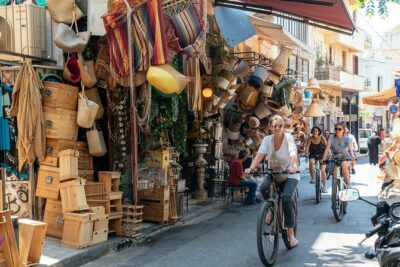
This is a useful place to begin because Monastiraki is one of Athens’ busiest visitor areas. You start in a familiar part of the city, then quickly move away from the usual souvenir shops and archaeological sights. Arrive with a few minutes to spare so you can find the pastry shop without rushing.
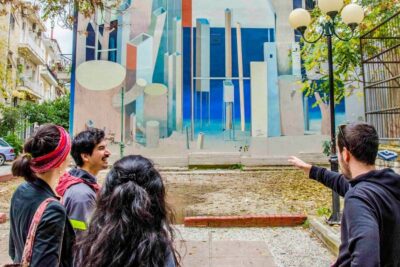
The experience includes an English-speaking guide. Private and small-group options are available, which matters here because street art is easiest to discuss when everyone can hear and ask questions. In a smaller group, you can also stop without blocking a busy pavement.
Monastiraki to Psyri: leaving the postcard center
The first walk takes about 10 minutes toward Psyri. This opening stretch gives the guide a chance to explain how street art fits into Athens and what to watch for. You may begin by noticing large murals, but the guide will also draw attention to smaller marks, layered images, lettering, and work that sits above eye level.
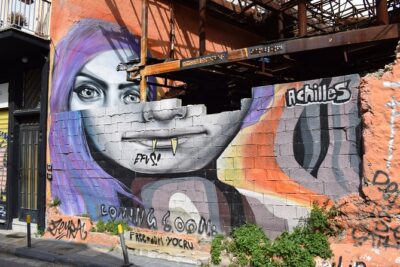
Psyri is a strong early stop because it combines popular nightlife streets with older local passages and workshop areas. The neighborhood has changed considerably, and the walls show that change. Some works are playful or decorative. Others carry sharper messages about politics, money, work, and daily life.
Do not expect a formal gallery arrangement. Pieces can be partly covered, weathered, painted over, or crowded by signs and parked vehicles. That is part of the subject. Your guide helps you understand the wall as a changing public space rather than a permanent exhibition.
The longest section in Psyri lasts about 40 minutes. That gives you time to examine several works and ask about individual artists. Penelope is particularly praised for explaining styles, themes, and the background of a wide range of pieces, while Greg has been noted for connecting art with modern Greek society and the changing character of Athens.
Platia Iroon and Sarri: smaller streets, sharper detail
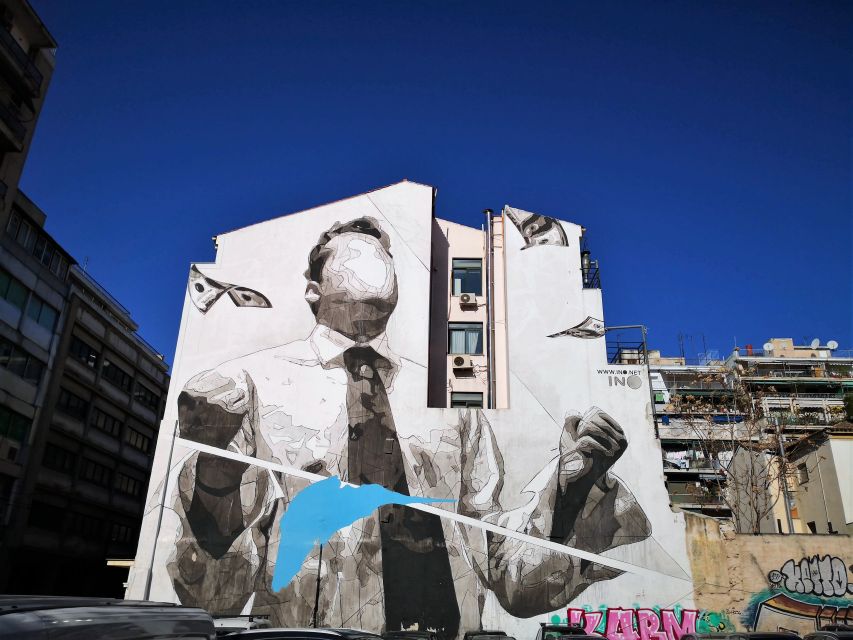
The route continues with a walk of roughly 10 minutes to Platia Iroon, followed by about 15 minutes toward Sarri. These shorter sections break up the main viewing stops and help you see how quickly the city’s walls change from one street to the next.
Small alleys and courtyards are important here. A large mural on a major street is easy to find, but a smaller work tucked beside a doorway or in a courtyard can tell you just as much about the local scene. The guide may point out how artists use the shape of a building, cracks in plaster, shutters, pipes, or old signs as part of the work.
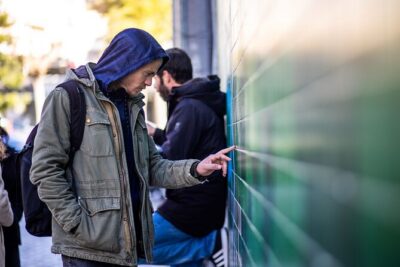
This is also where the tour’s advice to look up becomes practical. Several works are placed high on walls, and the best view may be above shopfront level. Bring sunglasses on a bright day and keep your phone ready, but do not spend the whole walk behind a screen. The guide’s explanation is what turns a wall into a story.
Sarri is useful for understanding how old urban fabric and newer art overlap. You are not simply visiting an art district. You are walking through working streets where the art sits among everyday life. That makes the experience feel more like an introduction to Athens than a parade of photo stops.
A few more street art tours around Athens worth a look
- Athens Street Art Walk
★ 5.0 · 309 reviews - Awesome Street Art Tour in Athens with a Local Expert Small-Group
★ 5.0 · 150 reviews - Athens Urban Street Art Tour
★ 5.0 · 98 reviews - Athens street art tour
★ 5.0 · 27 reviews
Omonoia: art beside a changing city
From Sarri, the route takes about 15 minutes to Omonoia. This section may feel less polished than the tourist center, and that is intentional. Omonoia is one of the places where the tour’s social and financial themes become easier to see in the surroundings.
Street art here can be direct. Images may respond to unemployment, austerity, migration, public frustration, or political conflict. Your guide explains the references rather than treating every dark image as a simple sign of decline. The point is not to label the neighborhood, but to understand why artists choose certain subjects and locations.
This part of the walk may appeal most to visitors who want modern Athens rather than a carefully presented version of the city. It also requires some openness. You are looking at real streets, not a purpose-built art venue, and the setting can feel rougher or more intense than Monastiraki.
The guides generally keep the conversation interactive. Eleni has been praised for explaining both the art and the artists, while Katerina is known for clear English and an engaging presentation. If you have a particular interest in political art, portraiture, technique, or international artists working in Athens, say so. The route can be discussed through different angles.
Metaxourgeio and the final square
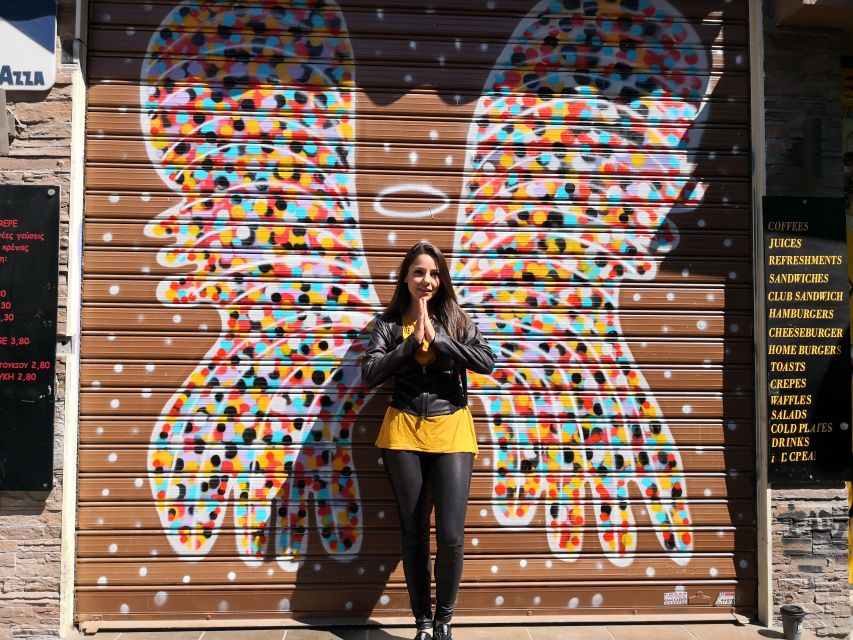
The final leg takes about 30 minutes toward Metaxourgeio Square, with the tour ending there. This is the longest named walking section, so it is worth saving a little energy. The payoff is a neighborhood where large walls, side streets, and independent creative activity give the walk a strong finish.
Metaxourgeio is often the kind of area you may not reach on a first Athens visit. That makes the ending useful. You finish with a better sense of how far the city’s street-art culture extends beyond the Acropolis and central shopping streets.
The final stop at Metaxourgeio Square also gives you a clear place to continue your day. The tour does not include hotel transport, food, or drinks, so plan your next move before you arrive. You may want to stay in the area, return by metro, or head elsewhere in central Athens.
The route’s listed walking sections add up to a full two hours. The pace is usually manageable, but it is not a slow coffee-and-stroll outing. One summer group ended early because of the heat, and another visitor noted that the pace was fairly brisk. In July and August, an earlier start may be more comfortable if that option is available.
What the guides add to the experience
The quality of the guide matters more here than it would on a basic sightseeing walk. The art changes, but the guide’s ability to explain context is what gives the tour its value.
Penelope is repeatedly praised for her energy, clear speech, detailed explanations, and ability to involve the whole group. She has also offered route choices and adjusted the discussion to different interests. Katerina is described as warm, engaging, and easy to listen to. Greg brings strong interest in Athens and, as one account notes, is an artist himself. Eleni is praised for her friendly manner and command of the local scene. Pascal has been valued for explaining techniques, artists, and the social issues behind the work.
These names do not guarantee a particular guide on your date, but they give you a useful idea of the experience’s strongest feature: the human explanation behind the walls. The guides do not simply point and name. They discuss artistic choices, neighborhood change, political meaning, and the lives of artists.
Some guides use extra material on a tablet to clarify an artist or show related work. You may also receive practical help beyond the art, such as suggestions for seeing more of Athens or advice on using the metro. That is a welcome bonus, though the tour’s main purpose remains street art.
Is $47 a fair price?
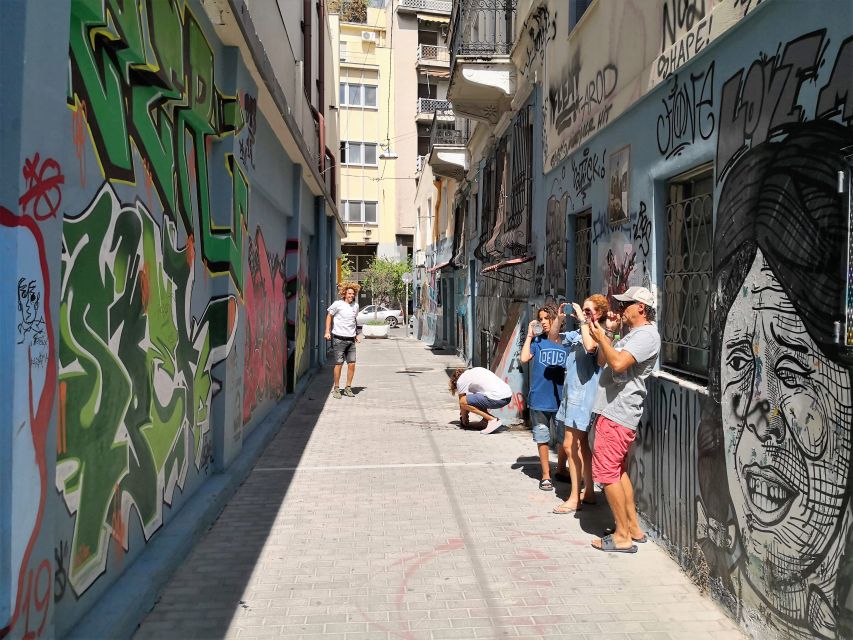
At $47 per person, this is not the cheapest way to spend two hours in Athens. You can walk through Psyri, Omonoia, and Metaxourgeio on your own for free. The question is what you would miss without someone explaining the walls.
For an independent walk, you would need to identify the best pieces, know which artists matter, understand the references to Greece’s crisis and politics, and keep track of work that may change or disappear. The fee pays for that local interpretation and for a route designed around art rather than random wandering.
The value is strongest if you are genuinely interested in street art, modern Greek society, photography, architecture, or urban change. One useful distinction is that this is not mainly an Instagram stop. The art is central, but the tour asks you to think about it.
The value is weaker if you want a quick overview of Athens’ ancient monuments, a food tour, or a relaxed walk with frequent café breaks. Food and drinks are not included, and the route is focused on walls, streets, and discussion.
Who should book this walk?
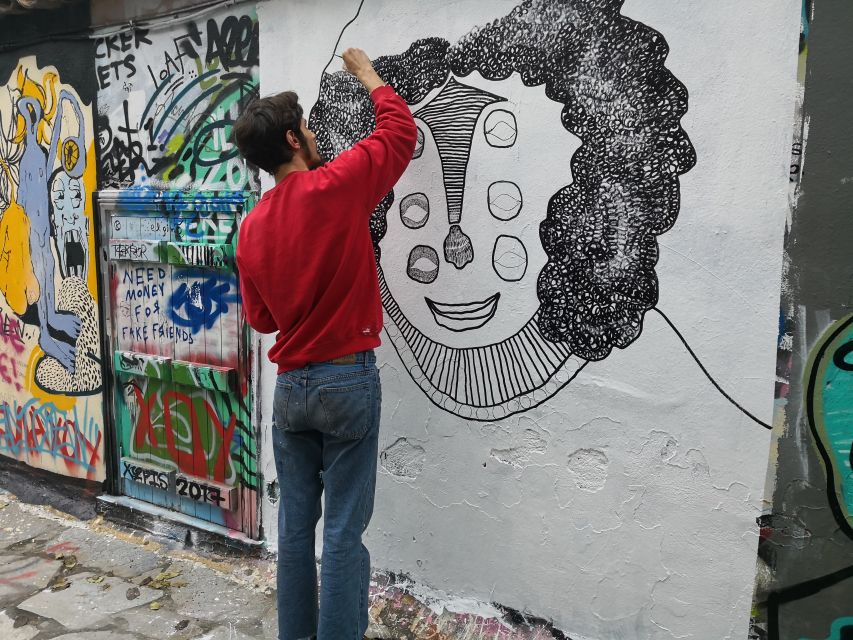
I would recommend it to adults and older children who can manage two hours on foot and enjoy asking questions. It is particularly good after you have visited one or two major archaeological sites, when you are ready to see the present-day city through a different lens.
Art students, photographers, politically curious visitors, and repeat visitors to Athens should find plenty to think about. It also suits people who prefer a small-group or private format, since the guide can respond to different interests more easily.
Families should consider the heat and walking pace. A 13-year-old joined one summer tour, but the group ended early because of high temperatures and other plans. In cooler months, the route may feel easier, and small groups can make the discussion more comfortable.
You should also be comfortable seeing parts of central Athens that may feel less tidy or more challenging than the main tourist areas. That is not a flaw in the tour. It is the reason the route offers a more honest look at the city, but it may not suit someone seeking a carefully polished sightseeing experience.
Practical details for a smoother walk
Wear supportive shoes. The route includes pavements, alleys, courtyards, and steady walking between neighborhoods. A bottle of water is sensible, especially in warm weather, since refreshments are not included.
Meet at Lonis pastry shop on Athinas 7, directly beside the Monastiraki metro exit on Athinas Street. Check the exact start time when booking, since the two-hour activity has different possible departures.
The tour is offered in English, with private and small-group formats available. You can cancel up to 24 hours before the start for a full refund, and the reserve-now, pay-later option keeps your plans flexible.
Do not judge the walk by the first mural you see. The best part is learning how to notice layers: a political symbol beside a commercial sign, a carefully painted figure above a rough tag, or an image that makes more sense once the guide explains the event behind it.
Should you book the Athens street-art tour?
Book it if you want to understand Athens as a living city rather than only as an ancient one. The combination of skilled guides, lesser-seen neighborhoods, and political art makes this a strong two-hour addition to a first visit or a useful new angle on a return trip.
Skip it if you dislike walking, want only classical sights, or prefer a quiet route with little discussion. For everyone else, $47 is a reasonable price for a focused introduction to Athens street art, especially when a guide such as Penelope, Greg, Katerina, Eleni, or Pascal can turn a wall you might ignore into a piece of the city’s story.
FAQ
Where does the Athens street-art tour start?
It starts at Athinas 7 in Athens, next to the Monastiraki metro station exit. Meet in front of Lonis pastry shop, using the Athinas Street exit if you arrive by metro.
Where does the tour finish?
The walk finishes at Metaxourgeio Square.
How long does the tour last?
The tour lasts two hours. The route includes Monastiraki, Psyri, Platia Iroon, Sarri, Omonoia, and Metaxourgeio.
What language is the tour in?
The tour is conducted in English by a live English-speaking guide.
Is food or hotel transport included?
No. Hotel pickup and drop-off, food, and drinks are not included.
Can I cancel or pay later?
You can cancel up to 24 hours in advance for a full refund. The reserve-now, pay-later option allows you to book without paying immediately.
Just added around Athens
- Athens Street Art Bike Tour★ 5.0 · 20 reviews
- Athens Street Art – Private Walking Tour★ 5.0 · 9 reviews
- Athens Food and Wine Walk from Street Art to Greek Dinner★ 5.0 · 11 reviews
- Explore Athens Street Art & Street Food Extravaganza★ 5.0 · 18 reviews
- Private Tour: Athens Street Art Walking Tour★ 5.0 · 23 reviews
- Street Art Tour & Graffiti Painting Workshop in Athens★ 5.0 · 6 reviews
- Athens: Greek Life and Street Art Electric Bicycle Tour★ 4.7 · 16 reviews
- Private Athens Street Art & Culture Tour★ 5.0 · 9 reviews
Athens Street Art Tours, compared.

Awesome Street Art Tour in Athens with a Local Expert Small-Group
Read our review →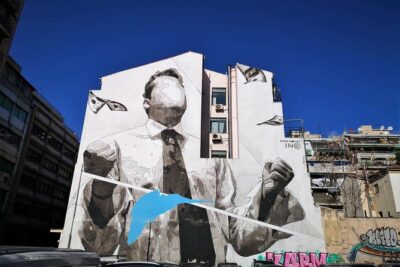
Browse the lists this tour appears in