
REVIEW · SOUTH AFRICA
Johannesburg: Street Art and Culture in Maboneng!
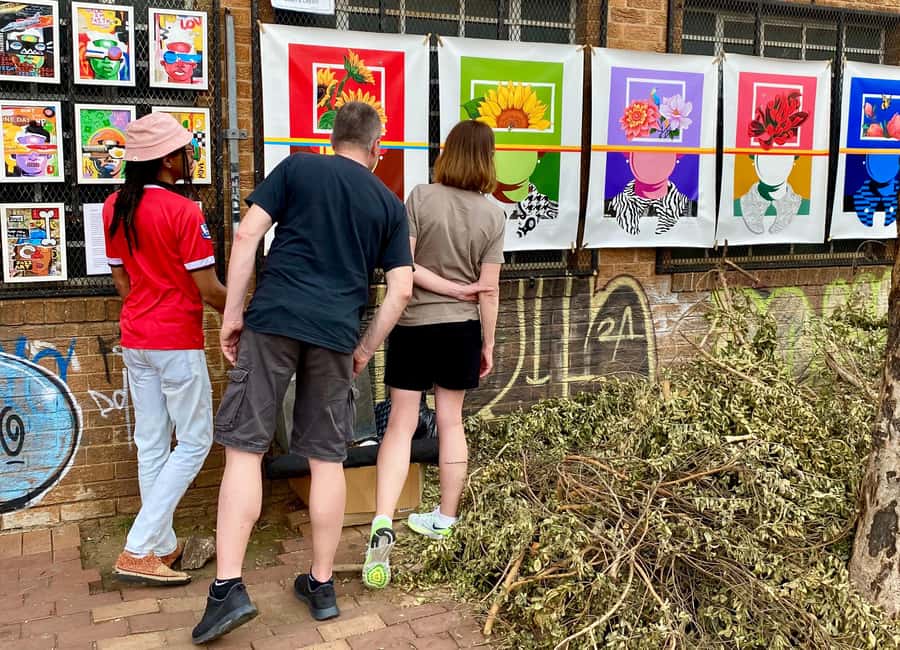
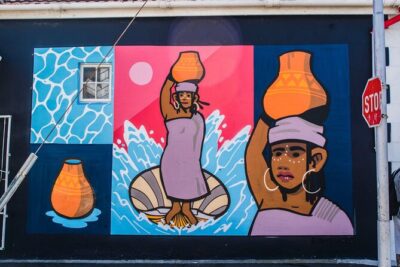
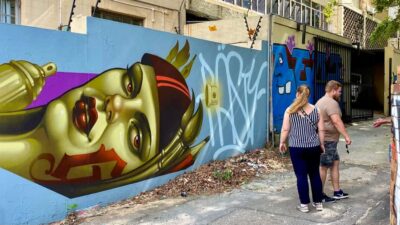
Maboneng’s best stories are painted on its walls. This two-hour walk connects striking work by artists such as ESPO Powers and DBongz with the area’s mining past, apartheid-era history, creative businesses, and present-day redevelopment. It is not just a photo stop at murals. You get the reasons behind the art and a clearer sense of how this part of Johannesburg has changed.
I like the small, personal feel of the walk, especially when guides such as Ayanda explain the neighborhood from local experience. I also like the useful starting point at Home of the Bean, where you can settle in with coffee before heading out. The main consideration is that Maboneng is an active inner-city district, not a polished open-air museum. Expect informal traders, changing street activity, and a few repeated points if your guide is covering a lot of background in a short time.
Key things to know before you book
- Street art with context: Learn about local and international artists, including ESPO Powers and DBongz, rather than simply passing painted walls.
- A short but full route: The two-hour walk includes a safety briefing, several Maboneng sections, a stop at the Hideout Bar, and a viewpoint.
- Local guides matter: Ayanda is frequently named for his warm manner, local insight, and strong grasp of Johannesburg’s art and history. Other guides may include Bonny, Kaiser, or Michael.
- Maboneng’s complicated story: The tour covers industrial decline, creative redevelopment, gentrification, and the people who still call the area home.
- Bring spending money: Food, drinks, art, crafts, and informal-trader purchases are not included.
- Good for a first look at Joburg: You see more and understand more than you likely would by walking the precinct alone, but this is still an introduction rather than a full city history tour.
Why Maboneng works so well as a walking tour
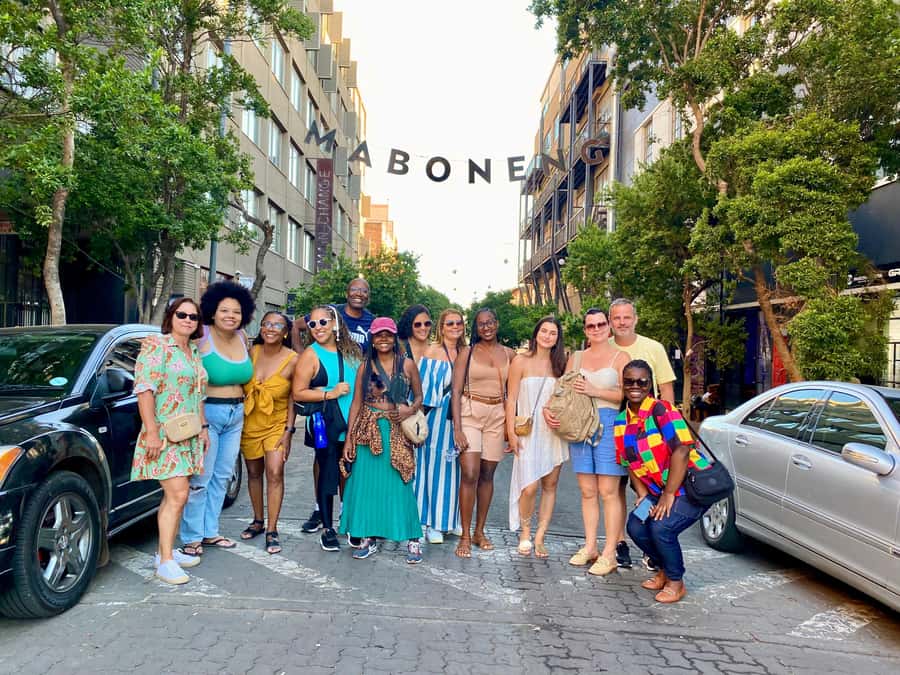
Maboneng means Place of Light, an apt name for a district built around art, food, design, and public life. Its appeal comes from contrast. Old industrial buildings meet new creative spaces. Large murals sit close to working businesses and street stalls. Art galleries and gift shops share the same streets as everyday local commerce.
That mix gives the tour more substance than a standard graffiti walk. You are looking at painted walls, but you are also discussing who gets to shape a changing city. The area’s redevelopment began in 2009, transforming a former industrial zone into one of Johannesburg’s better-known creative quarters. That change brought new energy and investment, but it also raises questions about affordability, ownership, and who benefits from regeneration.
I like this kind of setting because the neighborhood itself becomes part of the lesson. The guide can point out how the district has changed, then connect those changes to the art around you. The result is a useful introduction to present-day Johannesburg, not a tidy version designed only for sightseeing.
A few more street art tours around the world worth a look
- Moco Museum Amsterdam Entrance Tickets with Banksy & More
★ 4.4 · 10,088 reviews - Medellin: Comuna 13 Graffiti Tour, Cable Car & Street Food
★ 4.8 · 9,046 reviews - CDMX: Xochimilco, Coyoacan, Frida Kahlo Museum & Murals Tour
★ 4.4 · 3,025 reviews
Starting with coffee at Home of the Bean
The meeting point is Home of the Bean, at the corner of Fox and Berea Street, under the bridge. From the outside, the building can look like an old industrial structure, so do not wait outside if you arrive early. Go inside the coffee shop and wait there.
The tour begins with about 15 minutes at the café for a safety briefing. You can buy coffee before setting off, but food and drinks are your own responsibility throughout the experience. That small pause is practical. It gives you time to meet the guide, ask questions, and understand how the walk will work before entering the streets.
The operator communicates by WhatsApp or message around 30 minutes before the start, including if there is a change to the booking. Keep your phone available, especially if you are unfamiliar with the meeting point.
Reading Maboneng through its murals
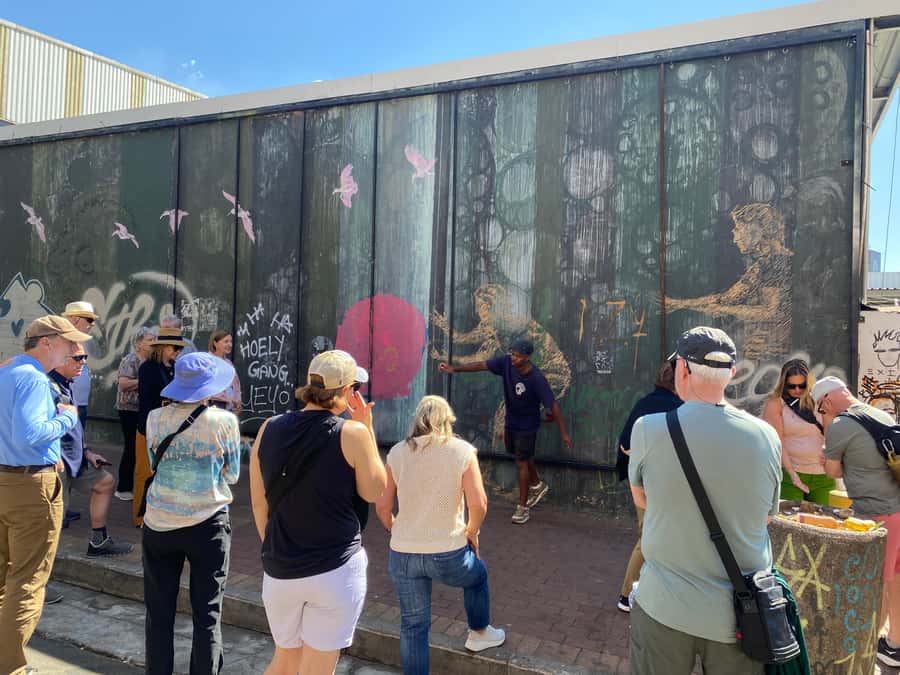
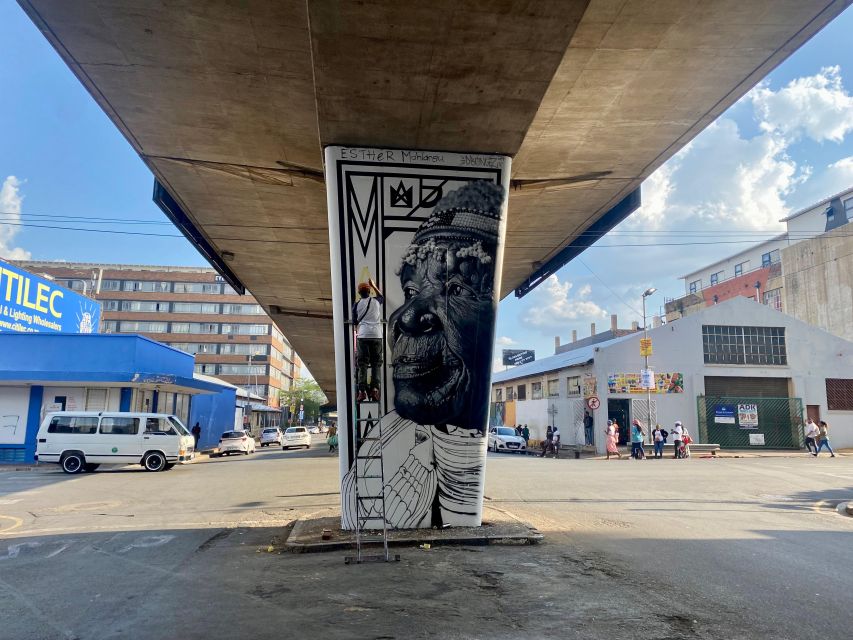
The first major portion of the walk takes you into Maboneng for about 30 minutes of street viewing and explanation. The guide points out murals and other works across the precinct, explaining the artists and the ideas behind selected pieces.
The strongest part of this section is the added meaning. A mural may reflect identity, politics, local life, or the artist’s view of the city. Names such as ESPO Powers and DBongz give the walk an international and South African frame, showing that Maboneng’s art scene is connected beyond Johannesburg while still rooted in local concerns.
Bring a camera, but try not to rush from one photo to the next. The guide’s explanation is the reason to book this walk instead of simply searching for Maboneng murals online. You will learn which pieces deserve a closer look and how the art fits into the district’s social setting.
The pace should suit most people who can manage an ordinary city walk. The route includes several walking sections rather than one long uninterrupted stroll, and the activity is listed as wheelchair accessible. Still, the streets are part of a working urban area, so conditions can vary. If you use a wheelchair or have specific mobility needs, contact the operator before arrival to discuss the route.
Maboneng Arts Village and the creative economy
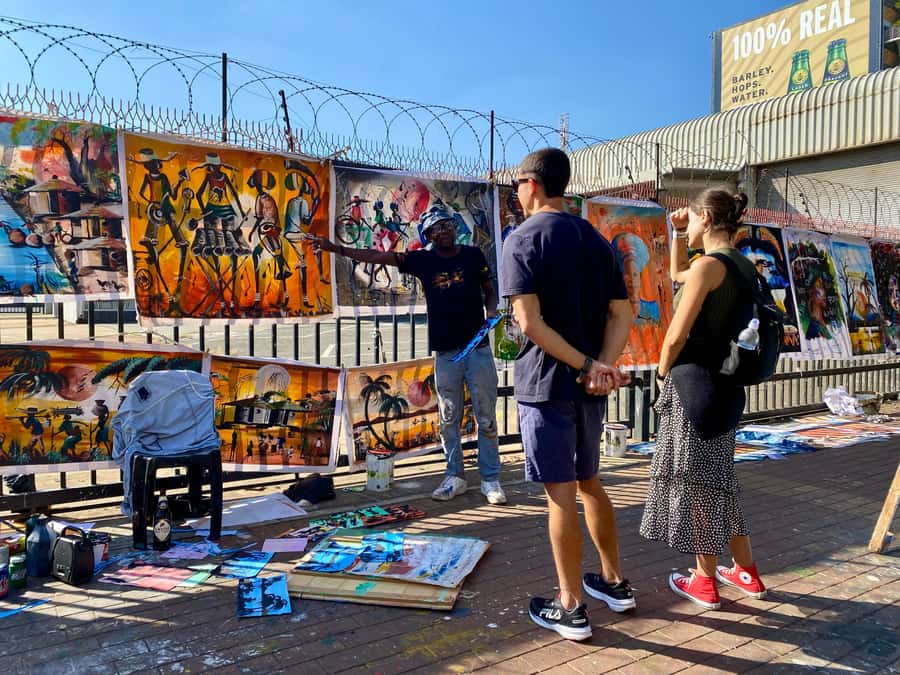
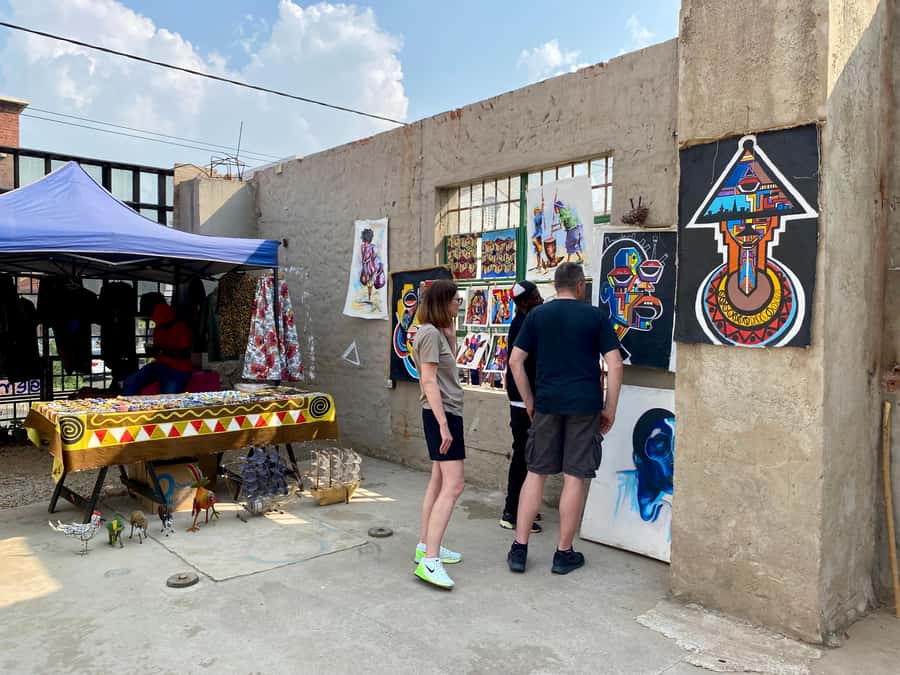
One stop takes you into Maboneng Arts Village, a space where artists and creatives can sell their work. This adds an important layer to the outdoor murals. You get to see how creativity functions as a livelihood, not just as decoration on a wall.
I find this stop useful for anyone who wants to buy something made locally. Street artists and informal traders also work along the route, so bring cash or a card if you may want art, crafts, food, or other goods. Purchases are not included in the $40 tour price.
The Arts Village also helps explain the district’s appeal. Maboneng is not simply a set of painted buildings. It is a collection of studios, shops, galleries, restaurants, bars, and public spaces tied to the idea of an inner city that can support creative work. The guide can show you how those pieces fit together, while also giving you a more grounded picture of the people who live and work here.
Same walls, a different guide:
- Moco Museum Barcelona Banksy & More
★ 4.6 · 2,340 reviews - Amsterdam: Streetart Museum STRAAT Entrance Ticket
★ 4.8 · 2,137 reviews - Belfast: Murals Taxi Tour
★ 4.9 · 2,047 reviews - Blackbeard to Banksy – The Ultimate Walking Tour of Bristol
★ 5.0 · 1,961 reviews
The Hideout Bar and an apartheid-era story
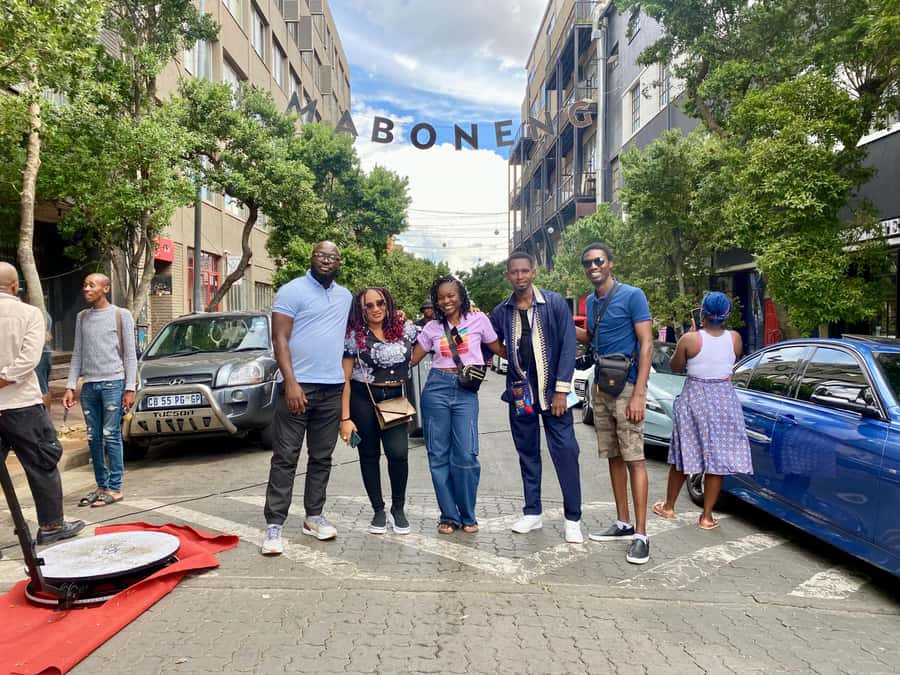
The visit to the Hideout Bar at Curiocity Backpackers is one of the more unusual stops. The space is linked to an alleged story that Nelson Mandela and other anti-apartheid activists used it as a hideout during apartheid.
The word alleged matters here. Treat this as a local story connected to the neighborhood, not as a formal museum presentation or a fully documented historical site. Its value is in the way it opens a conversation about secrecy, resistance, and the risks faced by activists.
This stop also breaks up the mural viewing. You move from public art into a more intimate interior space, then return to the streets with a better sense of the political weight carried by Johannesburg’s urban neighborhoods. If you enjoy places with layers of memory rather than only polished attractions, this is likely to be one of the most memorable parts of the walk.
Seeing redevelopment from more than one angle
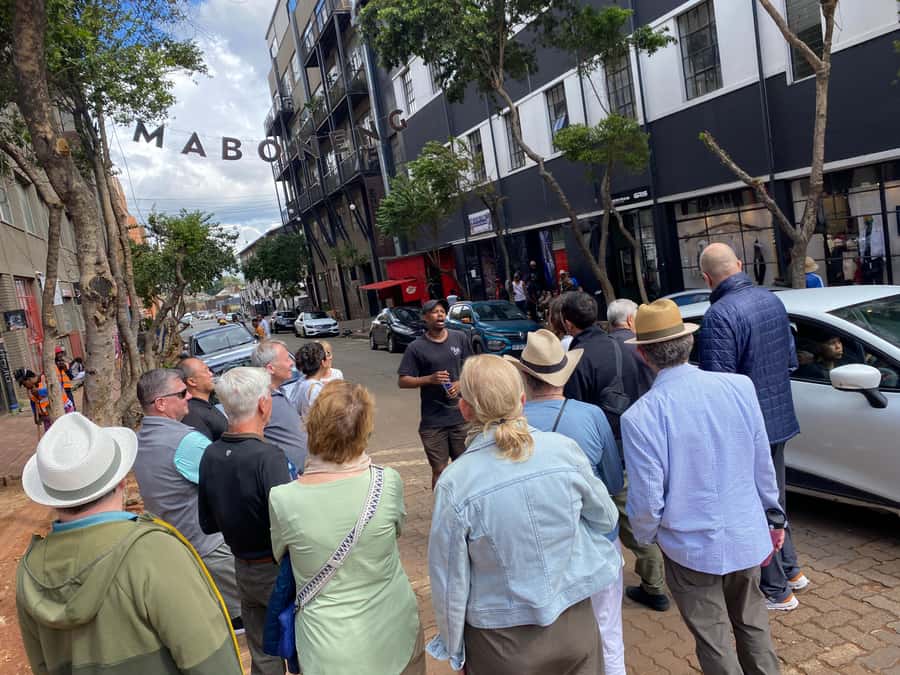
A later section returns to Maboneng for another 30 minutes of walking and sightseeing. This is where the tour’s wider theme becomes clearer. You are not only learning how buildings were reused. You are looking at the tension between renewal and gentrification.
The area’s redevelopment has made room for restaurants, shops, art spaces, and a new social scene. At the same time, development changes property values, business patterns, and the feel of daily life. A good guide does not reduce that story to either success or failure. The most useful approach is to let you see both the promise of regeneration and the questions it creates.
Ayanda is especially well suited to this part of the walk, based on the way he explains local change and his personal connection to the area. He has been praised for answering questions clearly, sharing local experience, and linking Maboneng to wider Johannesburg and South Africa. The guide on your departure may be Ayanda, Bonny, Kaiser, Michael, or another member of the team, so the exact style can vary.
A viewpoint before returning to the café
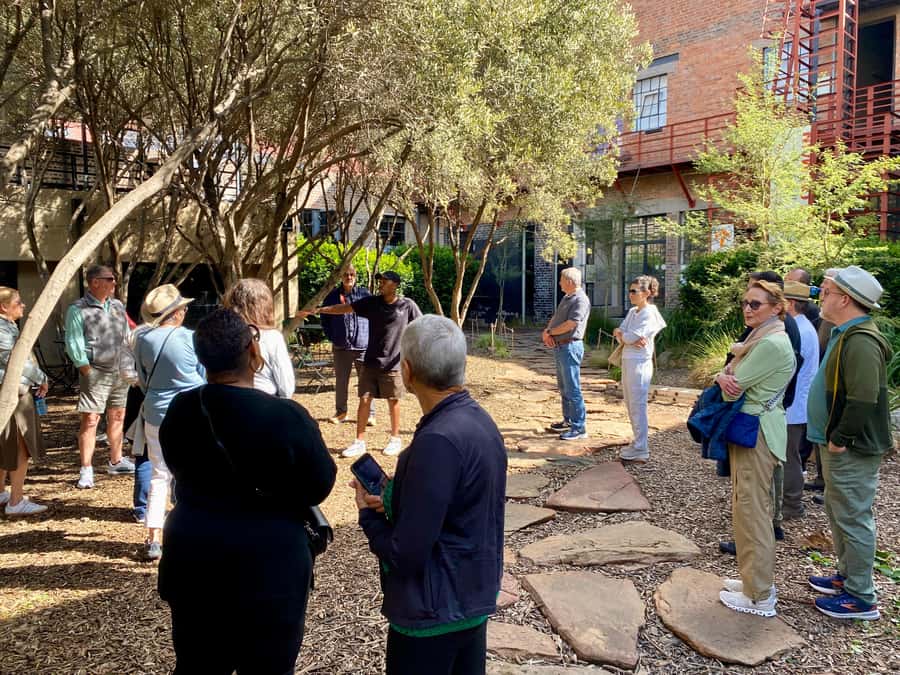
The route includes about 15 minutes at a viewpoint, with scenic views along the way. This gives you a pause from close-up murals and street-level details. It is a useful chance to understand Maboneng as part of inner-city Johannesburg rather than as an isolated arts district.
The viewpoint is not described as a long rooftop visit, so keep expectations modest. Another stop may include a rooftop bar or elevated view, but the exact setting can depend on the route and conditions. The point is the wider outlook, not a lengthy drink stop. If you want to order something, pay for it yourself.
After another short 15-minute section through Maboneng, the walk returns to Home of the Bean. The route is compact enough to fit into a morning or afternoon, making it practical before another Johannesburg activity. One traveler even used it during a tight schedule before reaching the airport, though you should allow extra time if you have a firm departure deadline.
What the guide adds to the experience
The guide is the central reason this tour works. Without one, you can see Maboneng’s murals, but you will miss much of the story around them. The best moments come when the guide connects a piece of art to the artist, the street, and the country’s larger social history.
Ayanda is the name most often associated with the experience. His strengths are local familiarity, an easy manner, and an ability to explain both street art and the wider story of Johannesburg. He has also helped visitors with practical needs such as finding an ATM or arranging a nearby parking spot.
Bonny, Kaiser, and Michael have also led tours. The descriptions available for these guides point to a friendly and informed approach, but do not expect every tour to feel identical. Group size can be small, sometimes only two to four people, which allows more questions and a less scripted conversation.
The tour is offered in English only. That matters if you want detailed explanations about art, politics, and redevelopment. It is not the right choice if you need another language.
Safety, street life, and practical comfort
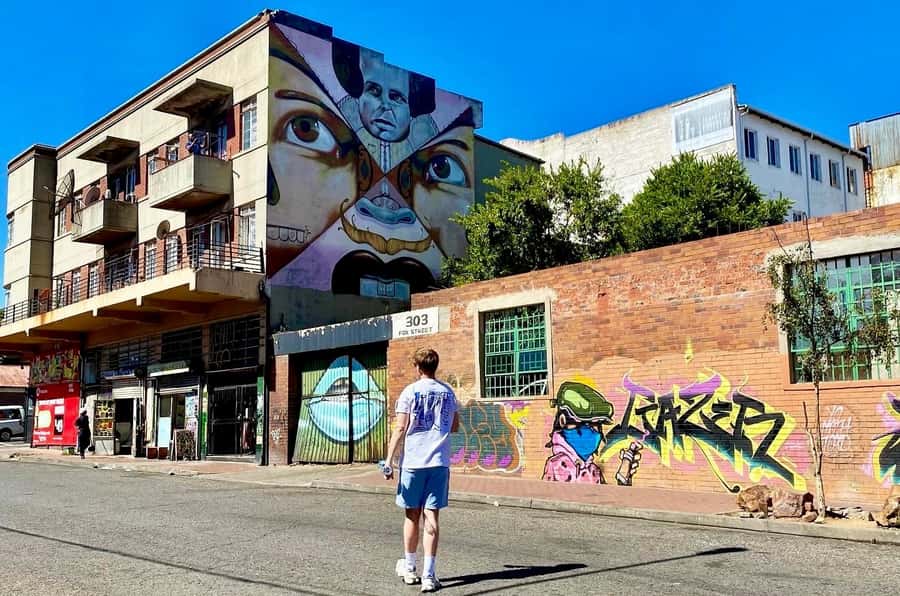
Maboneng is an inner-city neighborhood with an active street scene. You will encounter local residents, artists, informal traders, shops, and people moving through the district for ordinary daily business. That is part of the experience, but it also means you should pay attention to your surroundings and follow the guide’s advice.
The 15-minute briefing at the start is there for a reason. Stay with the group, keep your belongings secure, and avoid treating the area like a movie set. The guide’s local relationships are useful, and several people specifically valued being shown around rather than walking alone.
The tour is not physically demanding in the way a hike is, but it involves repeated walking sections and standing while looking at art. Wear comfortable shoes and bring sun protection or a light layer according to the weather. If you hope to shop, carry a payment method that works for you, since both card and cash may be useful.
Is $40 a fair price?
At $40 per person, this is not the cheapest way to walk through Maboneng. You can see some of the public art without paying for a tour. The real question is what you would miss without local interpretation.
The price includes entry to all sites visited, while food and drinks are extra. You are paying for two hours with a guide, a planned route, access to spaces such as Maboneng Arts Village and the Hideout Bar, and background that would be hard to assemble on your own in a short visit.
I think the value is strongest for a first-time visitor to Johannesburg who wants an introduction to the inner city without committing to a full-day city tour. It is also useful for anyone interested in public art, urban change, and contemporary South African culture. If you only want photographs of murals and do not care about their makers or setting, the price may feel high.
Free cancellation is available up to 24 hours before the start, and you can reserve now and pay later. Those terms help if your Johannesburg schedule is still shifting.
Who should book this walk?
Book it if you want:
- A compact introduction to Maboneng and inner-city Johannesburg
- Street art explained through artists, politics, and local culture
- A guide who can discuss redevelopment and gentrification without reducing the subject to a slogan
- A small-group experience with room for questions
- A practical first activity in Johannesburg
- A chance to buy work from artists and local traders
It suits adults, older children, students, art fans, and visitors who want a more thoughtful look at the city. It may be less suitable if you dislike walking, want a quiet sightseeing route, or expect a formal museum-style history lesson.
Should you book the Maboneng street art tour?
I would book this tour if Maboneng is new to you and you want to understand more than its painted walls. The strongest reasons are the local guide, the small-group feel, the links between art and urban change, and the chance to see spaces you might skip on your own.
Choose another activity if your main goal is a broad Johannesburg overview, a dedicated apartheid museum visit, or a long food tour. This walk focuses tightly on Maboneng, and that focus is its strength. You leave with a clearer idea of how art, commerce, history, and daily life meet in one changing neighborhood.
FAQ
Where does the Maboneng street art tour start?
It starts at Home of the Bean coffee shop at the corner of Fox and Berea Street, under the bridge. Wait inside the café if you arrive before the tour.
How long does the tour last?
The tour lasts two hours, including the safety briefing, walking sections, visits, and return to Home of the Bean.
What language is the tour offered in?
The tour is offered in English only.
Is food or coffee included?
No. You can buy coffee at Home of the Bean, but all food and drinks are at your own expense.
Is the tour wheelchair accessible?
Yes, the activity is listed as wheelchair accessible. Contact the operator before arrival if you need to discuss specific route requirements.
Can I buy art or goods during the walk?
Yes. Street artists and informal traders operate along the route, and Maboneng Arts Village provides a place for artists and creatives to sell their work. Bring cash or a card if you plan to purchase anything.
Can I cancel the booking?
You can cancel up to 24 hours in advance for a full refund. The tour also offers a reserve-now, pay-later option.
Just added around the world
- Your Own Belgrade: Street Art and Hidden Gems Walking Tour★ 5.0 · 2 reviews
- Xochimilco floating gardens, Coyoacan and UNAM murals★ 4.0 · 6 reviews
- Vienna Urban Art Tour: Explore a different side of Vienna!★ 3.8 · 14 reviews
- Wynwood Walls Street Art & Neighborhood Walking Tour★ 4.9 · 9 reviews
- Vancouver: Street Art & Craft Beer Walking Tour with Tasting★ 4.8 · 14 reviews
- Vancouver: Street Art & Craft Coffee Walking Tour w/ Tasting★ 4.8 · 11 reviews
- Urban Canvas: Osaka Street Art Bike Tour★ 5.0 · 10 reviews
- UNAM: Murals & Revolution★ 4.9 · 8 reviews
South Africa Street Art Tours, compared.

Johannesburg: Maboneng Street Art & Culture Tour
Read our review →Johannesburg: Maboneng Street Art & Culture Tour
Read our review →
Colours of Johannesburg: A Graffiti & Street Art Tour
Read our review →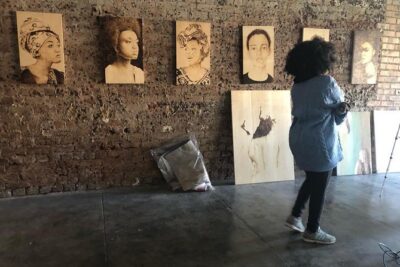
(Meet the Artist)Art Gallery & Street Art tour with lunch
Read our review →
Johannesburg Street Art & Museum Walking or E-scooter Tour
Read our review →Browse the lists this tour appears in