
REVIEW · SOUTH AFRICA
Johannesburg: Maboneng Street Art & Culture Tour
Maboneng is best understood on foot, with someone who can explain what you are seeing. This two-hour walk links rooftop city views, bold murals, small galleries, craft spaces, and the stories of a Johannesburg district still shaping its future. The art is not just decoration. It speaks about identity, protest, hope, and life after apartheid.
I like the personal guide-led approach, especially because Refiloe, Mulalo, and other guides are praised for explaining the artists and their work rather than simply pointing at painted walls. I also like the route’s mix of art and local life, from Hallmark House and Jewel City to vendors, galleries, and creative workshops.
The main consideration is pace. Two hours goes quickly, and this is a walking tour with several stops rather than a long, quiet gallery visit. Maboneng can also feel unfamiliar to first-time visitors, so you should stay with the guide and treat the walk as an introduction, not a free-roaming afternoon.
Key points at a glance
- Rooftop beginning: Start at Hallmark House for broad views across Johannesburg and a useful first look at the city.
- Street art with context: Stop at murals in Maboneng and learn about the artists, methods, and social ideas behind them.
- Several creative districts: The route includes Maboneng, Jewel City, Access City, Artisan Lofts, and 264 Fox Street.
- Strong guide element: Refiloe and Mulalo are frequently praised for warmth, humor, local connections, and clear explanations.
- Good value for art lovers: At $37 per person, the tour combines guiding, orientation, art interpretation, and local recommendations in two hours.
- Simple practical setup: English is the tour language, food and drinks are extra, and you meet at Hallmark House rather than using hotel pickup.
Why Maboneng makes a good walking tour
Johannesburg can be hard to read from a car window. Its mining origins, post-apartheid changes, creative energy, and uneven development sit close together, but the connections are not always obvious. Maboneng gives you a compact place to begin making sense of that mix.
The district has become one of the city’s best-known creative areas. Here, old urban spaces are used for art, food, shops, studios, and public gatherings. The result is not a polished theme park. It is a working part of inner-city Johannesburg, with all the energy and rough edges that implies.
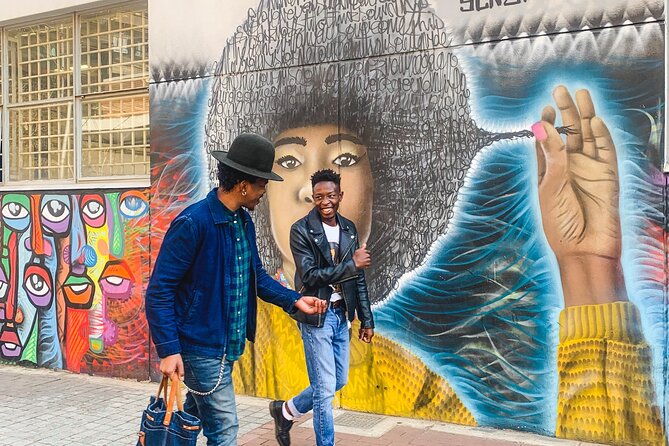
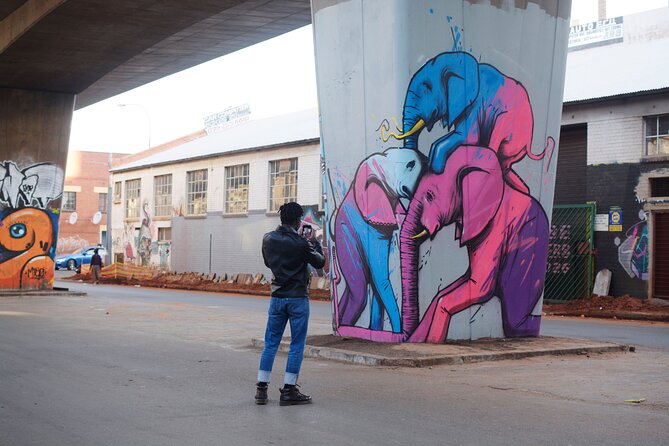
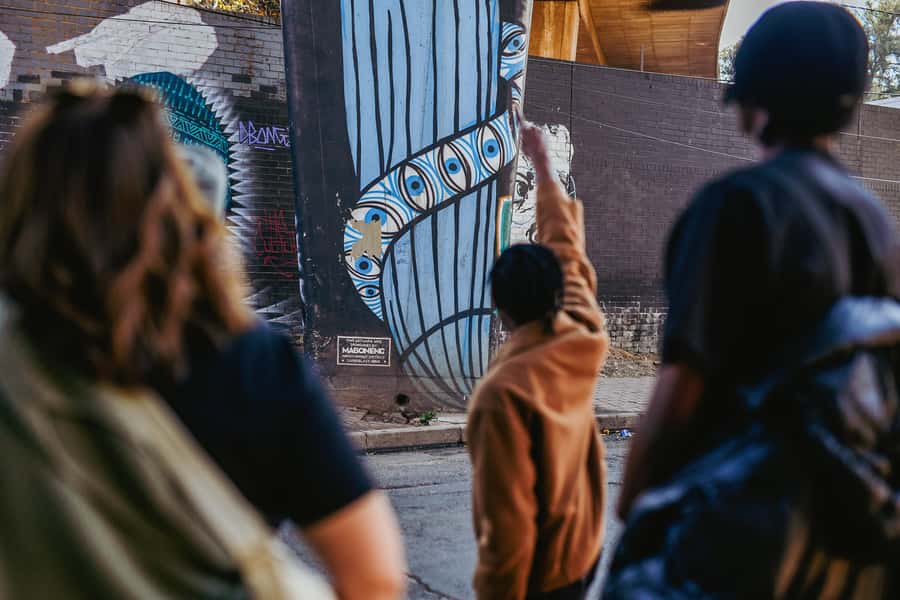
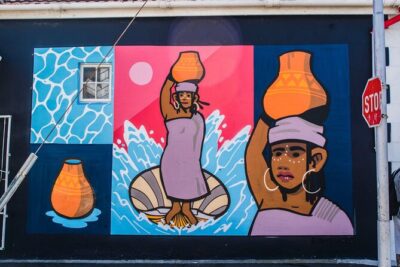
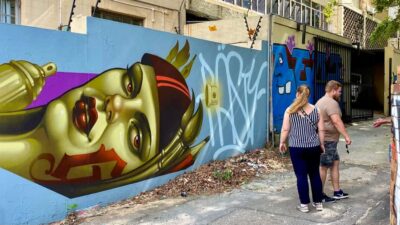
I like that this tour treats street art as a form of local storytelling. A mural can show a face, pattern, or slogan, but the guide adds the questions that make it worth stopping for. Who made it? What ideas are being put into public view? Why was this wall chosen? How does the work fit into the area’s changing identity?
That context matters in Johannesburg. If you only photograph the murals, you see color. If you understand some of the city’s political and social background, you begin to see why public art can carry ideas about memory, resistance, belonging, and hope.
A few more street art tours around the world worth a look
- Moco Museum Amsterdam Entrance Tickets with Banksy & More
★ 4.4 · 10,088 reviews - Medellin: Comuna 13 Graffiti Tour, Cable Car & Street Food
★ 4.8 · 9,046 reviews - CDMX: Xochimilco, Coyoacan, Frida Kahlo Museum & Murals Tour
★ 4.4 · 3,025 reviews
Starting at Hallmark House and seeing Johannesburg from above
The meeting point is Hallmark House at 54 Siemert Road. If you arrive early, wait inside at the coffee shop. The experience then begins around Hallmark House’s rooftop, a useful place to get your bearings before heading into the streets.
The rooftop view gives you a broad first impression of Johannesburg. You can see the city as a large, layered urban center rather than a series of separate tourist sights. It also sets up the tour’s main theme: how inner-city districts are being reshaped through art, design, and new local businesses.
This opening stop is brief, but it earns its place. A city view helps you understand the scale of Johannesburg before the tour narrows its focus to walls, buildings, lanes, and people. It is also a good point for photographs, particularly if your start time brings softer light.
Do not expect a long rooftop visit or a full meal here. The coffee shop is mainly the practical meeting point, while the rooftop functions as an introduction. Food and drinks are not included, so plan to buy anything you want separately.
Maboneng’s murals and the stories behind them
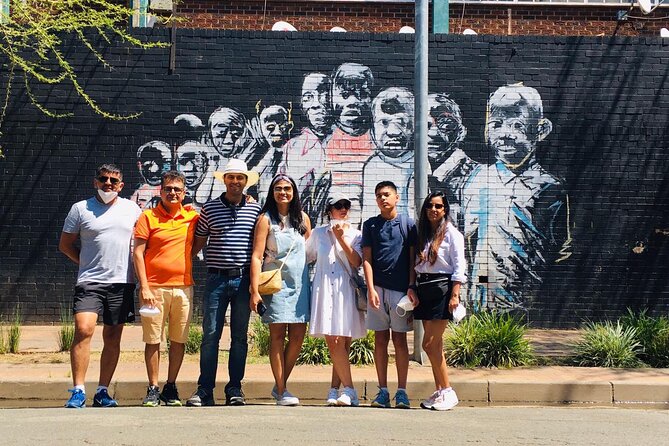
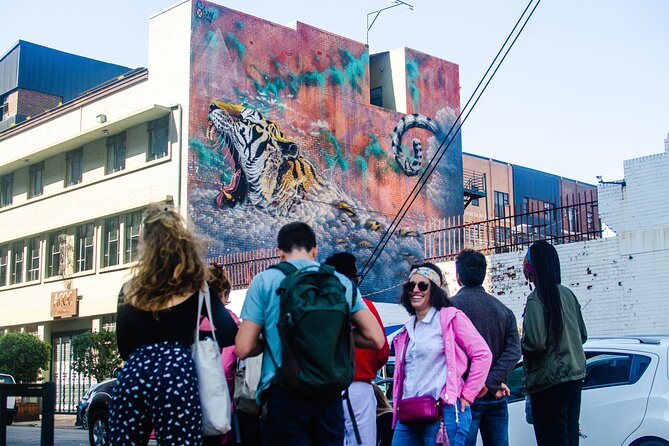
The Maboneng Precinct is the heart of the walk. You will stop for photographs, then move through the area with the guide explaining selected pieces and the people behind them.
The strongest part of the experience is the interpretation. The art can be striking on its own, but the guide helps you look longer and more carefully. You may hear about an artist’s background, a technique, a particular subject, or the reason a work matters to the neighborhood.
This is also where the tour connects art to Johannesburg’s difficult past. The city’s development cannot be separated from mining, segregation, inequality, and the long effects of apartheid. The walk does not reduce those subjects to a formal history lecture. Instead, they come up through the buildings, public spaces, art, and changing uses of the district.
That approach should suit you if you want history in a visual and human form. You will not get every detail of Johannesburg’s past in two hours, but you will gain useful questions and a stronger sense of how the city is trying to describe itself today.
The Maboneng stop is listed as about 15 minutes, though the full walking route continues to explore the area and nearby creative spaces. Because street art can change, be painted over, or appear in different places, the exact visual experience may vary.
The Cosmopolitan Lounge and the social side of the route
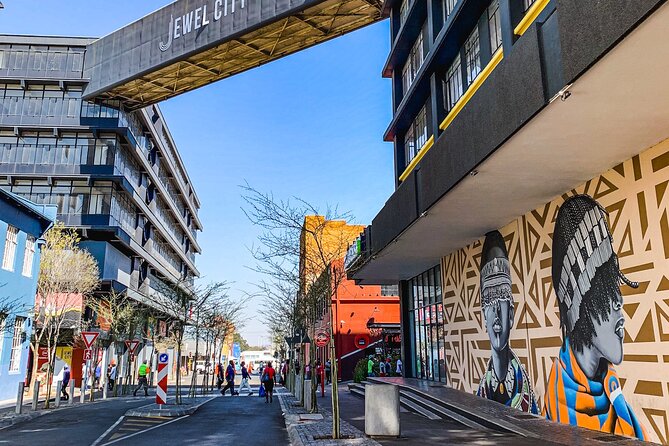
The Cosmopolitan Lounge is a short stop, listed at about five minutes. It is not presented as a long dining or nightlife visit. Instead, it adds another piece to the area’s social character and gives the guide a chance to explain how places such as this fit into Maboneng’s creative scene.
Short stops like this help the walk feel connected to real city life. You are not moving only between formal attractions. You are seeing spaces where people meet, eat, create, and spend time.
The trade-off is that you should not expect extended time at every location. The tour covers a lot in two hours, so the guide needs to keep moving. If you want to sit down for a drink at the lounge or linger over photographs, save that for after the tour.
Same walls, a different guide:
- Moco Museum Barcelona Banksy & More
★ 4.6 · 2,340 reviews - Amsterdam: Streetart Museum STRAAT Entrance Ticket
★ 4.8 · 2,137 reviews - Belfast: Murals Taxi Tour
★ 4.9 · 2,047 reviews - Blackbeard to Banksy – The Ultimate Walking Tour of Bristol
★ 5.0 · 1,961 reviews
Hallmark House, Access City, and Artisan Lofts
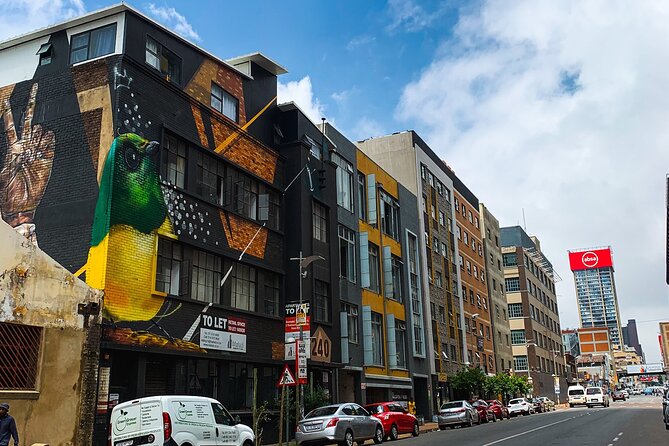
The route returns to Hallmark House for a more direct look at the building, with time for sightseeing and shopping. This is a useful contrast to the rooftop opening. From above, you see the city as a whole. At street level, you can consider how a building is being used and how creative businesses fit into the district.
Access City adds an arts and crafts market element. You might find local goods, small-scale creative work, and vendors whose presence gives the neighborhood a more grounded feel than a mural-only tour would provide. The guide can help you understand what you are seeing and point out places worth revisiting.
Artisan Lofts continues that focus. These stops matter because they show art as work, not just as public spectacle. Studios, shops, and market spaces give you a chance to see how creative activity becomes part of daily city life.
The shopping is optional, and the tour does not include purchases. I would treat these stops as a chance to browse and ask questions rather than a promise of a large market. Several people have found enough time to look around and shop, but the schedule remains compact.
Jewel City and Johannesburg’s changing center
Jewel City brings the route into another area shaped by urban renewal and modern art. The stop includes photographs, sightseeing, local vendors, galleries, and more public art.
This section helps widen the story beyond Maboneng itself. You can compare different kinds of creative spaces and see how art is being used in areas with distinct identities. The guide’s role is especially useful here because the point is not only to see another set of buildings. It is to understand how regeneration affects the way people use and imagine the city.
The name also points toward Johannesburg’s long connection with precious metals and the mining economy. The tour uses that background as part of the larger story of a city moving from an industrial past toward new forms of work and expression.
Expect another short stop, around ten minutes in the listed schedule. If a gallery or vendor catches your eye, you may want to return after the walk. The tour offers an introduction rather than enough time for a detailed gallery visit.
264 Fox Street and meeting local creatives
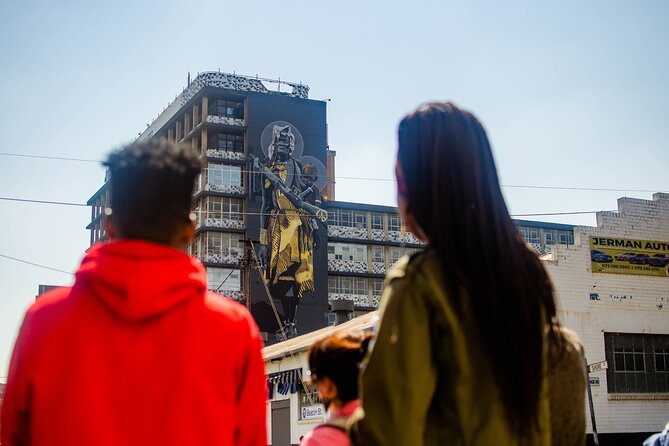
The route continues to 264 Fox Street, with time for more art, photographs, and conversation. This is one of the places where the experience can feel especially direct. You may meet local artists or creatives, hear about how they work, and learn how different materials and methods are used to tell stories.
That human contact is a major reason to choose this tour instead of exploring alone. A map can show you where a mural is located, but it cannot easily explain the artist’s motivation or connect you with the people making work in the area.
The schedule includes a visit to 264 Fox Street and then a final guided walk there. The details may vary with the group and the day, but the basic idea is clear: the walk finishes by keeping you close to the creative community rather than ending at a distant transport point.
You should have your camera ready, but ask before photographing people or artwork in close detail. The guides are also often willing to take pictures of you, which is helpful if you are traveling alone or want more than self-portraits.
The guides make the difference
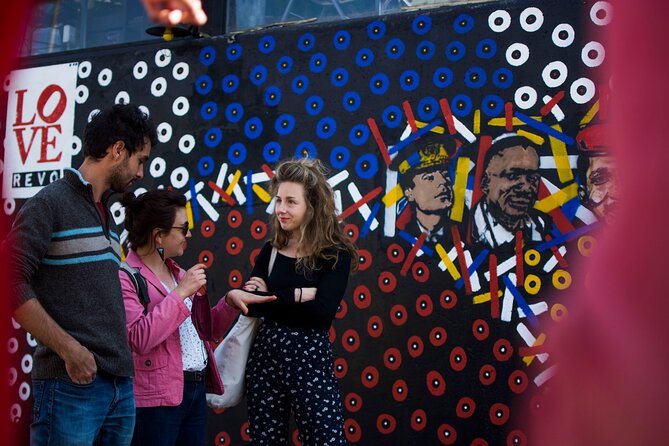
The route is worthwhile on its own, but the guide is the main reason the experience works. Refiloe is praised for his enthusiasm, humor, care, and ability to explain art in a way that feels easy to follow. Mulalo is also singled out for his professionalism, local understanding, and strong explanations of both art and neighborhood history.
Other guides, including Clement and Mulelwa, have led the experience as well. That means the exact personality of the walk can differ, but the repeated strengths are clear: friendly conversation, detailed background on the art, and a strong connection with people in the area.
Several guides also give suggestions for restaurants, drinks, artists, and places to return to after the tour. This is useful because Maboneng rewards a second look. Once you know which streets and buildings matter, you can come back with more confidence and spend longer in the places that interest you.
The safety issue deserves a plain word. Some first-time visitors may feel unsure in an unfamiliar inner-city district, and one review specifically noted that the area is not generally recommended for non-locals to explore without guidance. The tour’s value is partly that the guide knows the area and has good relationships there. Stay with the group, follow the guide’s advice, and do not treat the tour as permission to wander anywhere alone.
Is $37 a fair price for two hours?
At $37 per person, this is not the cheapest way to see a few murals. It is a fair price if you value interpretation, local orientation, and the chance to meet creatives.
Your fee covers the guide, not transport, meals, drinks, or shopping. There is no hotel pickup or drop-off, so you need to make your own way to Hallmark House. That keeps the tour focused and helps explain why it fits into a short two-hour schedule.
The value is strongest for a first visit to Johannesburg. You receive a concentrated introduction to Maboneng and nearby districts, along with ideas for what to do next. It can also be good after a wildlife trip, when you want to walk, talk, and see an urban side of South Africa rather than spend another day sitting in a vehicle.
The value is weaker if you want a long art workshop, a formal museum visit, or plenty of unstructured shopping time. This is a guided overview with several short stops, not a full-day cultural program.
Practical advice for making the most of the walk
Wear comfortable shoes. The route includes repeated walking between stops, and the experience works best when you can pay attention to the guide rather than think about tired feet.
Arrive at Hallmark House with enough time to find the coffee shop. If you arrive before the start, wait there as instructed. The rooftop and street portions follow from that meeting point.
Bring water and plan for your own food and drinks. Nothing culinary is included, though the guide may suggest places to eat or drink afterward.
Keep your phone or camera ready, but listen first and photograph second. The murals are attractive, yet the explanations are what separate this tour from a self-guided photo walk.
If you are especially interested in a particular artist, ask the guide for names and follow-up places. One useful feature of the experience is that the guides can point you toward artists and venues you may want to explore later.
Who should book this Johannesburg tour?
I would recommend it to first-time visitors who want a clear, human introduction to central Johannesburg. It suits people interested in public art, photography, local creative work, urban change, and South African history.
It is also a good choice for solo visitors. The guide provides company, local direction, and help with photographs, while the small walking format makes it easier to ask questions.
Families with older children may enjoy it too. One family with an 11-year-old found the route interesting, though young children who dislike walking or discussion may lose patience with the art explanations.
You may want something else if your main goal is Soweto, apartheid museums, food, or a broad city sightseeing circuit. This tour focuses tightly on Maboneng, Jewel City, street art, and nearby creative spaces. Its strength is focus, not coverage of every side of Johannesburg.
Should you book the Maboneng Street Art and Culture Tour?
Book it if you want to see Johannesburg through its artists and changing inner-city neighborhoods. The best parts are the guide’s interpretation, the chance to meet or learn about local creatives, and the way the walk connects murals to the city’s complicated past.
I would especially choose it early in a Johannesburg stay. The recommendations from guides such as Refiloe and Mulalo can help you decide where to eat, which artists to follow, and where to return for a longer look.
Skip it if you want a leisurely gallery afternoon or a private car tour with little walking. For everyone else, $37 buys a useful introduction to a part of Johannesburg that is much easier to understand with a local guide beside you.
FAQ
How long is the Maboneng Street Art and Culture Tour?
The tour lasts two hours.
How much does the tour cost?
The listed price is $37 per person.
Where does the tour meet?
The meeting point is Hallmark House at 54 Siemert Road. If you arrive early, wait inside Hallmark House at the coffee shop.
Is the tour conducted in English?
Yes. The live tour guide speaks English, and English is the listed tour language.
Does the tour include hotel pickup and drop-off?
No. Hotel pickup and drop-off are not included, so you need to reach Hallmark House yourself.
Are food and drinks included?
No. Food and drinks are not included in the tour price.
Which places does the walking route visit?
The route includes Maboneng Precinct, The Cosmopolitan Lounge, Hallmark House, Access City, Artisan Lofts, Jewel City, and 264 Fox Street.
Will I meet local artists or creatives?
The experience includes opportunities to meet local vendors and creatives, visit galleries and arts and crafts spaces, and learn about emerging artists and their techniques.
Can I cancel the booking for a full refund?
Yes. You can cancel up to 24 hours in advance for a full refund. You can also reserve now and pay later, subject to the booking terms.
Just added around the world
- Your Own Belgrade: Street Art and Hidden Gems Walking Tour★ 5.0 · 2 reviews
- Xochimilco floating gardens, Coyoacan and UNAM murals★ 4.0 · 6 reviews
- Vienna Urban Art Tour: Explore a different side of Vienna!★ 3.8 · 14 reviews
- Wynwood Walls Street Art & Neighborhood Walking Tour★ 4.9 · 9 reviews
- Vancouver: Street Art & Craft Beer Walking Tour with Tasting★ 4.8 · 14 reviews
- Vancouver: Street Art & Craft Coffee Walking Tour w/ Tasting★ 4.8 · 11 reviews
- Urban Canvas: Osaka Street Art Bike Tour★ 5.0 · 10 reviews
- UNAM: Murals & Revolution★ 4.9 · 8 reviews
South Africa Street Art Tours, compared.

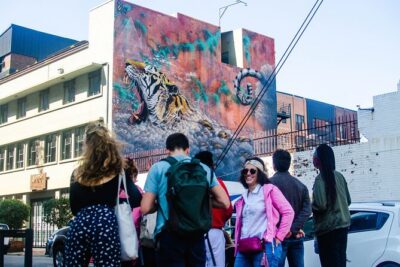
Johannesburg: Maboneng Street Art & Culture Tour
Read our review →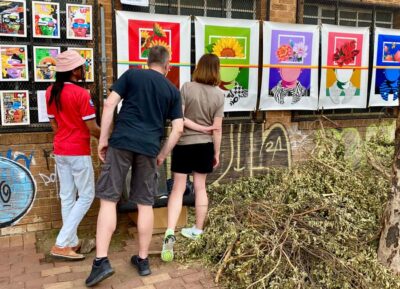
Johannesburg: Street Art and Culture in Maboneng!
Read our review →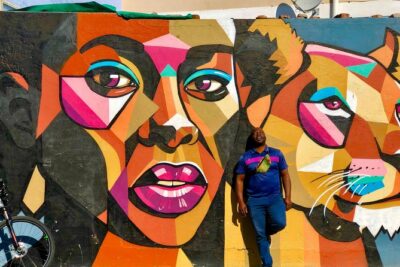
Colours of Johannesburg: A Graffiti & Street Art Tour
Read our review →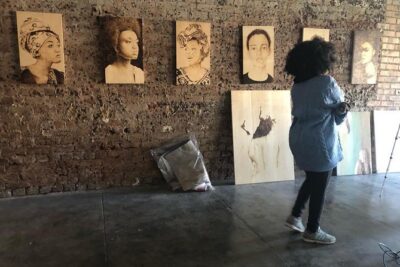
(Meet the Artist)Art Gallery & Street Art tour with lunch
Read our review →
Johannesburg Street Art & Museum Walking or E-scooter Tour
Read our review →Browse the lists this tour appears in