
REVIEW · BOGOTA
Biking in Full Color: Urban Art Bike Tour
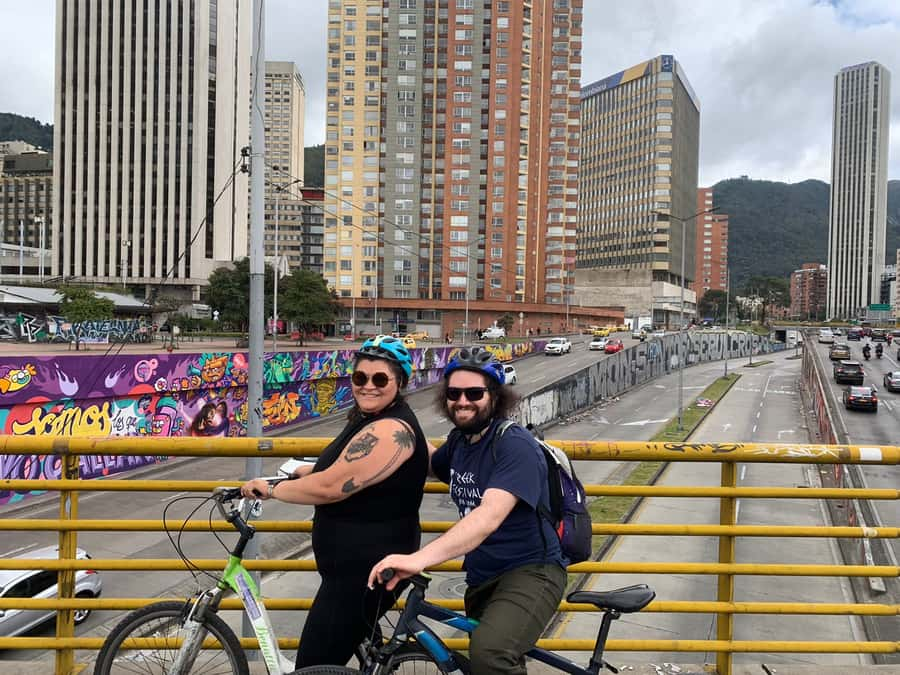
Bogotá’s street art is not background decoration. It is a public record of protest, identity, grief, and hope, and this three-hour bike tour gives you a quick, thoughtful way to read it. You ride 13 kilometers from La Candelaria through four central neighborhoods, with stops for major murals and a work linked to peace after Colombia’s conflict.
I like the bike-based route, which lets you cover more ground than a walking tour without sitting in a vehicle. I also like the focus on female artists and the guide’s attention to meaning, technique, and local stories. The main consideration is the pace: three hours on city streets may feel demanding if you are not comfortable cycling, and the tour runs rain or shine.
Key points at a glance
- Four neighborhoods in 13 kilometers: Ride through Centro, Teusaquillo, Santa Fe, and La Macarena, with each area offering a different urban setting.
- Street art with a point of view: Expect murals tied to politics, social struggles, cultural identity, and Colombia’s move toward peace.
- Women artists in focus: Several stops feature walls decorated with illustrations by female artists.
- A guide who works in the art world: The guide is a practicing urban artist, and Diego led at least one highly praised departure.
- A practical Bogotá introduction: The route combines art with architecture, urban growth, bicycles, and recent Colombian history.
- Simple but important packing rule: Wear sports shoes, and leave backpacks and valuables behind.
Why Bogotá makes sense on two wheels
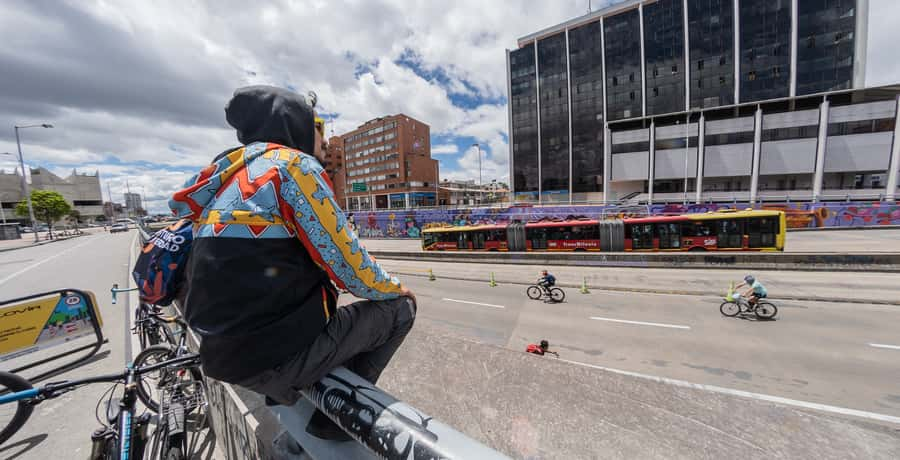
Bogotá is known for its extensive cycling culture, and this tour uses that part of the city rather than treating the capital as a string of isolated sights. You follow bike lanes and, on Sunday mornings, may ride during the city’s Ciclovía, when selected roads open to cyclists and cultural activities.
That timing can change the feel of the ride. Instead of moving through traffic in a car or taxi, you get a closer look at walls, corners, storefronts, and the way neighborhoods shift from one block to the next. The bicycle also helps connect murals that would be awkward to visit on foot.
The route is not a gentle ride through a park. It covers 13 kilometers in three hours, including stops and explanations. You should be comfortable riding in an urban setting and wearing athletic shoes. The company says backpacks and valuables are not allowed, so pack light and keep your hands free.
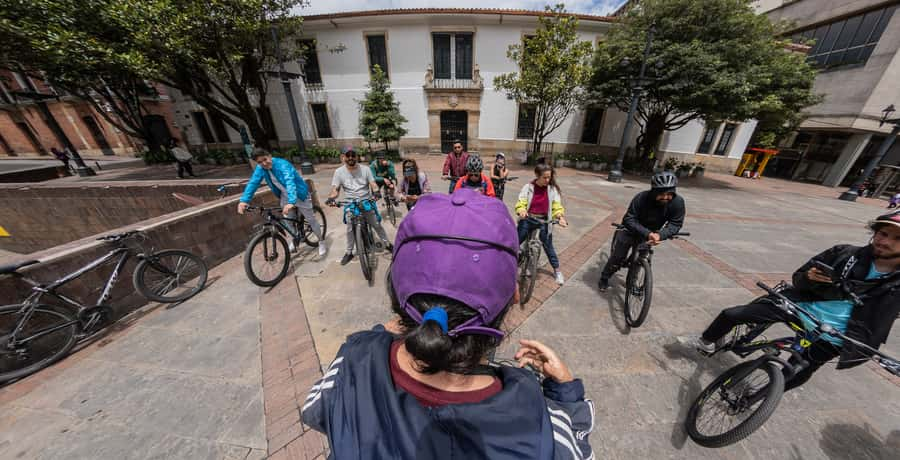
The meeting point is in La Candelaria, in front of the large red wall at Carrera 3 #12-52. Look for a guide wearing a purple hoodie or cap, or carrying a purple umbrella. That bright marker should make the starting point easier to spot in the busy old center.
More Street Art Bike Tours in Colombia:
- London Bike Tour: Landmarks, Secret Gems, Pub Stop & Street Art
★ 5.0 · 943 reviews - Barcelona Street Art and Graffitti Bicycle Tour
★ 5.0 · 361 reviews - London: Landmarks & Secrets Bike Tour with Pub & Street Art
★ 4.9 · 314 reviews
Starting in La Candelaria
La Candelaria is a sensible place to begin. This historic central district is already one of Bogotá’s best areas for street art, and its narrow streets put you close to painted walls from the first minutes of the tour.
Here, the guide sets up the larger story. You learn how graffiti developed into a recognized part of Bogotá’s cultural life and how artists use public walls to address subjects that may be uncomfortable in official spaces. The focus is not simply on finding the prettiest image. You are asked to consider who made it, what visual methods were used, and what the work says about the city.
That approach matters. A giant painted wall can look impressive in a photograph, but the story behind it may involve protest, displacement, gender, political power, or community identity. A guide who works as an urban artist can point out choices in line, scale, color, and placement that you might miss on your own.
One of the tour’s strengths is its range of languages. Live guiding is available in English, Spanish, French, German, and Italian. Private and small-group departures are also offered, which may suit you if you want more time for questions or a quieter ride.
Centro to Santa Fe: art beside daily life
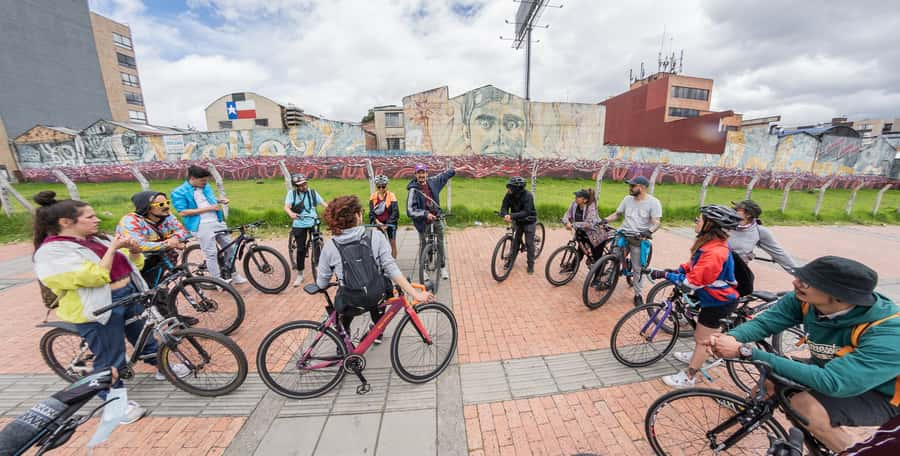
From the starting area, the route passes through Centro and Santa Fe. These neighborhoods provide the clearest sense of Bogotá as a city where art sits alongside ordinary urban life.
You might see politically charged images, symbolic figures, and large-scale pieces that address Colombia’s social struggles. The point is not to make every wall feel solemn. Street art can be playful, strange, bright, or ironic, but the guide connects those visual choices to the society around them.
The contrast between neighborhoods is part of the lesson. You are not moving through a single open-air gallery with a matching style on every wall. Different districts have different buildings, street patterns, and social histories, and the art changes with them. The tour uses those changes to explain architecture and urbanization as well as painting.
This is also where the bike format earns its price. At $62 per person, the experience costs more than simply wandering through La Candelaria with a map. You are paying for a guide, bicycles, route planning, and access to a wider group of districts in a short window. If you only want to photograph a few walls, the price may feel high. If you want the city’s art explained while you cover substantial ground, it is easier to see the value.
Meeting female artists through their walls
A notable part of the route is its attention to illustrations by female artists. This gives the tour a useful correction to the common way street art is presented, where large male names can dominate the story.
The focus lets you look at more than technique. You can consider how women use public space, how their figures and subjects differ, and how the city responds to art made outside traditional galleries. The information provided does not name each artist, so you should not expect a fixed list of stops in advance. Instead, the guide selects walls and explains their place in Bogotá’s art scene.
That flexibility is useful in a city where outdoor art changes. Murals may be repainted, added to, or affected by construction. A live guide can explain what you are seeing on the day rather than relying on a permanent museum label.
If this subject matters to you, say so early in the tour. A small group or private format should make it easier to ask for more detail about the artists and their working methods. The tour promises multiple stops, but the exact amount of time at each wall can depend on the group and the route conditions.
More Bike Tours in Colombia:
- Mexico City; ART NACO : Murals & Street Art Bike Tour
★ 5.0 · 284 reviews - Mexico City: Art Naco, murals & street art bike tour
★ 4.7 · 166 reviews - Street Art Bike Ride
★ 5.0 · 125 reviews - Cologne: Ehrenfeld Street Art Bike Tour
★ 4.9 · 105 reviews
Teusaquillo and the city beyond the old center
The route continues toward Teusaquillo, one of the four neighborhoods named for the ride. This shift helps you see Bogotá beyond the tourist center.
The experience links the murals to architecture and urban growth, rather than treating them as isolated pictures. You ride through changing parts of the capital and watch the city’s built form become part of the interpretation. The walls are not displayed in a clean gallery setting. Their surroundings affect how they look and what they mean.
This is a good reason to choose the tour early in your Bogotá stay. It gives you a basic map of several central districts and introduces themes you may notice elsewhere, including public memory, social inequality, and how art occupies shared space.
The ride also offers a practical sense of Bogotá’s bicycle network. The tour uses city bike lanes and may take place during Sunday Ciclovía. Routes and conditions can vary, but the design of the experience treats cycling as a normal way to see the capital, not just a novelty for visitors.
The peace and post-conflict mural
One of the most meaningful stops is a mural connected to peace and Colombia’s post-conflict period. Colombia’s long conflict has shaped families, communities, politics, and public memory. A mural about peace gives those large issues a visible form that you can discuss at street level.
The guide places the work within Colombia’s effort to test new ideas about peace and social change. The tour describes the country as a kind of social laboratory, where communities and institutions continue working through the effects of conflict and looking for ways to build a different future.
That can be a valuable part of the outing, but you should expect interpretation rather than a full political history course. Three hours must cover art, cycling, four neighborhoods, architecture, and recent history. The mural is best understood as an entry point: it helps you ask better questions and notice how public art can carry memory.
The mood may shift here from color and technique to reflection. That is one reason this activity suits you if you want more than attractive photographs. It also means the tour may feel less lighthearted than a standard sightseeing ride.
La Macarena and the largest murals
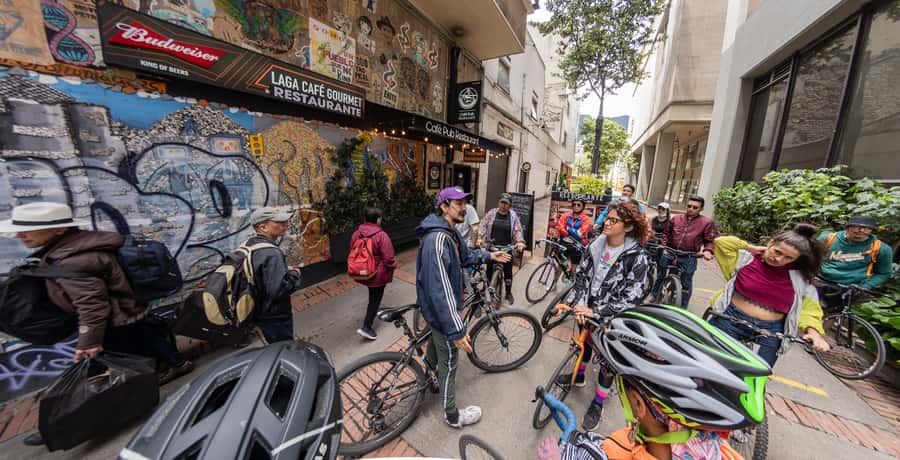
La Macarena is another major section of the route, and the tour includes some of Bogotá’s biggest murals. Large-scale work is easier to appreciate in person because a photograph often flattens its size and removes the surrounding buildings.
You can expect several stops rather than one continuous ride. The guide uses the breaks to discuss the artwork’s history, methods, and meaning. This makes the tour slower and more conversational than a simple bicycle transfer between sights.
The larger murals also give the route visual variety. Some pieces may reward close attention to detail, while others work through scale and distance. Because the tour connects these works to cultural diversity and social struggle, you are encouraged to see them as part of the city’s public conversation.
Do not plan a tight appointment immediately afterward. The published duration is three hours, but urban cycling, group questions, and weather can affect the exact finish. The tour is rain or shine, and a rain poncho is provided, so a flexible schedule will make the experience easier.
A stop at the coffee factory
The route includes a stop at a coffee factory. This adds a useful local break to a tour otherwise centered on painted walls and city history.
The available details do not specify whether the stop includes a tasting, production demonstration, or purchase opportunity, so you should not book it expecting a particular coffee program. What is clear is that the factory provides a change of pace and another way to connect the city’s cultural life with a familiar Colombian product.
It also breaks up the 13-kilometer ride. Three hours on a bicycle can feel much easier when the experience includes stops for conversation and observation. If coffee is a major reason you are interested, ask the guide what the stop includes at the start.
What the guide adds
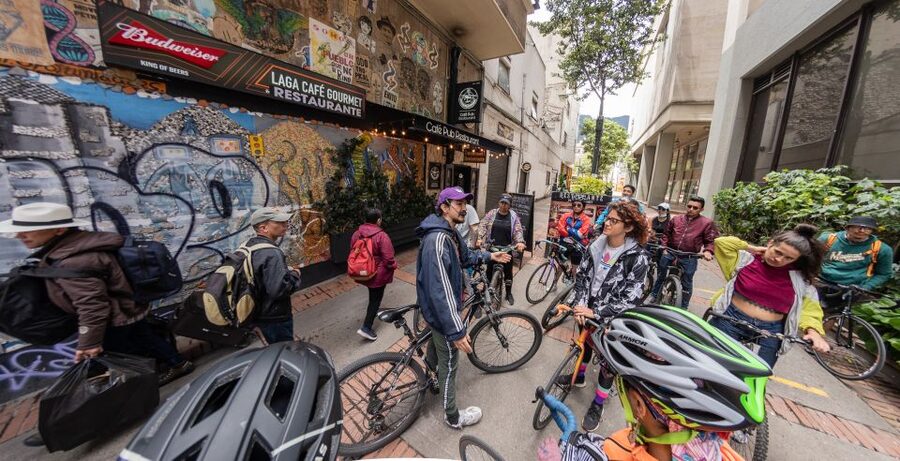
The guide is central to the value here. The company describes its guides as passionate about street art, with the lead guide also working as a recognized urban artist. That background can help you understand how murals are planned, painted, layered, and read by the public.
Diego led one departure and received especially strong praise for explaining art, graffiti, and history across several districts. He was also described as closely connected to the local community and fully engaged in the experience. If Diego is available for your date, his background would be a useful reason to request him, though guide assignment is not guaranteed in the information provided.
The small-group and private options matter because street art raises questions. You may want to ask why a wall uses a certain symbol, how a piece was made, or what changed in the neighborhood around it. A large group can make those conversations harder, while a smaller departure should give you more room to speak.
The listed rating is 3.2 from four reviews, so I would keep expectations measured. The two detailed five-star accounts praise the engaging explanations, local connection, and the way the guide links several neighborhoods. With such a small sample, the rating is not enough to predict every departure, but the strongest praise points to the human side of the experience rather than the bicycle hardware.
Practical details that affect your choice
The tour costs $62 per person and lasts three hours. I see that as a fair but not bargain-level price for a guided urban ride, especially if you value the guide’s interpretation and the chance to reach four districts. It is less compelling if your main goal is independent cycling or a quick photo walk.
Wear sports shoes. You should also avoid bringing a backpack or valuables, since both are specifically prohibited. Keep your clothing comfortable for cycling and bring only what the operator allows.
The tour operates in all weather, with a rain poncho offered when needed. Bogotá’s weather can change, so do not assume a gray morning means cancellation. A rain-ready attitude is part of booking this activity.
Cancellation is free up to 24 hours before the start, and you can reserve now and pay later. Those terms help if your Bogotá schedule is still shifting. Starting times vary, so check availability before planning other activities around it.
Who should book this bike tour?
I would choose this for you if you want to connect art with Colombia’s social story, rather than simply collect mural photographs. It suits active visitors who enjoy cycling, asking questions, and seeing how neighborhoods differ.
It is also a good fit for a first visit to Bogotá because the route covers four central areas and introduces the city’s bike culture. The range of languages makes it practical for international visitors, while a private or small-group format may help if you want a more personal discussion.
I would hesitate if you dislike urban cycling, need a weather-proof plan, or want a relaxed walking pace. The route is long enough to require energy, and the rain-or-shine policy is not ideal for anyone seeking a fully controlled outing.
Should you book it?
Book it if the idea of reading Bogotá through its walls appeals to you. The combination of La Candelaria, four neighborhoods, female artists, giant murals, a coffee factory, and a peace-themed work gives the ride more substance than a basic city bicycle tour.
Before paying, confirm the language, starting time, group size, and what the coffee factory stop includes. If you can travel light, wear proper shoes, and accept possible rain, this is a useful way to meet Bogotá as a city of bicycles, public art, and ongoing social change.
FAQ
Where does the Bogotá Urban Art Bike Tour start?
The meeting point is in front of the large red wall at Carrera 3 #12-52 in La Candelaria. Look for a guide with a purple hoodie, purple cap, or purple umbrella.
How long is the tour?
The tour lasts three hours and covers 13 kilometers of bike trails.
Which Bogotá neighborhoods does the route visit?
The route passes through Centro, Teusaquillo, Santa Fe, and La Macarena.
What languages are available?
Live guiding is available in English, Spanish, French, German, and Italian.
What should I bring?
Wear sports shoes. Backpacks and valuables are not allowed.
Does the tour run if it rains?
Yes. The tour takes place rain or shine, and a rain poncho is offered when needed.
Just added around Colombia
- Comuna 13 Neighborhood & Street Art Private Tour★ 4.7 · 12 reviews
- Medellin: Graffiti Tour Comuna 13★ 4.1 · 14 reviews
- Medellín Comuna 13 local guides snacks and your own graffiti★ 4.9 · 13 reviews
- Comuna 13: Recorrido de Arte Urbano, Cultura y Resiliencia★ 5.0 · 3 reviews
- Graffiti Tour: a fascinating walk through a street art City★ 5.0 · 5 reviews
- Fun Graffiti Workshop: The Art of Aerosol and Color★ 5.0 · 3 reviews
- Comuna 13: Graffiti Tour with Tasting, Live Show, & Gallery★ 5.0 · 4 reviews
- Comuna 13: Graffiti tour & Street Food/drink with telesferic★ 4.4 · 19 reviews
Bogota Street Art Tours, compared.
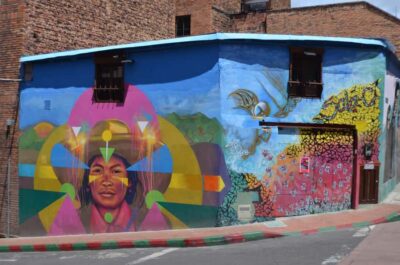
Bogotá: La Candelaria Graffiti & Urban Art Guided Tour
Read our review →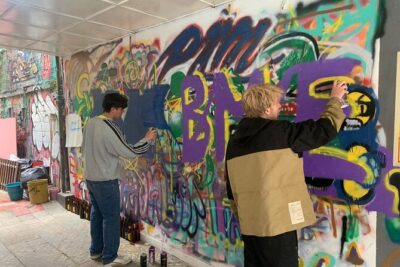
Fun Graffiti Workshop: The Art of Aerosol and Color
Read our review →
Graffiti Tour in La Candelaria Bogotá with Transportation
Read our review →
Bogotá: Graffiti Tour el mejor recorrido de arte urbano
Read our review →Graffiti Tour in La Candelaria Bogotá with Transportation
Read our review →
Graffiti Tour: a fascinating walk through a street art City
Read our review →Browse the lists this tour appears in