REVIEW · TOURS
Valparaiso: Street Art, Funiculars and Port City Tour
Valparaíso is easiest to understand from the bottom up. This tour begins beside the port, then climbs into the city’s hills by funicular, tracing a lively route through murals, old stairways, British and German landmarks, and viewpoints over the bay. The best part is the guide’s local connection: guides such as Alex, Grex, Maria, and Benjamin have introduced visitors to artists, shopkeepers, and neighborhood life.
I like the old photographs used along the route, which help you see how much Valparaíso has changed. I also like the small alfajor tasting, a simple but thoughtful way to support a local maker. The main catch is the brisk two-hour schedule. Hills, stairs, narrow lanes, and funicular rides make this a poor fit for anyone with mobility limits, and one stop may feel quick if you want long gallery visits.
Key points
- A bottom-to-top introduction: Begin at Muelle Prat and finish high in Cerro Alegre near Ascensor Reina Victoria.
- Two classic funicular rides: Tickets are included for Ascensor El Peral and Ascensor Concepción.
- Street art with context: Guides explain murals, artists, public art, and the social ideas behind the paintings.
- Historic neighborhoods: See Cerro Alegre, Cerro Concepción, Paseo Yugoslavo, Paseo Atkinson, and Pasaje Bavestrello.
- A useful local orientation: The guide can suggest restaurants, galleries, shops, and a practical route back to the port.
- Good value for a short tour: At $41 per person, the price covers the guide, funicular tickets, and an alfajor.
Starting at Muelle Prat and the Valparaíso port
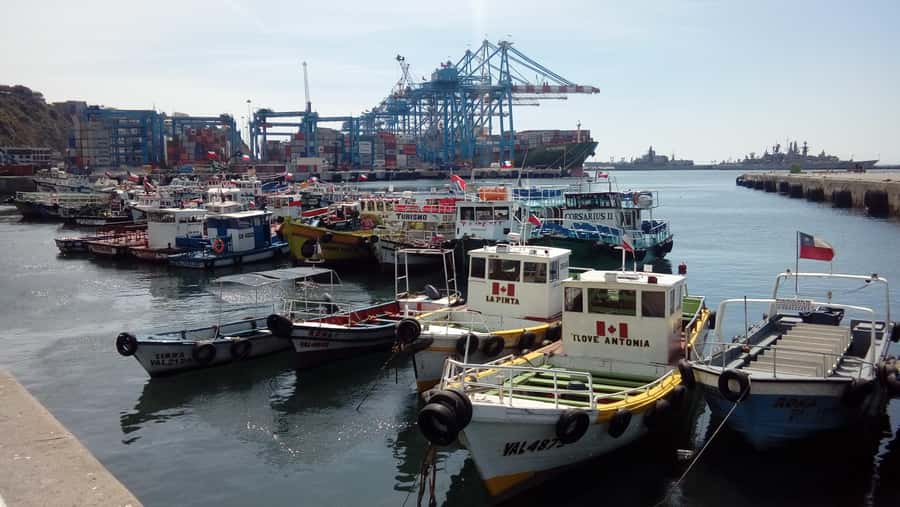
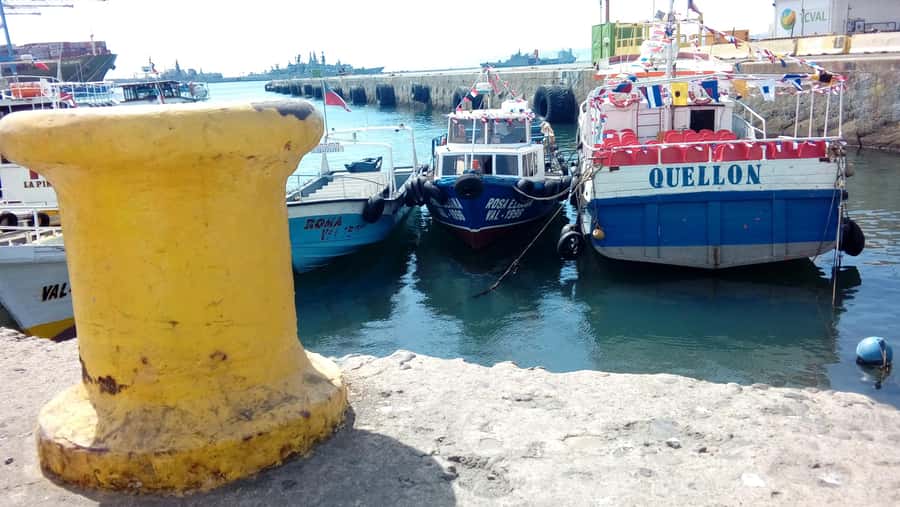
Meet your guide around the two cannons at Prat Pier, beside the Tourist Information Office. This is a clear public meeting point near the port, and it gives the tour an immediate sense of place rather than starting in a hilltop tourist district.
The first walk covers the Port of Valparaíso and the approach to Plaza Sotomayor. Your guide uses old photographs to compare the city’s earlier appearance with what you see today. I find this especially useful in Valparaíso, where weathered façades, painted walls, restored buildings, and newer commercial spaces can sit side by side.
The port stop is brief, about 10 minutes, so do not expect a full working-harbor tour. It is more of an introduction to the city’s position on the bay and its long connection with shipping, trade, and migration.
A few more street art tours around the world worth a look
- Moco Museum Amsterdam Entrance Tickets with Banksy & More
★ 4.4 · 10,088 reviews - Medellin: Comuna 13 Graffiti Tour, Cable Car & Street Food
★ 4.8 · 9,046 reviews - CDMX: Xochimilco, Coyoacan, Frida Kahlo Museum & Murals Tour
★ 4.4 · 3,025 reviews
Plaza Sotomayor and the city’s public face
Plaza Sotomayor gets about 20 minutes, making it one of the longer stops in the lower city. Here you see the main monument, the Chilean Navy Headquarters, and the fire department building. The nearby Cuerpo de Bomberos de Valparaíso receives a short explanation of its own.
This part of the walk gives useful historical framing before the tour turns toward street art. You will also pass part of the financial district, a reminder that Valparaíso is not only a postcard city of painted houses and hilltop cafés. It remains a working urban center, even when the colorful walls draw most of your attention.
The guide’s old-photo folder can make this section come alive. Several people specifically valued being able to match historic views with the current streets. If you enjoy architecture, city change, and local stories, this is more rewarding than simply stopping for photographs.
Riding Ascensor El Peral to Paseo Yugoslavo
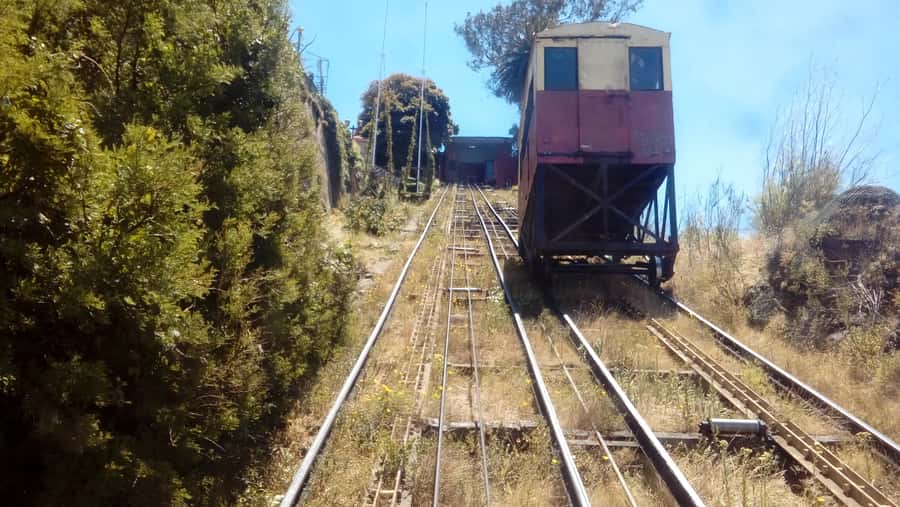
The first funicular ride is Ascensor El Peral, a historic hill transport system built in the early twentieth century. Your ticket is included, so you do not need to handle the fare separately. The ride is short, but it saves a steep climb and gives you a practical look at how Valparaíso connects its lower streets with the hills.
You arrive near Paseo Yugoslavo in Cerro Alegre. This is one of the tour’s strongest transitions. Within minutes, the view changes from port streets and formal civic buildings to narrow lanes, painted walls, old houses, small shops, and terraces looking toward the bay.
The funicular itself is not a theme-park attraction. It is public transport with character, and that is precisely why it belongs on a city tour. You see how local residents have long dealt with Valparaíso’s steep hills instead of treating the slopes as scenery alone.
Pasaje Bavestrello and the Italian influence
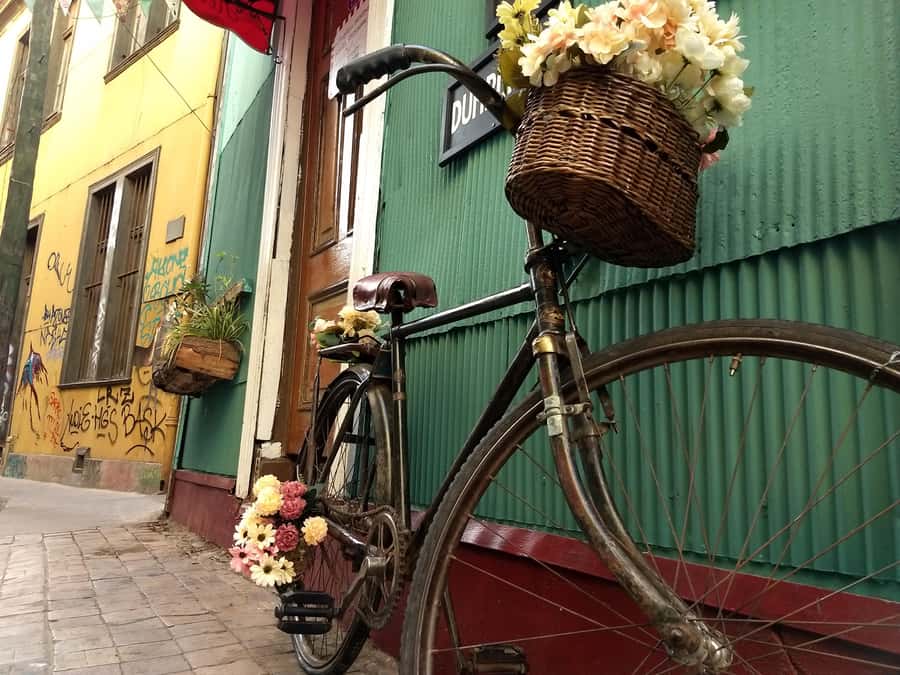
Pasaje Bavestrello offers a compact look at the Italian influence in the hill neighborhoods. The passage is tied to the way residents once shared daily community life, and the guide uses the setting to explain how different immigrant groups shaped Valparaíso.
This is one of the places where a local guide adds real value. A quick photograph of an old passage tells you very little by itself. The stories about residents, buildings, and cultural traditions help you see the hills as lived-in neighborhoods rather than an outdoor art exhibit.
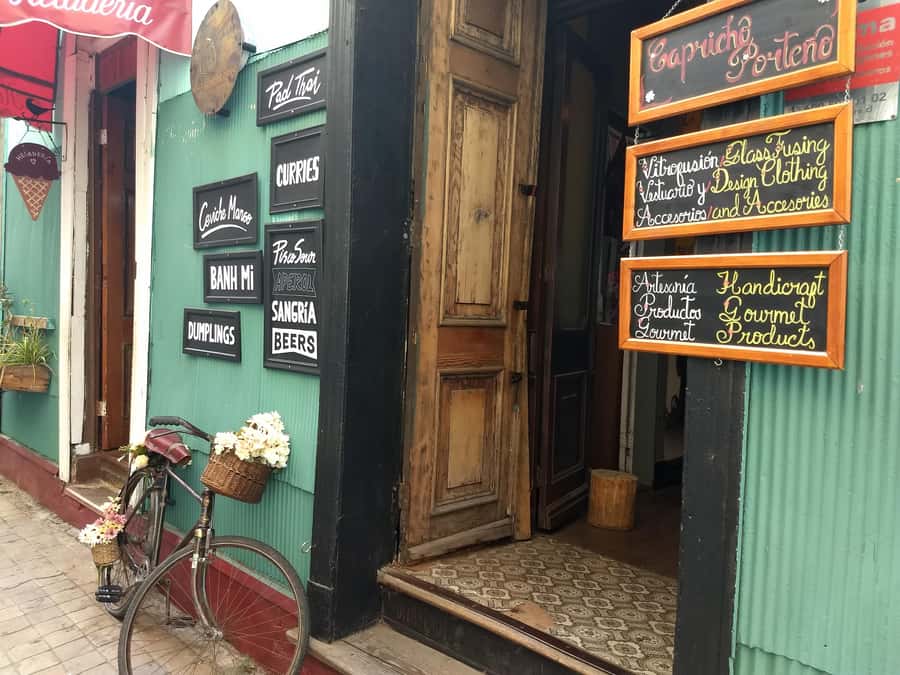
You will have time to look at small shops and local businesses along the route, but this is not a shopping tour. Souvenirs, crafts, jewelry, magnets, and art are available, yet the schedule does not allow for extended browsing at every stop.
Same walls, a different guide:
- Moco Museum Barcelona Banksy & More
★ 4.6 · 2,340 reviews - Amsterdam: Streetart Museum STRAAT Entrance Ticket
★ 4.8 · 2,137 reviews - Belfast: Murals Taxi Tour
★ 4.9 · 2,047 reviews - Blackbeard to Banksy – The Ultimate Walking Tour of Bristol
★ 5.0 · 1,961 reviews
Pasaje Gálvez and Valparaíso’s street art

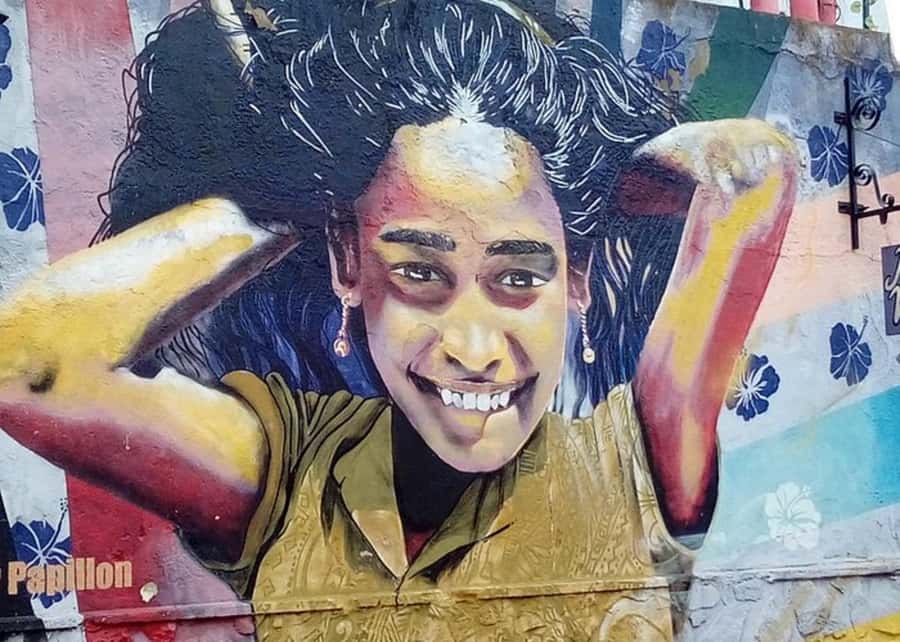
Pasaje Gálvez receives about 30 minutes, the longest single stop on the route. This is where the tour makes its main case for Valparaíso’s street art. The walls, stairs, doors, and public spaces carry paintings in many styles, and the guide explains who made them and what their ideas may express.
The strongest feedback about this experience focuses on the art explanations. Guides have included Alex, Grex, and others who know local artists personally, and some have arranged brief visits to workshops or galleries. That connection can turn a mural walk into a conversation about the people who make and maintain the city’s art.
You should expect social and cultural context, not only a list of artist names. The explanations can cover the meaning of a mural, the background of the artist, and how Chilean events or public debate shaped the work. That makes the painted walls easier to read.
There is also a practical limitation. Street art changes. A wall may be repainted, weathered, or covered by a new work, and the exact route can vary. The value lies less in checking off one famous mural and more in learning how to look at the city’s public art.
Gervasoni, Concepción, and Atkinson viewpoints
The route continues through Paseo Gervasoni and toward Ascensor Concepción. The stop at Gervasoni is short, only about five minutes, but it adds another hilltop viewpoint and a chance to see the relationship between the houses, slopes, and bay.
Ascensor Concepción is another funicular stop, listed at about five minutes. Riding two different ascensores helps you understand the city’s unusual transport system better than taking just one. It also breaks up the walking, though you still need to handle uneven streets and stairs between stops.
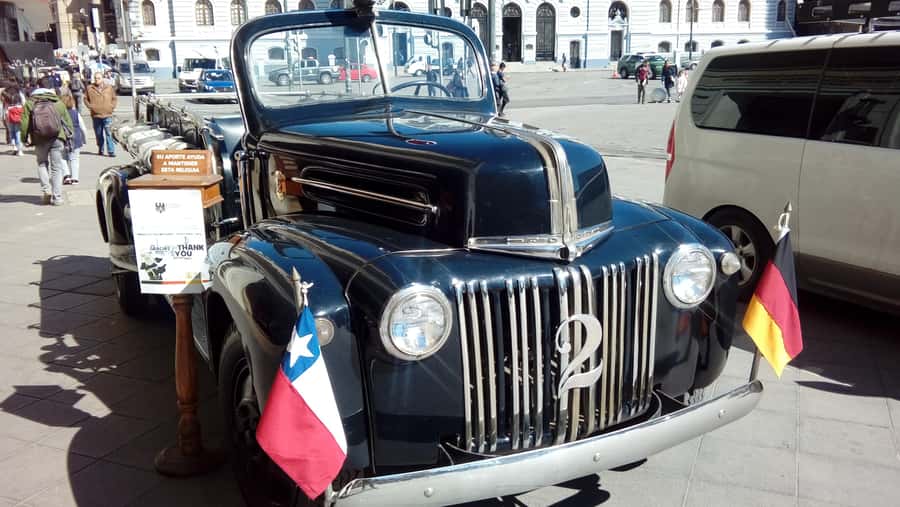
Paseo Atkinson brings a different mood. Here the focus shifts toward British influence, with old houses, gardens, and views across the city. You also pass the Deutsche Schule of Valparaíso, which reflects the important German presence in the city.
The route includes Brighton Restaurant, known for its terrace and seafood, but a meal is not part of the tour. Think of this as a recommendation point, not a restaurant reservation or tasting stop. Your guide can suggest places for lunch or dinner at the end, which is useful if you are staying in Valparaíso or returning to Santiago later.
The Piano Staircase and two churches
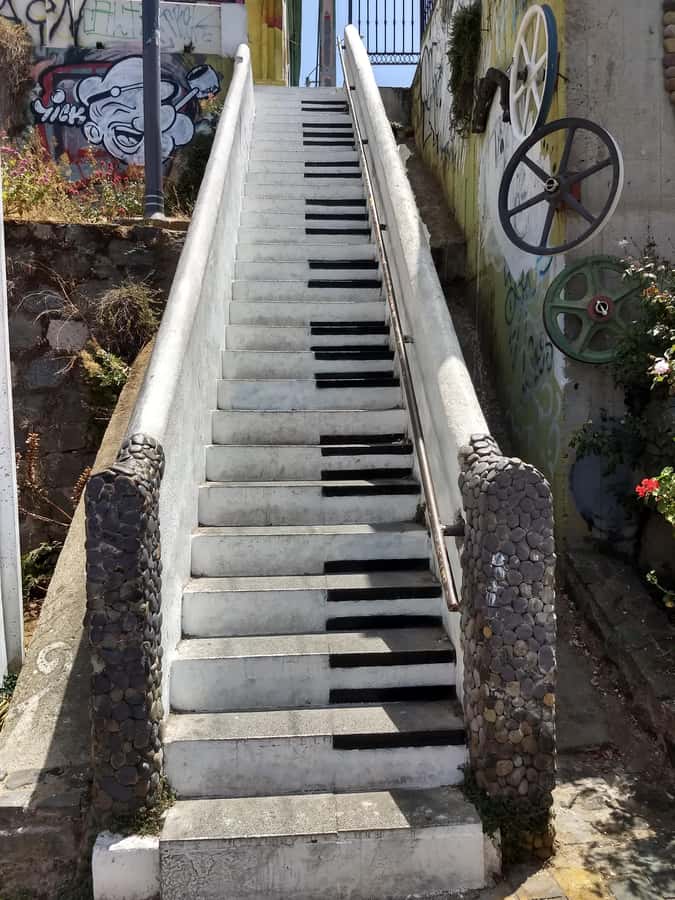
The Piano Staircase is one of the tour’s more playful photo stops. Its colored steps resemble piano keys and offer a quick visual break from the older architecture and painted walls. You will likely want a moment for photographs, but the schedule allows about 10 minutes.
The route then passes the Lutheran Church of the Holy Cross, dating from 1897, and an Anglican church in the hills. These buildings show how immigrant communities created their own institutions while sharing the same steep neighborhoods.
The churches are short stops, about five minutes each. You will not get a full interior visit or a long architectural lecture based on the supplied schedule. Their importance is in the wider story: Valparaíso’s character came from many communities, and those influences remain visible in the streets and buildings.
Paseo Dimalow and the final murals
Paseo Dimalow offers more hill views and a useful look at restaurants in Cerro Alegre. Your guide can point out places to eat and explain how to return to the lower city. This is a good time to ask practical questions, especially if you plan to continue exploring without a group.
The tour also includes the colorful stairs associated with Calle 13’s song Latinoamérica and the mural titled We are not hippies, we are happies. These are popular visual landmarks, but they make more sense when seen as part of the larger street-art route rather than as isolated photo backdrops.
The final destination is Ascensor Reina Victoria. This gives you a clear endpoint in the hills, but it is not the original meeting point at Muelle Prat. The guide explains how to get back and can offer food suggestions. Pay attention at the end, since you may need to continue independently or arrange your own way downhill.
What the $41 price covers
At $41 per person, this is not the cheapest way to see Valparaíso. A free walking tour may cover some of the same central streets, and one person specifically felt the route overlapped with a free option.
The paid tour earns its price through three things:
- A small-group or private format may allow more questions and a slower conversation.
- Funicular entry tickets are included.
- The guide provides local context, old photographs, art explanations, and practical advice.
A guide who knows local artists and shopkeepers can also show you details you might pass without noticing. That personal connection was one of the most repeated strengths of the experience. Alex, in particular, was praised for explaining murals, introducing local perspectives, and helping people find a suitable restaurant afterward.
Still, value depends on your plans. If you only want a quick orientation and are comfortable finding murals on your own, the price may feel high for two hours. If you have just arrived and want a safe, structured way to understand the hills, the included funicular rides and local guidance make the cost easier to justify.
Walking conditions and who should book
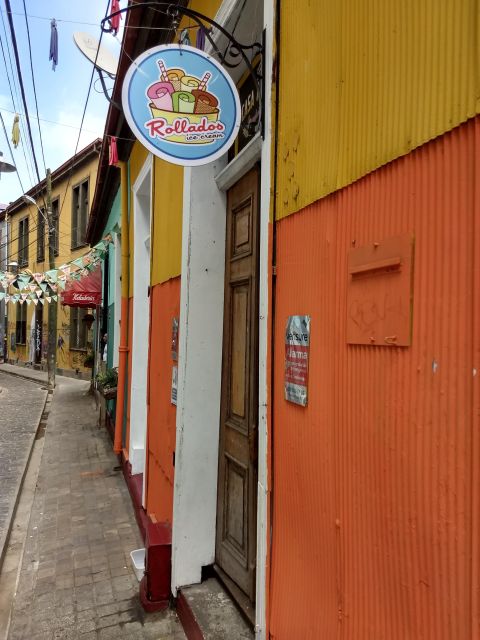
The tour is described as calm and safe, but it is not effortless. You walk through narrow streets, hills, passages, and stairways, with two funicular rides breaking up the climbs. The activity is not suitable for pregnant women, people with mobility impairments, or people with altitude sickness.
The pace has generally been described as comfortable, and guides have adjusted for private groups. One guide even walked farther with visitors who wanted help finding a restaurant. That said, two hours is short for this many stops, so you should be ready to keep moving.
I would choose this tour if you are interested in:
- Street art with explanations rather than quick photographs
- The social and immigrant history of Valparaíso
- Funiculars and hill neighborhoods
- A short introduction before exploring alone
- Restaurant, gallery, and shopping suggestions from a local guide
It suits couples, families, and small groups. A family of seven, including two people with autism, found the experience suitable, though individual needs vary. Private or small-group arrangements may be especially helpful if you want to ask many questions or set the pace.
Guide quality matters here. Names assigned can vary, but Alex, Grex, Maria, Benjamin, Cristóbal, Romina, and others have led the experience. The strongest descriptions focus on warmth, clear English, art knowledge, flexibility, and personal ties in the neighborhoods.
For a small practical concern, keep your booking information handy and confirm the meeting details. One person had trouble contacting the company when the guide was late. The tour normally begins at the two cannons at Muelle Prat, but having the guide’s contact information would make any delay easier to manage.
Should you book this Valparaíso tour?
Book it if you want Valparaíso explained through its murals, hills, and people rather than seen only from a vehicle. The old photographs, two funicular rides, alfajor tasting, and access to local art knowledge give the short route more substance than a simple photo walk.
Skip it if you prefer to wander slowly, spend an hour in galleries, or avoid stairs and uneven hill streets. At $41, the tour is best value for first-time visitors who want a quick orientation and personal recommendations. For those visitors, it can turn a confusing city of steep lanes into a place you can continue exploring with confidence.
FAQ
Where does the tour begin?
The meeting point is around the two cannons at Muelle Prat, near the Tourist Information Office in Valparaíso.
Where does the tour finish?
The tour finishes at Ascensor Reina Victoria.
How long does the experience last?
The tour lasts two hours.
Are funicular tickets included?
Yes. Entry tickets for the funiculars are included in the price.
Which funiculars are included in the route?
The route includes Ascensor El Peral and Ascensor Concepción.
Is food included?
An alfajor made by local people is included. Additional food and drinks are not included.
What languages are available?
The live tour guide may conduct the tour in English, Chinese, French, or Portuguese.
Is the tour suitable for people with mobility impairments?
No. The activity is not suitable for people with mobility impairments. It is also not suitable for pregnant women or people with altitude sickness.
Can I book a private tour?
Yes. Private and small-group options are available.
Can I cancel for a refund?
You can cancel up to 24 hours in advance for a full refund. You can also reserve now and pay later.
Just added around the world
- Your Own Belgrade: Street Art and Hidden Gems Walking Tour★ 5.0 · 2 reviews
- Xochimilco floating gardens, Coyoacan and UNAM murals★ 4.0 · 6 reviews
- Vienna Urban Art Tour: Explore a different side of Vienna!★ 3.8 · 14 reviews
- Wynwood Walls Street Art & Neighborhood Walking Tour★ 4.9 · 9 reviews
- Vancouver: Street Art & Craft Beer Walking Tour with Tasting★ 4.8 · 14 reviews
- Vancouver: Street Art & Craft Coffee Walking Tour w/ Tasting★ 4.8 · 11 reviews
- Urban Canvas: Osaka Street Art Bike Tour★ 5.0 · 10 reviews
- UNAM: Murals & Revolution★ 4.9 · 8 reviews
Tours, compared.

Comuna 13 Graffiti Tour, Cable Car & Street Food
Read our review →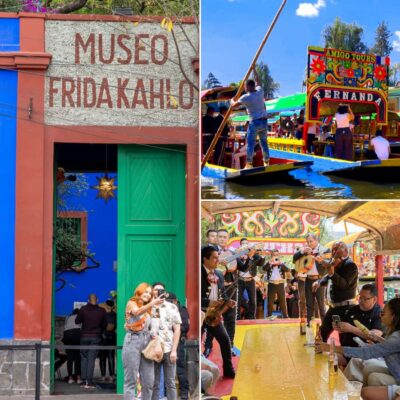
Xochimilco, Coyoacan, Frida Kahlo Museum & Murals Tour
Read our review →
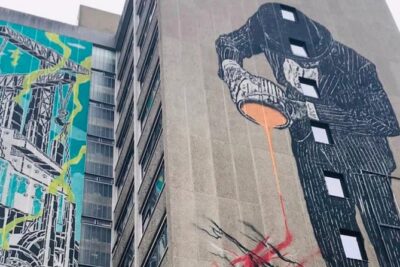
Blackbeard to Banksy – The Ultimate Walking Tour of Bristol
Read our review →