
REVIEW · STREET ART WALKING TOURS
Private Belgrade Street Art and Adventures Walking Tour
Belgrade’s street art is more than colorful paint on old walls. It offers a quick way into the city’s alternative culture, from open-calendar art spaces and former industrial buildings to designer workshops, independent galleries, and nightlife hubs. This private walk takes you into parts of Belgrade that ordinary sightseeing can easily miss.
I like the mix of serious cultural context and informal city wandering. I also like the chance to see an old shopping mall turned design center, a former brewery turned arts district, and an outdoor gallery in a passageway. The main drawback is the price: at $219.94 per person, this makes the most sense for a small private group that values a tailored introduction to Belgrade’s creative side.
Key points to know before booking
- Five focused stops: Visit Magacin, Karađorđeva 31, Belgrade Design District, Street Gallery, and Cetinjska 15.
- Private format: Only your group participates, which gives you room to ask questions about art, politics, history, and daily life.
- Three-hour walk: Each listed stop is planned for about 30 minutes, with time between them for walking and conversation.
- Alternative Belgrade: The route centers on squat culture, underground art, independent galleries, designers, bars, clubs, and abandoned spaces.
- Food and drink are extra: Snacks and alcoholic drinks are not included, even though the tour may introduce you to Belgrade craft beer and handmade sweets.
- Flexible cancellation: You can receive a full refund if you cancel at least 24 hours before the start time.
Why Belgrade street art makes a useful introduction
If you only see Belgrade’s grand boulevards and major monuments, you get an incomplete picture. The city’s murals and unofficial art spaces show how people use old walls, empty buildings, and neglected corners for expression.
That is the real strength of this walk. It does not treat street art as decoration alone. You learn how art occupies public space, how artists respond to the city, and how alternative groups create places for culture outside formal institutions.
The tour also gives you a way to ask direct questions. One strong point from the feedback is the guide’s ability to explain historical facts, symbols, and the role of street art in urban life. You are not simply shown a wall and told who painted it. The aim is to explain why the work matters where it is.
The private format helps here. With only your own group, you can spend more time on a mural that catches your eye or ask about a confusing symbol without worrying about slowing down a large party. The tour is listed at roughly three hours, so expect a compact introduction rather than an exhaustive survey of every painted wall in Belgrade.
More Street Art Walking Tours in the world:
- Blackbeard to Banksy – The Ultimate Walking Tour of Bristol
★ 5.0 · 1,961 reviews - Bristol: Blackbeard to Banksy Guided Walking Tour
★ 4.9 · 1,422 reviews - London: Street Art and Graffiti Guided Walking Tour
★ 4.9 · 1,354 reviews
Starting at Terazije Fountain
The tour begins at Terazije Fountain, at Terazije in central Belgrade. This is a practical meeting point near public transportation, and the walk returns there at the end.
Starting and finishing in the same place makes the tour easy to fit into a day of sightseeing. You can book it early in your stay to get a sense of the city, or later after you have seen the more traditional sights and want a different angle.
Wear comfortable shoes. The itinerary includes five stops of about 30 minutes each, but the experience also involves moving through city streets and passages. The precise route between the stops is not provided, so you should allow yourself a little breathing room around the three-hour estimate.
Magacin, an open-door cultural center
The first stop is Magacin, described as one of Belgrade’s oldest alternative cultural centers. It is also a street-art hotspot and a place for social and cultural activities.
What makes Magacin interesting is its open-calendar model. Instead of functioning only as a conventional venue with a fixed program, it offers space for different activities and groups. That gives you a useful look at how independent culture can operate with fewer formal barriers.
I would pay close attention here to the relationship between the building and the people using it. The point is not just to look at the walls. It is to understand how a place can become useful because artists, organizers, and local groups claim it for events and creative work.
There is no admission charge listed for this stop. Still, access to an alternative venue can depend on what is happening there at the time, so it is best to think of Magacin as a guided cultural stop rather than a guaranteed museum-style visit.
Karađorđeva 31 and a mural tied to Belgrade’s past
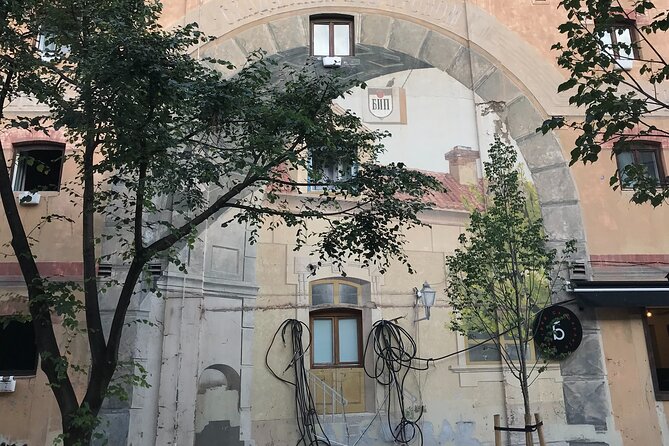
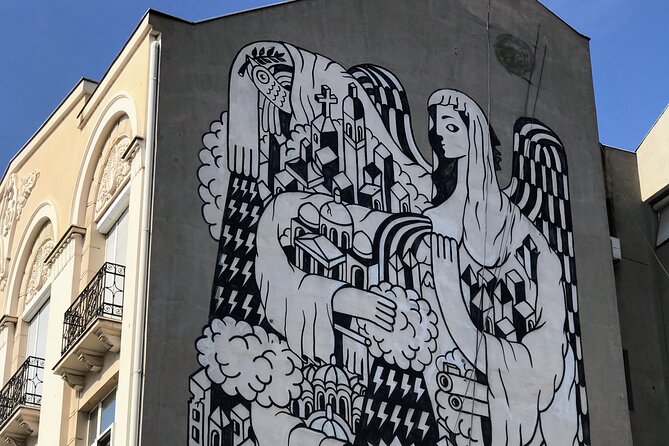
At Karađorđeva 31, you see a mural painted in 2008 during the BELEF festival by French artist Guillaume Alby, also known as REMED. The work draws on Belgrade’s history and religious art.
This is one of the route’s clearest examples of street art carrying a specific local conversation. The mural is not presented as a random international piece dropped onto a wall. Its subject connects contemporary public art with older symbols and the city’s past.
That connection is where a guide can add real value. You may recognize shapes and figures without understanding their references. The tour is designed to explain those meanings and place the work in the setting where it was created.
The mural also shows that Belgrade’s street-art scene is not limited to local artists. The city has attracted artists from different parts of the world, and the guide can help you see how outside influences meet local history.
A few more street art tours around the world worth a look
- Moco Museum Amsterdam Entrance Tickets with Banksy & More
★ 4.4 · 10,088 reviews - Medellin: Comuna 13 Graffiti Tour, Cable Car & Street Food
★ 4.8 · 9,046 reviews - CDMX: Xochimilco, Coyoacan, Frida Kahlo Museum & Murals Tour
★ 4.4 · 3,025 reviews - Moco Museum Barcelona Banksy & More
★ 4.6 · 2,340 reviews
Belgrade Design District in a former shopping mall
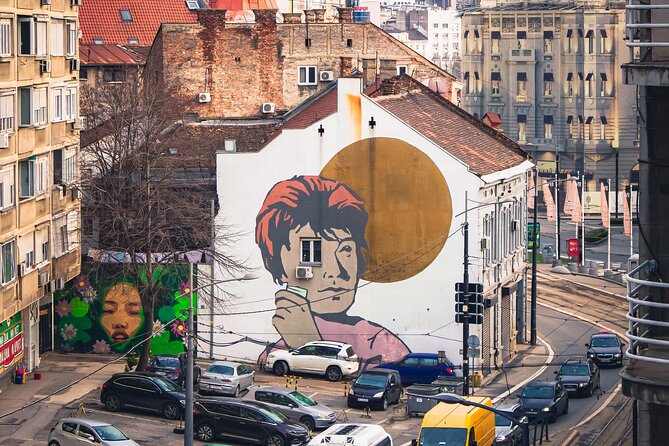
The Belgrade Design District occupies an abandoned shopping mall from the 1990s that has been taken over by young designers and artists. This is perhaps the easiest stop for understanding how old commercial space can gain a second life.
Instead of seeing a dead retail building, you get a working creative quarter. The appeal is not polished architecture. It is the visible contrast between the original purpose of the structure and the way younger creators use it now.
You may find this stop more engaging if you are interested in fashion, product design, illustration, independent shops, or small creative businesses. The supplied details do not promise specific stores or purchases, so treat it as a place to see and discuss local design rather than a guaranteed shopping opportunity.
I like this stop because it moves the discussion beyond murals. Street art is only one part of the city’s alternative culture. Designers and artists also need affordable places to work, show products, and meet the public.
Street Gallery in a narrow passage
Street Gallery is an independent outdoor gallery in a passageway. It focuses on critical works by young artists.
This setting matters. A gallery in an ordinary passage does not require you to enter a major cultural institution or buy a ticket. Art appears in the same public spaces people use to move through the city.
The focus on critical work should give this stop a more thoughtful edge. You may encounter pieces that comment on society, politics, identity, or public life, though the exact exhibition changes over time. Because it is an outdoor gallery, the material on view may not be the same on every visit.
This is a good place to ask how public art differs from graffiti, commissioned murals, and gallery work. The tour’s wider theme is not simply finding attractive walls. It is understanding who gets to speak in public and how artists use the city as a platform.
Cetinjska 15, a former brewery turned nightlife hub
The final listed stop is Cetinjska 15, a former brewery transformed into a cluster of bars, clubs, galleries, and street art. It brings together many of the tour’s themes in one place.
You can see how an old industrial site becomes a social center. During the day, it may read as an art and design area. At night, its bars and clubs give it a different role. The route uses the site to show how Belgrade’s creative life overlaps with nightlife and informal gathering places.
The tour description also mentions very good craft beer from Belgrade breweries and handmade sweets. However, alcoholic drinks and snacks are not included in the price. If you want to sample anything, plan to pay separately, and do not assume a tasting is part of the basic booking.
Cetinjska 15 may be one of the most useful stops for deciding where to return later. The tour introduces the setting, while your own evening visit would let you spend more time in its bars or clubs. The walk itself remains a cultural tour, not a pub crawl.
What the guide adds to the walk
The strongest praise centers on explanation. The guide is described as enthusiastic, pleasant, and able to answer questions about historical facts, symbols, and the role of street art in the city.
That matters because much of this route is interpretive. You can photograph a mural on your own, but you may not understand its references, the artist’s background, or the reason it appears in that particular place. The guide connects the visual details to Belgrade’s social and cultural life.
You should arrive with questions ready. Ask about how the alternative scene developed, why certain buildings were taken over, how artists work in public spaces, or what local people think of street art. The private format gives you a better chance to shape the conversation than a large group walk would.
No guide name is provided in the booking details, so you should not choose this tour expecting a particular named host. The useful feature is the guide-led interpretation and the ability to discuss what you are seeing as you go.
Price, group size, and overall value
The listed cost is $219.94 per person. That is high for a three-hour walking tour, especially because admission is free at the five named stops and food and drinks are extra.
The price becomes easier to justify for a small group. Since the activity is private and group discounts are available, the per-person cost may work better when shared among several people, depending on the final booking terms. You are paying for a private guide, a specialized route, and access to a side of Belgrade that can be difficult to organize on your own.
Still, you should compare it with a standard public walking tour before booking. If your main goal is to see famous landmarks at the lowest possible cost, this is not the right choice. If you want a focused look at street art, alternative culture, designers, independent galleries, and former industrial spaces, the price has a clearer purpose.
The guide is included. Snacks and alcoholic beverages are not. Mobile tickets are accepted, and confirmation arrives when you book.
Who will enjoy this Belgrade walk
I would recommend this tour to you if you enjoy visual culture, city history told through ordinary places, independent art, or local nightlife districts. It also suits repeat visitors who have already seen Belgrade’s major sights and want something less formal.
It can work well for a private group with mixed interests. Someone interested in murals can focus on the artwork, while another person can ask about history, squats, designers, bars, or social life.
The tour is also suitable for most participants, and it is near public transportation. The information does not provide a detailed accessibility assessment, so if you have specific mobility needs, ask the provider before booking. Old buildings, passages, and city streets may not offer the same conditions as a modern museum.
I would be less likely to recommend it to someone who wants a relaxed café walk with very little commentary. The route is built around discussion, cultural context, and places that may feel rough around the edges.
Booking details and cancellation
You meet at Terazije Fountain and finish back at the same point. The walk lasts about three hours and operates as a private activity for your group only.
You can cancel for a full refund if you do so at least 24 hours before the start time. Cancellations or changes made within 24 hours are not accepted for a refund, and the cut-off follows local time in Belgrade.
Because some stops are alternative or outdoor spaces, you may want to confirm any special needs before booking. The core route and meeting point are clear, but the precise pace may depend on walking time and the group’s questions.
Should you book this street-art tour?
Book it if you want Belgrade explained through its murals, repurposed buildings, designers, independent galleries, and nightlife culture. The best reason to choose it is the combination of access and interpretation: you see places you might miss, then get context for why they matter.
Think carefully about the cost. At $219.94 per person, it is not a bargain for a short walk unless the private format and group discount work in your favor. For a small group that values a personal guide and wants a creative side of Belgrade, it can be a strong choice. For budget visitors or those focused on major monuments, spend your money elsewhere and explore the public art at your own pace.
FAQ
Where does the tour begin?
It begins at Terazije Fountain, also called Terazijska česma, at Terazije in Belgrade.
Where does the tour end?
The activity ends back at the meeting point at Terazije Fountain.
How long does the tour last?
The tour lasts approximately three hours.
Is this a private tour?
Yes. Only your group participates in the activity.
How many stops are included?
The route lists five main stops: Magacin, Karađorđeva 31, Belgrade Design District, Street Gallery, and Cetinjska 15.
Is a guide included?
Yes. A guide is included in the tour price.
Are admission tickets included?
The listed stops have free admission.
Are snacks included?
No. Snacks are not included.
Are alcoholic drinks included?
No. Alcoholic beverages are not included. The tour may introduce you to Belgrade craft beer, but any drinks you purchase are separate.
Is the tour near public transportation?
Yes. The meeting point and activity are near public transportation.
Can most people participate?
Yes. Most people can participate, according to the activity details. If you have specific mobility needs, contact the provider before booking because the route includes streets, passages, and alternative cultural spaces.
What is the cancellation policy?
You can cancel for a full refund up to 24 hours before the experience begins. Cancellations or changes made less than 24 hours before the start time are not accepted for a refund.
Just added around the world
- Your Own Belgrade: Street Art and Hidden Gems Walking Tour★ 5.0 · 2 reviews
- Xochimilco floating gardens, Coyoacan and UNAM murals★ 4.0 · 6 reviews
- Wynwood Walls Street Art & Neighborhood Walking Tour★ 4.9 · 9 reviews
- Vienna Urban Art Tour: Explore a different side of Vienna!★ 3.8 · 14 reviews
- Vancouver: Street Art & Craft Beer Walking Tour with Tasting★ 4.8 · 14 reviews
- Vancouver: Street Art & Craft Coffee Walking Tour w/ Tasting★ 4.8 · 11 reviews
- Urban Canvas: Osaka Street Art Bike Tour★ 5.0 · 10 reviews
- UNAM: Murals & Revolution★ 4.9 · 8 reviews
Street Art Walking Tours, compared.
Blackbeard to Banksy – The Ultimate Walking Tour of Bristol
Read our review →
Naples Spanish Quarters Walking Tour Street Art, Folklore & Sweet
Read our review →
Brooklyn Graffiti & Street Art Walking Tour in Bushwick
Read our review →Browse the lists this tour appears in