

REVIEW · AUSTRALIA
Fremantle – Convicts, Culture & Street Art
Fremantle’s story comes in layers: convict escapes, port trade, Indigenous history, and street art all sit within an easy walking route. This two-hour tour links those pieces instead of treating the city as a string of unrelated sights.
I like the small maximum of 12 people, which should make it easier to hear the guide and ask questions. I also like the balance between landmark stops and everyday Freo streets, from FOMO Freo to the Cappuccino Strip. The main consideration is that this is an orientation walk, not a full inside tour of every major attraction, and you’ll need moderate physical fitness.
Key points at a glance
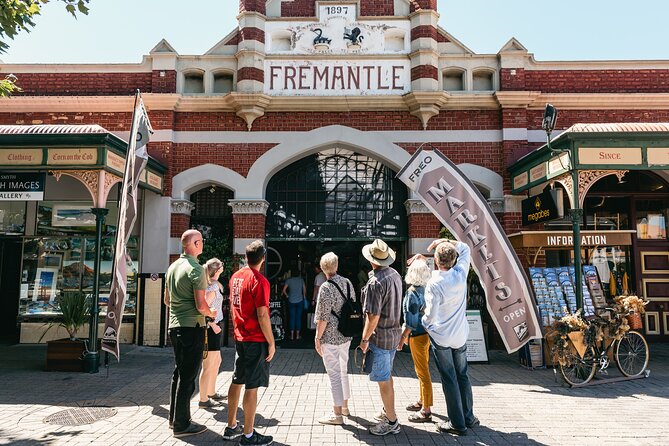
- Old Fremantle in a compact route: See the Round House, Whalers Tunnel, Bather’s Beach, and the port area in about two hours.
- Convict stories with real places attached: Hear about daring escapes and visit Fremantle’s first prison at the Round House.
- Street art and new Freo: FOMO Freo and the pedestrian mall show how the city mixes old buildings with newer creative spaces.
- A small walking group: The tour has a maximum of 12 people, a useful size for a town walk.
- Local guides and a simple finish: Sanya and Ann are among the guides associated with the experience, which ends near South Terrace’s Cappuccino Strip.
- Good practical value: Coffee or tea is included, while food, bottled water, transport, and entry to paid attractions are not.
Why this Fremantle walk works
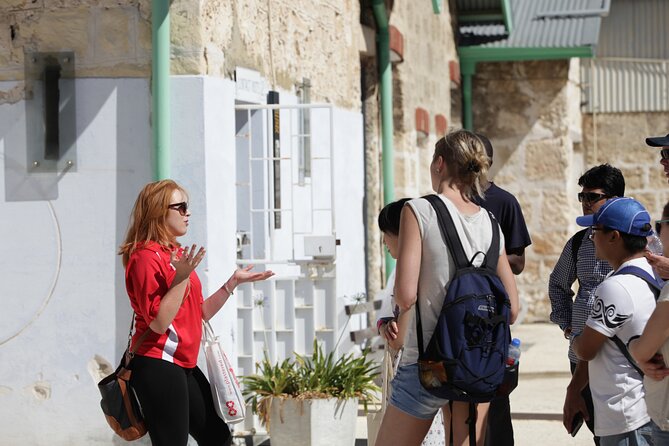
Fremantle is compact, but its story is not simple. The city grew around a port, served as a major convict settlement, sits on land with Aboriginal history, and now has a strong arts and food scene. A walk is a sensible way to connect these subjects because you move through the actual streets where they happened.
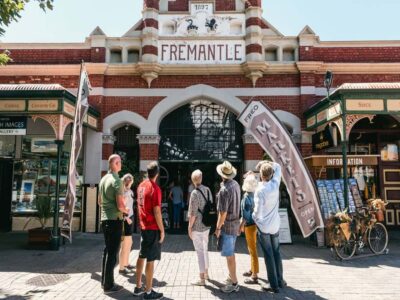
The route begins at Fremantle Visitor Centre near Town Hall at 10:00 am. The opening area is useful for getting your bearings, especially if this is your first time in town. You then move through civic spaces, shopping lanes, the port, the limestone coast, and South Terrace.
I would choose this tour early in a Fremantle stay. It gives you a useful map of the centre and helps you decide where to return later. The walk is only about two hours, so you still have much of the day for Fremantle Prison, the markets, museums, lunch, or a slower look at the street art.
The price is $46.62 per person. That is not the cheapest way to walk around Fremantle, since many of the stops are public places with no separate entry fee. The value comes from the guide’s narration, the route planning, and the connections between places that can look unrelated when you visit alone. With a maximum of 12 people, the cost is easier to justify if you prefer a focused introduction rather than a large group tour.
A few more street art tours around Australia worth a look
- Melbourne Street Art Tour
★ 5.0 · 378 reviews - PERTH BAR+STREET ART TOUR: Hidden Secrets, Laneways + Good Times!
★ 5.0 · 183 reviews - Melbourne: Street Art Walking Tour with a Street Artist
★ 4.9 · 147 reviews
Town Hall, FOMO Freo, and the new civic centre
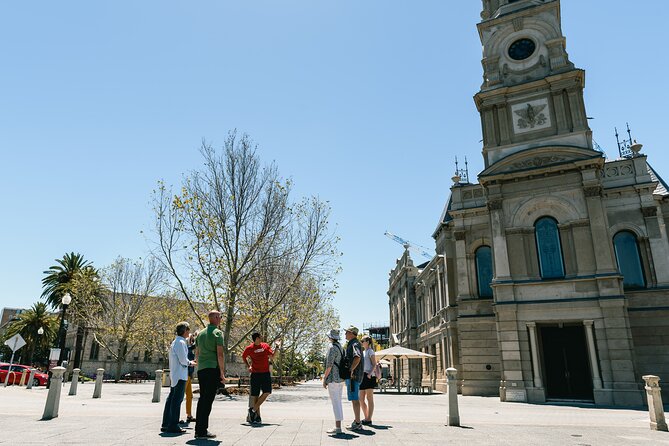
The first stop is Fremantle Town Hall, where the introduction takes place. It is a brief start, but an important one. You begin in the centre of town, close to public transport and the Fremantle Visitor Centre, rather than being dropped into an obscure meeting point.
From there, the walk moves toward FOMO Freo in Walyalup Koort. This newer hub brings together art, architecture, independent shops, food, and entertainment. The short stop helps show the present-day side of Fremantle before the tour turns toward its older buildings and waterfront history.
I like this contrast. A tour focused only on colonial buildings can make Fremantle feel frozen in the past. FOMO Freo reminds you that the city is still changing and that its cultural life is not limited to museums.
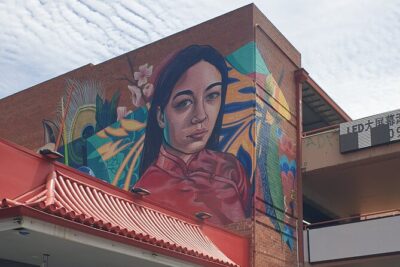
You also walk through a pedestrian mall between the Cappuccino Strip and Walyalup Koort. The area has been renewed with street art and other public improvements. The stop is brief, so you should think of it as a quick visual introduction, not a dedicated street-art workshop.
The route then follows one of the key trading streets in historic Fremantle. This is where the guide can connect shops, civic buildings, movement through the city, and the port economy. You’ll get more from this section if you pay attention to how the streets link the inland centre with the water.
Fremantle Ports and C.Y. O’Connor’s engineering story
The port stop lasts about 10 minutes and adds useful context to the city’s growth. Fremantle became well known for its port, created in the late 1800s and early 1900s. The tour explains the construction and the role of C.Y. O’Connor, the man associated with making the project possible.
This section matters because the port is more than a scenic waterfront. It explains why Fremantle became a place of trade, industry, movement, and hard physical work. The stories of prisoners and settlers make more sense once you understand the practical reason the town grew.
The port stop is free to enter, but it is still one of the more valuable parts of the walk because a guide can point out the connection between the harbour and the town centre. I would not expect a long technical talk on engineering. The listed time is about 10 minutes, so the emphasis is on orientation and a clear local story.
Whalers Tunnel and the limestone edge
Whalers Tunnel is a short but distinctive stop. The passage was cut directly into the limestone cliff to move whale products from the water’s edge up to High Street. It has also been used for purposes beyond commerce.
This is the kind of place that can be easy to miss without local direction. It gives you a physical sense of Fremantle’s limestone geology and of the work once required to move goods through the town. The tunnel is not presented as a long underground attraction, so keep your expectations in check. You’ll walk through it as part of the wider route, with about five minutes allocated.
The tunnel also adds variety. After civic buildings and shopping streets, you are suddenly looking at a practical piece of old infrastructure. It is a good reminder that Fremantle’s past is not only about grand public buildings. Some of it survives in cuts, passages, walls, and working routes.
Same walls, a different guide:
- Sydney Street Art & Food Tour
★ 5.0 · 120 reviews - Brisbane Small Bars and Street Art Tour
★ 5.0 · 34 reviews - Street Food & Street Art, Backroads & Boroughs
★ 5.0 · 23 reviews - Fremantle: Convicts, Culture, and Street Art
★ 4.8 · 23 reviews
The Round House and Fremantle’s prison past
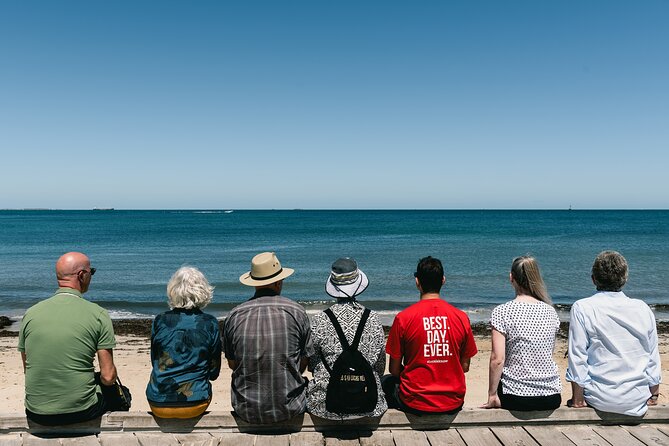
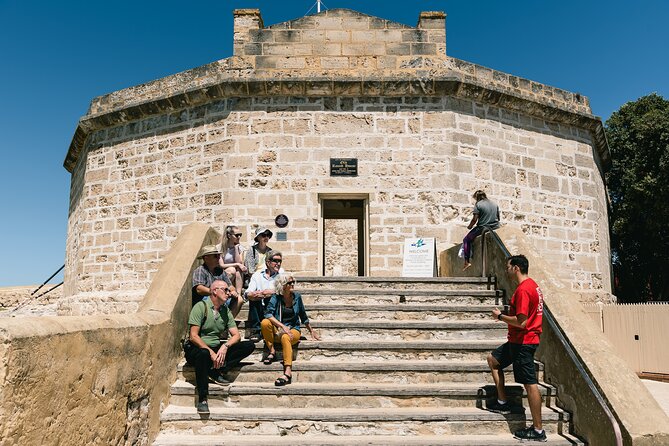
The Fremantle Round House is described as the oldest building in the city and its first prison. It is one of the clearest places on the route for understanding the town’s convict past.
The tour uses this setting to discuss prisoner stories, including daring escapes. Those tales give the history a human scale. Instead of hearing only dates and official milestones, you get a sense of the risks people took and the limits imposed by the settlement.
The stop itself is about five minutes, so this walk should not be confused with a full, extended visit to every room or exhibit at Fremantle’s prison sites. The experience is better understood as a guided look at the building’s place in the city’s story. If convict history is your main reason for visiting, allow separate time for Fremantle Prison beyond this tour.
That distinction helps you judge the price. You are paying for a connected route and local explanation, not a long admission-based prison visit. The Round House is especially useful as part of the sequence because you see it after hearing about the port and tunnel, then continue toward the shore.
Bather’s Beach and the first landing story

At Bather’s Beach, the focus shifts to the arrival of the first settlers to Western Australia. You may also climb on what remains of the original timber-piled jetty.
This is a small stop, but it gives the waterfront a clear historical reference point. Rather than seeing the beach only as a place for a view, you learn why this particular stretch matters to the settlement story. The remains of the jetty add a tangible detail, though the wording suggests only what is left of the original structure, not a preserved working pier.
Conditions and comfort matter here. You should wear shoes suitable for a walking tour and be ready for a route that includes outdoor waterfront areas. The activity requires a moderate level of physical fitness, and weather can affect whether it runs.
Esplanade Park and Aboriginal history
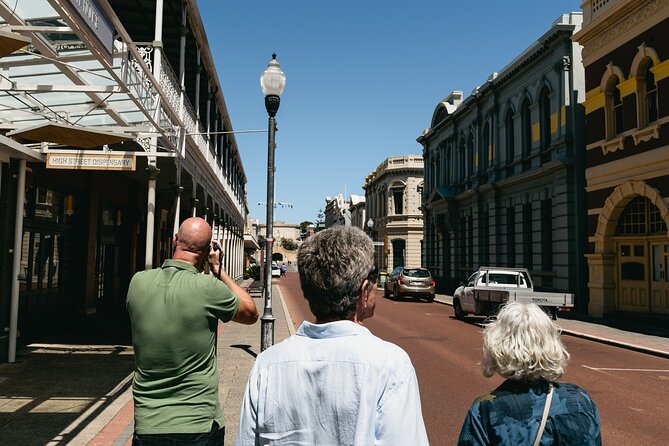
Esplanade Park is where the tour discusses land reclamation and Aboriginal history. This gives the walk a needed wider frame. Fremantle’s colonial and convict story is only part of the place, and the route makes room for the history of the land before and alongside European settlement.
The reclamation story also shows how the town’s shape changed over time. What looks like a settled park today has its own history of altered ground and urban development. The stop lasts about 10 minutes, making it one of the longer points on the route.
I value this part of the tour because it keeps the walk from becoming a simple parade of colonial landmarks. Listen for how the guide presents the relationship between land, settlement, and public space. The exact detail will depend on the host, but the tour’s stated focus makes this more than a passing mention.
South Terrace and the Cappuccino Strip finish
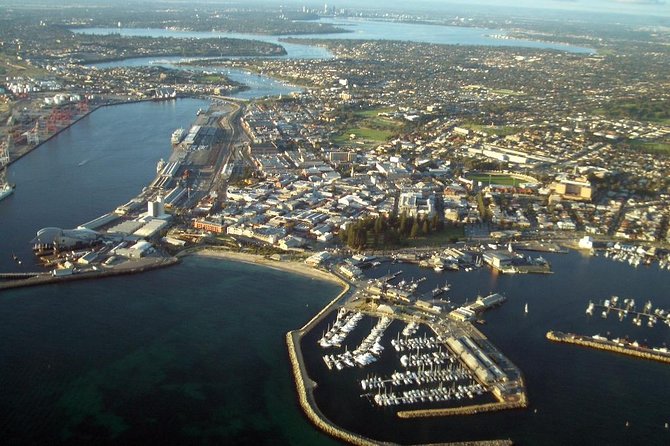
The tour ends on South Terrace, along Fremantle’s famous Cappuccino Strip. This is a practical finish. You are left near cafes and central streets, with time to stop for food or continue exploring without needing to return to the starting point.
Coffee or tea is included, which fits the ending well. Food and other drinks are not included, so plan to pay separately if you want lunch, a pastry, or something cold. Bottled water is also not supplied, so bring your own.
The final location gives the tour a relaxed close, but it also means the finish is not a formal return to the Fremantle Visitor Centre. Check the route on a map before booking if you need to meet transport or return to accommodation at a particular time. The end is listed generally as Fremantle, with South Terrace as the final stop.
What the two-hour timing really means
The tour lasts about two hours, with individual stops generally lasting five or 10 minutes. That leaves plenty of time for walking between them, along with introductions and short explanations.
This is a brisk introduction, not a slow architectural study. You’ll see a broad range of places, but you will not linger at every one. I think that pace works well for first-time visitors, families with older children, and anyone who wants context before exploring independently.
It may feel too short if you want long periods inside historic buildings or a detailed study of street art. The pedestrian mall and FOMO Freo are included as brief parts of the route, so serious art fans should not book this expecting a dedicated gallery or mural tour.
The small group limit helps. With no more than 12 people, the host can speak to the group without the feel of a large procession. It also gives you a better chance to ask about places you want to revisit later. The guide names connected with the experience include Sanya and Ann, both described as friendly and well prepared in the tour feedback.
Who should book this walk
I would recommend it to you if:
- You have only a short time in Fremantle.
- You want a clear introduction before sightseeing alone.
- You enjoy history but also want food streets, public art, and present-day culture.
- You prefer a small group to a large coach or crowded walking tour.
- You can manage two hours on foot with moderate physical effort.
- You want a route that includes Aboriginal history rather than focusing only on colonial buildings.
I would be more cautious if you want entry to Fremantle Prison as the main event, a long street-art tour, or a slow visit inside each historic site. The experience gives you the city’s outline and stories. It does not replace a full day of individual sightseeing.
The tour is also a good match for people who like local hosts. The strongest praise attached to the experience focuses on the guides, especially Sanya and Ann, and their friendly delivery. That matters on a short walk because the guide’s ability to connect the stops is the main product.
Practical details before you book
The start point is the Fremantle Visitor Centre at 155 High Street, Fremantle WA 6160. The start time is 10:00 am, and the tour is close to public transport.
You receive confirmation when booking, and mobile tickets are used. Service animals are allowed. The tour requires a minimum number of participants, and it can be affected by poor weather. If it is canceled for either reason, you are offered another date or experience, or a full refund.
Free cancellation is available up to 24 hours before the start time. Within 24 hours, changes are not accepted and the payment is not refunded. Since the activity is often booked about 31 days ahead, it makes sense to reserve early if the date matters, then keep the cancellation deadline in mind.
Should you book Fremantle, Convicts, Culture & Street Art?
Book it if you want a compact, human-scale introduction to Fremantle with a local host, a maximum of 12 people, and a route that connects convict stories, the port, Aboriginal history, and modern street culture.
At $46.62, it offers fair value when you want explanation and orientation rather than admission to a major attraction. The best reason to choose it is the mix of places: the Round House, Whalers Tunnel, Bather’s Beach, Esplanade Park, FOMO Freo, and South Terrace all appear in one manageable walk.
Skip it if you already know central Fremantle well or want a full inside visit to Fremantle Prison. For a first visit, though, the route gives you a useful framework, and the short finish near the Cappuccino Strip leaves you free to keep exploring.
FAQ
How long does the Fremantle walking tour last?
The tour lasts approximately two hours.
What time does the tour start?
The tour starts at 10:00 am.
Where does the tour begin?
It begins at the Fremantle Visitor Centre, 155 High Street, Fremantle WA 6160, Australia.
Where does the tour finish?
It finishes in central Fremantle, with the final stop on South Terrace near the Cappuccino Strip.
What places are included on the walk?
The route includes Fremantle Town Hall, FOMO Freo, Fremantle’s port, Whalers Tunnel, the Round House, Bather’s Beach, Esplanade Park, and South Terrace.
Is coffee or tea included?
Yes. Coffee and/or tea is included. Bottled water, food, and other drinks are not included unless specified.
How large is the group?
The tour has a maximum of 12 participants.
Is the tour suitable for anyone with limited mobility?
The activity requires a moderate level of physical fitness. The supplied information does not provide more specific accessibility details, so you should confirm any particular mobility needs before booking.
Can I cancel for a refund?
Yes. You can cancel up to 24 hours before the start time for a full refund. Cancellations or changes made less than 24 hours before the start are not accepted, and poor weather or an insufficient number of participants can also cause the tour to be rescheduled or refunded.
Just added around Australia
- Sydney Small Bars and Street Art Tour★ 5.0 · 14 reviews
- Melbourne Street Art Quest: Self-Guided Urban Story Game★ 3.5 · 3 reviews
- Melbourne Street Art Tour with a Local: Private & Personalized★ 4.5 · 3 reviews
- Hipster and Street Art Walking Tour★ 5.0 · 13 reviews
- Hidden Adelaide: Laneways and Street Art Tour★ 5.0 · 6 reviews
- Paint and Palate Street Art Tour with Food★ 5.0 · 21 reviews
- Sydney: Street Art and Multicultural Food Walking Tour★ 5.0 · 19 reviews
- Sydney: Street Art & Small Bar Tour with Complimentary Drink★ 5.0 · 4 reviews
Australia Street Art Tours, compared.
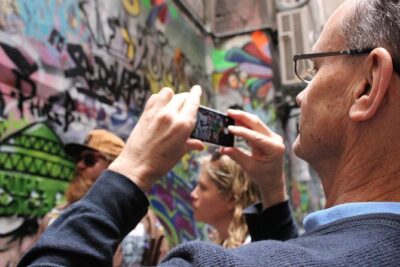
PERTH BAR+STREET ART TOUR: Hidden Secrets, Laneways + Good Times!
Read our review →


Browse the lists this tour appears in