
REVIEW · STREET ART MUSEUMS AND GALLERIES
Prague: The World of Banksy Immersive Experience Ticket
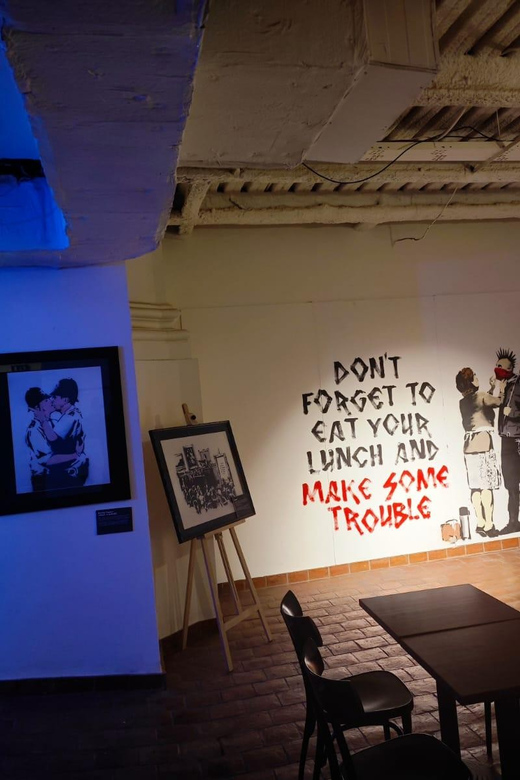
Banksy’s art is at its best when a serious political point arrives in a simple package. This Prague exhibition gathers his familiar images, including Girl with Balloon, in the former Church of Saint Michael the Archangel, where bare walls and mood lighting give the work an unusual setting. I like the chance to see many pieces in one place, and I like that the displays explain the stories and locations behind the images. The main catch is that this is an exhibition about Banksy, not a chance to meet the artist or see a fully authenticated collection of originals.
I also like the flexible format. You can move at your own pace, listen to the Smart Guide audio tour in several languages, and spend roughly an hour if you are on a busy Prague schedule. The $17 price is fair for an indoor art stop, though anyone looking for a traditional museum collection or a family activity with broad appeal should know that Banksy’s political themes can feel heavy, and the exhibition is not suitable for people with mobility impairments.
Key points to know before you go
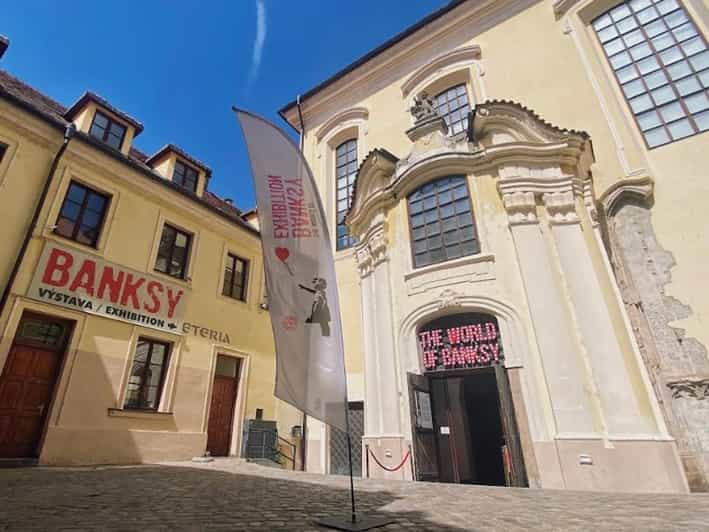
- The setting is part of the experience: The exhibition occupies Prague’s former Church of Saint Michael the Archangel, a place connected with Czech church reformer Jan Hus.
- Girl with Balloon is here: Banksy’s best-known image is one of the major reasons to visit.
- The art carries a political message: Expect themes of war, imperialism, peace, poverty, greed, capitalism, consumerism, and hypocrisy.
- You can use a multilingual audio guide: Scan a QR code inside and connect to the Smart Guide app in English, Czech, Turkish, Spanish, or German.
- Plan about an hour: The ticket is valid for a day, but the exhibition itself is compact enough to fit between Prague sights.
- The collection is not simply a wall of prints: Displays include paintings, explanations, animations, and work connected with graffiti artists and collectors.
Seeing Banksy inside a former Prague church
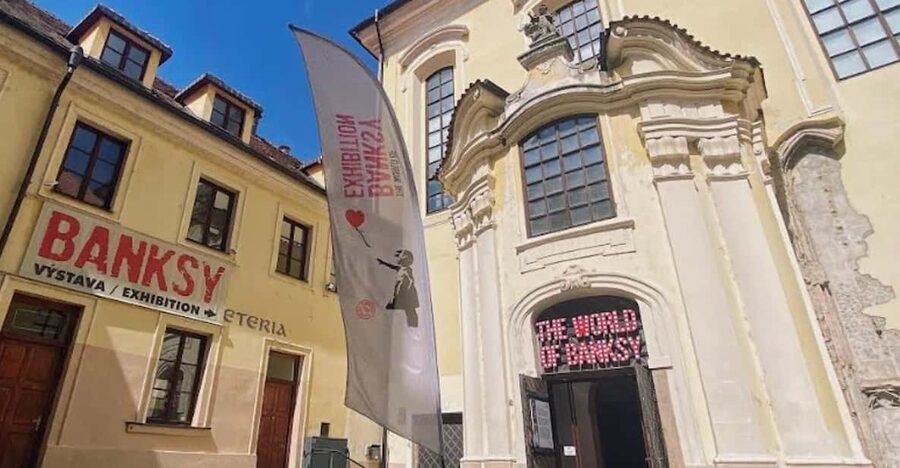
The first thing to understand is the contrast. Banksy is known for placing street art in unexpected public spaces, and here his work is shown inside a former church in central Prague. The Church of Saint Michael the Archangel provides rough, bare walls and a serious atmosphere. This is not a conventional white-box gallery, and that makes the visit feel closer to an installation than a standard art museum.
The building also gives the exhibition some historical weight. Jan Hus, the Czech priest and church reformer, preached here in the 15th century. That does not make the Banksy exhibition a lesson in Prague church history, but it adds a useful layer: you are looking at modern protest art in a place long connected with public speech and religious reform.
I like this choice of venue because Banksy’s work often depends on context. A small painted figure or a simple stencil can feel different when it appears beside old church walls rather than in a polished gallery. The church does not erase the modern nature of the work. Instead, it creates a visual clash between the old building and Banksy’s sharp comments on power, money, war, and society.
More Street Art Museums and Galleries in the world:
- Moco Museum Amsterdam Entrance Tickets with Banksy & More
★ 4.4 · 10,088 reviews - CDMX: Xochimilco, Coyoacan, Frida Kahlo Museum & Murals Tour
★ 4.4 · 3,025 reviews - Moco Museum Barcelona Banksy & More
★ 4.6 · 2,340 reviews
Girl with Balloon and the familiar images
For many people, Girl with Balloon is the main draw. The image is among Banksy’s most famous works, and seeing it included gives you a natural starting point for the exhibition. You will likely recognize some of the visual language: simple figures, strong silhouettes, dark humor, and an idea that can be understood quickly.
The exhibition is more useful when you resist the urge to photograph only the famous pieces. The supporting works help explain how Banksy turns a small image into a wider argument. Notes beside the art give background on the stories and places connected with the work, which adds context for pieces you may not know.
That explanatory material is one of the strongest parts of the visit. You are not left with a series of attractive images and no help understanding them. The displays give you facts about Banksy and explain the thinking behind different works. Some pieces may be familiar from newspapers or social media, while others will be new to you.
The exhibition also includes animations of Banksy’s art. These are useful because street art can be hard to experience outside its original setting. A wall painting removed from a street loses the traffic, weather, buildings, and public reaction around it. The animations offer another way to present the work and help connect separate images into a larger view of the artist’s methods.
The serious themes behind the simple images
Banksy’s art often looks easy to read, but the ideas behind it are not light. The exhibition asks you to think about war, imperialism, peace, individualism, greed, poverty, capitalism, consumerism, and hypocrisy. That list tells you what kind of visit this is. You are coming for art, but also for pointed social commentary.
I appreciate the directness. Banksy rarely hides his subject behind long explanations or difficult language. A child, soldier, rat, police officer, balloon, or consumer product can carry the message. The displays help connect those familiar figures to larger problems, so you can spend time thinking about the subject rather than trying to decode obscure art theory.
The mood can shift quickly. One work may make you smile at its joke, while the next asks you to consider violence or inequality. If you want a light break filled only with colorful pictures, this may not be the right choice. If you enjoy art that challenges authority and makes you question ordinary behavior, the serious material is part of the value.
The political ideas also explain why some people will connect strongly with the exhibition while others may move through quickly. Banksy’s work is built to provoke a reaction. You do not need to agree with every message, but you should expect a clear point of view rather than a neutral display.
What the visit is like from room to room
The experience does not follow a guided walking route with a named art historian. Instead, you enter with your ticket and explore the displays at your own pace. An English or Czech host or greeter is available, and the exhibition provides an audio guide through the Smart Guide app.
Inside the museum, scan the QR code to connect to the audio guide. The available languages are English, Czech, Turkish, Spanish, and German. This is a practical feature if you want more than the wall text, especially when you are seeing Banksy’s work for the first time.
I would begin by looking at the whole room before reaching for the phone. Notice how the art sits against the church interior. Then move closer to the pieces that catch your eye, read the explanations, and use the audio guide for extra background. That order lets you experience the setting rather than spending the entire visit staring at a screen.
The layout has been praised for making the exhibition easy to follow, with explanations placed around the works. Mood lighting also helps shape the visit. It gives the art a focused, theatrical quality, though some people may prefer brighter gallery lighting for close inspection.
Allow around an hour if you want to see the main displays and read the information. You can go faster if you are fitting this between other Prague sights, or stay longer with the audio guide and the political material. The ticket is described as lasting one day, so the important point is flexibility rather than a fixed timed performance.
More Entry Tickets in the world:
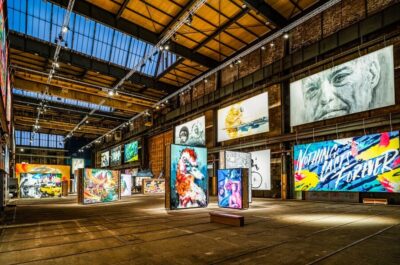
- Amsterdam: Streetart Museum STRAAT Entrance Ticket
★ 4.8 · 2,137 reviews - Moco Museum Amsterdam Admission Ticket with Banksy and more
★ 4.0 · 1,745 reviews - Miami: Wynwood Walls Skip-the-Line Ticket
★ 4.6 · 840 reviews - Paris: “The World of Banksy” Musée Banksy Entry Ticket
★ 4.4 · 783 reviews
Original works, reproductions, and what to expect
You should set your expectations carefully. The exhibition is created through a collaboration involving collectors of Banksy originals and leading graffiti artists. It presents Banksy’s work and message in one location, but it is not described as a permanent museum owned and operated by Banksy.
This distinction matters to art buyers and serious collectors. Some displays are described as paintings rather than simple printed images, and the exhibition includes detailed explanations of technique and background. Still, the collection brings together work linked to Banksy, along with material by graffiti artists, so you should not assume every item is an original Banksy street piece removed from its first location.
For a casual art lover, this may not be a problem. The benefit is access. You can see a broad range of images in Prague without chasing uncertain street locations across several countries. You also get the background information that a photograph on a phone cannot provide.
For a dedicated Banksy follower, the limitation is clearer. You may want more work directly by the artist and less associated material. The exhibition is best understood as a presentation of Banksy’s art and ideas for a wider audience, not as a tightly focused archive of authenticated originals.
Why the church setting changes the artwork
The building does more than provide four walls. Banksy’s art is often associated with streets, public buildings, political conflict, and places where people do not expect to find a gallery. Showing it in a former church continues that habit of placing modern art in an unusual location.
The bare surfaces are especially helpful. Reproduced street art can feel flat when it is placed on a clean, modern wall. Here, the church helps recreate some of the roughness and sense of place connected with Banksy’s public work. The result is not the same as standing in front of an original mural outdoors, but it is more atmospheric than a standard printed exhibition.
The historical association with Jan Hus adds another useful thought. Hus preached and challenged accepted religious authority in this church centuries ago. Banksy challenges political and commercial authority through visual jokes and public art. The two figures belong to very different periods, but the building encourages you to think about how public messages can question powerful institutions.
You do not need to know Prague’s religious history to enjoy the exhibition. A short visit still works. But if you pause to consider the site, the experience gains more depth than a simple collection of famous images.
Is $17 a fair price in Prague?
At about $17 per person, this is a reasonable paid attraction if Banksy interests you. The ticket gives you access to a substantial collection in a central church, plus animations, explanatory text, and an audio guide. For many people, it fills about an hour, making it easy to add before or after another central Prague stop.
The value depends on what you expect from art. If you want to see one original masterpiece in a major national museum, spend your money elsewhere. If you want a focused look at Banksy’s imagery and political ideas, with many works gathered under one roof, the price is easier to justify.
I especially like the value for a rainy day or a short gap in your schedule. You are not committing to a full-day tour or a long guided program. You can see the main work quickly, or take your time with the audio material.
The exhibition may be less satisfying for a mixed group. One person can spend an hour reading every explanation, while another may lose interest after the famous pieces. That difference is worth considering if you are visiting with family or friends who do not care much about contemporary political art.
Who will enjoy this most
I would choose this exhibition if you already like Banksy, street art, social commentary, or modern art that makes a blunt point. It is also a good option if you want something different from Prague’s castles, churches, and historic streets without leaving the center.
You will get the most from it if you read the notes and use the audio guide. The art alone can be seen quickly, but the explanations provide the background that turns familiar images into a more complete experience.
Families can visit, but interest will vary by age and personality. The simple visual style may appeal to children, while the political themes are aimed more at older visitors. There is no claim that the entire family will want to go through every display, so keep the visit flexible.
People with mobility impairments should note that the experience is not considered suitable for them. The available information does not provide detailed access guidance, so you should check directly before booking if mobility is a concern.
Booking is flexible: cancellation is available up to 24 hours before the visit for a full refund, and you can reserve now and pay later. Those terms are useful when your Prague plans are still changing, but they do not alter the exhibition itself.
My call: book it for context, not just celebrity art
I would book The World of Banksy if you want to understand why Banksy’s work has become so widely recognized, not simply take a quick picture of Girl with Balloon. The church setting, mood lighting, animations, and background notes give the exhibition more substance than a wall of famous prints.
I would skip it if you want a traditional museum devoted only to verified originals, or if your group has little interest in political art. The exhibition asks for some attention, and the messages about war, poverty, capitalism, and hypocrisy are central rather than decorative.
For $17, it is a sensible one-hour addition to a Prague day. Go in expecting a carefully presented Banksy-themed exhibition in an unusual historic building, with a mix of visual impact and social criticism. That is the experience it offers, and for the right visitor, it is time and money well spent.
FAQ
Where is The World of Banksy exhibition located?
It is located in the Church of Saint Michael the Archangel in Prague, in the Central Bohemian Region of the Czech Republic.
How much does the ticket cost?
The listed price is $17 per person.
How long should I allow for the exhibition?
The ticket duration is listed as one day, but the exhibition itself can fill about an hour. You can spend more or less time depending on how closely you read the displays and use the audio guide.
Is Girl with Balloon included?
Yes. Banksy’s Girl with Balloon is included among the works presented at the exhibition.
Is an audio guide available?
Yes. You can connect to the Smart Guide app by scanning a QR code inside the museum. The audio guide is available in Czech, English, Turkish, Spanish, and German.
Is the exhibition suitable for people with mobility impairments?
The experience is listed as not suitable for people with mobility impairments.
Can I cancel my booking?
Yes. You can cancel up to 24 hours in advance for a full refund. You can also reserve your place and pay later.
Just added around the world
- Your Own Belgrade: Street Art and Hidden Gems Walking Tour★ 5.0 · 2 reviews
- Xochimilco floating gardens, Coyoacan and UNAM murals★ 4.0 · 6 reviews
- Vienna Urban Art Tour: Explore a different side of Vienna!★ 3.8 · 14 reviews
- Wynwood Walls Street Art & Neighborhood Walking Tour★ 4.9 · 9 reviews
- Vancouver: Street Art & Craft Beer Walking Tour with Tasting★ 4.8 · 14 reviews
- Vancouver: Street Art & Craft Coffee Walking Tour w/ Tasting★ 4.8 · 11 reviews
- Urban Canvas: Osaka Street Art Bike Tour★ 5.0 · 10 reviews
- UNAM: Murals & Revolution★ 4.9 · 8 reviews
Street Art Museums and Galleries, compared.
Moco Museum Amsterdam Entrance Tickets with Banksy & More
Read our review →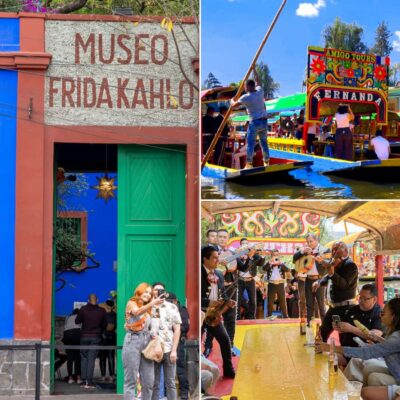
Xochimilco, Coyoacan, Frida Kahlo Museum & Murals Tour
Read our review →
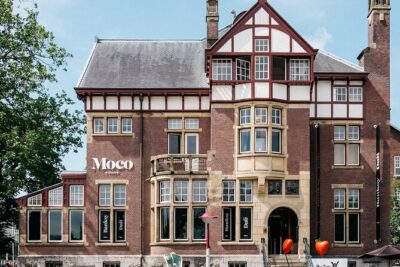
Moco Museum Amsterdam Admission Ticket with Banksy and more
Read our review →

“The World of Banksy” Musée Banksy Entry Ticket
Read our review →
The World of Banksy Museum Permanent Exhibition
Read our review →Browse the lists this tour appears in