
REVIEW · STREET ART MUSEUMS AND GALLERIES
Brussels: The World of Banksy Museum Permanent Exhibition
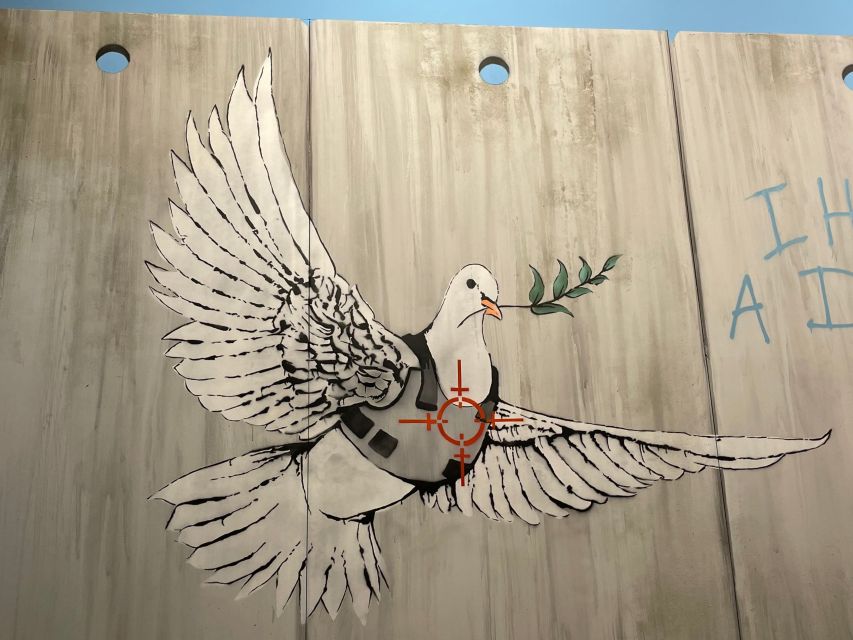
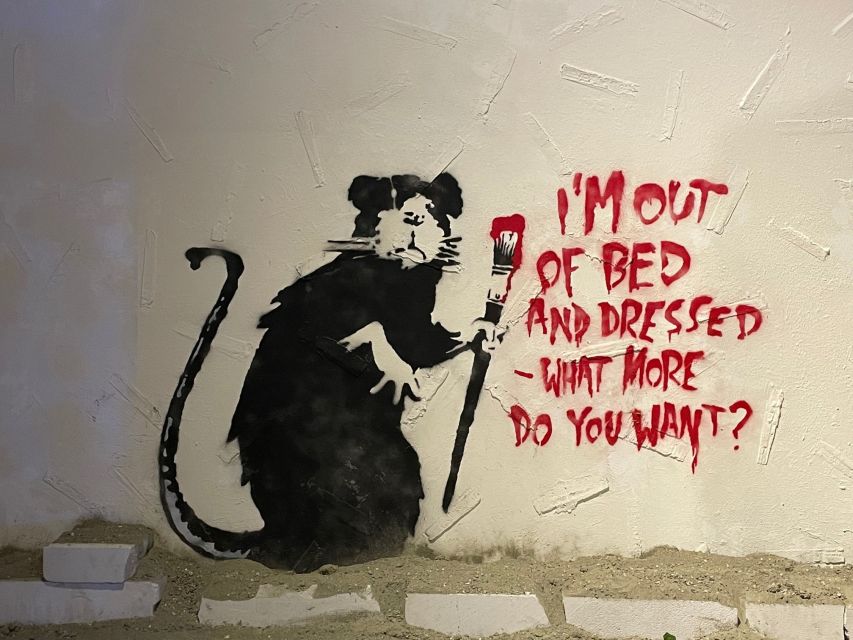
Banksy’s art is made for streets, yet much of it has vanished under paint, weather, demolition, or removal. This Brussels exhibition brings more than 130 works and life-size murals together inside a former fabric house, giving you a clear look at the images and ideas that made the anonymous artist famous.
I like the quiet, self-guided format, which lets you stop, think, and take photos without being pushed along. I also like the central location, close to Place De Brouckere and Place Sainte Catherine. The main caution is practical: the exhibition occupies two floors with no lift, so only part of it is wheelchair accessible.
Key points
- More than 130 works: See a broad selection of Banksy-inspired reproductions, stencils, installations, and life-size mural scenes in one place.
- A relaxed one-hour visit: The official visit lasts about an hour, but you can spend closer to 90 minutes or two hours if you read every panel and pause often.
- Central Brussels setting: The museum is near Place De Brouckere and Place Sainte Catherine, making it easy to add to a day in the city centre.
- Self-guided and unhurried: You explore independently, with information available in French, English, and Dutch.
- A former fabric house: The old building gives the exhibition a more unusual setting than a standard modern gallery.
- Check access before booking: The exhibition is on two floors, and there is no lift.
Why Banksy works better in a room than on a screen
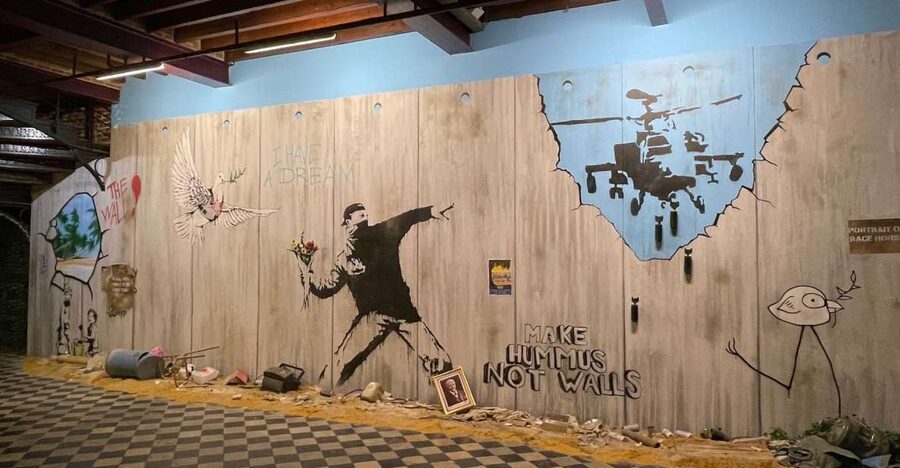
Banksy’s images are often seen online as small pictures surrounded by headlines and social media comments. Here, the scale changes the experience. Life-size murals let you see how a simple stencil, a few blocks of color, and a sharp visual joke can fill a wall.
The exhibition also helps you follow the recurring themes in Banksy’s work. You will encounter ideas about war, inequality, consumer culture, policing, childhood, borders, and the uneasy line between protest and commercial success. The point is not to hand you one official answer for every image. Much of the pleasure comes from making your own connection.
That suits Banksy. His work is direct, but it is not always simple. A picture that makes you laugh may also leave you uncomfortable a moment later. The display gives you enough context to place the work in Banksy’s artistic career, while leaving room for your own response.
You should also know what kind of museum this is. It is a presentation of recreations and reproductions, not a collection of original street walls gathered from around the world. That distinction matters to anyone interested in authenticity. Still, because so many street pieces have disappeared, a carefully made life-size recreation can preserve the way an image looked and felt better than a small photograph can.
More Street Art Museums and Galleries in the world:
- Moco Museum Amsterdam Entrance Tickets with Banksy & More
★ 4.4 · 10,088 reviews - CDMX: Xochimilco, Coyoacan, Frida Kahlo Museum & Murals Tour
★ 4.4 · 3,025 reviews - Moco Museum Barcelona Banksy & More
★ 4.6 · 2,340 reviews
Finding the museum near central Brussels
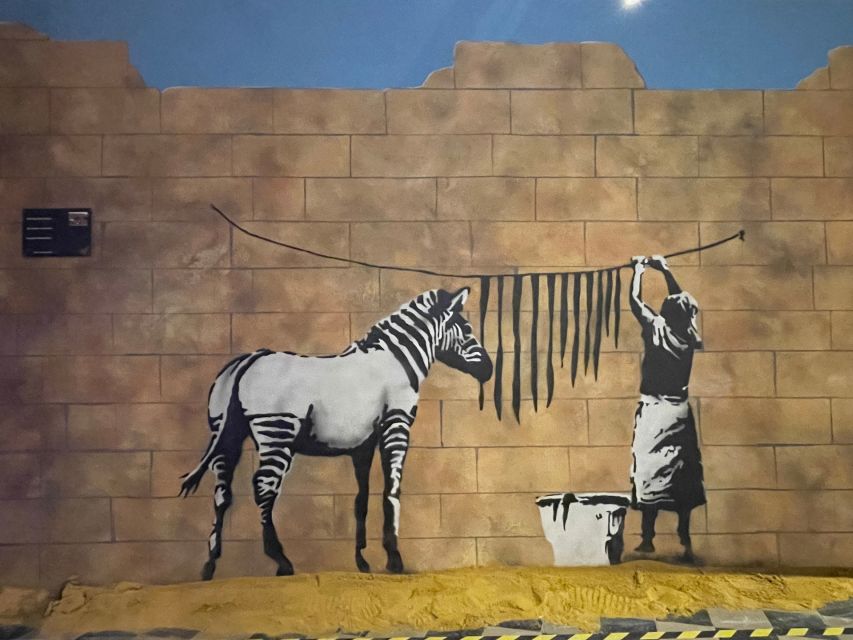
The museum sits in the city centre, near Place De Brouckere and Place Sainte Catherine. That location makes it a handy indoor stop during a day of sightseeing, especially if you want an art experience that does not require a long journey outside the central area.
The building was formerly a fabric house. It is described as a place full of history, though the exhibition itself remains the main attraction. Do not expect a grand, purpose-built art museum with broad galleries and polished architectural flourishes. The building has a more rough-edged character, and that can work well with Banksy’s street-art subject.
The central setting also makes timing simple. You can visit for about an hour, then continue toward Brussels sights, cafés, shops, or the area around Sainte Catherine. If you are planning a full day in Brussels, this is an easy activity to fit between other stops rather than a destination that takes over your entire schedule.
What you see on the first floor
The visit is self-guided, so there is no set group pace and no named tour guide leading you from room to room. A host or greeter is available in French, English, or Dutch, while the exhibition information follows the same language choices.
You begin by getting a sense of Banksy’s career and working method. The presentation introduces the anonymous artist and the unusual way street art reaches an audience. Instead of waiting for people to enter a gallery, Banksy places images in public spaces, often where they can surprise people who did not come looking for art.
The early part of the exhibition helps explain why the work became so widely recognized. The pieces tend to use a fast, clear visual language. A child, soldier, police officer, animal, shopping cart, or balloon may carry the main idea. The humor is often spare, and the message can be understood quickly, but the best pieces reward a longer look.
This part of the visit is useful if you know Banksy mainly through a few famous images. It gives you a wider view of the artist’s concerns instead of treating the most recognizable stencils as isolated posters. You can see how similar subjects return in different forms, sometimes with a change in setting that alters the meaning.
The information panels are intentionally brief in many places. I find that helpful when a picture already makes its point and you want to keep moving. If you want a detailed explanation of every work, you may find the labels too thin. Several pieces have context, but not every image receives a long account of its background or symbolism.
The life-size murals and larger rooms
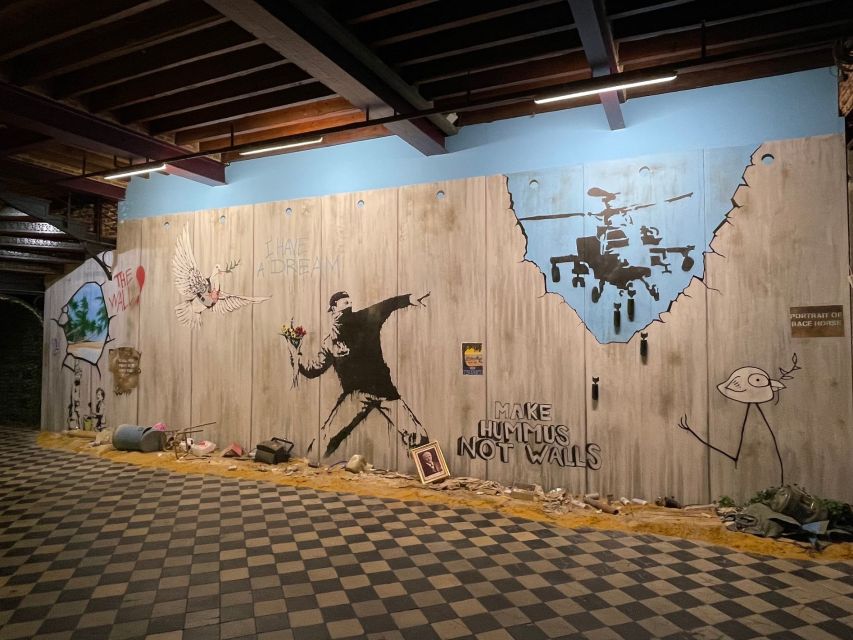
The real-size murals are the strongest reason to visit in person. A phone image cannot show you the physical relationship between a figure, a wall, and the space around it. At full scale, the compositions feel more like public interventions than framed artwork.
The recreated walls also make it easier to understand Banksy’s visual economy. You can see how much impact comes from placing an ordinary figure in an unexpected situation. The image may be funny at first glance, then unsettling when you consider who has power, who is being watched, or who is being ignored.
The exhibition is designed to guide you around the world in one place. It gathers street-art scenes associated with different settings and stages of Banksy’s career, so you do not need to visit multiple cities to see the range of ideas. That is a real benefit for a short Brussels stay.
At the same time, the museum cannot reproduce every part of the original street experience. Outdoor Banksy works were often seen unexpectedly, in relation to a particular neighborhood, building, conflict, or passing crowd. Inside, you know you are looking at a planned display. If the setting and surprise of public art matter most to you, that limitation will be noticeable.
I would treat the murals as a chance to study the images rather than as replacements for seeing street art in its original location. The exhibition preserves scale and visual detail, while the street gives art a changing social setting. The two experiences are different, and this museum is most useful when you understand what it can and cannot provide.
A few more street art tours around the world worth a look
- Medellin: Comuna 13 Graffiti Tour, Cable Car & Street Food
★ 4.8 · 9,046 reviews - Amsterdam: Streetart Museum STRAAT Entrance Ticket
★ 4.8 · 2,137 reviews - Belfast: Murals Taxi Tour
★ 4.9 · 2,047 reviews - Blackbeard to Banksy – The Ultimate Walking Tour of Bristol
★ 5.0 · 1,961 reviews
A second floor with more to consider
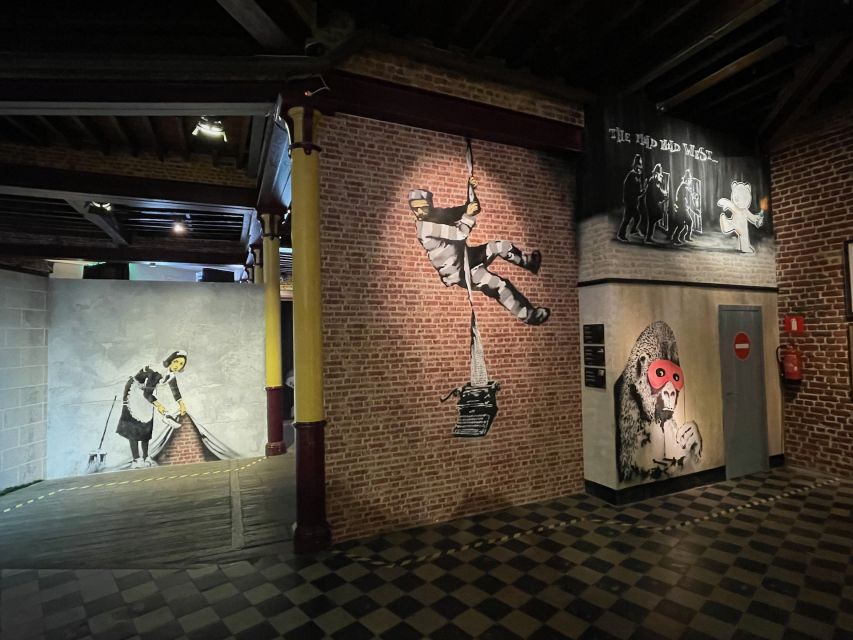
The exhibition continues upstairs, and the second level is part of the reason the visit can last longer than the stated one hour. You can move quickly through the display in roughly an hour, or take 90 minutes to two hours if you read the text, look closely at the murals, and discuss the work with the people you are visiting with.
The upper section gives you more time with the range of Banksy’s subjects. You may find yourself moving between playful pieces and darker ones, with little warning. That shift is part of the experience. Banksy’s work often uses a charming image to lead you toward a serious idea, so the emotional tone can change quickly.
A calm atmosphere helps here. You are not being hurried through with a large guided group, and the self-guided layout lets you return to an image or pause in front of a mural. You can take photographs and videos, which is useful if you want to remember particular compositions or share the experience later.
The relaxed setup is especially good for solo visitors. You can take your time without worrying about losing a guide or holding up a group. It also works well for couples and families with older children who prefer to talk about the images rather than follow a formal lecture.
The main weakness remains the amount of explanation. If you want background on the exact place where every work appeared, why a particular stencil was made, or how the original piece changed over time, you may need to do additional reading afterward. Think of the museum as a visual introduction with selected context, not a full academic catalogue.
The building, atmosphere, and gift shop
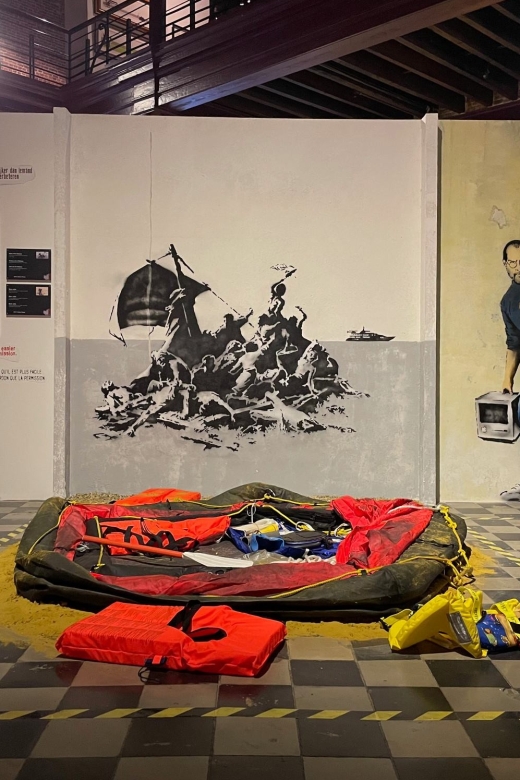
The former fabric house gives the museum a different feel from a conventional gallery. Its appearance may seem unappealing from the outside, and the interior does not have the polished feel of a major national museum. That is not necessarily a problem. The less formal setting fits art that began outside official cultural institutions.
Inside, the atmosphere is quiet and relaxed. You can look closely without a sense that you must rush to the next room. The exhibition is also described as clean and comfortably maintained, with a temperature that makes it easy to stay for a while.
Photography and video are allowed, which adds value at this price. You can record the scale of the murals and keep images of the works that speak to you. Be considerate of other people in the rooms, especially when a popular piece draws attention.
There is a gift shop at the end. It carries Banksy-related items, and it gives you a chance to take home something connected to the exhibition rather than leaving with only phone pictures. If you are trying to keep the visit inexpensive, the shop is optional, of course, but it can add time to the stop for anyone interested in art books, prints, or souvenirs.
Is $16 good value?
At $16 per person, this is a reasonable price for a central Brussels museum visit lasting about an hour. The value improves if you take your time across both floors and stay for 90 minutes or longer. You are paying for a large number of works, life-size displays, a self-guided format, and a location that is easy to add to a city-centre itinerary.
The price is less convincing if you only want to see original Banksy pieces. The exhibition contains recreations, so serious collectors or visitors looking for authenticated original works should set their expectations accordingly. You are paying for access to a broad visual presentation of Banksy’s work, not for a conventional collection of original street walls.
Teachers can choose a student rate, which may make the visit especially useful for an art, design, politics, or media class. The subject matter gives students plenty to discuss, from public space and authorship to protest art and the role of reproduction.
The booking terms also offer some useful flexibility. You can reserve now and pay later, and cancellation is free up to 24 hours before the visit for a full refund. The ticket is valid for one day, with starting times shown according to availability. Those details help if your Brussels schedule may change.
Who should visit, and who may want more
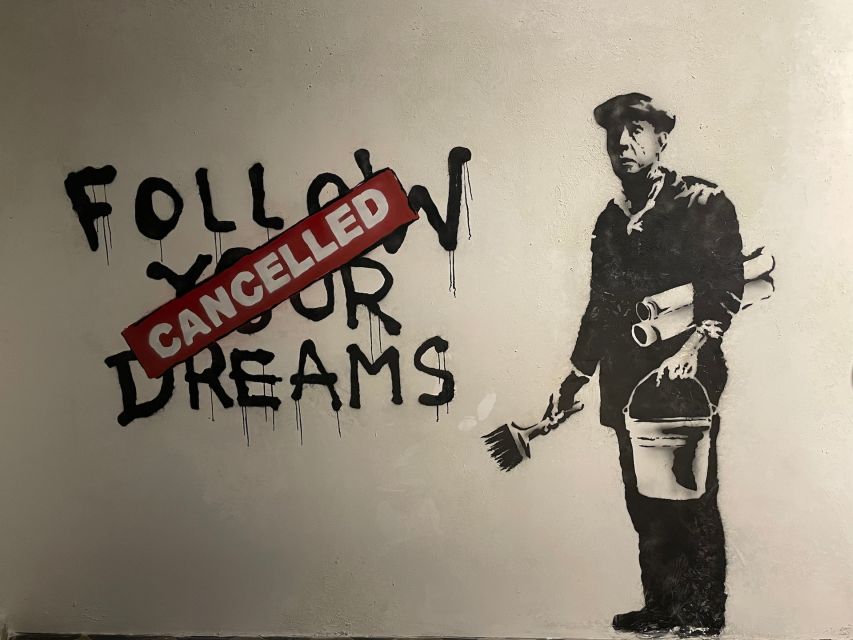
I would recommend this exhibition to anyone who already likes Banksy and wants to see a large range of work in one sitting. It is also a good introduction if you know only the most famous images and want a clearer sense of the artist’s recurring subjects.
Art lovers who enjoy unusual displays should find plenty to examine. The museum is less formal than a standard gallery, and the casual layout makes it easy to follow your own interests. Solo visitors, couples, and families with older children can all use the flexible pace to their advantage.
Teachers and students may find the exhibition especially practical. The short labels provide starting points for discussion, and the visual work is immediate enough to engage people who do not normally spend much time in galleries.
I would hesitate to recommend it to someone who expects a fully guided tour, original works with detailed provenance, or lengthy commentary beside every piece. It is also not a complete physical-access option for wheelchair users, since the exhibition is on two floors and there is no lift. Check with the museum before booking if full access is important to you.
Language should not be a major barrier. The host or greeter and the exhibition information are available in French, English, and Dutch. Since the visit is self-guided, you can also spend more time with the visual material and less time worrying about keeping up with spoken explanations.
Should you book the Banksy Museum?
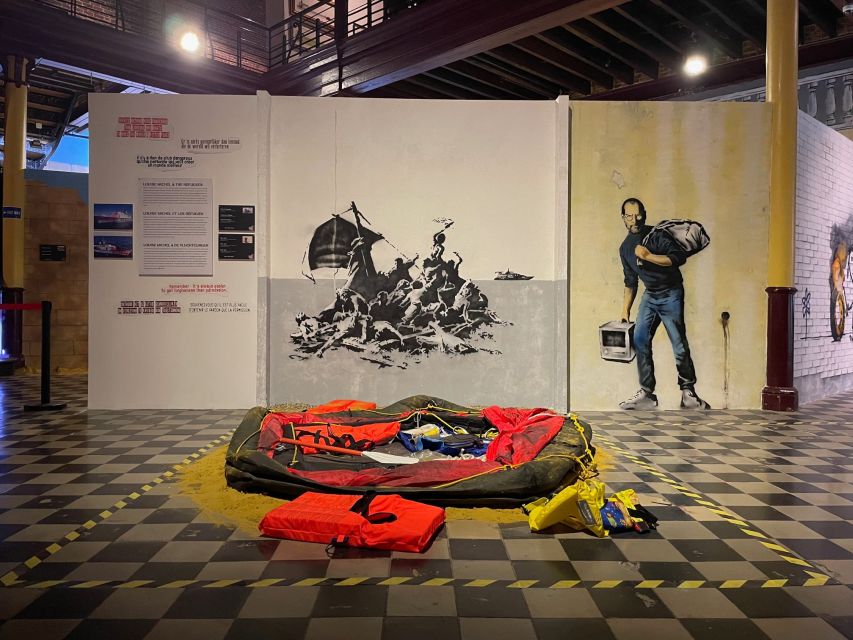
Book it if you want an easy, central Brussels stop with a strong visual focus, a quiet pace, and plenty of life-size art. The best parts are the scale of the murals, the chance to see more than 130 works together, and the freedom to stay for an hour or two without a guide setting your speed.
Skip it if only original street pieces will satisfy you, or if you need a lift between floors. For most people interested in Banksy, though, $16 is fair value for a well-organized introduction that leaves room for your own thoughts. I would plan around 90 minutes, then continue exploring central Brussels nearby.
FAQ
How long does the Banksy Museum visit last?
The included visit is listed as one hour. You can take closer to 90 minutes or two hours if you read the information and spend extra time with the art across both floors.
How many works are included?
The exhibition presents more than 130 pieces of art and life-size murals.
Is the exhibition guided?
The visit is self-guided. A host or greeter is available, and the exhibition is offered in French, English, and Dutch.
Where is the museum located?
The museum is in central Brussels, near Place De Brouckere and Place Sainte Catherine.
Is the museum wheelchair accessible?
Only part of the exhibition is accessible by wheelchair. The display is on two floors, and there is no lift.
Can teachers get a different ticket rate?
Yes. Teachers can choose the student rate.
Can I cancel the booking?
You can cancel up to 24 hours in advance for a full refund. You can also reserve now and pay later, subject to the available booking terms.
Just added around the world
- Xochimilco floating gardens, Coyoacan and UNAM murals★ 4.0 · 6 reviews
- Your Own Belgrade: Street Art and Hidden Gems Walking Tour★ 5.0 · 2 reviews
- Vienna Urban Art Tour: Explore a different side of Vienna!★ 3.8 · 14 reviews
- Wynwood Walls Street Art & Neighborhood Walking Tour★ 4.9 · 9 reviews
- Vancouver: Street Art & Craft Beer Walking Tour with Tasting★ 4.8 · 14 reviews
- Vancouver: Street Art & Craft Coffee Walking Tour w/ Tasting★ 4.8 · 11 reviews
- Urban Canvas: Osaka Street Art Bike Tour★ 5.0 · 10 reviews
- UNAM: Murals & Revolution★ 4.9 · 8 reviews
Street Art Museums and Galleries, compared.
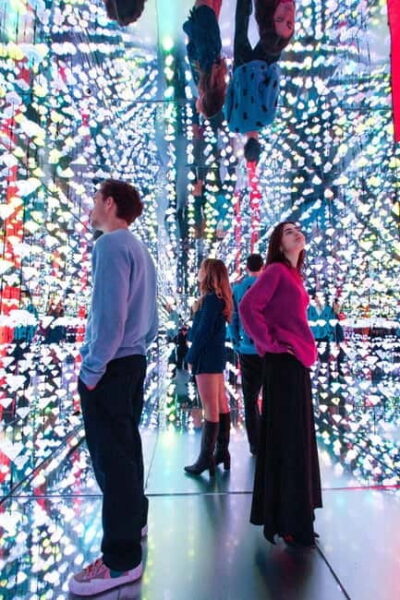
Moco Museum Amsterdam Entrance Tickets with Banksy & More
Read our review →
Xochimilco, Coyoacan, Frida Kahlo Museum & Murals Tour
Read our review →
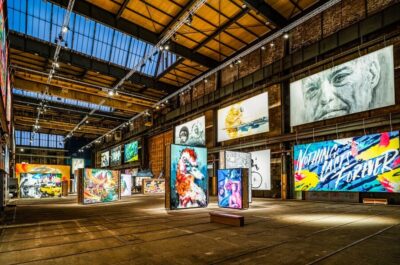
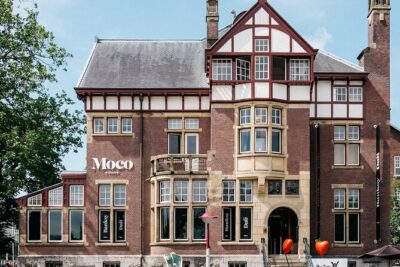
Moco Museum Amsterdam Admission Ticket with Banksy and more
Read our review →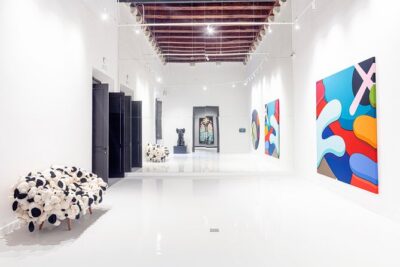
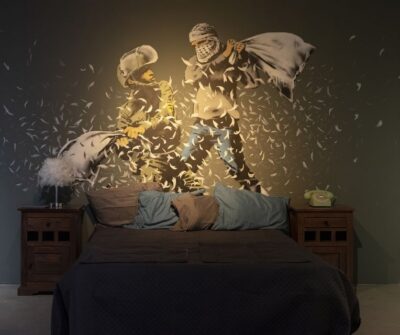
“The World of Banksy” Musée Banksy Entry Ticket
Read our review →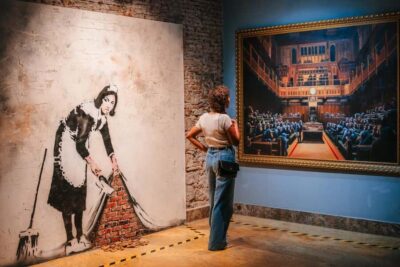
Browse the lists this tour appears in