
REVIEW · GRAFFITI TOURS
Palermo: Graffiti and Street Art Guided Tour in English
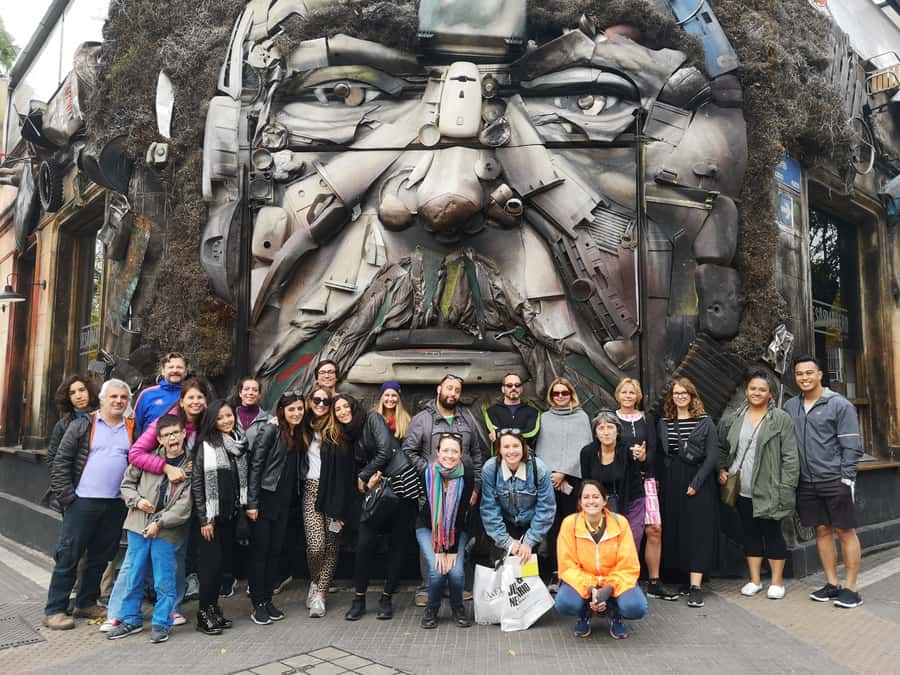
Palermo’s street art is more than a collection of colorful walls. It is a public record of Argentina’s political life, from election propaganda in the 1920s to protest writing in the 1970s. This two-hour walk gives you the stories behind the paint, not just a string of photo stops.
I especially like the clear meeting point at Plaza Serrano and the chance to see the Trump Wall graffiti at Madison Avenue Bar. Guides including Juan, Vito, Victor, and Ailen are praised for mixing art, politics, football, and humor. The main drawback is that a large group can make it harder to hear or examine every piece closely.
Key points to know before you go
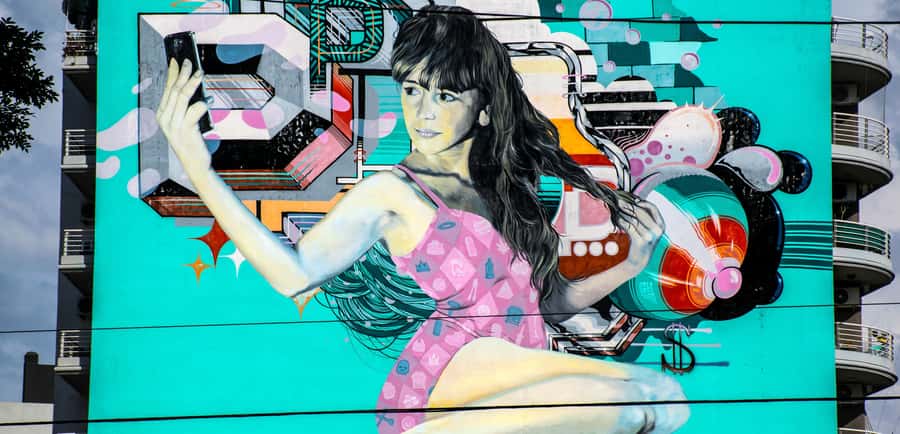
- Political roots: Learn how graffiti served as endorsement, propaganda, and election messaging in Argentina.
- Aerosol changes everything: See why the arrival of spray paint in 1969 mattered to protest movements.
- Strong English-speaking guides: Juan, Vito, Victor, Ailen, Aylen, and Elina are among the guides praised for energy and clear storytelling.
- Useful Palermo route: Begin at Plaza Serrano, also called Plaza Cortazar, and finish at Plaza Inmigrantes de Armenia.
- Good value: At $13 per person, the tour gives you two hours of local context for less than many standard city walks.
- Easy to plan: Meet by the big PALERMO sign, look for the orange shirt, and cancel free up to 24 hours ahead.
Why Palermo street art deserves two hours
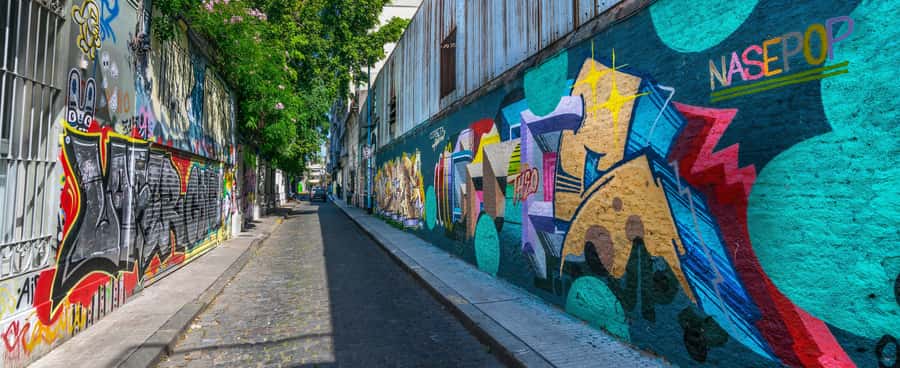
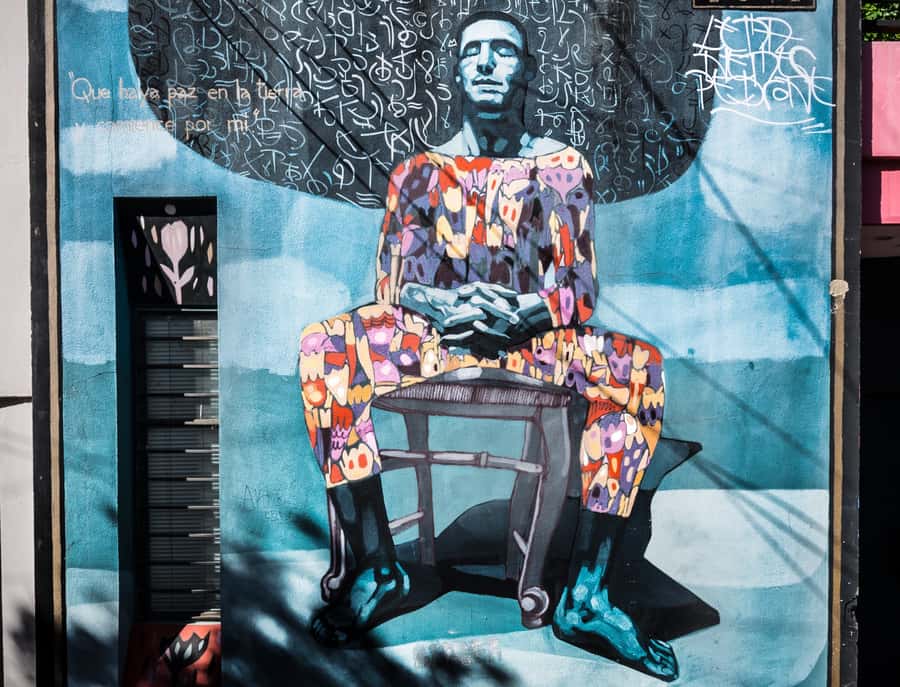
Palermo is one of Buenos Aires’s most eclectic neighborhoods, and this tour uses its walls as a guidebook. You walk through an area often known as Palermo Soho, where murals, tags, political images, football references, and commissioned-looking artwork appear among ordinary city streets.
The point is not simply to count murals. Your guide explains how to read them. A painted wall may tell you about a political campaign, a neighborhood identity, a social conflict, or an artist’s personal style. That extra layer makes the walk more useful than wandering with a camera and wondering what you are seeing.
I like this approach because street art can be easy to photograph and easy to misunderstand. The guide supplies the missing context, then lets you look again with sharper eyes. By the end, you may begin to recognize recurring artists, symbols, and styles elsewhere in Buenos Aires.
The experience is also a good fit if you want an introduction rather than a specialist lecture. The strongest guide accounts describe a light, entertaining tone mixed with solid information. That balance matters on a walking tour: two hours of nonstop dates and political names would be hard work, while two hours of pretty walls without context would feel thin.
More Graffiti Tours in the world:
- Medellin: Comuna 13 Graffiti Tour, Cable Car & Street Food
★ 4.8 · 9,046 reviews - Wynwood Graffiti Golf Cart Small-Group Tour
★ 5.0 · 1,646 reviews - London: Street Art and Graffiti Guided Walking Tour
★ 4.9 · 1,354 reviews
Starting at Plaza Serrano and Plaza Cortazar
The meeting point is Plaza Serrano, also called Plaza Cortazar, at the corner of Jorge Luis Borges and Honduras streets. Look for the large PALERMO sign and a guide wearing an orange shirt.
This is a practical place to begin because the meeting instructions are specific. You do not need to search an entire neighborhood for a particular shop or hotel entrance. Still, give yourself enough time to reach the plaza, especially if you are unfamiliar with Palermo’s streets.
From here, the guide sets the tone for the walk and introduces the neighborhood through its public art. The route is on foot, so wear comfortable shoes and expect to spend the full two hours outside. There is no hotel pickup, and food and drinks are not included, so handle those needs before or after the walk.
The route ends at Plaza Inmigrantes de Armenia. That finish is useful for planning the rest of your day, since you are not returned to the starting point. You can treat the tour as a compact walk across Palermo rather than a round trip.
From 1920s politics to public walls
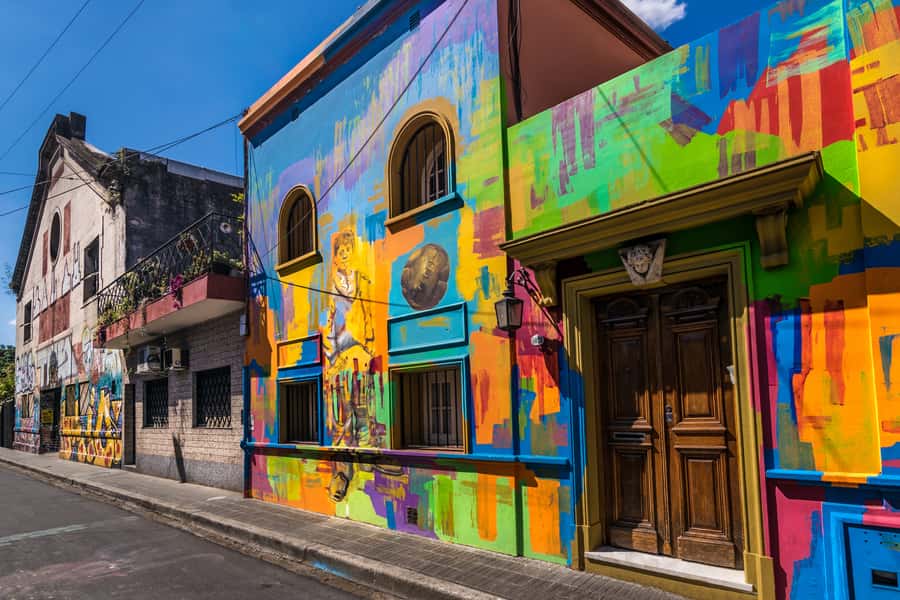
One of the most interesting parts of the experience is the historical opening. You travel back to the 1920s, when political movements were gaining ground in Argentina and graffiti could serve as a direct political endorsement.
This is an important correction to the common idea that street art began as a modern visual trend. In Argentina, writing and painting in public space had political force long before today’s large murals. Messages could support a candidate, promote a movement, or spread propaganda during an election campaign.
Your guide connects those early uses to the social conflicts that followed. You learn how Argentinians became more involved in protesting and how public walls became part of that argument. The art is therefore tied to people, power, and disagreement, not just decoration.
I find this historical thread particularly useful for first-time visitors to Buenos Aires. It offers a way to understand why public writing can carry such weight in Argentina. Instead of treating every wall as an isolated artwork, you see the street as a place where political messages have long been made visible.
The tour does not appear to require prior knowledge of Argentine politics or art. Guides such as Elina and Ailen are praised for explaining the subject clearly, while Juan is often singled out for adding personal warmth and humor. You can ask questions as the walk develops, which helps keep the historical material connected to what is directly in front of you.
The 1969 arrival of aerosol paint
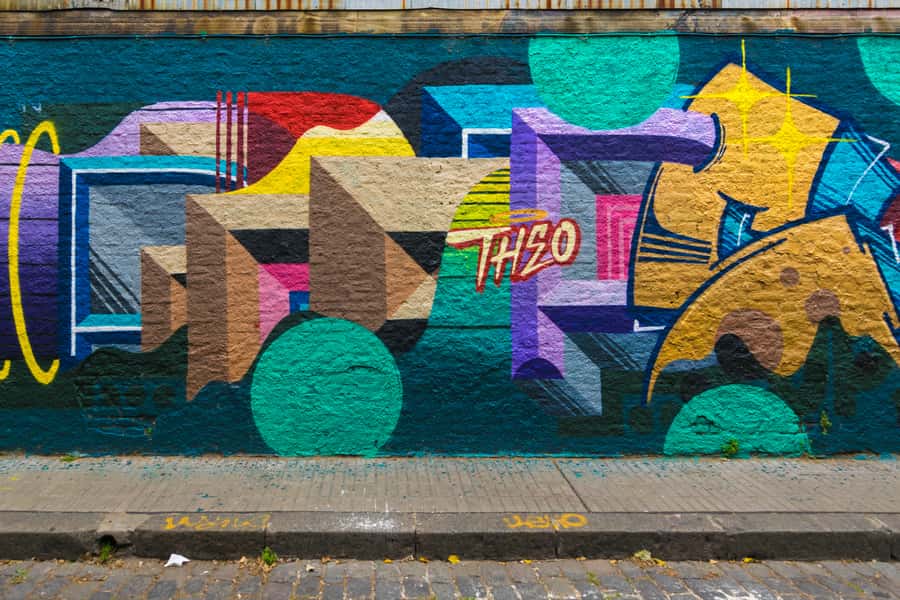
The arrival of aerosol paints in 1969 is another key turning point. Before that, putting a message on a wall could take more time. Spray paint allowed words and images to be made much faster, and that speed changed how urban movements used public space during the 1970s.
This detail gives the tour a practical edge. You are not only learning that protest art existed. You are learning how a new tool changed the pace and reach of public expression.
The guide also explains the effect of a different military government and the growing role of protest. The material becomes a way to discuss fear, pressure, resistance, and social conflict without separating art from the events that shaped it.
For me, this is where the tour moves beyond a standard mural walk. You begin with styles and colors, but you also consider why someone needed to write quickly, why a wall mattered, and how public messages could spread through a city.
The subject may not suit someone looking only for light sightseeing. The political material is part of the main experience, not a short aside. If you prefer a tour focused solely on design techniques or Instagram photos, this may feel more serious than expected. If you like understanding a city through its public spaces, it adds real value.
More Guided Tours in the world:
- Bristol: Blackbeard to Banksy Guided Walking Tour
★ 4.9 · 1,422 reviews - Berlin: City Street Art Guided Walking Tour
★ 4.8 · 1,051 reviews - Glasgow: Street Art Guided Walking Tour
★ 4.8 · 385 reviews - Athens: Guided Urban Street-Art Tour
★ 4.9 · 361 reviews
Murals, football, and the details you could miss
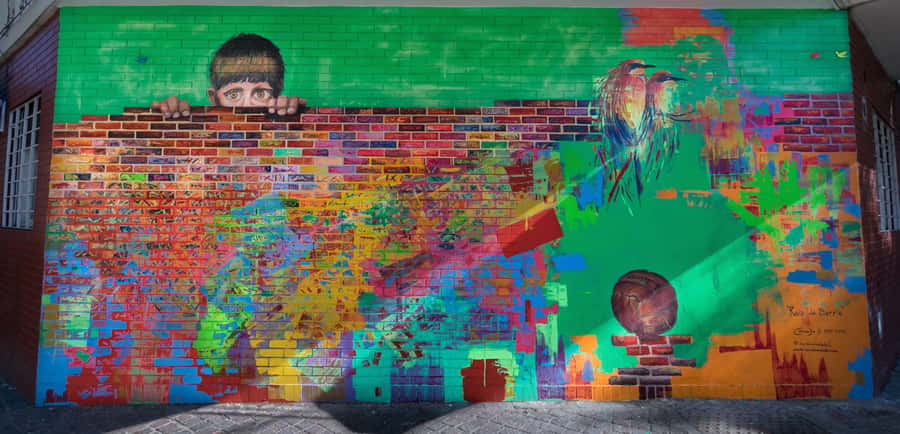
The Palermo route includes different kinds of work. You might see football murals, butterfly imagery, lettering, and other styles placed across the neighborhood. The variety keeps the walk from becoming repetitive and shows that street art does not have one single visual language.
Football is an especially useful local subject. Several guides connect the art to Argentina’s strong football culture, and the tour can help you see sports imagery as part of local identity rather than a random wall theme. You may also hear about how art, politics, and national pride overlap in public spaces.
The Trump Wall graffiti at Madison Avenue Bar is a named highlight and a clear photo opportunity. Your guide places it within the wider street-art route, so it becomes more than a quick picture. Bring a phone or camera if you want photographs, but remember that the purpose of the stop is also to discuss what the image says and why it attracts attention.
One benefit of a guided route is simple: you may pass a piece without noticing it. A guide knows where to look and can point out details that would otherwise blend into the street. That is especially helpful when artwork is tucked beside storefronts, spread across a larger wall, or surrounded by competing signs and colors.
The route is not described as a visit to a museum or a formal gallery. You are outside, moving through Palermo and seeing art in its working setting. That makes the experience feel more connected to daily life, but it also means walls can change over time. Street art is not a permanent collection, and the exact appearance of a neighborhood can shift.
The guide makes or breaks the walk
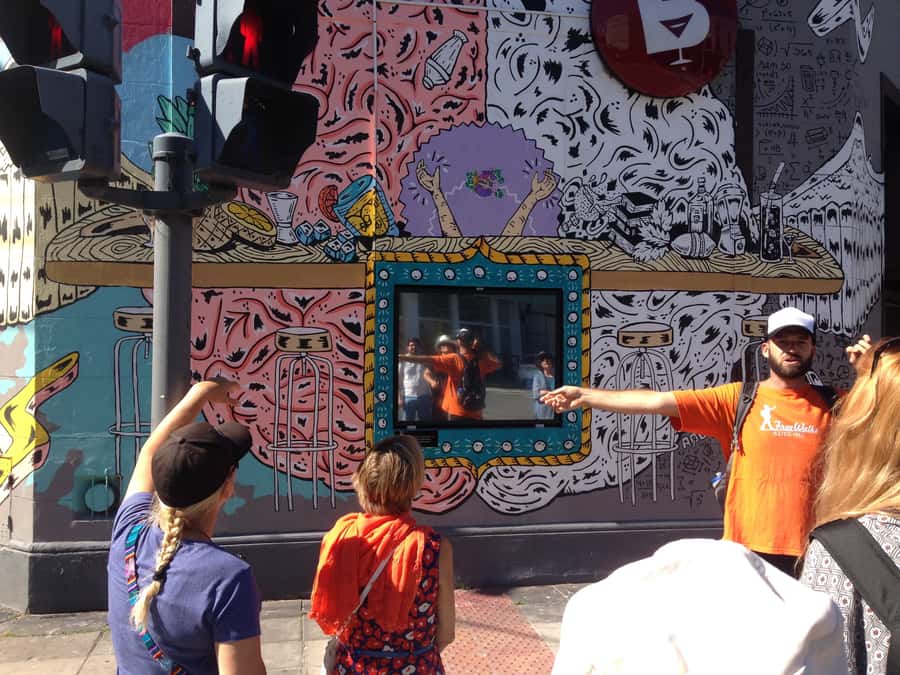
The guide is the most important part of this experience. A good route through Palermo can still feel flat if the explanations are rushed or generic. Here, the strongest guide names include Juan, Vito, Victor, Ailen, Aylen, and Elina.
Juan is repeatedly described as warm, funny, and full of local pride. He is also praised for answering questions about Buenos Aires after the walk, which is handy if this is one of your first activities in the city. Vito is noted for his energy and passion for artists, sports, and politics. Victor is praised for bringing a strong sense of enthusiasm to the subject.
Ailen and Aylen are also mentioned for clear, engaging presentations, while Elina is described as entertaining and well informed about both art and Buenos Aires. Guides may vary by departure, so you should not book solely to obtain one particular person. The consistent point is that the walk depends on an animated guide who can connect visual details with local stories.
Some groups can be large. One account notes that a big group was still well managed and easy to hear, but another practical concern remains: a crowd can make it harder to stand close to a wall or ask a question immediately. Stay near the guide, especially at busy corners, and speak up if you cannot hear.
The tour is in English, and the guide is live rather than audio-based. That gives you a chance to ask for clarification, pause over a detail, or connect the artwork to something you have already seen in Buenos Aires.
Timing, weather, and accessibility
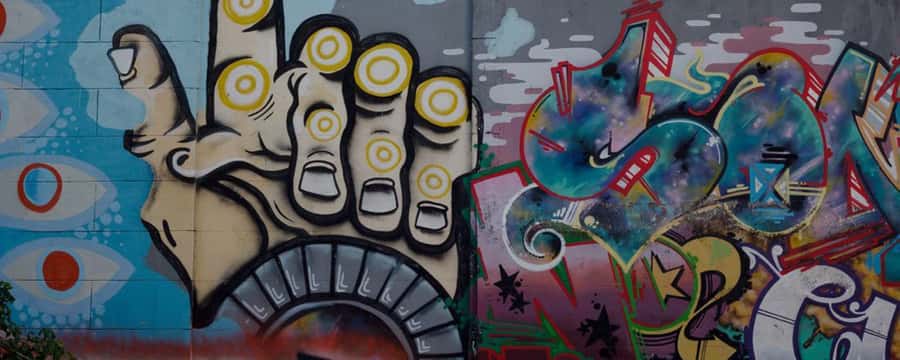
The walk lasts two hours, which is a sensible length for a street-art tour. It gives the guide time to explain the political background without turning the outing into a full-day commitment. Several guide accounts also describe the pace as comfortable and the duration as just right.
The tour operates even if it rains. That is useful in Buenos Aires, where a change in weather should not automatically force you to cancel. Still, bring suitable clothing and shoes, since this remains an outdoor walk with no indoor museum stop listed.
The activity is wheelchair accessible. The supplied information does not describe the exact pavement conditions or restroom arrangements, so you may want to confirm any specific mobility needs before booking.
There is no food or drink included. This is not a problem for most people, since the activity is short, but you should plan a snack or meal separately. Plaza Serrano and Plaza Inmigrantes de Armenia also make clear reference points for arranging the rest of your Palermo plans.
Cancellation is free up to 24 hours before the tour for a full refund. You can also reserve now and pay later, which helps if your Buenos Aires schedule is still changing.
Is $13 a fair price?
At $13 per person, this is strong value if you want context rather than a simple neighborhood stroll. You get two hours with an English-speaking guide, a focused route through Palermo, explanations of Argentina’s political graffiti, and a chance to see notable pieces such as the Trump Wall at Madison Avenue Bar.
The value is even clearer if you would otherwise walk past the same walls without understanding them. The tour does not include transportation, food, drinks, or hotel pickup, but those exclusions keep the price low and make sense for a short walking activity.
You are paying mainly for the guide’s interpretation. That means the experience is best when you listen actively and ask questions. If you only want photographs, you could walk around Palermo on your own for free. If you want the stories, historical links, and artist context, $13 is a modest price.
The overall rating is 4.8 from 684 reviews, and the repeated praise centers on guide enthusiasm, clear explanations, humor, and the way art is connected to Argentine history. One useful note is that a single comment suggested improving the route itself, so do not expect every wall or stop to be equally memorable.
Who should book this Palermo walk?
I would choose this tour if you are interested in political history, public art, football culture, or learning a city through its neighborhoods. It also works well early in a Buenos Aires visit, since the guide can give you useful background about Palermo and the city.
It suits solo visitors, couples, and families with older children who can manage a two-hour walk. The English explanations and clear meeting point make it approachable, while the price keeps it easy to add to a larger sightseeing plan.
You may want to skip it if you dislike outdoor walking, want a polished museum setting, or have no interest in politics and protest. The artwork is the hook, but the history behind it is the heart of the experience.
Should you book it?
Book this tour if you want Palermo to feel like more than attractive streets and good photo spots. You will see murals and graffiti, but you will also learn how public art became tied to elections, military rule, protest, football, and neighborhood identity.
The $13 price, short duration, English guide, accessible format, and flexible cancellation make it an easy choice for most visitors. Just arrive at Plaza Serrano by the PALERMO sign, look for the orange shirt, stay close if the group is large, and expect the strongest moments to come from the stories behind the walls.
FAQ
Where does the Palermo street-art tour start?
It starts at Plaza Serrano, also called Plaza Cortazar, at the corner of Jorge Luis Borges and Honduras streets.
Where does the tour finish?
The walk finishes at Plaza Inmigrantes de Armenia.
How long does the tour last?
The guided walking tour lasts two hours.
What language is the tour in?
The tour is conducted in English by a live guide.
How do I find the guide?
Look for the guide wearing an orange shirt near the large PALERMO sign at the meeting point.
Is the tour wheelchair accessible?
Yes, the activity is listed as wheelchair accessible.
Does the tour operate in rainy weather?
Yes, the tour still takes place when it rains.
Is food or drink included?
No. Food and drinks are not included.
Can I cancel for a refund?
Yes. You can cancel up to 24 hours in advance for a full refund. You can also reserve now and pay later.
Just added around the world
- Your Own Belgrade: Street Art and Hidden Gems Walking Tour★ 5.0 · 2 reviews
- Xochimilco floating gardens, Coyoacan and UNAM murals★ 4.0 · 6 reviews
- Vienna Urban Art Tour: Explore a different side of Vienna!★ 3.8 · 14 reviews
- Wynwood Walls Street Art & Neighborhood Walking Tour★ 4.9 · 9 reviews
- Vancouver: Street Art & Craft Beer Walking Tour with Tasting★ 4.8 · 14 reviews
- Vancouver: Street Art & Craft Coffee Walking Tour w/ Tasting★ 4.8 · 11 reviews
- Urban Canvas: Osaka Street Art Bike Tour★ 5.0 · 10 reviews
- UNAM: Murals & Revolution★ 4.9 · 8 reviews
Graffiti Tours, compared.
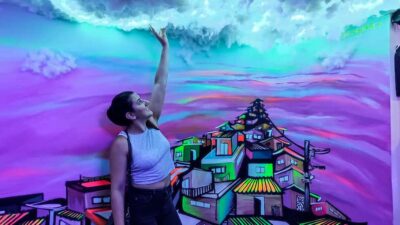
Comuna 13 Graffiti Tour, Cable Car & Street Food
Read our review →
Brooklyn Graffiti & Street Art Walking Tour in Bushwick
Read our review →
Medellín: Comuna 13 Tour with Snacks And Your Own Graffiti
Read our review →
Browse the lists this tour appears in