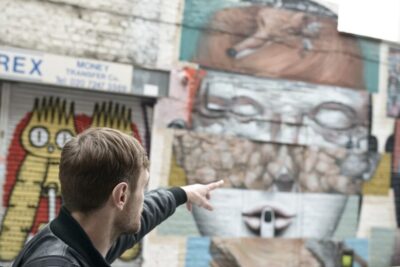
REVIEW · TOURS
Nairobi: Kibera Street Art Tour with Local Artists
Kibera’s most powerful stories are painted on its walls, and this 150-minute walk lets you hear those stories from artists who grew up there. Saviour and Anthony of the Sun Valley Art Collective guide you through murals, studios, artists’ homes, and community projects, adding personal meaning to every stop.
I like the small guide-to-guest ratio, with one guide for every two guests. I also like that your money and attention support local artists directly, especially when you buy a painting or handmade piece. The main consideration is that this is a real walk through an informal settlement, not a polished gallery district, so expect uneven ground, ordinary daily activity, and limited suitability for anyone with mobility problems.
Key points at a glance

- Saviour and Anthony bring personal stories: The guides grew up in Kibera and speak about art, community life, and their own work.
- Murals carry social messages: The paintings cover education, health, politics, hope, and daily life rather than serving as simple decoration.
- Small groups make conversation easier: One guide for every two guests gives you room to ask questions and move at a comfortable pace.
- Street food adds a local taste: Snacks from favored vendors are available on request during the walk.
- Direct artist sales support the community: You can buy paintings, recycled-metal work, and other pieces from local creators.
- The walk ends near transport: Finish at Hof Gallery Kibera, close to Olympic Stage, where you can call a taxi, use Uber, or catch a matatu.
Why Kibera’s art makes this walk different
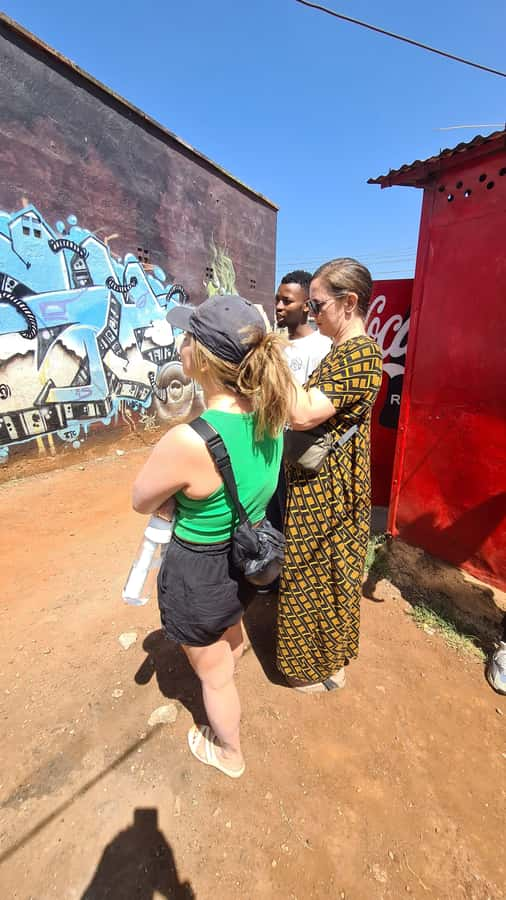
Many city tours show you a neighborhood from the outside. This one asks you to pay attention to the people shaping it from within. Sun Valley Art Collective includes about 15 local artists who grew up in Kibera, and their work gives you a more personal way to understand the area.
The murals are not just colorful backdrops for photographs. They can address education, health care, sport, creativity, social issues, and hopes for the future. Your guides explain who made each piece, what inspired it, and how collaborative projects come together.
I appreciate that the focus stays on the artists rather than on poverty as a spectacle. You will see difficult realities, but you will also meet people building careers, supporting younger residents, and using art as a practical tool for community work.
That balance matters. Kibera is often reduced to a stereotype, while this walk shows a more complete picture. You hear about challenges, but also about local organization, creativity, and the people who choose to remain active in their community.
A few more street art tours around the world worth a look
- Moco Museum Amsterdam Entrance Tickets with Banksy & More
★ 4.4 · 10,088 reviews - Medellin: Comuna 13 Graffiti Tour, Cable Car & Street Food
★ 4.8 · 9,046 reviews - CDMX: Xochimilco, Coyoacan, Frida Kahlo Museum & Murals Tour
★ 4.4 · 3,025 reviews
Meeting at Gateway Supermarket
The walk begins outside Gateway Supermarket on Kibera Station Road, near Jamhuri Estate. You will receive the exact map location, and the meeting area is described as safe.
There is no parking at the starting point, so I would plan to arrive by Uber or taxi. Give yourself enough time to find the supermarket and meet the guide without rushing. This is not the kind of outing where you want to arrive at the last second with a camera bag, food, and water still to organize.
Wear closed-toe shoes that you can comfortably walk in for two and a half hours. A hat, water, and a camera are useful, though you should always ask before photographing people, homes, or active work sites.
Your guides will explain when photographs are suitable. You will be passing people who are going about their day, so respectful behavior matters more here than getting the perfect picture.
Walking through Kibera with local artists

From the meeting point, the tour moves on foot through Kibera. The walking portion lasts about two hours, with several stops along the way.
The route includes murals, artists’ houses, studios, art collectives, and places where local makers display their work. The guides do not simply point at a wall and name the painter. They discuss the reason behind the work, the setting in which it was made, and the issues it addresses.
Saviour and Anthony have a useful connection to the area because they are not outsiders giving a quick explanation. They describe life in Kibera from personal experience and explain their long relationship with art.
That does not mean the walk is a formal art lecture. The appeal is the conversation as much as the information. With such small groups, you can ask how a mural was organized, why certain subjects appear repeatedly, or what it is like to earn money as an artist in the neighborhood.
The ground may be uneven, and the route is not designed for wheelchair users or people with mobility impairments. If you need a slower pace or have another special request, contact the provider before booking. The organizers say they are flexible when they know what you need in advance.
Murals with a purpose
The strongest part of the tour is the explanation behind the murals. Their subjects can include education, health care, sport, creativity, and social concerns. The art helps you notice the ways residents communicate with one another and with people passing through.
Some pieces are collaborative, made by more than one artist. That detail gives the work a different feel from a private painting hanging in a gallery. A mural becomes part of a shared space, and its message can belong to a group rather than one person.
The guides also discuss the social and political side of their work. You are not asked to treat every wall as a cheerful photo stop. Instead, you get context for why a certain image matters and how the artists hope it affects the community.
I would pay close attention to the contrast between the art’s bright surfaces and the serious subjects beneath them. That contrast is one reason the walk feels more thoughtful than a standard street-art outing.
Same walls, a different guide:
- Moco Museum Barcelona Banksy & More
★ 4.6 · 2,340 reviews - Amsterdam: Streetart Museum STRAAT Entrance Ticket
★ 4.8 · 2,137 reviews - Belfast: Murals Taxi Tour
★ 4.9 · 2,047 reviews - Blackbeard to Banksy – The Ultimate Walking Tour of Bristol
★ 5.0 · 1,961 reviews
Meeting the makers beyond the murals

The walk also introduces you to other artists. One stop may include a welder who turns recycled metal into animal figures. Another can take you to an exhibition featuring work by a different local artist.
You may visit a gallery where several artists’ work is displayed for sale, including objects made from recycled glass. The tour can also include the Sun Valley collective’s own studio, where paintings and recycled-metal pieces are shown.
These visits add variety. You are not seeing only large public walls, and you are not hearing only from the two people leading the walk. You get a look at different methods of making art and different ways artists try to earn a living.
The studio stop is especially useful if you are thinking about buying something. You can meet the people behind the work, ask about the materials, and understand where your money goes. Purchases are optional, and artwork is not included in the tour price.
Street food and everyday life
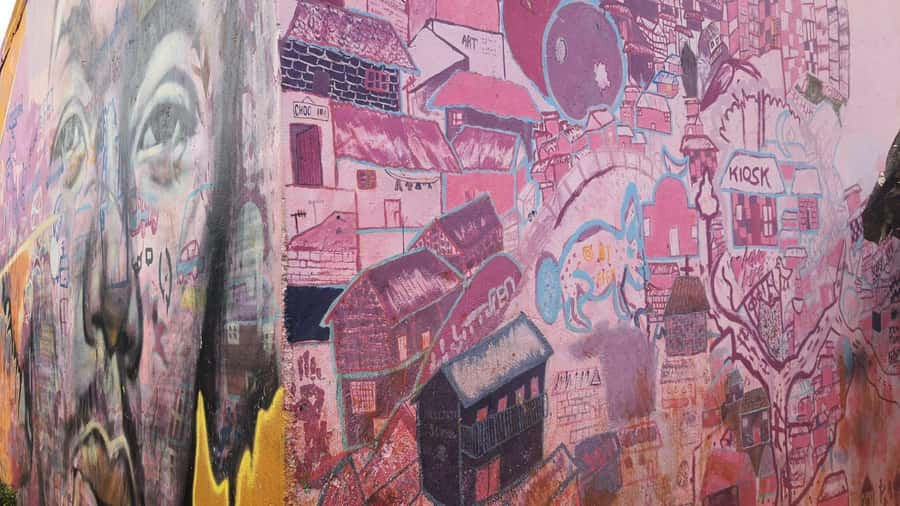
Street-food samples are available on request, and the guides stop at vendors they personally favor. This is a small part of the outing, but it can make the walk feel less like a staged cultural display.
Bring water and a snack in case you need something familiar, especially if you are unsure about trying food from a street stall. If you do want to sample local food, tell the guides ahead of time or during the tour so they can plan around your preferences.
Food also gives you another way to talk with the guides about daily life. The point is not simply to collect a taste. It is to connect the art and the neighborhood with ordinary routines, local businesses, and the people who use the streets every day.
Use common sense with photography and personal space. Ask before photographing vendors or other residents, and follow the guides if they tell you that a certain moment is private.
Buying art directly from the artists
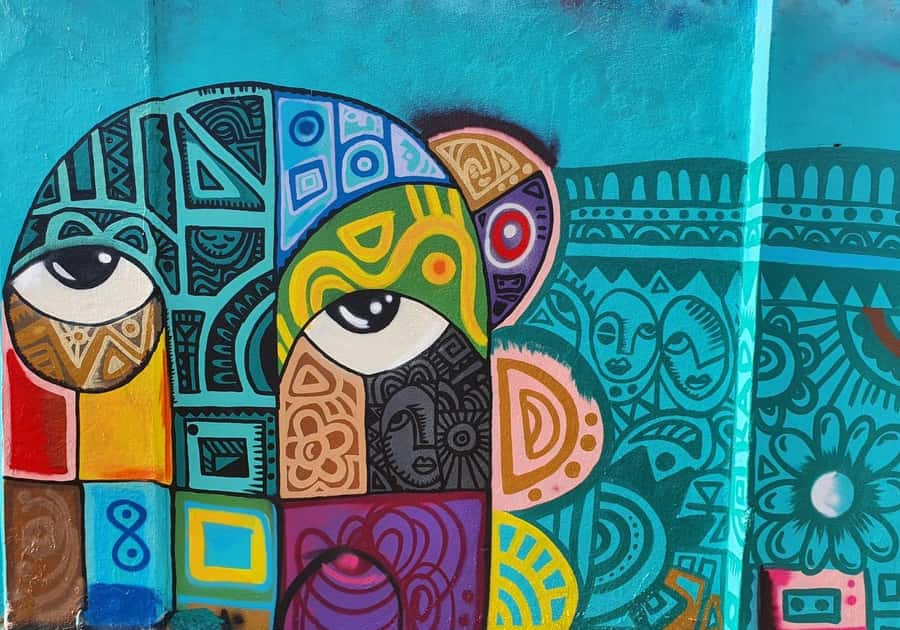
One of the tour’s best practical features is the chance to buy work directly from local artists. You might find paintings, recycled-metal objects, or other handmade pieces at the studios and galleries along the route.
A purchase is not required, and I would not treat it as an obligation. Still, if you see something you genuinely like, buying directly gives the artist a clear form of support and gives you a more meaningful souvenir than a generic Nairobi memento.
The experience can be especially personal if you buy from one of your guides. One visitor bought a piece by Saviour and took it home as a reminder of the day. That kind of purchase connects the object to a person and a story, not just to a place name.
Carry enough room in your luggage for a flat artwork or small object if you think you might shop. The exact pieces and prices are not specified, so ask the artist about size, materials, and payment before committing.
The final stop at Hof Gallery Kibera
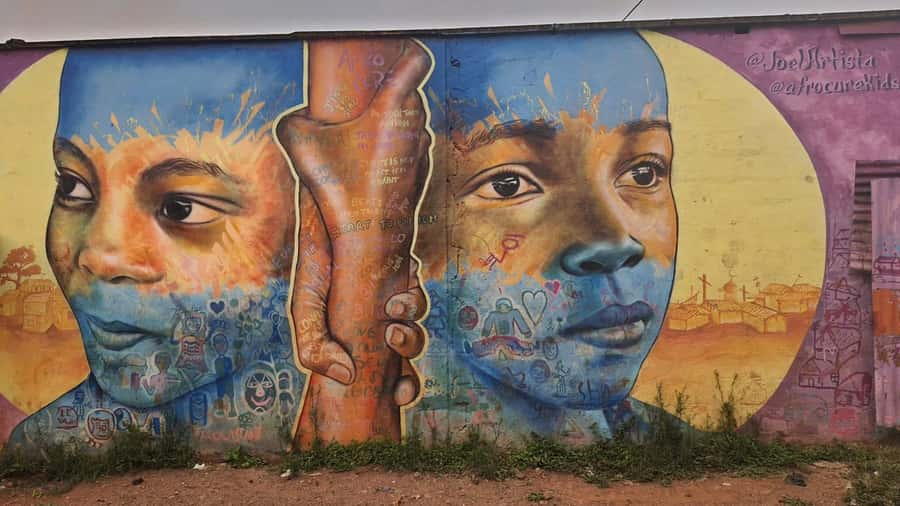
The walk finishes at Hof Gallery Kibera, near Olympic Stage. This gives you a practical place to pause after the route and consider any artwork you have seen.
From the end point, you can call an Uber or taxi, or take a matatu to your next destination. Since the tour does not return you to Gateway Supermarket, plan your onward route before you start.
Ending near a transport point is helpful, but you should still keep your phone charged and have your destination ready. If you are unfamiliar with Nairobi, ask the guides for help calling your ride or identifying the right matatu.
What $45 gets you
At $45 per person, this is not the cheapest way to spend two and a half hours in Nairobi. Its value comes from the access and the small scale rather than from a long list of included extras.
You receive a live English or Swahili-speaking guide, a 150-minute walking tour, visits with local artists and art groups, and the chance to see places you would not easily understand on your own. The one-guide-for-two-guests arrangement is a real benefit because it leaves room for questions and personal conversation.
Street-food samples are included on request, while art purchases cost extra. If you want a polished sightseeing bus, major landmarks, or a museum-style presentation, this is not the right use of your money.
If you want a direct conversation with artists, a closer look at community-led creativity, and a chance to support makers through a purchase, the price is easier to justify. You are paying for time, access, and local interpretation, not just transport between sights.
Who should book this walk
I would recommend this outing to adults and older teenagers who are comfortable walking through an active urban neighborhood and who want more than a quick photograph. It suits people interested in public art, social history, community projects, and meeting artists where they live and work.
It is also a good choice if you have already seen Nairobi’s main sights and want an experience led by local residents. The guides speak English and Swahili, and their personal connection to Kibera gives the conversations a direct, human quality.
This is less suitable if you need smooth paths, a quiet route, or guaranteed access to every stop. It is not suitable for wheelchair users or people with mobility impairments, and the walk requires closed-toe shoes and a reasonable level of comfort on foot.
I would also think carefully about your attitude before booking. Come ready to listen, ask respectful questions, and accept that people are living their daily lives around you. If you approach Kibera only as a dramatic photo setting, you will miss what makes the tour worthwhile.
Simple preparation for a better visit
Wear comfortable clothes and closed-toe shoes. Bring water, a hat, and a camera, but keep your equipment manageable while walking.
Ask before taking photographs, especially inside homes, studios, galleries, or around people who are not part of the tour. Do not litter, and follow the guides’ advice about where to stand and when to move on.
Keep some flexibility in your schedule. The advertised time is 150 minutes, while the broader description allows two to three hours. Conversations, food stops, and studio visits can affect the pace.
The provider offers free cancellation up to 24 hours before the start time, and you can reserve now and pay later. Those policies are useful if your Nairobi plans are still shifting.
Should you book the Kibera street-art tour?
Book it if you want to meet local artists, understand the meaning behind public murals, and see Kibera through the eyes of people who grew up there. The strongest reasons are the small groups, the personal guidance from artists such as Saviour and Anthony, and the chance to support creators directly.
Skip it if you want a conventional sightseeing tour with smooth paths, fixed museum displays, and little contact with ordinary neighborhood life. For the right visitor, though, this is a thoughtful and well-focused way to spend an afternoon in Nairobi, with art providing the doorway into wider stories about work, community, and hope.
FAQ
Where does the tour start?
It starts outside Gateway Supermarket on Kibera Station Road, near Jamhuri Estate. A map location can be provided.
Where does the tour finish?
The tour finishes at Hof Gallery Kibera, near Olympic Stage. From there, you can call an Uber or taxi or take a matatu.
How long does the tour last?
The advertised duration is 150 minutes. The activity information describes the walk as lasting about two to three hours.
Which languages are available?
The live tour guide can lead the experience in English or Swahili.
Is street food included?
Street-food samples are available on request. You should bring water and a snack as well.
Is the tour suitable for wheelchair users?
No. The tour is not suitable for wheelchair users or people with mobility impairments. Comfortable closed-toe shoes are recommended.
Just added around the world
- Your Own Belgrade: Street Art and Hidden Gems Walking Tour★ 5.0 · 2 reviews
- Xochimilco floating gardens, Coyoacan and UNAM murals★ 4.0 · 6 reviews
- Vienna Urban Art Tour: Explore a different side of Vienna!★ 3.8 · 14 reviews
- Wynwood Walls Street Art & Neighborhood Walking Tour★ 4.9 · 9 reviews
- Vancouver: Street Art & Craft Beer Walking Tour with Tasting★ 4.8 · 14 reviews
- Vancouver: Street Art & Craft Coffee Walking Tour w/ Tasting★ 4.8 · 11 reviews
- Urban Canvas: Osaka Street Art Bike Tour★ 5.0 · 10 reviews
- UNAM: Murals & Revolution★ 4.9 · 8 reviews
Tours, compared.
Comuna 13 Graffiti Tour, Cable Car & Street Food
Read our review →
Xochimilco, Coyoacan, Frida Kahlo Museum & Murals Tour
Read our review →
Blackbeard to Banksy – The Ultimate Walking Tour of Bristol
Read our review →