
REVIEW · ATHENS
Private Athens Street Art & Culture Tour
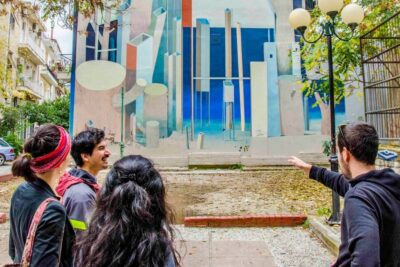
Athens has an open-air art gallery hiding in plain sight. On this private walk, you follow a local street artist through Monastiraki, Psyrri, Metaxourgeio, and Gazi, finding murals and smaller works that are easy to miss on your own. I like the focus on artists such as iNO, Sonke, and Vasmoulakis, and I like that the tour treats graffiti as visual evidence of Athens life, not just colorful decoration.
The three-hour route is private for up to four people, so you can ask questions and shape the conversation around your interests. Guide Eugenia has been praised for her preparation, clear English, and easy conversation. The main consideration is physical: this is a walking tour through smaller streets, and it is not suitable for people with mobility impairments or pregnant women.
Key points to know before you book
- Start at Monastiraki Metro Station: Meet outside on the square, then begin walking through central Athens.
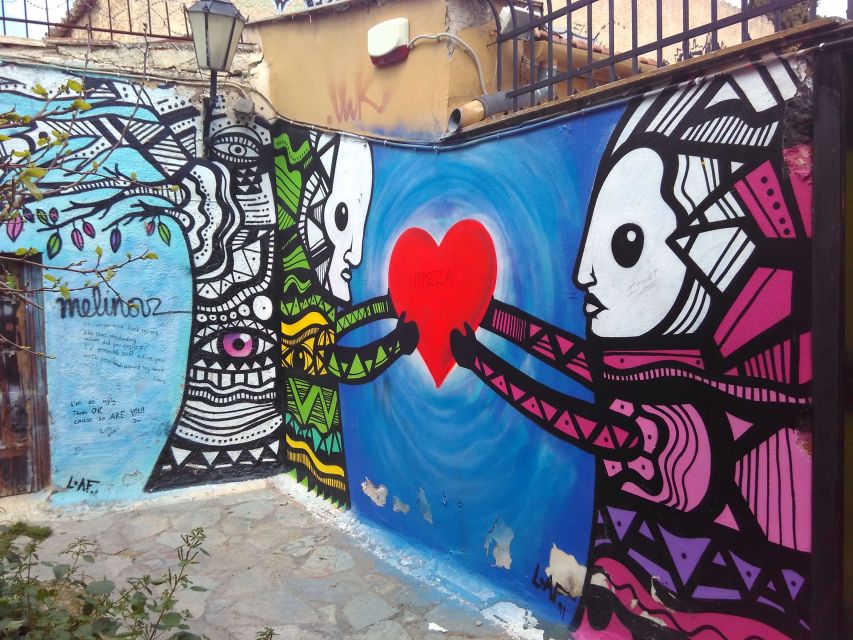
- See several forms of street art: Your guide explains tags, pieces, murals, stencils, paste-ups, throw-ups, bombings, installations, and wild-style graffiti.
- Visit four distinct areas: The route passes through Monastiraki, Psyrri, Metaxourgeio, and Gazi before ending at Omonoia Square.
- Connect art with current affairs: Murals and graffiti are used to discuss social pressure, politics, protest, and the changing face of Athens.
- Enjoy a genuinely private format: The $259 price covers a group of up to four, which can be good value for a family or small group.
- Expect a changing gallery: Street art can be painted over, damaged, or replaced, so the exact works cannot be guaranteed.
Why Athens works so well for street art

Athens gives street artists a city-sized canvas. Blank walls, old buildings, shop shutters, narrow lanes, and neglected surfaces all become part of the scene. The result is not one tidy art district. It is a changing collection of images spread across central neighborhoods.
That change is important. A mural you see today may be covered tomorrow. A small paste-up may last only a short time. This means the tour is less about checking off fixed monuments and more about learning how to read the city as you walk through it.
The guide also explains the basic language of the scene. You will hear about tags, which are stylized signatures; pieces, which are larger and more developed works; and murals, which often take up an entire wall. Stencils, paste-ups, throw-ups, bombings, installations, and wild-style graffiti each have their own look and purpose.
You do not need an art background. The value is in having someone point out what you are seeing and explain why it matters. A wall that first looks like random paint may reveal a careful technique, a political reference, or a conversation with another work nearby.
There is also a useful linguistic footnote. The word graffiti comes from an Italian form linked to a Greek word for writing or scratching. That gives the subject a fitting connection to Athens, even though modern graffiti has developed into a broad international art form.
A few more street art tours around Athens worth a look
- Athens: Guided Urban Street-Art Tour
★ 4.9 · 361 reviews - Athens Street Art Walk
★ 5.0 · 309 reviews - Athens: Guided Street Art Walking Tour
★ 4.9 · 182 reviews
Starting at Monastiraki and reading the first walls
The meeting point is outside Monastiraki metro station on the square. This is a practical place to begin because it is central, easy to find, and already surrounded by a mix of historic Athens, shopping streets, food stalls, and side lanes.
From there, the walk moves away from the most obvious sights and into streets where art appears on building fronts, shutters, walls, and less polished corners. The tour is not designed as a standard parade of famous monuments. Instead, the guide uses the walk to show you how street art fits into ordinary city space.
This is where a private guide makes a difference. You can stop to ask why a certain image was made, how it was produced, or what a term means. You can also ask to spend more time on a style that catches your attention. In a larger group, the pace and subject matter would be less flexible.
Monastiraki can be crowded, so keep your meeting details clear and arrive ready to walk. Food and drinks are not included, and the focus stays on the art and the neighborhoods rather than on a scheduled café stop.
Psyrri: small streets, big visual variety
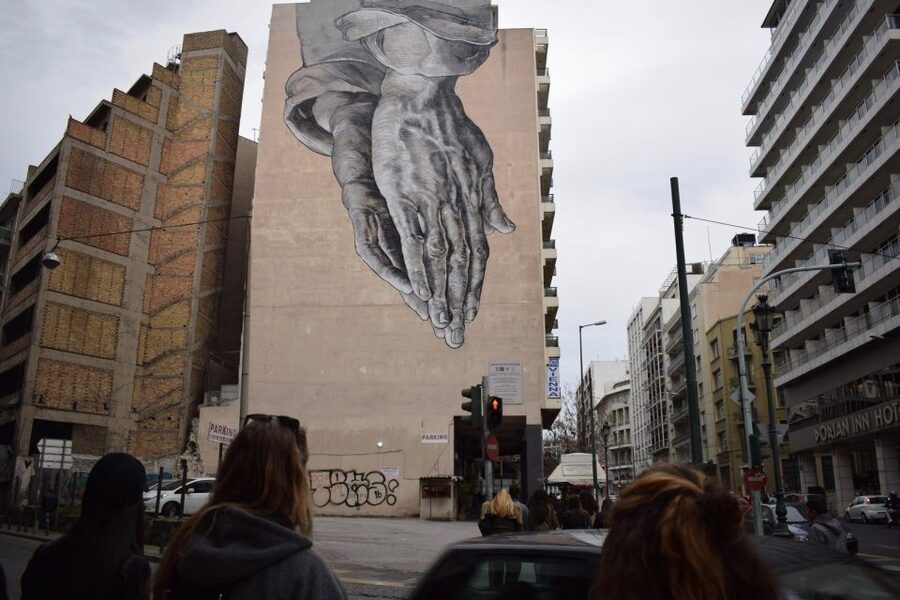
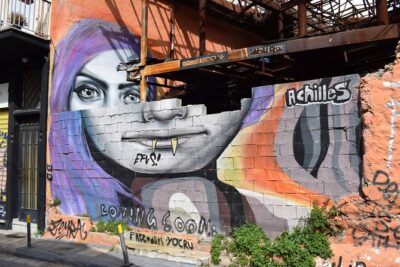
Psyrri is one of the most useful parts of the route for understanding how Athens street art works. Its smaller streets provide many surfaces for tags, layered posters, painted shutters, and larger murals. The setting helps you see the difference between a quick mark and a carefully planned public artwork.
Your guide may point out how different artists use color, scale, and line. The supplied route specifically highlights the bold work associated with iNO and the color of Vasmoulakis. You may also see work linked to artists such as Sonke, though street art is always subject to change.
I like this part of the walk because it encourages you to look at the whole wall, not just the central image. Cracks, old posters, doorways, wires, and neighboring buildings can affect how a piece looks. Street art is made for public space, so the surroundings are part of the composition.
Psyrri also makes a good lesson in the difference between commissioned murals and unsanctioned work. The tour discusses guerrilla art and the reasons artists choose public walls. You will not get a single simple answer. Some work may be personal, some political, some decorative, and some intended to provoke a reaction.
Metaxourgeio and the politics of the wall
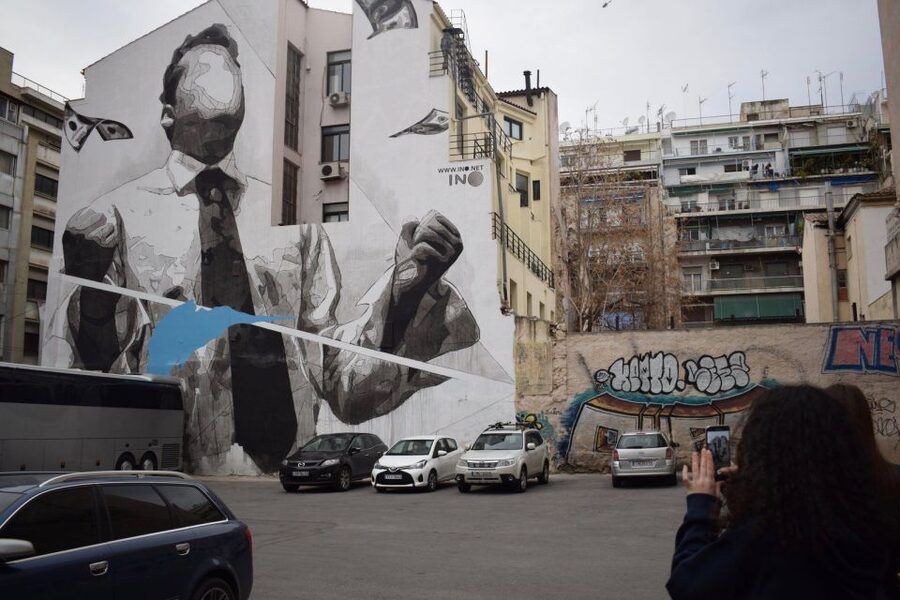
The route continues toward Metaxourgeio, an area closely associated with Athens street art and changing urban life. Here, the guide places images in a wider social and political setting.
Athens has experienced strong political debate, economic pressure, protest, and rapid change. Street artists often respond to those conditions directly. A painted figure, slogan, or distorted portrait can comment on public policy, inequality, policing, identity, or the mood of a particular period.
The important point is that the guide does not simply tell you that a work is political. You learn how to look for clues in the image, the words, the placement, and the technique. A stencil can be repeated quickly. A paste-up can be prepared elsewhere and attached in minutes. A large mural requires more time and visibility. Each method affects the message and the risk involved.
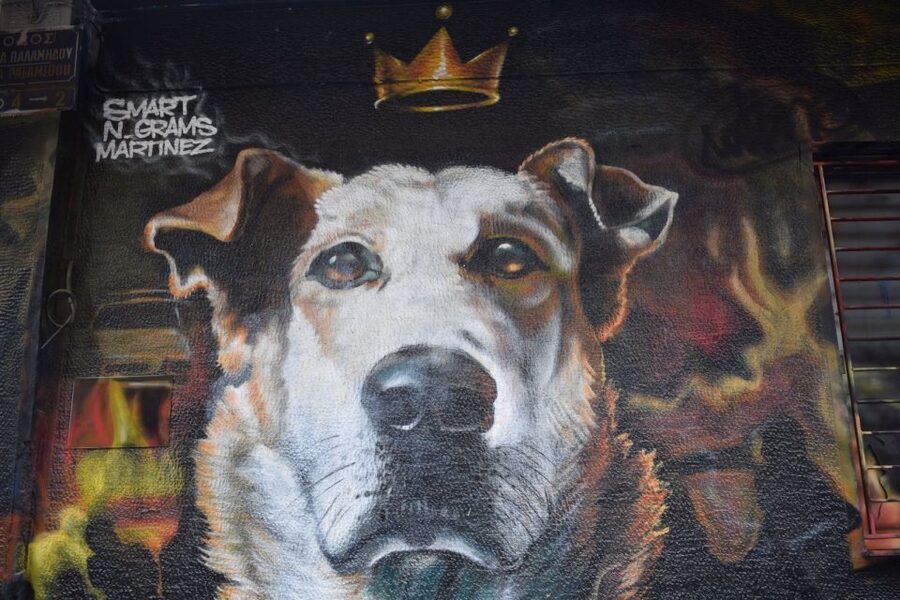
One review from Japan specifically described being drawn to graffiti depicting Loukanikos, the dog associated with anti-austerity demonstrations. That detail shows how Athens street art can preserve pieces of recent public memory that are not always found in formal museums. The subject may be humorous, angry, or symbolic, but it often connects with a real moment in city life.
This is likely the strongest part of the experience for anyone interested in politics, photography, urban culture, or contemporary art. It also requires an open mind. Some images may be confrontational, and the guide may discuss subjects that are not comfortable or neatly resolved.
Same walls, a different guide:
- Awesome Street Art Tour in Athens with a Local Expert Small-Group
★ 5.0 · 150 reviews - Athens Urban Street Art Tour
★ 5.0 · 98 reviews - Athens street art tour
★ 5.0 · 27 reviews - Private Tour: Athens Street Art Walking Tour
★ 5.0 · 23 reviews
Gazi and the changing urban canvas
Gazi is another stop on the walk and adds a different setting to the route. The neighborhood helps show how street art moves through areas that change in character over time.
Here, you may find larger paintings, layered works, and pieces that sit beside newer development. The contrast matters. Street art often appears where old and new Athens meet, and the surrounding buildings can tell you as much about the city as the artwork itself.
The tour describes Athens as a large contemporary gallery, but there is no museum-like control over this collection. Works fade in the sun, walls are repainted, and new artists add their own marks. You should treat the experience as a snapshot of the city at one moment.
That is both a strength and a limitation. You get something personal and current rather than a permanent exhibition. On the other hand, no guide can promise that every named work will still be visible on the day of your walk.
Your guide’s role is especially useful here. She can help separate an intentional piece from background marks and explain how styles overlap. You may see a quick tag beside a detailed mural, or a pasted image partly covered by newer paint. Instead of treating this as visual clutter, the tour asks you to see the wall as an ongoing exchange.
A private tour with room for questions
The private format covers up to four people for $259. That works out to about $65 per person for four participants. For two people, the per-person cost is higher, but you are paying for a private guide rather than joining a large group.
The value depends on your priorities. If you simply want to photograph a few murals, you can explore parts of Athens on your own for less. If you want context, help finding less obvious works, and the freedom to ask questions throughout the walk, the price is easier to justify.
I especially like the format for families, couples, or a small group of friends with different levels of interest. The route can become a conversation instead of a lecture. One verified booking described Eugenia as very prepared and attentive to the group’s wishes, while another praised her enthusiasm and clear English.
The tour is conducted in English and lasts three hours. That is enough time to cover several neighborhoods without turning the experience into an exhausting full-day commitment. It also means you should wear comfortable shoes and expect a steady urban walk, even though the supplied information does not give an exact distance.
The endpoint is Omonoia Square, not the original meeting point. Plan the rest of your day from there. Since the walk finishes in a different part of central Athens, this can be useful if you are heading onward, but you should not assume you will return to Monastiraki automatically.
What the guide adds to the experience
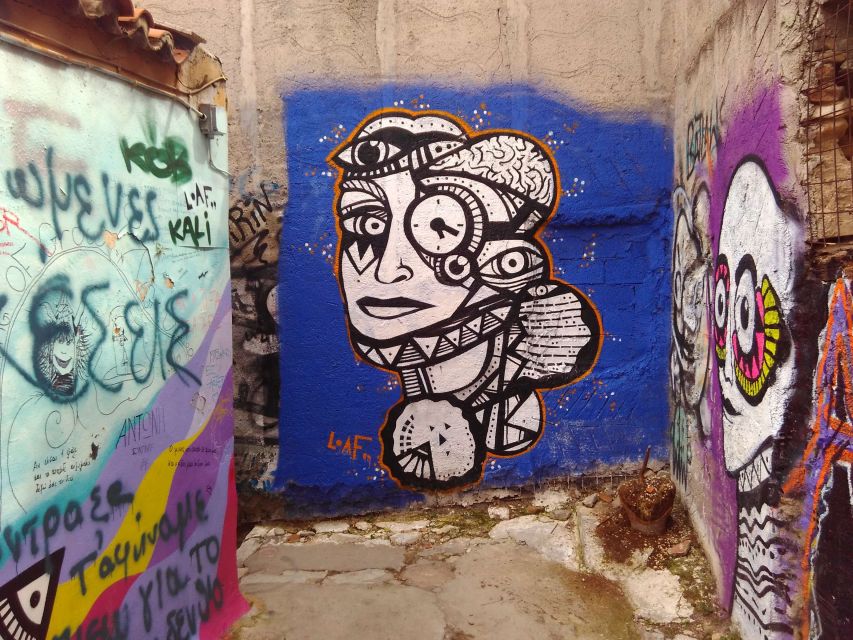
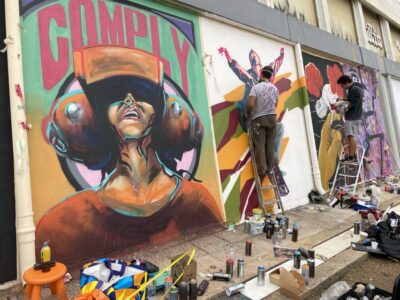
A street art tour can easily become a photo walk with a few names attached. This one aims for more. Your guide is described as a local street artist, which gives the discussion a practical angle.
You can expect explanations of tools, styles, terminology, and the choices artists make in public space. A guide with firsthand experience can help explain why a stencil is useful, how a paste-up differs from paint, or why a mural may be planned differently from a quick throw-up.
The human side of the tour also matters. The strongest praise goes to the guide’s preparation, enthusiasm, pleasant manner, and ability to hold a good conversation. Eugenia is the only guide named in the available information, so you should not assume she will lead every departure. Still, the feedback makes clear that guide quality is a central part of the experience.
One short German review noted that the English was easy to understand. That is useful if you want detailed discussion but do not speak Greek. The tour is offered in English only.
Who will get the most from this walk
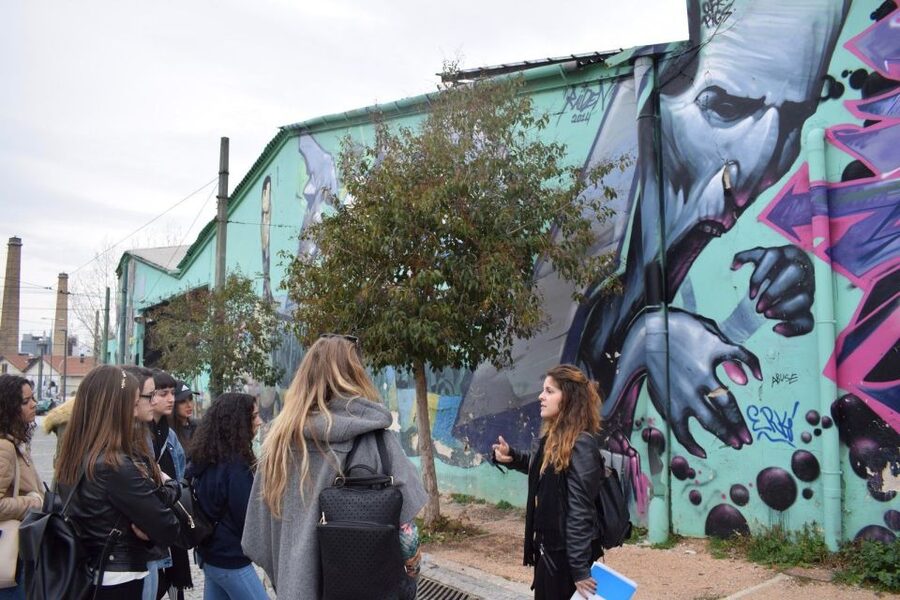
I would choose this tour if you want to understand Athens beyond ancient temples and museum displays. It suits people interested in public art, photography, social issues, youth culture, architecture, and the way cities express frustration or hope.
It also works well for teenagers. One booking from France specifically praised the experience for adolescents. The mix of visual discovery, urban exploration, and political ideas gives younger visitors something more active than a conventional history tour.
Families should note the walking demands. The activity is suitable for all ages in general, but it is not suitable for pregnant women or people with mobility impairments. The streets may be uneven or narrow, and the exact route can change as the guide responds to what is visible.
Art specialists may enjoy the terminology and references to named artists. Complete beginners should also feel comfortable, since the guide introduces the styles along the way rather than assuming prior knowledge.
You should skip it if you want a fixed collection of guaranteed works, a seated activity, or a tour centered on ancient Athens. This is about modern public art and the city around it.
Practical details that affect your day
The tour begins at Monastiraki Metro Station and ends at Omonoia Square. Both are central Athens locations, but they are not the same place, so allow time to continue from the endpoint.
Starting times vary, and you need to check availability for the date you want. The tour lasts three hours. Food, drinks, and personal expenses are not included, so plan any refreshments separately.
You can cancel up to 24 hours in advance for a full refund, and the reserve-now, pay-later option gives you some flexibility while planning. These policies are useful if your Athens schedule is still shifting.
The activity has a rating of 5 from nine reviews, with repeated praise for the guide’s preparation, enthusiasm, friendliness, and English. That is a small sample, so I would treat it as encouraging rather than absolute proof. The consistent point is that the guide is the heart of the experience.
Should you book the Athens street art tour?
Book it if you want a private, discussion-based walk through the modern side of Athens. The route from Monastiraki to Omonoia gives you several neighborhoods, a range of street art techniques, and a useful way to connect images with social and political life.
The $259 group price is strongest for four people. For a couple, it is a more personal but costlier choice. Either way, you are paying for access to a local artist’s eye and for help finding meaning in art that changes quickly.
I would not book it for guaranteed murals or a relaxed sightseeing stroll. Book it for the stories behind the walls, the chance to see areas beyond the standard tourist path, and a clearer understanding of how Athens speaks through paint.
FAQ
Where does the Athens street art tour start?
It starts outside Monastiraki Metro Station on the square.
Where does the tour finish?
The walk finishes at Omonoia Square in Athens.
How long does the tour last?
The tour lasts three hours.
Is the tour private?
Yes. It is a private group experience for up to four people.
What language is the tour offered in?
The live tour guide speaks English.
Is food included?
No. Food, drinks, and personal expenses are not included.
Just added around Athens
- Athens Street Art – Private Walking Tour★ 5.0 · 9 reviews
- Athens Street Art Bike Tour★ 5.0 · 20 reviews
- Athens Food and Wine Walk from Street Art to Greek Dinner★ 5.0 · 11 reviews
- Explore Athens Street Art & Street Food Extravaganza★ 5.0 · 18 reviews
- Private Tour: Athens Street Art Walking Tour★ 5.0 · 23 reviews
- Street Art Tour & Graffiti Painting Workshop in Athens★ 5.0 · 6 reviews
- Athens: Greek Life and Street Art Electric Bicycle Tour★ 4.7 · 16 reviews
- Athens: Graffiti Workshop and Tote Bag Painting Experience★ 5.0 · 9 reviews
Athens Street Art Tours, compared.

Awesome Street Art Tour in Athens with a Local Expert Small-Group
Read our review →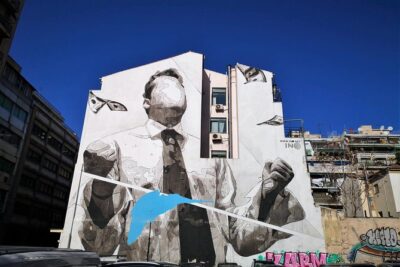
Browse the lists this tour appears in