
REVIEW · LISBON
Lisbon Street Art Tour
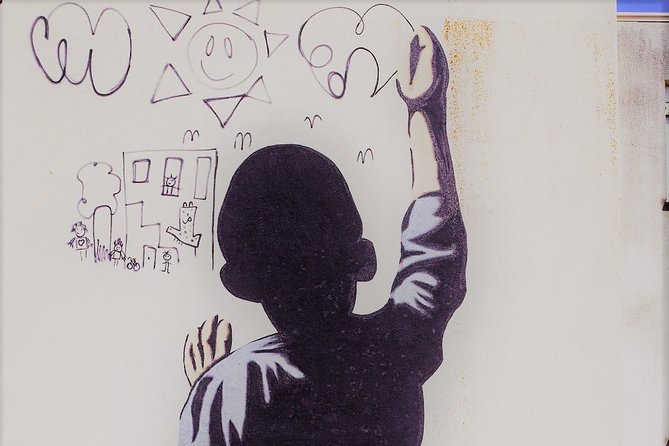
Lisbon’s street art is not confined to one gallery or a neat museum district. It appears on broad walls, tucked-away corners, old façades, and alongside the city’s famous tiles. This two-hour walk through Graça and Mouraria connects those works with the artists, methods, and social questions behind them.
I like the focus on Shepard Fairey, Vhils, and Bordalo II, alongside lesser-known local artists. I also like that the tour treats street art as more than decoration, bringing in politics, public space, gender, and the changing nature of art. The main drawback is practical: Lisbon’s hills and uneven streets make this a poor fit for anyone with mobility impairments.
The tour is led in French by Peter, and the group is limited to eight people. A pastel de nata or ginginha is included, and the route may also include an unexpected musical moment, since one recent outing took a short detour for live fado.
Key points to know before booking
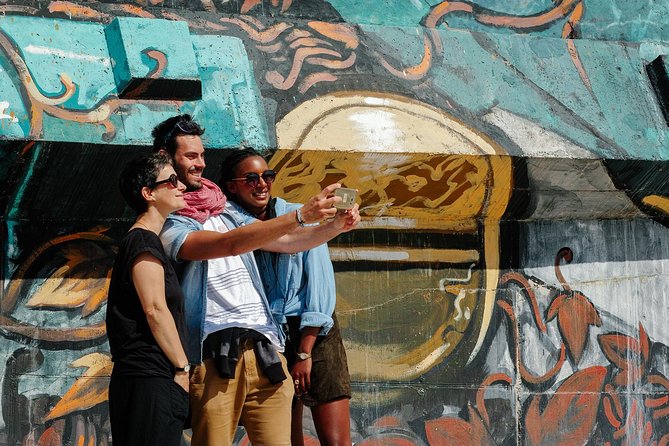
- Graça and Mouraria provide the main setting: You focus on two Lisbon neighborhoods known for a strong concentration of street art rather than trying to cover the whole city.
- The artist list is unusually broad: Expect work linked to Shepard Fairey, Vhils, Bordalo II, TV Boy, Joana Vasconcelos, Andrea Tarli, Urban Solid, and Utopia.
- Peter leads the tour in French: He explains the artists, techniques, and ideas behind each work while keeping the group small.
- Street art is discussed as public debate: The conversation can include social and political subjects, the role of art, and the experience of women in a traditionally male-dominated field.
- Lisbon’s other public art gets attention too: You also look at sculptures and the city’s famous tiles, not just painted walls.
- A local taste is included: Choose a pastel de nata or ginginha, while coffee and other drinks cost extra.
Why Graça and Mouraria make a good walking route

Lisbon’s street art is scattered across the city, so a focused route makes sense. This tour concentrates on Graça and Mouraria, two old neighborhoods where large murals and smaller pieces can appear within the same walk.
That mix matters. A giant wall painting is easy to spot, but small works can reward a slower look. You might pass a piece on a main street, then turn into a quieter corner where the scale changes completely. The tour is designed to point out both kinds of work.
The streets themselves are part of the experience. Graça and Mouraria are hilly, and you should expect some walking on uneven ground. The setting gives the art a strong sense of place, but it also means comfortable shoes and water are sensible choices.
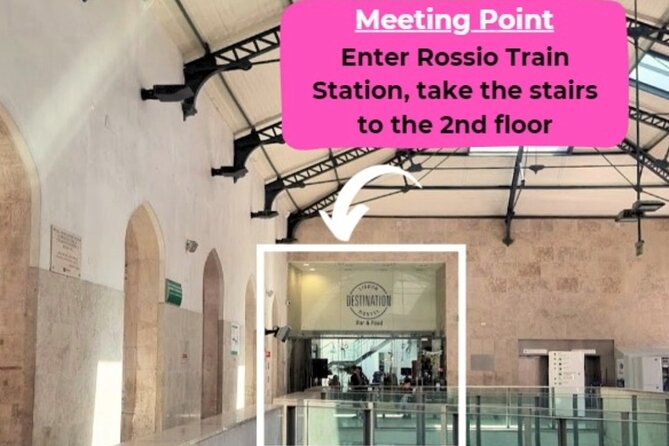
The meeting point is in front of the church. The exact church is not specified in the tour information, so check the booking details carefully before setting out. Do not assume this is a flat route or a simple stroll through one level district.
A few more street art tours around Lisbon worth a look
- Lisbon: Street Art Tour
★ 4.9 · 1,324 reviews - Lisbon: Kickstart Street Art Walking Tour
★ 4.9 · 717 reviews - Lisbon: Banksy Museum Permanent Exhibition Entry Ticket
★ 4.7 · 506 reviews
Shepard Fairey, Vhils, and Bordalo II
The tour includes work by major international and Portuguese artists, giving you several useful points of comparison.
Shepard Fairey is known for bold graphic imagery and strong public messages. Seeing his work in Lisbon helps show how an international street artist can become part of another city’s visual conversation. The guide discusses the work itself, and, when available, the artist’s own words.
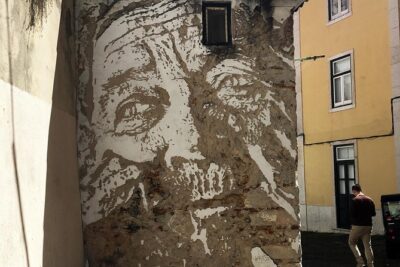
Vhils offers a very different approach. Rather than relying only on paint, his work is associated with carving and removing layers from walls. That makes the building surface part of the image. On this walk, you learn about the technique instead of simply photographing the finished result.
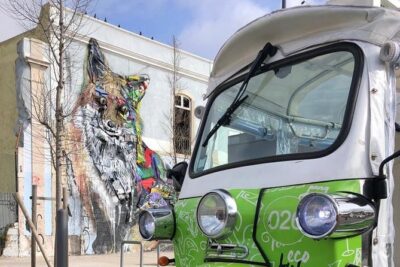
Bordalo II is another important Portuguese name on the route. His work often uses discarded materials and connects art with waste and consumption. That gives the tour an environmental angle, while also showing how street art can be built from objects that would otherwise be thrown away.
The contrast between these artists is one of the tour’s strengths. You are not looking at one repeated style. You see graphic design, altered façades, recycled materials, murals, and smaller pieces, then discuss why each artist chose that method.
Local artists and the smaller works

The route also introduces artists such as Andrea Tarli, Urban Solid, and Utopia. These names may be less familiar to you than Fairey or Vhils, which is exactly why a guide helps.
Without context, a small stencil or painted detail can be easy to miss. Peter comments on each work and explains the technique where it is known. That turns the walk into an active search rather than a simple transfer between famous murals.
TV Boy and Joana Vasconcelos are also part of the artistic mix. Their inclusion broadens the conversation beyond one narrow definition of street art. You consider how public art can overlap with sculpture, installation, popular imagery, and formal contemporary art.
The tour does not promise that you will see every important piece in Lisbon. That would be impossible in two hours, especially in a city where works can change, disappear, or be covered. Instead, the route gives you a manageable introduction to areas with plenty to notice.
How the guide discusses technique and meaning
Each work is commented on, with attention to the artist’s words when those are available. You learn how a piece was made, then consider what it is trying to say.
That structure keeps the tour from becoming a list of artist names. A mural may raise questions about politics, social conditions, identity, or the use of public space. Another may make you wonder where the boundary lies between art, advertising, protest, and vandalism.
I like this approach because it leaves room for disagreement. Street art is not always polite or easy to classify. A strong guide should give you enough context to form your own view, rather than insisting that every wall has one correct interpretation.
The tour also discusses the place of art in society and the nature of art itself. Those subjects can sound academic, but the street setting keeps them concrete. You are looking at actual walls and public objects while asking who gets to make art, who gets to control a city’s appearance, and how long a work should remain in place.
Same walls, a different guide:
- Lisbon: Street Art Tuk Tuk Tour
★ 4.9 · 372 reviews - LISBON Street Art Tour
★ 5.0 · 371 reviews - 3-Hour Guided Street Art Walking Tour of Lisbon
★ 5.0 · 278 reviews - Lisbon Street Art Walking Tour
★ 5.0 · 141 reviews
Women entering a male-dominated scene
One useful part of the tour is its attention to women entering street art, a field traditionally dominated by men.
This topic adds needed balance to the usual focus on famous male muralists. You hear about the changing makeup of the scene and the challenges women face when working in public, large-scale, and sometimes confrontational spaces.
The supplied information does not name specific female artists connected to this part of the discussion, so you should not expect a dedicated list of women or a separate women-only route. Still, the subject gives the tour a wider view of who shapes Lisbon’s public art.
That is valuable if you want more than a photo walk. The city’s walls become a way to consider access, recognition, and who is seen in public space.
Tiles, sculpture, and a short fado surprise
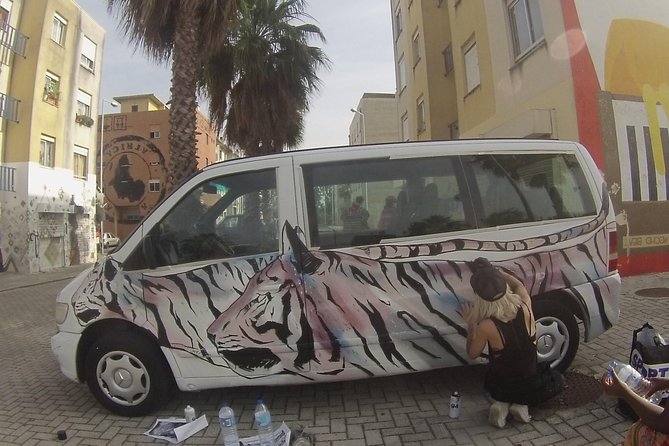
Street art is the main subject, but the tour does not ignore Lisbon’s other visual traditions. The route includes public sculptures and the city’s ubiquitous decorative tiles.
That comparison is especially helpful. Lisbon’s tiles are often treated as background scenery, yet they strongly shape how the city looks and how façades are read. Placing them beside newer forms of public art lets you see that Lisbon has long used buildings and streets as visual surfaces.
Public sculpture adds another layer. It can be more permanent than a mural, but it still changes how people move through a neighborhood. Looking at both sculpture and street art keeps the experience from becoming too narrowly focused on painted walls.
There may also be a pleasant musical addition. One outing included a short detour with a fado singer who performed several songs. This is not listed as a guaranteed feature, so treat it as a possible bonus rather than a promised part of the route.
The included pastel de nata or ginginha
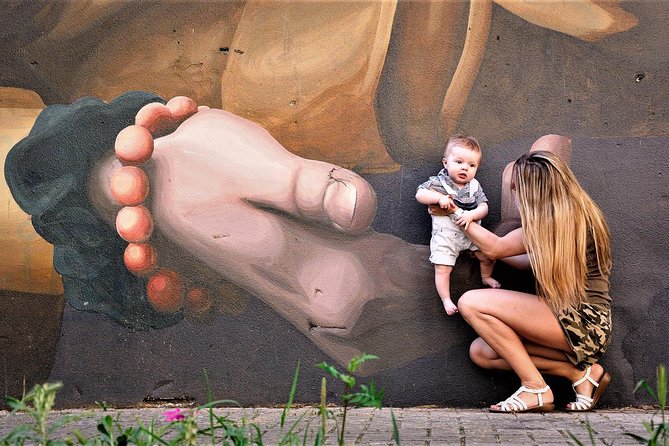
The tour includes one Lisbon specialty: a pastel de nata or ginginha.
A pastel de nata is the familiar Portuguese custard tart, while ginginha is a sour cherry liqueur. You choose between a small sweet bite and a local drink, which gives the walk a modest food and drink element without turning it into a full tasting tour.
Coffee and other hot or cold drinks are not included. If you want coffee with your pastry, plan to pay separately. The inclusion is best understood as a finishing touch, not a major part of the $41 price.
Still, it fits the tour well. After two hours of walking and talking, a simple local specialty gives you a pause and a sense of place. If you do not drink alcohol, the pastel de nata is the obvious choice.
What the $41 price buys you
At $41 per person, this is not the cheapest way to see Lisbon’s walls. You can spot public art on your own for free. The value comes from the interpretation, route planning, and access to a small French-speaking group.
A group capped at eight gives the walk a more personal scale. You should have a better chance to hear Peter’s explanations and ask questions than you would on a large city tour. It also makes stopping at smaller pieces more practical.
The price makes the most sense if you want to understand the work rather than simply collect photographs. You are paying for the connection between artists, methods, and ideas, plus the included specialty.
It is less useful if you already know Lisbon’s street art well or prefer to wander without a fixed route. The two-hour format also means the tour can introduce only a selection of the city’s work. Think of it as a focused orientation, not an exhaustive survey.
The French-language format and guide Peter
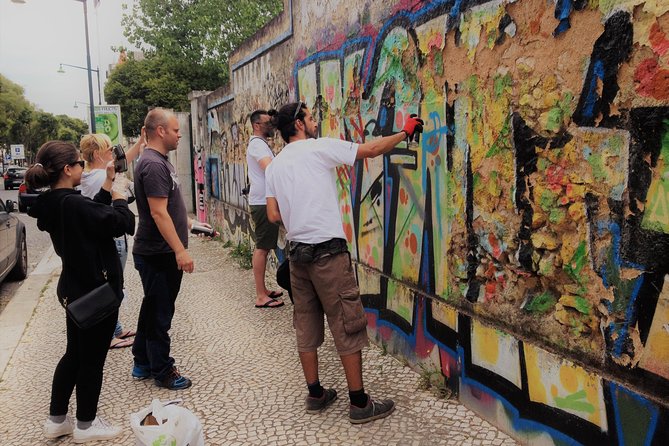
The tour is conducted in French. That is important: the experience is not advertised as multilingual, so you should be comfortable following detailed discussion in French.
Peter’s role is central because the value depends on explanation. He identifies the artists, describes the methods, and connects individual works to larger social and political questions. Recent outings also included a great deal of information about pieces found on both main streets and quieter corners.
The small group helps here. With no more than eight participants, the walk should feel less like a moving crowd and more like a conversation. If you want to ask about a technique or artist, this setting is better suited to questions than a large tour.
The experience has received a current rating of 5 from four verified bookings. That is a very small sample, so I would treat it as encouraging rather than definitive. The repeated praise centers on Peter’s explanations, the variety of art, the Mouraria route, and the unexpected fado moment.
Who should book this walk
I would recommend this tour to you if you enjoy contemporary art, city neighborhoods, photography, or conversations about public space. It works particularly well as an early Lisbon activity because it helps you notice details you might otherwise walk past later.
It is also a good choice if you want to see Mouraria through something other than food or traditional sightseeing. The art leads you into both major streets and less obvious corners, while the surrounding buildings and tiles remain part of the view.
You should be ready to walk for two hours and handle hills and uneven streets. The experience is not suitable for people with mobility impairments, and comfortable shoes are essential.
Families and mixed-age groups may enjoy the visual variety, but the discussion can move into political and social subjects. If you want only quick photo stops, this may feel too talk-focused. If you like asking why a work exists and what it is doing in public, the pace should suit you.
Booking remains fairly flexible. You can cancel up to 24 hours in advance for a full refund, and you can reserve now and pay later. Starting times vary, so check availability for your date.
Should you book the Lisbon Street Art Tour?
Book it if you want a compact, French-language introduction to Lisbon’s street art with real attention to artists and technique. Peter’s small-group format, the focus on Graça and Mouraria, and the mix of famous names with local work give the $41 fee a reasonable purpose.
Skip it if you need a flat route, want a self-guided walk, or expect a full-city survey. Also remember that the fado stop is a possible extra, not part of the stated guarantee.
For the right reader, this is a thoughtful way to see Lisbon’s walls, tiles, sculptures, and social questions in the same two hours. Bring water, wear good shoes, and arrive ready to look up, down, and around the next corner.
FAQ
Where does the Lisbon Street Art Tour take place?
The tour focuses on Lisbon’s Graça and Mouraria neighborhoods, which have particularly strong collections of street art. The meeting point is in front of the church.
How long is the tour?
The walking tour lasts two hours. Starting times vary, so check availability for your preferred date.
What language is the tour conducted in?
The tour is conducted in French by a live guide. The guide named in the tour information is Peter.
Which artists might I see?
The route includes works by Shepard Fairey, Vhils, Bordalo II, TV Boy, Joana Vasconcelos, Andrea Tarli, Urban Solid, and Utopia, along with other local and international artists.
Is food or drink included?
You receive a Lisbon specialty, either a pastel de nata or ginginha. Coffee and other hot or cold drinks are not included.
Is the tour suitable for people with mobility impairments?
No. The tour is not suitable for people with mobility impairments. Comfortable shoes and water are recommended.
Just added around Lisbon
- Street Art Tour by Tuk Tuk Joy★ 5.0 · 2 reviews
- Urban Art City★ 5.0 · 2 reviews
- Street Art – Tuk Tuk Tour★ 5.0 · 17 reviews
- Lisbon Street Art and Lookout Point Tour★ 5.0 · 17 reviews
- The Real Lisbon Street Art Private Guided Tour by Minivan★ 5.0 · 23 reviews
- Private Tuk Tuk of the Old Town Lisbon and Street Art Highlights★ 5.0 · 20 reviews
- Lisbon Street Art – Private Tuk Tuk Tour with pickup★ 5.0 · 17 reviews
- Lisbon Street Art Walk★ 5.0 · 17 reviews
Lisbon Street Art Tours, compared.

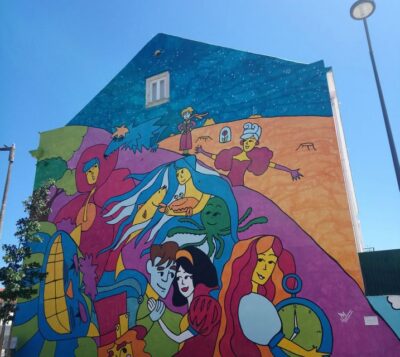

Banksy Museum Permanent Exhibition Entry Ticket
Read our review →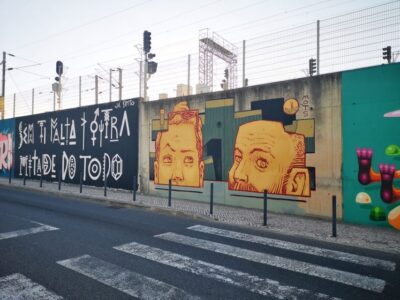
3-Hour Guided Street Art Walking Tour of Lisbon
Read our review →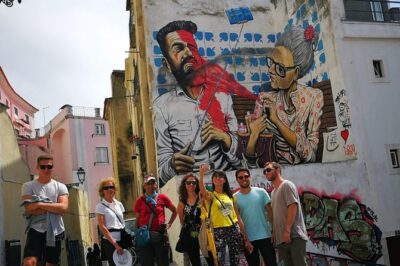
Browse the lists this tour appears in