

REVIEW · LISBON
LISBON Street Art Tour
Lisbon’s street art is not confined to one polished gallery. It climbs stairways, fills old façades, appears beside laundry and tilework, and changes as artists add, paint over, or remove pieces. This three-hour walk takes you through Mouraria, Graça, São Vicente, and nearby Alfama, with local guides who explain both the art and the city around it.
I like the small group limit of 10, which gives guides room to answer questions and point out details you would miss alone. I also like the link between art and place: fado, neighborhood identity, political ideas, and Lisbon’s changing streets all enter the conversation.
The catch is the terrain. You will tackle steep hills and many stairs, sometimes in hot weather or rain. This is not a gentle stroll, so wear solid walking shoes and bring water. A snack is sensible, since the tour uses most of its three hours.
Key points to know before you book
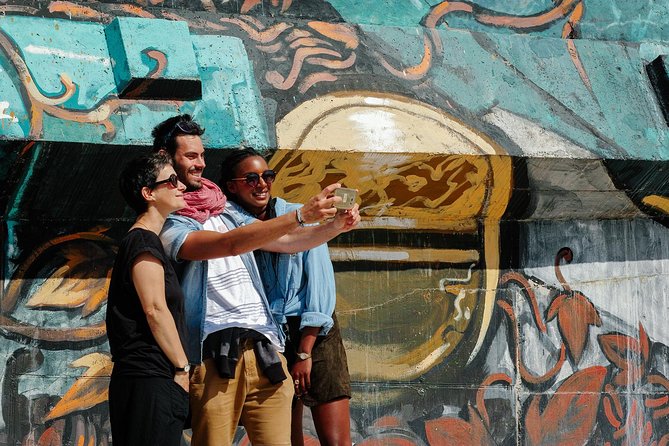
- Mouraria opens the story: Explore Escadinhas de São Cristóvão, where fado, local life, photography, and wall art meet.
- Graça brings the hills: The route includes steep climbs and descents, but rewards you with fine city views and large murals.
- Guides add real context: Guides such as Diogo, Vero, Vera, Ben, and Luisa explain artists, techniques, social issues, and the difference between graffiti and street art.
- The art keeps changing: You may see newly added work, older pieces, and walls altered by weather, city rules, or other artists.
- The group stays small: A maximum of 10 people makes this more personal than a large city walk.
- The price is modest: At $24.20 per person, the tour offers three hours of guided walking through areas you might not find on your own.
Why this Lisbon street art walk feels different

Many city art tours lead you from one famous wall to another. This one uses street art as a way to read Lisbon. You see the work, then hear how it relates to the neighborhood, the artist, and the people who live there.
That distinction matters. A mural is not just a colorful backdrop for a photograph. It can refer to a political movement, a local memory, a music tradition, or the changing use of a street. Guides with direct ties to Lisbon’s art scene bring that extra layer. Diogo and Ben are praised for making the subject clear and lively, while Vero has an academic background in anthropology and a close connection to the city’s art collective.
The tour also helps you notice small work. You might pass large murals without seeing a stencil, paste-up, painted letter, or tiny image nearby. The point is not simply to collect photographs. It is to learn how to look.
That said, the tour depends on the city as it exists on the day you visit. Street art is temporary. A wall may have changed since an earlier walk, and a piece your guide expected to show you may be covered or altered. I see that as part of the subject, though visitors wanting a fixed set of monuments should choose a conventional museum tour instead.
A few more street art tours around Lisbon worth a look
- Lisbon: Street Art Tour
★ 4.9 · 1,324 reviews - Lisbon: Kickstart Street Art Walking Tour
★ 4.9 · 717 reviews - Lisbon: Banksy Museum Permanent Exhibition Entry Ticket
★ 4.7 · 506 reviews
Escadinhas de São Cristóvão and the roots of fado
The walk begins at Largo da Graça 13, then heads toward the streets around Escadinhas de São Cristóvão in Mouraria. The area is closely tied to fado, and the art here reflects more than decoration. Walls and photographs connect the neighborhood with its singers, residents, and long-standing character.
This first section takes about an hour. That is useful because it gives the guide time to explain the setting before the route becomes a hill walk. You are not rushed past a wall after hearing only the artist’s name. You can ask why the work appears there and how it relates to Mouraria.
One memorable feature is the collection of fado singer photographs. These images add a human side to the walk and help you understand how art can honor local figures without looking like a formal monument.
Mouraria is also a good place to see how street art sits alongside ordinary life. The route passes through old streets rather than a dedicated art district. You may be taking photographs of a mural while people go about their daily business. Please keep the volume down, leave doorways clear, and remember that the neighborhood is not simply an outdoor stage.
The climb to Miradouro da Graça
The route then reaches Miradouro da Graça, also known as Miradouro da Graça, Sophia de Mello Breyner Andresen. The stop is listed at about 15 minutes, but the climb deserves more attention than the short viewing time suggests.
Graça sits high above much of Lisbon. Getting there means working uphill, and the route includes stairs. The effort is part of the experience, but it can be demanding if you have mobility limits or are unused to Lisbon’s slopes.
At the viewpoint, the reward is a broad city scene paired with street art. It gives you a chance to pause, catch your breath, and understand the geography of the neighborhoods you are crossing. I would not book this walk expecting a long viewpoint visit, though. This is an art tour first, and the lookout is one brief part of a much longer route.
If you visit in summer, start with water already in hand. If you go in January, an umbrella is a wise addition. Lisbon’s weather can make the hills feel much harder than they look on a map.
Graça and São Vicente: the main art walk

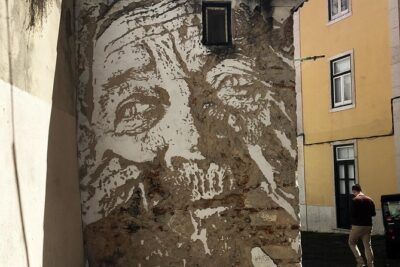
The longest section takes about an hour and a half through Graça and São Vicente. This is where the tour builds its strongest case. The neighborhood has large façades covered by work from local artists and names from outside Portugal, along with smaller pieces tucked into side streets.
The guide explains how the art is made and how different styles fit into Lisbon’s street scene. You will hear about approved murals as well as work that exists outside official programs. The distinction between graffiti and street art is useful here. It helps you see that lettering, tagging, paste-ups, and large commissioned images do not all serve the same purpose.
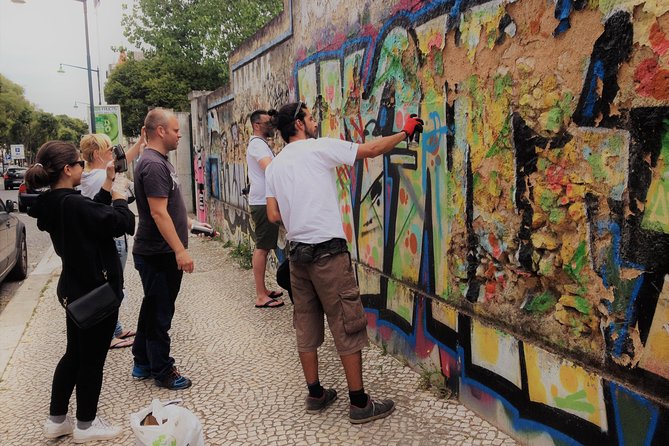
The route also includes the group’s Walls of Fame. This gives you a chance to see a more concentrated display of artists and styles. The walls can be visually striking, but the guide’s explanation is what gives them meaning. You may learn who made a piece, what technique was used, and what social or political idea sits behind it.
The guides bring different strengths. Diogo is described as deeply engaged with the subject and skilled at finding pieces that would otherwise pass unnoticed. Vero explains the cultural side of the work and its connection to Lisbon’s changing identity. Luisa covers both legal and underground art, while Ben brings an easy, informative style. The exact guide varies, so book this for the quality of the subject and format rather than one promised personality.
This part also offers some of the best photo chances. Large walls provide obvious images, but I would keep your camera ready for details around windows, corners, and stairways. Ask before photographing people near their homes, and do not block narrow lanes while framing a shot.
Same walls, a different guide:
- Lisbon: Street Art Tuk Tuk Tour
★ 4.9 · 372 reviews - 3-Hour Guided Street Art Walking Tour of Lisbon
★ 5.0 · 278 reviews - Lisbon Street Art Walking Tour
★ 5.0 · 141 reviews - Tuk Tuk Lisbon: Exploring Urban Art
★ 5.0 · 90 reviews
Jardim Botto Machado and the long azulejo wall
The final listed stop is Jardim Botto Machado, reached after the walk through Graça and São Vicente. The stop takes about 15 minutes and focuses on a long azulejo wall described as the longest in the world.
Azulejos are one of the clearest visual signs of Portugal, so this wall makes a fitting finish. It brings traditional tilework into the same conversation as murals, photographs, and graffiti. The colors can feel more formal than the rougher street pieces, but together they show how Lisbon’s public art moves between old craft and modern expression.
The short stop is enough for photographs and an explanation, but do not expect an extended garden visit. The tour’s real substance remains the walking route and the stories told along it.
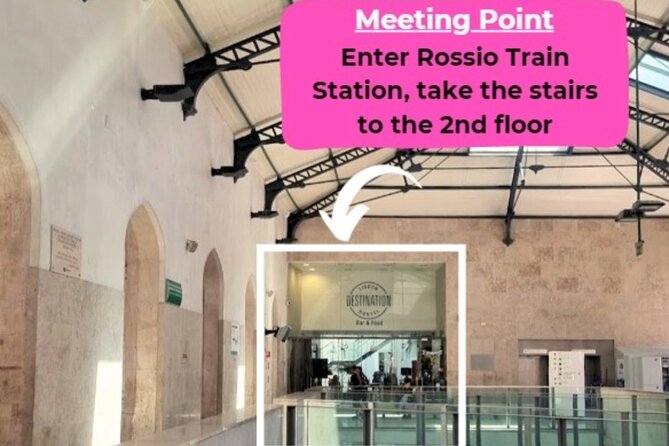
The ending can vary within Graça or Alfama, depending on the time and the group’s energy. The advertised meeting point is Largo da Graça 13, and the tour may finish somewhere in the Graça or Alfama area rather than at the precise starting spot. That is worth noting if you have a timed reservation immediately afterward.
What $24.20 buys you

At $24.20 per person, this is a good value if you would otherwise spend your Lisbon visit walking past art without understanding it. Admission to each stop is free, but the value lies in the guide’s eyes, local context, and route planning.
You receive roughly three hours of company and explanation in a group capped at 10. That works out to a modest cost for a focused neighborhood walk, especially if the guide helps you find additional areas or restaurants afterward. Some walks run longer when the group is small and engaged, but plan around the stated three-hour duration rather than counting on extra time.
The price is less compelling if you want a short, flat introduction. You are paying for a physical walk through hills, not a seated gallery talk. If you already know Lisbon’s street art scene well, you may find fewer surprises, though the changing walls still give the route a fresh element.
The tour is offered in English and uses a mobile ticket. Confirmation arrives when you book. It is often reserved about 20 days ahead, so planning a little early makes sense during popular travel periods.
Walking demands, weather, and group size

The phrase moderate physical fitness should be taken seriously. This is not a technical hike, but you will walk for most of three hours and handle steep uphill and downhill sections. You may also climb hundreds of stairs, depending on the exact route and pace.
Good walking shoes are essential. Smooth sandals, thin soles, or new shoes could make the hills unpleasant. Bring water, sun protection in warm weather, and rain gear in wetter months. January conditions can call for an umbrella.
The small group helps with the physical side. The guide can stop for photographs, explain a wall, and adjust the pace more easily than a large tour could. Still, small does not mean easy. If stairs are difficult for you, this is probably the wrong activity.
Service animals are allowed, and the starting point is near public transportation. The activity is suitable for solo visitors, couples, and families who can manage the terrain. Several guides make an effort to speak with everyone, which can help solo participants feel included.
Who should book this tour
I would choose this walk if you want to see Lisbon through local streets rather than only through major viewpoints and monuments. It suits people interested in art, city culture, photography, architecture, fado, and the way neighborhoods change.
It is especially useful early in your stay. The guide can show you how the hills connect, introduce areas you may return to, and suggest more places to explore. One guide even helped visitors find additional art districts and restaurants after the walk.
Families with older children may enjoy the visual variety, provided everyone can handle the stairs. Solo visitors get a social setting without committing to a large group. Art fans will appreciate the discussion of technique and artists, while people who know little about street art can follow the basic ideas without specialist training.
I would skip it if you want a quiet, flat route, a guaranteed list of famous works, or a fixed ending at the starting point. I would also avoid booking it on a day when you have a tight appointment afterward.
Should you book the Lisbon Street Art Tour?
Yes, if you can manage Lisbon’s hills and want more than a quick collection of mural photographs. The strongest feature is the way the walk connects art with Mouraria’s fado roots, Graça’s neighborhood life, and the social and political ideas behind the work.
Book it for the guide’s interpretation, the small group, and the chance to see parts of Graça, São Vicente, and Alfama that are easy to miss. Wear proper shoes, bring water, allow the full three hours, and accept that the walls may change.
At $24.20, this is one of the more affordable ways to get a focused, local view of Lisbon. For an active visitor who wants to see the city between the monuments, it earns a place on the plan.
FAQ
Where does the Lisbon Street Art Tour start?
The meeting point is Largo da Graça 13, 1170-364 Lisboa, Portugal.
Where does the tour finish?
The tour begins and generally finishes in the Graça area, but the exact ending may be somewhere in Graça or Alfama depending on the time and the group’s energy.
How long does the tour last?
The tour lasts approximately three hours.
How much does the tour cost?
The listed price is $24.20 per person.
What language is the tour offered in?
The tour is offered in English.
How many people can join the group?
The maximum group size is 10 people.
Is the tour suitable for people with limited mobility?
The route requires moderate physical fitness and includes steep hills and many stairs. It may not suit anyone who has difficulty walking uphill or using stairs.
What should I wear or bring?
Wear comfortable walking shoes. Bring water, and consider carrying an umbrella in January or other wet weather.
Can I cancel for a full refund?
Yes. You can cancel at least 24 hours before the local start time for a full refund. Cancellations or changes made within 24 hours are not refunded or accepted.
Just added around Lisbon
- Street Art Tour by Tuk Tuk Joy★ 5.0 · 2 reviews
- Urban Art City★ 5.0 · 2 reviews
- Street Art – Tuk Tuk Tour★ 5.0 · 17 reviews
- Lisbon Street Art and Lookout Point Tour★ 5.0 · 17 reviews
- Private Tuk Tuk of the Old Town Lisbon and Street Art Highlights★ 5.0 · 20 reviews
- The Real Lisbon Street Art Private Guided Tour by Minivan★ 5.0 · 23 reviews
- Lisbon Street Art – Private Tuk Tuk Tour with pickup★ 5.0 · 17 reviews
- Lisbon Street Art Walk★ 5.0 · 17 reviews
Lisbon Street Art Tours, compared.


Banksy Museum Permanent Exhibition Entry Ticket
Read our review →
3-Hour Guided Street Art Walking Tour of Lisbon
Read our review →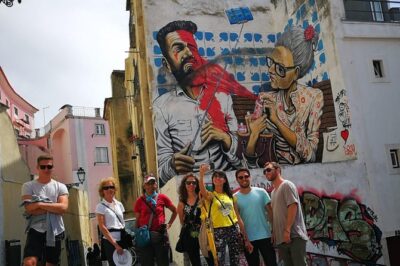


Browse the lists this tour appears in