
REVIEW · GERMANY
Art Nouveau Meets Street Art in Munich (Max. 12 guests)
Munich’s Schwabing district gives this tour its best material: elegant Jugendstil façades, curling floral details, and bold early-20th-century design. Then the walking tour changes gear. You ride the subway to Bahnwärter Thiel and turn those architectural ideas into four spray-painted postcards.
I like the small group, capped at 12 people, and the unusual mix of street-level architecture and hands-on art. I also like that Philipp is both an architect and a certified official Munich guide, so the buildings are not just photo stops. He can explain how the designs work.
The main consideration is the change of setting and pace. After about an hour on foot, you need to travel by subway to the workshop, and the final activity takes place inside a heated shipping container. It is creative and relaxed, but not a traditional sightseeing tour.
Key points at a glance
- Four Jugendstil façades: You study and frame specific architectural details rather than simply walking past buildings.
- Philipp’s architectural eye: Your guide combines formal training as an architect with certification as an official Munich guide.
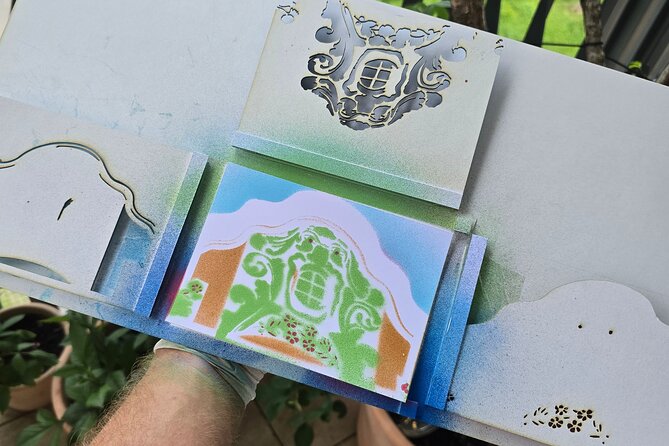
- A spray-paint finale: You make four postcards with stencils based on the Art Nouveau designs seen earlier.
- Small-group format: The group is limited to 12 people, with private bookings available.
- A useful Munich add-on: The price includes a digital map of Philipp’s favorite places in the city and one postcard as a gift.
- Good for beginners: Protective glasses, gloves, masks, and clothing covers are supplied, and no prior art skill is required.
Why Schwabing is the right place to begin
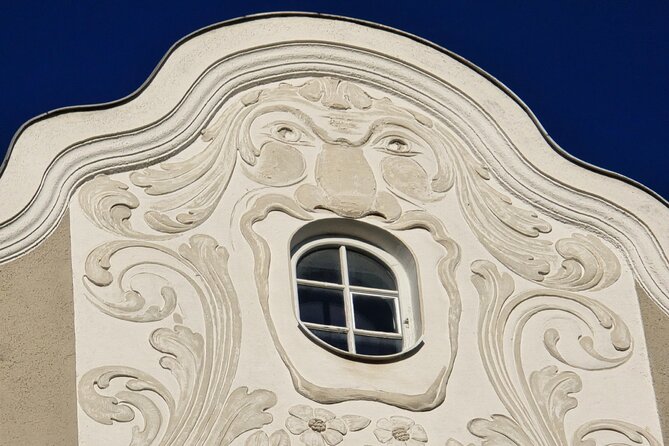
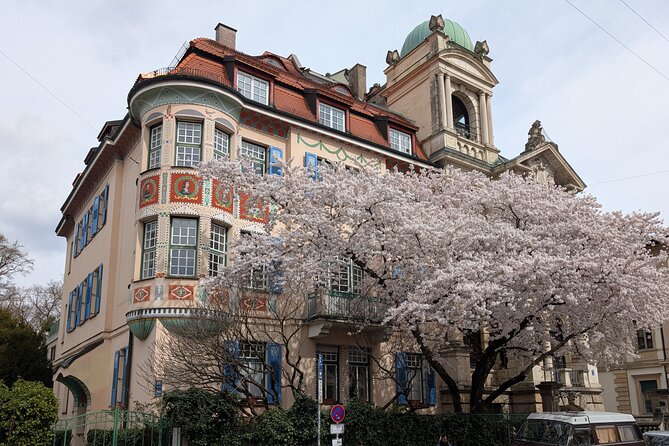
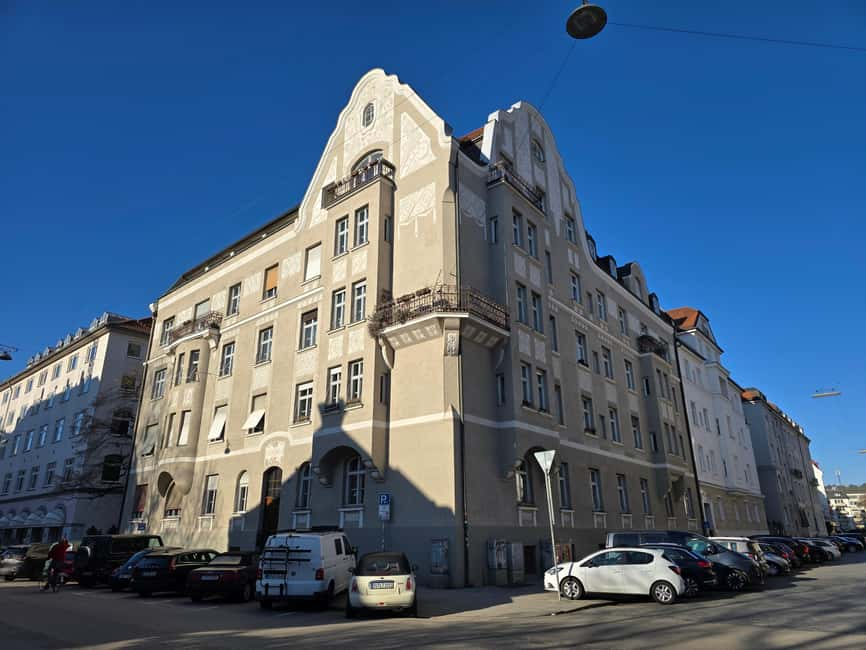
The tour starts at Georgenstraße 7, in Schwabing, the old bohemian quarter associated with Munich’s artistic life. This is a smart starting point because the area is also linked with the rise of German Art Nouveau, known locally as Jugendstil.
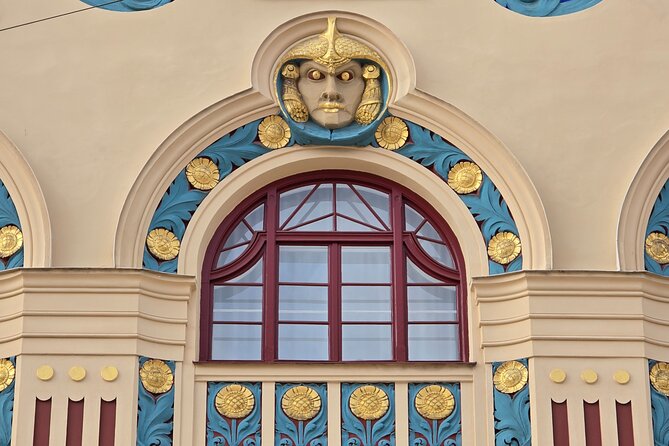
You begin with the buildings themselves. Instead of treating architecture as background scenery, Philipp asks you to look closely at façades, floral motifs, lines, and decorative details. That approach suits the subject. Jugendstil is easy to miss if you only glance at a building from across the street.
The tour also brings in figures such as Wassily Kandinsky and Paul Klee. Their connection helps place Schwabing within Munich’s wider art story. You are not simply learning a list of names. You are getting a sense of why this quarter attracted artists and why its architecture took such a distinctive turn.
The meeting point is in front of the entrance at Georgenstraße 7. Look for Philipp with a tablet slung over his shoulder. From Giselastraße subway station, the walk takes about 10 minutes. U3 and U6 both serve that station, so the starting point is reasonably easy to reach from central Munich.
A few more street art tours around Germany worth a look
- Berlin: City Street Art Guided Walking Tour
★ 4.8 · 1,051 reviews - Berlin: 3-Hour Street Art Tour
★ 4.7 · 778 reviews - Dresden: Neustadt District Street Art Guided Walking Tour
★ 4.3 · 333 reviews
Four façades, studied instead of rushed
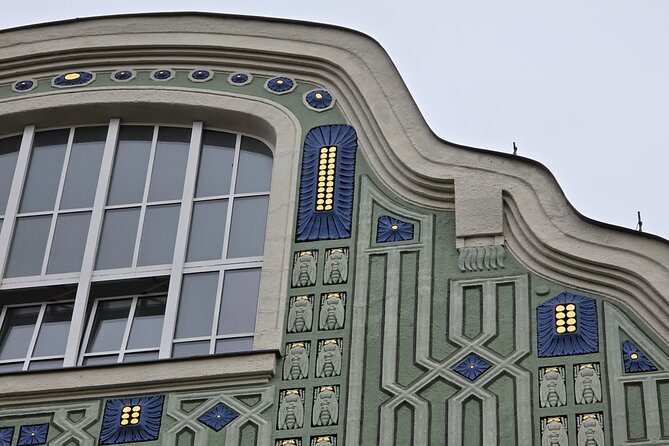
A particularly good part of the format is the decision to focus on four outstanding Jugendstil façades. The tour does not ask you to remember every building in Schwabing. Instead, you examine a smaller number of examples and use them as visual references for the workshop later.
This gives the walk a clear purpose. You look at the shapes and motifs, then consider how they might work as a stencil or graphic design. A floral curve, repeating line, or ornamental frame can become more memorable when you know you will use it yourself.
I like this approach for visitors who often feel that architecture tours move too quickly. You have a reason to pause and frame details with your eyes. It also gives children and first-time art viewers something concrete to do. You do not need to arrive with a background in design.
The downside is that the walking section is focused rather than broad. If you want a long tour covering many Munich landmarks, this is not the right choice. The subject is narrow, and that is part of its appeal.
From Jugendstil façades to Bahnwärter Thiel
After roughly an hour of exploring Schwabing, the group takes the subway to a contemporary art district on a former castle-yard site. The final stop is Bahnwärter Thiel, an arts setting that provides a sharp contrast to the older façades.
This transition is one of the tour’s defining features. You begin with architecture from the Jugendstil period, then move into a modern setting built around creative reuse and street-art energy. The change makes the postcard activity feel connected to Munich today rather than locked in the past.
The workshop takes place inside a heated shipping container. That detail gives the activity a raw, urban character, but it also matters practically. You are not sitting in a polished art studio. The space is part of the creative idea, and it may feel more informal than a museum class.
You should wear comfortable shoes for the walking portion. Smoking is not allowed, and participation is at your own risk. Wheelchair users cannot take part, so accessibility is an important limitation to check before booking.
Making four postcards with spray paint
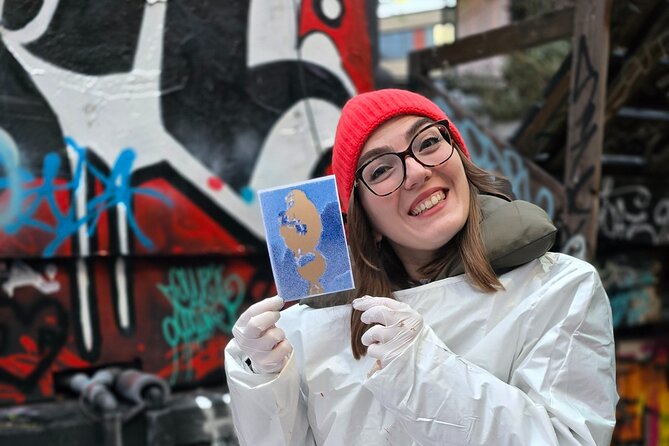
The creative finale is simple enough for beginners. Using spray paint and stencils, you create four postcards based on the Art Nouveau details examined earlier. Supplies include the paint, stencils, envelopes, postcards, safety glasses, protective gloves, masks, and clothing covers.
That setup means you do not need to bring art materials or special clothing. The protective equipment is especially useful for families and anyone who feels unsure about working with spray paint. You can focus on the design rather than worrying about ruining your clothes.
The activity is not presented as a technical art lesson. It is a relaxed chance to translate an architectural impression into something of your own. Some people will enjoy the process more than the finished result, while others will appreciate having four small souvenirs to send or keep.
You also receive a postcard showing one of the tour highlights. Together with the postcards you make, that gives you a physical reminder of the tour rather than only a set of photographs on your phone.
Same walls, a different guide:
- Berlin Street Art Walking Tour – Off The Grid
★ 5.0 · 270 reviews - Berlin: Graffiti Workshop at the Berlin Wall
★ 4.6 · 234 reviews - Cologne: Ehrenfeld District Street Art Walking Tour
★ 4.9 · 202 reviews - East Meets West: Berlin Food Culture & Street Art
★ 5.0 · 157 reviews
Why the small group matters
The maximum group size is 12. That is not an intimate private tour, but it is small enough to keep the experience personal, especially during the close-looking part of the walk and the spray-paint activity.
A smaller group helps when Philipp is explaining a façade. You can ask questions without trying to catch a lecture from the back of a large crowd. It should also make the workshop easier to manage, since everyone needs access to supplies and working space.
The provider offers private groups and can handle special requests or larger groups by arrangement. The regular format is likely the better value for solo visitors, couples, and families who want to meet other people. A private booking makes more sense for a school group, art club, or family gathering that wants the session to itself.
The activity has earned a perfect 5 rating from four verified bookings, with praise focused on Philipp’s preparation, friendliness, passion, and clear organization. That is a small sample, so I would not treat it as proof that every tour runs identically. Still, the comments point to the experience’s strongest qualities: it is carefully planned, informative, and enjoyable rather than a loose walk followed by an unrelated craft.
Philipp’s role as architect and city guide
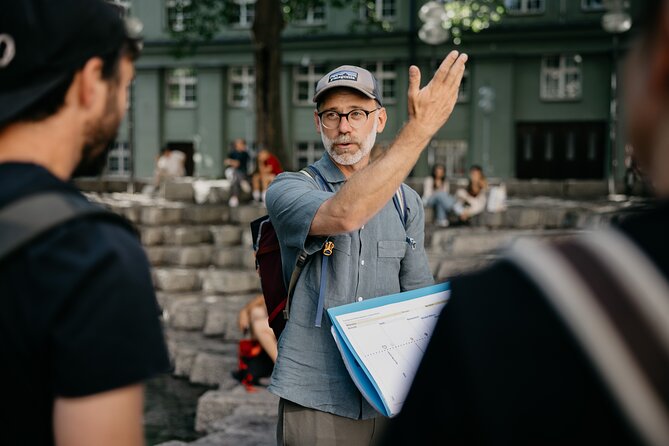
Your guide is Philipp, a local architect and certified official Munich tour guide. That combination is useful here. An architect can draw your attention to proportion, ornament, materials, and design choices. An official city guide can connect those details to Munich’s people, neighborhoods, and art life.
The distinction matters because an Art Nouveau walk can easily become either too technical or too shallow. Philipp’s role is to keep the subject connected to the city. The stories of Kandinsky and Klee add a human side, while the façade study gives the tour a clear visual focus.
The available guiding languages are English, German, and Spanish. The activity is described as bilingual in English and German, so if you prefer Spanish, check the available session language when booking. The guide’s tablet makes him easy to recognize at the meeting point.
The strongest praise directed at Philipp centers on his effort and preparation. For you, that likely means a tour with a planned visual thread: notice the façades, remember their details, then use those details in the workshop. That structure is more satisfying than a general walk with a craft activity added at the end.
The $42 price and what it includes
At $42 per person, this is priced above a basic city walk but below many longer specialty experiences. The value depends on how much you want from the activity.
You are paying for 150 minutes with a specialist guide, a focused architecture walk, the subway transition to the art district, a supervised spray-paint activity, and the materials. The protective equipment is included, as are four postcards, envelopes, and a separate postcard gift. You also receive a digital map with Philipp’s favorite places to visit in Munich.
That package makes the price easier to justify for anyone who wants more than sightseeing. You get explanation, transportation between the two parts of the experience, and a creative activity that continues the theme of the walk.
Food and drinks are not included. You should also account for your travel to Georgenstraße 7 and your journey home from Bahnwärter Thiel. The tour finishes at the art venue rather than returning you to the original meeting point, so plan the rest of your day from there.
For a family, the value may depend on how many people want to participate in the art session. For an adult interested in architecture, the combination is more distinctive than a standard neighborhood walk. It is especially attractive if you want a souvenir you made yourself.
Who will enjoy this experience most

I would recommend this tour to:
- First-time art visitors: You get clear examples and practical visual tasks instead of a dense lecture.
- Architecture fans: The focus on four façades allows time to examine design details.
- Families with creative children: The postcard activity is hands-on and beginner-friendly.
- Couples and small groups: The 12-person limit keeps the experience manageable.
- Visitors seeking a different Munich angle: Schwabing, Jugendstil, and Bahnwärter Thiel offer a break from the city’s main sights.
- People who like useful souvenirs: You leave with postcards, including ones you designed yourself.
It may not suit you if you want a purely historical tour, a large list of landmarks, or a fully accessible route. The subway transfer also means the experience is split into two parts rather than unfolding as one continuous walk.
Practical timing and booking advice
The tour lasts 150 minutes, or two and a half hours. Allow extra time before the start to find Georgenstraße 7, especially if you are walking from Giselastraße station.
Comfortable shoes are the only listed item you need to bring. Protective equipment and art materials are supplied. Since the final activity involves spray paint, the provided mask and clothing cover are useful parts of the setup, not decorative extras.
You can cancel up to 24 hours before the activity for a full refund. The reserve-now, pay-later option helps if your Munich plans are still changing. Starting times vary, so check availability for your chosen date.
The activity is not suitable for wheelchair users. Participation is at your own risk, and smoking is not allowed. These are simple conditions, but they are worth checking before you commit, particularly if you are booking for a family or mixed-ability group.
Should you book Art Nouveau Meets Street Art in Munich?
Book it if you want Munich explained through both its older architecture and its current art culture. The best reason to choose it is the link between the two: you study Jugendstil details in Schwabing, then turn those ideas into four spray-painted postcards at Bahnwärter Thiel.
I especially like the focused four-façade format, Philipp’s combination of architectural and guiding experience, and the fact that beginners can take part without bringing supplies. The perfect ratings from four verified bookings also support the picture of a well-organized and friendly experience, though the sample is small.
Skip it if your priority is a classic city tour, a long architectural survey, or a step-free route. For everyone else, $42 buys a compact, distinctive Munich activity with a clear creative payoff and something personal to take home.
FAQ
How long does the Art Nouveau and street art tour last?
The activity lasts 150 minutes, or two and a half hours.
Where does the tour begin?
It begins at Georgenstraße 7, in front of the entrance to the building.
How do I reach the meeting point?
The easiest route is by subway lines U3 or U6. Exit at Giselastraße station, then walk about 10 minutes to Georgenstraße 7.
Where does the tour finish?
The tour finishes at Bahnwärter Thiel.
Who leads the experience?
Philipp leads the tour. He is a local architect and certified official Munich tour guide.
Which languages are available?
The listed languages are English, German, and Spanish. The experience is described as bilingual in English and German.
What is included in the spray-paint activity?
Spray paint, stencils, envelopes, postcards, safety glasses, protective gloves, masks, and clothing covers are included.
Is the tour suitable for wheelchair users?
No. The activity is not suitable for wheelchair users.
Just added around Germany
- Art Nouveau Meets Street Art in Munich (Max. 12 guests)★ 5.0 · 3 reviews
- Alternative Hamburg Private Alternative Street Art Tour★ 4.5 · 6 reviews
- Street Art Tour Dresden Neustadt★ 4.0 · 15 reviews
- 3-Hour Cologne Street Art Bike Tour in Small Group with Guide★ 4.5 · 20 reviews
- Explore Cologne’s best Street Art Quarter★ 4.5 · 4 reviews
- Open graffiti workshop in the Mauerpark in Berlin★ 5.0 · 2 reviews
- Berlin Private Street Art Tour – Off The Grid★ 5.0 · 9 reviews
- Alternative Berlin & Street Art Tour★ 4.5 · 14 reviews
Germany Street Art Tours, compared.
Dresden: Neustadt District Street Art Guided Walking Tour
Read our review →

East Meets West: Berlin Food Culture & Street Art
Read our review →
Browse the lists this tour appears in