
REVIEW · LONDON
London: East End Instagrammable Street Art & Graffiti Tour
London’s East End is an open-air gallery that changes by the week. On this two-hour walk, you’ll find giant murals, narrow lanes, painted adverts, Banksy work and small pieces that are easy to miss unless someone points them out. The tour also connects the art to Whitechapel, Spitalfields, the old Jewish quarter and Shoreditch.
I like the way the route mixes famous names with work that could vanish under a new layer of paint tomorrow. I also like that guides such as Matt and Margaret make room for questions, photos and different walking speeds. The main consideration is weather: the tour runs rain or shine, and the exact finish can shift as the art changes.
Key points at a glance
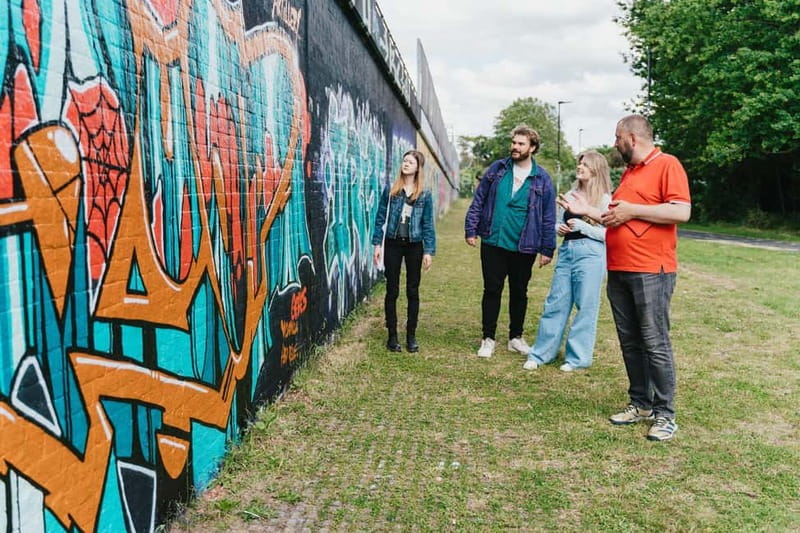
- Phlegm and Fanakapan murals on Henage Street: Two huge wall pieces give you an immediate sense of the scale of East End street art.
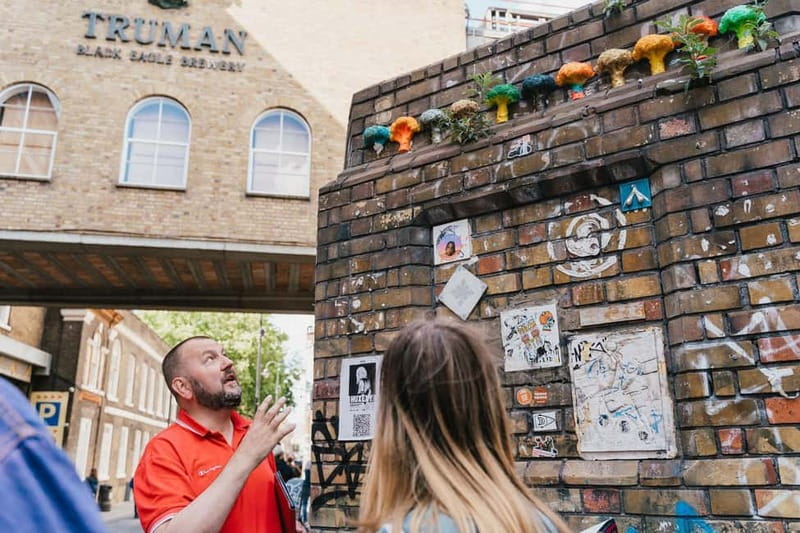
- Brick Lane and Dray Walk: Look for rainbow broccoli, painted adverts, bold lettering and walls that may change soon.
- Banksy and Thierry Noir in Shoreditch: The walk includes a secret Banksy location and work by the French artist known for painting the Berlin Wall.
- A chance to make your own mark: At 7 Stars Yard, you may be invited to leave a small creation of your own.
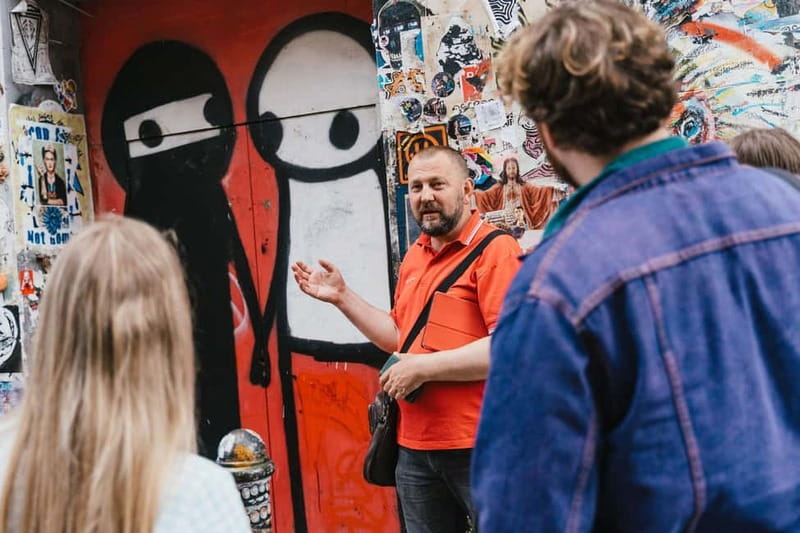
- Art with local context: Stik’s work on Princelet Street connects street art with the Muslim community and the area’s past.
- Flexible East End finish: The route begins at Whitechapel Gallery and generally finishes near Liverpool Street Station, but the final point can change.
Why this East End walk is worth your time
At $49 per person, this is not the cheapest way to spend two hours in London. You can walk Brick Lane on your own for free. The value comes from interpretation: a guide helps you spot artists, understand recurring symbols and see how the art fits into the East End’s story.
That matters here because street art is often easy to miss. A small piece tucked beside a doorway may be less famous than a giant mural, but it can explain an artist’s style or show how quickly this part of London changes. You will also hear about the so-called Graffiti Wars near Shoreditch High Street, where rival approaches to street art produced some memorable work.
The tour is conducted in English and is wheelchair accessible. It runs for two hours, so it suits a morning or afternoon between other London plans. You will be walking outdoors the whole time, with pauses for photos and short explanations. Wear shoes that can handle city pavements, and bring rain protection.
The route begins outside Whitechapel Gallery at 80 Whitechapel High Street. That is a useful meeting point, since it is easy to identify and places you right at the edge of the area you are about to explore.
More Graffiti Tours in London
- London: Street Art and Graffiti Guided Walking Tour
★ 4.9 · 1,354 reviews - Shoreditch Street Art and Graffiti Tour (Private Group Booking)
★ 5.0 · 108 reviews - ADVANCED GRAFFITI STREET ART TOUR / SHOREDITCH / EAST LONDON
★ 5.0 · 23 reviews
From Whitechapel to Spitalfields: a quick change of scene
The opening stretch takes you from Whitechapel toward Spitalfields. This is a good introduction to the East End because the neighborhood combines old community stories with newer creative work. You will hear about Whitechapel’s connection with the infamous murders linked to Jack the Ripper, but the tour is not limited to crime stories.
The focus soon shifts to art, local identity and changing streets. The East End has long been shaped by different communities, and that background helps explain why the walls carry so many styles and subjects. You get a short historical frame without spending the whole walk in a lecture.
Spitalfields is also where the tour begins to feel less like a standard sightseeing route. Instead of moving from one grand monument to another, you follow your guide down side streets and into spaces you could easily pass without noticing.
Henage Street and the first giant walls
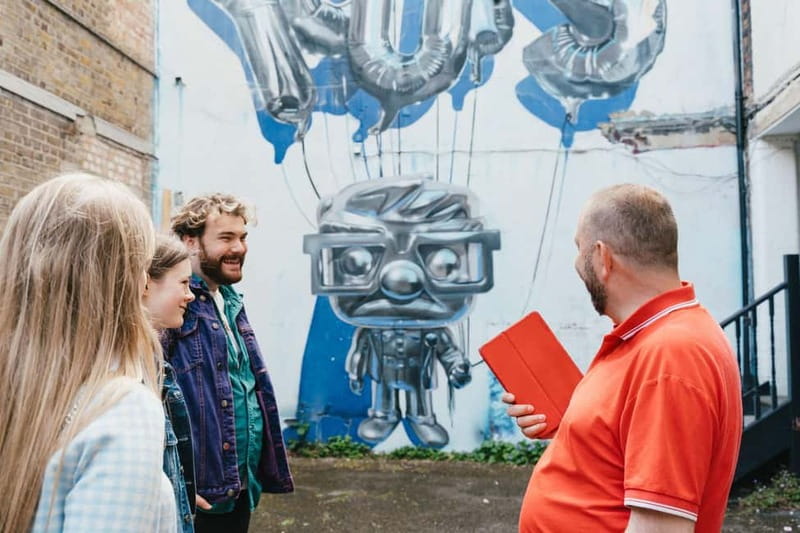
Henage Street contains two large works that occupy entire building walls. One is by Phlegm, whose thin, strange creatures are easy to recognize once you know his style. The other is by Fanakapan, an artist known for silver balloons.
These works show why a guided walk helps. You need distance to take in a whole wall, but you also need to move closer to catch smaller details. Your guide can suggest where to stand and how to frame a photograph, while giving you enough time to take it without rushing you along.
This is one of the tour’s strongest early stops for photographs. The scale is impressive, but the contrast between the artists is just as useful. One wall has a dreamlike, character-based feel. The other plays with reflective surfaces and familiar balloon shapes.
Brick Lane: the tour’s main gallery
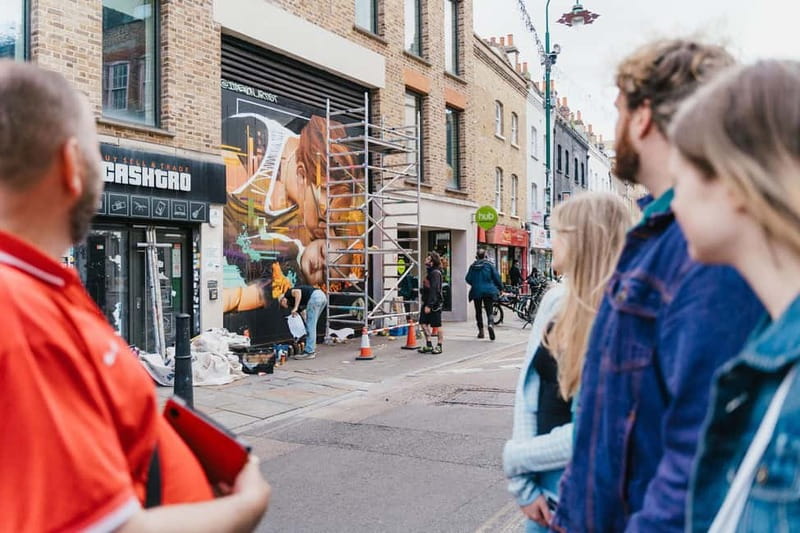
Brick Lane is the heart of the walk. It is famous for food, markets and nightlife, but its walls are the main attraction here. The art appears at different heights and from different angles, so your guide may ask you to step back, cross the street or look up.
That simple change of viewpoint makes a difference. Some works are designed to be seen from a distance, while others reveal details only when you move close. There is also plenty of layered work, with one artist painting beside or over another.
The route includes large pieces, smaller tags and collaborations involving more than one artist. You will hear about artists responsible for particular sections of wall, including work marked by a distinctive number 5. This is useful if you want to keep exploring after the tour, since you begin to recognize patterns instead of seeing the walls as one long blur of paint.
Brick Lane is also an active public street, not a quiet museum. Expect people, traffic and changing conditions. That gives the art a real setting, but it can make photographs harder at busy moments.
More Graffiti Tours in the UK
- East End London Instagrammable Street Art and Graffiti Tour
★ 5.0 · 16 reviews - 3-Hour Private Tour of East London Graffiti & Street Art
★ 4.5 · 5 reviews
Princelet Street and a work with a message
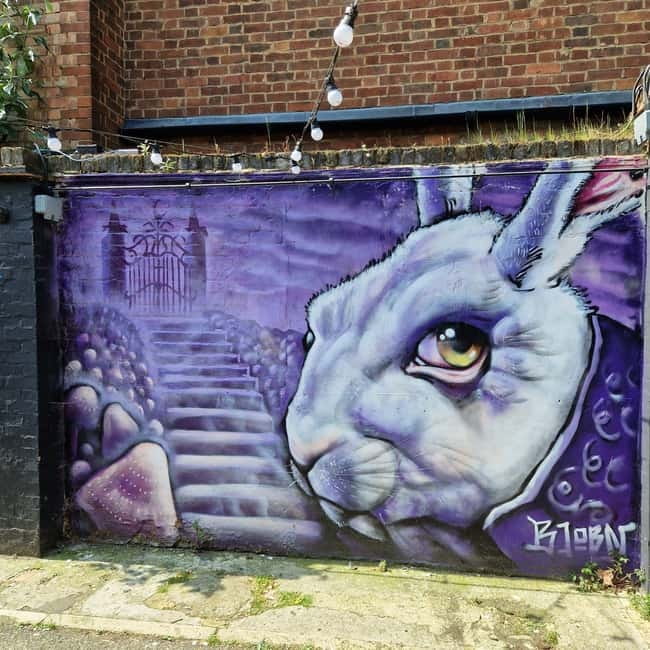
On Princelet Street, you will see a piece by Stik dedicated to the Muslim community and its long connection with the area. The work has been defaced more than once and repainted again, which gives it a practical lesson in how public art survives.
This is more than a quick photo stop. It shows that street art can be decorative, political, local and personal at the same time. A mural may look simple from across the street, yet its meaning depends on where it is placed and who feels connected to it.
The stop is short, about 10 minutes, but the guide has time to explain the work and answer questions. I appreciate that the tour does not treat every mural as mere background for social media.
Nearby, you will also see Paul Bommer’s Huguenot plaque. It adds another small piece of local context to the walk and reminds you that the East End’s story is built from many communities, not just its current art scene.
Dray Walk and the rainbow broccoli
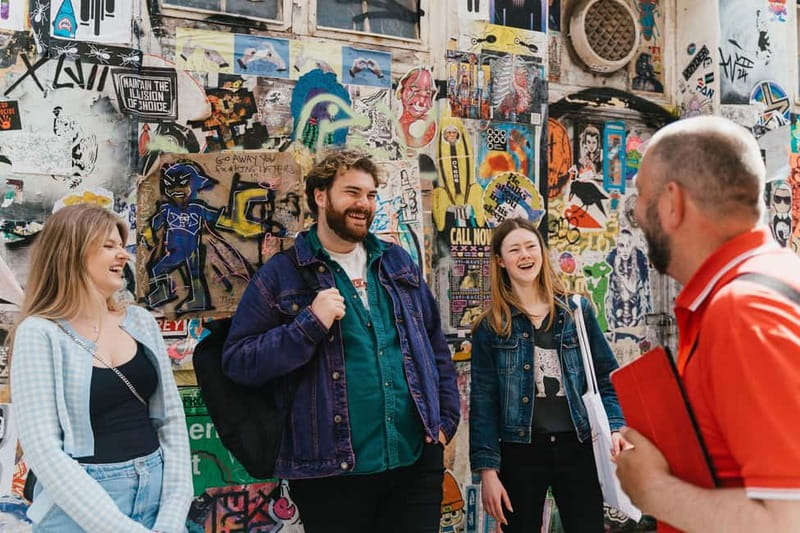
Dray Walk brings one of the tour’s more playful details: broccoli painted in many colors. Some versions are fairly realistic, while others look like bright graphic symbols.
The broccoli is a good example of how street art builds its own visual language. Once your guide points it out, you may start spotting the motif elsewhere. You will also learn that the artist who began the trend now has a gallery, a detail that links informal wall work with the formal art world.
This section is especially good for younger visitors and anyone who enjoys odd, recurring details. It breaks up the larger murals and gives you a simple subject to look for as you continue along Brick Lane.
Allen Gardens and art that may not last
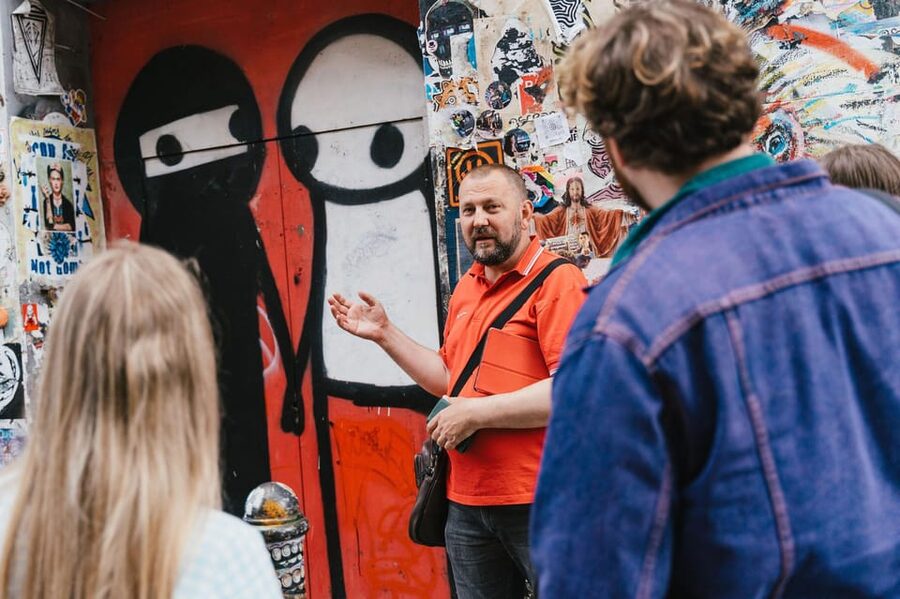
Allen Gardens is surrounded by walls covered with graffiti. This is one of the places where you should take photos promptly. Some pieces change often, and a new work may cover the one you came to see.
That temporary quality is part of the point. You are not walking through a fixed collection with labels and conservation staff. The wall itself changes, sometimes quickly. A photograph can become a record of a piece that no longer exists.
Your guide can help you separate newer layers from older ones and notice how artists share limited wall space. If you want polished, permanent monuments, this may feel untidy. If you like seeing art in the middle of an ongoing conversation, it is one of the most genuine parts of the route.
Ebor Street and bold letters
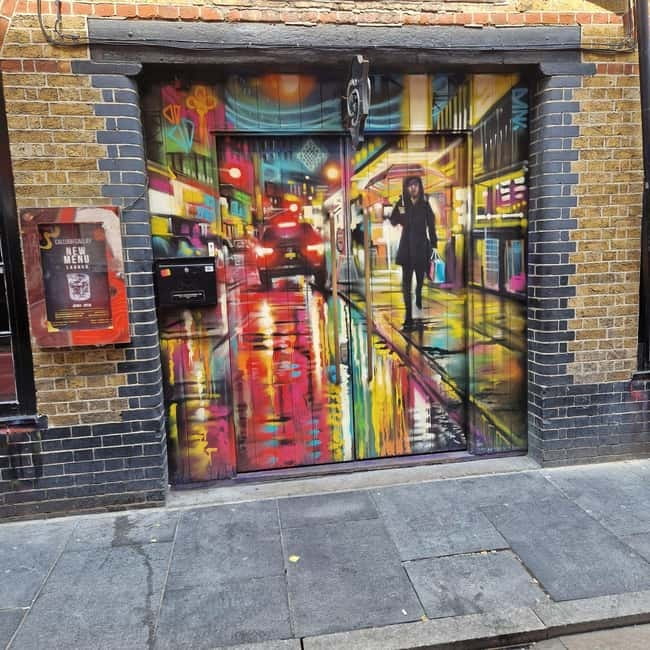
Ebor Street shifts the mood again. Here you may see large painted adverts made by graffiti artists, along with smaller pieces by Neon and big, forceful lettering by Ben Eine.
Eine’s lettering is especially easy to understand at a glance. The scale and color make it work as a photograph, but the stop also gives you a chance to think about the link between graffiti and commercial design. Painted adverts borrow the visual energy of street art, while artists such as Eine bring lettering into the center of the composition.
This is a useful stop if you are interested in technique. The walk is not only about recognizable names. It also shows how artists use letters, repetition, scale and public walls to make an image readable from far away.
Seven Stars Yard and your own street art
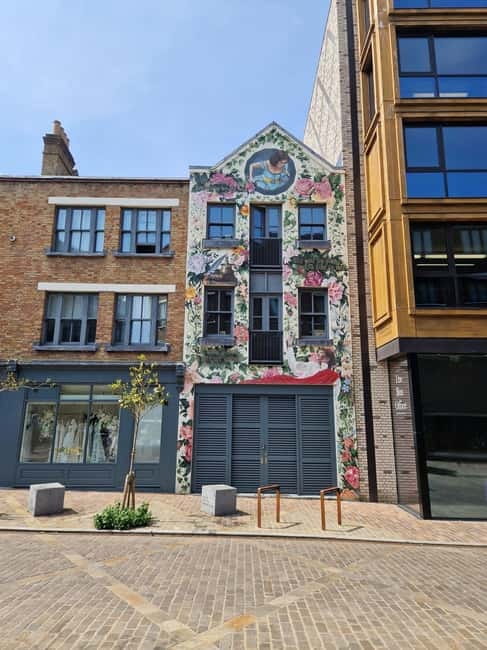
Seven Stars Yard is narrow and can feel a little intimidating at first. Your guide knows the space and uses it to show more work up close. This is also where you may get the chance to leave your own creation behind.
That hands-on element gives the tour a welcome change of pace. You spend much of the walk looking at other people’s work, so making something yourself helps you understand the quick, physical nature of street art. The activity is not the main reason to book the tour, but it makes the experience more memorable.
Do not expect a full art class. The information provided describes an opportunity to make your own street art, not a long workshop with a set lesson. Think of it as a short creative moment inside a walking tour.
Rivington Street: Banksy and Thierry Noir
No East End art walk would feel complete without a Banksy reference, and Rivington Street provides one. The guide takes you to a less obvious place where you can see Banksy’s work.
The exact location is kept as a secret within the tour description, so you should not expect a long advance list of every piece. That approach also reflects the changing nature of street art. Works are painted over, moved, damaged or absorbed into new buildings.
Rivington Street also includes work by Thierry Noir, the French artist best known for his pioneering paintings on the Berlin Wall in the 1980s. Seeing his work in London gives you a useful connection between street art in different cities. It also shows that the East End is not isolated from the wider history of the form.
The art’otel and a Banksy in a new setting
The route continues to the art’otel London Hoxton, where an older Banksy work is now part of a newer hotel. You do not need to stay at the hotel to see it.
This stop raises an interesting question about what happens when street art becomes part of a polished commercial setting. A work that began in a public, less controlled environment can end up displayed beside a modern hospitality business. That contrast is worth noticing rather than treating the hotel as just another photo backdrop.
The stop lasts around 10 minutes, giving you time to see the work and hear its story. It also provides a good reminder that the East End is changing quickly, with new buildings and businesses sharing space with older art.
New Inn Broadway and Shakespeare’s Curtain Theatre
At New Inn Broadway, the art takes an unexpected turn. You may suddenly find Shakespeare, along with a Romeo and Juliet piece near the site associated with his Curtain Theatre.
The surrounding work combines different color palettes, styles and small details, including a tiny policeman. Together, these pieces create a kind of painted wallpaper. It is a good example of how street art does not always need one clear author or subject to work as a whole.
This stop broadens the tour beyond modern graffiti. The East End is presented as a place where theatre, migration, local memory and contemporary art overlap. You get a quick cultural surprise without leaving the main focus on the streets.
Shoreditch High Street and the final Graffiti Wars story
The final section reaches Shoreditch High Street, where you hear the last story about the Graffiti Wars. The name sounds dramatic, and the conflicts involved competing ideas about who controls public walls and what should remain visible.
The important result is that some strong art came out of that tension. This closing story gives the tour a larger frame. You have seen individual artists and pieces, and now you get a sense of the arguments behind the walls.
The usual finish is listed near Liverpool Street Station, Stop G, but the exact endpoint can change because the art itself keeps changing. Confirm the finish with your guide before making a tight onward booking.
Guides, pace and what the feedback tells you
The strongest pattern in the available feedback is the quality of the guiding. Matt is described as enthusiastic and clear for people who do not speak English as a first language. Margaret is praised for her passion and detailed explanation, while another guide, Jt, is described as willing to answer questions and match the group’s pace.
That is important on a street art tour. A guide who simply points at walls would add little. You want someone who can explain artists, local stories, changing pieces and the difference between a quick tag and a planned mural.
You should also expect time for photographs. The guides are described as allowing people to take the shots they want rather than forcing the group through every stop. The pace appears suitable for a range of ages, though you are still spending two hours on city streets.
Is $49 good value?
At $49, the tour makes the most sense if you want context and direction, not just a list of places to photograph. The route covers Whitechapel, Spitalfields, Brick Lane, Princelet Street, Dray Walk, Allen Gardens, Rivington Street, Shoreditch and the area near Liverpool Street.
You could visit many of these streets alone, but you would likely miss smaller works, artist connections and the stories behind repeated images such as the broccoli. The guided explanation is what turns a casual walk into a focused look at East End street culture.
The price is harder to justify if you already know the area well or prefer wandering without a schedule. It is also worth remembering that art can disappear. You are paying for the guide’s interpretation and the route, not a guarantee that every pictured work will still look exactly the same.
Who should book this tour?
I would choose this walk if you want an alternative to London’s major museums, enjoy photography or like seeing how a neighborhood changes through art. It also suits first-time visitors who want a clear introduction to Brick Lane and Shoreditch without spending hours researching artist names.
Families can benefit from the colorful work and the chance to create something at Seven Stars Yard. The walk also works well for adults who want local context rather than a simple collection of Instagram stops.
You may want to skip it if rain would spoil your day, since the tour runs in all conditions. You should also avoid scheduling a tight appointment immediately afterward because the finish can change.
Should you book the East End street art tour?
Book it if you want a guided introduction to London’s street art, with Banksy, Stik, Phlegm, Fanakapan, Thierry Noir and Ben Eine folded into the history of Whitechapel, Brick Lane and Shoreditch. The mix of large murals, tiny pieces, local stories and changing walls gives the two hours a clear purpose.
Skip it if you only want permanent attractions or total freedom to wander. For everyone else, $49 is a fair price for a well-paced route and a guide who can help you see what you would probably walk past.
FAQ
Where does the London East End street art tour start?
The guide meets you directly outside Whitechapel Gallery at 80 Whitechapel High Street.
How long does the tour last?
The tour lasts two hours. Starting times depend on availability when you book.
Where does the tour finish?
The listed finish is Liverpool Street Station, Stop G, London EC2M 4RB. The exact finish point can change because the street art in the area changes.
What language is the tour conducted in?
The tour is conducted in English with a live English-speaking guide.
Is the tour wheelchair accessible?
Yes, the activity is listed as wheelchair accessible.
Does the tour run in bad weather?
Yes. Tours run rain or shine, so bring suitable clothing and footwear.
Can I make my own street art?
Yes. The route includes Seven Stars Yard, where you may have the chance to leave your own creation.
Which artists and places might I see?
The route can include work by Banksy, Stik, Phlegm, Fanakapan, Thierry Noir, Ben Eine and Neon. Stops include Whitechapel, Spitalfields, Brick Lane, Princelet Street, Dray Walk, Allen Gardens, Rivington Street, the art’otel and Shoreditch High Street.
Just added around London
- London Street Art Tour of the East End Semi-Private 12ppl Max★ 5.0 · 23 reviews
- The Great Street Art Experience★ 5.0 · 2 reviews
- Shoreditch Street Art Private Photography Tour including Brick Lane★ 5.0 · 5 reviews
- London Street Art Tour of the East End Exclusive Walking Tour★ 5.0 · 12 reviews
- Private Shoreditch Street Photography Workshop★ 4.5 · 4 reviews
- 3-Hour Private Tour of East London Graffiti & Street Art★ 4.5 · 5 reviews
- London Unexpected Private Tour – Markets, Street Art & Camden Town★ 5.0 · 2 reviews
- East End London Instagrammable Street Art and Graffiti Tour★ 5.0 · 16 reviews
London Street Art Tours, compared.
London Bike Tour: Landmarks, Secret Gems, Pub Stop & Street Art
Read our review →
Landmarks & Secrets Bike Tour with Pub & Street Art
Read our review →

East End Street Art Tour and Spray Painting Workshop
Read our review →
Shoreditch Street Art and Graffiti Tour (Private Group Booking)
Read our review →Browse the lists this tour appears in