
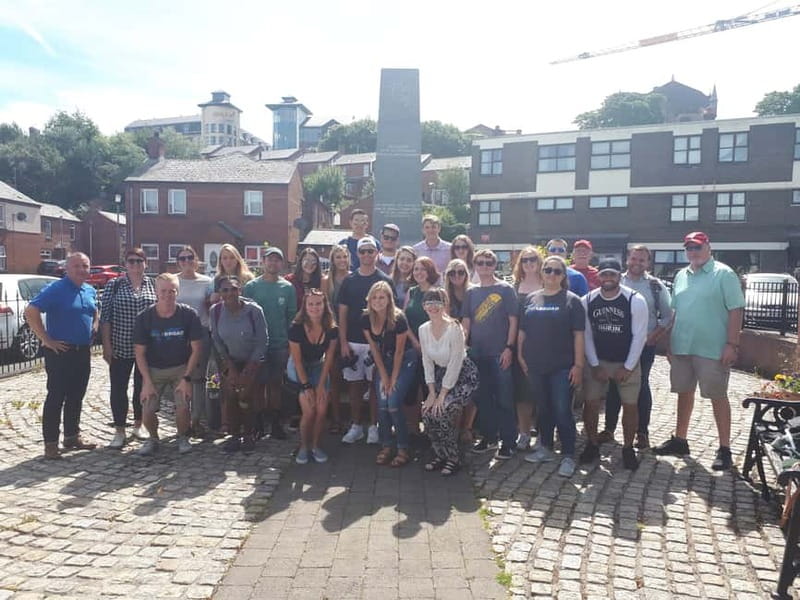
REVIEW · UK
Derry: Bloody Sunday and Bogside Murals Walking Tour
Derry’s Bogside is not a backdrop for history. It is the place where that history happened. This 90-minute walk takes you past the famous murals, the site of Bloody Sunday, and the monument honoring those killed, while explaining how partition, discrimination, civil rights protests, and the Troubles shaped the city. The murals give the story a human face, not just a list of dates.
I like two things in particular: the walk connects the early 20th-century story to the events of 1969 and 1972, and guides such as Gleann, Glenn, Angela, Tony, and Michael bring local and family connections to the subject. The main drawback is practical: the tour runs outdoors in all weather, and it is not suitable for people with mobility impairments.
Key points at a glance
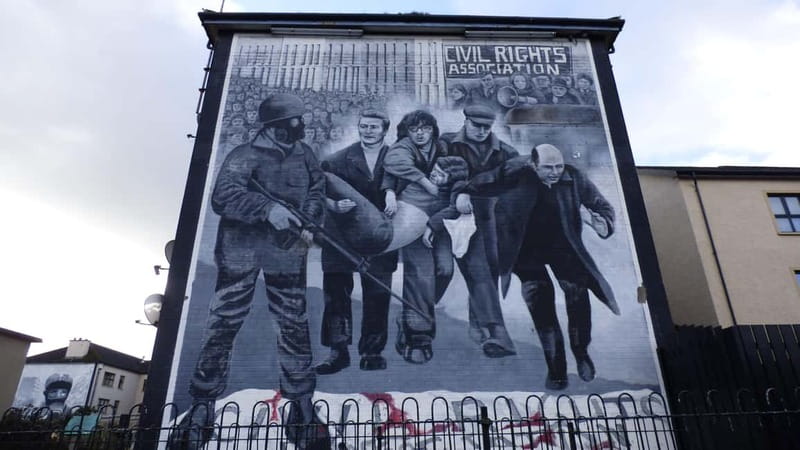
- The Bogside murals turn political history into powerful public art you can see at close range.
- Bloody Sunday is explained at the site of the massacre, then brought to a close at its memorial.
- The route covers more than one tragedy, including partition, discrimination, the Civil Rights movement, and the Battle of the Bogside.
- Local guides add personal context, with several guides drawing on family experience and life in Derry.
- The 1.5-hour length works well, giving you a serious introduction without taking over your day.
- Weather matters, so bring a rain jacket and wear shoes suited to walking.
Why the Bogside is the right place to start
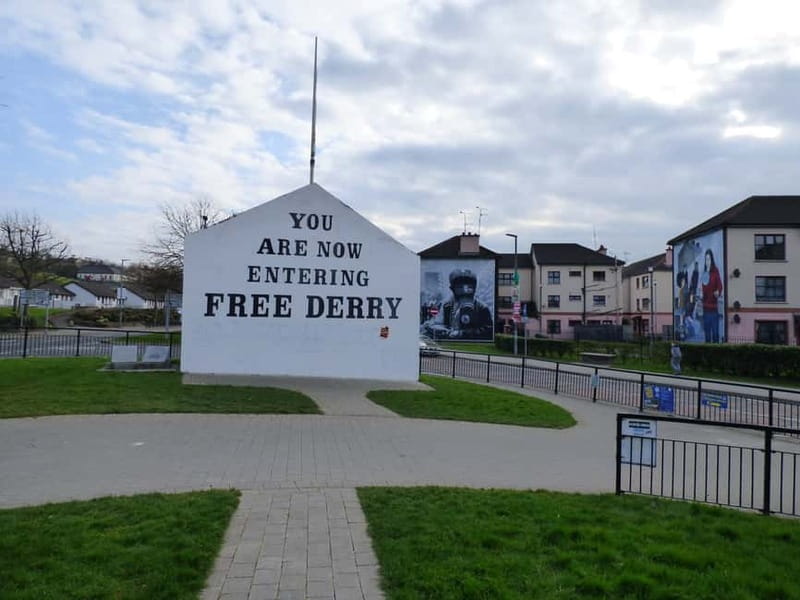
If you want to understand modern Derry, begin in the Bogside. This working-class area became the heart of the city’s Civil Rights movement and later one of the best-known places associated with the Troubles.
The tour starts outside the Tower Museum at Magazine Gate, just inside the city walls. That meeting point is useful in its own right. You begin beside Derry’s historic defensive walls, then move into the Bogside and from old city fortifications into the story of modern political conflict.
I like this contrast. The walls represent centuries of power and division, while the Bogside shows how those older divisions affected ordinary families in the 20th century. You do not simply walk from one attraction to another. You move between two parts of Derry that help explain each other.
The guide leads on foot, in English, and the pace is designed to be manageable for most people who are comfortable walking outdoors. The route is short enough to fit around a museum visit, lunch, or an afternoon in the city, but the subject matter is serious. You should allow yourself time afterward if you think you will want to sit quietly, visit another memorial, or reflect on what you have heard.
More Mural Tours in the UK
- Belfast: Murals Taxi Tour
★ 4.9 · 2,047 reviews - Belfast’s Political Mural Taxi Tour
★ 5.0 · 1,180 reviews - Famous 1.5 hour Belfast Murals Tour
★ 5.0 · 477 reviews
The political background before Bloody Sunday
The early part of the tour explains the setting before the best-known events. You hear about the partition of Ireland and the creation of the six-county state, then about the discrimination faced by Irish Catholics in areas such as housing, voting, and employment.
This background matters because Bloody Sunday did not happen in isolation. The tour shows how political structures and daily inequalities created mounting anger, and why civil rights demands became so important in Derry.
A good guide can make this section clear without drowning you in names and dates. Gleann, Glenn, Angela, and other guides are praised for explaining the wider story as well as the specific events around the Bogside. That broader view is one of the tour’s strengths. You are less likely to leave thinking of Bloody Sunday as one terrible afternoon with no connection to anything before or after it.
You may already know some of the basic outline of the conflict. Even so, the walk adds something a book or documentary cannot provide as easily: the physical setting. The streets, walls, murals, and memorials help you picture how protests and confrontations affected the area.
The Civil Rights movement and the Battle of the Bogside
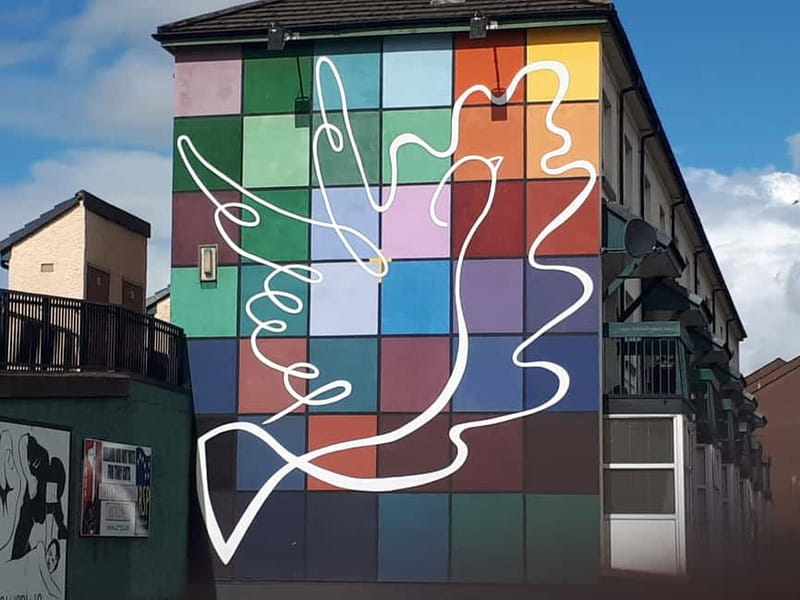
The tour then moves through the story of the Civil Rights movement and the Battle of the Bogside in 1969. This is where the political background becomes local and immediate.
You learn why the Bogside became a focal point for protest, how residents responded to events around them, and how the conflict between the community and the authorities grew. The guide’s job here is not simply to identify a location. It is to explain how an area became a symbol of resistance and why the events in Derry mattered across Northern Ireland.
I like that the walk treats the Bogside as a community rather than as a collection of conflict sites. Personal accounts help you think about families, residents, and local identity, not only armed groups and political leaders. Several guides, including Gleann and Michael, have personal or family connections to the events, and that can add emotional weight to the explanation.
At the same time, personal storytelling requires care. This is contested history, and people can hold strongly different views about its causes and meaning. The best approach is to listen closely, ask respectful questions, and remember that the guide is sharing a local perspective rather than pretending that every community experienced events in exactly the same way.
The Bogside murals as a history lesson
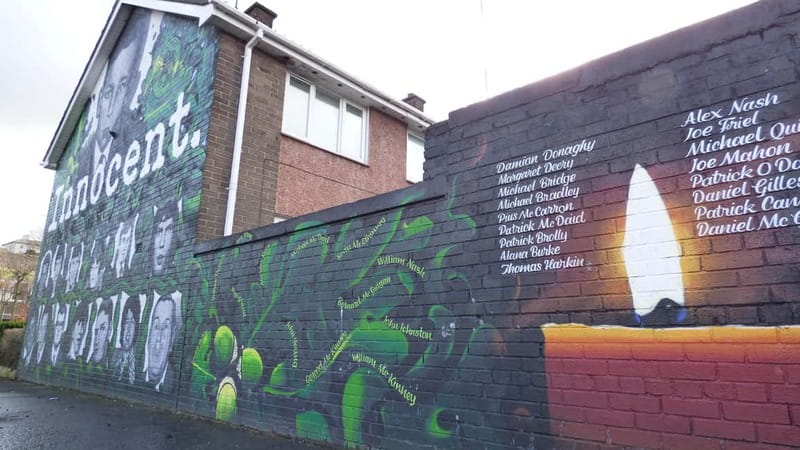
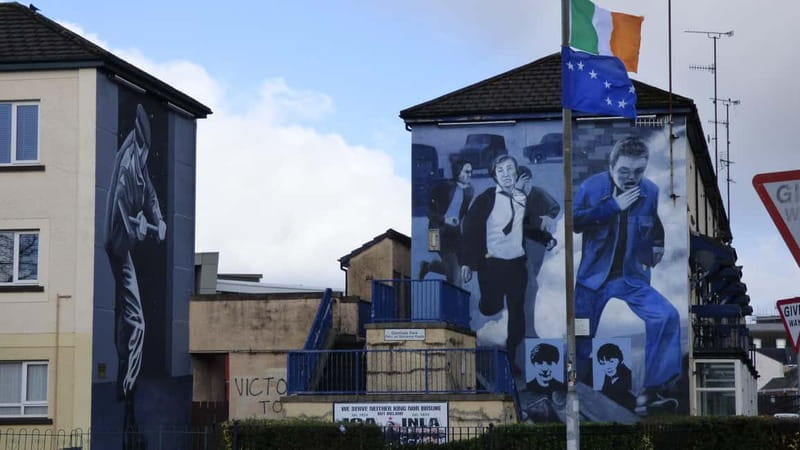
The murals are the visual center of the walk. They are large, direct, and impossible to treat as background decoration.
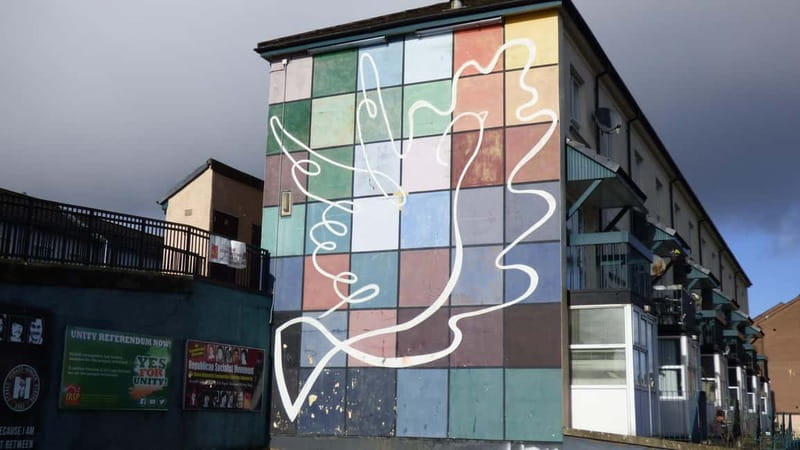
The artwork depicts key moments, people, and ideas from Derry’s past. Some images focus on the Civil Rights era and Bloody Sunday, while others reflect the broader experience of the Bogside and the Troubles. Your guide explains what the images represent and places them in context.
This is where the tour becomes especially useful for first-time visitors. You can photograph the murals on your own, but without explanation, you may miss who or what they refer to. A guide points out the details that connect one painting to the next and helps you understand why public art became such an important way for the community to tell its story.
I also like the scale of the murals. They are not hidden inside a gallery or separated from daily life. They occupy walls along the streets where people live and walk. That setting makes the art feel immediate, but it also means you should approach it with respect. These are memorial and political works, not simply colorful photo stops.
The murals can be emotionally heavy. If you prefer history presented in a quiet museum, this walking tour may feel direct and intense. If you want to see how a community keeps its own memory visible, the murals are one of the most meaningful parts of the experience.
More Street Art Walking Tours in the UK
- Blackbeard to Banksy – The Ultimate Walking Tour of Bristol
★ 5.0 · 1,961 reviews - Bristol: Blackbeard to Banksy Guided Walking Tour
★ 4.9 · 1,422 reviews - London: Street Art and Graffiti Guided Walking Tour
★ 4.9 · 1,354 reviews - Glasgow Street Art Daily Walking Tour: 2pm
★ 5.0 · 648 reviews
Bloody Sunday at the site of the massacre
The central subject is Bloody Sunday, when civil rights marchers were shot and killed in January 1972. The tour takes you to the site connected with the massacre and explains what happened there.
This stop is likely to be the most difficult part of the walk. The guide discusses the human cost, the victims, and the inquiries that followed. The focus is not only on the event itself, but also on the long process of establishing what happened and how the findings affected public understanding.
I value the fact that the tour does not reduce Bloody Sunday to a single sentence in a timeline. You hear about the people who died, the effect on their families and community, and the lasting importance of the event. Personal accounts from guides with family connections can make this section especially powerful, though they also call for a respectful listening style from the group.
The stop is outdoors, so weather can affect how long you want to remain in one place. Rain, wind, and cold are possible, and the tour continues regardless of conditions. Bring waterproof clothing rather than relying on an umbrella alone, since you may need both hands free to walk and listen.
Ending at the Bloody Sunday monument
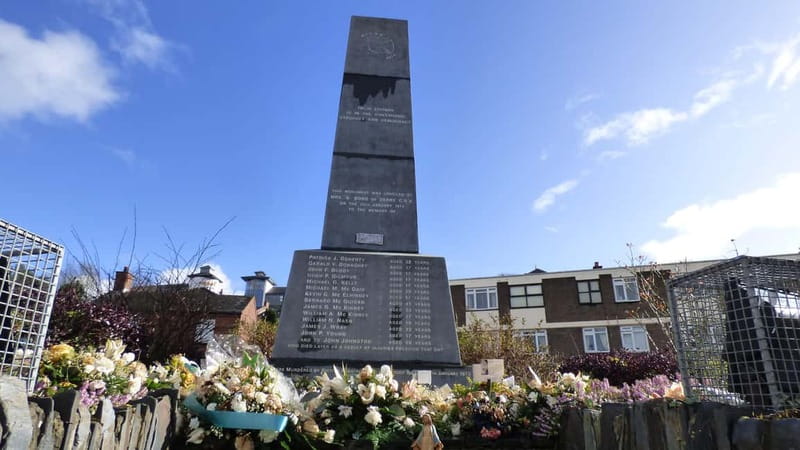
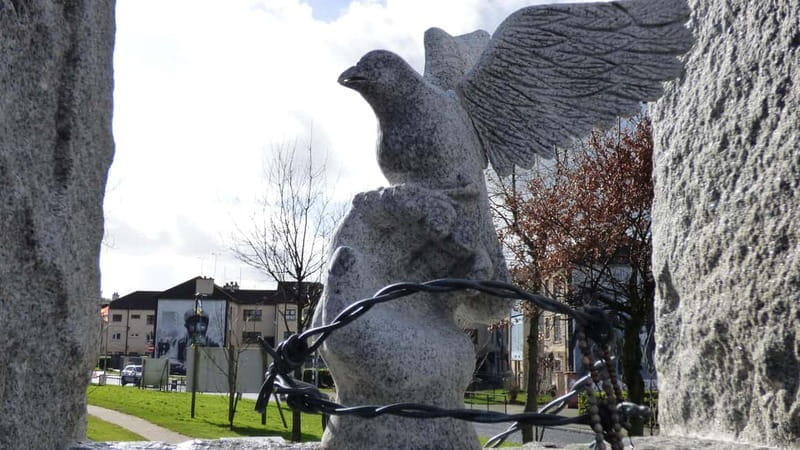
The walk concludes at the Bloody Sunday monument, a fitting final stop because it shifts the focus from the event to remembrance.
The monument is a lasting tribute to those killed and to the Civil Rights Association. Ending here gives the tour a clear shape. You begin with the political conditions that produced conflict, walk through the places and images connected with that conflict, and finish with a memorial rather than a simple return to the starting point.
This final stop also leaves you near the heart of the Bogside, where you can continue exploring on your own. The tour does not include entry to a museum or another attraction, so you may want to pair it with the Free Derry Museum or another city visit before or after. One useful pairing is to visit the museum first, then take the walk while the names, events, and questions are fresh.
You should not expect the monument to offer a tidy ending. Derry’s past still carries pain, pride, and disagreement. The point is not to make a complicated story feel simple. It is to help you see why these places matter.
What the guides add to the walk
The guide is the most important part of this experience. The tour is available with English-speaking guides including Gleann, Glenn, Angela, Tony, Wendy, Laura, and Michael.
Gleann is repeatedly praised for combining strong research with personal experience, humor, and a natural way of answering questions. Glenn is also noted for thoughtful storytelling and family connections to the conflict. Angela brings a clear account of Northern Ireland, the Bogside, and nearby Creggan, while Michael is from the Bogside and is closely connected to the subject.
That range matters. A guide who simply recites a script can give you dates and locations. A local guide can explain how those events are remembered in Derry, what details outsiders often miss, and why certain places still carry emotional force.
The humor mentioned by several people should not be mistaken for a light treatment of Bloody Sunday. It serves a practical purpose. Ninety minutes of painful history can become overwhelming, and a warm, human guide helps keep the group attentive without making the subject seem casual.
You can also ask questions. The guides are described as willing to adjust the explanation to the group’s existing knowledge, which helps if you are new to Irish history or already familiar with the Troubles. If you have a particular interest in murals, family memory, civil rights, or the Good Friday Agreement, ask early so the guide can give that subject the attention it deserves.
How the tour handles the Troubles today
The route is strongest on the origins of the conflict, the Civil Rights movement, the Battle of the Bogside, and Bloody Sunday. It also places the events within the wider period that led toward the Good Friday Agreement of 1998.
If your main interest is how the Troubles affect everyday life in Derry today, you may find that this is not the tour’s main focus. The central purpose is to explain the Bogside’s past and the events represented by the murals and memorial. You can ask about present-day life, but the available time is limited.
That is not necessarily a weakness. A 90-minute walk needs a clear subject, and this one has one. Just know what you are booking. For a wider look at current community relations, politics, or the comparison between Derry and Belfast, you may need another experience or more time in the city.
Price, pace, and practical value
At $35 per person, the tour offers good value if you want context rather than a quick mural photo. You are paying for a guided route, local interpretation, and access to a story that is difficult to understand fully from signs alone.
The 1.5-hour duration is another advantage. It is long enough to cover the main events and several murals, but short enough to fit into a day trip or a larger Derry itinerary. The walk is described as easy paced, though the activity is not suitable for people with mobility impairments. If walking is difficult for you, check carefully before booking.
There is no transport, admission ticket, or meal included. That keeps the price focused on the guide and the walk. Wear comfortable shoes, check the forecast, and prepare for rain or strong wind. The tour operates outside, and the weather can affect your comfort even when the storytelling is excellent.
Free cancellation is available up to 24 hours before the start time, and you can reserve now and pay later. Those options are useful if your Northern Ireland plans are still changing.
Who should book this Derry walking tour
I would choose this tour if you are visiting Derry for the first time, have limited time, or want a clear introduction to the city’s modern political history. It is also a good choice if you have seen the Bogside murals in photographs and want to understand what they mean.
Families with older teenagers may find it valuable, provided everyone is ready for serious subject matter. History students, people interested in civil rights, and anyone tracing Irish or Northern Irish family connections should also get a lot from the walk.
I would think twice if you dislike outdoor walking, need step-free access, or want a broad survey of every period of Derry’s history. This is focused on the Bogside, the Civil Rights era, Bloody Sunday, and the Troubles. It is not a general city sightseeing tour.
Should you book it?
Yes, if you want to understand Derry through the places where its modern story unfolded. The strongest reasons to book are the murals, the visit to the Bloody Sunday site, and guides such as Gleann, Glenn, Angela, and Michael, who bring local and personal context to difficult material.
Bring waterproof clothing, allow yourself time to think afterward, and consider visiting the Free Derry Museum as a companion stop. Skip it only if mobility or the emotional weight of the subject makes this kind of walking tour unsuitable. For most visitors seeking an honest introduction to Derry’s past, $35 is a fair price for 90 minutes that can change how you see the city.
FAQ
Where does the Derry Bogside walking tour meet?
The meeting point is outside the Tower Museum at Magazine Gate, just inside the city walls.
How long does the tour last?
The walking tour lasts 1.5 hours.
What language is the tour conducted in?
The tour is conducted in English with a live English-speaking guide.
What does the tour cover?
It covers partition, the creation of the six-county state, discrimination faced by Irish Catholics, the Civil Rights movement, the Battle of the Bogside, Bloody Sunday, the Bogside murals, and the inquiries that followed the massacre.
Does the tour visit the Bloody Sunday monument?
Yes. The walk concludes at the Bloody Sunday monument, a tribute to the people killed and to the Civil Rights Association.
Is the tour suitable for people with mobility impairments?
No. The experience is not suitable for people with mobility impairments. You should also be prepared for all weather because the tour takes place outdoors.
Just added around the UK
- Manchester Street Art: Quest Experience★ 4.0 · 6 reviews
- Shoreditch Street Art Private Photography Tour including Brick Lane★ 5.0 · 5 reviews
- London Street Art Tour of the East End Semi-Private 12ppl Max★ 5.0 · 23 reviews
- The Great Street Art Experience★ 5.0 · 2 reviews
- London Street Art Tour of the East End Exclusive Walking Tour★ 5.0 · 12 reviews
- Private Shoreditch Street Photography Workshop★ 4.5 · 4 reviews
- London Unexpected Private Tour – Markets, Street Art & Camden Town★ 5.0 · 2 reviews
- 3-Hour Private Tour of East London Graffiti & Street Art★ 4.5 · 5 reviews
UK Street Art Tours, compared.
Blackbeard to Banksy – The Ultimate Walking Tour of Bristol
Read our review →

London Bike Tour: Landmarks, Secret Gems, Pub Stop & Street Art
Read our review →
Browse the lists this tour appears in