
REVIEW · ITALY
Street Art Tour of Rome
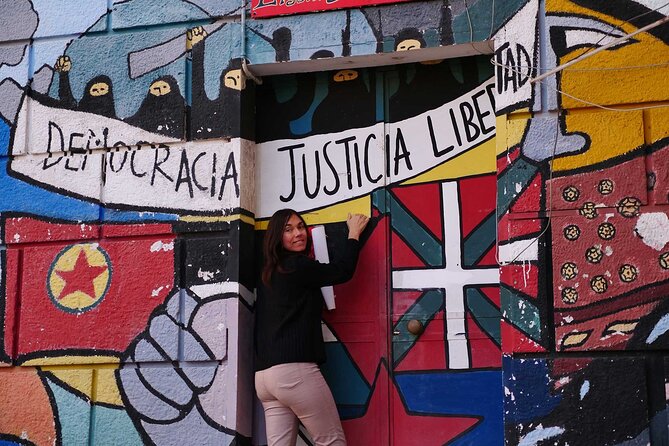
Rome’s best street art is not gathered around the Trevi Fountain. It appears on apartment walls, around ordinary streets, and in neighborhoods where daily Roman life continues far from the main sights. This Garbatella and Tor Marancia walking tour gives you a clear look at that side of the city, with local guide Lisa explaining the murals, artists, and changes taking place around them.
I like the way the tour joins contemporary art with neighborhood history, rather than treating the murals as large outdoor decorations. I also like the two-part route: Garbatella brings architecture and street scenes, while Tor Marancia delivers the strongest concentration of murals. The main consideration is that this is a walking tour in the open air, so good weather matters and comfortable shoes are essential.
Key points to know
- Two very different Rome neighborhoods: Garbatella offers distinctive architecture and local history, while Tor Marancia is known for its striking wall paintings.
- A personal guide makes the difference: Lisa is named in several comments as kind, engaging, and helpful, with clear explanations of the art and neighborhoods.
- A useful break from ancient Rome: The tour focuses on modern Rome, contemporary artists, and parts of the city many sightseeing routes skip.
- Nearly three hours on foot: The experience lasts about 2 hours 45 minutes, with 1 hour 30 minutes in Garbatella and 1 hour in Tor Marancia.
- Good value for art lovers: At $38.41 per person, the price covers an expert local walking guide and access to two outdoor art districts.
- Plan for weather and water: The tour can be canceled in poor weather, and bottled water is not provided, though Rome’s public drinking fountains offer refill options.
Why Garbatella makes a strong first stop
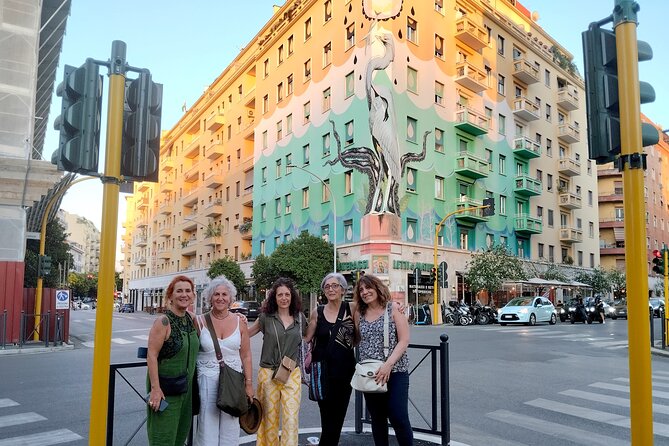
The tour begins at Via Giacinto Pullino 103, in Rome’s Garbatella area. This opening section lasts about 1 hour 30 minutes, giving you time to walk at an easy pace, look closely at the walls, and understand how the neighborhood’s architecture and public art fit together.
Garbatella is useful as a first stop because it gives the tour room to breathe. You are not simply moving from mural to mural with a quick fact at each one. The guide explains the stories behind the works and connects them with the contemporary history of Rome. That context helps you see street art as part of neighborhood life, not as something placed there only for photographs.
You can expect plenty of opportunities to take pictures, but the point is not just to collect colorful backgrounds. The guide draws attention to different artistic styles and to the way the works sit beside ordinary buildings and streets. Lisa received particular praise for showing how the two neighborhoods differ, which is one of the strongest reasons to take this tour instead of seeking out a single mural on your own.
Garbatella also gives you a look at a less formal side of Rome. The experience is still firmly in the city, but it moves away from the standard route of imperial monuments, churches, and grand piazzas. If you have already spent several days among ancient ruins, this change of subject can refresh your sightseeing.
A few more street art tours around Italy worth a look
- Naples Spanish Quarters Walking Tour Street Art, Folklore & Sweet
★ 5.0 · 797 reviews - Naples: Spanish Quarters Folk Street Art w/ Sweets Tasting
★ 4.9 · 788 reviews - Graffiti art tour in Rome
★ 5.0 · 714 reviews
What you learn about modern Rome
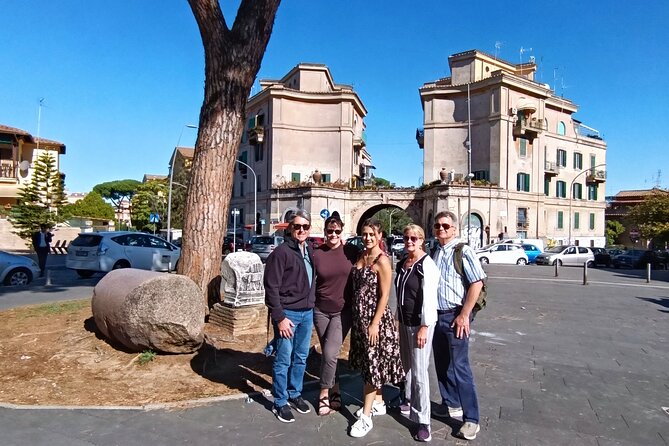
The art is the main attraction, but the explanations give the walk its value. You hear about well-known artists as well as newer names, and you learn how murals were created. That makes the tour useful for anyone who wants more than a list of artists or a set of photo stops.
The focus on contemporary Rome matters because the city is often presented through its ancient past. Here, you get a different view of how neighborhoods express identity today. The walls become a way to discuss local change, public art, and the relationship between artists and the communities around them.
I would pay attention to the guide’s comparisons between Garbatella and Tor Marancia. They are not presented as interchangeable street-art districts. Their different styles and settings help show how public art can take on a different character from one neighborhood to the next.
The guide’s role is especially important for this kind of experience. Without context, a mural can be easy to admire and just as easy to forget. With an explanation of its background and place in the neighborhood, you have a better chance of remembering what you saw after the walk ends.
Tor Marancia and Rome’s mural center
The second stop is the Museo Condominiale di Tor Marancia, where you spend about one hour viewing the neighborhood’s murals. This is the high point for many people who book the tour, since Tor Marancia is known for its large-scale public art.
The name can sound like a conventional museum, but the experience takes place around the neighborhood’s buildings rather than inside a standard gallery. The walls provide the exhibition space. That setting changes how you see the work: you are looking at art in the middle of a residential area, with the surroundings forming part of the experience.
The murals are described as stunning, and the tour gives you a better chance to understand their scale and purpose. You can photograph the paintings, but the guide also explains the process behind them and the artists involved. That balance is important. You get the visual appeal of a street-art walk without losing the human story.
Tor Marancia is also where the tour feels most different from a normal Rome sightseeing plan. You are not standing in a queue or passing through a famous interior. You are walking through a neighborhood and seeing how a major art project has shaped its public spaces.
The one limitation is that the Tor Marancia portion lasts about an hour. If you want a very long photography session at every mural, the pace may feel brisk. The full tour, however, allows enough time for both this district and Garbatella, which is a better choice if you want variety.
Lisa’s role in making the walk personal
Lisa is the guide specifically named in the feedback, and her contribution appears to go beyond delivering prepared information. She is described as engaging, professional, kind, and clear when explaining the murals and the history of the neighborhoods.
That personal touch matters on a route that does not have the same built-in fame as the Colosseum or Pantheon. You are relying on the guide to point out what matters, explain why it matters, and keep the walk connected from one stop to the next.
Lisa also appears to be attentive to practical needs. After one tour, she called a taxi and stayed until it arrived. On another occasion, she offered coffee and useful local tips. Those details do not change the artwork itself, but they suggest a guide who treats the walk as a personal introduction to Rome rather than a rushed transaction.
There was also one serious service problem. One person arrived at the meeting area at the scheduled time and found no guide, with no cancellation message. The guide apologized, explained that an unexpected issue had prevented contact, and offered to refund the taxi trips. The strong overall rating of 4.8 from 19 reviews and recommendation from 95 percent of bookers suggest that this was an exception, but it is still worth keeping in mind. Confirm your plans and watch for any last-minute communication.
Same walls, a different guide:
- Naples: Street Art, Wine and Food Tasting Walking Tour
★ 5.0 · 163 reviews - Naples Essentials: Monuments, Local Life & Street Art
★ 4.9 · 79 reviews - 4×4 tour of Orgosolo: Murals and typical lunch at the shepherd’s
★ 5.0 · 76 reviews - Rione Sanità tour among baroque, revival, street art & food
★ 4.8 · 59 reviews
Is $38.41 a fair price?
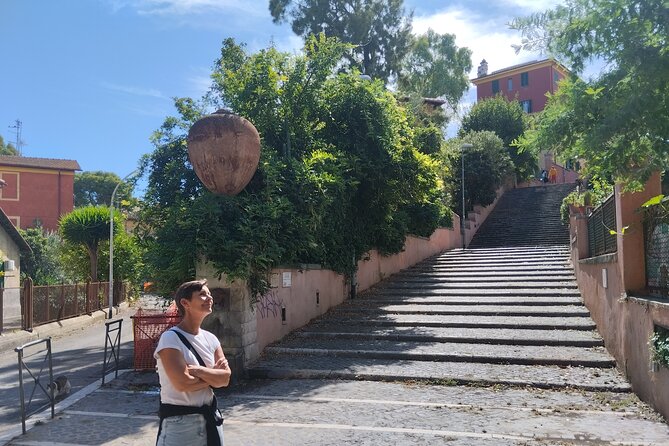
At $38.41 per person, this is not the cheapest way to look at public art in Rome. You could visit a neighborhood on your own without paying an admission fee. The price is paying for interpretation, route planning, and a local guide who can explain the stories behind the murals.
That makes the tour a reasonable value if you care about context. The two neighborhoods are not presented as one quick stop, and the total walking time is close to three hours. You are getting a focused introduction to a part of Rome that can be harder to understand without local guidance.
The value is weaker if you prefer to wander alone, take photographs at your own speed, or read about artists independently. The murals themselves do not require an entrance ticket, and the group can include up to 25 people. That is a manageable maximum for a walking tour, but it is not the same as a private outing.
For most art lovers, the price makes sense because of the guide’s explanations. For casual sightseers, I would book it only if you want a break from ancient monuments and have a real interest in modern public art.
Timing, walking, and practical planning
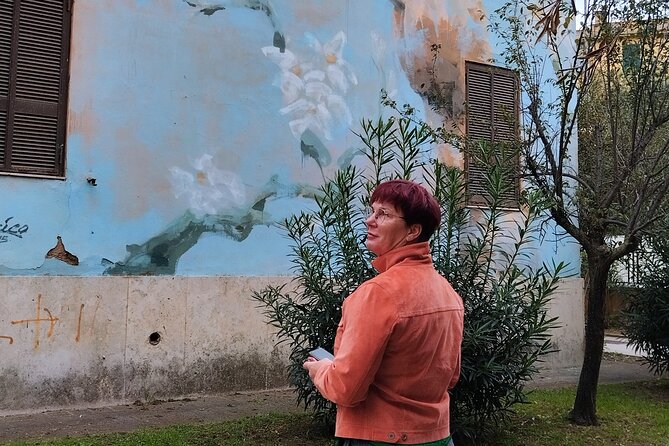
Set aside the full 2 hours 45 minutes rather than treating the duration as a loose estimate. The route includes two substantial neighborhood visits, and you will want time to stop, look up at large walls, take pictures, and listen.
Wear shoes suited to city walking. The route is outdoors, and the experience is better when you can focus on the art instead of your feet. Bring a refillable water bottle. Bottled water is not included, but you can use Rome’s many public drinking fountains along the way.
The tour is offered in English and uses a mobile ticket. The meeting point is Via Giacinto Pullino 103, 00154 Rome, and the walk returns to that same meeting point at the end. Since the start and finish are the same, you do not need to arrange a separate pickup at the end.
The meeting area is near public transportation, which makes it practical to reach without a taxi. Still, allow extra time to find the exact address. A missed start would be especially frustrating on a tour with a fixed meeting point and several hours of planned walking.
The group can contain up to 25 people. Most people can take part, and service animals are allowed. The tour needs good weather, so poor conditions can lead to a change of date or a full refund.
Who will enjoy this Rome street-art tour
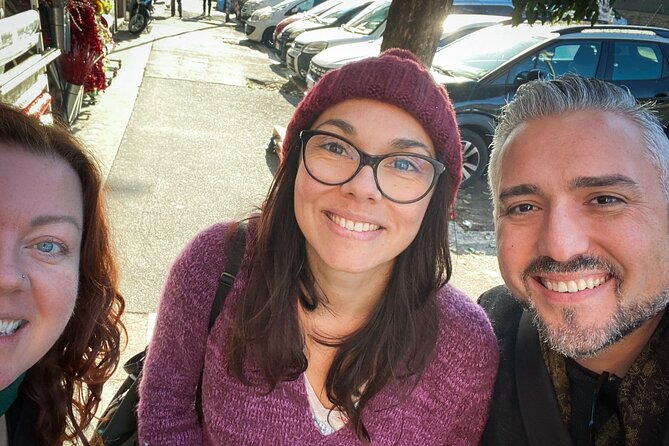
I would recommend this walk to you if you enjoy urban art, neighborhood stories, and a less familiar view of Rome. It suits repeat visitors particularly well, since you can spend a morning or afternoon seeing a part of the city that does not duplicate the classic central route.
It is also a good match for photographers. The murals offer plenty to frame, and Garbatella adds architecture and street scenes beyond the paintings themselves. Just remember that this is a guided walk, not an open-ended photo shoot.
Families and mixed-age groups may also find it appealing because the subject changes every few minutes. The route combines art, local stories, and outdoor movement rather than asking you to spend hours in a quiet gallery. Still, anyone who finds extended walking difficult should consider the nearly three-hour duration.
You may want to skip it if your Rome schedule is very short and this is your first visit. The Colosseum, Roman Forum, Vatican Museums, and central squares may deserve priority. If you have already covered those major sights, this tour becomes a more attractive addition.
How it compares with seeing murals alone
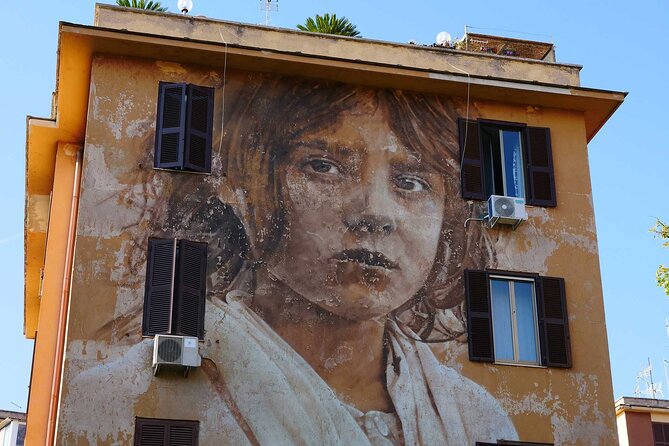
You can certainly visit Garbatella or Tor Marancia without a guide. The challenge is knowing what you are looking at and how to connect one work to the next. Street art has no wall label beside it, and the meaning of a mural can be easy to miss.
This tour solves that problem with a planned route and spoken explanations. You get both neighborhoods in one outing, hear about established and newer artists, and learn how the paintings were made.
The trade-off is freedom. You will follow the group’s timing and route rather than stopping wherever you like. If you want a self-guided day, use the tour as an introduction, then return to the area later with your camera and your own pace.
Cancellation and booking details
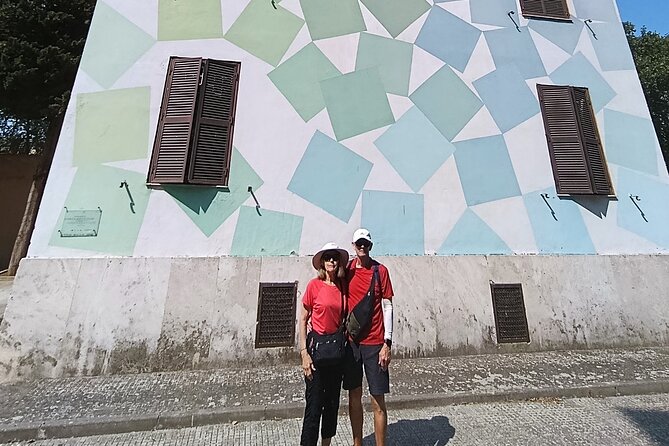
You can cancel for a full refund up to 24 hours before the local start time. Changes or cancellations made less than 24 hours before the experience are not refunded or accepted.
Because the tour depends on good weather, a cancellation caused by poor conditions gives you the option of another date or a full refund. This policy is useful for an outdoor activity, especially if you are planning your Rome schedule several days ahead.
The experience is often booked well in advance, with an average booking lead time of 49 days. That does not guarantee that every date will sell out, but it is a good reason to reserve early if your Rome dates are fixed.
Should you book it?
Book this tour if you want Rome beyond the ancient center and prefer art with a story attached. The combination of Garbatella’s architecture, Tor Marancia’s major murals, and Lisa’s personal guidance makes the experience more useful than simply hunting for walls on your own.
Skip it if your time in Rome is extremely limited, you dislike guided walking, or you need a weather-proof activity. For everyone else, $38.41 is a fair price for nearly three hours of local context, outdoor art, and neighborhoods that many first-time itineraries miss.
FAQ
How long does the Street Art Tour of Rome last?
The tour lasts approximately 2 hours 45 minutes. About 1 hour 30 minutes is spent in Quartiere Garbatella, followed by about 1 hour at the Museo Condominiale di Tor Marancia.
Where does the tour start?
The meeting point is Via Giacinto Pullino 103, 00154 Rome, Italy. The activity ends back at the same meeting point.
What neighborhoods does the tour visit?
The route visits Quartiere Garbatella and the Museo Condominiale di Tor Marancia. Both areas are known for street art, but the tour also covers architecture, neighborhood stories, and contemporary Rome.
Is the tour offered in English?
Yes. The tour is offered in English and includes an expert local guide.
Is bottled water included?
No. Bottled water is not included. You can refill your own bottle at one of Rome’s many public drinking fountains.
How many people can join the tour?
The maximum group size is 25 people.
What happens if the weather is poor?
The experience requires good weather. If it is canceled because of poor conditions, you can choose another date or receive a full refund.
Just added around Italy
- Torpignattara Photo Tour: melting pot, street art and politics★ 5.0 · 5 reviews
- Rome: Pigneto Urban Art Walking Tour with Italian Aperitif★ 5.0 · 2 reviews
- Art & Craft: Beer Tour with Street Art in Rome★ 4.5 · 6 reviews
- Street Art of Spanish Quarters and Maradona Tour★ 3.5 · 3 reviews
- The Spanish Quarters, Street Art and Local Market Tour in Naples★ 5.0 · 23 reviews
- Private Street Art Tour: Exploring Milan’s Hype Neighborhoods★ 5.0 · 2 reviews
- Street Art&Urban Vibes in Milan’s Most Exciting Rising Areas★ 4.4 · 5 reviews
- Spanish Streets – Maradona Street Art & Murals★ 5.0 · 3 reviews
Italy Street Art Tours, compared.
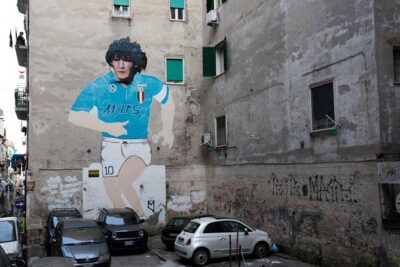
Naples Spanish Quarters Walking Tour Street Art, Folklore & Sweet
Read our review →
Spanish Quarters Folk Street Art w/ Sweets Tasting
Read our review →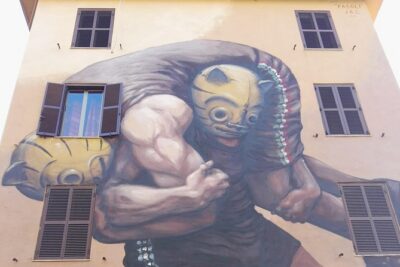
Naples Essentials: Monuments, Local Life & Street Art
Read our review →
4×4 tour of Orgosolo: Murals and typical lunch at the shepherd’s
Read our review →
Rione Sanità tour among baroque, revival, street art & food
Read our review →
The Spanish Quarters, Street Art and Local Market
Read our review →Browse the lists this tour appears in