
REVIEW · LISBON
Street Art at Lisbon
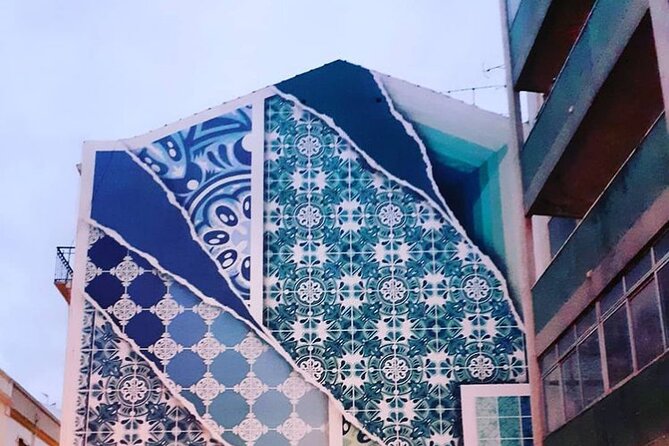
Lisbon’s best street art is often tucked beside old stone lanes, steep viewpoints, and everyday city life. This private walk connects Rossio, Alfama, Mouraria, Graça, and São Vicente, showing you how modern murals sit alongside some of Lisbon’s oldest neighborhoods.
I like the personal format, since your guide can explain Portuguese artists rather than simply point at painted walls. I also like the parking garage gallery at Miradouro Chão do Loureiro, an unusual stop that gives the tour more range than a standard walk through the center.
The main caution is physical: this is a three to four-hour walking tour through hilly parts of Lisbon. You should be ready for a fair amount of walking, and the experience may feel less satisfying if you want a fixed collection of famous monuments instead of changing outdoor art.
Key points at a glance
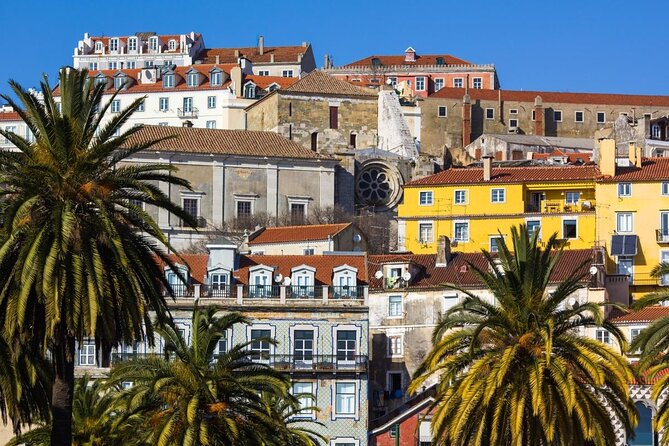
- A private walk through six central areas: You visit Rossio, Chiado, Chão do Loureiro, Alfama, Mouraria, Graça, and São Vicente with only your own group.
- Bordalo II in Chiado: You see work connected to one of Portugal’s best-known street artists and his family’s artistic legacy.
- A parking garage turned art stop: The murals at Miradouro Chão do Loureiro provide one of the tour’s most distinctive moments.
- Street art beside old Lisbon: Alfama and Mouraria show how new paintings and older city traditions share the same streets.
- A guide-led interpretation: The walk covers Portuguese and international artists, plus the way street art has helped renew parts of Lisbon.
- A three-hour fitness commitment: Good shoes and a steady pace matter more here than museum-style comfort.
Why this walk gives Lisbon a different face
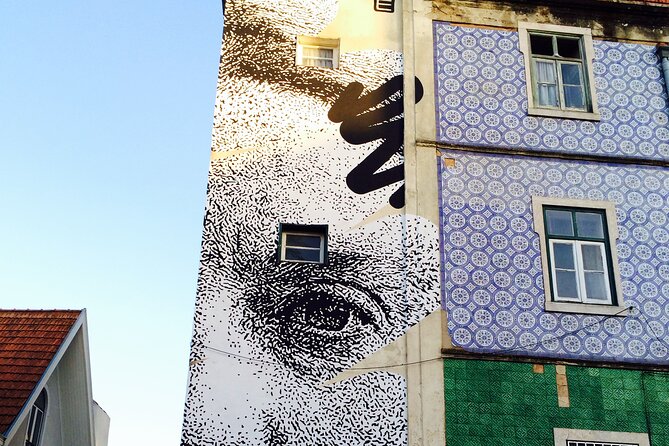
Lisbon is easy to remember for tiled façades, yellow trams, lookout points, and steep streets. This tour adds another layer. Instead of treating street art as decoration between major sights, it uses murals and graffiti to explain how the city changes and how artists respond to it.
You begin at Rua 1º de Dezembro, near Rossio Square. That location is useful because it places you in the city center from the start, with historic streets and major neighborhoods within walking distance. The tour ends back at the same meeting point, so you do not need to arrange a separate pickup or work out where to collect your belongings afterward.
The walk is private, which matters here. Street art is not displayed in a neat museum sequence. A guide can adjust the pace, explain why a work matters, and spend more time on a piece that catches your eye. If you are curious about technique, local artists, or the social side of public art, the format gives you room to ask.
Guide Filipa is associated with this experience, and the feedback about her points to a friendly, professional approach. That personal connection can make a major difference on a walk where the story behind a mural is just as important as the image itself.
A few more street art tours around Lisbon worth a look
- Lisbon: Street Art Tour
★ 4.9 · 1,324 reviews - Lisbon: Kickstart Street Art Walking Tour
★ 4.9 · 717 reviews - Lisbon: Banksy Museum Permanent Exhibition Entry Ticket
★ 4.7 · 506 reviews
Rossio Square starts the story
The first stop is Praça Dom Pedro IV, better known as Rossio Square. You spend about 20 minutes here, beginning in what is described as the heart of Lisbon.
Rossio is a smart starting point because it gives you the city’s central frame before the tour moves into smaller neighborhoods. The square is open, busy, and surrounded by the movement of central Lisbon. From here, you can start to see the contrast the tour is built around: formal public space on one side, informal art in side streets and less expected places on the other.
Do not expect Rossio itself to be a large street art gallery. Its value is as a point of orientation and a reminder that this tour is about the city as a whole, not just isolated murals. You begin with a familiar Lisbon landmark, then move toward art that is easier to miss on your own.
Chiado and the work of Bordalo II
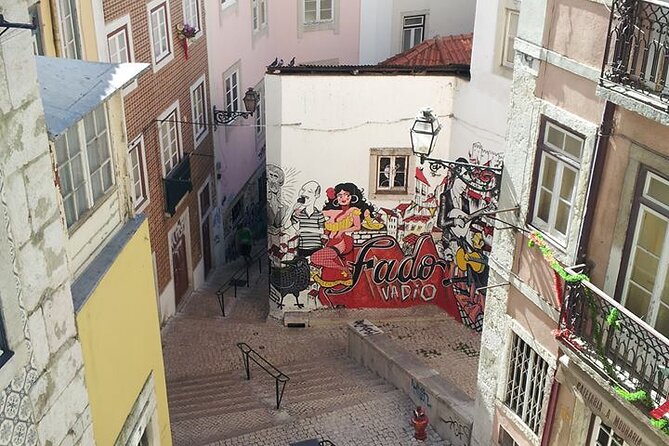
The Chiado stop focuses on work by Bordalo II. His artist name honors his grandfather, the painter Bordalo, and signals a link between family tradition and a new form of public art.
That background gives the stop more meaning than a quick photograph. You can consider how an artist takes an inherited name and artistic history, then reshapes it through street work. The experience presents Bordalo II as part of both Portuguese art and the wider international street art scene.
Chiado is also a strong setting for this discussion because it is one of Lisbon’s best-known central districts. Here, modern art appears within a polished urban area rather than only in neglected corners. I like that contrast. It asks you to look at street art as a serious part of the city, not simply as a splash of color on a forgotten wall.
The stop lasts about 20 minutes. That is enough for an explanation and a close look, but the exact art you see can depend on what remains in place at the time of your visit. Outdoor work changes, and you should think of the tour as a current view of Lisbon’s public art rather than a permanent museum collection.
Chão do Loureiro reveals an unexpected gallery
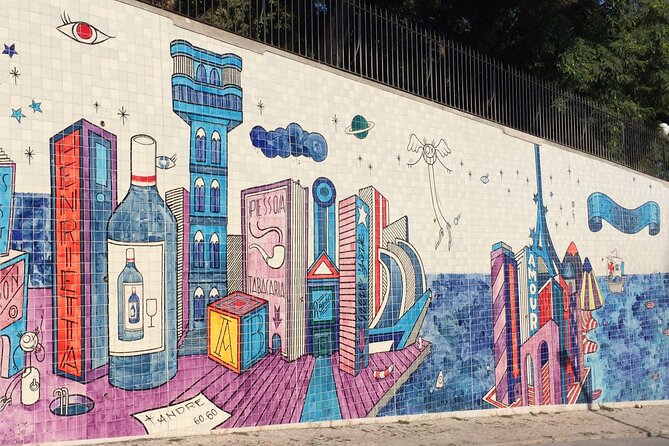
The Miradouro Chão do Loureiro stop lasts about 30 minutes and centers on a car parking area covered with street art murals. This is one of the tour’s most unusual details, and it was also singled out as a highlight in the available feedback.
A parking garage may sound like an odd sightseeing stop. That is precisely why it works. The murals show how art can reclaim a functional, ordinary place and turn it into part of the city’s visual character. You are not just moving from one famous wall to another. You are seeing how public art can change the feeling of a space people use for everyday errands.
This stop also gives you a useful lesson in looking. In Lisbon, street art may appear on a building, a retaining wall, or a parking structure. If you only follow the main monuments, you can miss much of it. A guide who knows where to look saves you time and helps you notice work you might otherwise walk past.
The parking garage is likely to appeal most if you enjoy surprising locations and large-scale murals. If your idea of street art is a single iconic wall, this stop may feel less conventional, but that is part of its appeal.
Same walls, a different guide:
- Lisbon: Street Art Tuk Tuk Tour
★ 4.9 · 372 reviews - LISBON Street Art Tour
★ 5.0 · 371 reviews - 3-Hour Guided Street Art Walking Tour of Lisbon
★ 5.0 · 278 reviews - Lisbon Street Art Walking Tour
★ 5.0 · 141 reviews
Alfama brings modern art into old streets
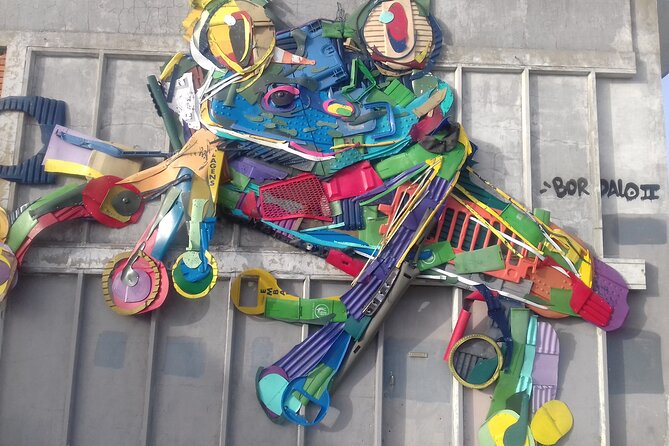
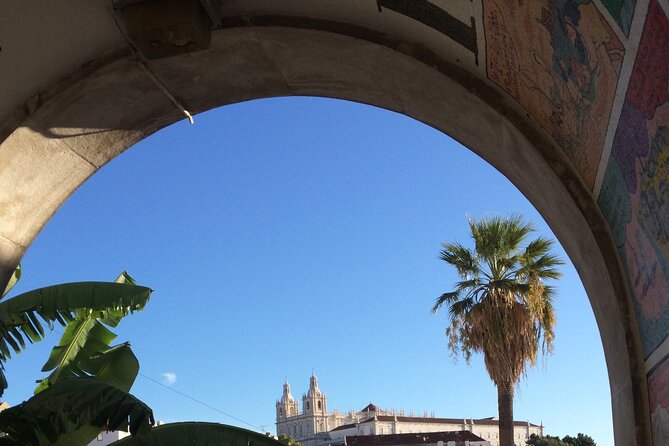
The tour then moves into Alfama, where you spend about 30 minutes looking for street art in the historic neighborhood. Alfama is one of Lisbon’s oldest areas, known for narrow streets and a strong sense of age. Placing contemporary work here creates one of the clearest contrasts on the route.
The art is not presented as a replacement for Alfama’s older character. Instead, it becomes another layer. You see how artists work within a district shaped by centuries of daily life, and you can compare the scale and mood of public murals with the smaller details of the surrounding streets.
This part of the walk may be especially useful if you have already planned to visit Alfama for its traditional atmosphere. The guide gives you a second reason to pay attention. Look beyond the obvious views and historic buildings, since the art may be found in less expected spots.
Because Alfama is hilly and made up of uneven streets, this is one place where comfortable footwear matters. The tour information says most people can take part, but the length and terrain still call for a reasonable level of fitness. It is not a seated sightseeing trip.
Mouraria shows the city in transition
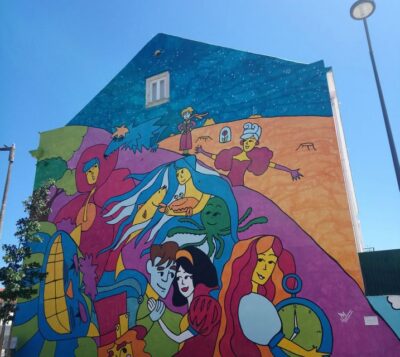
In Bairro da Mouraria, the walk lasts about 40 minutes. The focus is on the many forms and techniques used in the area’s street art.
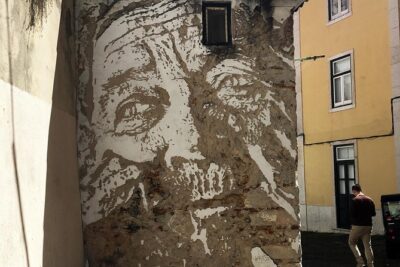
Mouraria is an effective place to discuss change. The tour explains how street art has helped renew parts of Lisbon, and this neighborhood lets you see that idea at street level. Art can bring attention to a place, give blank walls a new purpose, and create a visual identity that belongs to the people who live and work nearby.
I would pay close attention to the techniques here rather than rushing from one mural to the next. The stop is not only about finding pretty pictures. It is also about understanding how artists use different surfaces and methods, and how public art can alter your reading of a neighborhood.
Forty minutes gives this area more space than a quick photo stop. It also makes the overall tour feel like a walk through working districts rather than a checklist of attractions. You remain in the city’s ordinary streets, where the art is part of the setting instead of being separated from it.
Graça and São Vicente bring newer work
The final neighborhood section covers Graça and São Vicente, with about 40 minutes devoted to newer street art. This gives the tour a sense of movement. You are not looking only at established works or older examples. You also see how the scene continues to develop.
That focus on recent pieces is valuable because outdoor art changes quickly. Some works disappear, get painted over, or are replaced. A guide can help you understand that temporary quality and point out what is current at the time of your visit.
Graça and São Vicente also keep the tour connected to Lisbon’s higher districts, where walking can involve inclines. The route is rewarding for people who enjoy seeing neighborhoods on foot, but you should not underestimate the effort. One available comment specifically notes the need for a relative degree of fitness for the three-hour experience.
The final section is a good fit if you want more than the city center. It takes you into districts where you can see residential Lisbon and newer public art together. You may finish with a better sense of how street art works across the city, from central squares to neighborhood streets.
What the private format is worth at $98.48
At $98.48 per person, this is not a bargain-priced group stroll. The value depends on how much you want personal attention and interpretation.
The price makes more sense if you are traveling with a small private group and want to ask questions freely. You are paying for a guide’s time across three to four hours, not for admission to a monument. The main sights on the route are free, and the experience does not include monument tickets.
I see the strongest value in the route design. You move through several districts, including places you might not connect with street art on your own. The parking garage gallery, Bordalo II’s work, and the newer pieces in Graça and São Vicente give the walk a clear identity.
The price is harder to justify if you are happy to wander without context, or if you mainly want to photograph famous Lisbon attractions. You could see public art independently, but you would need to find the locations and make sense of the artists and techniques yourself.
Coffee or tea is included, which is a pleasant extra rather than a major reason to book. The real purchase is time with a private guide and a focused way to read Lisbon’s public spaces.
Who will enjoy this Lisbon art walk
I would recommend this experience to you if you:
- Like contemporary art but also want historic neighborhoods
- Prefer private guiding to a large group
- Want to see how art fits into normal city life
- Enjoy walking and can manage three to four hours on foot
- Have already seen some traditional Lisbon sights and want a different angle
- Are interested in Portuguese artists such as Bordalo II
It may not suit you if you have limited walking ability, want a short activity, or prefer indoor galleries with guaranteed works on display. Street art changes, so the exact pieces available on your date cannot be treated like a fixed museum collection.
The tour is also less useful for someone seeking monument admission. Tickets to monuments are not included, and the walk is centered on public art rather than entering major historic sites.
Practical details before you go
Your meeting point is Rua 1º de Dezembro in Lisbon, and the activity returns there at the end. It is near public transportation, which makes the start and finish fairly straightforward.
A mobile ticket is provided, and confirmation arrives when you book. Service animals are allowed, and most people can participate, though the walking time and hills deserve attention.
Free cancellation is available if you cancel at least 24 hours before the start time. Cancellations made later, as well as changes made inside that 24-hour window, are not accepted for a refund. The cut-off follows Lisbon local time.
Wear shoes suited to uneven streets and plan for a steady walk. Since the tour includes historic districts and lookout areas, the surface and slope may change as you go. Bring enough water for your own needs, and leave room in your schedule rather than booking another tight appointment immediately afterward.
Should you book Street Art at Lisbon?
Book it if you want a private, human-scale look at Lisbon’s changing art scene. The strongest reasons are the unusual parking garage gallery, the connection to Bordalo II, and the chance to see modern work in Alfama, Mouraria, Graça, and São Vicente rather than only in central streets.
I would be more cautious if you are not comfortable walking for three hours or if $98.48 feels high for an activity with no paid monument entry. For the right person, though, the price buys a well-focused way to see Lisbon beyond the usual postcard stops, with Filipa or another private guide helping you notice the city’s art where you might otherwise miss it.
FAQ
Where does the tour start?
The tour starts at Rua 1º de Dezembro, R. 1º de Dezembro, Lisbon, Portugal.
Where does the tour finish?
The activity ends back at the meeting point.
How long does the experience last?
The tour lasts approximately three to four hours.
How much does the tour cost?
The listed price is $98.48 per person.
Is this a private tour?
Yes. Only your group participates in the private activity.
Which Lisbon neighborhoods are included?
The route includes Rossio Square, Chiado, Miradouro Chão do Loureiro, Alfama, Bairro da Mouraria, Graça, and São Vicente.
Are monument tickets included?
No. Tickets to monuments are not included.
Can I cancel for a full refund?
Yes, if you cancel at least 24 hours before the experience start time. Cancellations made less than 24 hours in advance are not refunded.
Just added around Lisbon
- Street Art Tour by Tuk Tuk Joy★ 5.0 · 2 reviews
- Urban Art City★ 5.0 · 2 reviews
- Street Art – Tuk Tuk Tour★ 5.0 · 17 reviews
- Lisbon Street Art and Lookout Point Tour★ 5.0 · 17 reviews
- The Real Lisbon Street Art Private Guided Tour by Minivan★ 5.0 · 23 reviews
- Private Tuk Tuk of the Old Town Lisbon and Street Art Highlights★ 5.0 · 20 reviews
- Lisbon Street Art – Private Tuk Tuk Tour with pickup★ 5.0 · 17 reviews
- Lisbon Street Art Walk★ 5.0 · 17 reviews
Lisbon Street Art Tours, compared.


Banksy Museum Permanent Exhibition Entry Ticket
Read our review →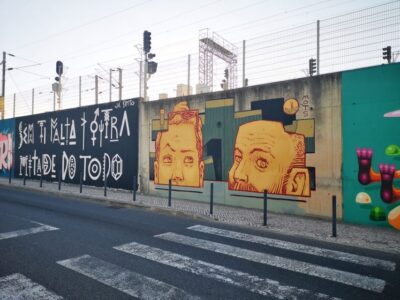
3-Hour Guided Street Art Walking Tour of Lisbon
Read our review →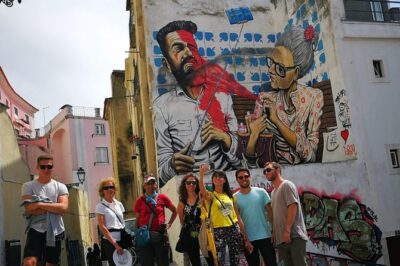

Browse the lists this tour appears in