
REVIEW · NEW YORK CITY
Street art tour at Soho
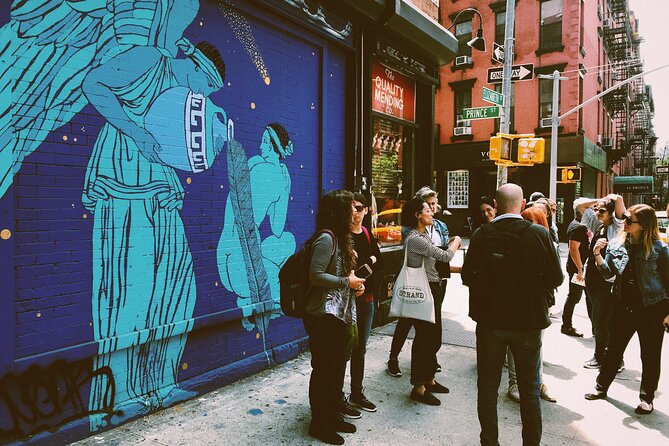
New York street art is not confined to galleries. This two-hour SoHo walk connects major public artworks with the social questions behind them, from Forrest Myers’s towering minimalist piece to the famous Bowery wall. The route ends at a mural site tied to Keith Haring and the city’s early graffiti era.
I like the private format, which lets your group of up to six set the pace and ask questions without competing with a large crowd. I also like the useful finish: your guide can point you toward other murals to see after the tour. The main limitation is that the experience depends on good weather, and the advertised route is compact rather than a broad survey of all New York street art.
Key points to know before booking
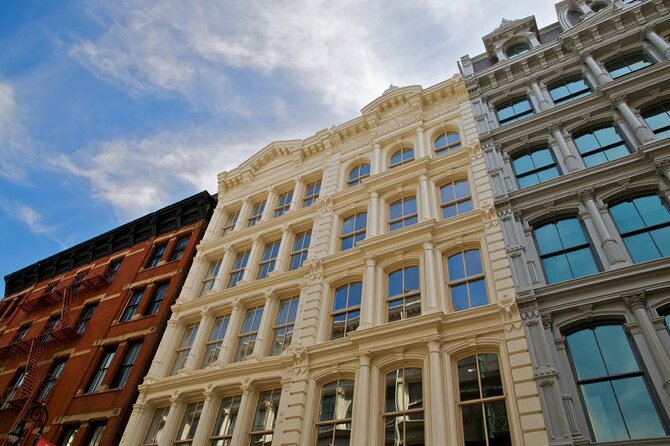
- The Wall begins the story: See Forrest Myers’s eight-story minimalist work, created in 1973 and known as The Gateway to Soho.
- Three distinct stops: The route links The Wall, Elizabeth Street Garden, and the Bowery Mural.
- Private for up to six: Your group receives the guide’s full attention instead of joining a large public walk.
- Guides bring art and social context: Ortal, Adi, and Avitel have led tours praised for energy, clear explanations, and practical New York suggestions.
- A useful end point: The tour finishes at 76 East Houston Street, beside the Bowery Mural, with recommendations for more walls to visit.
- Simple morning timing: Meet at 9:00 am near Broadway-Lafayette, with a mobile ticket and English-language service.
Why this short SoHo walk works
This is not a hit-and-run photo stop tour. The route gives you time to look, ask questions, and connect public art with the changing streets around it. That matters in SoHo, where a work can be easy to miss if you focus only on shops, traffic, and architecture.
The private setup is the strongest practical feature. With no more than six people in your party, you can pause when something catches your eye or ask for more context about an artist, a wall, or the neighborhood. A fixed flat rate can also be good value for a family or small group, though the actual price is not provided here. Compare the total group price with per-person tours before booking.
The walk is offered in English and begins at 9:00 am. That early start can help you see the streets before the day feels too crowded, though the tour still takes place outdoors and requires ordinary walking comfort. The route ends close to where it begins, making it easy to continue around the Lower East Side, Nolita, or SoHo afterward.
The guide is important here. Ortal is described as energetic, lighthearted, and good at keeping a group engaged. Adi is praised for a professional and pleasant approach, while Avitel is noted for offering restaurant and museum suggestions. The operator also uses guides involved in art, which gives the discussion a stronger foundation than a quick list of artist names.
One point to keep in mind: the available feedback includes strong praise for related art experiences from the same provider, including gallery visits and museum tours. That supports the provider’s art focus, but it does not mean every part of this street route will suit every taste. If you want a long, citywide survey of murals, this two-hour walk may feel limited. If you want a focused introduction with room for questions, the size and pace work in its favor.
A few more street art tours around the USA worth a look
- Wynwood Graffiti Golf Cart Small-Group Tour
★ 5.0 · 1,646 reviews - Murals of Nashville Instagram Tour by Golf Cart
★ 5.0 · 950 reviews - Miami: Wynwood Walls Skip-the-Line Ticket
★ 4.6 · 840 reviews
Meeting at Broadway-Lafayette at 9:00 am
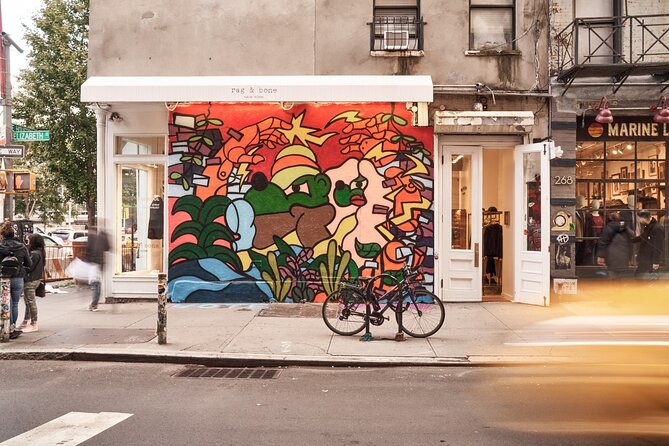
The tour starts at Broadway-Lafayette Street and East Houston Street, at 9:00 am. This is a useful meeting point because the route begins in the SoHo area and later moves toward Nolita and the Bowery.
Arrive with your mobile ticket ready and allow a few minutes to find the exact corner. The information gives the start as Broadway-Lafayette St, Lafayette Street, and East Houston Street. Since the meeting point is near public transportation, you can reach it without arranging a special transfer.
The walk ends at 76 East Houston Street, the address of the Bowery Mural. That finish is practical. You are not left at an isolated attraction or sent back across town. From there, you can continue on foot into the surrounding neighborhoods or use nearby public transportation.
The exact walking distance and route timing between stops are not provided, so plan for a full outdoor walking experience rather than three quick roadside views. Wear shoes you can use comfortably for two hours, and bring protection from sun or rain. The tour requires good weather and may be rescheduled or canceled if conditions are poor.
The Wall and the Gateway to SoHo
The first major stop is The Wall, also called The Gateway to Soho. Forrest Myers created this minimalist artwork in 1973. At eight stories high, it was part of the building at 599 Broadway until 2002.
That scale is what makes the piece worth discussing with a guide. A minimalist work can look simple at first glance, especially when viewed from a busy sidewalk. Standing below it gives you a better sense of how it relates to the building and the street around it.
The work also offers a useful reminder that public art does not have to resemble a painted mural. Street art tours often focus on bright color and obvious lettering, but this stop broadens the definition. You begin with a large architectural artwork, then move toward sculpture and mural culture.
The 2002 detail matters because the work’s connection to its original building changed. Your guide can help place the piece in the story of SoHo’s changing streets, though the supplied tour information does not specify exactly how the work is displayed today. You should expect discussion and observation here, not a museum-style interior visit.
For photographers, the height creates a challenge. The full work may be difficult to capture from street level, particularly among buildings and traffic. That is another reason to pay attention to the explanation rather than treating the stop as a simple picture opportunity.
Elizabeth Street Garden in Nolita
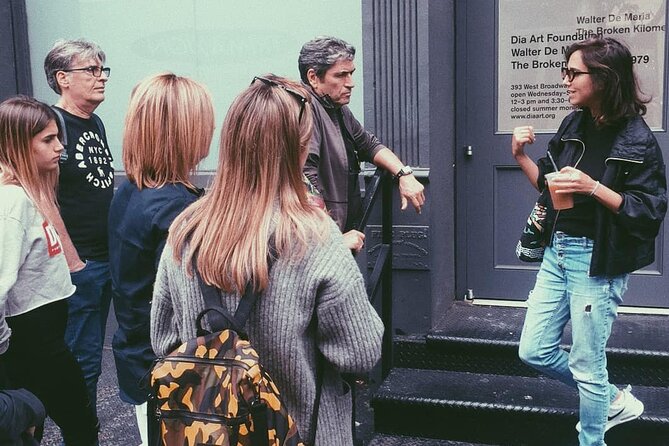
The route then reaches Elizabeth Street Garden, a one-acre sculpture garden in Nolita. This stop shifts the mood from a huge work integrated into a building to a smaller open-air space filled with sculpture.
The garden is operated year-round by neighborhood volunteers. It also hosts more than 200 free public events each year, including educational, wellness, and arts programs for children, older people, and others who live and work nearby. Those details give the stop a community angle that a standard mural walk might miss.
I like this part of the route because it shows public art as an active neighborhood resource, not simply decoration. The garden’s value comes from both its sculptures and the people who maintain and program it. You get a chance to consider who public art serves, who cares for it, and how a small urban space can support local life.
There is also a practical caution. A garden is not the same as a permanent gallery, and its appearance or access may vary with events, weather, or local operations. The tour information confirms that volunteers operate it year-round, but it does not promise a particular sculpture display or event on your tour date.
If you are interested in the social side of art, this may be the most rewarding stop. It adds balance to the route. Instead of seeing only famous walls, you see a community-supported place with free programming and a clear local purpose.
Same walls, a different guide:
- Nashville Combo Tour: Sightseeing, Murals & Brewery/Distillery
★ 5.0 · 641 reviews - NYC: Brooklyn Graffiti Workshop with Local Artist
★ 4.8 · 570 reviews - Houston’s Official City & Mural Tour!
★ 4.0 · 568 reviews - NYC: Brooklyn Graffiti & Street Art Walking Tour in Bushwick
★ 4.8 · 492 reviews
The Bowery Mural and Keith Haring’s mark
The final stop is the Bowery Mural, at Houston Street and the Bowery. The concrete wall became a popular graffiti site in the early 1980s, and Keith Haring created a large mural there in 1982.
This is a strong place to end because it ties the tour to New York’s graffiti era and to one of the city’s best-known public-art addresses. The wall has a clear physical presence, and the setting helps you understand why large-scale painting became such a visible part of New York’s street culture.
The wording of the stop is important: Keith Haring created a mural on the wall in 1982. The tour is not promising that the original artwork remains unchanged today. Murals in public spaces can change, be replaced, or be painted over, so you should treat the site as a location with an important artistic story rather than assume you are seeing an untouched historical piece.
That distinction does not make the stop less useful. In fact, it gives your guide room to explain how public walls evolve. The Bowery Mural is a place where art, ownership, preservation, and changing neighborhood identity meet.
The end point is also convenient for extending your day. You receive recommendations for other wall murals after the tour, so the guide can help you continue exploring instead of simply sending you home. Ask for those suggestions before the tour ends, especially if you want to build your own afternoon route.
What the private format adds
A private tour for only your group can change the experience in small but important ways. You do not have to worry about slowing down a large party when you need a better view or want to ask about a detail. If your group includes children, a private format can also make it easier to keep the pace comfortable.
The tour has been described as a good choice for families, including children who enjoyed returning to the route a year later. That does not guarantee that every child will stay interested for two hours, but the private structure gives the guide more room to adjust explanations and keep the conversation moving.
It can also work well for friends with different levels of art knowledge. One person can ask about technique, another can ask about neighborhood change, and someone else can focus on practical recommendations. The guide’s reported energy and light humor are useful here because public art discussions can become dry when they rely only on dates and names.
The tradeoff is cost. A flat rate for up to six people may be sensible for a full group, but less attractive for one or two participants if a per-person walking tour is available elsewhere. Since no price is supplied, calculate the total against your group size before booking.
The guides and the quality of the explanation
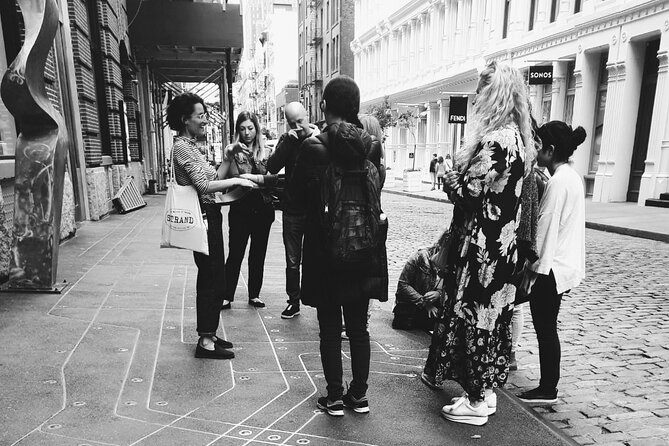
The guide can make or break a short art walk. The names connected with this provider include Ortal, Adi, and Avitel. Ortal is described as energetic, attentive, and lighthearted, with a strong ability to keep the group focused. Adi is associated with an interesting, professional tour in a pleasant setting.
Avitel is noted for giving restaurant and museum suggestions, which is useful if you want the walk to shape the rest of your New York day. The provider’s guides are also involved in art, giving them a personal connection to the subject rather than relying only on memorized facts.
The tour has also been especially well received by Hebrew speakers interested in art and social understanding. The listed service is in English, so do not assume another language is included. If language is important to your booking, confirm it before paying.
The strongest pattern is not one single fact about the route. It is the combination of explanation, energy, and attention to the group. You are paying for interpretation as much as for the three locations. If you prefer to wander silently and take your own photos, you may get more value from a self-guided walk. If you want help making sense of what you are seeing, the guide is the main reason to book.
Who will get the most from this tour
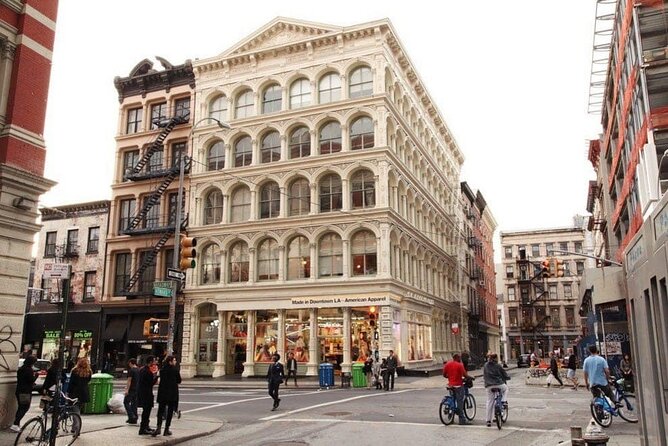
I would recommend this walk to:
- First-time New York visitors who want an introduction to public art without committing half a day.
- Returning New York visitors who want a different way to see SoHo and Nolita.
- Small families who benefit from a private pace.
- Friends who want art context and ideas for the rest of the day.
- People curious about the connection between public art and neighborhood life.
It may be less suitable if you want a large number of murals, a long route through several boroughs, or a guaranteed look at one specific current artwork. The listed route is focused on three locations, and the exact condition of outdoor work can change.
Most people can participate, and service animals are allowed. The tour is near public transportation, but the details do not state whether every part of the route is step-free. If that matters to you, ask the provider before booking.
Weather, cancellations, and planning the morning
Free cancellation is available when you cancel at least 24 hours before the 9:00 am start time. Inside that 24-hour window, changes are not accepted and the payment is not refunded.
Because the tour requires good weather, the provider may offer another date or a full refund if conditions cause cancellation. The same applies if the minimum number of participants is not met. Keep that rule in mind if you are building a tightly timed day around the walk.
I would avoid scheduling an important timed attraction immediately afterward. The tour lasts about two hours, but outdoor routes can run a little differently depending on questions and walking pace. Since it ends at the Bowery Mural, plan a flexible lunch or neighborhood walk rather than a rushed cross-town appointment.
Should you book the SoHo street art tour?
Book it if you want a small, guided introduction to public art in SoHo and Nolita, especially if you are traveling with up to five companions. The route has variety: a huge minimalist work, a volunteer-run sculpture garden, and a famous mural wall linked to Keith Haring and early-1980s graffiti.
The best value comes from the private format and the guide’s interpretation. You also leave with suggestions for more murals, museums, and places to eat, depending on your guide. For a group of six, the flat rate may make good financial sense.
Skip it if your priority is a long mural crawl, independent wandering, or indoor art during uncertain weather. For everyone else, this is a focused two-hour way to see a side of Lower Manhattan that is easy to miss when you stick to the usual sightseeing route.
FAQ
How long does the SoHo street art tour last?
The tour lasts approximately two hours.
Where does the tour begin?
It begins at Broadway-Lafayette Street and East Houston Street in New York City.
What time does the tour start?
The start time is 9:00 am.
Where does the tour end?
The tour ends at the Bowery Mural at 76 East Houston Street, New York, NY 10012.
Is this a private tour?
Yes. Only your group participates, and the group can be as large as six people.
What happens if the weather is poor?
The experience requires good weather. If it is canceled because of poor conditions, you will be offered another date or a full refund.
Just added around the USA
- Wynwood Walls Street Art & Neighborhood Walking Tour★ 4.9 · 9 reviews
- Urban Art and Historical Electric Bike Tour★ 5.0 · 3 reviews
- Tucson Food Tours- Locally Owned Mural and History Tour★ 5.0 · 10 reviews
- St. Pete’s Must-Do Murals Tour — The Premier Street Art Trolley★ 5.0 · 22 reviews
- Tijuana Urban Art Walk from San Diego★ 4.0 · 8 reviews
- Sacramento Street Art Walking Tour – See the Murals Sacramento is Famous For★ 5.0 · 6 reviews
- Downtown Sacramento Mural and Art Walking Tour★ 5.0 · 4 reviews
- Would I Lie To You? Mural Walks★ 5.0 · 3 reviews
New York City Street Art Tours, compared.
Brooklyn Graffiti & Street Art Walking Tour in Bushwick
Read our review →
Hip-Hop, Murals, Sports, and Dangerous Neighborhoods Tour
Read our review →
Hip-Hop, Murals, Sports & Dangerous Neighborhoods Tour
Read our review →Browse the lists this tour appears in