REVIEW · STREET ART TOURS
Street Art in Depth 4 days in Casablanca and Rabat
Casablanca and Rabat show you a side of Morocco that most classic sightseeing skips: artists painting old city walls while festival teams handle the hard work behind the scenes. You’ll meet people connected with Sbagha Bagha and JIDAR, then search out murals across medinas and city streets.
I like the access to local festival organizers and the chance to see both famous sights and less obvious painted walls. I also like the private format, with your own group, an English-speaking driver, hotel or riad stays, and transport between cities.
The main drawback is the price, $1,862.22 per person, which covers several useful services but leaves lunch, dinner, drinks, tips, and personal spending to you. The plan also needs a little clarification, since it lists three nights but four breakfasts.
Key points at a glance
- Meet the people behind the murals: Spend time with Sbagha Bagha and JIDAR festival teams, not just look at finished walls.
- See two different Moroccan cities: Casablanca brings modern urban Morocco and major landmarks, while Rabat combines old medina walls with a capital city setting.
- Search for street art with local help: A resident artist in Casablanca points out painted walls that are easy to miss on your own.
- Private four-day format: Only your group takes part, with an English-speaking driver and transportation included.
- Classic sights are part of the mix: The plan includes Place Mohammed V, the Grand Theater de Casablanca, Quartier Habous, Ain Diab, and Hassan II Mosque.
- Plan for extra costs: Meals beyond breakfast, drinks, tips, and personal purchases are not included.
Why this four-day art trip feels different
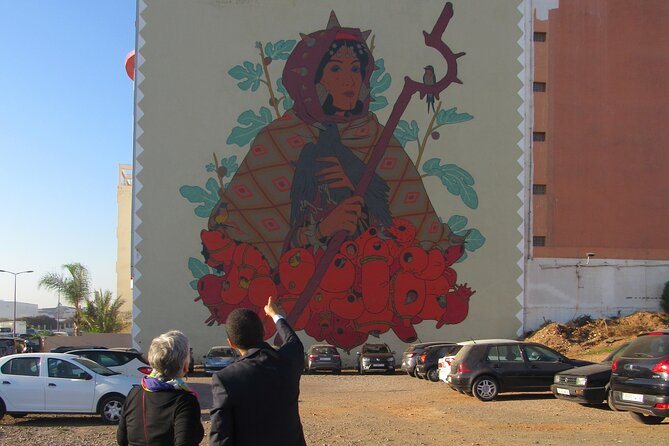
Most city tours show you what is already finished. This one tries to explain how public art gets made. In Casablanca, you learn about the Sbagha Bagha festival, its team, its artists, and the practical work involved in turning city walls into large painted pieces.
That behind-the-scenes angle is the heart of the experience. You are not simply driven past murals for a quick photo. You have the chance to meet artists as they create their work and ask how a festival brings them into the city.
The experience also gives you a useful contrast between Casablanca and Rabat. Casablanca is Morocco’s biggest city and economic center, with a more cosmopolitan feel. Rabat is the national capital, where historic walls and newer public art share the same city space.
I would think of this as an art-focused city tour with accommodation, rather than a dedicated painting workshop. You will look, discuss, and meet people involved in the festivals. There is no promise that you will paint a mural yourself.
Other street art tours people book around the world:
- Moco Museum Amsterdam Entrance Tickets with Banksy & More
★ 4.4 · 10,088 reviews - Medellin: Comuna 13 Graffiti Tour, Cable Car & Street Food
★ 4.8 · 9,046 reviews - CDMX: Xochimilco, Coyoacan, Frida Kahlo Museum & Murals Tour
★ 4.4 · 3,025 reviews
Casablanca’s painted medina walls and festival work
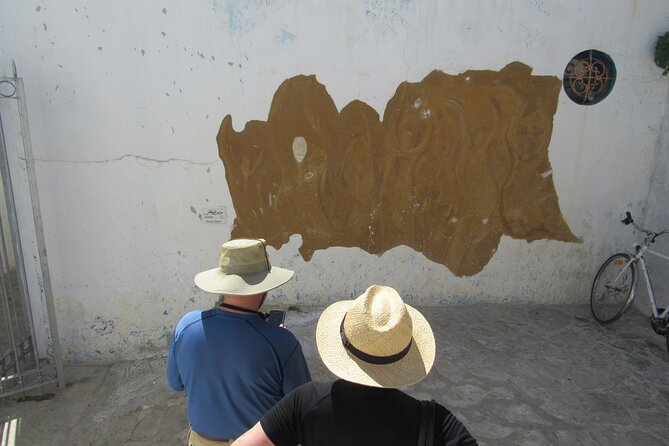
Your first day is centered on Casablanca and lasts about four hours. A member of the Sbagha Bagha team joins you, along with a resident artist who can show you painted walls in the old medina and elsewhere in the city.
That local connection matters. Street art is often scattered across side streets, older districts, and walls that have little meaning to someone passing through quickly. A person involved in the local scene can help you understand where the art is, why the festival uses certain spaces, and how the city’s older fabric affects the work.
You also get a look at festival operations. The practical side of public art can be easy to overlook: supporting artists, arranging their time in the city, and managing large walls in active neighborhoods. This part should suit you if you like the story behind an artwork as much as the finished image.
The first day is not overloaded with classic monuments. That is a good thing for an art-focused visit, since it leaves room for conversation and close attention. If you want a packed checklist of Casablanca sights immediately, you may find this opening day more specialized than expected.
Casablanca beyond the murals
The second Casablanca day lasts about five hours and adds the city’s main sights. You are scheduled to see Place Mohammed V, the Grand Theater de Casablanca, Quartier Habous, Ain Diab, and Hassan II Mosque.
Place Mohammed V is a natural place to read Casablanca’s city character. The buildings around the central area show the combination of French-colonial planning and Moroccan design often described as Moresque architecture. This same blend appears in Quartier Habous, where the setting gives you a different view of the city from the old medina.
Ain Diab brings another side of Casablanca, while Hassan II Mosque gives the day its biggest landmark. The mosque sits beside the Atlantic and is known for its very tall minaret. It is one of the city’s defining sights, so including it keeps the itinerary from becoming too narrow.
The description does not specify entry arrangements for every sight, and the itinerary lists admission as free. I would confirm in advance whether the schedule includes interior admission to Hassan II Mosque or views from outside. That small question matters because the mosque is a major part of Casablanca sightseeing, yet the tour’s strongest focus remains street art.
Moving from Casablanca to Rabat
On the third day, you move to Rabat for two days connected with the JIDAR Festival team. The listed visit lasts about five hours and focuses on how artists are selected and how they work on the large old walls of the medina.
This is a useful change of emphasis. Casablanca introduces you to Sbagha Bagha and the city’s painted walls. Rabat adds the organizing and selection side of another major art event. You get to compare two festival settings instead of treating Moroccan street art as one single style or program.
The medina walls are especially important here. Large public works can change the feel of an older district, and the visit gives you a chance to consider that relationship directly. You can ask how artists are chosen, how their work fits the location, and what it takes to paint at this scale.
The schedule leaves room for personal discovery outside the formal visits, but meals are at leisure and not included beyond the listed breakfasts. Rabat therefore works best if you like a guided core program with some independent time around it.
A few more street art tours around the world worth a look
- Moco Museum Barcelona Banksy & More
★ 4.6 · 2,340 reviews - Amsterdam: Streetart Museum STRAAT Entrance Ticket
★ 4.8 · 2,137 reviews - Belfast: Murals Taxi Tour
★ 4.9 · 2,047 reviews - Blackbeard to Banksy – The Ultimate Walking Tour of Bristol
★ 5.0 · 1,961 reviews
Rabat’s murals by private vehicle
Your fourth day is a five-hour city tour by car, designed to show murals outside the main walking areas. This is one of the most practical parts of the trip. Street art is rarely concentrated in one tidy museum district, and private transport lets you cover more ground than a walking route.
The tour presents Rabat as both an old and modern city. That contrast is central to the experience. You are not looking only at isolated paintings. You are seeing how large wall works sit among older streets, city infrastructure, and everyday urban life.
The information does not provide a fixed list of mural locations, so the exact route may depend on what is painted and available during your visit. Public art changes. Walls are repainted, completed, altered, or sometimes removed. A flexible route can be an advantage, especially during a festival, but you should not expect a permanent museum collection with guaranteed works.
Each night is spent in a riad, according to the tour description. A riad stay can make the lodging feel more connected to Moroccan architecture than a standard chain hotel, though the specific properties are not named. Ask for the hotel or riad details before booking if room style or location matters to you.
What the private format changes
This is a private activity, so only your group participates. That gives you more control than a large coach tour. You can ask more questions about the artists, pause longer at a wall, or discuss whether a work fits its setting without trying to keep up with a crowd.
Pickup is offered, and the stated start time is 8:00 a.m. Early starts are useful for a full sightseeing day, but you should be ready to begin on time. The included English-speaking driver handles transportation, and the tour says a Sbagha Bagha team member will join the Casablanca visit. A meeting with the JIDAR team is also included in Rabat.
The wording does not clearly say whether the driver is also your main sightseeing guide at every stop. I would ask who will lead each day, especially if you want detailed architectural or historical commentary alongside the art discussion.
The tour is listed as near public transportation, although private transport is included. Most people can participate, but no detailed accessibility information is provided. If you have mobility needs, ask about the vehicle, medina walking surfaces, and the amount of walking around mural sites.
What the $1,862.22 price includes
At $1,862.22 per person, this is not a budget city break. Its value depends on how much you want the access and planning wrapped into one private program.
The price includes three nights in a hotel or riad, daily breakfast, transportation, an English-speaking driver, the Casablanca festival connection, the JIDAR meeting, and city tours focused on murals. It also includes the intercity movement between Casablanca and Rabat, although the exact transfer timing is not provided.
For two cities and four days, lodging and private transportation account for much of the cost. The meetings with festival teams are the part you cannot easily reproduce by booking ordinary sightseeing on your own. If your main aim is to understand Moroccan street art and meet people working in that field, the package has a clear reason for its higher price.
The value is weaker if you mainly want a general Morocco highlights tour. Lunch, dinner, drinks, tips, and personal purchases are extra. You will also need to budget for those meals across four days.
There is one practical inconsistency to clear up. The inclusions mention three nights but list Breakfast (4). Since the trip lasts about four days, four breakfasts may be intended, but three nights would normally produce three hotel breakfasts. Confirm exactly what is included before paying.
The human side of the experience
The tone of the trip appears personal rather than formal. Susan and Hicham are named in the guest feedback connected with the experience, and the trip is described as carefully planned around individual interests. I would use that as a reason to discuss your priorities before arrival.
Tell the provider if you want more time with artists, more classic architecture, or more mural viewing. The program already mixes all three, but the balance may matter. A person focused on public art may want to spend less time at general city sights, while a first-time visitor to Casablanca will likely want the mosque and central landmarks.
The strongest appeal is the feeling of seeing contemporary Morocco through local creative work. One of the specific benefits of mural hunting is that the paintings can point toward subjects and concerns in the places where they appear. You get a more current view of the cities than a tour limited to palaces, mosques, and historic monuments.
At the same time, the description does not name individual artists or guarantee workshops, studio visits, or talks with every artist. Think of the meetings as valuable access to festival teams and creators, not a formal art course.
Who should book this Casablanca and Rabat tour
I would recommend it most strongly to you if you:
- Seek a special-interest trip rather than a standard Morocco package.
- Follow public art, mural festivals, or urban design.
- Like meeting organizers and artists, not just photographing finished works.
- Prefer private transport and a planned route.
- Want Casablanca and Rabat in the same short visit.
- Appreciate having accommodation and breakfast arranged.
I would be more cautious if you want a low-cost trip, a fully scheduled meal plan, or a broad tour of Morocco beyond these two cities. Marrakech, Asilah, and other places are mentioned in the guest material, but they are not part of this four-day itinerary.
You should also confirm the accommodation names, breakfast count, daily start details, and the exact role of the driver. These are simple questions, but clear answers will help you judge the price fairly.
Should you book Street Art in Depth?
Book this experience if the festival access is the main reason you are coming to Morocco. The chance to meet Sbagha Bagha and JIDAR team members, see old medina walls, and cover mural sites by private vehicle gives the trip a clear identity.
Skip it if you want the cheapest way to see Casablanca and Rabat, or if you prefer a classic history-first itinerary. At $1,862.22 per person, the package asks you to pay for private service, lodging, transport, and specialist access. For an art-minded visitor who values local connections, that can be worthwhile. For everyone else, it may feel like more than you need.
Free cancellation is available up to 24 hours before the start time. If the minimum number of participants is not met, the provider says you will be offered another date or experience, or a full refund.
FAQ
How long is the Street Art in Depth experience?
The experience lasts about four days and includes visits in Casablanca and Rabat.
Where does the experience take place?
It begins in Casablanca and continues in Rabat, Morocco.
What time does the tour start?
The stated start time is 8:00 a.m.
Is pickup available?
Yes. Pickup is offered.
Is this a private tour?
Yes. Only your group participates.
What transportation is included?
Transportation is included, along with an English-speaking driver.
Who will I meet during the experience?
In Casablanca, you will meet a member of the Sbagha Bagha team and have an opportunity to meet festival artists. In Rabat, you will meet the JIDAR Festival team.
Are accommodation and breakfast included?
Yes. The package includes a hotel or riad for three nights and breakfast. The details also list four breakfasts, so you should confirm the exact breakfast arrangement before booking.
What is not included in the price?
Personal purchases, drinks, lunch, dinner, and tips are not included.
Just added around the world
- Your Own Belgrade: Street Art and Hidden Gems Walking Tour★ 5.0 · 2 reviews
- Xochimilco floating gardens, Coyoacan and UNAM murals★ 4.0 · 6 reviews
- Vienna Urban Art Tour: Explore a different side of Vienna!★ 3.8 · 14 reviews
- Wynwood Walls Street Art & Neighborhood Walking Tour★ 4.9 · 9 reviews
- Vancouver: Street Art & Craft Beer Walking Tour with Tasting★ 4.8 · 14 reviews
- Vancouver: Street Art & Craft Coffee Walking Tour w/ Tasting★ 4.8 · 11 reviews
- Urban Canvas: Osaka Street Art Bike Tour★ 5.0 · 10 reviews
- UNAM: Murals & Revolution★ 4.9 · 8 reviews
Street Art Tours, compared.
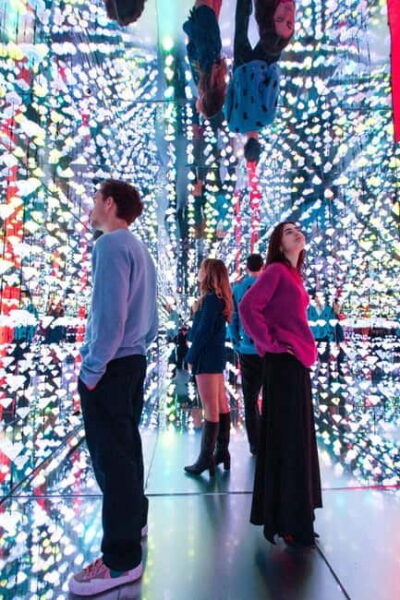
Moco Museum Amsterdam Entrance Tickets with Banksy & More
Read our review →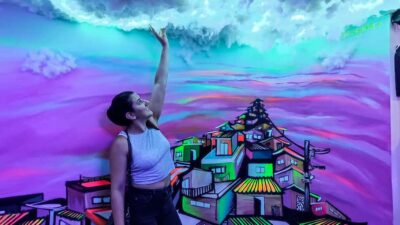
Comuna 13 Graffiti Tour, Cable Car & Street Food
Read our review →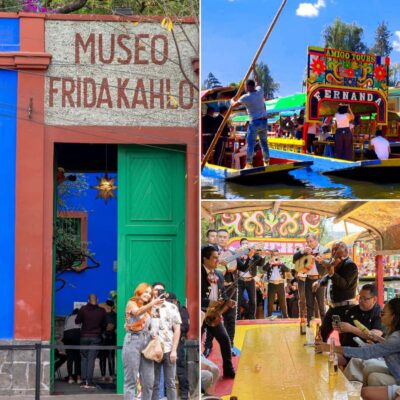
Xochimilco, Coyoacan, Frida Kahlo Museum & Murals Tour
Read our review →
Blackbeard to Banksy – The Ultimate Walking Tour of Bristol
Read our review →