
REVIEW · USA
RoRo Street Art Tour in Phoenix
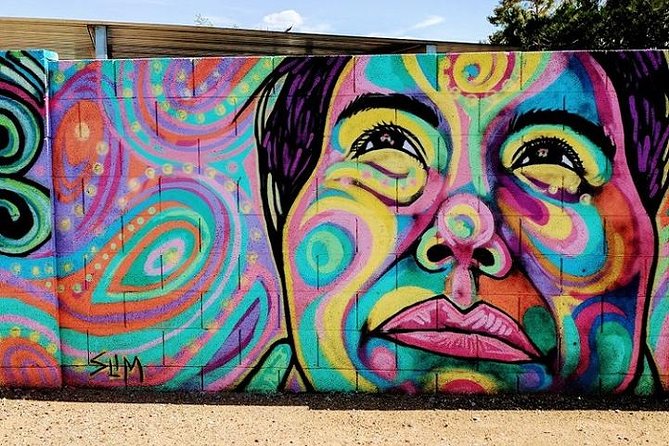
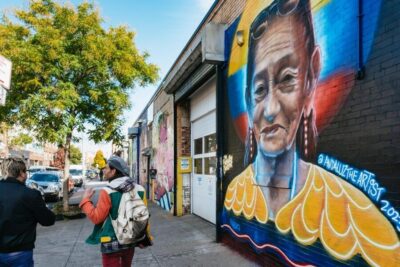
Roosevelt Row, often called RoRo, is where Phoenix’s street art story unfolds on walls, alleys, restaurant facades, and once-overlooked corners. This two-hour walking tour does more than point out colorful murals. Guide Lori Ann explains who made the work, when it appeared, and how art helped reshape the neighborhood.
I like two things right away: Lori Ann has personal connections with several artists, and the small group makes it easier to stop for photos and questions. I also like the route’s practical shape, beginning at Phoenix Center for the Arts and ending near Taco Chelo, a local Mexican restaurant decorated with art.
The main consideration is the heat. You will spend much of the tour outside, often beside walls and in alleys where shade is limited. Bring water, sunscreen, and a hat, and choose your departure time with Phoenix weather in mind.
Key points to know before you book
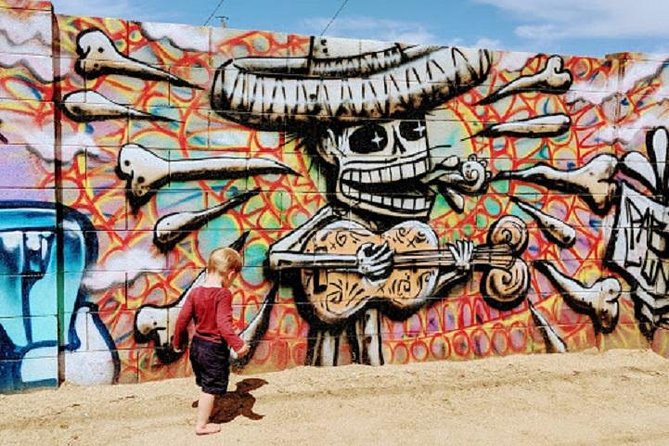
- Artist stories add meaning: Lori Ann explains the people, choices, conflicts, and neighborhood changes behind the art.
- The route shows more than famous murals: Expect alleys, side walls, galleries, restaurant spaces, and details easy to miss from a car.
- Small groups keep the walk personal: The tour is promoted for groups of up to 12, with a stated maximum of 15 participants.
- The Churchill is a useful mid-route stop: You can find seating, restrooms, water, and food at this shipping-container food court.
- Phoenix sun is part of the experience: The tour pauses in shade when possible, but much of the art is outdoors.
- You finish near food and local art: The endpoint is Taco Chelo on Roosevelt Street, not back at the starting point.
Why Roosevelt Row works so well as an outdoor gallery
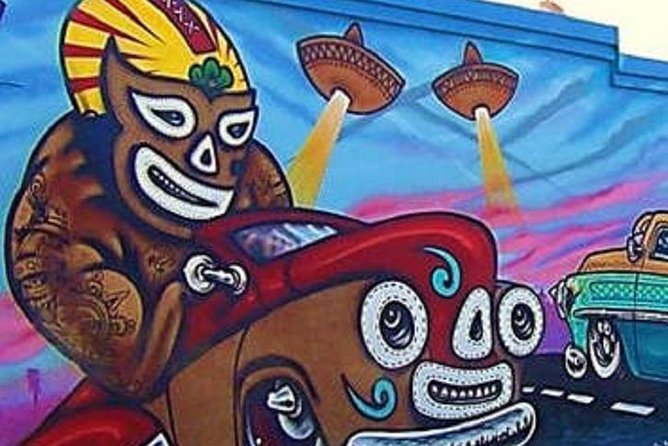
Street art makes you look at a city differently. Instead of moving from one formal attraction to the next, you follow paint across ordinary streets and notice how businesses, artists, property owners, and residents share the same blocks.
Roosevelt Row gives this format plenty to work with. The neighborhood has become one of Phoenix’s best-known art districts, and the walls change over time. Some pieces are commissioned. Others grow out of graffiti traditions or artist-led projects. That mix gives the tour a useful edge: you are not simply admiring finished pictures, you are learning how public art takes shape.
Lori Ann’s role matters here. She has led Phoenix street art tours for nearly a decade and knows several artists personally. That lets her add the why behind the artwork, not just the title or date. You may hear about the artists, the development of the area, the evolution of street art from the 1990s to today, and the tensions that can come when creative districts attract galleries, new businesses, and higher prices.
That context is the reason to book a guided walk instead of photographing murals on your own. You can find plenty of images online, but you will not get the same sense of how the art connects to the people and changing streets around it.
A few more street art tours around the USA worth a look
- Wynwood Graffiti Golf Cart Small-Group Tour
★ 5.0 · 1,646 reviews - Murals of Nashville Instagram Tour by Golf Cart
★ 5.0 · 950 reviews - Miami: Wynwood Walls Skip-the-Line Ticket
★ 4.6 · 840 reviews
Starting at Phoenix Center for the Arts
The tour begins at Phoenix Center for the Arts, at 1202 North 3rd Street. Arrive ready to walk, since this is a neighborhood route rather than a ride between fixed attractions.
The opening portion helps set up the area and its art culture. You can expect an introduction to Roosevelt Row and to the place of murals, graffiti, and commissioned work in downtown Phoenix. The guide also answers questions, so this is a good time to mention whether you are especially interested in technique, local artists, neighborhood change, or photography.
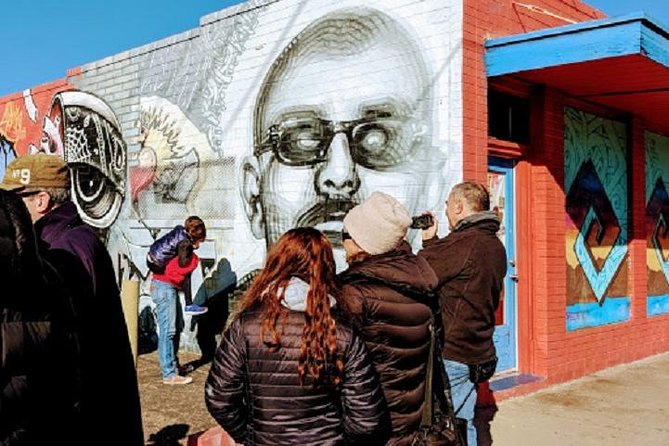
The group size is one of the tour’s practical advantages. The experience is advertised for no more than 12 participants, while the additional information gives a maximum of 15. Either way, this is far smaller than a large city sightseeing group. A modest group makes it easier to hear in a street setting and gives the guide room to adjust the pace for photographers or slower walkers.
Do not expect a brisk march. The walk includes frequent stops, and people move at different speeds when photographing walls. Lori Ann has shown a willingness to keep the pace comfortable, but you should still wear sensible shoes and allow the full two hours.
The Churchill and Phoenix’s container-built creativity
One of the named stops is The Churchill, a food court made from shipping containers. It is a lively and useful pause, not just a photo stop. The site is decorated with what is described as the world’s first shipping-container sculpture and sits beside the mural-filled One-and-a-Half Street.
This stop shows how Phoenix’s art scene is not limited to isolated walls. Art appears alongside food, retail, public gathering spaces, and reused industrial materials. The result is a more grounded view of the district. You see how creative work becomes part of daily city life rather than something kept behind museum doors.
The Churchill also helps with the practical side of a desert walking tour. It offers restrooms, water, seating, and food. Some tours spend nearly the entire time outdoors, so even a short stop here can make the experience more comfortable.
Do not count on a long meal break during the scheduled route. The listed stop is brief, and the tour has many pieces to cover. If you want to eat at The Churchill, plan to return later or ask the guide how much time is available on your departure.
Carly’s Bistro and the wall that helped launch the district
Carly’s Bistro is another key stop. The owner, Carly, gave street artists space to work in 2012. The wall became an important springboard for artists and helped RoRo develop its reputation as one of the country’s notable street art areas.
This is a particularly useful part of the walk because it connects a specific business decision to a wider neighborhood story. Instead of treating the murals as decoration, the tour shows how giving artists a place to work can change how people see a block.
The wall is also described as historic and ever changing. That means the exact art you see can shift over time. If you return to Phoenix later, you may find a different set of images, styles, or artists in the same area. Street art is not a permanent museum display, and that impermanence is part of its appeal.
You may want to photograph the wall, but listen before reaching for your phone. The best part of this stop is the background about the artists and the area. A picture records what the wall looks like today. The story explains why it matters.
Same walls, a different guide:
- Nashville Combo Tour: Sightseeing, Murals & Brewery/Distillery
★ 5.0 · 641 reviews - NYC: Brooklyn Graffiti Workshop with Local Artist
★ 4.8 · 570 reviews - Houston’s Official City & Mural Tour!
★ 4.0 · 568 reviews - NYC: Brooklyn Graffiti & Street Art Walking Tour in Bushwick
★ 4.8 · 492 reviews
More than two stops: galleries, alleys, and changing walls
The two named stops are only part of the walking experience. The route also includes street art around downtown Phoenix, with murals, graffiti, commissioned pieces, and walls tucked behind buildings or along alleys.
The guide has taken groups into several local establishments during the walk. Near the beginning, that can include a hotel lobby for about 10 minutes. Around the middle, The Churchill provides a short break. Near the end, the Bentley Gallery may offer air-conditioning and seating, except on Mondays when it is closed.
These indoor pauses are especially helpful in warmer months. They do not turn the tour into an indoor art visit, but they offer occasional relief and show how street art connects with Phoenix’s wider art community.
The gallery portion may not appeal to everyone. Exhibits change, and individual taste varies. You might enjoy seeing how formal gallery art compares with public murals, or you might prefer more time outside with the walls. The walk tries to include both, so people interested only in graffiti should know that the route can also touch on gallery exhibitions and broader art topics.
A few people may wish the tour covered even more murals. That is understandable. Roosevelt Row has plenty to see, and two hours can pass quickly when you stop for stories and photographs. The tradeoff is a manageable outing rather than an exhausting art marathon.
What Lori Ann adds to the walk
The strongest part of this experience is the guide’s personal connection to the local art scene. Lori Ann does not simply identify a mural and move on. She shares background on artists, the neighborhood, and the way public art has developed in Phoenix.
Her experience also helps with questions. If you want to know about an artist’s work, the difference between graffiti and commissioned mural art, or how a piece fits into the district, you have someone to ask. The tour can be adjusted to the group’s pace and interests, within the limits of a two-hour walk.
You may also receive suggestions for places to eat or visit later, including local music or art spots. Those recommendations are useful because the tour ends in an area worth exploring after the official walk.
The personal approach has a clear benefit, but it also means the tour is shaped by the guide’s interests and current access. Street art changes. A wall may be repainted, a gallery may be closed, or a piece may look different from photographs taken months earlier. That is normal for this kind of tour, not a flaw.
Walking conditions, heat, and comfort
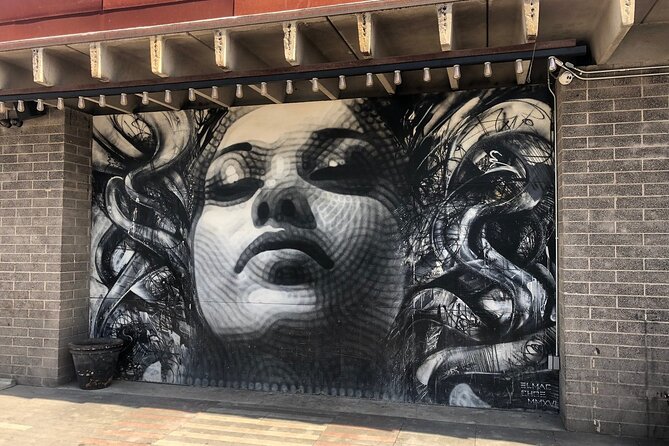
Phoenix weather deserves serious attention. Much of the route is outside, and the street art often sits on the sides of buildings, in alleys, or behind structures where shade can be uneven. The guide works to pause in shaded spots and may start earlier when temperatures rise, but you should plan for sun.
Bring:
- Water
- Sunscreen
- A hat or other sun protection
- Comfortable walking shoes
- A phone or camera with enough battery for photographs
The tour includes access to restrooms and water at stops such as The Churchill, with other indoor pauses sometimes available. Still, do not treat those breaks as a substitute for carrying your own water.
The operator may pause tours during the hottest part of summer rather than run an unpleasant outing. Departure times vary, so select a cooler time when possible. Spring and fall can offer a more comfortable balance, while winter is often appealing for outdoor sightseeing, though the exact conditions depend on the day.
Most people can take part, and service animals are allowed. The tour is still a two-hour urban walk, so anyone with mobility concerns should consider the length, surface conditions, and need to keep up with a small group. The guide is attentive to different walking speeds, but the route is not described as wheelchair-specific.
Is $28 a fair price?
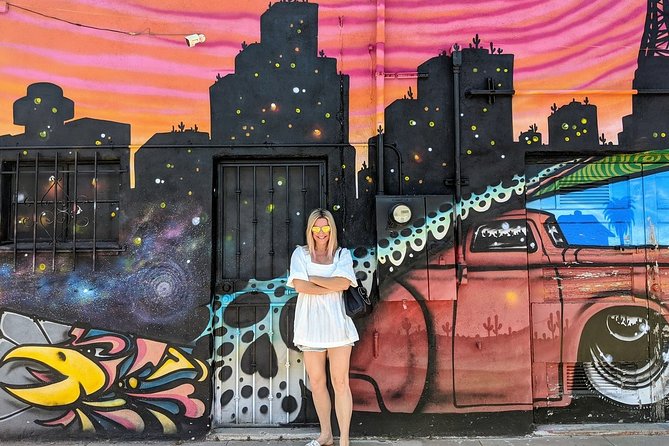
At $28 per person, the tour sits in a reasonable range for a small-group, two-hour city walk. You are paying for local interpretation rather than transportation or admission to a major attraction.
That distinction matters. If you only want a quick collection of mural photographs, you can explore parts of Roosevelt Row independently at no cost. The tour earns its price through the stories, artist connections, neighborhood background, and access to art that is easy to overlook while walking alone.
The small group also improves the value. A guide can answer questions, point out details, and avoid the impersonal feel of a large tour. You do not have to pay separate admission for the listed stops, but you should budget separately for food if you want to eat at The Churchill or Taco Chelo.
For art lovers, first-time Phoenix visitors, and locals who want better context for their own city, $28 is a sensible spend. If you dislike walking in the sun or prefer formal museums, the value will be less convincing.
Ending at Taco Chelo on Roosevelt Street
The official finish is Taco Chelo Phoenix, at 501 East Roosevelt Street. This is a local Mexican restaurant with its own art connection, making it a fitting end to a tour about food, public space, and creative work.
The endpoint is also useful for planning the rest of your day. You can eat there, continue exploring Roosevelt Row, or use the location as a starting point for more downtown Phoenix sightseeing. Since the tour does not return to Phoenix Center for the Arts, plan your transportation and parking accordingly.
Ending at a restaurant rather than a generic street corner gives the walk a natural finish. You move from looking at art on public walls to spending time in a local place that reflects the same neighborhood culture.
Who should book this Phoenix art walk?
I would choose this tour if you want to understand how Phoenix’s street art developed, not just see a few large murals. It is especially suited to solo visitors, couples, friends, and curious locals who enjoy asking questions and walking at an easy pace.
It also works well as an early introduction to downtown Phoenix. Afterward, you will have a better sense of where to eat, which art areas to revisit, and how to spot public art beyond the obvious walls.
I would think twice if you want a fast, air-conditioned activity or a strict museum-style tour. The art is outdoors, the route can be sunny, and some of your time goes to neighborhood history, galleries, and conversation rather than nonstop mural viewing.
You can cancel up to 24 hours before the experience for a full refund. Confirmation is provided at booking, the tour is offered in English, and mobile tickets make arrival simple.
Should you book the RoRo Street Art Tour?
Book it if you want the human story behind Phoenix’s murals. The best reason to go is Lori Ann’s local connection and her ability to link artists, businesses, public walls, and neighborhood change.
Bring water, protect yourself from the sun, and leave room in your schedule for photos. At $28, this is a strong-value introduction to Roosevelt Row, especially if you are new to Phoenix or would otherwise walk past the art without understanding what you are seeing.
FAQ
How long is the RoRo Street Art Tour?
The tour lasts approximately two hours.
Where does the tour begin?
It begins at Phoenix Center for the Arts, 1202 N 3rd St, Phoenix, Arizona 85004.
Where does the tour end?
The walk ends at Taco Chelo Phoenix, 501 E Roosevelt St, Phoenix, Arizona 85004.
How much does the tour cost?
The listed price is $28 per person.
How large is the tour group?
The experience is promoted for groups limited to 12 participants, while the stated maximum is 15 travelers.
Is the tour offered in English?
Yes. The tour is offered in English, and mobile tickets are available.
Just added around the USA
- Wynwood Walls Street Art & Neighborhood Walking Tour★ 4.9 · 9 reviews
- Urban Art and Historical Electric Bike Tour★ 5.0 · 3 reviews
- Tucson Food Tours- Locally Owned Mural and History Tour★ 5.0 · 10 reviews
- St. Pete’s Must-Do Murals Tour — The Premier Street Art Trolley★ 5.0 · 22 reviews
- Tijuana Urban Art Walk from San Diego★ 4.0 · 8 reviews
- Sacramento Street Art Walking Tour – See the Murals Sacramento is Famous For★ 5.0 · 6 reviews
- Downtown Sacramento Mural and Art Walking Tour★ 5.0 · 4 reviews
- Would I Lie To You? Mural Walks★ 5.0 · 3 reviews
USA Street Art Tours, compared.


Murals of Nashville Instagram Tour by Golf Cart
Read our review →

Nashville Combo Tour: Sightseeing, Murals & Brewery/Distillery
Read our review →
Brooklyn Graffiti & Street Art Walking Tour in Bushwick
Read our review →
Wynwood Art District 1-Hour Street Art Tour by Golf Cart
Read our review →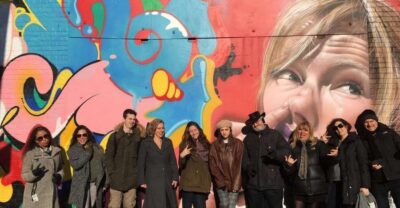
Browse the lists this tour appears in