
REVIEW · BRAZIL
Rio Street Art Tour
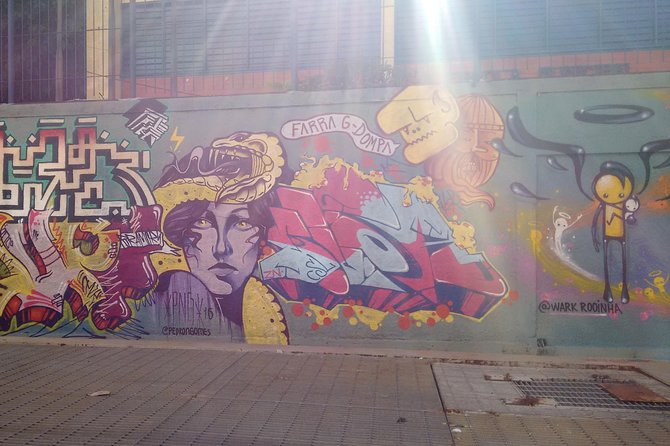
Rio’s street art is not just decoration. On this three-hour route, murals become a guide to Rio’s politics, Carnival, slavery, Afro-Brazilian culture, architecture, and changing port district. Guide Wellington connects the painted walls with the city around them, then uses the metro and VLT to link several central neighborhoods.
I like two things right away: the local transport makes this feel like a real introduction to Rio, not a sightseeing loop sealed inside a coach, and the route adds places such as Little Africa and Porto Maravilha to better-known sights like the Selarón Steps. The main drawback is simple: you will walk a lot, and the route includes public transport, so it demands more energy than a static mural stop.
Key points to know
- Private format: Only your group takes part, even if you are traveling alone.
- Wellington’s focus: Expect art explained through Rio’s history, politics, culture, architecture, Carnival, and samba schools.
- Public transport included in the route: The tour uses Rio’s metro and VLT, with walking between sights.
- Major mural highlight: Porto Maravilha is home to the Etnias panel, described as the largest graffiti mural in the world.
- Strong cultural range: The route reaches Little Africa and discusses the port’s connection with enslaved Africans.
- Plan for water: The walking is manageable, but the three hours can feel active in Rio’s heat.
Rio told through walls, stairs, and public transport
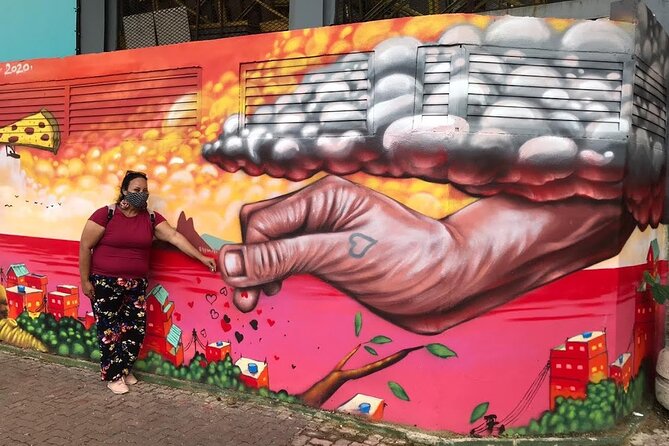
This is a street art tour with a wider purpose. The paintings give Wellington a way to explain how Rio developed, who shaped it, and how the city presents itself today.
You begin near the Municipal Theater in Praça Floriano, a useful central meeting point in Rio’s Centro. From there, the route heads toward Glória by metro. That first ride matters. You are not simply being driven between isolated attractions. You get a brief lesson in moving through the city as residents do, then continue on foot to see how art fits the streets themselves.
The experience is private, so Wellington can adjust the conversation to your interests. If you want more about politics, architecture, Carnival, Afro-Brazilian culture, or the meaning of a particular mural, you can ask without holding up a large group. Solo visitors also have the option of booking the same experience without needing to gather a party.
Wellington is praised for making the art easy to understand without treating it as a collection of pretty pictures. His explanations connect the figures and symbols on the walls to Rio’s past and present. He also speaks English well, which is useful when the subject turns to complex social and political issues.
A few more street art tours around the world worth a look
- Moco Museum Amsterdam Entrance Tickets with Banksy & More
★ 4.4 · 10,088 reviews - Medellin: Comuna 13 Graffiti Tour, Cable Car & Street Food
★ 4.8 · 9,046 reviews - CDMX: Xochimilco, Coyoacan, Frida Kahlo Museum & Murals Tour
★ 4.4 · 3,025 reviews
Starting in Glória and reaching the Selarón Steps
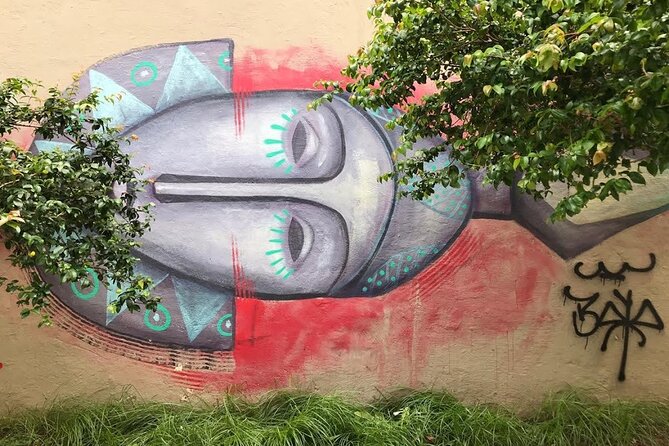
The first section begins in Glória, where you see what is described as Rio’s first legalized graffiti. That is a useful starting point because it frames street art as part of the city’s public life, not simply as unauthorized paint on a wall.
The walk also brings in Rio’s European architectural influence. This gives the tour a welcome second layer. You are not looking only upward at murals. You are also comparing the old civic buildings and urban design with newer forms of public art.
The Escadaria Selarón is one of the route’s most recognizable stops. The colorful staircase, created by Chilean artist Jorge Selarón, is among Rio’s best-known sights and is described as the city’s third most visited tourist attraction. It can be crowded and very photogenic, but the tour gives it more context than a quick photo stop.
Expect about 20 minutes here. That is enough time to see the staircase, take photographs, and hear Wellington explain its place in the city. It is not enough for a long, quiet visit, so if the steps are your main reason for booking, you may want to return separately.
The staircase is also a useful contrast with the larger murals later in the day. Here, the art is built into a narrow staircase and surrounded by people. In Porto Maravilha, it spreads across a broad urban wall. Seeing both helps you understand the range of Rio’s public art.
Cinelândia and the city’s grand civic buildings
Cinelândia adds architecture and civic history to the route. This central district is home to major libraries and Rio’s principal theater, giving you a chance to see the formal side of the city before the tour returns to murals and port redevelopment.
The planned timing here is about 30 minutes. That makes this more of an interpretive walk than an indoor museum visit. The emphasis is on the buildings, the surrounding public spaces, and the way Rio’s cultural life appears in the center of the city.
I like this part because it prevents the tour from becoming a narrow art crawl. Street art makes more sense when you see the institutions, streets, and older buildings that surround it. Wellington also brings in current events, politics, Carnival, samba schools, and the social forces that shape Rio.
At the end of this section, you take the VLT, Rio’s light rail system, toward Olympic Boulevard. The change from walking to public transport gives the tour a nice rhythm, though it also means you should stay alert and follow Wellington’s instructions. This is not a private vehicle experience with every transfer handled behind the scenes.
One practical point deserves attention. A past tour included a guide buying a train ticket for a participant to avoid a possible fine. Do not assume this is automatically included for every departure. Ask how public transport fares are handled when you book, and carry a way to pay for any ticket you may need.
Olympic Boulevard and Porto Maravilha
Olympic Boulevard is home to several of Rio’s main museums, including the futuristic Museum of Tomorrow and the Museu de Arte do Rio. You may see these institutions from the outside or pass near them as the route continues. The tour is about the public spaces and murals, not a full museum admission program.
The Olympic area also shows Rio’s effort to reshape its old port district. The buildings, open spaces, museums, and public art create a different feel from the older streets near Cinelândia and the Selarón Steps.
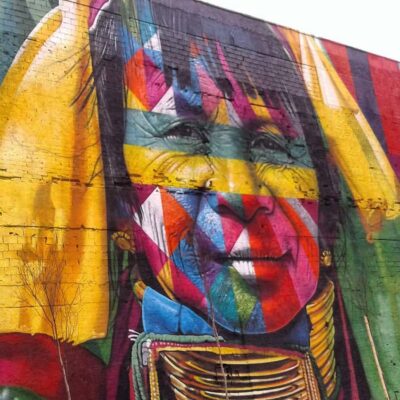
Porto Maravilha is the final major section and receives about an hour. This is where the tour reaches the Etnias panel, also called the ethnicities mural, which is described as the largest graffiti mural in the world. Its size is impressive, but the real value comes from hearing what the people and imagery represent.
Wellington explains the messages in the mural in detail and places the port area in the story of enslaved Africans brought to Brazil. That historical context gives the mural weight. You are not just checking off a large wall for a photograph. You are looking at art tied to identity, migration, race, and the difficult history beneath Rio’s modern redevelopment.
This is also the part of the route where Little Africa may come into the conversation. The area is important for understanding Afro-Brazilian life and the legacy of slavery in Rio. One group changed its focus from street art to Little Africa and received a full explanation of the area, so it is worth asking Wellington in advance if that subject is especially important to you.
Same walls, a different guide:
- Moco Museum Barcelona Banksy & More
★ 4.6 · 2,340 reviews - Amsterdam: Streetart Museum STRAAT Entrance Ticket
★ 4.8 · 2,137 reviews - Belfast: Murals Taxi Tour
★ 4.9 · 2,047 reviews - Blackbeard to Banksy – The Ultimate Walking Tour of Bristol
★ 5.0 · 1,961 reviews
What Wellington adds to the artwork
The strongest part of this experience is the guide’s range. Wellington does not treat every mural as an isolated work. He connects the art to architecture, city politics, Carnival, samba schools, and his experience as a native of Rio.
That approach suits you if you like asking why a work exists, who it represents, and how local people may read it. You will get less from the tour if you want only a fast series of photo stops with minimal explanation.
His style also appears to be personal rather than scripted. He has been described as friendly, open to questions, and able to make the city feel like it is being introduced by an old acquaintance. That does not mean the tour is casual or lacking in structure. The route has clear stops and transport links. It means the conversation can move beyond prepared facts.
Language is another strength. Wellington speaks English well, and the route has worked for visitors who wanted detailed explanations of social and political themes. He has also encouraged Portuguese practice for participants who wanted it, though the main experience can be conducted in English.
A small caution: one person felt that some of the graffiti was older and wanted more newer work. Street art changes, and a three-hour route cannot show every current piece. If recent artists and newly painted walls are your priority, ask Wellington what is currently on the route before booking.
The walking level and practical rhythm
The route is described as an easy walking route, but easy does not mean short. One person specifically noted lots of walking, and the full path includes several neighborhoods plus metro and VLT rides.
Bring water, wear comfortable shoes, and expect Rio’s weather to affect your comfort. There are no admission fees listed for the stops, but the tour still requires stamina because you are outside and moving for roughly three hours.
The starting point is the Municipal Theater of Rio de Janeiro, at Praça Floriano in Centro. The tour ends in a different location, in the Porto Maravilha area, rather than returning to the theater. That can work well if you plan to continue toward the Museum of Tomorrow, the Museu de Arte do Rio, or another central attraction, but it requires some thought if you need to return to your hotel.
Because the activity uses public transportation, allow yourself a little flexibility after the official finish. The stated duration is approximately three hours, and street conditions, waiting times, and the pace of your group can affect the exact end time.
The tour requires good weather. If poor weather causes a cancellation, you are offered another date or a full refund. You can also cancel for a full refund up to 24 hours before the start time. Changes or cancellations made less than 24 hours before the start are not accepted for a refund.
Is $68.61 a fair price?
At $68.61 per person, this is not the cheapest way to see a few murals. You could photograph the Selarón Steps and walk around Porto Maravilha independently for far less.
The value comes from the interpretation and the private format. You are paying for a guide who can explain the art, answer questions, connect several districts, and help you make sense of the metro and VLT route. The price is easier to justify if you are new to Rio, interested in history and culture, or traveling with family and want a clear introduction to the city center.
It is also a strong value for a solo visitor because the booking can operate with one person. A private guide for three hours would normally cost more if arranged independently, although the public transport fares may need separate clarification.
The tour is less good value if you only want contemporary graffiti photography. In that case, a self-guided walk may give you more freedom to stay with a wall or seek out newer pieces. This tour earns its price through context, not through the number of murals alone.
The experience is booked about 30 days ahead on average, so plan early if your schedule is tight. The perfect timing depends on your interests. Take it early in your Rio visit if you want the history and neighborhoods to help you understand later sightseeing. Take it later if you already know the major sights and want a deeper look at the city’s cultural side.
Who should book this Rio street art tour?
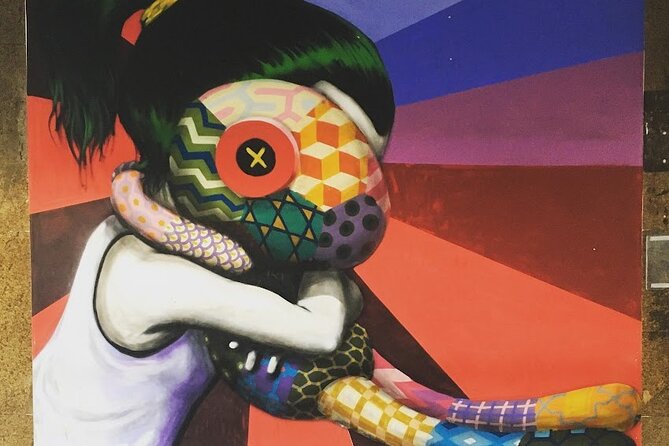
I would choose this tour for someone who wants a first look at Rio beyond the standard postcard circuit. It works especially well for:
- Solo visitors who want a private guide without organizing a group
- Families who prefer a flexible explanation of art and city history
- People interested in Afro-Brazilian culture and Little Africa
- Visitors who enjoy architecture, politics, Carnival, and public art together
- Anyone comfortable walking and using the metro and VLT
- Repeat visitors looking for a different side of Centro and Porto Maravilha
I would hesitate if you dislike walking, want a purely vehicle-based outing, or expect a gallery-style tour devoted only to current graffiti. The route is broad. It is about Rio as a city, with street art as the thread connecting the stops.
My call: book it for context, not just photographs
Book the Rio Street Art Tour if you want Wellington’s local perspective and a useful introduction to Centro, Cinelândia, the Selarón Steps, Little Africa, and Porto Maravilha. The mix of murals, architecture, public transport, Carnival, and Afro-Brazilian culture gives you a fuller sense of Rio than a quick photo walk.
Before confirming, ask about the current mural lineup and how transport fares are handled. Bring water, wear good walking shoes, and leave room in your schedule for the tour to finish in Porto Maravilha. If those details suit you, the $68.61 price is reasonable for a private, guide-led introduction to Rio’s art and city life.
FAQ
How long does the Rio Street Art Tour last?
The tour lasts approximately three hours.
Where does the tour begin?
It begins at the Municipal Theater of Rio de Janeiro, at Praça Floriano in Centro, Rio de Janeiro.
Where does the tour end?
It ends at a different location in the Porto Maravilha area rather than returning to the starting point.
Is this a private tour?
Yes. Only your group takes part, and the experience can accommodate a solo participant.
Does the tour use public transportation?
Yes. The route includes Rio’s metro and VLT, along with walking between the stops.
What happens if the weather is poor?
The experience requires good weather. If it is canceled because of poor weather, you will be offered a different date or a full refund.
Just added around the world
- Your Own Belgrade: Street Art and Hidden Gems Walking Tour★ 5.0 · 2 reviews
- Xochimilco floating gardens, Coyoacan and UNAM murals★ 4.0 · 6 reviews
- Wynwood Walls Street Art & Neighborhood Walking Tour★ 4.9 · 9 reviews
- Vienna Urban Art Tour: Explore a different side of Vienna!★ 3.8 · 14 reviews
- Vancouver: Street Art & Craft Beer Walking Tour with Tasting★ 4.8 · 14 reviews
- Vancouver: Street Art & Craft Coffee Walking Tour w/ Tasting★ 4.8 · 11 reviews
- Urban Canvas: Osaka Street Art Bike Tour★ 5.0 · 10 reviews
- UNAM: Murals & Revolution★ 4.9 · 8 reviews
Brazil Street Art Tours, compared.
São Paulo: Bar and Street Art Crawl with Local Guide
Read our review →
Private Street Art Tour of São Paulo with Batman´s Alley Visit
Read our review →

Sao Paulo, Pinheiros – Food & Graffiti Tour | in English
Read our review →Browse the lists this tour appears in