
REVIEW · MURAL TOURS
Hands On Chinese Cave Murals with Local Expert
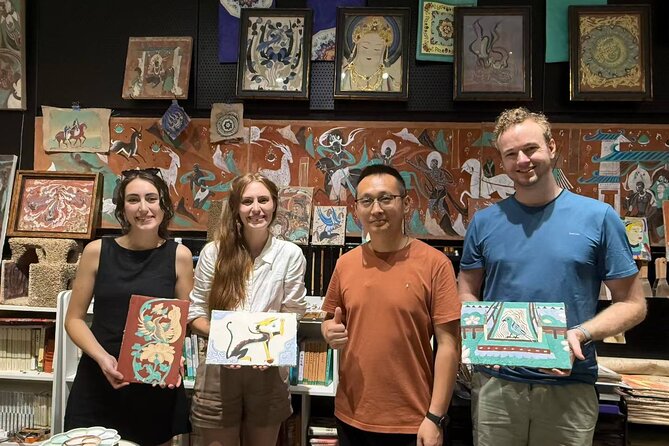
Ancient Dunhuang art becomes much more approachable when you are holding the brush yourself. At this Shanghai workshop, you choose a mural pattern, work with natural mineral pigments, and recreate a small piece of Chinese religious art on a clay board.
I like two things right away: the calm classroom setting gives you time to focus, and the instructor explains the cultural meaning behind the images rather than treating the work as a simple craft project. You can choose a Buddha, Bodhisattva, or the mythical Nine-colored Deer.
The main consideration is time. Three hours sounds generous, but careful tracing, color work, and finishing can pass quickly. This is a slow art session, not a quick souvenir stop, so it suits you best if you enjoy patient, hands-on work.
Key points to know before booking
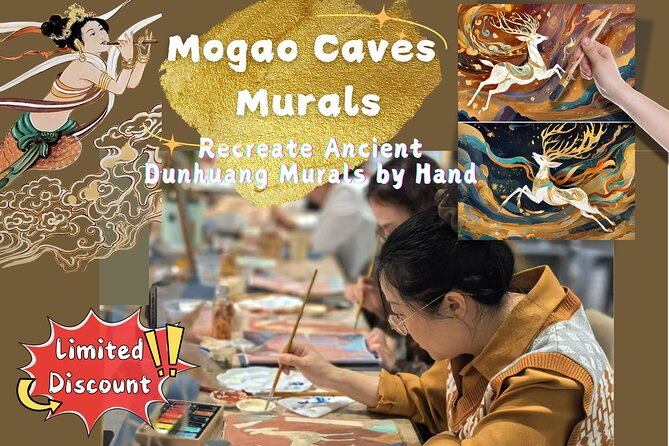
- Paint Dunhuang designs by hand: Work from traditional patterns featuring Buddhas, Bodhisattvas, or the Nine-colored Deer.
- Use traditional-style materials: Mineral pigments, a clay board, brushes, and other tools give the work a physical feel that printed reproductions cannot match.
- Learn from a Dunhuang art specialist: The instructor explains the art and cultural background while helping you with color and technique.
- Keep your finished artwork: You create a piece yourself and take home a personal reminder of your time in Shanghai.
- Expect a quiet three-hour session: The peaceful setting favors concentration, patience, and careful brushwork.
- Small-group format: The class accepts no more than 20 people, allowing for a more personal lesson than a large public demonstration.
Why Dunhuang murals make a fine Shanghai workshop
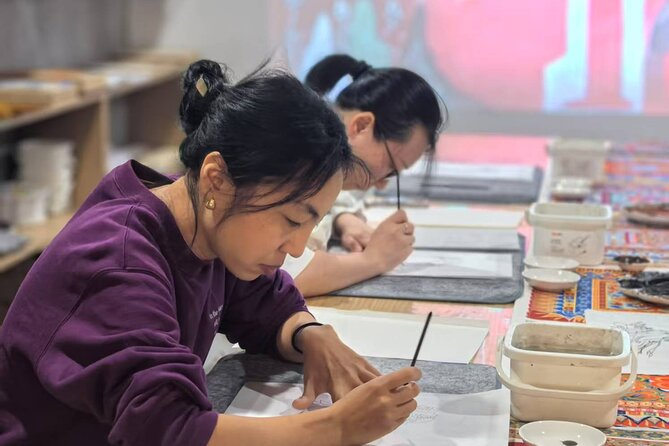
Dunhuang is best known for its cave temples and painted images, created over centuries along the old Silk Road. You are not visiting those caves in this workshop, but you are exploring the visual language connected with them: solemn Buddhas, elegant Bodhisattvas, symbolic animals, and carefully layered colors.
That distinction matters. This is not a museum tour or a lecture about distant sites. You spend much of the session making something with your own hands. The act of tracing a figure and placing color on a rough clay surface gives you a better sense of the care required by mural painting.
The workshop also offers a quieter side of Shanghai. The city can be fast and crowded, but this activity asks you to sit down, slow your breathing, and pay attention to a small section of art. I like that contrast. It adds cultural depth to a city visit without requiring a full-day excursion out of town.
More Mural Tours in the world:
- CDMX: Xochimilco, Coyoacan, Frida Kahlo Museum & Murals Tour
★ 4.4 · 3,025 reviews - Belfast: Murals Taxi Tour
★ 4.9 · 2,047 reviews - Belfast’s Political Mural Taxi Tour
★ 5.0 · 1,180 reviews
Arriving at 515 Yi Shan Lu in Xuhui
The meeting point is 515 Yi Shan Lu, Xuhui District, Shanghai, postal code 200235. The activity begins and ends there, so you do not need to arrange a second pickup point after class.
The location is near public transportation, which helps if you are building this into a day around Shanghai. Still, check your route and allow enough time to find the exact entrance. The supplied details identify the street address but do not provide a detailed transfer plan, nearby landmark, or hotel pickup service.
A mobile ticket is provided, and confirmation arrives when you book. Keep that confirmation available on your phone. Since the class has a maximum of 20 participants, arriving on time is sensible, especially if you want to settle in before the instruction begins.
Choosing your image: Buddha, Bodhisattva, or Nine-colored Deer
The first creative decision is your design. You can select from several traditional patterns, including majestic Buddhas, graceful Bodhisattvas, and the Nine-colored Deer from an old Chinese folktale.
Each option gives the finished piece a different mood. A Buddha design may feel formal and centered. A Bodhisattva can offer more flowing lines and ornamental detail. The Nine-colored Deer adds a storybook quality and may appeal to you if you prefer a mythical animal to a religious figure.
You do not need to arrive with a strong art background. The workshop is built around tracing or painting established patterns, so the design gives you a guide. At the same time, you are not locked into a completely mechanical copy. One participant chose a Bodhisattva and added personal touches, showing how the class can leave room for individual style.
Ask about the design choices at the beginning. Some patterns may require more fine lines or more careful color work than others. If you are new to painting, a simpler outline may be more relaxing. If you want a challenge, choose an image with more detail.
Working with mineral pigments and a clay board
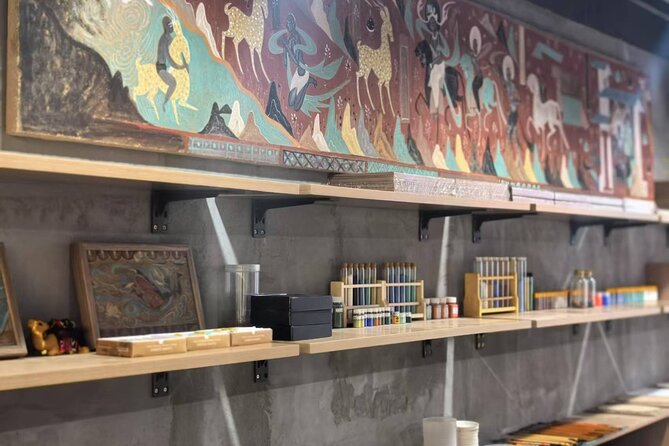
The materials are one of the best reasons to choose this class. Instead of painting on ordinary paper with standard craft paint, you work with mineral pigments, a clay board, and traditional tools.
Mineral colors have a different character from modern tubes of paint. They connect your small artwork to older methods and help you notice how color sits on the surface. The clay board also gives the piece texture. You are not simply filling in a flat coloring sheet.
The instructor can help create colors, which is useful if you have a particular shade in mind or want to make your design more personal. One participant wanted to experiment with color and received help producing a suitable mix. That sort of assistance can make the final piece feel more like your own work, rather than a preset classroom exercise.
You should expect the painting process to reward a light touch. The more carefully you work, the more satisfying the result is likely to be. Do not rush because you want to finish early. The value here comes from the process as much as the artwork.
A few more street art tours around the world worth a look
- Moco Museum Amsterdam Entrance Tickets with Banksy & More
★ 4.4 · 10,088 reviews - Medellin: Comuna 13 Graffiti Tour, Cable Car & Street Food
★ 4.8 · 9,046 reviews - Moco Museum Barcelona Banksy & More
★ 4.6 · 2,340 reviews - Amsterdam: Streetart Museum STRAAT Entrance Ticket
★ 4.8 · 2,137 reviews
What the three-hour class feels like
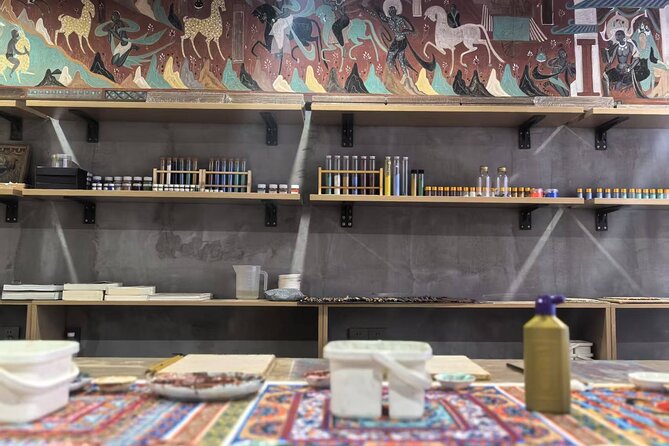
The session is designed as a complete creative activity rather than a short demonstration. You choose a pattern, learn about the art, prepare to work with the materials, and then paint your design.
The instructor’s role is important. Along with explaining Dunhuang art and culture, the teacher provides practical help with the brushwork and colors. The available comments describe the teaching as professional, patient, and attentive, with cultural information included during the class.
Expect the pace to feel calm. The setting is described as quiet and meditative, which suits detailed painting. You may find that the room encourages you to put aside your phone and focus on line, color, and texture for a while.
The exact order of instruction and painting is not specified, so I would not promise a fixed minute-by-minute schedule. The broad shape is clear: cultural explanation, design selection, hands-on painting, and a finished piece to take away.
The cultural value goes beyond making a souvenir
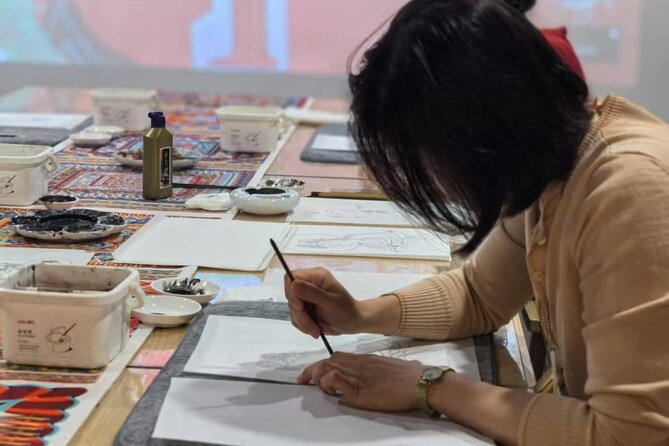
A handmade object can be a better travel memory than something bought from a shelf. You remember the design you picked, the colors you worked to create, and the parts of the painting that demanded patience.
This workshop also gives you a practical entry point into Chinese artistic traditions. You are not expected to become a mural conservator in one afternoon. Instead, you gain a basic feel for the symbols, materials, and careful methods linked with Dunhuang art.
The spiritual subject matter may appeal to you even if you are not religious. The figures are also important as works of composition, line, costume, gesture, and color. The class presents them in a way that lets you appreciate both their cultural role and their visual beauty.
I especially like that the experience does not reduce the subject to a photo opportunity. Your hands are involved from start to finish. That makes the connection more personal and gives you something to discuss after class.
How personal is the instruction?
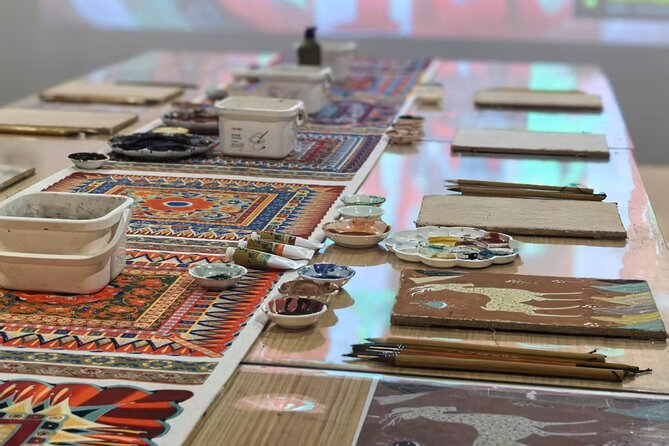
The maximum group size is 20 people. That is small enough for a workshop atmosphere, though it is not the same as a private lesson.
You should have a chance to ask for help with colors and technique, particularly because the teaching is built around individual painting. The instructor’s patience is a strong point for beginners, and the option to add personal touches makes the experience less rigid.
If every participant arrives with a different design, the instructor may need to divide attention among several projects. Your experience can also depend on the number of people who attend that day. Those wanting one-to-one coaching should recognize that this is a shared class rather than a private studio appointment.
For most visitors, the group limit is a reasonable compromise. You get guidance without paying the much higher price often associated with private instruction.
Is $99 a fair price?
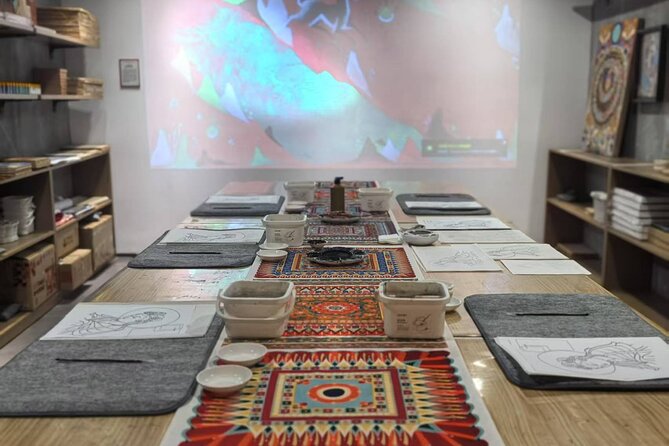
At $99 per person, this is not a bargain craft class. It is also more than a quick cultural demonstration. The price needs to cover roughly three hours of instruction, the materials, the cultural teaching, and the finished artwork you create.
I see the value most clearly if you want an activity with substance. You are paying for time, guidance, and access to materials that are not part of an ordinary tourist workshop. The class also gives you a break from sightseeing and a chance to make something that cannot be duplicated exactly.
The value is weaker if you only want a fast introduction or a cheap souvenir. You could spend less on a simple art activity elsewhere, but it would likely not offer the same focus on Dunhuang patterns, mineral pigments, clay boards, and cultural context.
Think of the $99 as a payment for a small cultural lesson and a creative session, not simply for a finished object. If you enjoy art, history, or quiet experiences, the cost is easier to justify.
Who will enjoy this most?
This workshop fits adults who like learning by doing, families with participants who can stay focused, and visitors looking for a slower cultural activity in Shanghai.
You do not need advanced painting skills. The patterns provide structure, and the teacher can assist with color and technique. The session may be especially suitable if you want to try Chinese art without committing to a long course.
It also works well for someone who has already visited museums or historical sites and wants a more active follow-up. Instead of only looking at old art behind glass, you spend time thinking about how lines and colors are built.
The activity may be less suitable if you dislike sitting still, want a major sightseeing schedule packed into every hour, or expect a finished painting with no effort. It is a patient workshop. The quiet mood is part of the point.
Most participants can take part, and service animals are allowed. The supplied information does not give specific details about wheelchair access, seating, or adaptations for particular needs, so contact the provider if you need those arrangements confirmed.
Practical planning for the day
Set aside about three hours, plus time to reach the meeting point. Because the activity returns to the same address, it is easy to combine with other plans in the Xuhui area or near a public transportation route.
Wear something comfortable and suitable for a seated art session. The available details do not specify how messy the work becomes or whether protective clothing is supplied, so you may prefer not to wear your most delicate outfit.
Bring your mobile confirmation and arrive prepared to choose a design. If you already know that you want a Buddha, Bodhisattva, or Nine-colored Deer, that can help you settle into the activity quickly. If not, ask the instructor which pattern best suits your patience and painting experience.
The cancellation terms are straightforward: cancel at least 24 hours before the local start time for a full refund. Cancellations or changes made inside that 24-hour window are not accepted for a refund.
Should you book the Dunhuang mural workshop?
Book it if you want a meaningful, hands-on cultural activity and like the idea of taking home art made by you. The strongest reasons are the expert teaching, the natural pigments, the textured clay board, and the chance to choose a design with real cultural meaning.
I would be more cautious if your Shanghai schedule is tight or if $99 feels high for a craft class. The experience depends on giving the painting time. You should choose it for the quiet concentration and the learning, not for a fast result.
For art-minded visitors, curious families, and anyone who wants a calmer afternoon away from the city’s noise, this is a thoughtful choice. You leave with more than a picture: you leave with a better feel for how traditional Chinese imagery can be studied through the hand as well as the eye.
FAQ
Where does the workshop begin?
It begins at 515 Yi Shan Lu, Xuhui District, Shanghai, China, postal code 200235.
Where does the activity end?
The activity ends back at the meeting point on Yi Shan Lu.
How long does the workshop last?
The experience lasts approximately three hours.
How much does the workshop cost?
The listed price is $99 per person.
What kind of artwork can I create?
You can choose from traditional mural patterns such as Buddhas, Bodhisattvas, and the Nine-colored Deer.
What materials are used?
The workshop uses mineral pigments, clay boards, brushes, and traditional-style tools.
Do I need advanced painting skills?
The available information says most participants can take part, and the instructor provides guidance with designs, colors, and techniques.
How many people can join?
The activity accepts a maximum of 20 participants.
Is public transportation available near the meeting point?
The meeting point is near public transportation.
Can I cancel for a full refund?
Yes. You can cancel at least 24 hours before the local start time for a full refund. Cancellations or changes made less than 24 hours before the start time are not accepted for a refund.
Just added around the world
- Your Own Belgrade: Street Art and Hidden Gems Walking Tour★ 5.0 · 2 reviews
- Xochimilco floating gardens, Coyoacan and UNAM murals★ 4.0 · 6 reviews
- Vienna Urban Art Tour: Explore a different side of Vienna!★ 3.8 · 14 reviews
- Wynwood Walls Street Art & Neighborhood Walking Tour★ 4.9 · 9 reviews
- Vancouver: Street Art & Craft Beer Walking Tour with Tasting★ 4.8 · 14 reviews
- Vancouver: Street Art & Craft Coffee Walking Tour w/ Tasting★ 4.8 · 11 reviews
- Urban Canvas: Osaka Street Art Bike Tour★ 5.0 · 10 reviews
- UNAM: Murals & Revolution★ 4.9 · 8 reviews
Mural Tours, compared.
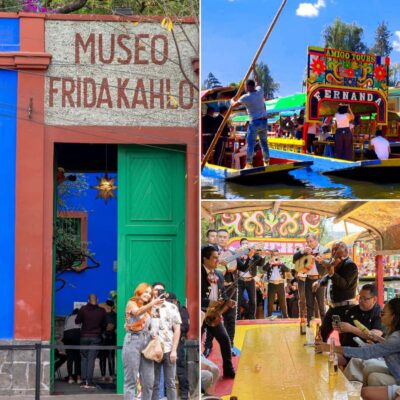
Xochimilco, Coyoacan, Frida Kahlo Museum & Murals Tour
Read our review →


Murals of Nashville Instagram Tour by Golf Cart
Read our review →
Nashville Combo Tour: Sightseeing, Murals & Brewery/Distillery
Read our review →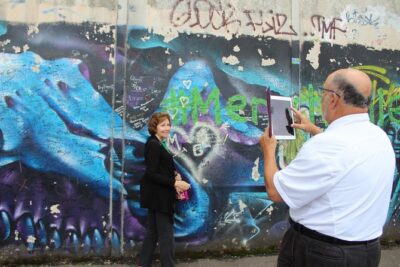
Browse the lists this tour appears in