
REVIEW · HOUSTON
Walking Tour of Houston: History, Architecture, Street Art
Houston’s story comes into focus block by block on this downtown walk. You’ll move from Market Square, the city’s birthplace, to grand Art Deco towers, a NASA-linked park, theaters, murals, and one of Houston’s finest civic buildings. I like the mix of architecture and street art, and I like that guide John Gu adds local names, stories, and practical tips instead of simply pointing at façades.
The $25 price is fair for a two-hour city orientation, especially if you’re new to Houston or have only a free morning. The main drawback is that the tour stays outdoors and moves at a walking pace, so rain, heat, or a need for long indoor breaks may affect your enjoyment. One group’s outing lasted about two and a half hours with a 20-minute break, so allow a little extra time.
Key points at a glance
- Houston’s birthplace: Begin around Downtown Historic District Market Square, where the city’s early story comes alive among some of its oldest buildings.
- Art Deco highlights: See the 1920s Gulf Building and 1930s City Hall, two strong examples of Houston’s early skyscraper and civic design.
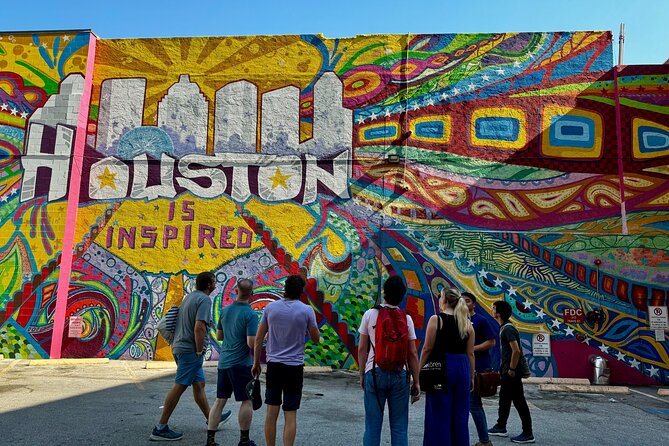
- Street art with a photo stop: The Houston is inspired mural offers the tour’s best-known picture opportunity.
- Space-program connection: Tranquility Park gives you a quick look at Houston’s ties to NASA.
- Small enough to stay personal: The maximum group size is 25, and John Gu has been praised for clear explanations, humor, and patient answers.
- Useful finish: The walk ends near Lynn Wyatt Square in the Theater District, close to cafés and further downtown sightseeing.
Why this downtown walk works
Houston can feel spread out and hard to read at first. This tour gives you a practical framework for the central area, linking buildings and public spaces that can otherwise seem like unrelated stops. You get a quick lesson in Houston’s beginnings, its early skyscraper boom, its civic institutions, its performing arts scene, and its space-program identity.
The route is also easy to understand geographically. You begin at Lyric Market on Smith Street and finish at 601 Capitol Street, near Lynn Wyatt Square. The two points are close enough that you can walk back to the starting area afterward, and one detailed account describes both ends as about a block from the tram line.
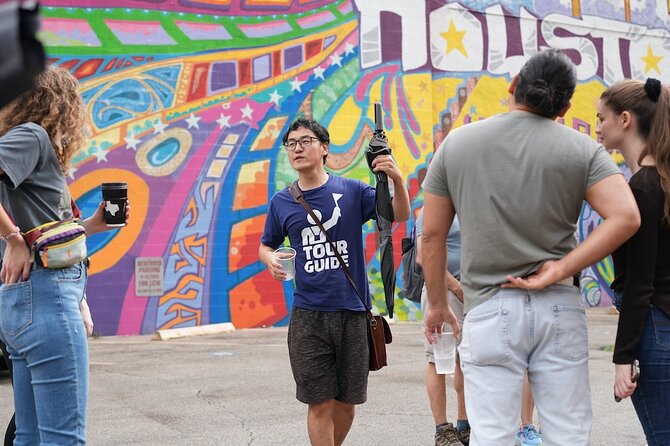
Guide John Gu is the key to the experience. He leads in English and has been praised for speaking clearly to a group of about 20, answering questions patiently, and adding humor to the architectural details. He also covers important people, mural artists, and city stories, which gives the walk more personality than a simple list of dates.
The format suits you if you want an introduction before exploring alone. You’ll leave with a better sense of where the Theater District, Market Square, City Hall, and major downtown landmarks fit together. You’ll also have a guide who can point you toward places worth seeing after the walk.
More Street Art Walking Tours in the USA
- NYC: Brooklyn Graffiti & Street Art Walking Tour in Bushwick
★ 4.8 · 492 reviews - Brooklyn: Bushwick Street Art Walking Tour
★ 4.7 · 462 reviews - Graffiti & Street Art Walking Tour in Brooklyn
★ 5.0 · 255 reviews
Market Square and Houston’s first chapter
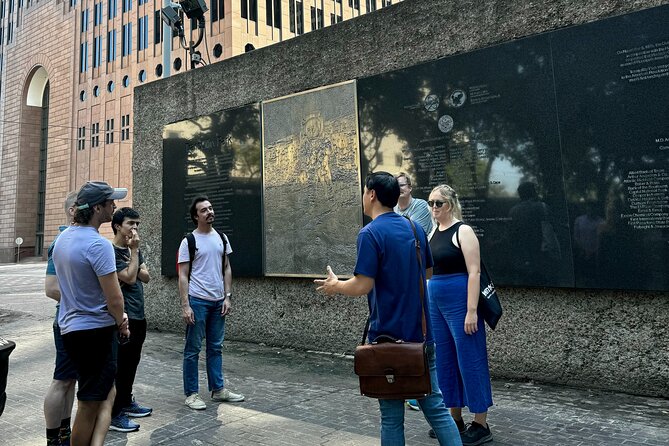
The first stop is Downtown Historic District Market Square, described as the birthplace of Houston. This is where the tour begins to connect the modern business center with the city’s earliest days.
You’ll pass some of Houston’s oldest buildings and hear how the historic district fits into the city’s growth. The stop is brief, about five minutes, but it sets the tone for the rest of the walk. Instead of treating Houston as only a city of glass towers, the tour starts with its older core.
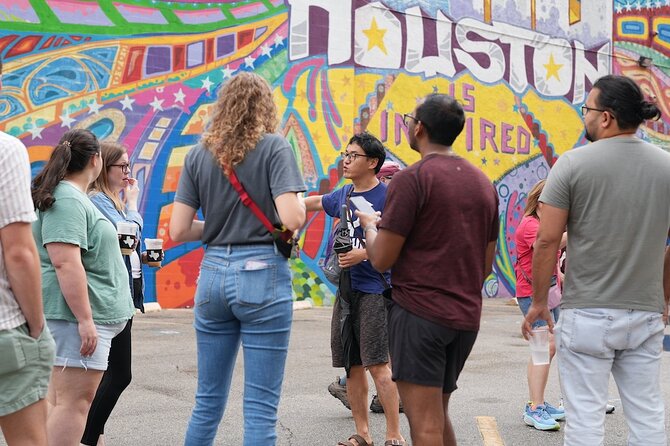
The nearby Houston is inspired mural is the main photo opportunity. It is considered the city’s most popular Instagram photo location, so this is a useful place to take a picture early in the walk. The mural also gives the route a street-art angle from the start.
Do not expect a long museum-style talk here. The value comes from getting the basic orientation, seeing the older buildings in context, and learning what to notice as you continue through downtown.
The Gulf Building and Houston’s early skyscrapers
The Gulf Building is one of the route’s strongest architectural stops. Completed in 1929, this 37-story tower reflects the confidence of Houston’s early skyscraper era.
Look for its Art Deco shape, stepped setbacks, marble details, and glowing crown. The building was once Houston’s tallest, and its upper lighting still helps it catch the eye after dark. The design is not only about height. Its decorative details show how much effort went into making early office towers memorable from street level.
You’ll hear about the mural-covered lobby as well, although the tour stop itself is listed as a short exterior visit. If you are especially interested in interiors, ask John what access is possible during your visit rather than assuming the lobby will be open.
This stop works well for anyone who likes city design but does not want a long technical lecture. The building gives you an easy visual lesson in Art Deco: strong geometry, setbacks, ornament, and a dramatic crown.
The Theater District beyond the façades
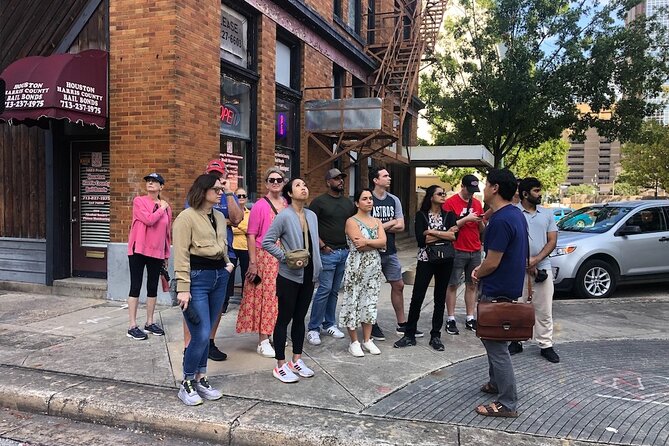
The Theater District brings a different side of Houston into view. This part of downtown is home to major performing-arts venues, including the Alley Theatre and Jones Hall.
The Alley Theatre is noted for its bold Brutalist design and its productions. Jones Hall is known for its marble interior and concert acoustics. On a short walk, you get to compare two very different approaches to public architecture: one heavy and modern, the other polished and formal.
The tour ends in this area, at Lynn Wyatt Square, so the district is more than a passing stop. You can use it as a launch point for lunch, a café break, or further exploration after John finishes the walk.
The tour does not include a performance or admission to either venue. Its purpose is to explain the district and show you where these cultural spaces fit in downtown. If you plan to attend a concert or play, you’ll need a separate ticket and schedule.
Same walls, a different guide:
- Wynwood Graffiti Golf Cart Small-Group Tour
★ 5.0 · 1,646 reviews - Murals of Nashville Instagram Tour by Golf Cart
★ 5.0 · 950 reviews - Miami: Wynwood Walls Skip-the-Line Ticket
★ 4.6 · 840 reviews - Nashville Combo Tour: Sightseeing, Murals & Brewery/Distillery
★ 5.0 · 641 reviews
City Hall and the shape of civic Houston
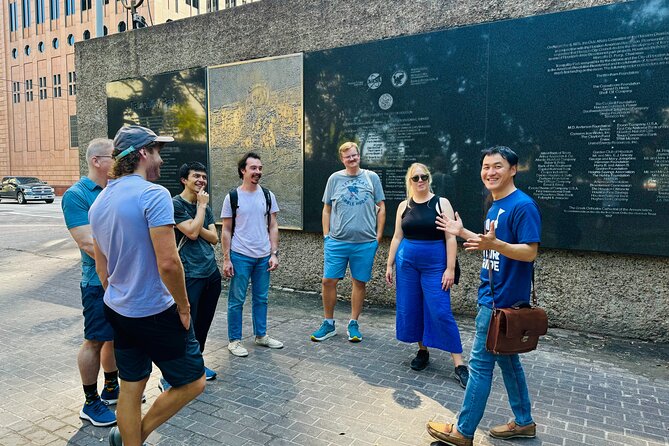
Houston’s City Hall, completed in 1939, gives the route another clear architectural marker. The limestone-clad building uses Art Deco geometry and detailed friezes, and it faces Hermann Square with a formal civic presence.
This stop helps explain how Houston presented itself during the 1930s. Office towers expressed commercial ambition, while City Hall used symmetry, stone, and ornament to project public authority. You do not need to know much about architectural terms to appreciate the contrast.
The guide’s role matters here. A façade can be easy to photograph and just as easy to forget. Stories about the building, the city’s leaders, and the work carried out inside give the stop more meaning.
Again, the scheduled visit is short. Think of it as a focused outdoor explanation, not an interior tour of municipal offices.
Tranquility Park and Houston’s NASA connection

Tranquility Park is one of the route’s most distinctive stops because it links downtown Houston with the space program. The park is dedicated to NASA, and John uses it to explain Houston’s relationship with space exploration.
This is a useful reminder that Houston’s identity is not limited to oil, offices, and sports. NASA is one of the city’s best-known connections with the wider world, and a small downtown park gives you a place to discuss that role without leaving the central district.
The stop is brief, about five minutes, so it will not provide a full account of the space program. If NASA is your main interest, you’ll need a separate visit to explore that subject in depth. On this tour, Tranquility Park works as a compact piece of the city’s larger story.
The Niels Esperson Building’s unusual crown
The Niels Esperson Building is another architectural highlight. Completed in 1927, it uses an Italian Renaissance-inspired design with terracotta details, grand columns, and a temple-like crown.
Its story adds a personal touch. The building was created as a tribute to real estate figure Niels Esperson by his wife, Mellie. That detail helps turn the structure from an attractive old tower into a building with a clear human story behind it.
The building reflects the ambition of Houston’s early skyscraper period, but it does so in a different way from the Gulf Building. Where the Gulf Building is associated with Art Deco lines and a stepped crown, the Niels Esperson Building leans toward classical decoration and a more ornate upper section.
For you, this is a good stop for comparing styles. The tour places several buildings close enough together that you can see how Houston’s architecture changed from one decade and design language to the next.
The 1910 Harris County Courthouse
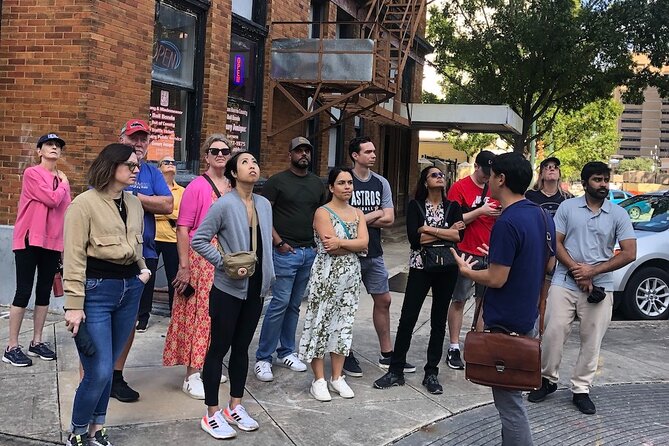
The 1910 Harris County Courthouse closes the main architectural sequence with a grand civic building from Houston’s earlier period. It is described as a city landmark and a high point of civic design.
This courthouse gives you another contrast. Its tone is more traditional than the streamlined Art Deco towers, and its purpose is public rather than commercial. Along with City Hall, it shows how Houston used major buildings to express order, authority, and civic pride.
The stop is short, but the building rewards a careful look. Notice how different it feels from the skyscrapers you have already seen. That comparison is one of the best reasons to take the route with a guide rather than simply walk downtown with a camera.
Timing, distance, and the pace of the walk
The advertised duration is about two hours. The listed stops are each roughly five minutes, but the walking between them and any question period add to the total. One reported outing took about two and a half hours, including a 20-minute restroom, snack, and beverage break.
I would keep at least two and a half hours free, especially if you like to ask questions or take photos. The official group limit is 25 people, which is large enough for a social group but still manageable on city sidewalks. John has been praised for speaking loudly enough for a group of around 20.
Wear comfortable shoes. You are covering several downtown locations on foot, and the experience is built around seeing the buildings from the street. Bring water because bottled water is not included, and food and drinks purchased during the walk are also your responsibility.
Houston weather deserves attention. The tour is outdoors, and rain did not prevent at least one group from completing the walk, but wet weather can make a long city walk less comfortable. A hot day may also change how much you enjoy the pace. Check the forecast and carry a small umbrella or water bottle when needed.
The route is stroller accessible, and service animals are welcome. Most people can participate, but the experience still involves walking between stops and spending time outside.
What $25 gets you
At $25 per person, this is priced as a low-cost orientation rather than a full attraction package. There are no museum admissions, meals, drinks, or performance tickets included. You are paying for John’s time, local explanation, and the structure of the route.
I think the price works best if you are new to Houston, staying downtown, or have a short amount of free time. A guide can help you understand several major buildings in two hours, then you can decide which areas deserve a longer visit.
The value is also strong for solo visitors. One detailed account describes John making a point of including a solo participant during the break, which suggests that he pays attention to group dynamics rather than speaking only to the loudest people.
If you already know downtown Houston well, the tour may feel introductory. Its strength is orientation and context, not access to private spaces or a long specialist lecture on one building.
You can cancel for a full refund up to 24 hours before the start time. Changes or cancellations inside that window are not accepted for a refund.
Who should book this Houston walk
I would recommend it if you want:
- A first look at downtown Houston before exploring on your own
- A mix of city history, architecture, public spaces, and mural art
- A guide who can answer questions and explain local figures and artists
- A short activity that fits around a meeting or another downtown plan
- A walk that works for a solo visitor, a couple, or a small family group
- A clear finish near cafés and the Theater District
It is less suitable if you want a seated experience, extensive indoor access, or a full-day study of Houston’s past. You should also think twice if walking outdoors in uncertain weather will be difficult for you.
The tour is offered in English only. That said, one Spanish-language comment praised John’s clarity and patience, but the official language for the experience is English, so you should be comfortable following an English-speaking guide.
Should you book it?
Book this tour if you want a friendly, practical introduction to central Houston for $25. The combination of Market Square, Art Deco towers, City Hall, Tranquility Park, the Niels Esperson Building, the courthouse, and the Theater District gives you more variety than the short duration suggests.
John Gu is the main reason to choose this walk over wandering alone. His clear delivery, humor, city stories, and attention to questions help turn a set of downtown buildings into a connected experience.
Just allow more than two hours, bring water, and remember that the tour stays outside. If that sounds comfortable, this is a smart first activity in Houston and a useful way to decide what you want to see next.
FAQ
How long does the Walking Tour of Houston last?
The tour is scheduled for approximately two hours. You should allow closer to two and a half hours if the group takes a break, asks questions, or spends extra time on photos.
Where does the tour begin?
The tour begins at Lyric Market, 411 Smith Street, Houston, Texas 77002.
Where does the tour end?
It ends at 601 Capitol Street, near Lynn Wyatt Square in the heart of Houston’s Theater District.
What language is the tour offered in?
The tour is offered in English.
Is food or bottled water included?
No. Snacks and bottled water are not included, and you pay separately for food and drinks during the walk.
Is the tour suitable for strollers and service animals?
Yes. The tour is stroller accessible, and service animals are welcome.
How large is the group?
The tour has a maximum of 25 participants.
Can I cancel for a refund?
Yes. You can cancel at least 24 hours before the start time for a full refund. Cancellations or changes made less than 24 hours before the start time are not accepted for a refund.
More History Tours in the USA
- 3-Hour Atlanta Beltline Food, Street Art and History Tour
★ 5.0 · 345 reviews - 2-Hour Food, History and Street Art Tour of Ponce City Market
★ 5.0 · 159 reviews - Guided Urban Art and Historical E-Bike Tour in Park City
★ 5.0 · 49 reviews - Atlanta: Beltline Food, Street Art, and History Walking Tour
★ 5.0 · 47 reviews
Just added around the USA
- Wynwood Walls Street Art & Neighborhood Walking Tour★ 4.9 · 9 reviews
- Urban Art and Historical Electric Bike Tour★ 5.0 · 3 reviews
- Tucson Food Tours- Locally Owned Mural and History Tour★ 5.0 · 10 reviews
- St. Pete’s Must-Do Murals Tour — The Premier Street Art Trolley★ 5.0 · 22 reviews
- Tijuana Urban Art Walk from San Diego★ 4.0 · 8 reviews
- Sacramento Street Art Walking Tour – See the Murals Sacramento is Famous For★ 5.0 · 6 reviews
- Downtown Sacramento Mural and Art Walking Tour★ 5.0 · 4 reviews
- Would I Lie To You? Mural Walks★ 5.0 · 3 reviews
Houston Street Art Tours, compared.




Private 3-in-1 Sightseeing, Brewery, and Mural Tour of Houston by Cart
Read our review →Browse the lists this tour appears in