REVIEW · BELFAST
IRA Troubles Conflict Private Tour Museum Graves Murals and Political Analysis
Belfast’s past comes into sharp focus on this Republican-focused tour, which moves from Falls Road murals and the peace walls to Milltown Cemetery, Bobby Sands memorials, and a private museum rarely open to the public. Guides including Barry, Paula, Joe, and others bring personal experience and strong political views to the story.
I like the access to places many standard city tours skip, especially the Irish Republican History Museum and Clonard Martyrs Memorial Garden. I also like the private format: you can stop, ask direct questions, and adjust the conversation to your interests. The main caution is clear: this is not a neutral account of both communities. Its viewpoint is intentionally Irish Republican.
Key points at a glance
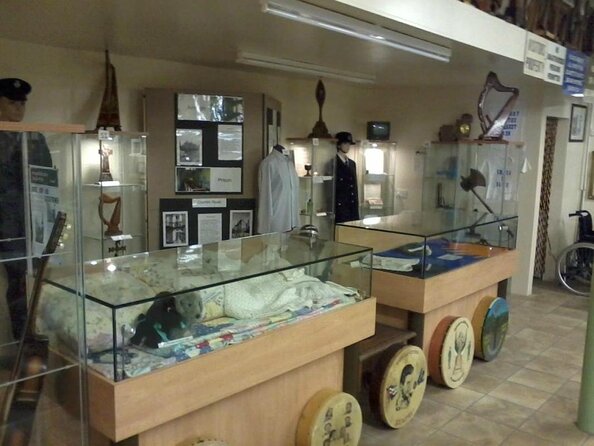
- Private museum access: Visit the Eileen Hickey Irish Republican History Museum when it is open, with exhibits and possible conversations with former prisoners.
- Republican viewpoint: Hear the story of the Troubles, the IRA, hunger strikes, and the peace process from a clearly stated Nationalist perspective.
- Major Belfast sites: See Falls Road, Shankill Road, Divis Tower, Ballymurphy, Clonard, Milltown Cemetery, and several political murals.
- Personal guides: Barry, Paula, Joe, Brendan, Kieran, and other guides are named in the tour’s feedback, with personal memories forming a major part of the experience.
- Private transport: Air-conditioned transport and hotel pickup make it easy to cover a lot of West Belfast in roughly three hours.
- Best for serious learners: This suits you if you want political context and frank discussion, not a light sightseeing drive.
What this Belfast Troubles tour is really about
This is a history tour with a defined argument. You are not being given a carefully balanced overview from equal Republican, Loyalist, and British viewpoints. Instead, you are following the conflict through Irish Republican history, from centuries of resistance to the armed campaign, prison protests, hunger strikes, and the current peace process.
That focus is useful if you already know the basics and want to understand how one side remembers the conflict. It also makes the tour more emotionally direct. You will see memorials to Republican volunteers, civilian victims, and prisoners, while hearing explanations that place these sites within a long struggle against British rule.
The tour title tells you what to expect, and the description is unusually plain about its angle. If you want both sides presented with equal weight, choose a separate tour built around the full Republican and Loyalist divide. If you want the Republican story explained by guides with lived experience, this is a much closer fit.
The private vehicle matters. West Belfast’s key sites are spread across several districts, and the tour can cover more ground than a walking route. You are driven between stops, then step out for short visits, photographs, and explanations. With only your group present, you can ask about a particular mural, family connection, event, or political question without holding up a large crowd.
More Mural Tours in Belfast
- Belfast: Murals Taxi Tour
★ 4.9 · 2,047 reviews - Belfast’s Political Mural Taxi Tour
★ 5.0 · 1,180 reviews - Famous 1.5 hour Belfast Murals Tour
★ 5.0 · 477 reviews
Falls Road murals and the first look at the divide
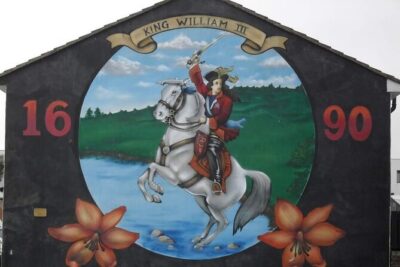
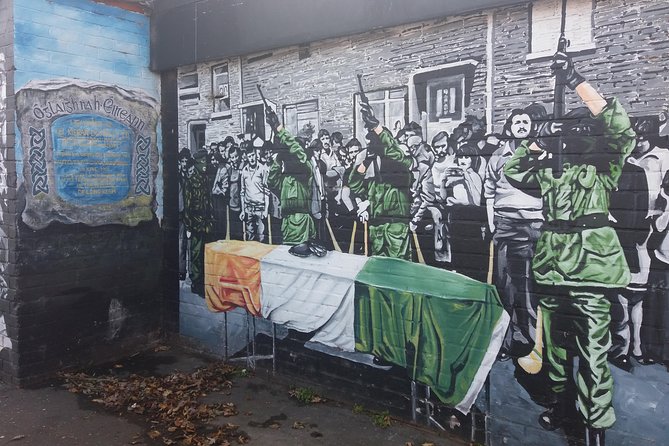
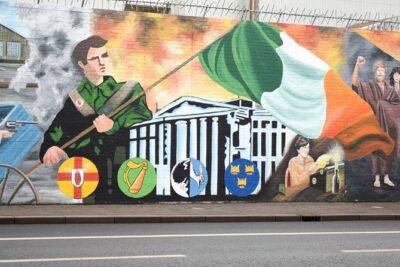
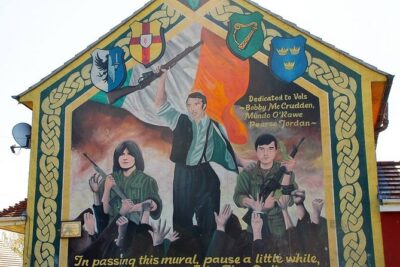
The opening visit near the International Mural Wall on Divis Street sets the tone. You travel toward Falls Road, where murals turn political memory into public art. Some celebrate Republican figures and historic struggles. Others address international causes, colonialism, imprisonment, or local deaths.
The guide explains how the modern conflict developed from civil rights protests, sectarian violence, competing national identities, and the collapse of trust between communities. The tour also looks at murals painted by former prisoners, often called POWs in Republican language.
This is a good first stop because you are not simply photographing painted walls. You are learning how murals work in Belfast. They mark territory, honor the dead, teach political lessons, and tell residents and outsiders which version of the past is being kept alive.
The stop is listed at about ten minutes, so expect a focused explanation rather than a long art walk. Bring a camera, but listen before taking pictures. The meaning of a mural can matter more than its visual appeal.
The peace walls, where separation is still visible
The peace walls are one of Belfast’s hardest sights to absorb. They separate mainly Republican and Nationalist Catholic neighborhoods from mainly Loyalist and Unionist Protestant areas. Many were built as temporary barriers after sectarian riots in 1969, but their usefulness as physical protection meant that they stayed.
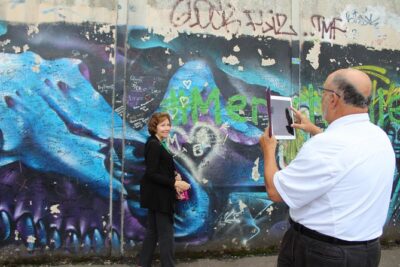
You see both sides of the wall and learn why the barriers were built. The experience includes a chance to sign your name and leave a message of peace, which gives the stop a small personal action amid a much larger political story.
One of the most famous walls runs between the Falls Road and Shankill Road. It stretches for about 800 meters and includes a tall, multi-level concrete structure. The fact that gates can still close on some roads is a reminder that the peace process did not erase every division.
The listed stop is short, around ten minutes, but the wall itself deserves your attention. Look at how close the neighborhoods are. The physical distance is small, yet the political and social distance has lasted for generations.
Shankill Road and the missing half of the picture
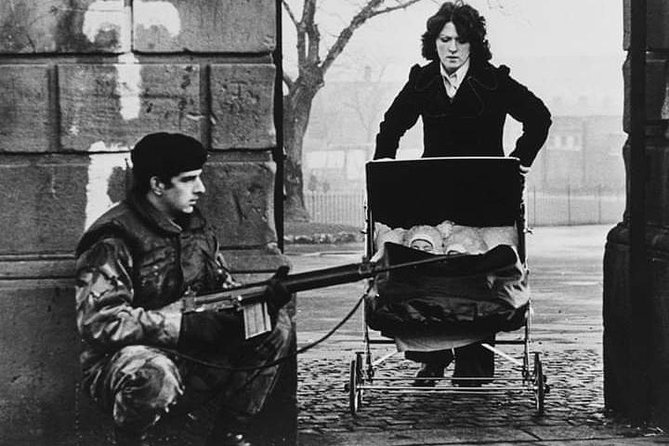
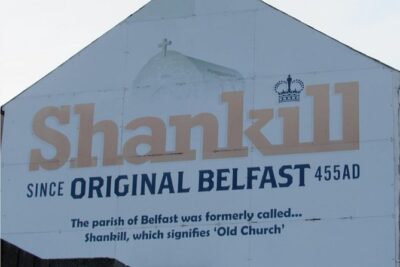
The tour then crosses into the Loyalist Shankill area, the historic center of Ulster Loyalism. Here, the murals often show masked men, weapons, flags, and symbols linked to organizations including the UDA, UFF, and UVF.
You learn how Loyalism developed and how Loyalist paramilitary groups operated during the conflict. This section is important because the tour’s main viewpoint is Republican, yet it does not ignore the other side entirely. You are shown the area and given a Republican interpretation of its role.
Still, do not expect a full Loyalist political history. The balance is not equal by design. One person who wants both arguments explained in similar detail may find this limiting. I would treat Shankill Road as an essential counterpoint, then read or book another experience if you need a wider account of Unionism, British identity, and Loyalist fears.
More Mural Tours in the UK
- Belfast: Private Black Taxi Cab Political Murals Tour
★ 4.9 · 425 reviews - Belfast Murals Taxi Tour
★ 5.0 · 341 reviews - Political Wall Murals and Peacewall
★ 4.9 · 247 reviews - Private Political History & Murals Tour Belfast
★ 5.0 · 182 reviews
Clonard Martyrs Memorial Garden and Bombay Street
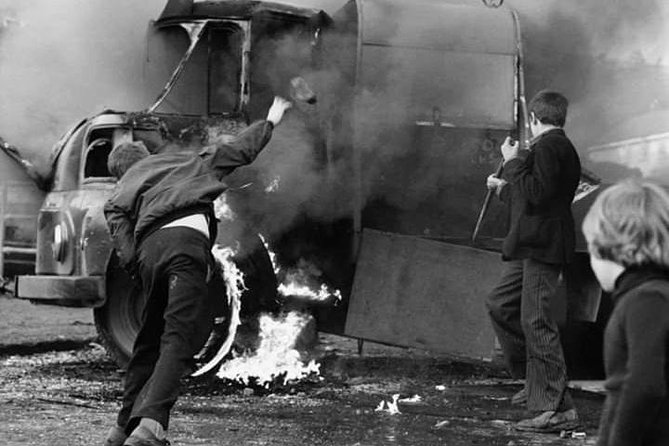
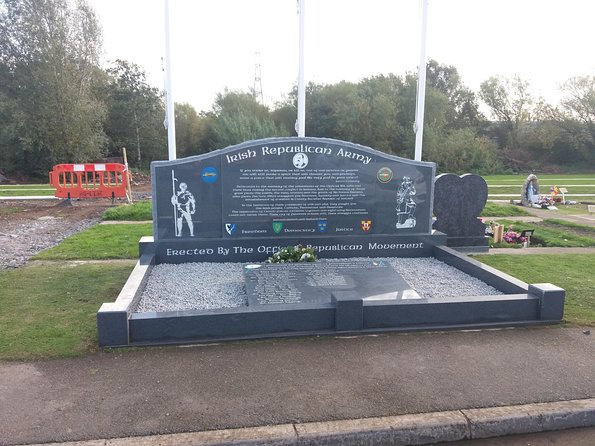
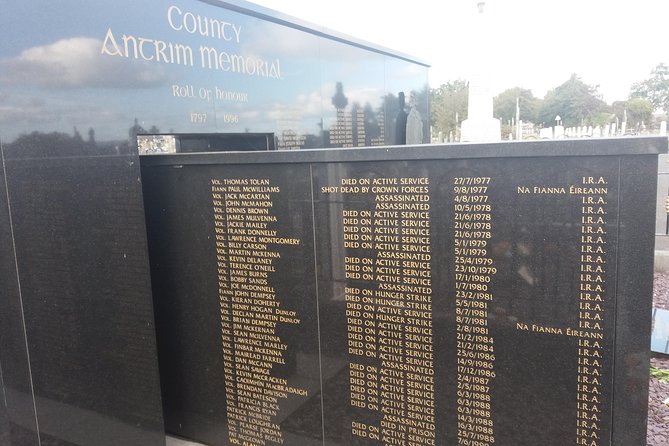
At Clonard, the tour becomes more intimate. The memorial garden commemorates Republican volunteers from C Company, Second Battalion, Belfast Brigade, along with civilians from the Greater Clonard area and deceased Republican prisoners dating back to 1916.
The garden includes black iron gates with a rising phoenix, a Celtic cross, plaques, benches, and lists of names. Separate areas remember volunteers, civilians, prisoners, and people who resisted British rule. The wording and symbols make the site unmistakably Republican.
This is also where you learn about the violence of 1969. Loyalist attacks burned Catholic homes in Bombay Street and forced residents to flee. The first peace walls appeared in this period, including barriers intended to separate communities that had been living beside one another.
The memorial is not a quick photo stop in spirit, even if the visit is scheduled for around thirty minutes. The names are the point. I would allow yourself time to read the plaques and notice how the memorial connects local deaths to a much longer national story.
Milltown Cemetery and the Republican plots
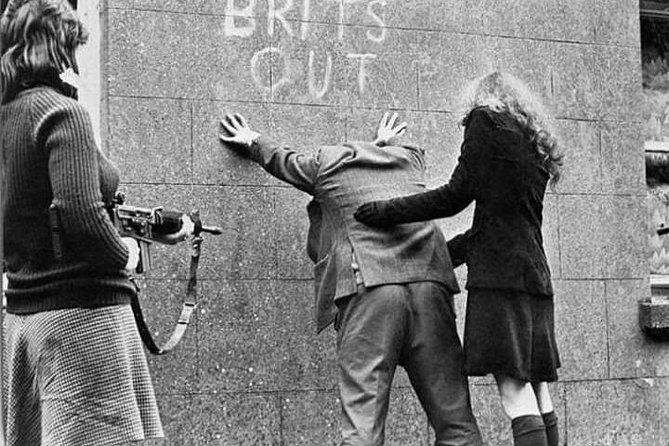
Milltown Cemetery offers one of the tour’s most serious moments. You visit the Republican plots, including graves maintained by the National Graves Association in Belfast. These include Republican volunteers killed in the 1920s, the Northern Campaign of the 1940s, and later periods of the conflict.
The most prominent grave is that of Bobby Sands, the IRA member who died after a 66-day hunger strike in 1981 while imprisoned at the Maze. Sands had been elected as a Member of Parliament during the hunger strike, making his death both a prison protest and a major political event.
You also see the New Republican Plot, which contains the remains of 77 IRA volunteers, including Máiread Farrell. The graves are marked with Republican symbols, including the Red Hand.
The cemetery stop lasts about 25 minutes. That is enough for a focused explanation, but some people may find the pace heavy, especially after several memorials and murals. One practical advantage of the private format is that you can ask the guide to clarify names, dates, or the difference between military and civilian remembrance.
If you have a family grave to visit, the driver may be able to help with a short practical stop. One past itinerary included a flower-shop visit for this purpose, but do not assume it is guaranteed. Ask when booking.
Bobby Sands, hunger strikes, and prison protest
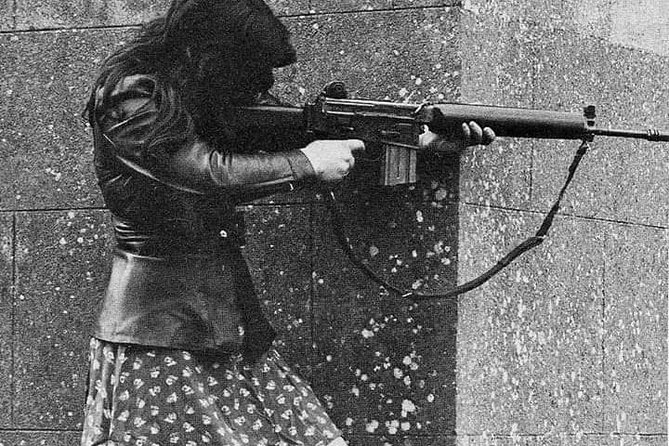
Bobby Sands appears more than once because his story is central to Republican memory. One mural gives you the iconic portrait. Another part of the tour covers the Blanket Protest, the Dirty Protest, and the 1981 hunger strike.
The guide explains why Republican prisoners rejected the removal of Special Category Status and how prison clothing, washing conditions, and hunger strikes became political weapons. You also see photographs of 12 of the 22 hunger strikers connected with the wider Republican story.
This section can be difficult because the language of the tour is openly sympathetic to the prisoners’ cause. You may hear the IRA described as an army or liberation movement, while others describe it as a terrorist organization. The tour does not smooth over that disagreement, and you should be ready to ask how different communities use different words for the same events.
The Irish Republican History Museum
The private museum is likely the tour’s biggest reason to book. It is not normally open to the public in the same way as a standard city museum, and access adds something that murals alone cannot provide.
The museum covers resistance to British rule and Irish Republican history across roughly 800 years. Exhibits include material linked to the conflict, and the tour specifically includes a chance to see and handle plastic and rubber bullets used by British Crown forces. Former prisoners may also share personal experiences when the museum is open.
The museum operates from 10 a.m. to 2 p.m., Tuesday through Saturday. If it is closed, the tour substitutes a visit around Ballymurphy. That is a major planning detail. Ask about opening times when you book, especially if the museum is the main reason you are paying for this experience.
The private setting lets you ask questions that would be hard to raise in a formal museum. You can ask how an object was used, what it meant to prisoners, or how Republican communities remember it. At the same time, a private collection with a strong political identity will not offer the same curatorial distance as a public institution.
Clonard Monastery and the search for peace
Clonard Monastery sits near the interface between Falls Road and Shankill Road. During the violence of 1969, priests from the monastery worked to protect local residents and help people caught in the attacks.
The monastery was also associated with Fathers Alec Reid and Gerry Reynolds, two Catholic clergy members involved in peace work. Their presence gives this stop a different mood from the memorial gardens and paramilitary murals. Instead of focusing on armed struggle or fallen volunteers, the story turns toward mediation and contact across the divide.
You are likely to spend about ten minutes here. It is a brief stop, but it helps prevent the tour from becoming only a catalogue of violence. The peace process involved more than political leaders and armed groups. Religious figures, prisoners, families, and local intermediaries also played roles.
D Company Garden, Divis Tower, and Ballymurphy
The tour continues through Republican strongholds associated with the Belfast Brigade of the Provisional IRA. At the D Company, Second Battalion Garden of Remembrance, the guide explains the organization of the Belfast Brigade and the neighborhoods linked to its battalions.
Divis Tower gives you another strong visual marker. The tower overlooks Falls Road and once contained a British Army sniper position and observation post, reportedly remaining in use until 2005. Nearby murals commemorate some of the first people killed during the Troubles.
In Ballymurphy, you drive through Republican streets and see murals honoring local volunteers, including Jim Bryson and the image of his Big Louie machine gun. Other murals address the Great Famine and local memory.
These are short stops, often five to ten minutes. Their value lies in seeing how ordinary streets became associated with military positions, funerals, murals, and surveillance. You are not visiting isolated monuments. You are being shown neighborhoods where the conflict shaped daily movement and identity.
Timing, pickup, and the real value of $255.50
The tour costs $255.50 per person and lasts about three hours. That is not a bargain for a short city drive, but the price needs to be judged against what is included: private transport, pickup from a central Belfast meeting point, an air-conditioned vehicle, a private guide, and access to places not normally part of a standard itinerary.
For two people, the total cost is substantial. The value improves for a small group because the private vehicle and guide cost are shared. Group discounts are available, and the private arrangement lets you ask questions and alter the emphasis without waiting for a bus full of strangers.
Free pickup is offered from the Leonardo Hotel. Other central locations can cost extra, including Lanyon train station, St George’s Market, the Titanic area, Crumlin Road Gaol, Queen’s University, the Botanic Gardens, and the Ulster Museum. Cruise-ship pickup and drop-off cost £25 each way. Airport pickup is not offered.
There is also a £25 upgrade, when available, to a Mercedes-Benz V-Class with electric doors, leather reclining seats, and privacy glass. I would treat that as a comfort extra, not a necessary part of the experience.
Who should book this experience
You should book if you want:
- A Republican account of the Troubles rather than a neutral city overview.
- Personal stories from guides with direct experience of Belfast.
- Access to a private museum and former-prisoner perspectives.
- Political murals, graves, memorials, and peace walls in one compact route.
- A private setting where you can ask difficult questions.
- A strong historical focus instead of general sightseeing.
You should think twice if you want a light tour, a purely photographic outing, or equal time devoted to Republican, Loyalist, and British arguments. The subject is painful, and the language can be direct. This is best approached with respect, patience, and a willingness to hear a viewpoint that may not match your own.
Should you book the Belfast Republican Troubles tour?
Book it if the private museum, Milltown Cemetery, Bobby Sands, and Republican political analysis are the parts of Belfast you most want to understand. The strongest features are the access, the personal guides, and the ability to connect murals and memorials with the streets where the conflict happened.
Before paying, confirm three things: who your guide will be, whether the museum is open on your date, and exactly where pickup will take place. If you need a balanced account of the whole divide, pair this with a separate tour focused on Loyalist and Unionist history.
For the right audience, this is a serious and memorable three hours. It is not a complete account of Northern Ireland, but it offers a close, personal look at one side of Belfast’s still-unfinished story.
FAQ
How long does the tour last?
The tour lasts approximately three hours.
How much does the tour cost?
The listed price is $255.50 per person.
Is this a private tour?
Yes. Only your group participates, and the tour includes private transportation.
What viewpoint does the guide present?
The tour presents the Troubles and Irish Republican history from an Irish Republican perspective. It discusses Loyalist and British involvement, but it is not designed as an equal treatment of all sides.
Is the Irish Republican History Museum always open?
No. The museum is open from 10 a.m. to 2 p.m., Tuesday through Saturday. If it is closed, the tour includes a visit around Ballymurphy instead.
Where is free pickup available?
Free pickup is available from the Leonardo Hotel, described as the central meeting location.
Can I be picked up from a cruise ship?
Yes, but cruise-ship pickup costs £25 each way and is paid directly to the guide by cash or card.
Does the tour visit Milltown Cemetery?
Yes. The route includes the Republican plots at Milltown Cemetery and Bobby Sands’s resting place.
Can I cancel for a full refund?
Yes, if you cancel at least 24 hours before the experience starts. Cancellations or changes made less than 24 hours in advance are not accepted for a refund.
More Political Street Art Tours in Belfast
- 2 Hour Private Belfast Taxi Cab Tour of Troubles & Peace walls
★ 5.0 · 240 reviews - Belfast Troubles Murals Street Art and Peace Wall Walking Tour
★ 5.0 · 163 reviews - Belfast Troubles : Murals, Street Art, and Peace Wall Tour
★ 4.7 · 99 reviews - Belfast Famous Black Taxi Tour Political Murals & Peace Wall 2 Hr
★ 5.0 · 67 reviews
More Private Street Art Tours in the UK
- 2 Hour Terror and Mural History Belfast taxi Private Tour
★ 5.0 · 7 reviews - Belfast: Famous Murals Private Tour
★ 5.0 · 6 reviews - N0 1 Belfast black cab Irish and British mural 2hr private tour
★ 4.5 · 6 reviews - 3-Hour Private Tour of East London Graffiti & Street Art
★ 4.5 · 5 reviews
Just added around Belfast
- 1 Hour Express Belfast Taxi/Cab Tour History, Murals, Troubles★ 5.0 · 17 reviews
- Falls road Murals Walking Tour with former prisoners★ 5.0 · 19 reviews
- Belfast history of terror & mural 1 hr express private taxi tour★ 5.0 · 3 reviews
- 2 Hours Republican & Loyalist Mural Black Taxi Tour from Belfast★ 5.0 · 21 reviews
- Private Belfast Mural & Giant’s Causeway Tour from Belfast (2 in 1)★ 5.0 · 5 reviews
- World Famous Private Belfast Troubles Taxi Cab Tour 2 Hour★ 4.5 · 14 reviews
- Best of Belfast Driving Taxi Tour with Political Murals★ 5.0 · 9 reviews
- Belfast political history and mural unique private 90 min tour★ 5.0 · 10 reviews
Belfast Street Art Tours, compared.


2 Hour Private Belfast Taxi Cab Tour of Troubles & Peace walls
Read our review →