REVIEW · BELFAST
2 Hour Terror and Mural History Belfast taxi Private Tour
Belfast’s Troubles history is not tucked away in a museum. It is painted across walls, built into streets, and remembered beside homes where families were forced out. This two-hour taxi tour takes you through West and North Belfast, from the Peace Wall and Falls Road murals to Shankill Road, with the driver supplying the political and personal context.
I like the route for two clear reasons: it fits a lot into a short visit, and it shows both nationalist and loyalist viewpoints. I also like the chance to hear first-hand context from a guide who, on one occasion, had been shot during the Troubles and could explain the conflict from lived experience. The main drawback is the pace. With nine stops in about two hours, several visits last only 10 minutes, so you will see the key places rather than study them at length.
Key points to know before booking
- The route covers both sides of Belfast’s divide, including Falls Road, Bombay Street, and Shankill Road.
- The Peace Wall and murals are the main event, with time for photos and an explanation of their symbols.
- A personal guide can add rare first-hand context, including experience of being wounded during the Troubles.
- Nine stops fit into approximately 120 minutes, so expect brief visits rather than long walks.
- Pickup is available near Belfast City Hall, but not directly from cruise ships.
- The $190.59 per-person price buys convenience and focus, though value depends on group size.
Why this short Belfast tour matters
I would choose this experience when I wanted a strong introduction to Belfast’s recent past without spending a full day on foot. The taxi carries you between neighborhoods that can feel difficult to understand from a normal sightseeing bus. Your guide can point out the physical lines between communities, then explain why those lines were created.
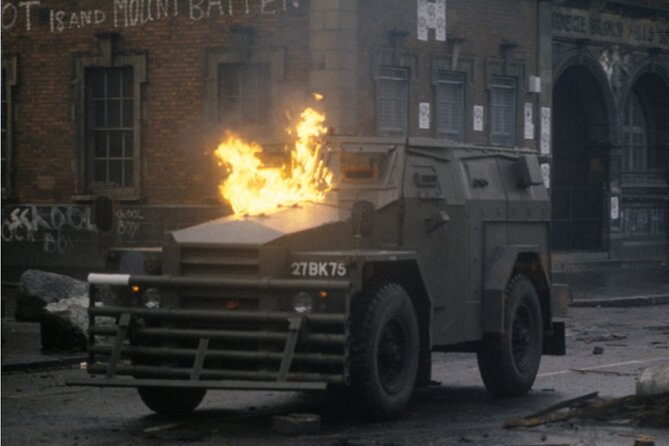
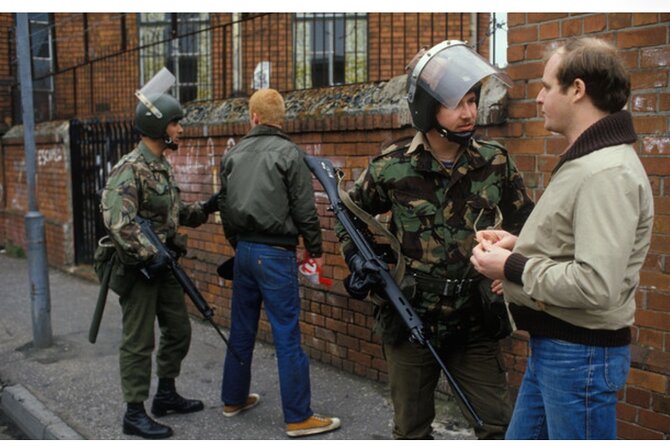
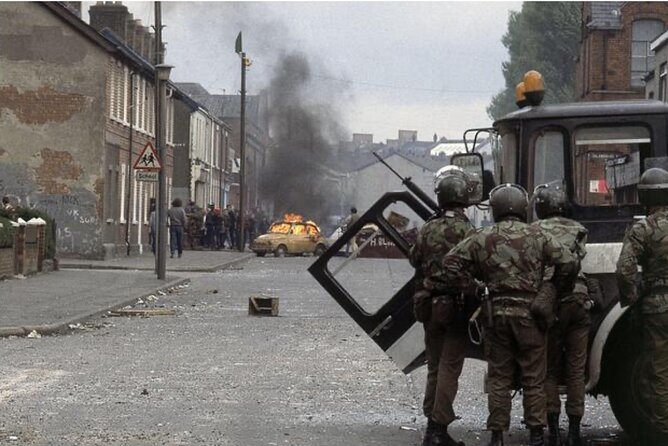
The tour deals with the Troubles, the period of conflict that began in the late 1960s and continued until the peace process took hold. Protestant and Catholic communities were divided by politics, religion, national identity, and competing ideas about Northern Ireland’s future. Republican communities generally wanted a united Ireland. Unionist and loyalist communities generally wanted Northern Ireland to remain part of the United Kingdom.
That simple description does not explain the human cost. Homes were burned, families were displaced, prisoners went on hunger strike, and paramilitary groups killed in the name of their causes. This route helps you connect those events to real streets and buildings.
The tone matters. One guide connected with the tour had been shot during the Troubles and offered an even-handed account of both sides. That kind of background can give the tour unusual force, but you should still listen carefully and remember that personal experience is one perspective, not the whole story.
More Mural Tours in Belfast
- Belfast: Murals Taxi Tour
★ 4.9 · 2,047 reviews - Belfast’s Political Mural Taxi Tour
★ 5.0 · 1,180 reviews - Famous 1.5 hour Belfast Murals Tour
★ 5.0 · 477 reviews
Starting near City Hall and getting oriented
The listed starting point is the Leonardo Hotel on Great Victoria Street. Pickup is also offered within a one-kilometer radius of Belfast City Hall, including the front gates. If you arrive by cruise ship, you cannot be collected at the ship itself. The cruise shuttle drops you near Visit Belfast, across from City Hall, so arranging pickup at the City Hall gates is the practical choice.
This detail matters because the tour is only two hours. You do not want to lose part of that time sorting out a distant pickup. Confirm your meeting point before the day begins.
The vehicle also makes the route easier for anyone who prefers not to walk long distances between neighborhoods. Parking fees are included. Coffee, tea, and alcoholic drinks are not included, but this is not really a refreshment-focused outing. The point is the commentary and the sites outside the window.
Peace Wall: Belfast’s most visible divide
The Peace Wall is the natural opening stop. These barriers were first built during the Troubles to separate Protestant and Catholic districts and limit attacks between them. Some stretch for miles, and certain gates still close at night.
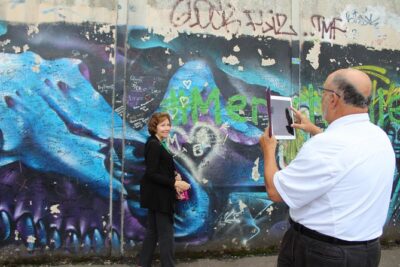
You will see a wall covered with murals, messages, and graffiti. It can look like an open-air art site, but the painted surface sits on top of a difficult reality. The wall was created as a security measure, and its continued presence shows that peace and full social integration are not exactly the same thing.
The stop lasts about 20 minutes, making it one of the longer visits. Use that time to look at the writing as well as the larger murals. The guide should help you distinguish memorials, political statements, peace messages, and personal reactions.
For me, this is one of the most useful stops because it gives you a physical picture of division before the tour moves into the stories of people and organizations affected by it.
Divis Flats and the rooftop base called Fort Apache
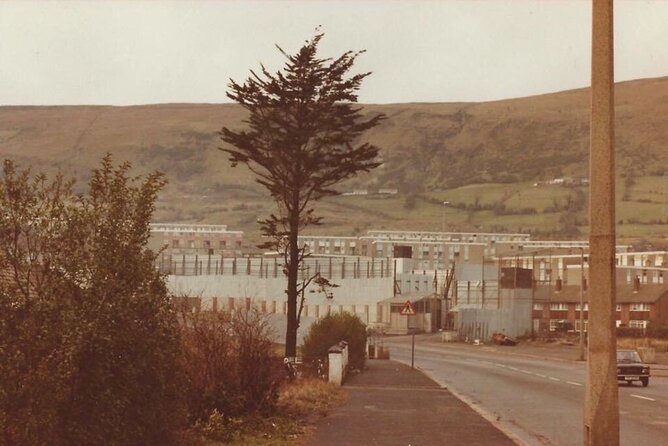
Divis Flats offers a glimpse into life in a Catholic part of West Belfast during the worst years of the conflict. Built in the late 1960s, the high-rise complex became associated with street violence and repeated confrontations with British security forces.
A British Army base was placed on the roof of the tallest building. Locals called it Fort Apache. From that position, soldiers had a wide view over the district, but the base also became a daily reminder of surveillance and military control.
You have roughly 10 minutes here, so do not expect an extended walk through the complex. The value is in understanding how a residential setting could become part of the conflict itself. Homes were not just nearby when trouble broke out. They were part of the contested space.
More Mural Tours in the UK
- Belfast: Private Black Taxi Cab Political Murals Tour
★ 4.9 · 425 reviews - Belfast Murals Taxi Tour
★ 5.0 · 341 reviews - Political Wall Murals and Peacewall
★ 4.9 · 247 reviews - Private Political History & Murals Tour Belfast
★ 5.0 · 182 reviews
The International Wall and the murals of Falls Road
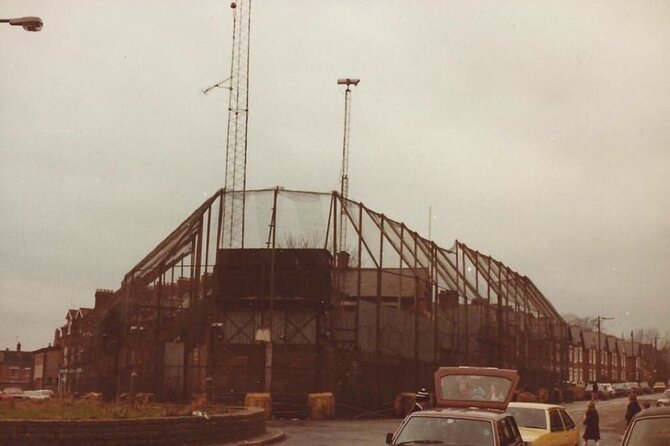
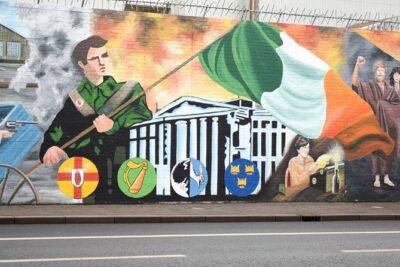
The International Wall on Divis Street and Falls Road changes often. Its paintings connect Belfast’s own political struggle with international causes, human rights campaigns, and movements for independence or justice.
This is a good place to ask questions. A mural can refer to a local event, a foreign political group, or a broad idea of solidarity. Without explanation, you may recognize the colors and figures but miss the intended message.
The visit is scheduled for about 10 minutes. That is enough for a close look at a few sections and a quick explanation, but not enough to read every panel or photograph the whole wall at leisure. If murals are your main interest, you may want to return later on your own.
The art here is political, not merely decorative. It records what communities wanted remembered, who they supported, and how they viewed their own struggle.
Bobby Sands and the power of a single mural
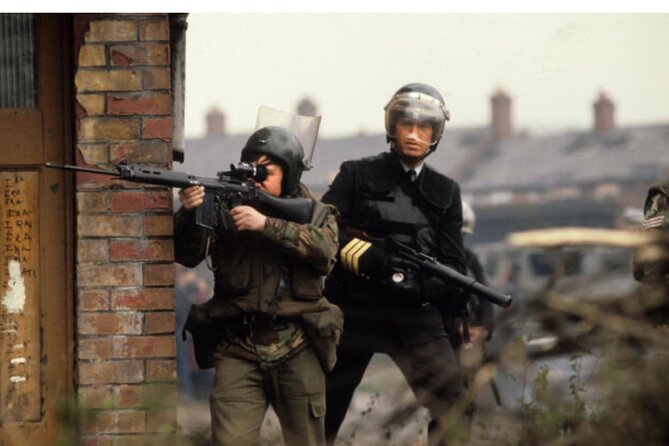
The Bobby Sands mural is among Belfast’s best-known political images. Sands was a member of the Provisional IRA who died during the 1981 hunger strike. While on hunger strike, he was elected as a Member of Parliament, which gave his death an international political impact.
The mural presents Sands as a symbol of republican resistance. It also opens a difficult discussion about imprisonment, armed struggle, hunger strikes, British policy, and the meaning of political martyrdom.
Your stop lasts around 10 minutes. That makes the guide’s explanation especially important. You will have time to see the mural and take in its setting, but the subject needs context. A balanced guide should explain why Sands is honored in republican areas while also making clear that the period involved violence and loss on all sides.
This is one of the places where a first-hand guide can make a difference. Personal stories can help you understand why these images still carry emotional weight.
Clonard Monastery and the work behind the peace process
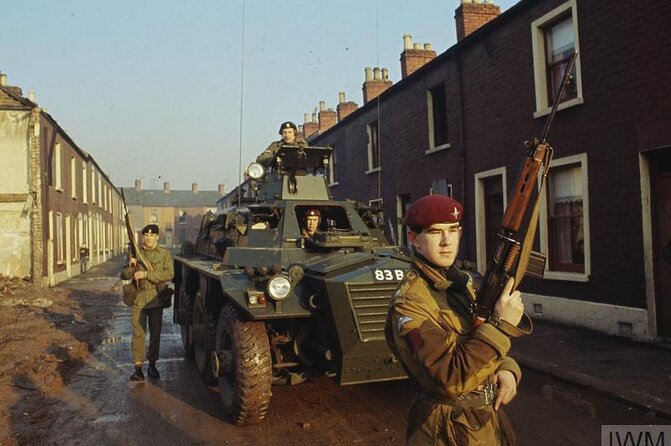
Clonard Monastery brings a different mood to the route. The red-brick monastery was founded in 1896 and became an important place during the peace process. Priests there, especially Father Alec Reid, worked behind the scenes to open communication between opposing groups.
Father Reid’s efforts helped create conversations that eventually contributed to the Good Friday Agreement in 1998. The monastery therefore represents more than religious architecture. It is linked to the slow, private work of getting enemies to talk.
You have about 10 minutes here. That is enough to appreciate the building and hear why it matters, though not enough for a long architectural visit. The stop is valuable because it shifts attention away from armed groups and toward mediation, trust, and the difficult process of negotiation.
It also gives the tour a needed change of pace. After the murals, security barriers, and stories of violence, Clonard offers a place associated with dialogue.
Clonard Martyrs Memorial Garden
Next to the monastery, the Clonard Martyrs Memorial Garden remembers local people who died during the Troubles. Plaques and memorials sit within a quiet garden, creating a space for mourning rather than political display.
You will spend about 15 minutes here. Take the time to read what you can and consider the scale of the conflict at neighborhood level. National politics can feel abstract. A local memorial makes it personal.
The wording and symbols of memorials matter in Belfast, and they can reflect a community’s own understanding of sacrifice. Your guide can help explain that context. This is a solemn stop, and it rewards a respectful, quiet approach.
Crumlin Road Gaol and the route to the courthouse
Crumlin Road Gaol is a former prison with connections to both ordinary criminal cases and political imprisonment. Members of the IRA and loyalist paramilitary groups were held there. The neighboring courthouse handled major trials connected with the conflict.
A tunnel linked the gaol and courthouse. Prisoners could be taken directly from the jail to court, making the connection between imprisonment and prosecution very literal.
The prison also saw hunger strikes, riots, and escapes. Today, the restored site offers paid guided visits, but this taxi tour does not include a full prison admission. The stop here lasts about 10 minutes and is listed as free, so you should expect an exterior explanation rather than the complete jail tour.
That distinction is important. If Crumlin Road Gaol is high on your personal list, set aside another visit for the longer interior experience. On this tour, it works as one chapter in the larger story.
Bombay Street and the birth of the Provisional IRA
Bombay Street is one of the most important stops for understanding how the conflict escalated in 1969. Sectarian riots led to homes being destroyed and Catholic families being driven out. Many residents felt abandoned by the state and by the existing IRA structures.
Those events helped lead to the formation of the Provisional IRA, which presented itself as a force created to defend nationalist communities and pursue Irish reunification through armed resistance. The organization then became a major actor in the conflict, with consequences that included further violence and loss.
You have about 15 minutes here. Memorials and restored homes help you see that this was not just a political dispute carried out by distant leaders. It reached front doors and displaced families.
Bombay Street is also a useful counterpoint to the Peace Wall. The wall shows a long-term physical response to conflict. Bombay Street shows the kind of immediate crisis that helped produce the armed response in the first place.
Shankill Road and the loyalist point of view
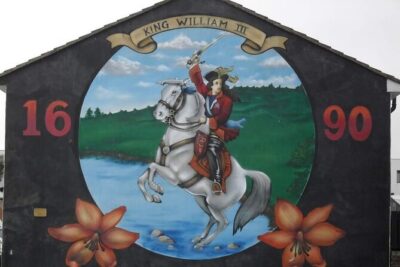
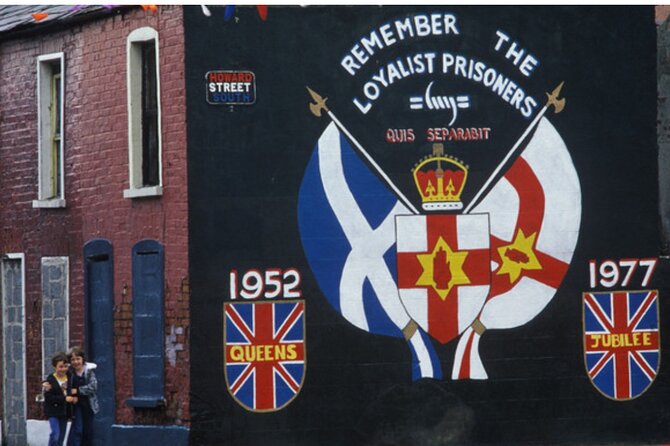
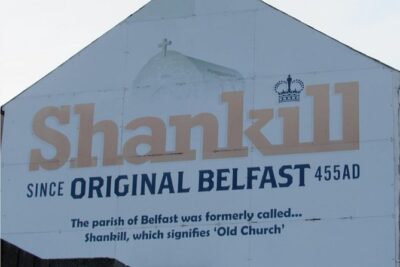
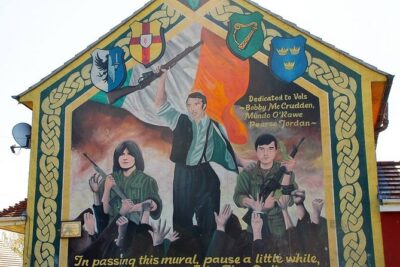
The final major stop is Shankill Road, a strongly loyalist area. Its murals express the unionist desire to keep Northern Ireland within the United Kingdom and remember the people and groups who fought for that position.
The road is associated with the Ulster Volunteer Force and the Ulster Freedom Fighters, names linked with loyalist paramilitary activity. The murals may honor individuals, commemorate events, or present a particular version of community identity.
This 20-minute visit is valuable because it prevents the tour from becoming a one-sided account centered only on republican West Belfast. You will have already seen Falls Road and the Bobby Sands mural. Shankill Road lets you compare how each community remembers its dead, defines its cause, and presents its political story.
The comparison can be uncomfortable, and that is part of the point. I would pay attention to what appears in the murals, but also to what is left out. Every memorial tradition selects certain facts and gives them a certain meaning.
Is $190.59 per person good value?
At $190.59 per person, this is not a cheap sightseeing ride. The value depends heavily on how many people are in your party. For one or two people, the cost is high for a two-hour experience. For a larger private group sharing the vehicle, it becomes easier to justify.
You are paying for a focused route, a vehicle, parking fees, pickup near central Belfast, and a guide who can explain politically sensitive places while driving between them. You are not paying for food, drinks, or entry to the full Crumlin Road Gaol tour.
A standard city tour may cost less, but it may not give you this concentrated look at the Peace Walls, Falls Road, Bombay Street, and Shankill Road. I would compare the price with your priorities. If you want Belfast’s modern political history, the route is efficient. If you mainly want general sightseeing, the cost may feel steep.
The tour can accommodate up to 25 people, though the taxi format may feel more personal with a smaller party. Ask about the vehicle arrangement if group size matters to you.
Who should book this experience?
I recommend it for first-time visitors who want the basic structure of Belfast’s Troubles in a short window. It suits anyone studying politics, peace processes, modern British and Irish history, or community conflict.
It is also useful if mobility, weather, or limited time makes a long walking tour difficult. The taxi takes you directly between areas, while the guide fills in the details.
I would not choose it if you want long visits at each mural, a full prison tour, or a relaxed afternoon. The schedule is tight. Most stops last 10 minutes, and the route keeps moving.
The tour is offered in English. Service animals are allowed, and most people can participate. Free cancellation is available until 24 hours before the start time. After that point, late cancellations and changes are not accepted.
Should you book it?
Book this tour if you want a compact, serious introduction to Belfast’s divided past and value a guide who can explain both republican and loyalist perspectives. The strongest features are the range of locations, the first-hand possibility, and the direct connection between murals, streets, memorials, and political events.
Think twice if $190.59 per person feels high for two hours or if you want extensive time at each stop. For the right visitor, this is less a sightseeing ride than a brisk history lesson on the streets where the history happened.
FAQ
How long is the Belfast taxi tour?
The tour lasts approximately two hours.
Where does the tour start?
The listed starting point is the Leonardo Hotel on Great Victoria Street in Belfast.
Can I be picked up near Belfast City Hall?
Yes. Pickup is available within a one-kilometer radius of Belfast City Hall, including the front gates.
Can the tour pick me up from a cruise ship?
No. Direct pickup from cruise ships is not offered because the ships are several miles outside Belfast city center. The cruise shuttle stops near Visit Belfast, across from City Hall.
What language is the tour offered in?
The tour is offered in English.
What places does the route visit?
The route includes the Peace Wall, Divis Flats, the International Wall on Divis Street, the Bobby Sands mural, Clonard Monastery, Clonard Martyrs Memorial Garden, Crumlin Road Gaol, Bombay Street, and Shankill Road.
Is admission included at the stops?
Admission is included for the Peace Wall. The other listed stops are marked as free, but the tour does not include a full paid visit inside Crumlin Road Gaol.
Are parking fees included?
Yes, parking fees are included.
Are food and drinks included?
No. Coffee, tea, and alcoholic beverages are not included.
Can service animals join the tour?
Yes. Service animals are allowed.
How many people can join?
The maximum group size is 25 people.
What is the cancellation policy?
You can cancel up to 24 hours before the start time for a full refund. Cancellations or changes made less than 24 hours before the tour are not accepted.
More Private Street Art Tours in Belfast
- Denver: Street Art, Murals, and Graffiti Private Walking Tour
★ 5.0 · 47 reviews - Private Street Art Tour of São Paulo with Batman´s Alley Visit
★ 5.0 · 30 reviews - Cancun Private Street Art Tour
★ 5.0 · 30 reviews - Private Tour: Athens Street Art Walking Tour
★ 5.0 · 23 reviews
More Private Street Art Tours in the UK
- IRA Troubles Conflict Private Tour Museum Graves Murals and Political Analysis
★ 5.0 · 67 reviews - Belfast: Famous Murals Private Tour
★ 5.0 · 6 reviews - N0 1 Belfast black cab Irish and British mural 2hr private tour
★ 4.5 · 6 reviews - 3-Hour Private Tour of East London Graffiti & Street Art
★ 4.5 · 5 reviews
Just added around Belfast
- 1 Hour Express Belfast Taxi/Cab Tour History, Murals, Troubles★ 5.0 · 17 reviews
- Falls road Murals Walking Tour with former prisoners★ 5.0 · 19 reviews
- Belfast history of terror & mural 1 hr express private taxi tour★ 5.0 · 3 reviews
- 2 Hours Republican & Loyalist Mural Black Taxi Tour from Belfast★ 5.0 · 21 reviews
- World Famous Private Belfast Troubles Taxi Cab Tour 2 Hour★ 4.5 · 14 reviews
- Private Belfast Mural & Giant’s Causeway Tour from Belfast (2 in 1)★ 5.0 · 5 reviews
- Best of Belfast Driving Taxi Tour with Political Murals★ 5.0 · 9 reviews
- Belfast political history and mural unique private 90 min tour★ 5.0 · 10 reviews
Belfast Street Art Tours, compared.
2 Hour Private Belfast Taxi Cab Tour of Troubles & Peace walls
Read our review →