
REVIEW · DENMARK
Street Art and Rooftops of Aarhus, Denmark
Aarhus reveals itself particularly well through its public art. This small-group walk links murals, sculptures, graffiti, and installations with the city’s streets, buildings, and local stories. You move from the harbor and Dokk 1 through the old Latin Quarter, then on to creative workspaces, an industrial art site, City Hall, and a high lookout.
I like the way the tour uses art as a key to the city rather than treating it as a string of unrelated photo stops. I also like the small maximum of 10 people, which gives you room to ask about an artist, a building, or one of the city’s many odd details. Guide Marina is especially associated with the experience, though the tour may be led by a multilingual guide.
The main drawback is simple: two hours may feel tight for a route covering this much ground, especially if you want long stops for photos. You should also expect some walking and an experience that is not entirely outdoors, so comfortable shoes and a flexible attitude toward weather make sense.
Key points at a glance
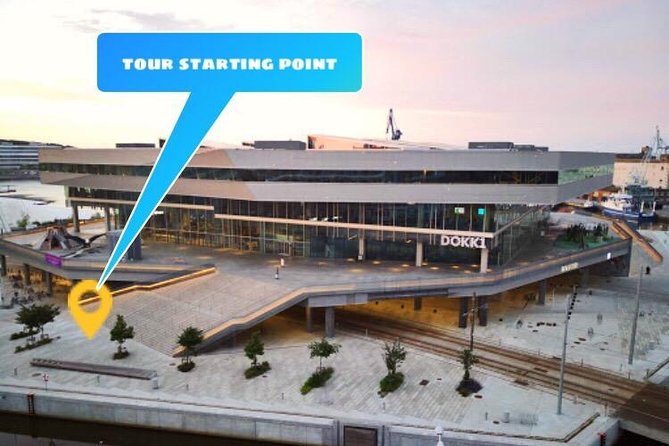
- Starts near Dokk 1 and the harbor: The route begins in central Aarhus, close to the city’s modern waterfront.
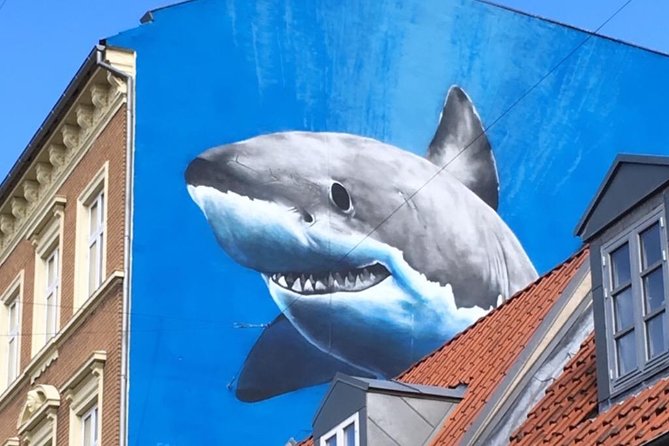
- Art explains the city: Expect public sculptures, graffiti, murals, and installations tied to local culture and stories.
- Includes the Latin Quarter: Old houses and narrow streets provide a strong contrast with newer creative districts.
- Reaches a modern art setting: A former industrial site has been turned into an art space used by Aarhus’s creative community.
- Small group, up to 10 people: You get a more personal walk and better chances to ask questions.
- Finishes with a city view: The route includes a popular viewpoint opened in 2017, then returns to the meeting point.
Starting at Dokk 1 and the Aarhus waterfront
The tour begins at 10:00 am near Dokk 1, Aarhus’s city multimedia center. The listed meeting point is Europaplads 3, while the tour information also identifies Dokk 1 at Hack Kampmanns Plads 2 as the starting area. Check your confirmation carefully so you know exactly where to meet your guide.
This is a smart place to begin. Aarhus has long been shaped by its relationship with the water, and the harbor gives you an immediate sense of the city’s modern direction. Starting here also avoids dropping you straight into a standard old-town walk. You begin with contemporary Aarhus, then move into older streets and public spaces.
From the first steps, art is the focus. You will not simply walk past a mural and hear its title. The guide explains how works fit into the surrounding city and points out details that are easy to miss at street level. A good guide can turn a painted wall, a sculpture, or a temporary installation into a prompt for discussing local life, design, and the way Aarhus presents itself.
The walk is conducted in English, though a multilingual guide may operate the tour. The group is limited to 10 people, a useful size for an art walk. You can hear the commentary without standing in a crowd, and the guide can pause for questions without turning the whole experience into a lecture.
A few more street art tours around the world worth a look
- Moco Museum Amsterdam Entrance Tickets with Banksy & More
★ 4.4 · 10,088 reviews - Medellin: Comuna 13 Graffiti Tour, Cable Car & Street Food
★ 4.8 · 9,046 reviews - CDMX: Xochimilco, Coyoacan, Frida Kahlo Museum & Murals Tour
★ 4.4 · 3,025 reviews
The Latin Quarter’s old houses and new ideas
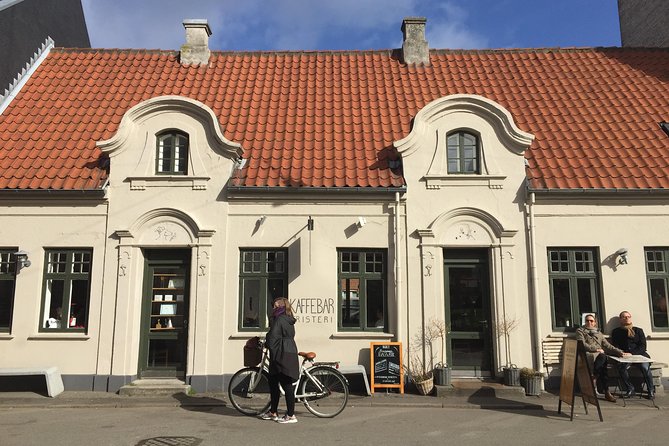
The route continues into the Latin Quarter, one of the most appealing parts of central Aarhus. Its old, charming houses create a close-grained setting for the art. Here, the interest comes from the contrast between historic streets and newer creative expression.
I find this part valuable because it gives the public art some context. A mural looks different when you understand the age and character of the street around it. Sculptures and installations also make more sense when you see how they interact with shopfronts, homes, lanes, and shared public spaces.
The guide adds cultural and historical commentary as you walk. Past participants have particularly valued the extra stories about buildings, city life, and unusual local details. That broader information matters. If you only want a catalog of artists and techniques, an art museum may suit you better. If you want to understand how art works within an actual city, this route offers more.
The pace is intended to be manageable, but you should still expect steady walking. The stated duration is about two hours, while some outings have lasted closer to three hours. That difference may depend on the group, the guide, questions, and the time spent at each stop. If you have a tight schedule, allow extra breathing room after the official end time.
A rooftop stop in Aarhus’s creative quarter
One of the route’s more unusual features is a rooftop setting used by freelancers and other creative people. The tour takes you to a hip hangout where people gather for coffee and work above the street.
This is not presented as a food tour, and food and drinks are not included. You should not book it expecting a café stop with a prepared tasting. The value is the setting: a different angle on the city and a glimpse of the spaces used by Aarhus’s creative community.
Rooftops can also change the rhythm of a walking tour. After moving through narrow streets and busy public spaces, getting above street level gives you a fresh view of the city. You may find this especially useful if you are trying to understand Aarhus quickly at the start of a stay.
The practical detail is that the tour does not take place entirely outdoors. That makes sense here, since the route includes indoor or semi-indoor settings. Still, conditions can vary, and you should dress for a walking tour rather than for a formal museum visit.
From old industry to a modern art space
The walk then reaches an old industrial site that has been transformed into a modern art space. This change of use is one of the tour’s strongest themes. Aarhus is not shown as a city frozen in its past. Instead, old working spaces are connected with present-day art and creative activity.
The guide explains the stories behind the works you see along the route. That can include who made them, what they are trying to communicate, and how the local community relates to them. The experience is at its best when you take time to look closely instead of treating every stop as a quick photograph.
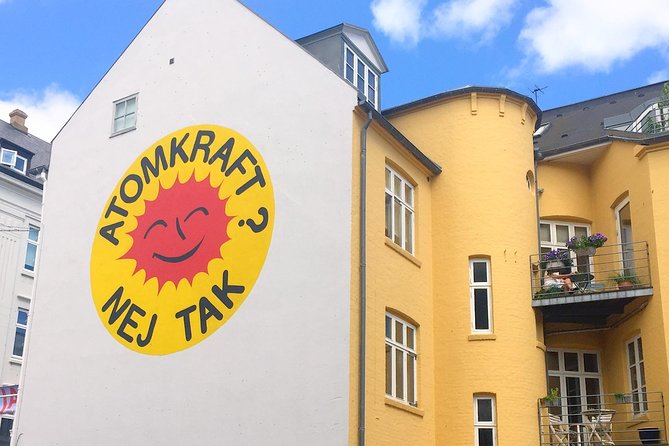
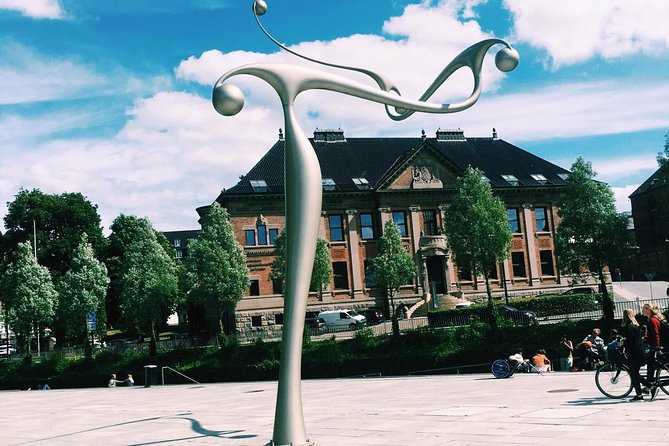
Several aspects of the art are included: graffiti, large murals, public sculpture, and installations. That variety keeps the walk from becoming repetitive. A mural asks you to read a wall; a sculpture changes the way you see a square; an installation may depend on your position or on the surrounding architecture.
There is no entry ticket required for the attractions visited. That keeps the advertised price straightforward. You are paying mainly for the guide’s time, route planning, interpretation, and access to a city view that would be harder to connect on your own.
Same walls, a different guide:
- Moco Museum Barcelona Banksy & More
★ 4.6 · 2,340 reviews - Amsterdam: Streetart Museum STRAAT Entrance Ticket
★ 4.8 · 2,137 reviews - Belfast: Murals Taxi Tour
★ 4.9 · 2,047 reviews - Blackbeard to Banksy – The Ultimate Walking Tour of Bristol
★ 5.0 · 1,961 reviews
City Hall, monuments, and the official center
After the more alternative and creative parts of the walk, you reach Aarhus’s official city center. The area around City Hall introduces a more formal side of the city, with monuments and civic buildings.
This shift is useful. You see how Aarhus presents itself through public institutions as well as through independent art. The guide connects the monuments and buildings to the wider story of the city, adding facts and small quirks rather than sticking only to dates and names.
If you are new to Aarhus, this portion gives you a practical overview. You learn where the central landmarks are and gain a better sense of how the harbor, old quarters, civic center, and creative districts relate to one another. The tour is not only for specialist art lovers. It also works as an orientation walk, provided you are happy for art to be the main thread.
Do not expect a full architectural tour of every major building. The advertised experience is art-focused, and the city information supports that theme. You will get useful context, but the guide’s attention remains on public space and the artists who use it.
The high viewpoint and the return to the harbor
The final major stop is a viewpoint opened in 2017. It has quickly become one of the city’s most popular places for seeing Aarhus from above. The tour’s wording identifies it as a particularly attractive lookout, and the route saves this change in perspective for near the end.
This is a strong way to finish. After seeing individual works close up, you can step back and see the city as a whole. The harbor, central streets, and rooftops become part of one picture. You also get a better sense of why the route has moved between old houses, industrial buildings, civic monuments, and creative spaces.
The tour then returns to the meeting point. Since it starts and ends centrally, you can continue with lunch, museum visits, shopping, or more independent exploring afterward. Food and drinks are not included, so plan your own café stop once the walk is over.
The viewpoint may be the most photograph-friendly stop, but it should not overshadow the rest of the route. The tour’s real strength is the combination of small details at street level and the wider view at the end.
What Marina’s guiding style adds
Marina is the guide most closely associated with this experience. The strongest praise centers on her passion for art, her knowledge of Aarhus, and her ability to explain small details and artist messages in a lively way.
That combination matters. Public art can be hard to read without context, particularly when a work uses local references or unusual materials. A guide who can explain both the artwork and the city around it helps you see more than you would on a solo walk.
Marina’s commentary also appears to go beyond standard facts. Expect stories about buildings, local customs, public spaces, and amusing details about Aarhus. That makes the walk feel less like an art class and more like a conversation while moving through town.
The small group supports that style. With no more than 10 people, you can ask about a technique, return to a detail, or request more information about a particular part of the city. If you are quiet in large groups, this setup is a clear advantage.
Price, pace, and who gets the best value
At $63.20 per person, this is not the cheapest way to see Aarhus. It is also not simply a paid stroll from one landmark to another. The price includes a professional guide, a planned route, interpretation of many public artworks, and several different sides of the city.
I think the value is strongest for first-time visitors who want both orientation and cultural context. You could seek out street art independently, but you would need to identify the works, find the route, and research the stories behind them. The tour saves that effort and gives you a human connection to the city.
Art lovers will get the most from it, especially if you enjoy comparing styles and asking why a work appears in a particular place. It also suits anyone who prefers local culture over a standard list of famous monuments.
The value is less clear if you dislike walking, want long museum visits, or prefer to explore at your own pace. The guide controls the route and timing, and the two-hour format means you cannot linger everywhere. The activity requires a moderate level of physical fitness.
The tour is booked, on average, 34 days ahead. That suggests you should reserve early if your schedule is fixed, particularly since the group is capped at 10 people. Confirmation is received at booking, and free cancellation is available until 24 hours before the start time. Changes or cancellations made inside that window are not accepted for a refund.
Practical details before you go
The walk starts at 10:00 am. Wear comfortable shoes, since the experience covers several central districts on foot. Bring a phone or camera if you want to record the art and city views, but keep your attention on the guide too. Many of the best details may be small rather than dramatic.
The official language is English. The tour may be operated by a multilingual guide, so check your booking details if language is especially important to you.
No attraction admission tickets are needed. Food and drinks are not included, and the activity is not entirely outdoors. Cruise ship passengers must provide the ship name, docking time, disembarkation time, and re-boarding time when booking. That information helps the provider judge whether the schedule fits your port visit.
The tour is recommended by 98 percent of participants and has a 4.9 rating from 62 reviews. Those numbers suggest a consistently strong experience, but they should not replace practical judgment. You still need to be comfortable walking, staying with a group, and accepting a route that mixes outdoor streets with other settings.
Should you book Street Art and Rooftops of Aarhus?
Book it if you want to see Aarhus through public art, hear the stories behind murals and sculptures, and get a useful first look at the city’s old, civic, industrial, and creative districts. The small group, personal questions, rooftop setting, and final high viewpoint give the walk more variety than a basic city orientation tour.
I would especially choose it early in an Aarhus visit. The route can help you decide where to return later, and the guide’s local stories may change how you see the city for the rest of your stay.
Skip it if you want a purely museum-based art experience, a very slow photography walk, or a tour with no physical effort. For everyone else, the mix of street art, local history, creative spaces, and city views makes the $63.20 price reasonable, particularly when you value interpretation rather than simply checking off sights.
FAQ
Where does the tour start?
The meeting point is listed as Europaplads 3, 8000 Aarhus, Denmark. The tour information also identifies Dokk 1, Hack Kampmanns Plads 2, as the starting point, so check your confirmation for the exact meeting instructions.
What time does the tour begin?
The tour starts at 10:00 am.
How long does the experience last?
The stated duration is approximately two hours. Some outings may last longer depending on the pace, questions, and time spent at stops.
Is the tour conducted in English?
Yes. The experience is offered in English, though it may be operated by a multilingual guide.
Are attraction tickets, food, or drinks included?
No attraction entry tickets are required for the places visited. Food and drinks are not included.
How many people can join the tour?
The tour has a maximum of 10 travelers. A moderate level of physical fitness is required because the experience involves walking through Aarhus.
Just added around the world
- Your Own Belgrade: Street Art and Hidden Gems Walking Tour★ 5.0 · 2 reviews
- Xochimilco floating gardens, Coyoacan and UNAM murals★ 4.0 · 6 reviews
- Vienna Urban Art Tour: Explore a different side of Vienna!★ 3.8 · 14 reviews
- Wynwood Walls Street Art & Neighborhood Walking Tour★ 4.9 · 9 reviews
- Vancouver: Street Art & Craft Beer Walking Tour with Tasting★ 4.8 · 14 reviews
- Vancouver: Street Art & Craft Coffee Walking Tour w/ Tasting★ 4.8 · 11 reviews
- Urban Canvas: Osaka Street Art Bike Tour★ 5.0 · 10 reviews
- UNAM: Murals & Revolution★ 4.9 · 8 reviews
Denmark Street Art Tours, compared.

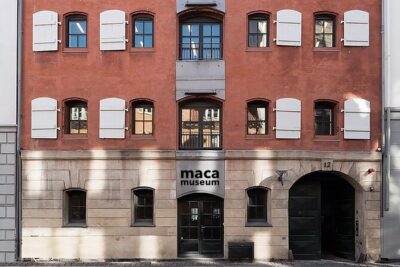
MACA Museum ‘Banksy & Street Art: The Early Years’ Art Exhibition
Read our review →
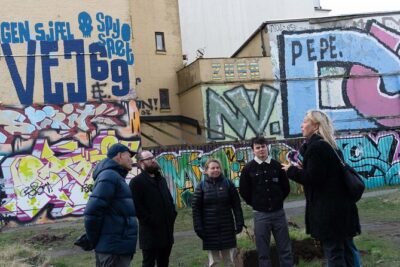
Small Group Guided Food Tour and Street Art Visit to Norrebro
Read our review →Browse the lists this tour appears in