
REVIEW · NEW YORK CITY
New York: Hip-Hop, Murals, Sports, and Dangerous Neighborhoods Tour
New York’s most revealing stories are often found away from Midtown’s polished avenues. This five-hour outing moves from Hell’s Kitchen to Harlem, the Bronx, and Brooklyn, linking 1990s crime stories with hip-hop, baseball, movies, murals, and neighborhood life. I like the mix of famous stops and local places, especially the Apollo Theater, Yankee Stadium, and the Notorious B.I.G. mural. I also like that you use the subway, since it gives the day a more grounded feel than a tour spent entirely behind bus windows.
The main consideration is pace. You cover a lot of New York in five hours, with walking and subway travel along the way. The tour is not suitable for children under six, people with mobility or heart problems, or anyone with serious back trouble. Its dark-neighborhoods theme can also sound sensational, so I would book it for the cultural stories and street-level context, not for a simple scare ride.
Key points at a glance
- Five borough-style stops in five hours: Begin near Hell’s Kitchen, then head toward Harlem, the Bronx, and Brooklyn.
- Hip-hop and film landmarks: Hear stories tied to Notorious B.I.G., Mike Tyson, Spike Lee, old-school hip-hop, and local music culture.
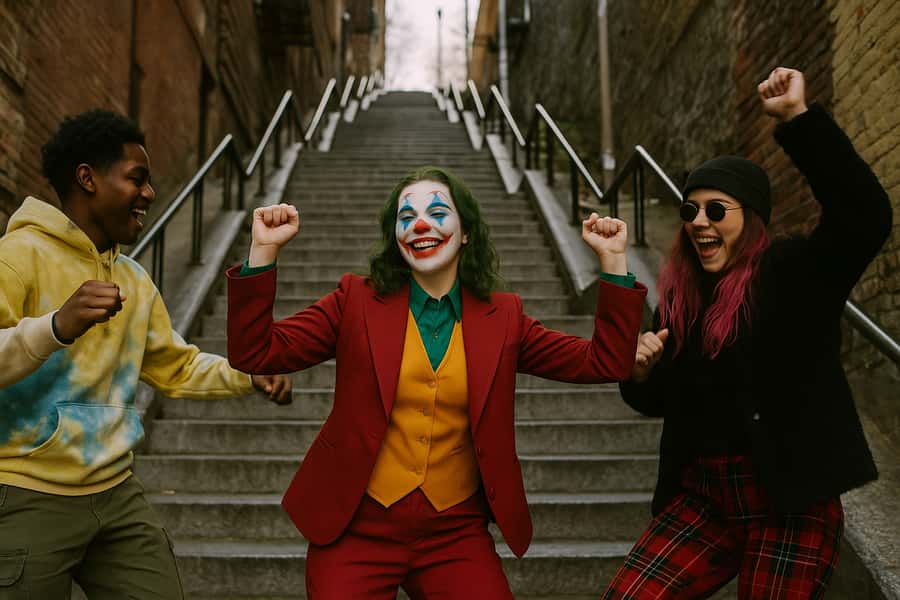
- Major New York sights: Visit Yankee Stadium, the Apollo Theater, the famous Joker Stairs, and large neighborhood murals.
- A real subway component: Subway tickets are not included, so carry money or a transit payment method.
- Strong guide-led storytelling: Guides including Alex, Louie, Jose, Kent, Louis, and Alexander are praised for humor, clear explanations, personal attention, and handling bilingual groups.
- Useful language choices: Tours are offered in English, Italian, and French on Tuesday, Thursday, and Saturday, with Spanish listed on Saturday.
New York’s rough-edged cultural story
This is not a standard boroughs tour built around quick photo stops. Its central idea is that New York’s music, sports, movies, and crime stories grew out of the same streets and social changes.
The tour looks back especially to the 1990s, when hip-hop was moving into the mainstream, the Yankees and Knicks held a powerful place in city life, and films helped spread New York’s gritty image around the world. That period gives the day a clear theme. You are not simply crossing town to see unrelated sights. You are following the people, places, and stories that shaped popular culture.
I appreciate that the experience includes both famous names and ordinary local settings. Al Capone, Notorious B.I.G., Mike Tyson, and Spike Lee all appear in the story, but the day also includes a coffee shop, a barber shop used by baseball stars and hip-hop figures, bookstores, and murals. Those smaller stops help keep the experience connected to daily life rather than turning it into a list of celebrity addresses.
The word dangerous needs some care. The tour presents neighborhoods through their past reputation, crime stories, gangs, and legends. That can be compelling, but Harlem, the Bronx, Brooklyn, and Hell’s Kitchen are not frozen in the 1990s. I would treat the theme as a way to understand how New York changed, not as a claim about the character of every street you visit today.
More Mural Tours in the USA
- Murals of Nashville Instagram Tour by Golf Cart
★ 5.0 · 950 reviews - Nashville Combo Tour: Sightseeing, Murals & Brewery/Distillery
★ 5.0 · 641 reviews - Houston’s Official City & Mural Tour!
★ 4.0 · 568 reviews
Starting at Mickey Spillane’s in Hell’s Kitchen
The meeting point is Mickey Spillane’s, at 350 West 49th Street near Ninth Avenue. Look for the guide holding a Careri Entertainment sign. This is a practical place to begin because it is easy to identify, but you should arrive ready to start on time. The tour lasts five hours, usually in the morning, and the route covers a wide area.
Hell’s Kitchen provides an effective opening. The neighborhood once had a fearsome reputation, and its name fits the tour’s focus on old crime stories and New York folklore. From here, the guide sets up the larger story: how areas now familiar to visitors were once described very differently, and how movies, newspapers, music, and local legends shaped that image.
The best part of this opening is the contrast. You begin in central Manhattan, close to the theaters and hotels most visitors know, then turn toward a less polished version of the city. Expect stories and street observation rather than a long indoor visit. Since the tour moves quickly, comfortable shoes matter more than dress clothes.
Harlem and the Apollo Theater
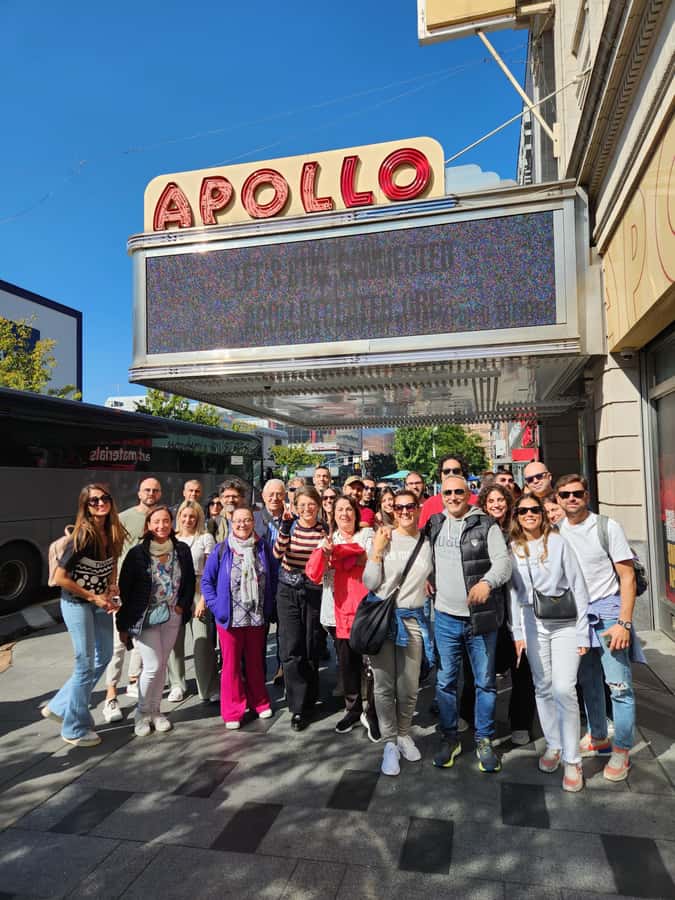
Harlem gives the tour its strongest connection to music and Black American culture. The Apollo Theater is the key stop, and its importance reaches far beyond the building itself. For generations, the Apollo has been linked with performers, talent shows, soul, jazz, and the wider story of American popular music.
Here, the guide can connect the theater to the old-school hip-hop era and to the artists and neighborhood figures who helped shape New York’s sound. The value is not just seeing the facade. You get a clearer sense of why Harlem has such a large place in the city’s cultural memory.
I would pay close attention to the transitions between music stories and neighborhood history. The tour is designed around people and places, so a stop at the Apollo may lead into stories about local legends, performers, or changing city life. The experience is strongest when you listen for those links instead of treating each sight as an isolated checkpoint.
Harlem is also one reason this tour suits adults interested in culture, music, and urban history more than families seeking simple sightseeing. The stories may include crime and social hardship, and the pace may be tiring for young children. Children under six are not allowed.
The Bronx, Yankee Stadium, and Mike Tyson’s birthplace
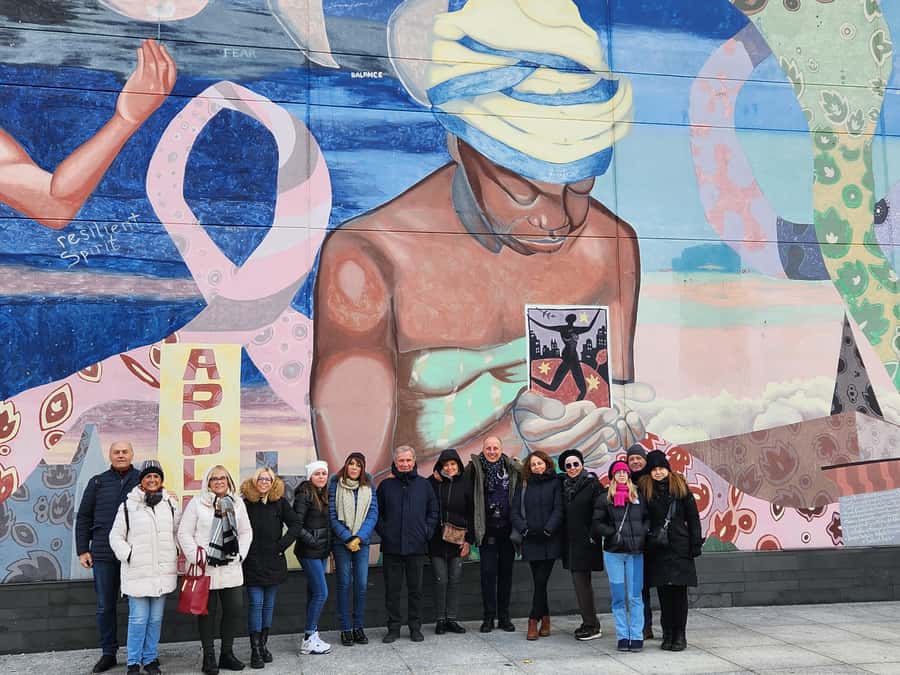
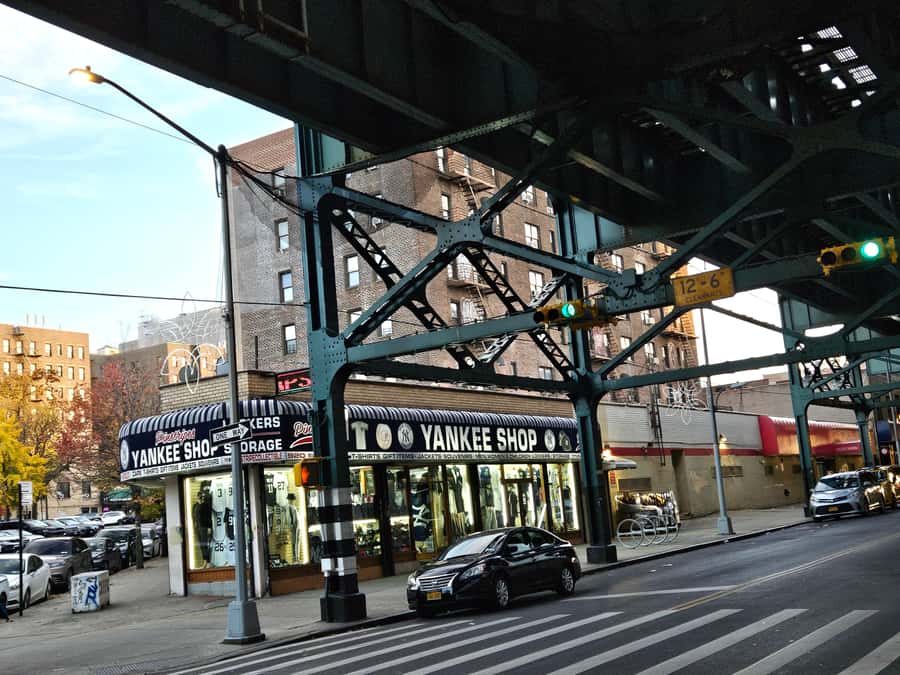
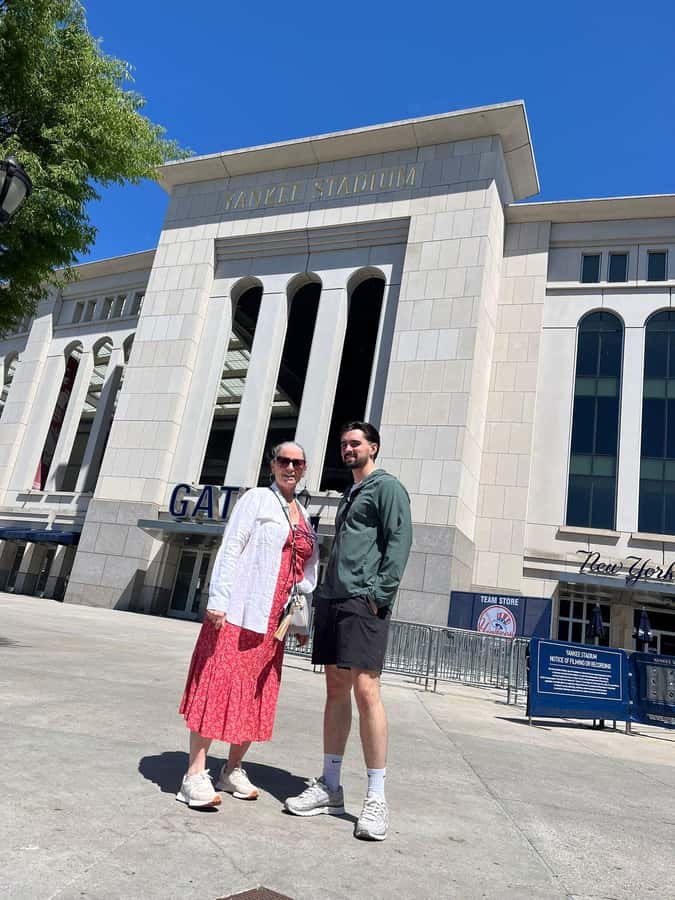
The Bronx brings sports into the picture. Yankee Stadium is one of the tour’s major visual stops, and it offers a different kind of New York mythology from the Apollo or the murals. Baseball is part of the city’s identity, and the Yankees represent a long tradition of neighborhood pride, famous players, and intense local loyalty.
You should have time to pose near the stadium, but this is not described as a game-day experience or a stadium admission tour. The attraction is the setting and the story around it. If you want an inside stadium visit, this outing does not promise one.
The route also points out the birthplace of Mike Tyson. That detail fits the tour’s larger interest in figures whose lives are tied to the city’s tougher public image. Tyson’s story adds boxing to the mix of hip-hop, baseball, film, and crime. The result is a broad look at the personalities who became part of New York’s popular culture.
The Bronx section works best for people who already have some interest in the Yankees, boxing, or music history. If your main goal is architecture, museums, or classic sightseeing, this may feel less focused. The tour favors stories told on the street over formal exhibits.
Same walls, a different guide:
- Wynwood Graffiti Golf Cart Small-Group Tour
★ 5.0 · 1,646 reviews - Miami: Wynwood Walls Skip-the-Line Ticket
★ 4.6 · 840 reviews - NYC: Brooklyn Graffiti Workshop with Local Artist
★ 4.8 · 570 reviews - Wynwood Art District 1-Hour Street Art Tour by Golf Cart
★ 4.9 · 492 reviews
The Joker Stairs and New York on film
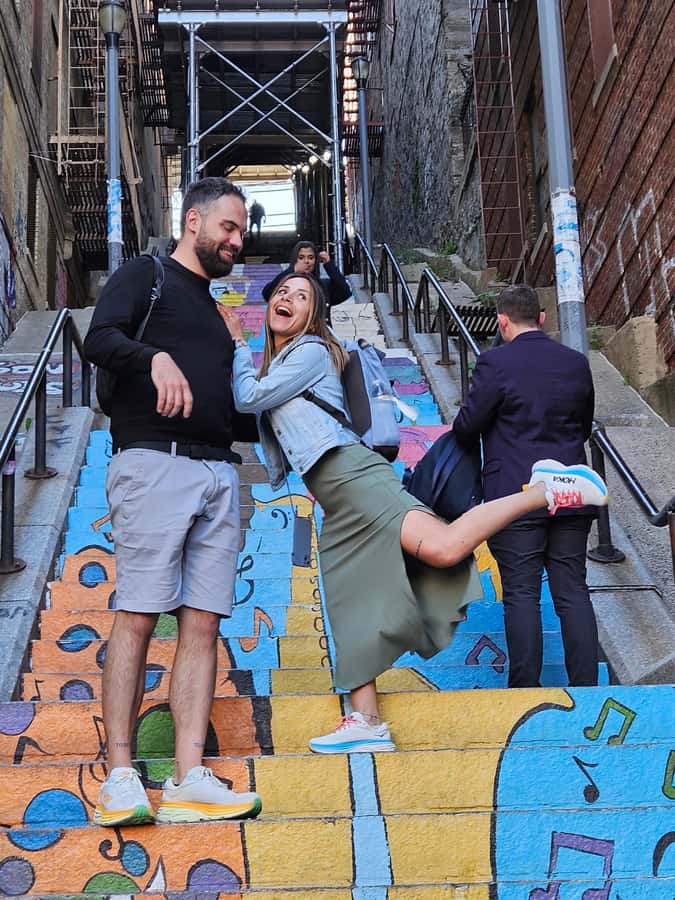
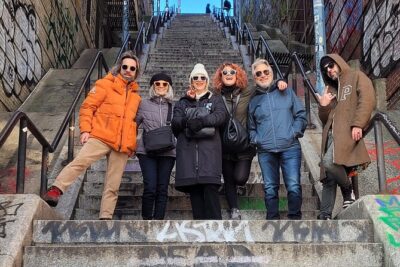
The Joker Stairs are another major photo stop. Their fame comes from film, and the location shows how quickly a local place can become part of a global image of New York. You can pose on the stairs and hear how the site became connected with the Joker character and the city’s darker cinematic mood.
This stop is visually simple but culturally useful. It demonstrates one of the tour’s recurring ideas: New York neighborhoods are not only lived-in places, but also settings that filmmakers and musicians turn into symbols. The stairs may be familiar from the screen, yet standing there gives you a more direct sense of the physical setting.
The practical issue is that stairs require balance and steady walking. That matters because the tour already involves movement across several boroughs. People with mobility impairments or back problems should skip this experience, as should anyone with a heart condition that makes extended walking or stair use difficult.
Brooklyn, Notorious B.I.G., and Spike Lee
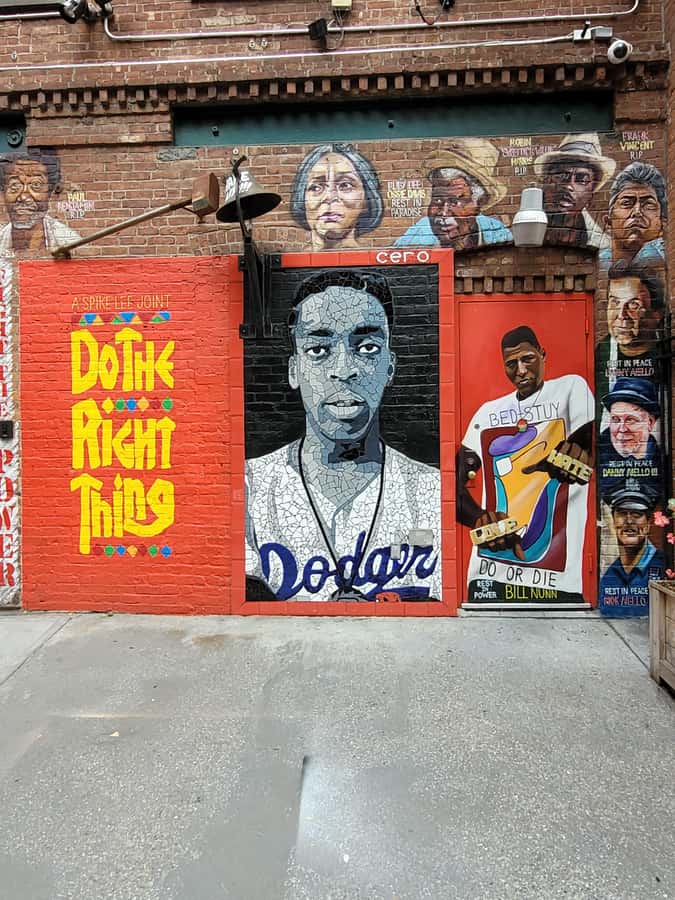
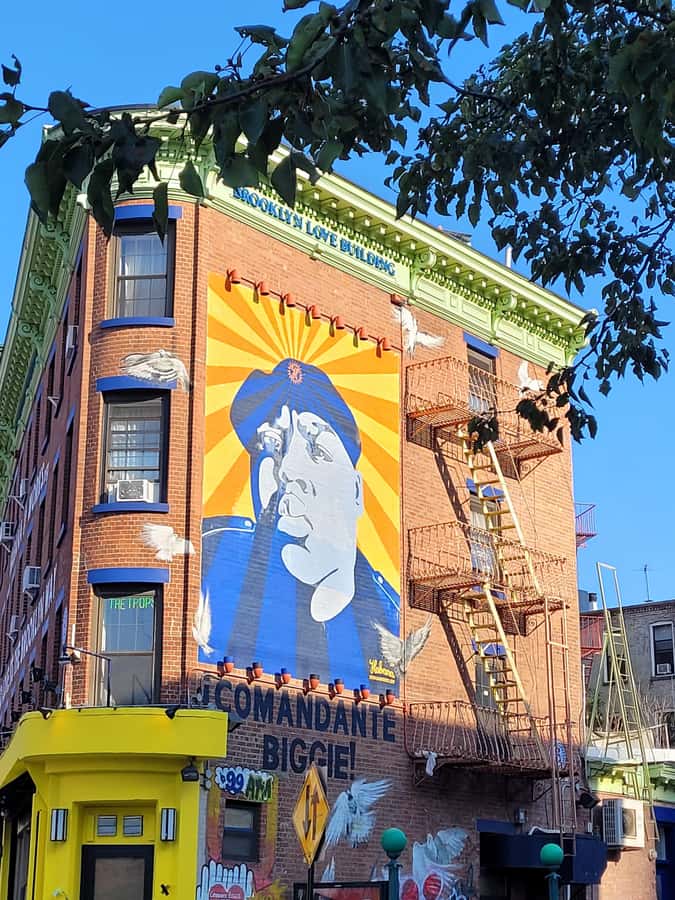
Brooklyn adds the strongest hip-hop and film connection. The tour visits a mural dedicated to Notorious B.I.G., one of the neighborhood’s most important musical figures. A mural is more than a portrait on a wall. It shows how a community keeps a performer’s memory in public view, outside a museum or concert hall.
The guide also points out streets associated with Notorious B.I.G. and visits Spike Lee’s production company. These stops give the Brooklyn portion a creative focus. Music, movies, and neighborhood identity overlap here, making the borough feel less like a final stop and more like the place where the day’s themes come together.
You may also visit bookstores and other local places that reflect Brooklyn’s cultural reputation. The information does not promise a long shopping session, so think of these as brief, carefully chosen stops rather than free time for browsing.
I especially like the Brooklyn section for readers who want context around names they already know. Hearing about Biggie or Spike Lee while standing in the area connected to their work can make familiar pop culture feel more physical and local. Still, the exact amount of time at each location may vary with the group and the day’s route.
Coffee, barbershops, and the everyday city
The tour’s smaller local stops are important because they prevent the day from becoming a parade of famous names. You may visit a legendary coffee shop and a barber shop associated with baseball stars and hip-hop figures. These places bring the story down to street level.
A barber shop, in particular, fits the theme well. It is the sort of place where sports talk, music, neighborhood news, and local memory can meet. Even a short stop can show you a side of New York that a major landmark cannot.
The same applies to the coffee shop. You are not promised a meal or a formal tasting, so do not book this expecting a food tour. The value lies in the setting and the stories attached to it. These stops also give the guide room to explain how neighborhood figures become part of local legend.
Why the subway matters
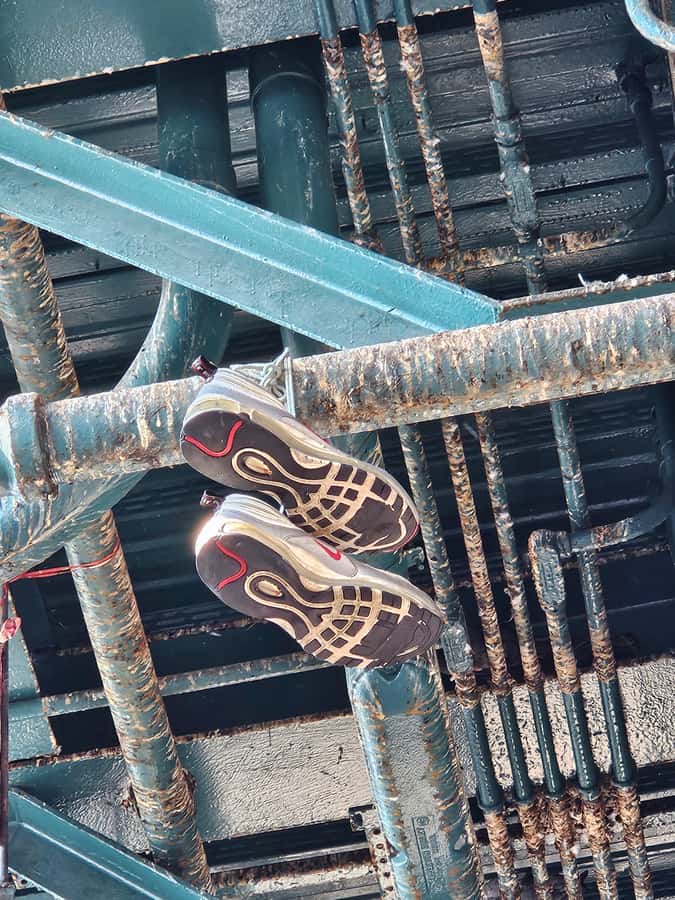
Subway tickets are not included, and that is worth planning for before you meet the group. The tour uses the subway as part of the experience, not merely as a way to save time. You move through the city as New Yorkers do, with the route itself becoming part of the day.
I see this as a strength. A private vehicle can show you a lot of streets, but it can also make the city feel like scenery outside a window. The subway puts you closer to the scale of the neighborhoods and helps explain how far apart these places really are.
It also adds a practical demand. Five hours of walking, standing, station changes, and street stops can be tiring. Wear supportive shoes and bring water. The supplied information does not give a fixed group size or exact station-by-station route, so you should expect the guide to adjust timing as the day unfolds.
Guides and the value of the storytelling
The guide can make or break a tour built around stories. This experience has several named guides associated with strong feedback: Alex, Louie, Jose, Kent, Louis, and Alexander. Specific praise centers on humor, clear explanations, friendliness, and attention to each person in the group.
Alex is described as someone who kept the group comfortable, answered questions, and even used knowledge of one participant’s home area in Texas to help create a personal connection. Louie is repeatedly described as funny, helpful, and good at explaining the character of each area. Jose is praised for being accommodating and enjoyable company, while Kent is noted for involving people directly rather than simply talking at them.
One useful detail is the handling of a bilingual group. A guide successfully switched between Italian and English, which matters if you are traveling with people who prefer different languages. The listed options are English, Italian, Spanish, and French, but availability changes by day. English, Italian, and French are listed for Tuesday, Thursday, and Saturday. Spanish is listed for Saturday.
The tour has a 4.7 rating from 143 reviews, and the strongest pattern is clear: people value the guide’s personal approach more than a rigid script. That does not guarantee a particular guide on your date, but it tells you what to expect from the format. Ask questions. The day is designed to become more interesting when you engage with the guide.
Is $69 a fair price?
At $69 per person, the tour offers five hours of guiding across several parts of New York. That is fair value if you want a connected story, help navigating the subway, and access to a route you might not assemble easily on your own.
The price does not include subway tickets or a tip for the guide. Those are modest additions, but they should be part of your budget. There is also no promise of food, stadium entry, theater admission, or a paid attraction ticket. You are paying mainly for the guide’s time, interpretation, route planning, and local connections.
I would compare it with a standard boroughs bus tour this way: a bus tour may cover more ground with less physical effort, while this outing gives more attention to hip-hop, crime stories, murals, film, and local legends. If you want a broad visual survey of Queens, Brooklyn, the Bronx, and Harlem, another boroughs tour may be a better fit. If you want a focused cultural story with a rougher edge, $69 makes sense.
Free cancellation up to 24 hours before the tour and the option to reserve without paying immediately make planning easier. Still, check the language and date carefully before booking.
Who should book this experience?
I would choose this tour if you like New York history told through music, movies, sports, and crime stories. It suits repeat visitors who have already seen the Empire State Building and Times Square, as well as first-time visitors who want a less polished introduction to the city.
It is especially good for fans of hip-hop, the Yankees, Notorious B.I.G., Spike Lee, Mike Tyson, and New York crime lore. It also works for people who enjoy asking questions and hearing a guide connect famous names to ordinary streets.
I would not choose it for a relaxed sightseeing day, a stroller-friendly outing, or a short list of major attractions. You cover a lot of ground, use public transport, and spend time outdoors. The dramatic title may appeal to you, but the real value is cultural context, not danger.
Should you book it?
Book it if you want to see New York through its music, sports, film, murals, and street legends. The mix of the Apollo Theater, Yankee Stadium, the Joker Stairs, Brooklyn’s Notorious B.I.G. mural, and local shops gives the day a strong identity.
Skip it if mobility is a concern, if you need a gentle pace, or if you want indoor admissions and long stops at each landmark. For everyone else, the $69 cost is reasonable for five hours of guided travel across a large part of the city, especially when you take part in the conversation and let the guide supply the connections.
FAQ
How long does the tour last?
The tour lasts five hours and is usually available in the morning.
Where does the tour meet?
The meeting point is Mickey Spillane’s at 350 West 49th Street, near Ninth Avenue and West 49th Street, in New York.
How will I identify the guide?
The guide will be holding a sign that says Careri Entertainment.
Which neighborhoods does the tour visit?
The route begins in Hell’s Kitchen and continues toward Harlem, the Bronx, and Brooklyn.
Does the tour include subway travel?
Yes. Subway travel is part of the experience, but subway tickets are not included.
Which landmarks are included?
The tour includes the Apollo Theater, Yankee Stadium, the Joker Stairs, and murals including one dedicated to Notorious B.I.G.
Which languages are available?
The tour is offered in Italian, English, Spanish, and French. Italian, English, and French are listed on Tuesday, Thursday, and Saturday. Spanish is listed on Saturday.
Is the tour suitable for young children?
No. The tour is not suitable for children under six.
Is the tour suitable for people with mobility or health concerns?
It is not suitable for people with back problems, mobility impairments, or heart problems.
What is included in the $69 price?
A certified tour guide is included. Subway tickets and a tip for the guide are not included.
Can I cancel the booking?
You can cancel up to 24 hours in advance for a full refund. You can also reserve now and pay later.
Just added around the USA
- Wynwood Walls Street Art & Neighborhood Walking Tour★ 4.9 · 9 reviews
- Urban Art and Historical Electric Bike Tour★ 5.0 · 3 reviews
- Tucson Food Tours- Locally Owned Mural and History Tour★ 5.0 · 10 reviews
- St. Pete’s Must-Do Murals Tour — The Premier Street Art Trolley★ 5.0 · 22 reviews
- Tijuana Urban Art Walk from San Diego★ 4.0 · 8 reviews
- Sacramento Street Art Walking Tour – See the Murals Sacramento is Famous For★ 5.0 · 6 reviews
- Downtown Sacramento Mural and Art Walking Tour★ 5.0 · 4 reviews
- Would I Lie To You? Mural Walks★ 5.0 · 3 reviews
New York City Street Art Tours, compared.
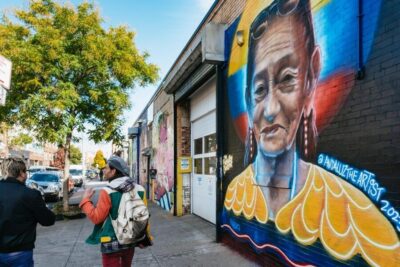
Brooklyn Graffiti & Street Art Walking Tour in Bushwick
Read our review →
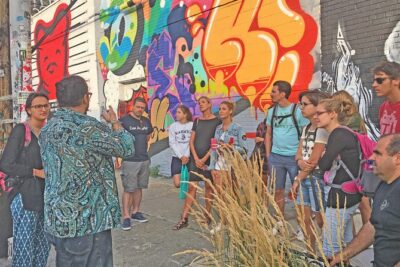

Hip-Hop, Murals, Sports & Dangerous Neighborhoods Tour
Read our review →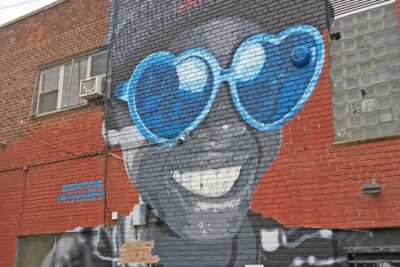
Browse the lists this tour appears in