
REVIEW · NAPLES
Naples Essentials: Monuments, Local Life & Street Art
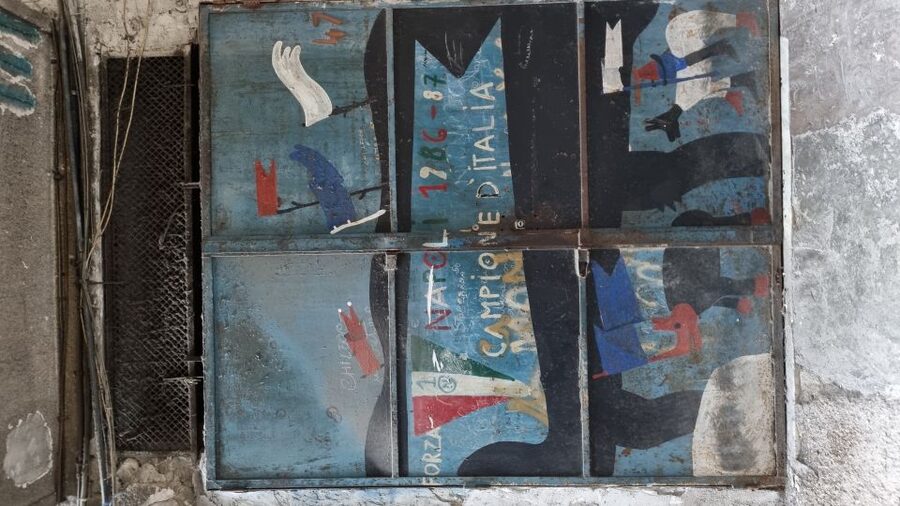
Naples reveals itself best on foot, and this tour gets to the city’s character quickly. You move from the grand sweep of Piazza del Plebiscito to the cramped lanes of the Quartieri Spagnoli, where laundry, murals, voices, and football loyalties tell you more about modern Naples than a polished museum display ever could. The Maradona street art gives the walk its local spark.
I like the clear mix of major sights and ordinary street life. I also like that guide Davide is known for a warm sense of humor and for making complicated history easy to follow, even for a reluctant teenager. The main consideration is pace: two hours is enough for an excellent introduction, but not enough for interior visits or a slow look at every monument.
Key points
- Piazza del Plebiscito begins the story: See the Royal Palace, Basilica of San Francesco di Paola, and San Carlo Opera House from outside.
- Naples’ royal and medieval past fits into one walk: Continue to Castel Nuovo and its Arch of Triumph, then enter Galleria Umberto I.
- The Quartieri Spagnoli feels like real city life: Narrow lanes, overhead laundry, local voices, and street art replace formal piazzas.
- Maradona is treated as a cultural figure, not just a football star: Your guide explains why his image matters so much in Naples.
- Via Toledo gives the tour a strong finish: See the historic Bank of Naples and Toledo Metro Art Station.
- Practical limits matter: Expect moderate walking on uneven streets, no food or entry tickets, and an itinerary that can shift with local conditions.
Why this two-hour route works for a first look at Naples
Naples can feel scattered at first. Its royal monuments, medieval castle, grand shopping arcade, narrow working-class lanes, and modern metro art do not seem to belong to one neat city plan. That is exactly why a guided route helps.
This walk links those contrasts in a sensible order. You begin in the monumental center, where Naples presents its royal face. Then you move toward the Quartieri Spagnoli, where the city becomes more intimate and less polished. Finally, Via Toledo brings you back to a broad commercial street and a striking piece of modern public art.
I would use this tour early in a Naples stay. It gives you names, landmarks, and a basic sense of direction before you tackle the city on your own. It also helps explain why Naples cannot be reduced to pizza, palaces, or football. All three matter, but the city’s appeal comes from the way grand history and daily life sit right beside each other.
The tour costs $28 per person for two hours. That is fair value if you want context rather than just a checklist of photo stops. You are paying for a licensed local guide, a planned route, and explanations that connect the monuments to Naples today. Since food, drinks, and admission tickets are not included, the price is easiest to judge as a walking orientation rather than a full sightseeing package.
A few more street art tours around Naples worth a look
- Naples Spanish Quarters Walking Tour Street Art, Folklore & Sweet
★ 5.0 · 797 reviews - Naples: Spanish Quarters Folk Street Art w/ Sweets Tasting
★ 4.9 · 788 reviews - Naples: Street Art, Wine and Food Tasting Walking Tour
★ 5.0 · 163 reviews
Piazza del Plebiscito and Naples’ royal face
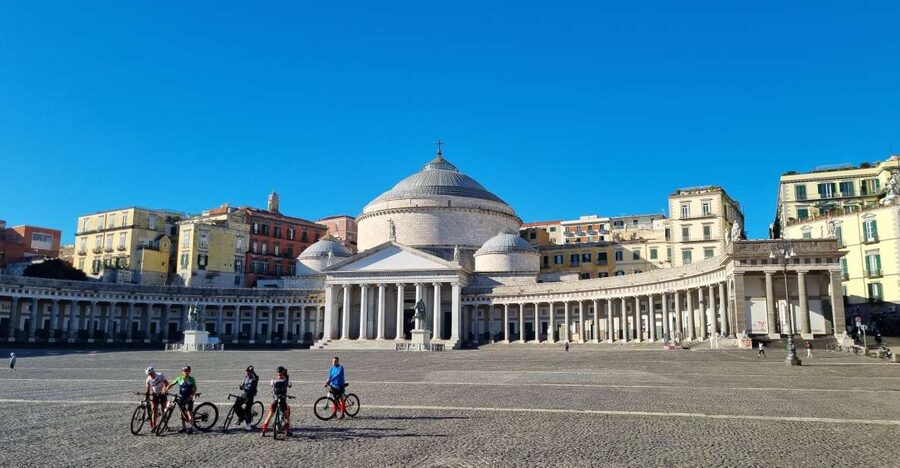
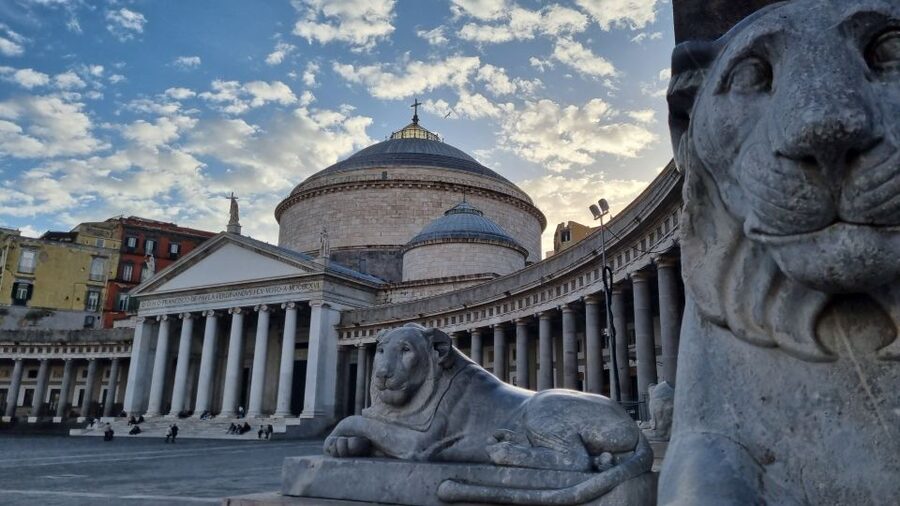
The tour starts in Piazza del Plebiscito, one of the city’s grandest public spaces. Its broad scale gives you a useful first impression of Naples. It is a meeting place for local life, but it also carries the weight of royal power and major public events.
From the square, you see the exterior of the Royal Palace. The focus here is on setting and story rather than an indoor visit, so you should not expect palace rooms or a museum tour. The guide’s role is to explain how the monarchy shaped this part of the city and why the buildings around the square look so imposing.
Across the piazza, the Basilica of San Francesco di Paola provides one of Naples’ most recognizable façades. Its curved form and classical appearance give the square a formal rhythm. This is a good place to listen, look up, and get your bearings before the walk moves into narrower streets.
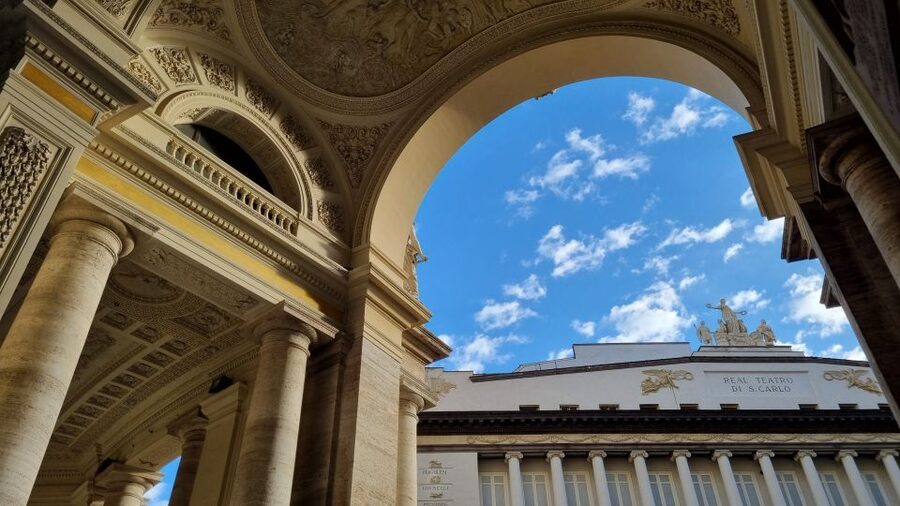
The nearby San Carlo Opera House adds another layer. It is the oldest opera house still in use in Europe, a detail that gives the building real weight even if you only view it from outside. I like this stop because it shows Naples as a city of music and royal ceremony, not just as a rough-edged port city.
Keep your expectations clear: the route does not include entry to the Royal Palace, San Carlo, or other attractions. You see the exteriors and hear the explanation. That keeps the walk moving, but anyone wanting interiors should plan separate visits.
Castel Nuovo and the medieval gateway
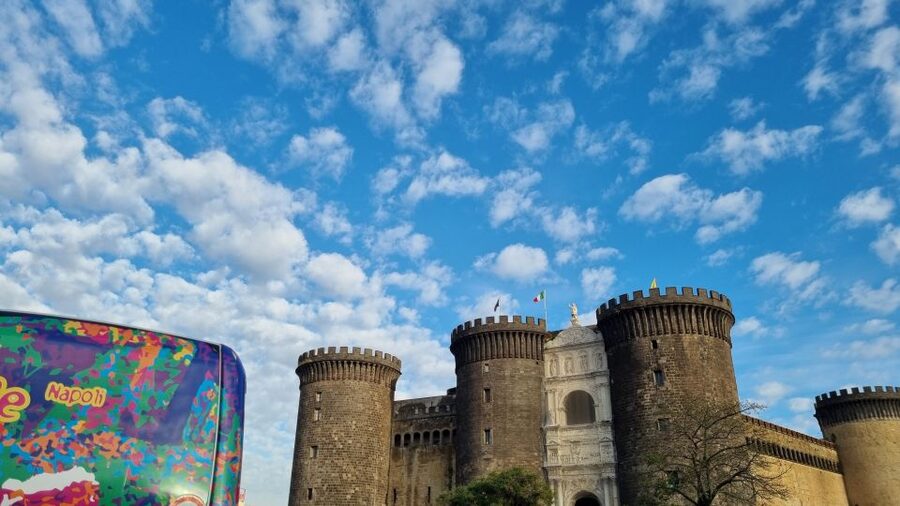
From the royal center, the route continues to Castel Nuovo, also called the Maschio Angioino. Its heavy medieval presence makes a strong contrast with the open piazza and classical basilica.
The castle’s monumental Arch of Triumph is the visual focus. It recalls Naples’ place as a powerful Mediterranean capital and gives the guide a natural way to explain the city’s political changes. This is one of those stops where a few well-chosen details help more than a long lecture. The stonework is impressive, but the reason it matters is the story behind the power that built it.
You will be walking through busy central areas, so this is not a quiet castle visit. Traffic, pedestrians, and city noise are part of the setting. That can make the guide’s explanations harder to hear at times, which is why headsets may be provided when needed.
The walk is not designed for long architectural study. If you enjoy examining fortifications or want to tour the castle’s interior, you will need extra time beyond the two-hour route. For a first introduction, though, the exterior gives you a useful landmark and a clear sense of Naples’ medieval chapter.
Galleria Umberto I and the city’s elegant middle ground
Next comes Galleria Umberto I, a grand covered arcade with a glass dome and Belle Époque atmosphere. After the solid walls of the castle, the gallery feels lighter and more open.
This stop is valuable because it shows another Naples: commercial, theatrical, and carefully designed. The architecture invites you to look overhead, but do not forget to watch the people moving through the space. The gallery still works as part of the city rather than as a frozen monument.
I appreciate the way this stop breaks up the walk. The route has already covered a large square and a castle, so the bright interior of the gallery gives you a different visual pace before the group enters the Quartieri Spagnoli.
Again, this is a viewing stop rather than a shopping or dining session. Food and drinks are not included, and the schedule is too short for a leisurely café break. You can return later if the arcade catches your eye.
Same walls, a different guide:
- Rione Sanità tour among baroque, revival, street art & food
★ 4.8 · 59 reviews - Naples: The Spanish Quarters, Street Art and Local Market
★ 4.7 · 59 reviews - Street art tour of the Spanish Quarters & Maradona idol
★ 4.7 · 49 reviews - Rione Sanità Tour among Baroque, Revival, Street Art & Food
★ 5.0 · 48 reviews
Entering the Quartieri Spagnoli
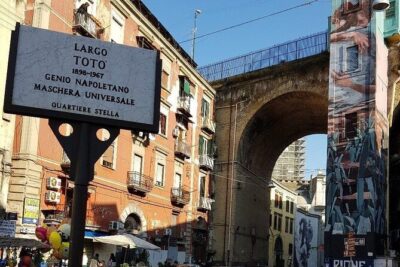
The biggest change comes when you enter the Quartieri Spagnoli. The name refers to the Spanish Quarters, an area known for tight streets and a strong neighborhood feel. Here the tour shifts from official Naples to lived-in Naples.
Expect narrow lanes, laundry overhead, street art, and local voices echoing between the buildings. This is not a staged old-town set. It is an active part of the city, and the route asks you to pay attention to small details: how people use the street, how buildings meet at close quarters, and how public space becomes part of daily life.
I like this section most because it gives the tour its balance. The monuments tell you what rulers and institutions wanted Naples to be. The Quartieri Spagnoli shows how people actually occupy the city. You get both sides in one compact walk.
The tradeoff is comfort. Streets can be uneven and crowded, and the group may need to pause or move aside for local activity. Wear shoes you can walk in for two hours. Leave large bags and luggage behind, since they are not allowed on the tour and would be awkward in the narrow lanes.
Maradona murals and the meaning of football in Naples
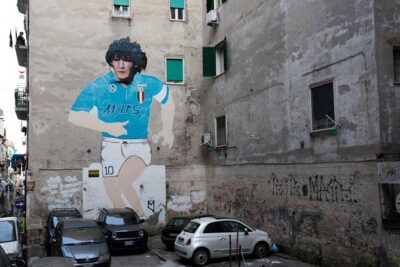
The Maradona murals are more than a quick football photo stop. Diego Armando Maradona remains a deeply loved figure in Naples, and his image has become part of the city’s public identity.
Your guide explains why. The point is not simply that Maradona played for Napoli or that he won matches. His place in local culture connects football with pride, belonging, and the feeling that Naples could defeat more powerful northern clubs and cities. The murals give you a direct, colorful way to understand that emotion.
This is also where a guide’s personality matters. Davide’s style, according to the information provided for the experience, combines humor with clear explanations. One lighthearted point of tension is the eternal Maradona versus Pelé debate. If you favor Pelé, you may hear a spirited Neapolitan counterargument.
The tour treats Maradona as part of the city’s social story, not as an isolated celebrity. That makes the stop worthwhile even if you are not a football fan. You are seeing how a sports figure can become part of neighborhood memory and civic identity.
Do not expect a formal museum or a large curated exhibition. These are street murals in a working neighborhood. Their condition and the exact viewing point can depend on local conditions, crowds, or events.
Via Toledo and the Toledo Metro Art Station
The route finishes along Via Toledo, one of Naples’ main streets. After the close lanes of the Spanish Quarters, the wider street gives the walk a natural release.
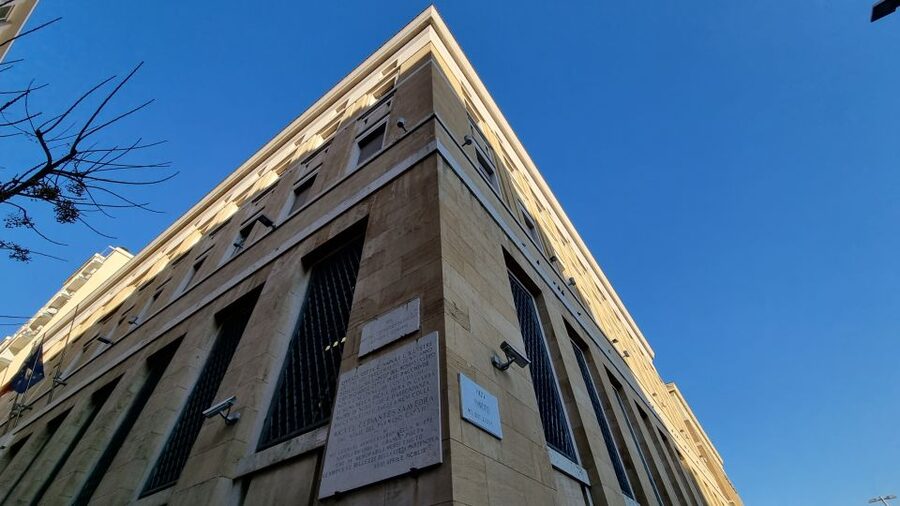
Via Toledo shows Naples in its modern daily rhythm. History remains present, but shops, traffic, public transport, and ordinary movement take over. The tour also points out the historic Bank of Naples, another reminder that this is a city shaped by commerce as well as palaces and churches.
The final stop is Toledo Metro Art Station. It is widely regarded as one of Europe’s most beautiful metro stations, and it makes a fitting end because it brings the story into the present. Naples does not preserve its past in one separate historic zone. It places old buildings, public art, transport, and street life side by side.
The station is also useful to you as a practical landmark. Even if you do not ride the metro immediately, you finish with a better understanding of where Via Toledo fits into the city.
The itinerary may change slightly because of weather, public events, or local conditions. The tour runs in all weather, so bring an umbrella when rain is possible. The guide may adjust the exact order or timing while keeping the main themes intact.
The guide, languages, and group feel
The experience includes a licensed local guide, and tours are offered in English, Spanish, and Italian. Guide Davide is the named guide associated with the strongest personal feedback, with praise for his humor, professionalism, and ability to keep the explanation engaging rather than heavy.
That matters on a two-hour city walk. Naples has a lot of history, and a guide can easily bury you in dates and dynasties. The strongest part of this experience appears to be the balance between explanation and conversation. You hear why places matter without losing the sense that you are walking through a living city.
Headsets are supplied when required. This is useful in busy streets, though no audio system can remove all city noise. Stay close enough to the guide to keep the thread of the story, especially around major roads and crowded squares.
Private groups are available on request, subject to availability. A private option could suit families or small groups who want a different pace, though the standard tour already aims to keep the route compact and manageable.
Walking demands, weather, and who should book
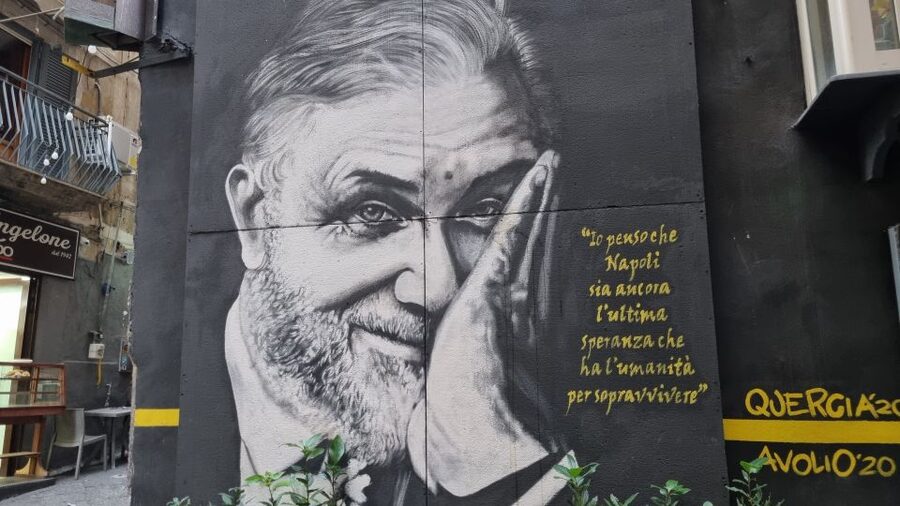
You should be comfortable walking for two hours through busy urban areas and over uneven streets. Comfortable shoes are essential, not optional. An umbrella is also sensible because the tour runs in all weather.
The experience is not suitable for children under 10 or wheelchair users, and electric wheelchairs are not allowed. Large bags and luggage are not permitted. These limits are especially relevant once the route enters the narrow streets of the Quartieri Spagnoli.
I would recommend it for:
- First-time visitors who want an orientation to central Naples
- Adults and older children who enjoy stories more than formal museum visits
- People interested in the link between monuments and present-day local life
- Football fans who want cultural context for Maradona’s place in Naples
- Small groups who prefer a private walking experience
I would choose something else if you need step-free access, dislike uneven streets, or want to spend most of your time inside monuments. This is a city walk, not a palace tour, castle tour, or food tour.
Is Naples Essentials worth $28?
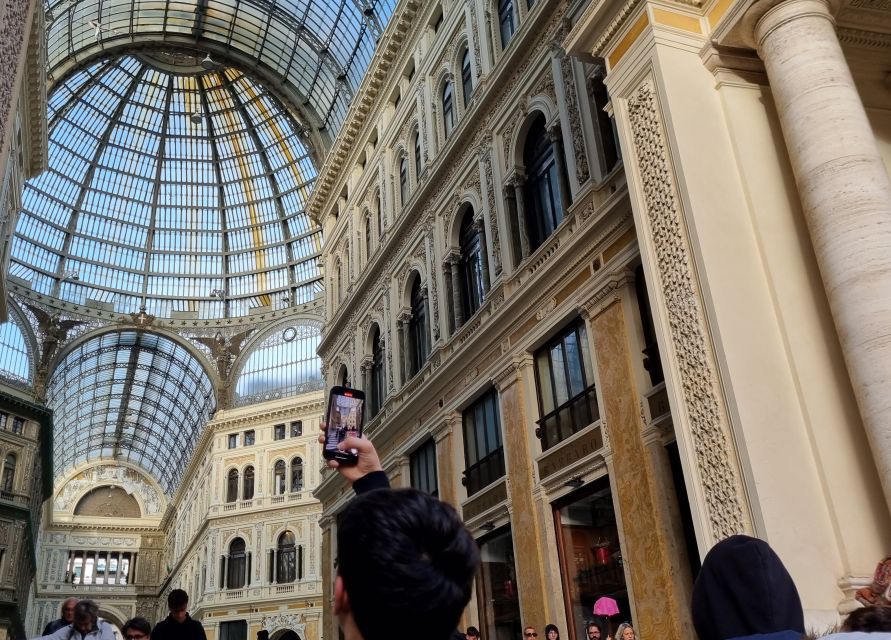
At $28, this is a solid introduction to central Naples. The value comes from the range packed into two hours: royal architecture, a medieval castle, a grand arcade, neighborhood streets, Maradona murals, Via Toledo, and modern metro art.
The walk also earns its price through interpretation. Without a guide, you can photograph Piazza del Plebiscito, Castel Nuovo, Galleria Umberto I, and Toledo station on your own. What you may miss is the connection between them, especially the shift from royal Naples to neighborhood Naples and the cultural meaning of Maradona.
The limits are clear. You pay separately for food, drinks, and any attraction entry. The route is moderately active, the meeting point can vary by booking option, and the itinerary can shift slightly. Still, the plan is focused and realistic rather than overloaded.
Should you book this Naples walking tour?
Book it if you want a lively first orientation and care about how Naples feels today as much as what its monuments look like. The combination of grand squares, local streets, street art, and guide Davide’s story-driven approach gives you a useful picture of the city in a short time.
Skip it if your priority is interior access, a food-focused outing, or an accessible route with no uneven streets. For most first-time visitors who can manage the walking, $28 is a reasonable way to get your bearings and understand why Naples is both monumental and intensely local.
FAQ
How long does the Naples Essentials tour last?
The walking tour lasts two hours.
How much does the tour cost?
The price is $28 per person.
Which languages are available?
The tour is offered in English, Spanish, and Italian.
Is the tour private?
A private group can be arranged on request, subject to availability.
Does the price include entry to the monuments?
No. Entry to attractions is not included. The tour focuses on guided viewing of the route and exterior sights.
Are food and drinks included?
No. Food and drinks are not included.
What should I bring?
Bring comfortable shoes and an umbrella.
Can I bring luggage or a large bag?
No. Luggage and large bags are not allowed.
Is the tour suitable for wheelchair users?
No. The tour is not suitable for wheelchair users, and electric wheelchairs are not allowed.
Can children join the tour?
Children under 10 years are not suitable for this experience.
What happens if it rains?
The tour runs in all weather conditions. The itinerary may vary slightly because of local conditions or events.
Just added around Naples
- Street Art of Spanish Quarters and Maradona Tour★ 3.5 · 3 reviews
- The Spanish Quarters, Street Art and Local Market Tour in Naples★ 5.0 · 23 reviews
- Rione Sanità: tour among street art, architecture, folklore★ 4.5 · 2 reviews
- Naples : Spanish Quarter & Maradona Street Art Tour★ 4.8 · 5 reviews
- Naples: Street Art, Wine and Food Walking Tour★ 5.0 · 15 reviews
- Naples: Football Tour with Maradona Stadium & Mural★ 4.4 · 5 reviews
- Naples Murals Catacombs and Folklore Sanità District Tour★ 4.5 · 5 reviews
- Rione Sanità Street Art and Traditions Tour for Small Groups★ 5.0 · 27 reviews
Naples Street Art Tours, compared.
Naples Spanish Quarters Walking Tour Street Art, Folklore & Sweet
Read our review →
Spanish Quarters Folk Street Art w/ Sweets Tasting
Read our review →
Rione Sanità tour among baroque, revival, street art & food
Read our review →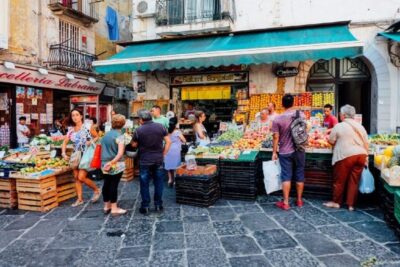
The Spanish Quarters, Street Art and Local Market
Read our review →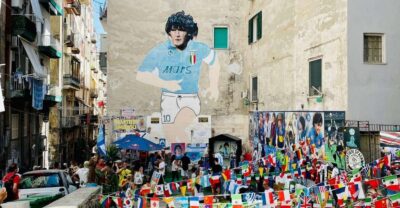
Street art tour of the Spanish Quarters & Maradona idol
Read our review →Rione Sanità Tour among Baroque, Revival, Street Art & Food
Read our review →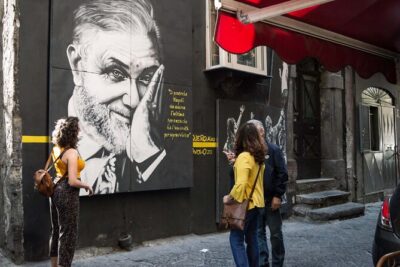
Spanish Quarter of Neaples StreetArt & Traditions, with coffee and babà
Read our review →Browse the lists this tour appears in