
REVIEW · NAPLES
Rione Sanità tour among baroque, revival, street art & food
Rione Sanità is Naples at its most revealing: Baroque palaces beside laundry lines, murals beside old churches, and street food around every corner. This two-hour walk explains how a district once marked by decline is working toward a new future, with local people and social cooperatives helping lead the change.
I like the way the tour links grand architecture to everyday life, especially the paired Palazzo San Felice and Palazzo dello Spagnolo. I also like that the food stops are genuinely local in character: fried pizza, a Poppella fiocco di neve, and a small Neapolitan coffee.
The main thing to consider is the short length. Two hours gives you a useful introduction, but the route moves quickly and does not include transportation or extended visits inside every site. The food is also served as a takeaway tasting, not a full sit-down meal.
Key points at a glance
- Start at Porta San Gennaro: Meet beside one of the historic entrances to Rione Sanità, at Via Porta S. Gennaro 35.
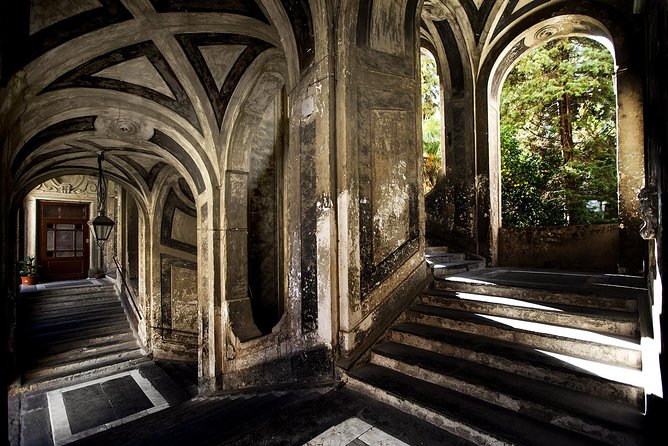
- See two famous Baroque façades: Palazzo San Felice and Palazzo dello Spagnolo are presented as twin examples of the district’s decline and renewal.
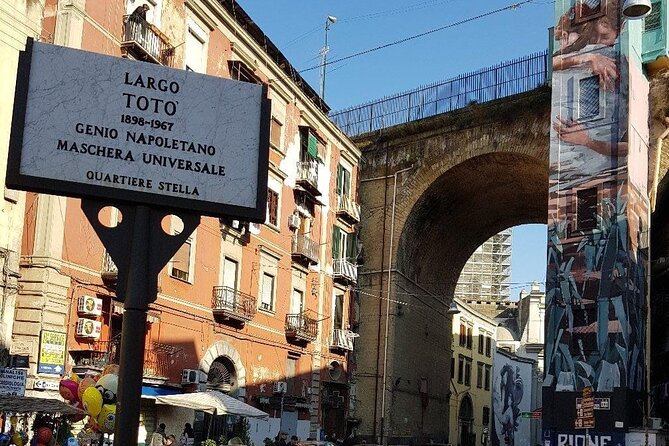
- Read Naples through street art: Murals honoring Totò and Maradona add modern local pride to the older churches and palaces.
- Hear the story of social change: Your guide explains how a social cooperative is helping regenerate the neighborhood.
- Taste three Neapolitan favorites: The tour includes fried pizza, a Poppella fiocco di neve, and coffee.
- Choose from three languages: Tours are offered in English, Italian, and Spanish.
Starting at Porta San Gennaro
Your meeting point is beside Porta San Gennaro at Via Porta S. Gennaro 35. The guide waits with a sign bearing your name, which makes the start simple in a part of Naples where streets and lanes can feel confusing.
Porta San Gennaro is more than a practical meeting point. It marks the symbolic entrance to Rione Sanità, one of Naples’ oldest districts. From here, the walk moves into the popular alleys, where the first impression is not a polished monument quarter. You see color, close-packed buildings, signs of daily life, and laundry hanging overhead.
That contrast is central to the tour. You are not being led from one isolated attraction to another. Instead, you are shown how churches, palaces, murals, shops, and homes share the same tight urban space. The district’s appeal comes from this mix.
The route is guided in English, Italian, or Spanish. A live local guide makes a real difference here because the meaning of the streets is not always obvious from the buildings alone. Guides named in recent bookings include Rosa, Giovanni, Gianluca, and Giorgia. Their approach has been described as prepared, warm, and passionate about Naples.
More Food and Drink Tours in Naples:
- Naples: Spanish Quarters Folk Street Art w/ Sweets Tasting
★ 4.9 · 788 reviews - Naples: Street Art, Wine and Food Tasting Walking Tour
★ 5.0 · 163 reviews - Rione Sanità Tour among Baroque, Revival, Street Art & Food
★ 5.0 · 48 reviews
Baroque beauty beside everyday Naples
The first major architectural focus is Neapolitan Baroque. This style can be theatrical, ornate, and full of movement, but in Rione Sanità it is not separated from ordinary life. The grand façades rise above narrow streets where residents still go about their routines.
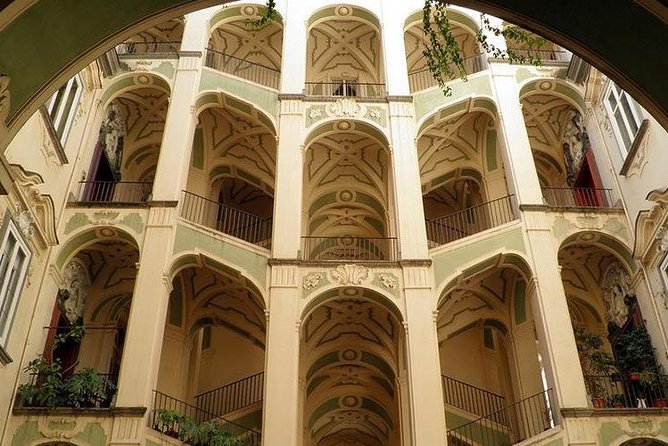
Palazzo San Felice and Palazzo dello Spagnolo are the key examples. They are often described as twin architectures because of their related visual character. Their broad staircases, decorative details, and unusual façades show the noble past of the district.
Your guide also uses these buildings to explain a harder story. The same palaces that suggest wealth and status now belong to a neighborhood shaped by years of decline. Their importance is not only artistic. They show how a district can carry the marks of both former prestige and present-day change.
I like this part of the tour because it avoids treating architecture as a list of dates and names. You get a clearer sense of how the buildings fit into the social story of Rione Sanità. The palaces are beautiful, but their beauty is part of a bigger question: how does a neighborhood protect its identity while building a better future?
Do not expect a long interior visit to each palace. The experience centers on the streets, façades, and guide commentary. If your main goal is extensive access to Baroque interiors, a dedicated church or palace tour would give you more time inside.
Murals of Totò, Maradona, and local pride
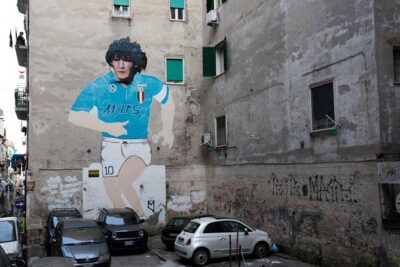
Rione Sanità’s walls add another layer to the walk. Murals dedicated to Totò and Maradona bring two powerful symbols of Naples into the neighborhood.
Totò, one of Naples’ best-known comic actors, represents local humor and cultural identity. Maradona carries a different kind of emotional force, tied to football and the city’s deep affection for its sporting hero. Their images help show how Neapolitan identity is expressed in public space, not only in museums.
The street art also makes the route feel current. You move from Baroque churches to painted walls, then back to old buildings and neighborhood businesses. That visual shift is one reason the tour works well for someone who wants more than the standard postcard view of Naples.
The murals are not presented as decoration alone. They form part of the district’s larger revival. The desire to renew Rione Sanità appears in public art, shared spaces, cultural projects, and efforts to bring attention to the neighborhood’s strengths.
One distinctive stop is the Alley of Culture, where books are made available for everybody. It is a small but meaningful detail. The project suggests that regeneration is not only about repairing buildings or attracting visitors. It can also involve access to reading, shared culture, and a stronger sense of community.
Churches, sculptures, and a message of renewal
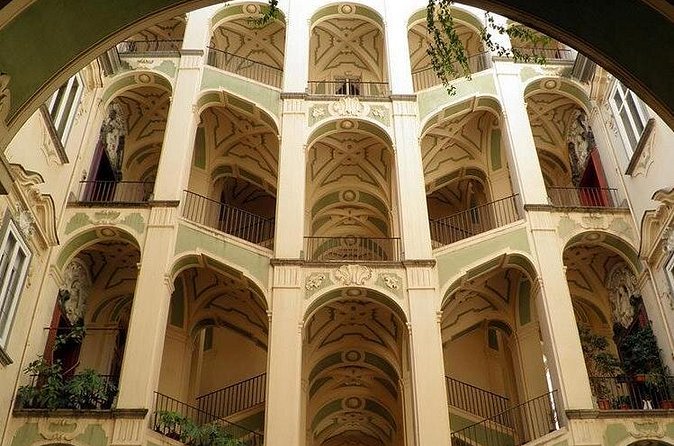
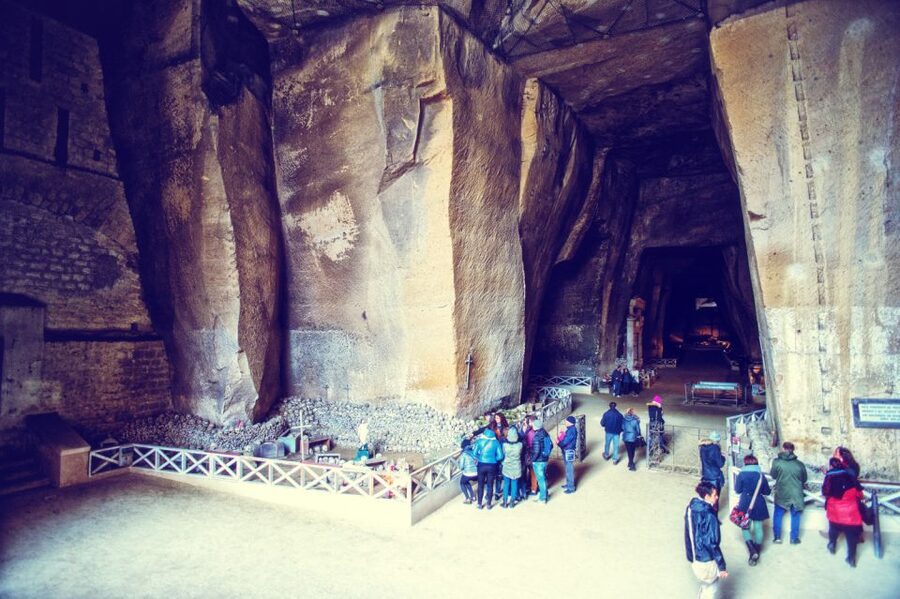
The tour brings together several religious and artistic landmarks. The Basilica of San Severo outside the walls is associated here with the sculpture of the Veiled Son. The work gives the route a more reflective moment after the noise and color of the alleys.
The Basilica of Santa Maria alla Sanità provides another important stop. Its Nativity scene is described as a symbol of hope and universal integration. You also get a closer look at the beauty of the churches, which helps explain why Rione Sanità matters beyond its street life.
The religious sites are valuable because they show the district’s long cultural reach. They are not simply old buildings placed on a sightseeing route. They connect faith, art, craftsmanship, and neighborhood identity.
At the same time, the two-hour format limits how much time you can spend studying each work. The guide’s explanation is the main way you understand the importance of the churches and sculpture. If you prefer to linger quietly in one basilica, you may want to return later on your own.
More Food Tours in Naples:
- Naples: Street Art, Wine and Food Walking Tour
★ 5.0 · 15 reviews - Medellin: Comuna 13 Graffiti Tour, Cable Car & Street Food
★ 4.8 · 9,046 reviews - Cancun Street Food Tour with Food Stalls, Local Market and Murals
★ 5.0 · 723 reviews - 3-Hour Atlanta Beltline Food, Street Art and History Tour
★ 5.0 · 345 reviews
Fried pizza, fiocco di neve, and Neapolitan coffee
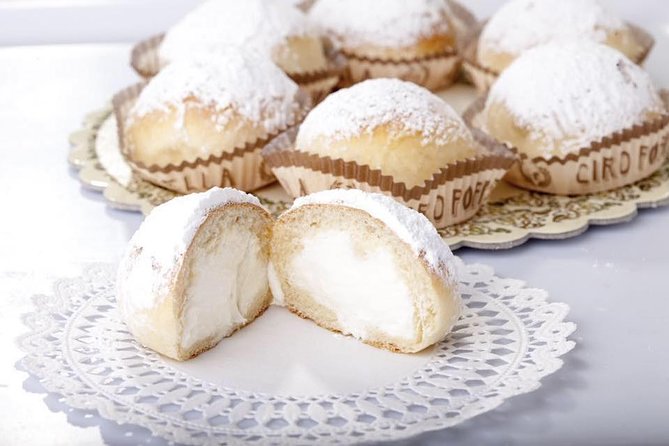
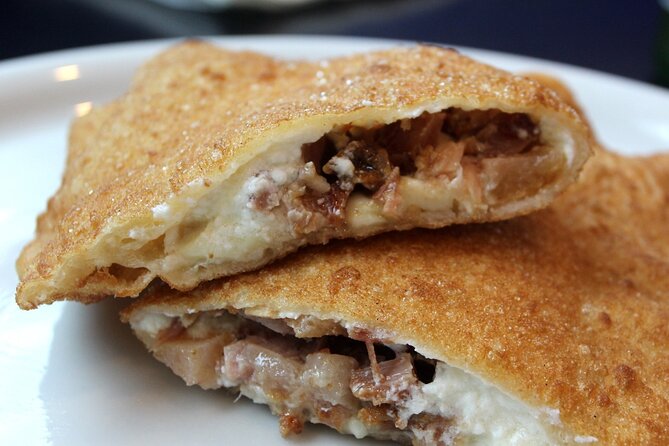
Food is built into the route rather than tacked on at the end. You stop for a typical fried pizza, served as a takeaway tasting, then visit one of Naples’ best-known pastry shops for a fiocco di neve from Poppella and a real Neapolitan coffee.
Fried pizza is a particularly fitting choice for this district walk. It is informal, inexpensive in spirit, and easy to eat while moving through the neighborhood. The tasting gives you a quick taste of Naples’ street-food culture without requiring a long restaurant stop.
The fiocco di neve offers a very different texture and mood. Its name means snowflake, and it is associated with Poppella, one of the pastry shops named in the route. Paired with coffee, it gives the tour a sweet finish and a chance to pause.
These tastings are included in the $47 price, which improves the overall value. You are paying for a local guide, a focused walk, and three food elements rather than only for a commentary-led stroll. Still, keep your expectations clear: this is a sampling of specialties, not lunch. If you have a large appetite, plan another meal afterward.
The food also helps make the neighborhood understandable in a practical way. Naples is not only something you look at. It is something you taste while standing in a street, sharing a quick stop, and moving on with the city around you.
The social cooperative story
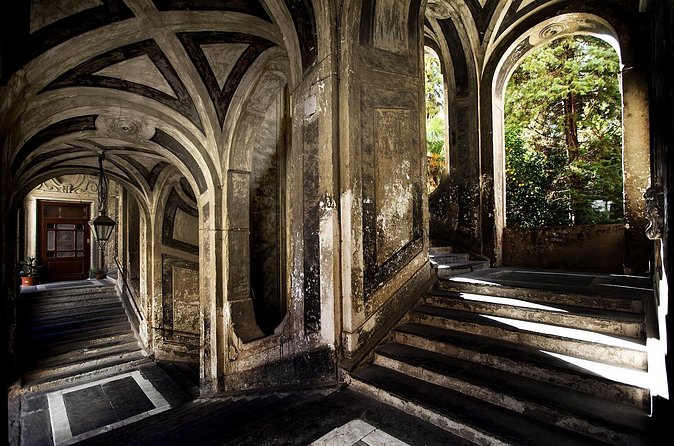
The most important part of the experience is the account of Rione Sanità’s revival. Your guide explains the work of a social cooperative that is helping regenerate the wider neighborhood.
This gives the walk a useful focus. You learn about a district that has not been reduced to a simple before-and-after story. The streets still show contradiction: impressive Baroque architecture, neglected signs of the past, creative public art, and active local life all appear together.
The story of change is also why a guide matters. Without context, you might see a beautiful palace, a striking mural, or a busy lane and move on. With explanation, you can connect those sights to the people trying to create new opportunities for the area.
The tour is strongest when it treats renewal as work in progress rather than a finished product. Rione Sanità is presented as a place with pride and problems, old traditions and new projects. That balance makes the experience more useful than a polished sightseeing loop.
A recent booking described the tour as a way to see a different and less familiar Naples. That is exactly the point. You are not being promised a tidy version of the city. You are being shown a district where beauty and difficulty exist side by side.
What the two-hour format really gives you
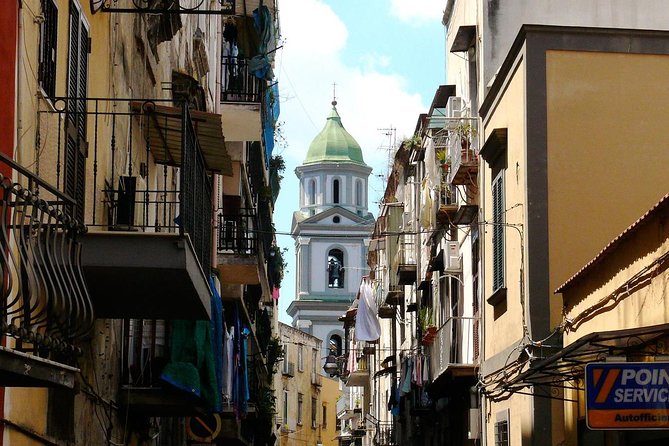
Two hours is enough for a strong introduction. You can reach the main meeting point, walk through the alleys, see the Baroque palaces, look at murals and churches, hear about community work, and stop for the included tastings.
The pace will likely feel active because there is a lot packed into a short period. You should arrive ready to walk and pay attention. The route is built around the guide’s explanations, so it rewards curiosity more than rushed photography.
The short format also makes this a useful choice early in a Naples visit. It can give you a sense of Rione Sanità before you decide if you want to return for more time at the churches, pastry shops, or cultural sites. It also fits neatly into a day when you have other plans.
The tradeoff is depth. You will not receive a full architectural study of every building, a long museum visit, or a leisurely food tour. The experience connects many pieces quickly. If you prefer a slow, single-subject tour, this may feel compressed.
Price, languages, and practical value
At $47 per person, the price is fair for a two-hour guided walk with a local expert and included food tastings. Fried pizza, a fiocco di neve, and coffee would cost something on their own, but the greater value comes from having those stops placed within a clear story about the district.
The tour includes whispers from six participants onward. That can help you hear the guide in a lively neighborhood, especially when the group is larger. No group maximum is provided, so you should not assume a small private-style experience.
Transportation is not included. You need to make your own way to Porta San Gennaro, and the meeting point is clearly given at Via Porta S. Gennaro 35. The guide waits with your name on a sign.
You can cancel up to 24 hours before the start for a full refund, and the reserve-now, pay-later option keeps payment flexible. Availability and starting times vary, so check those details when selecting your date.
Who will enjoy this Rione Sanità walk
I would choose this tour if you want to understand Naples through a neighborhood rather than only through famous monuments. It suits you especially well if you like architecture, street art, local food, and stories about community change.
It is also a good match if you feel unsure about exploring Rione Sanità without guidance. The walk gives you a structured introduction and a local voice to explain what you are seeing. One recent participant specifically valued having a guide in a district they would not have entered alone.
The tour may be less suitable if you want a full meal, extensive time inside churches, or a private itinerary tailored to your pace. It is also not the best pick for someone who wants only major postcard sights. Its purpose is to show a less polished and more complicated side of Naples.
Should you book it?
Book this tour if you want a compact, human look at Naples, with Baroque architecture and street food tied to a real story of neighborhood renewal. The strongest parts are the contrast between Palazzo San Felice and Palazzo dello Spagnolo, the murals and Alley of Culture, and the explanation of how local social work is shaping Rione Sanità.
Skip it if your priority is a long museum visit or a sit-down food experience. For $47, though, the combination of a local guide, three tastings, and a focused look at one of Naples’ most distinctive districts gives you solid value. I would place it near the start of a Naples stay, then return to Rione Sanità later if the churches, food, or street life call for more time.
FAQ
Where does the Rione Sanità tour begin?
The meeting point is next to Porta San Gennaro at Via Porta S. Gennaro 35. Your guide waits while holding a sign with the customer’s name.
How long does the tour last?
The tour lasts two hours.
What languages are available?
The live tour guide can lead the experience in English, Italian, or Spanish.
What is included in the price?
The price includes a local tour expert, whispers from six participants onward, a fried pizza tasting served as takeaway, a Poppella fiocco di neve, and coffee.
Is transportation included?
No. Transportation is not included in the tour.
Which buildings are featured?
The route includes Palazzo San Felice and Palazzo dello Spagnolo, described as twin Baroque architectures associated with the district’s decline and renewal.
Does the tour include street art?
Yes. The route includes murals dedicated to Totò and Maradona, along with the Alley of Culture and its books for everybody.
What food will I taste?
You will taste typical fried pizza, a fiocco di neve from Poppella, and Neapolitan coffee.
Can I cancel for a refund?
Yes. You can cancel up to 24 hours in advance for a full refund. You can also reserve now and pay later.
Just added around Naples
- Street Art of Spanish Quarters and Maradona Tour★ 3.5 · 3 reviews
- The Spanish Quarters, Street Art and Local Market Tour in Naples★ 5.0 · 23 reviews
- Rione Sanità: tour among street art, architecture, folklore★ 4.5 · 2 reviews
- Naples : Spanish Quarter & Maradona Street Art Tour★ 4.8 · 5 reviews
- Naples: Street Art, Wine and Food Walking Tour★ 5.0 · 15 reviews
- Naples Murals Catacombs and Folklore Sanità District Tour★ 4.5 · 5 reviews
- Naples: Football Tour with Maradona Stadium & Mural★ 4.4 · 5 reviews
- Rione Sanità Street Art and Traditions Tour for Small Groups★ 5.0 · 27 reviews
Naples Street Art Tours, compared.
Naples Spanish Quarters Walking Tour Street Art, Folklore & Sweet
Read our review →
Spanish Quarters Folk Street Art w/ Sweets Tasting
Read our review →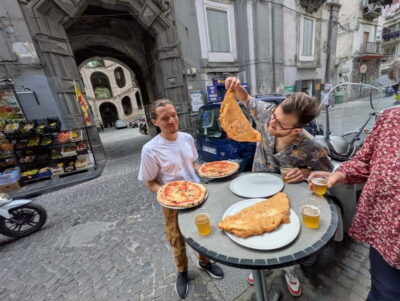
Naples Essentials: Monuments, Local Life & Street Art
Read our review →
The Spanish Quarters, Street Art and Local Market
Read our review →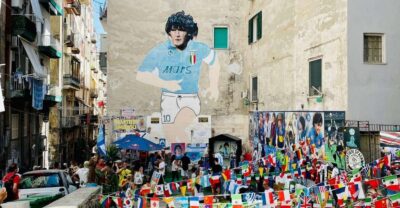
Street art tour of the Spanish Quarters & Maradona idol
Read our review →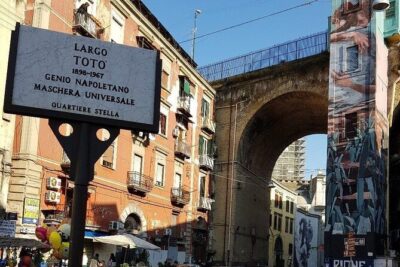
Rione Sanità Tour among Baroque, Revival, Street Art & Food
Read our review →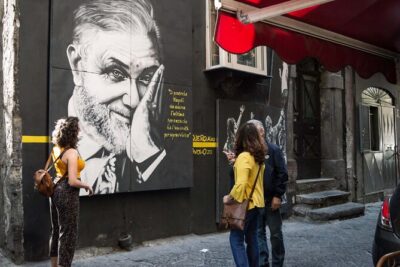
Spanish Quarter of Neaples StreetArt & Traditions, with coffee and babà
Read our review →Browse the lists this tour appears in