
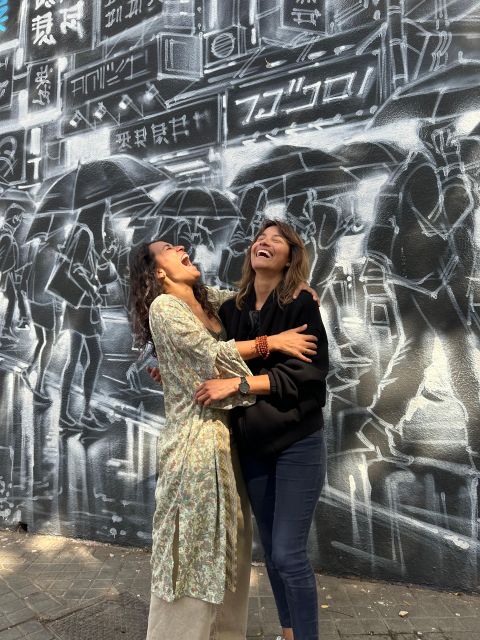
REVIEW · BARCELONA
Barcelona: Insider Street Art Tour with Private Studio Visit
Barcelona: Insider Street Art Tour with Private Studio Visit is less about checking off famous sights and more about learning how to read the city’s walls. Artist and art historian guides lead you through El Raval, La Rambla, and the Gothic Quarter, then take you inside an artist studio and a gallery.
I like the artist-led explanations, which give you more than a quick list of names and dates. I also like the studio access, where you can meet local artists and ask questions about their work. The main trade-off is time: two hours passes quickly, so this is a brisk introduction rather than a complete survey of Barcelona’s street art.
- Meet at Teatre Condal: Start in front of the BINGO sign on Av. del Paral·lel, with cafés and shops nearby.
- Read the walls: Learn the difference between tags, paste-ups, murals, graffiti styles, and urban sculpture.
- Walk through three central districts: The route links El Raval, La Rambla, and the Gothic Quarter.
- Enter working art spaces: Visit an artist collective studio and speak with local creators.
- Finish at Canal Gallery: See how street artists move from public walls into gallery spaces.
- Pay $33 for two hours: The price is strong if you value access and expert interpretation more than a long walking tour.
Why this Barcelona street art walk is different
Barcelona’s street art is easy to notice but harder to understand. You can pass a painted shutter or a layered wall and see only color. With the right guide, you begin to notice technique, placement, repetition, and the difference between a quick tag and a carefully planned piece.
This tour gives you that visual vocabulary. The guide explains tags, paste-ups, murals, and urban sculpture, along with the stories behind selected works. That matters because street art changes quickly. Pieces disappear, walls are painted over, and artists move between public work, studios, and galleries.
The guides are practicing artists or art historians. Past departures have included Kat, Kate, Anya, Juan, and Luke. Their backgrounds shape the experience. Anya has been praised for explaining the work clearly, while Juan is known for strong knowledge of the local scene. Luke’s relaxed, enthusiastic approach is especially useful during the studio visit.
I would choose this tour if you want context, not just photographs. You still get plenty of good photo stops, but the purpose is to help you recognize what you are seeing after the walk ends.
Starting at Teatre Condal on Av. del Paral·lel
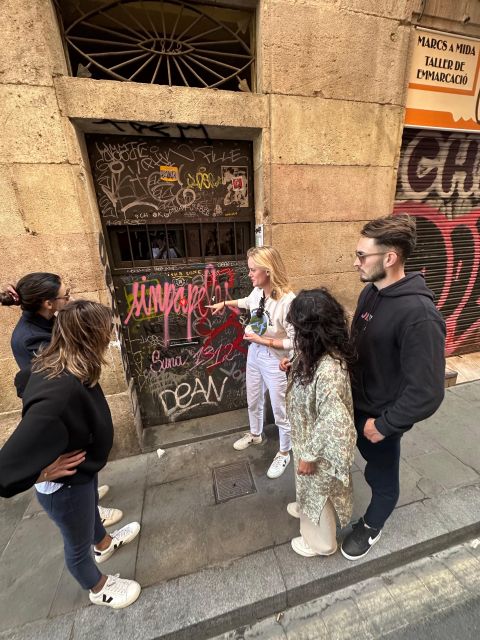
The meeting point is in front of the BINGO sign at Teatre Condal. This is a practical start because cafés and shops are nearby, so you can use the bathroom or pick up a drink before the two-hour walk.
The first guided stretch takes place along Av. del Paral·lel and lasts about 15 minutes. This opening gives the guide a chance to explain the local scene and set up the basic terms you will use throughout the tour.
Do not expect a formal museum-style introduction. The appeal is the street itself, with the guide responding to the walls, shutters, buildings, and works you encounter. The setting also helps you understand that urban art is tied to its surroundings. A work does not exist in isolation. Its size, surface, nearby businesses, and position on the street all affect how you see it.
Because the tour is in English, you should be comfortable following a spoken explanation while walking. The experience is listed as wheelchair accessible, though the route passes through busy central streets and includes several walking sections.
A few more street art tours around Barcelona worth a look
- Moco Museum Barcelona Banksy & More
★ 4.6 · 2,340 reviews - Barcelona: Banksy Museum, Permanent Exhibition Ticket
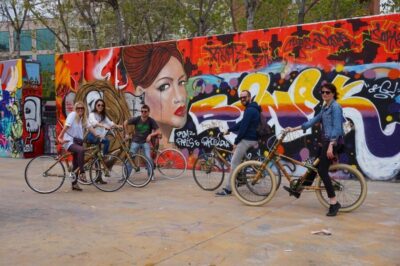
★ 4.7 · 543 reviews - Barcelona Street Art and Graffitti Bicycle Tour
★ 5.0 · 361 reviews
Finding art beyond the standard Barcelona route
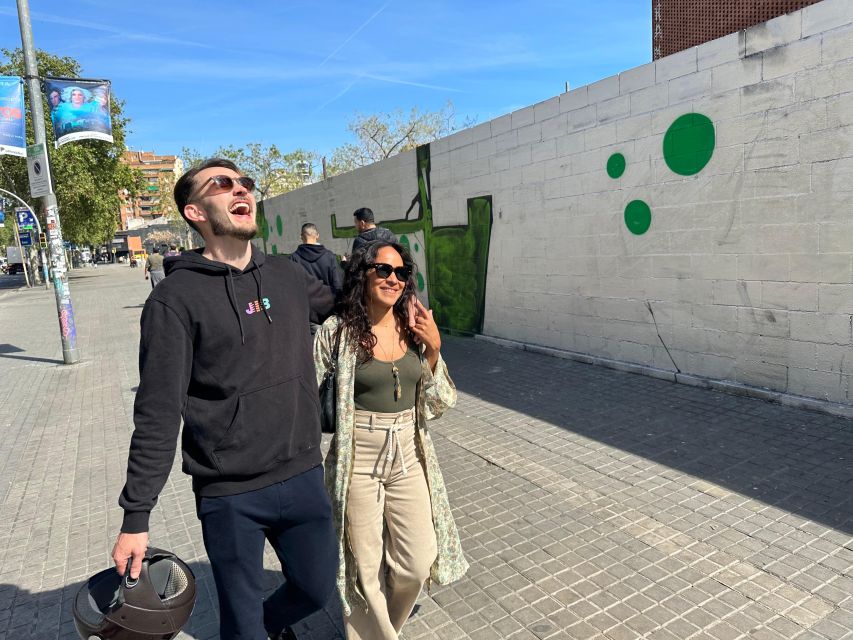
After the opening stop, the tour moves toward lesser-seen art locations. One stop is described as a special local find and receives about 15 minutes of guided attention. The exact artwork can change, which is normal for a street art walk. Public pieces are not permanent, and the guide needs room to follow what is currently on the walls.
This is one of the tour’s useful strengths. You are not simply being taken to a single famous mural for a quick photograph. You are shown how to look for work in less obvious places, including spots you might pass without noticing on your own.
The guide can point out differences in style and method. Tags may be quick and personal. Paste-ups can be prepared elsewhere and attached to the wall. Murals demand a different scale and planning. Urban sculpture changes the relationship between the work and the street because it occupies physical space rather than sitting flat against a surface.
The tour’s value is strongest here. You leave with a way of seeing, not just a set of locations. The included interactive map adds practical value after the walk, with suggestions for galleries, cafés, and other places to visit in Barcelona.
Walking through El Raval for about 20 minutes
The route then reaches El Raval, where you have about 20 minutes of walking. This is a natural part of the experience because the district connects several types of urban art and gives the tour a more everyday setting than a conventional attraction.
You should expect to keep moving while the guide points out works along the way. This is not a sit-down class, and there may not be time to study every piece in detail. The benefit is variety. You see how art appears across different surfaces and streets rather than in a single controlled room.
El Raval also gives the tour a useful contrast. Barcelona is often presented through grand architecture, famous avenues, and Gaudí sites. This walk shifts attention to smaller interventions and changing street-level details. Some works may be bold and easy to photograph. Others may be temporary, layered over older pieces, or partly worn away.
I like this part for the simple reason that it feels connected to real city life. You are not leaving Barcelona behind to visit a separate attraction. You are learning to spot its creative activity while moving through a working neighborhood.
A short look at La Rambla
The itinerary includes a five-minute visit to La Rambla. That may sound brief, but it gives you a quick connection between the street art route and one of Barcelona’s best-known public spaces.
Do not book this experience expecting a long La Rambla sightseeing stop. Its role is to show how urban art and public space meet in a heavily visited part of the city. The contrast can be revealing. Street art is not limited to quiet side streets or industrial walls. It can appear close to the city’s most famous pedestrian route, although it may be more temporary and contested there.
This is also a useful reminder to keep your expectations realistic. The tour is not a general Barcelona highlights walk. La Rambla is one piece of a route built around urban art, and the visit is short.
Same walls, a different guide:
- Moco Museum Barcelona Admission Ticket
★ 4.5 · 1,302 reviews - Barcelona Street Art Tour with Exclusive Artist Studios Visit
★ 5.0 · 152 reviews - Raval Street Art and Graffiti Guided Tour in Barcelona
★ 5.0 · 81 reviews - Barcelona: Raval Street Art and Graffiti Walking Tour
★ 4.9 · 60 reviews
Reading the Gothic Quarter’s walls
From La Rambla, you walk into the Gothic Quarter for about 15 minutes. The narrow streets and older buildings offer a different setting from El Raval and Av. del Paral·lel.
The guide can help you notice how works interact with stone, doors, shutters, and tight walls. The Gothic Quarter is often treated as a place to admire historic architecture, but the street art adds another layer to your walk. Some pieces may be small and easy to miss. Others may use the surrounding architecture as part of the composition.
This section is particularly useful for photographers because the close streets can frame works in interesting ways. Still, you should keep your camera ready rather than expect long stops at every wall. The tour covers a fair amount in two hours, and public art conditions can change.
The walk also helps balance the route. El Raval provides a strong street-level art setting, while the Gothic Quarter shows how urban work appears among old buildings and heavily visited lanes. You get a broader sense of Barcelona’s art scene without spending the entire afternoon on foot.
The studio visit is the tour’s key moment
The most unusual part comes when you visit an artist collective studio. This is more personal than standing in front of a finished piece on a public wall. You can meet local artists, see original work, and ask about the process behind it.
The studio visit is the reason I would choose this tour over a standard self-guided street art map. A map can show you where to go, but it cannot give you the same contact with people who make the work. The studio provides a bridge between the public wall and the person behind it.
Past guides and artists connected with the visit include Kat, Kate, Anya, Juan, and Luke. The exact people you meet can depend on the departure, so you should not book expecting one named guide unless your booking confirms it. Still, the experience is designed around direct conversation with artists rather than a distant presentation.
You may find this part especially useful if you make art yourself or have a family member who does. One family booking was arranged as a surprise for a son interested in street art, and the studio conversations became a major part of the experience. The tour can work well for curious beginners too, since you do not need a technical art background to join the discussion.
The setting is an active workspace, not a polished museum. That is part of the appeal, but it also means the visit may feel informal and changeable. If you prefer a highly structured tour with a fixed exhibition, this may feel less predictable.
From street walls to Canal Gallery
The route finishes at Canal Gallery, a dedicated urban art gallery. This stop shows how work that begins in public spaces can enter the gallery system.
That transition gives the tour a useful final chapter. You have seen art in streets, discussed how it is made, and met artists in their workspaces. At the gallery, you can consider how the same creative scene is presented in a more formal setting.
The gallery visit includes contact with the people behind the space, described as gallerists who represent street artists. Their role helps explain another side of the art world: how artists are supported, how original work is displayed, and how street-based work can reach collectors and indoor audiences.
Canal Gallery is also the endpoint, which makes the route easy to understand. You start near Teatre Condal and finish at a specific art venue rather than returning to the meeting point. Plan the next part of your day from the gallery, not from the theatre.
Is $33 a fair price?
At $33 per person, this is a good value for a two-hour experience that includes more than a guided walk. You are paying for an English-speaking guide with an art background, the route through several central districts, an artist studio visit, a gallery stop, and an interactive map for later exploring.
A self-guided walk would cost less, of course. You could find public art with your own map and photograph it at your own pace. What you would miss is the explanation, the studio access, and the chance to ask local artists direct questions.
The value depends on what you want from the afternoon. If your main goal is to cover as many walls as possible, two hours may feel short. If you want a focused introduction with personal access, the price is easier to justify.
The five-star rating attached to the experience is based on 21 reviews, and the strongest praise centers on the guides, the studio visit, and the quality of the explanations. Those are the features I would weigh most heavily when deciding.
Who should book this experience?
I would recommend it to anyone who likes contemporary art, photography, design, or unusual city walks. It is also a strong choice for people who have already seen Barcelona’s major sights and want a different subject for an afternoon.
Families can consider it if children or teenagers are already interested in drawing, graffiti, or making art. The direct contact with artists may hold their attention better than a traditional gallery tour.
It is less suitable if you want a slow stroll with long pauses. The route includes several walking sections, and the timing is compact. It is also not the right pick if you need a tour in a language other than English, since English is the listed language.
You should also keep the weather in mind. Much of the experience takes place outside, with the studio and gallery providing indoor stops. Comfortable shoes and a charged phone for photos are sensible, though those items are practical suggestions rather than listed requirements.
Booking is flexible: you can cancel up to 24 hours before the start for a full refund, and you can reserve now and pay later. Check the available start times when choosing your date.
My verdict on the Barcelona Insider Street Art Tour
Book this tour if you want to understand how Barcelona’s street art works and meet people connected to the scene. The strongest reasons are clear: artist-led interpretation, access to a working studio, and a gallery visit that shows the move from street walls to indoor exhibitions.
Skip it if you want a broad city tour, a long museum visit, or a completely self-paced route. Two hours is enough for a sharp introduction, not every corner of Barcelona’s urban art.
For $33, I see this as one of the better-value ways to spend a short afternoon in Barcelona, especially if you want the kind of local contact that a guidebook cannot provide.
FAQ
Where does the Barcelona street art tour begin?
It begins in front of the BINGO sign at Teatre Condal on Av. del Paral·lel, 40. Cafés and shops nearby provide places to use the bathroom or buy a refreshment before the tour.
Where does the tour finish?
The tour ends at Canal Gallery.
How long does the experience last?
The experience lasts two hours. You can check available starting times when booking.
What language is the tour offered in?
The live guided tour is offered in English.
Is the tour wheelchair accessible?
Yes, the activity is listed as wheelchair accessible.
What is included besides the guided walk?
The experience includes a visit to an artist studio, meetings with local artists, a visit to an urban art gallery, and an interactive map with galleries, cafés, and other places to visit in Barcelona.
Just added around Barcelona
- Barcelona Street Art, Graffiti and Tapas Tour★ 4.0 · 5 reviews
- Moco Museum Barcelona: Banksy Small-Group Tour with Skip-the-Line★ 5.0 · 5 reviews
- Small-Group Moco Museum Barcelona: Banksy & Modern Art Tour★ 4.8 · 16 reviews
- Private Barcelona Street Art Tour★ 5.0 · 2 reviews
- Barcelona | StreetArt Bike Tour Moco Museum★ 4.6 · 13 reviews
- Barcelona | Street Art Bike tour★ 5.0 · 3 reviews
- Barcelona Street Art, Graffiti & Tapas Tour★ 5.0 · 5 reviews
- Street Art, Sculptures & Crime Stories Walking Tour – Barcelona★ 5.0 · 11 reviews
Barcelona Street Art Tours, compared.

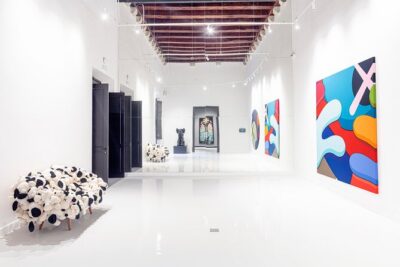
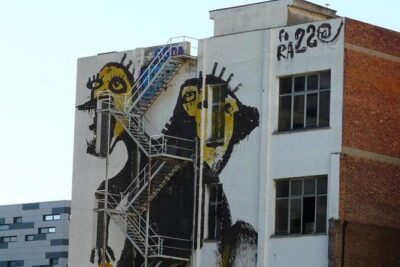
Barcelona Street Art and Graffitti Bicycle Tour
Read our review →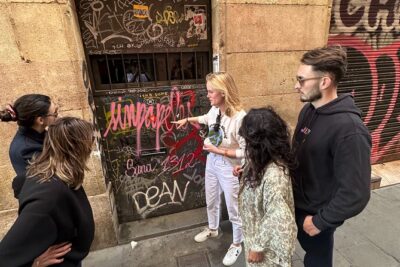
Barcelona Street Art Tour with Exclusive Artist Studios Visit
Read our review →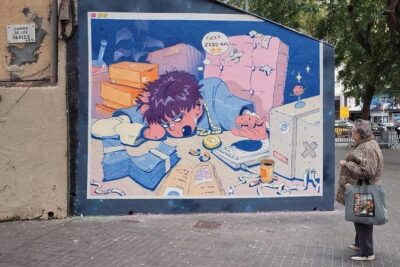
Raval Street Art and Graffiti Guided Tour in Barcelona
Read our review →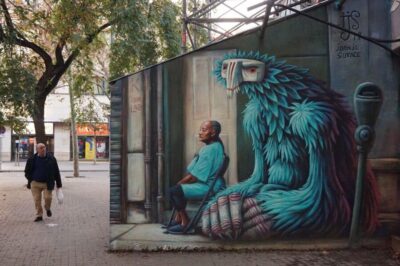
Browse the lists this tour appears in